Activated Alumina in the Anthraquinone (AO) Process for Hydrogen Peroxide Production: Application Case Analysis
Industry Context
Key Takeaways
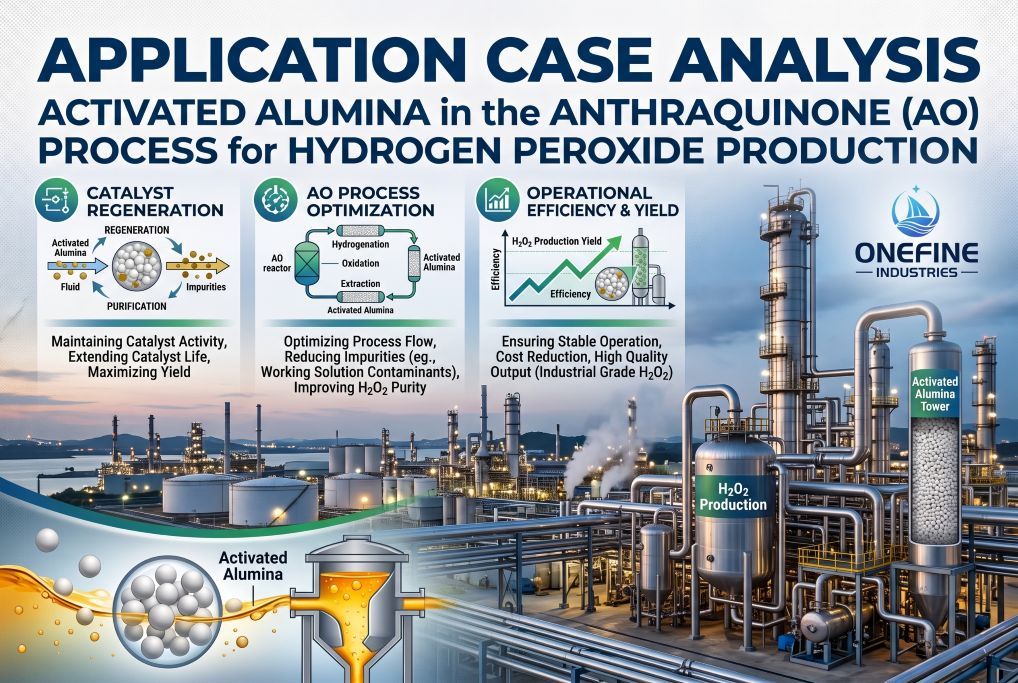
- Activated alumina adsorbs residual lye carried over from upstream washing, bringing alkalinity down to below 0.005 g/L.
- It effectively adsorbs both entrained extraction water and byproduct water to dry the working solution for the next cycle.
- The packed bed mechanically filters fine solids and decomposes residual H₂O₂ to prevent product drag-out into downstream steps.
Background
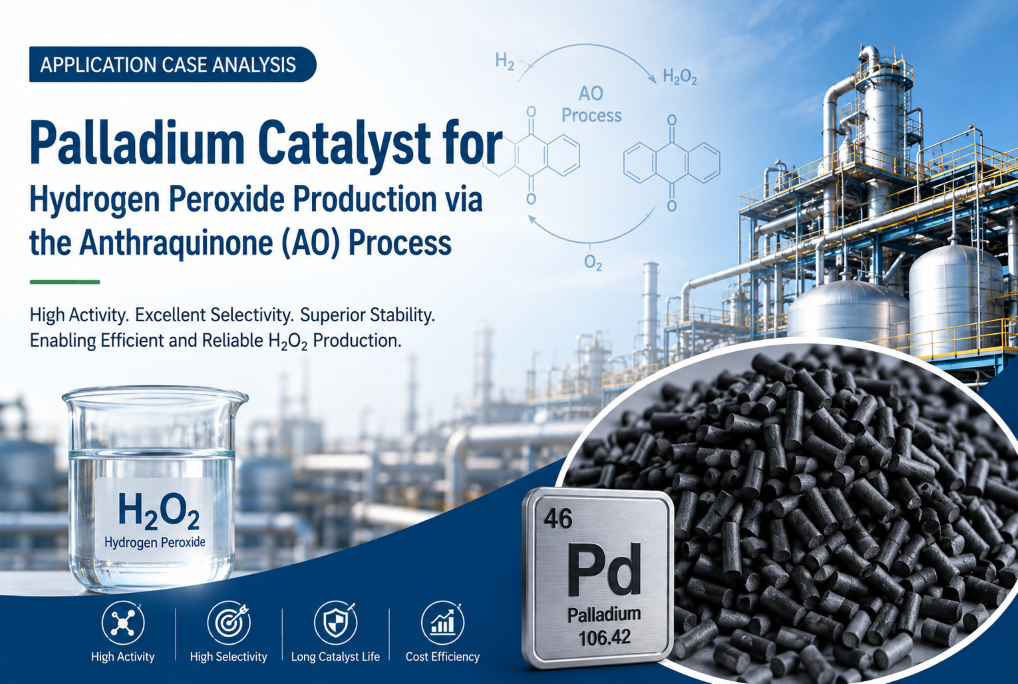
The anthraquinone (AO) process is the dominant industrial route for hydrogen peroxide (H₂O₂) production worldwide. A working solution carrying anthraquinone derivatives is cycled through hydrogenation, oxidation, and extraction stages, with H₂O₂ pulled out at the extraction step and the depleted working solution sent back to be regenerated and reused. Sorbsieve has already covered the hydrogenation side of this process in a separate application case built around Palladium Catalyst. This case looks at a different stage of the same process: the post-extraction purification of the working solution itself, where activated alumina does the work.
The Problem: A Working Solution That Degrades With Every Cycle
Every pass through the AO cycle leaves the working solution carrying more than just regenerated anthraquinone. Trace alkali (lye) from upstream washing steps, water picked up during extraction, and small amounts of undecomposed H₂O₂ all accumulate in the solution if nothing removes them. Left unchecked, this buildup degrades the working solution's performance over successive cycles — alkali residue and moisture interfere with the hydrogenation and oxidation chemistry, while carried-over H₂O₂ represents lost product and an added load on later processing stages.
Plants running the AO process address this with a purification step — commonly referred to as a clay bed or clay tower — positioned after extraction and before the working solution re-enters the hydrogenation loop.
Activated Alumina's Role in the Clay Bed
Activated alumina is the core adsorbent packed into this purification bed, and it performs several functions on the working solution in a single pass:
- Alkali removal — Activated alumina adsorbs residual lye carried over from upstream washing, bringing alkalinity down from a starting level of roughly 0.1 g/L to below 0.005 g/L, low enough for the solution to safely re-enter hydrogenation.
- Moisture removal — It adsorbs both water entrained during extraction and water generated as a byproduct of H₂O₂ decomposition, bringing water content in the working solution down to a low level suitable for the next process cycle.
- Residual H₂O₂ decomposition — Activated alumina decomposes a meaningful portion of the H₂O₂ still carried in the working solution after extraction, reducing losses that would otherwise be dragged into downstream steps.
- Mechanical filtration — As a packed bed, the alumina layer also physically filters particulates and fine solids out of the circulating solution.
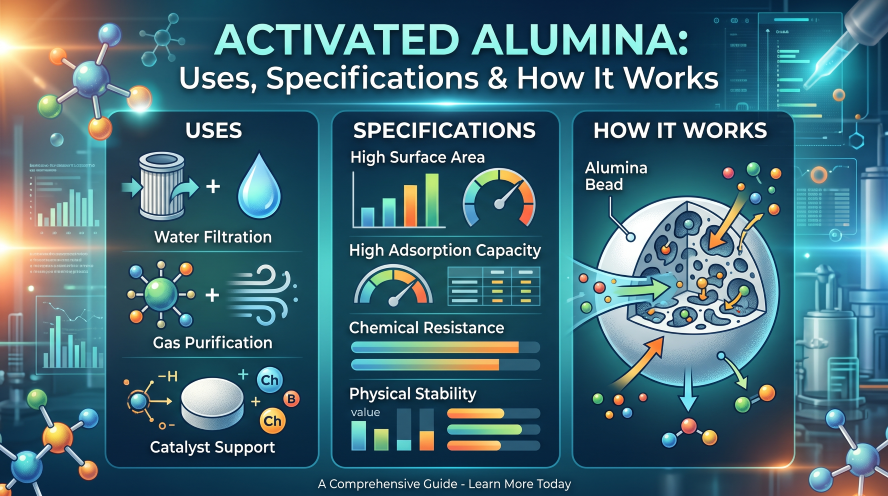
This combination — alkali scavenging, drying, residual peroxide decomposition, and filtration — is what makes activated alumina the standard packing material for this stage rather than a single-function desiccant. High surface area and well-developed pore volume are what give the material its adsorption capacity for both alkali and moisture in this application.
Why This Differs From the Hydrogenation-Stage Application
It's worth being explicit about how this use of activated alumina relates to the AO process case Sorbsieve already covers for Palladium Catalyst, since both sit within the same overall production process:
- Palladium Catalyst drives the hydrogenation reaction itself — converting anthraquinone to anthrahydroquinone at the front end of the cycle. See our related case, Palladium Catalyst for Hydrogen Peroxide Production via the Anthraquinone (AO) Process, for that side of the process.
- Activated alumina, by contrast, works downstream of extraction, cleaning up the depleted working solution before it goes back for another hydrogenation pass.
These are two different unit operations serving the same production process, not competing solutions to the same problem — which is why they are covered as two separate application cases rather than one combined write-up.
Operating Considerations
The clay bed operates as a fixed packed bed that the working solution flows through during each regeneration pass. Over time, the alumina's capacity for alkali and moisture adsorption is consumed, and plants monitor working solution quality indicators — alkalinity, water content, and overall solution performance — to judge when the bed material needs replacement. Because the packing sits directly in the working-solution recycle loop, consistent purification performance here has a direct bearing on how well the hydrogenation and oxidation steps perform downstream.
Recommended Products from Sorbsieve
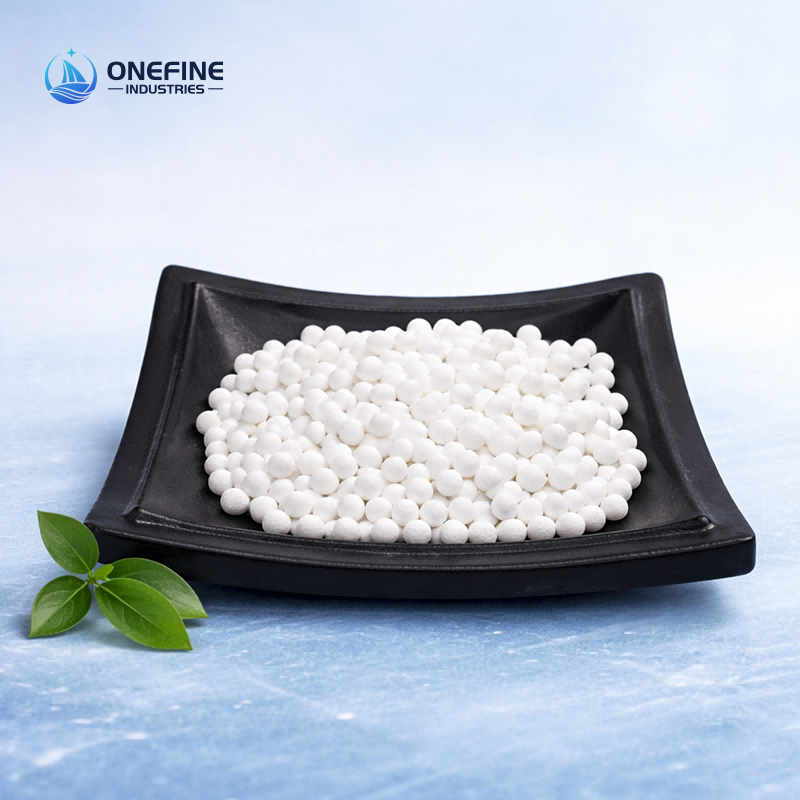
- Activated Alumina for Purification — the adsorbent packing used in AO process clay beds for alkali removal, drying, and residual peroxide decomposition
Looking for Bulk Supply of Activated Alumina?
Sorbsieve is a trusted bulk supplier of Activated Alumina and complete industrial adsorbents, serving industrial buyers across the Middle East.
We provide:
- ✅ Container-level supply (20'GP / 40'GP / 40'HQ)
- ✅ Full documentation (COA / TDS / SDS / COO)
- ✅ Multiple packaging options
- ✅ Technical support for activated alumina selection and system optimization
- ✅ Fast quote response for industrial inquiries
Contact our team for bulk pricing, product samples, and technical consultation.