What is Activated Alumina? Uses, Specifications & How It Works
Introduction
Key Takeaways :
- Dual-Pore Adsorption Mechanism: Activated alumina (γ-Al2O3) combines micropores (2–5 nm) and mesopores (5–50 nm) with a high specific surface area (≥300 m2/g) to selectively chemisorb water, fluoride ions, and acid gases while ignoring non-polar hydrocarbons.
- Liquid Water Tolerance (vs. Silica Gel): Unlike standard silica gel which softens or fractures in liquid water, activated alumina maintains structural integrity—making it the preferred choice for compressed air dryers (TSA/PSA) and drinking water defluoridation.
- Full Thermal Regenerability: Saturated alumina can be regenerated at 177–316°C (350–600°F) to restore >95% of its original adsorption capacity across thousands of cycles.
- Grade & Size Selection: 3–5 mm beads offer high crush strength (≥150 N) for TSA/PSA air dryers (-70°C dew point) and guard beds; 1.6–2.5 mm low-sodium beads (Na2O ≤0.3%) are required for H2O2 catalyst carrier duty to prevent active metal poisoning.
- Guard Bed Synergy: Widely deployed as a sacrificial protective pre-layer upstream of molecular sieves (13X / CMS) to intercept liquid condensation and heavy aerosols, extending downstream zeolite bed life by 2–3x.
Activated alumina is one of the most widely used industrial desiccants and adsorbents, valued for its mechanical strength, full thermal regenerability, and ability to work directly in contact with liquid water—something silica gel and many other desiccants cannot do. Manufactured by thermally activating aluminum hydroxide, it forms a highly porous γ-Al₂O₃ structure with a specific surface area of 300 m²/g or more. This guide covers how activated alumina works, its key specifications, how it compares to other desiccants, and how to select the right grade for compressed air drying, water defluoridation, and gas purification applications.
How Does Activated Alumina Work?
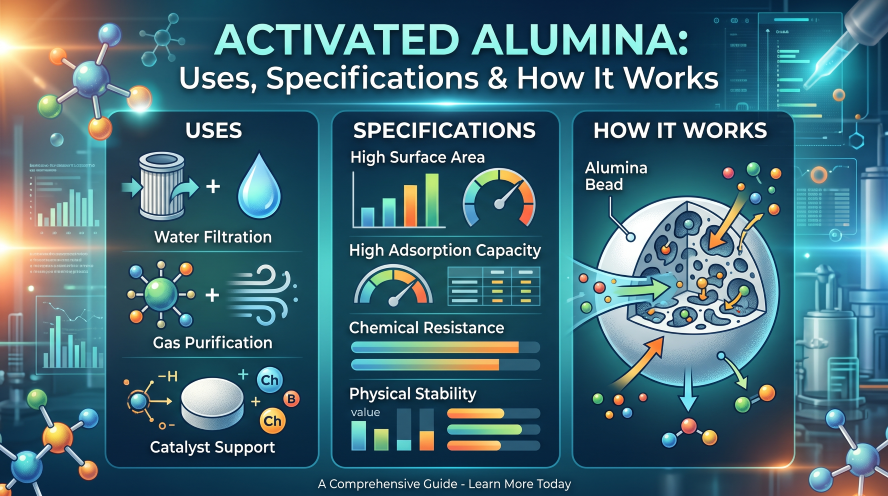
Activated alumina removes moisture and polar contaminants through physical and chemical adsorption rather than filtration. Its multi-level pore structure—combining micropores (2-5 nm) and mesopores (5-50 nm)—gives water molecules, fluoride ions, and other polar compounds a huge internal surface area to bond to. Because the γ-Al₂O₃ surface is strongly polar, it selectively attracts water, hydrogen fluoride, and organic acids while allowing non-polar hydrocarbons to pass through largely untouched.
This adsorption is reversible: heating the saturated material to roughly 177-316°C drives off the trapped moisture, restoring most of its original capacity. That regenerability is what makes activated alumina economical for continuous industrial use, supporting thousands of adsorption-regeneration cycles over its service life.
Key Specifications to Know
When evaluating activated alumina for a project, four properties matter most:
- Surface area (typically ≥300 m²/g) — determines adsorption capacity
- Crushing strength (varies by particle size) — determines resistance to pulverization under pressure cycling
- Regeneration temperature range (typically 177-316°C) — determines energy cost of thermal cycling
- Na₂O content — low-sodium grades are required for catalyst carrier applications to avoid poisoning active metal sites
Full spec tables, particle size options, and physical property test methods are available on our Activated Alumina for Purification product page.
Activated Alumina vs Silica Gel vs Molecular Sieve
Buyers often need to choose between three common desiccant types, and the right answer depends on the application:
- Activated alumina: Broad pore distribution, high mechanical strength, tolerates direct contact with liquid water without softening or cracking—best for compressed air drying and water treatment
- Silica gel: Lower cost but softens and can fracture when exposed to liquid water; suited to packaging and low-humidity storage rather than industrial process streams
- Molecular sieve (such as 13X molecular sieve): Uniform crystalline micropores give size-selective adsorption and much deeper drying, down to dew points around -100°C, but at higher cost and typically used after a bulk-moisture pre-stage
In practice, many systems combine two of these: activated alumina removes bulk moisture first, then molecular sieve handles the final deep-drying stage. This layered approach protects the more expensive molecular sieve bed and extends its service life.
Where Is Activated Alumina Used?
The same polar adsorption mechanism supports several distinct industrial applications:
- Compressed air drying: Twin-tower TSA/PSA dryers use activated alumina to bring dew points down to -40°C to -70°C for instrument and process air
- Drinking water defluoridation: Removes excess fluoride from groundwater in high-fluoride regions, a widely used and economical treatment method
- Catalyst carrier: Supports the working solution in the anthraquinone process for hydrogen peroxide production
- Guard bed protection: Installed upstream of carbon molecular sieve and other sensitive adsorbents to intercept liquid water and particulates before they reach more expensive downstream media
- Natural gas and LPG dehydration: Protects pipelines and storage systems from moisture-related corrosion and hydrate formation
How to Choose the Right Grade
Selection generally comes down to particle size and sodium content:
- 3-5mm beads suit compressed air drying, defluoridation, and general gas drying where higher crush strength is needed
- 1.6-2.5mm beads suit catalyst carrier use, fine filtration, and applications with tighter pressure-drop requirements
- Low-sodium grades (Na₂O ≤0.3%) are required wherever the alumina will be in contact with catalytic metal sites, to avoid poisoning them
- For deep-drying needs beyond what activated alumina alone can achieve, pairing it with oxygen generator molecular sieve or carbon molecular sieve in a multi-stage bed is the standard approach
Recommended Products from Sorbsieve
- Activated Alumina for Purification — full specifications and packaging options (link above)
- Carbon Molecular Sieve for Nitrogen Generation (CMS) (link above)
- 13X Molecular Sieve (Sodium X Type) (link above)
Frequently Asked Questions
Is activated alumina reusable? Yes. It can be thermally regenerated by heating to 177-316°C, which drives off adsorbed moisture and restores most of the original adsorption capacity. This makes it economical for continuous industrial use across thousands of cycles.
Does activated alumina work in liquid water applications? Yes—this is one of its key advantages over silica gel. Activated alumina does not soften, swell, or crack when exposed to liquid water, which is why it's the standard choice for drinking water defluoridation and other liquid-phase treatment.
Can activated alumina and molecular sieve be used together? Yes, this is a common design in compressed air and gas drying systems. Activated alumina removes bulk moisture in a first stage, then molecular sieve handles final deep drying, protecting the molecular sieve bed and reducing its regeneration load.
What particle size should I choose? It depends on the application. 3-5mm beads are standard for compressed air drying and defluoridation; 1.6-2.5mm beads are typically used for catalyst carrier and fine filtration applications where surface area per unit volume matters more than crush strength.
Looking for Bulk Supply of Activated Alumina?
Sorbsieve is a trusted bulk supplier of activated alumina and complete industrial adsorbents, serving industrial buyers across the Middle East.
We provide:
- ✅ Container-level supply (20'GP / 40'GP / 40'HQ)
- ✅ Full documentation (COA / TDS / SDS / COO)
- ✅ Multiple packaging options
- ✅ Technical support for grade selection and system optimization
- ✅ Fast quote response for industrial inquiries
Contact our team for bulk pricing, product samples, and technical consultation.
Related Products
Activated Alumina for Purification
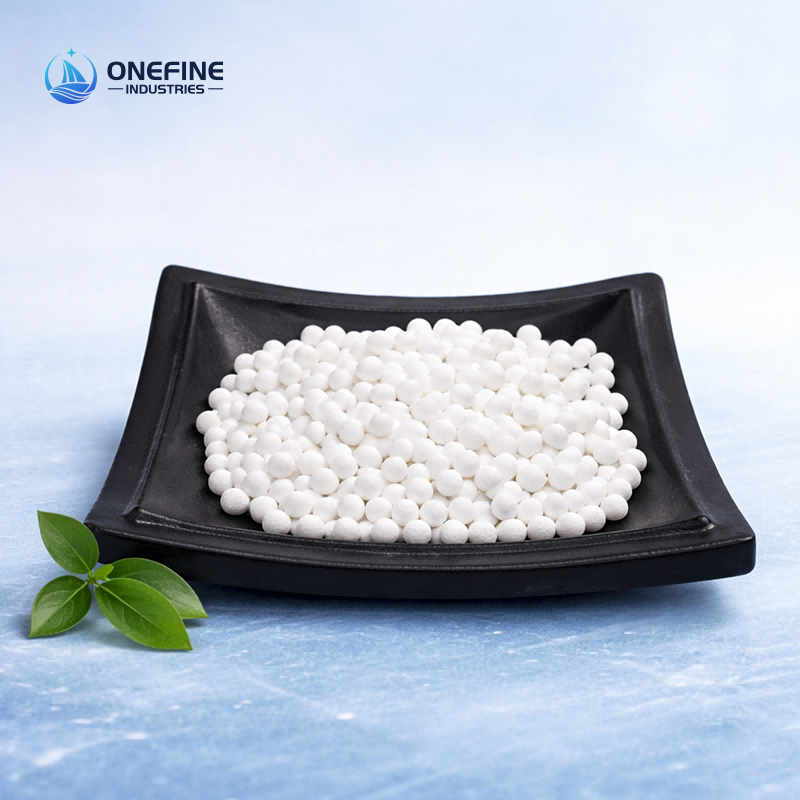
High-performance activated alumina (γ-Al₂O₃) adsorbent and desiccant for industrial gas/liquid drying, water defluoridation, and purification. White spherical beads with high surface area (≥300 m²/g), excellent crush strength, and full thermal regenerability. Available in multiple particle sizes for compressed air dryers, water treatment, and catalyst carrier applications.
Carbon Molecular Sieve for Nitrogen Generation (CMS)
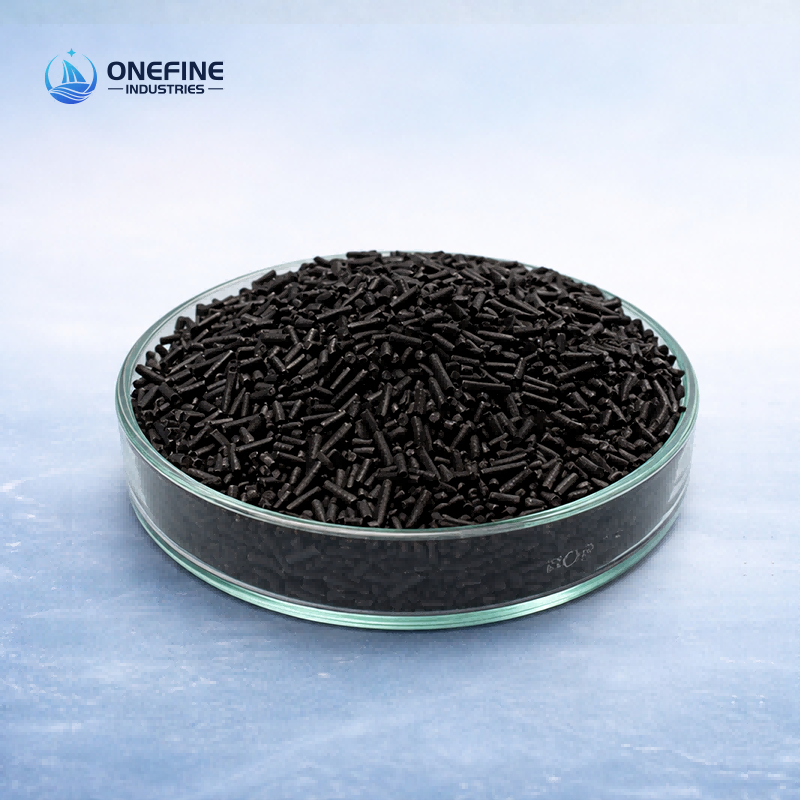
High-performance carbon molecular sieve (CMS) for PSA nitrogen generators. Uniform micropore distribution (0.3-0.5nm) ensures efficient oxygen-nitrogen separation. Delivers 95-99.999% nitrogen purity with 3-5 year service life. Bulk supply for industrial buyers worldwide.
13X Molecular Sieve (Sodium X Type)
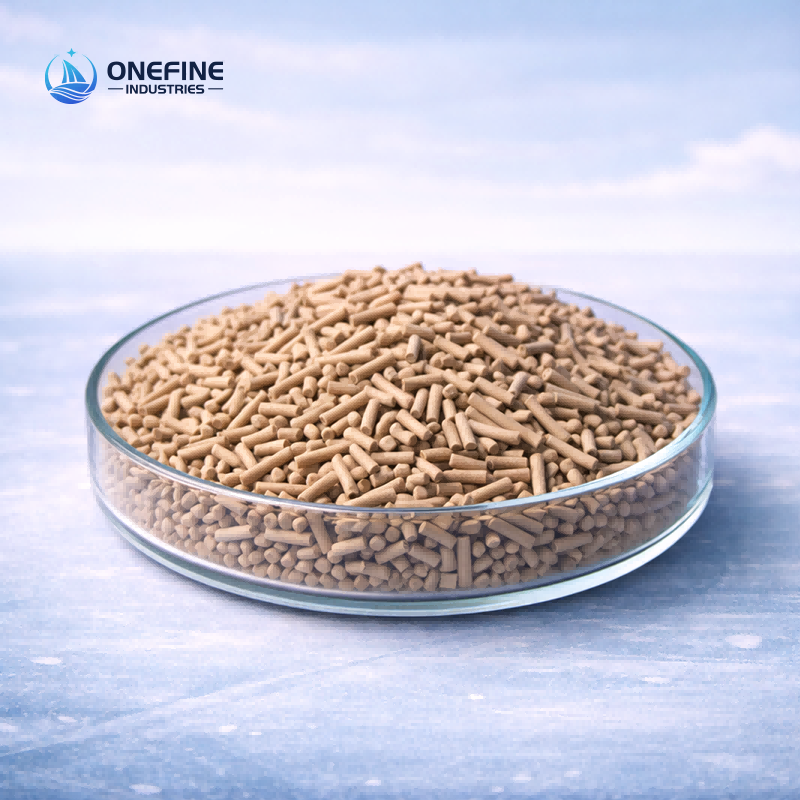
Sodium-type 13X molecular sieve with 10Å pore size for air separation pre-purification, natural gas sweetening, solvent recovery, and industrial gas drying. High adsorption capacity, industrial-grade performance.
Related Reading
Carbon Molecular Sieve: The Ultimate Guide to PSA Nitrogen Generation
A complete guide to carbon molecular sieve technology for on-site PSA nitrogen generation. Learn how CMS works based on kinetic diffusion separation, its key benefits including 50-90% cost savings vs cylinder/liquid nitrogen, industrial applications across food & beverage, chemical, electronics, pharmaceutical and mining industries, how to select the right CMS grade, maintenance tips, and comparisons with membrane and cryogenic nitrogen generation methods.
What is 13X Molecular Sieve? Uses, Specifications & How It Works
Everything you need to know about 13X molecular sieves: how they work, key properties, common applications in air separation pre-purification, natural gas sweetening, solvent recovery and industrial gas drying, plus regeneration methods and comparison with other sieve types.
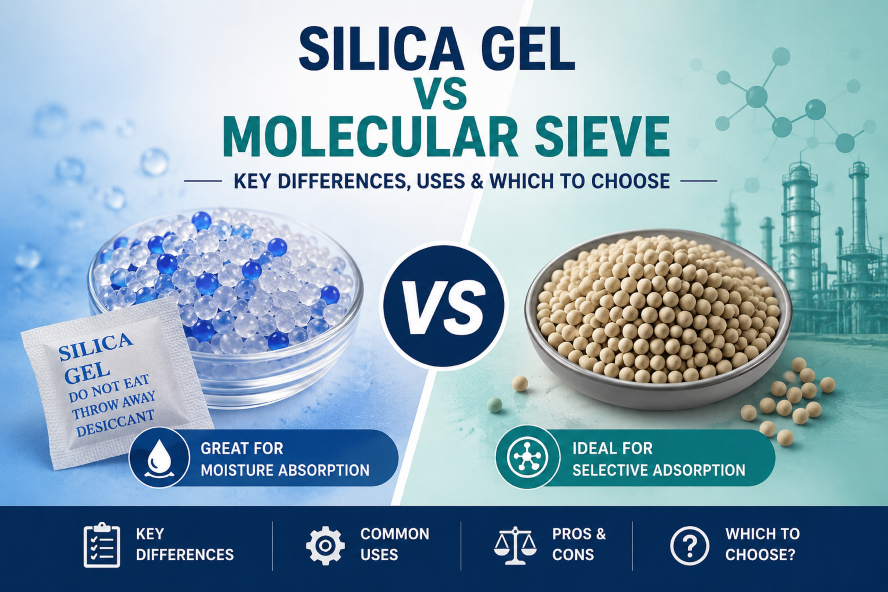
Silica Gel vs Molecular Sieve: Key Differences, Uses & Which to Choose
Silica gel and molecular sieve are both common desiccants, but they differ significantly in structure, adsorption performance, and ideal applications. This guide breaks down the key differences to help you choose the right one.