Product Guides
In-depth guides covering how each molecular sieve type works, its specifications, and applications.
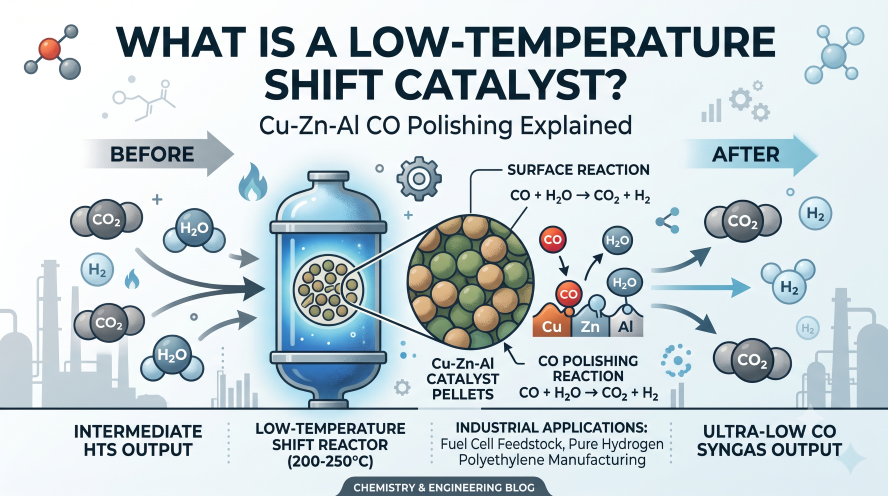
What Is a Low Temperature Shift Catalyst? Cu-Zn-Al CO Polishing Explained
A practical guide to how Cu-Zn-Al low temperature shift catalysts work, why sulfur protection is critical, and how LTS completes a two-stage shift train.
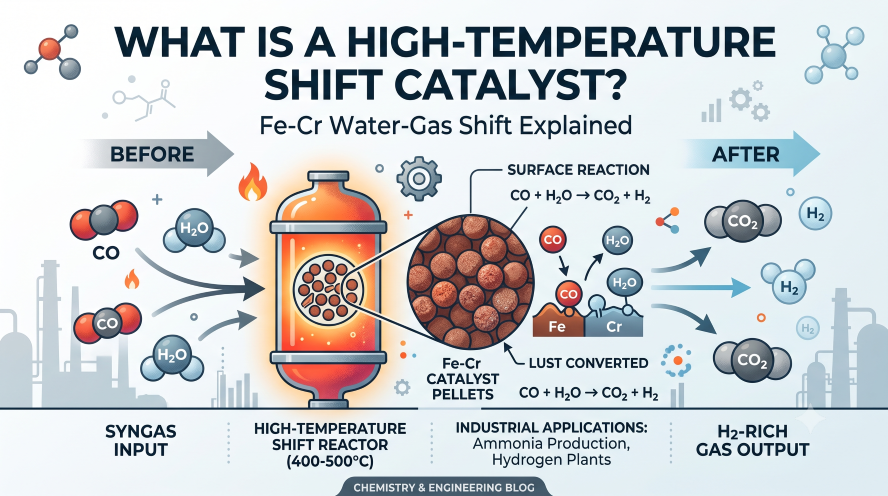
What Is a High-Temperature Shift Catalyst? Fe-Cr Water-Gas Shift Explained
A practical guide to how Fe-Cr high-temperature shift catalysts work, why they're built the way they are, and how HTS fits alongside LTS in a complete shift train.
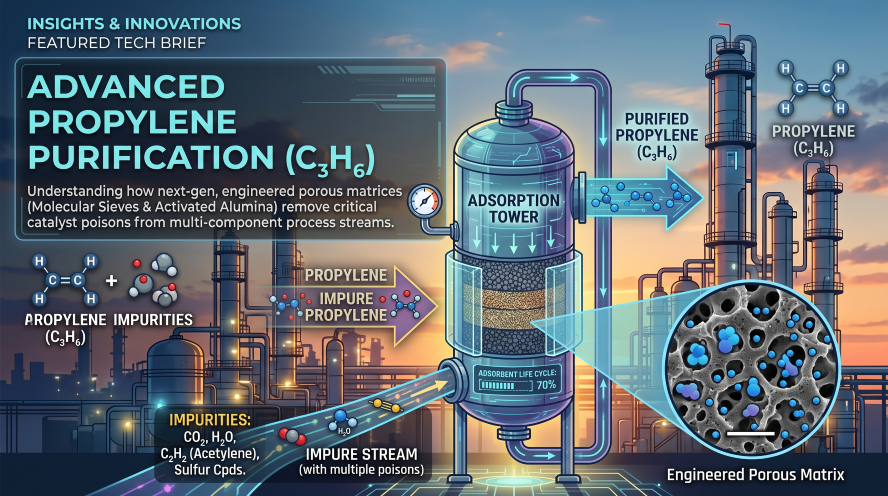
What Is a Propylene Purification Adsorbent?
A guide to how CuO-ZnO adsorbents remove CO and trace contaminants from polymer-grade propylene, why polymerization catalysts need this protection, and where this guard bed fits in a typical purification train.
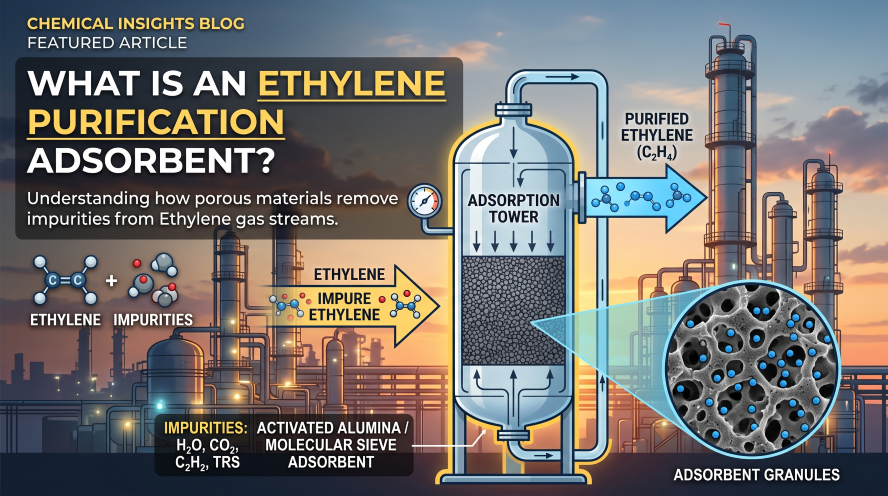
What Is an Ethylene Purification Adsorbent?
A guide to how CuO-ZnO adsorbents remove CO and trace contaminants from polymer-grade ethylene, why polymerization catalysts need this protection, and where this guard bed fits in a typical purification train.
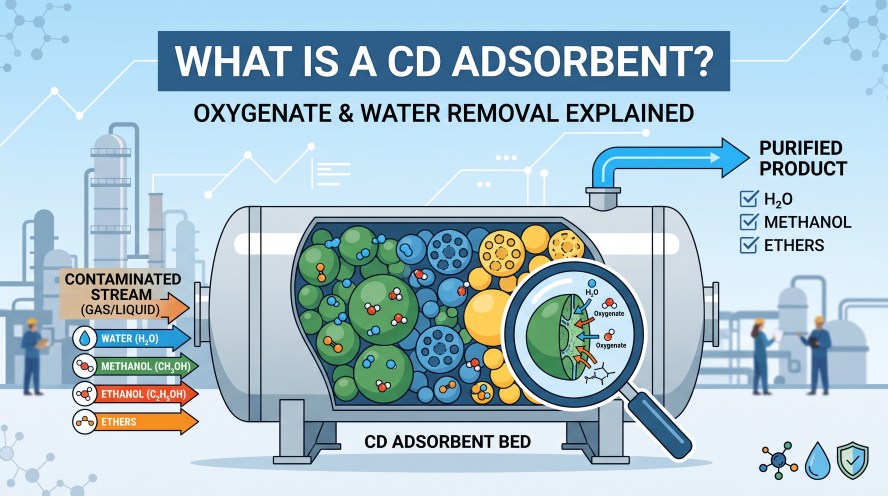
What Is a CD Adsorbent? Oxygenate & Water Removal Explained
How activated alumina protects the carbon molecular sieve bed in a PSA nitrogen generation train — bulk moisture removal upstream of precision gas separation.
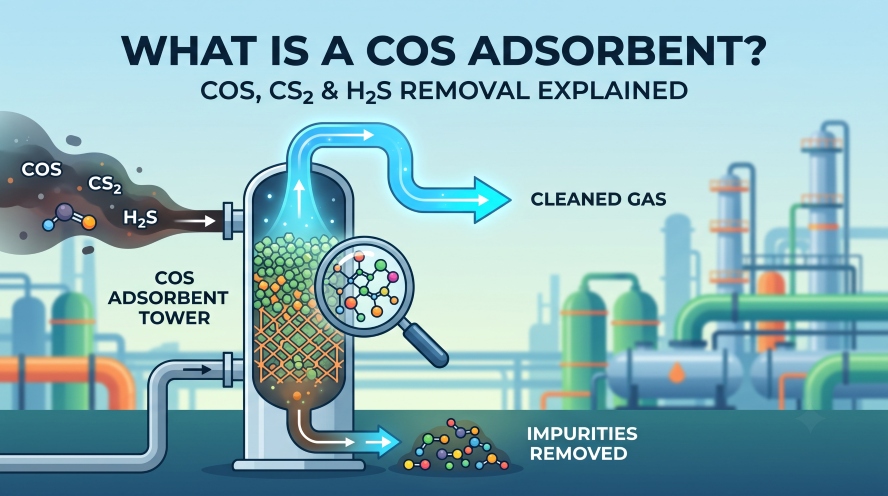
What Is a COS Adsorbent? COS, CS2 & H2S Removal Explained
A COS adsorbent removes COS, CS2, and H2S from cracked C2–C4 olefin streams, protecting polymerization catalysts. Learn how it works and where it fits in the purification train.
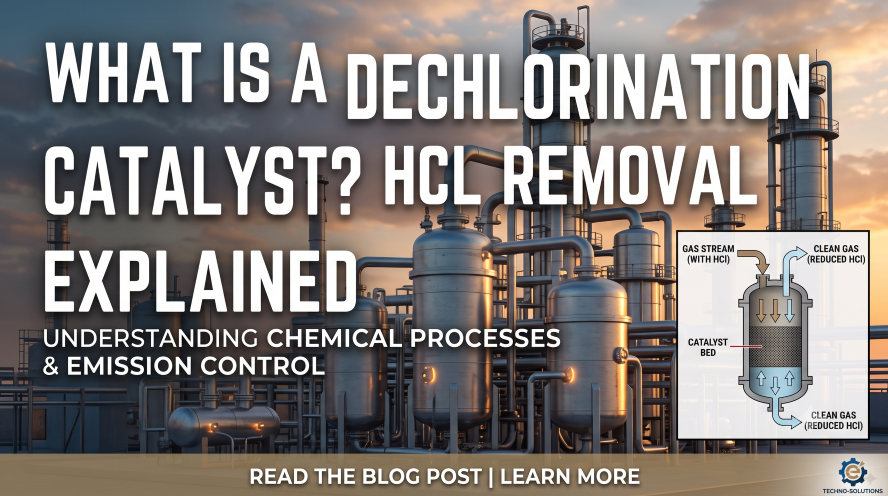
What Is a Dechlorination Catalyst? HCl Removal Explained
Trace hydrogen chloride (HCl) and organochlorides threaten Continuous Catalytic Reforming, Isomerization, PDH, and Syngas purification units. This guide explains dechlorination catalyst chemistry, green oil control, and guard bed operation practices.
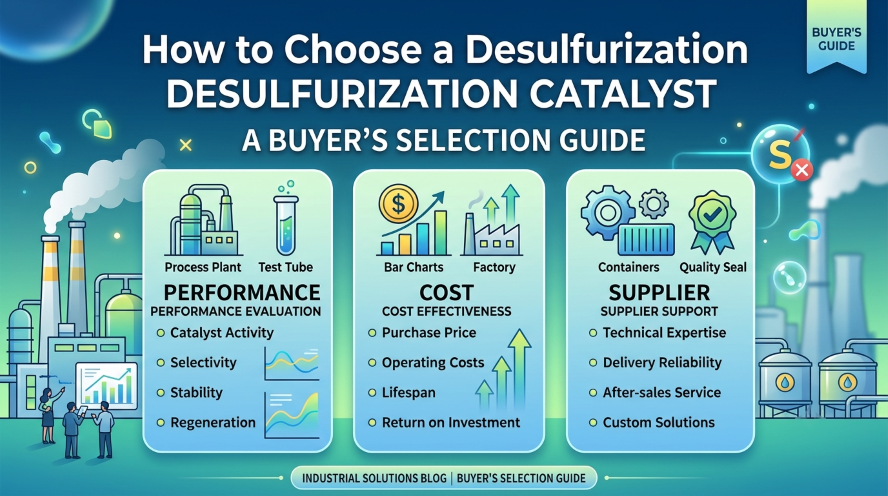
How to Choose a Desulfurization Catalyst: A Buyer's Selection Guide
With seven different desulfurization catalysts in play — each suited to a different feed condition or protection target — picking the right one comes down to a handful of questions about your process. This guide walks through the decision framework.
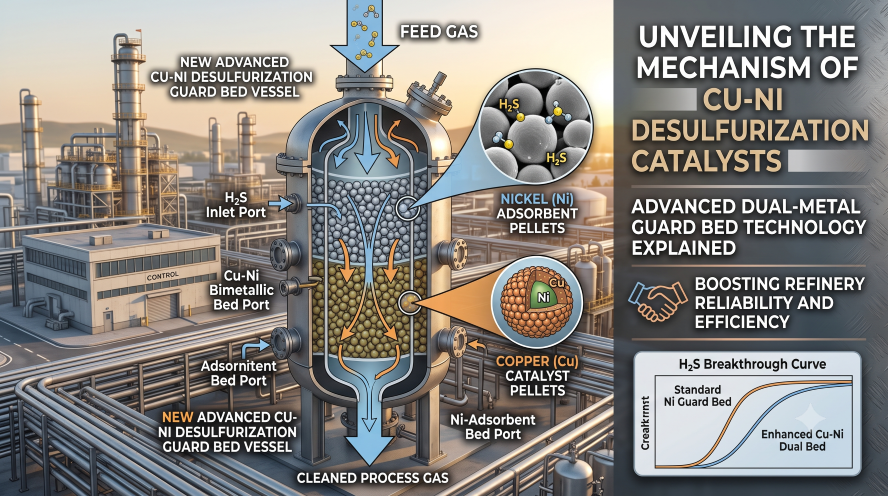
What Is a Cu-Ni Desulfurization Catalyst? Dual-Metal Guard Bed Technology Explained
A plain-language guide to copper-nickel (Cu-Ni) desulfurization catalysts: how the dual-metal mechanism works, why pre-reduced supply matters for commissioning time, and how to choose between a Cu-Ni system and a single-metal guard bed.
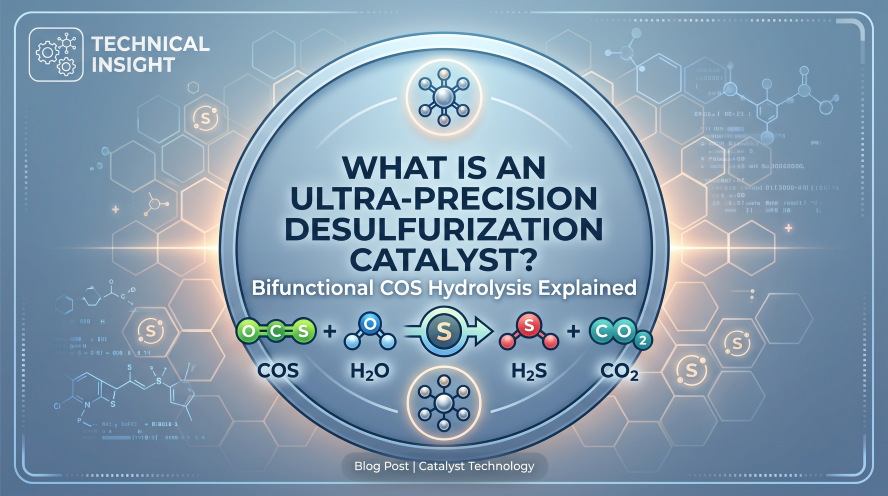
What Is an Ultra-Precision Desulfurization Catalyst? Bifunctional COS Hydrolysis Explained
A plain-language guide to how bifunctional ultra-precision desulfurization catalysts combine COS hydrolysis and H₂S adsorption in one reactor bed — and when this one-step approach makes more sense than conventional two-stage ZnO desulfurization.
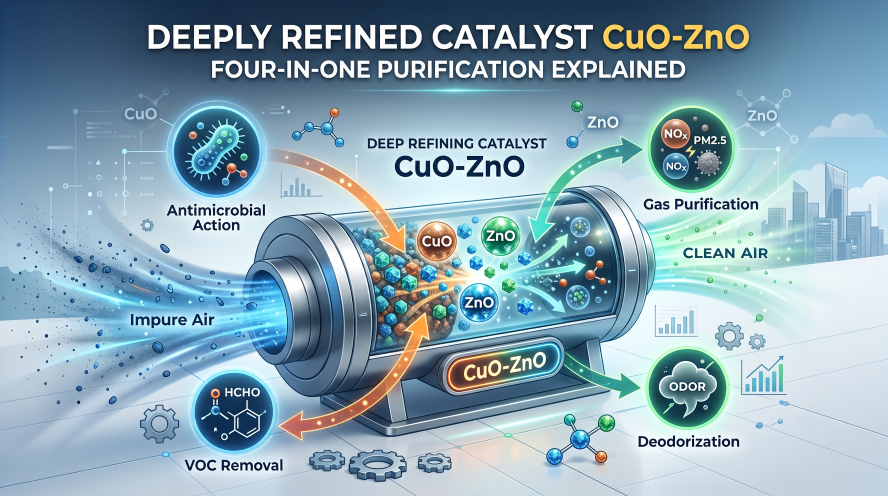
What Is a Deeply Refined Catalyst? CuO-ZnO Four-in-One Purification Explained
Not sure whether you need a dedicated desulfurization catalyst or a broader four-in-one guard bed? This guide explains how a CuO-ZnO deeply refined catalyst works and when it's the right choice for liquid hydrocarbon and synthesis gas purification.
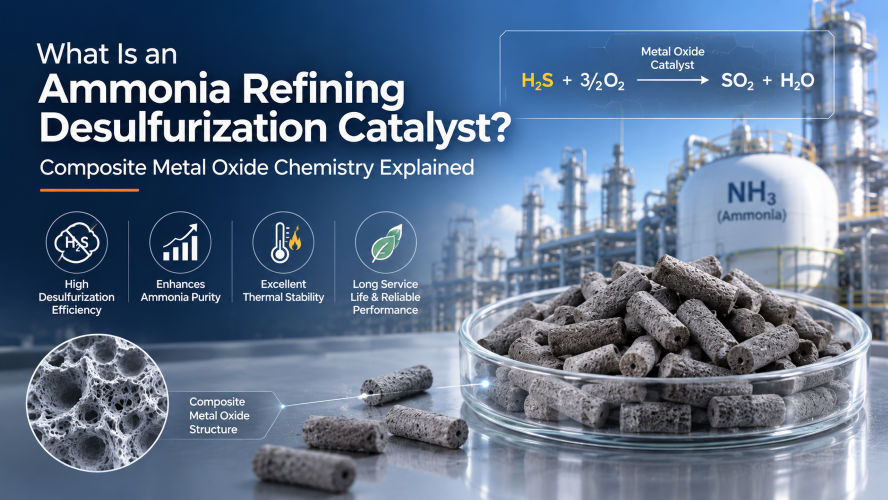
What Is an Ammonia Refining Desulfurization Catalyst? Composite Metal Oxide Chemistry Explained
Ammonia refining desulfurization catalysts use composite metal oxides to remove H₂S from wet, sour gas streams where conventional ZnO desulfurizers struggle. Learn how the chemistry works and when to choose this catalyst over standard alternatives.