Carbon Molecular Sieve for Nitrogen Generation (CMS)
High-performance carbon molecular sieve (CMS) for PSA nitrogen generators. Uniform micropore distribution (0.3-0.5nm) ensures efficient oxygen-nitrogen separation. Delivers 95-99.999% nitrogen purity with 3-5 year service life. Bulk supply for industrial buyers worldwide.
Get QuoteKey Attributes
- Uniform micropore size distribution for selective oxygen adsorption
- High adsorption capacity for excellent nitrogen yield
- Fast adsorption kinetics enabling short PSA cycle times
- High mechanical strength with low attrition rate
- Stable performance over thousands of adsorption-desorption cycles
- Good resistance to impurities and contaminants
- Wide nitrogen purity range from 95% to 99.999%
- Suitable for all industrial PSA nitrogen generator systems
- Cost-effective alternative to cylinder and liquid nitrogen supply
- Excellent regeneration characteristics
Applications
- On-site industrial nitrogen generation systems
- Food and beverage modified atmosphere packaging (MAP)
- Chemical and petrochemical pipeline purging & tank blanketing
- Electronics manufacturing soldering and wafer fabrication
- Pharmaceutical drug manufacturing and medical gas supply
- Metallurgy and metal heat treatment processes
- Mining fire prevention and explosion suppression
- Laser cutting and welding nitrogen supply
- Automotive parts heat treatment
- Glass manufacturing inert atmosphere
Product Description
What is Carbon Molecular Sieve?
Key Takeaways:
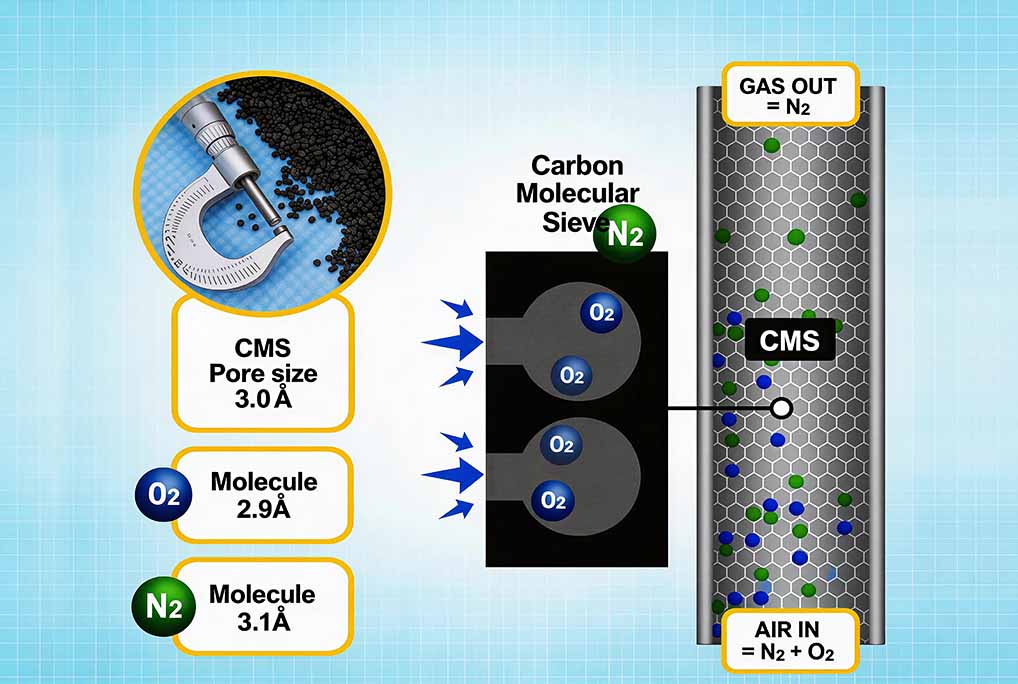
- Kinetic Separation Mechanism: Features 0.3-0.5 nm (3-5 Å) uniform micropores to selectively adsorb smaller oxygen molecules faster than nitrogen.
- Ultra-High Purity: Engineered to deliver 95% to 99.999% nitrogen purity for demanding industrial PSA systems.
- High Mechanical Strength: Low attrition rate (≤ 0.5%) ensures a stable 3-5 year service life under normal pressure swing cycles.
- Broad Applications: Ideal for on-site nitrogen generation in food packaging (MAP), electronics soldering, and petrochemical tank blanketing.
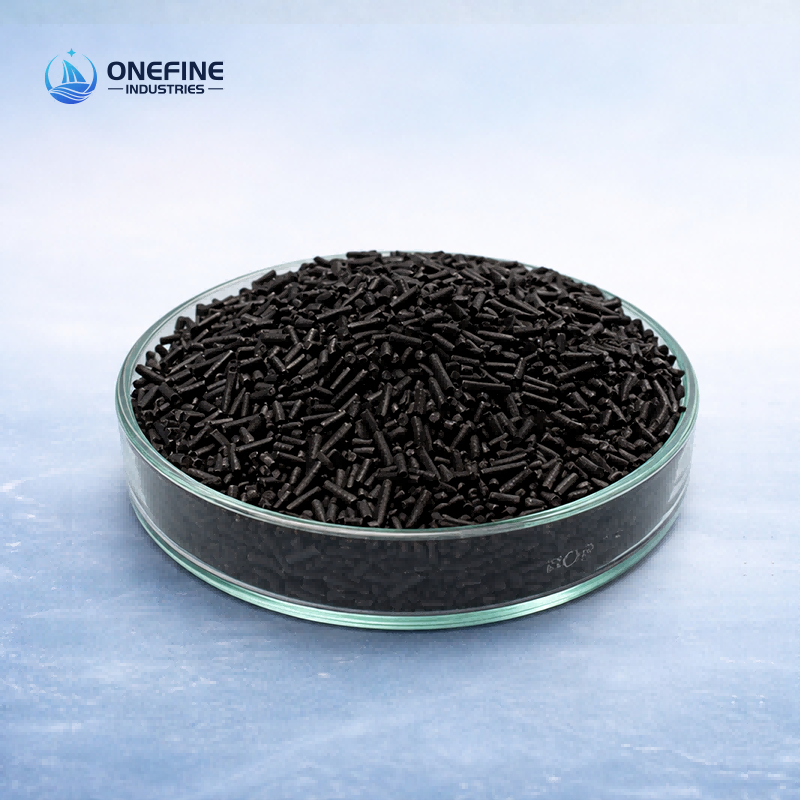
Carbon molecular sieve (CMS) is a premium adsorbent material specifically engineered for pressure swing adsorption (PSA) nitrogen generation systems. Made from high-quality carbonaceous raw materials through advanced carbonization and activation processes, our CMS features uniform micropore distribution, excellent adsorption selectivity, and high mechanical strength.
Unlike zeolite molecular sieves that separate gases based on equilibrium adsorption, carbon molecular sieves utilize a kinetic separation mechanism. The micropores are precisely sized at 0.3-0.5 nm, allowing smaller oxygen molecules (kinetic diameter ~3.46 Å) to diffuse into the pore structure much faster than larger nitrogen molecules (kinetic diameter ~3.64 Å). This size-selective adsorption property makes CMS highly efficient for nitrogen generation from compressed air.
Carbon molecular sieve is the core component of PSA nitrogen generators, responsible for separating oxygen and other impurities from compressed air to produce high-purity nitrogen gas. It is widely used in on-site nitrogen generation applications across various industries, delivering reliable performance and cost-effective nitrogen supply solutions. For a deeper technical dive into how it works and how to choose the right grade, see our Carbon Molecular Sieve Guide.
Key Benefits
High Separation Efficiency
- Uniform micropore distribution ensures consistent oxygen-nitrogen separation
- High adsorption capacity maximizes nitrogen yield per unit of sieve material
- Fast adsorption kinetics enable shorter cycle times and higher system productivity
- Achieves nitrogen purity levels from 95% up to 99.999%
Long Service Life
- High mechanical strength resists crushing and attrition during operation
- Low wear rate minimizes dust formation and maintains bed integrity
- Stable performance over thousands of adsorption-desorption cycles
- Typical service life of 3-5 years under normal operating conditions
- Good resistance to contaminants reduces degradation rate
Cost-Effective Operation
- On-site nitrogen generation costs 50-90% less than cylinder or liquid nitrogen
- High nitrogen recovery rate reduces compressed air consumption
- Long service life reduces replacement frequency and maintenance costs
- Fast payback period typically 12-24 months for most systems
Reliable Performance
- Consistent nitrogen purity under varying operating conditions
- Good regeneration characteristics with pressure swing cycling
- Stable performance across a wide range of temperatures and pressures
- Suitable for continuous, 24/7 industrial operation
Versatile Application
- Compatible with all PSA nitrogen generator designs
- Available in multiple particle sizes for different system requirements
- Suitable for both standard and high-purity nitrogen applications
- Works effectively in small laboratory units to large industrial systems
Working Principle
Carbon molecular sieve separates oxygen and nitrogen based on the kinetic difference in diffusion rates between the two gas molecules within the microporous carbon structure.
When compressed air enters a CMS adsorption bed, oxygen molecules, being slightly smaller, diffuse into the micropores of the carbon molecular sieve much faster (approximately 30-40 times faster) than nitrogen molecules. During the adsorption phase, oxygen is preferentially adsorbed onto the internal surface area of the CMS, while nitrogen remains in the gas phase and is collected as product gas.
When the adsorption pressure is reduced during the desorption (regeneration) phase, the adsorbed oxygen is released from the CMS, regenerating the adsorbent for the next cycle. This pressure swing adsorption process enables continuous, efficient production of high-purity nitrogen from compressed air.
Modern PSA nitrogen generators typically use two or more adsorbent beds that alternate between adsorption and regeneration phases, ensuring a continuous supply of nitrogen gas. For oxygen generation using a similar PSA principle, see our Oxygen Generator Molecular Sieve.
Applications
Food and Beverage Industry Carbon molecular sieve nitrogen generators are widely used in food and beverage processing for modified atmosphere packaging (MAP), which extends shelf life by displacing oxygen in food packages. Other applications include beverage dispensing (nitro coffee, craft beer), edible oil processing nitrogen blanketing, and grain storage atmosphere control.
Chemical and Petrochemical Industry In chemical and petrochemical applications, CMS-generated nitrogen provides inert atmosphere for tank blanketing, pipeline purging, and explosion protection. Nitrogen is also used as a carrier gas for various chemical processes, in refinery operations for catalyst regeneration and hydrocracking, and for preventing oxidation and polymerization of chemical products.
Electronics Manufacturing The electronics industry requires high-purity nitrogen for soldering processes (wave soldering and reflow soldering) to prevent oxidation and improve solder joint quality. Other applications include semiconductor wafer fabrication, chemical vapor deposition, ion implantation, PCB manufacturing, and component packaging.
Pharmaceutical and Medical Industry Pharmaceutical manufacturing uses nitrogen as an inert gas to prevent oxidation and ensure product stability. CMS nitrogen generators also supply medical-grade nitrogen for hospital central gas systems, medical device packaging (nitrogen atmosphere packaging protects sterile devices from contamination), and cryopreservation of biological samples.
Metallurgy and Heat Treatment In metallurgical applications, carbon molecular sieve nitrogen provides a protective atmosphere for metal heat treatment processes including annealing, hardening, and sintering, preventing oxidation and decarburization. It's also used for metal powder production via nitrogen atomization and aluminum degassing and fluxing.
Mining and Coal Industry CMS nitrogen generators play a critical role in mining safety. Nitrogen injection into goaf areas prevents spontaneous combustion in coal mines. Nitrogen inertization also reduces the risk of gas and dust explosions in underground mines and is used for extinguishing underground mine fires by displacing oxygen.
Laser Cutting and Welding High-purity nitrogen is used as an assist gas in laser cutting and welding applications. Nitrogen provides a clean, oxide-free cut edge and prevents discoloration of the weld area. CMS nitrogen generators supply the consistent, high-purity nitrogen required for these precision applications.
Selection Guide
Nitrogen Purity Requirement
The first and most critical factor is your required nitrogen purity:
- Standard CMS grades: Best for 95-99.5% nitrogen purity, offering the best balance of performance and cost for most industrial applications
- High-purity CMS grades: Optimized for 99.9-99.999% nitrogen purity, with enhanced separation efficiency for higher purity requirements
- Ultra-high purity CMS: For applications requiring 99.999%+ purity, often used in combination with additional purification steps
Higher purity requirements generally need more sieve material and result in lower nitrogen recovery rates.
Particle Size Selection
Carbon molecular sieve is available in different particle size ranges:
- 0.8-1.2 mm: Smaller particles with faster adsorption kinetics, suitable for smaller systems with shorter cycle times
- 1.2-2.0 mm: Standard size for most industrial PSA systems, offering a good balance of adsorption kinetics and pressure drop
- Custom sizes: Available upon request for specialized system designs
Select particle size based on your PSA system design, flow rate, and cycle time parameters.
For pretreatment to protect your CMS from moisture and contaminants, see our Activated Alumina for Purification — commonly used as a pre-drying stage ahead of CMS.
System Operating Parameters
Consider your PSA system's operating parameters when selecting CMS:
- Operating pressure: Most CMS grades perform optimally at 0.6-1.0 MPa
- Cycle time: Shorter cycle times may benefit from smaller particle sizes with faster kinetics
- Feed air quality: If your feed air contains higher levels of contaminants, ensure proper pretreatment to protect the CMS
Mechanical Quality
- High crushing strength resists breakage during loading and operation
- Low attrition rate minimizes dust formation and maintains bed integrity
- Good sphericity ensures uniform packing and gas distribution
Quantity Sizing
The amount of carbon molecular sieve required depends on:
- Required nitrogen flow rate and purity
- System operating pressure and cycle time
- CMS grade and performance characteristics
- Desired service life between replacements
Always follow equipment manufacturer recommendations for CMS quantity and replacement intervals. For a general introduction to nitrogen-generation-grade adsorbents and comparison with oxygen-generation-grade zeolites, see our 13X Molecular Sieve, commonly paired with CMS in dual-gas PSA system designs.
Packaging & Shipping
We offer flexible packaging and shipping options to suit your project scale and logistics requirements.
Standard Packaging:
- 25 kg drums (moisture-proof, suitable for trial orders and small batches)
- 150 kg steel drums (standard bulk packaging for industrial orders)
- 500 kg super sacks (most popular for industrial bulk orders)
- 1000 kg jumbo bags (for large-scale projects)
- Custom packaging available on request
Minimum Order Quantity (MOQ):
- 1 ton (entry-level orders accepted — perfect for first-time customers)
- 5+ tons (standard bulk orders)
- Container-level supply for long-term partnerships
Container Loading Capacity:
- 20'GP container: 18-20 tons (palletized)
- 40'GP container: 22-24 tons (palletized)
- 40'HQ container: 24-26 tons
Loading Ports: We ship from major Chinese ports based on your requirements: Shanghai Port (East China), Qingdao Port (Shandong, North China), Tianjin Port (North China), Ningbo Port (East China), Shenzhen Port (South China).
Lead Time:
- Stock orders: 7-15 days from payment confirmation
- Made-to-order: 20-30 days
Shipping Terms: FOB / CIF / CFR / EXW — flexible based on your destination and preferences.
Documents & Certificates
We provide complete documentation for every order:
📄 Technical Data Sheet (TDS) — Confirmed with you during product selection, ensuring exact specifications match your application requirements.
📄 Safety Data Sheet (SDS) — Provided before shipment, meeting all international transportation and handling standards.
📄 Certificate of Analysis (COA) — Issued for each production batch, delivered with your shipment for full quality traceability.
Additional documents available on request: Certificate of Origin (COO), Packing List, Commercial Invoice, Third-party Inspection Report (SGS / BV), Form E (for Middle East destinations with applicable tariff benefits).
Operation & Maintenance
Feed Air Treatment
Proper feed air treatment is the most important factor in maximizing CMS service life:
- Particulate filters: Remove dust and particles from the inlet air to prevent clogging
- Oil removal filters: Remove oil droplets and oil vapor from compressed air, as oil can coat the CMS surface and reduce adsorption capacity
- Dryers: Remove water vapor from the air, as moisture can reduce adsorption performance
- Regular filter replacement: Follow the manufacturer's recommended filter replacement schedule to maintain air quality
Contaminants in the feed air are the number one cause of premature CMS degradation.
Operating Parameters
Operate the PSA system within design parameters:
- Pressure: Don't exceed the maximum design pressure, as this can damage the sieve and vessels
- Temperature: Keep operating temperatures within the recommended range (typically 0-50°C). Higher temperatures reduce adsorption capacity
- Flow rate: Avoid significantly exceeding the design flow rate, as this can cause bed fluidization and sieve attrition
- Rapid pressure changes: Avoid fast pressure cycling that could cause mechanical stress on the sieve particles
Performance Monitoring
Regularly monitor key performance indicators to detect issues early:
- Nitrogen purity: A gradual decline in purity may indicate sieve degradation or contamination
- Nitrogen flow rate: Reduced flow capacity can signal sieve bed issues
- Pressure drop: Increasing pressure drop across the bed may indicate sieve crushing or dust accumulation
- Compressed air consumption: Increased air consumption per unit of nitrogen may indicate declining sieve efficiency
Sieve Handling and Replacement
When replacing or adding CMS:
- Handle sieve carefully to avoid breakage and attrition
- Follow proper loading procedures to ensure uniform packing and prevent channeling
- Use appropriate personal protective equipment (PPE) when handling dry sieve
- Avoid contamination of the sieve with dirt, oil, or other foreign materials
- Ensure proper bed compaction after loading to prevent fluidization
Frequently Asked Questions
Q: What is the typical service life of carbon molecular sieve?
A: Under normal operating conditions with proper air pretreatment, our carbon molecular sieve typically lasts 3-5 years. The actual service life depends on factors such as feed air quality, operating conditions, maintenance practices, and required purity levels.
Q: Can carbon molecular sieve be regenerated?
A: Yes, carbon molecular sieve is fully regenerable. In PSA systems, it is regenerated by reducing the pressure (depressurization) and purging with product nitrogen, which desorbs the adsorbed oxygen and other impurities. This regeneration happens automatically during each PSA cycle.
Q: What nitrogen purity can be achieved with CMS?
A: Depending on the PSA system design, operating parameters, and CMS grade, carbon molecular sieve can produce nitrogen with purity ranging from 95% to 99.999%. Higher purity generally requires more sieve material, longer adsorption times, and results in lower recovery rates.
Q: How do I know when to replace the carbon molecular sieve?
A: You should consider replacing your CMS when you notice a significant decline in nitrogen purity or production rate that cannot be resolved by adjusting operating parameters or cleaning filters. A gradual decrease in performance over time is normal, but a sudden drop may indicate a problem with the sieve bed or system contamination.
Q: Is carbon molecular sieve safe to use?
A: Yes, carbon molecular sieve is a non-toxic, non-hazardous material. It is chemically stable and does not react with most common gases. However, as with any powdered or granular material, proper dust protection should be used when handling dry CMS to avoid inhalation. The dust can cause mild irritation to the respiratory tract and eyes.
Q: What's the difference between carbon molecular sieve and zeolite molecular sieve?
A: Carbon molecular sieve is used for nitrogen generation (oxygen-nitrogen separation) and works based on kinetic diffusion rate differences. Zeolite molecular sieves are used for oxygen generation, gas drying, and gas purification, working based on equilibrium adsorption affinity differences. They have different pore structures, materials (carbon vs aluminosilicate), and applications.
Need a Custom Solution?
For bulk pricing and grade recommendation, please send your nitrogen purity & flow rate requirements to us. Our technical team will get back to you within 24 hours with a tailored solution.
Technical Specifications
| Pore Diameter | 0.3 - 0.5 nm (3 - 5 Å) |
| Material | High-quality carbonaceous raw material |
| Bulk Density | 600 - 700 g/L |
| Nitrogen Recovery Rate | 28 - 40% |
| Nitrogen Purity Range | 95% - 99.999% |
| Wear Rate | ≤ 0.5% |
| Moisture Content | ≤ 1.0% |
| Particle Size | 0.8-1.2mm, 1.2-2.0mm (customizable) |
| Operating Temperature | 0 - 50°C |
| Operating Pressure | 0.6 - 1.0 MPa (typical) |
| PH Value | 5 - 9 |
| Service Life | 3 - 5 years (normal conditions) |
| Regeneration Method | Pressure swing adsorption (PSA) |
Related Products
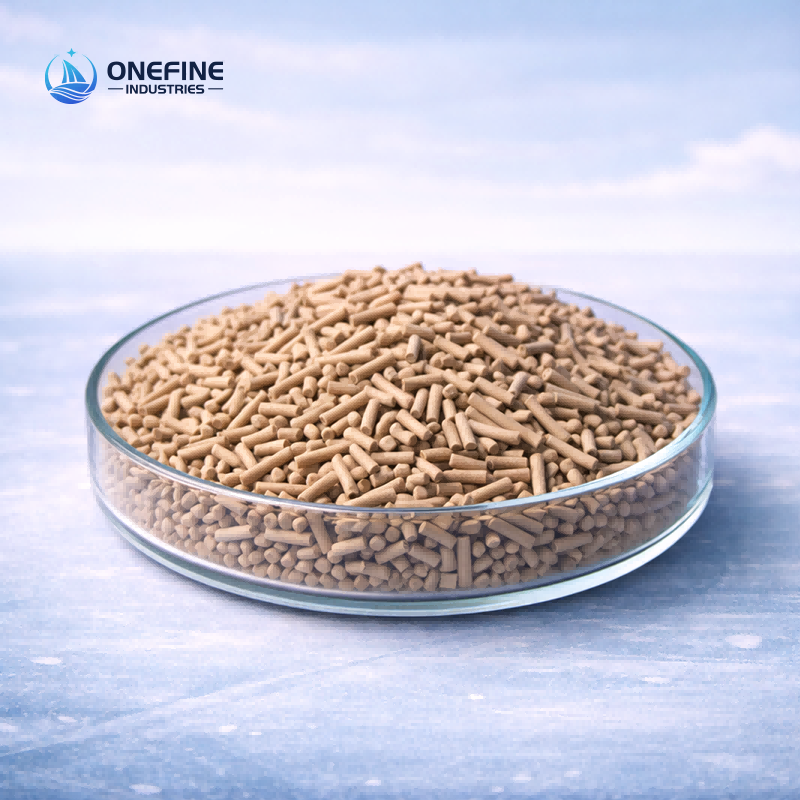
13X Molecular Sieve (Sodium X Type)
Sodium-type 13X molecular sieve with 10Å pore size for air separation pre-purification, natural gas sweetening, solvent recovery, and industrial gas drying. High adsorption capacity, industrial-grade performance.
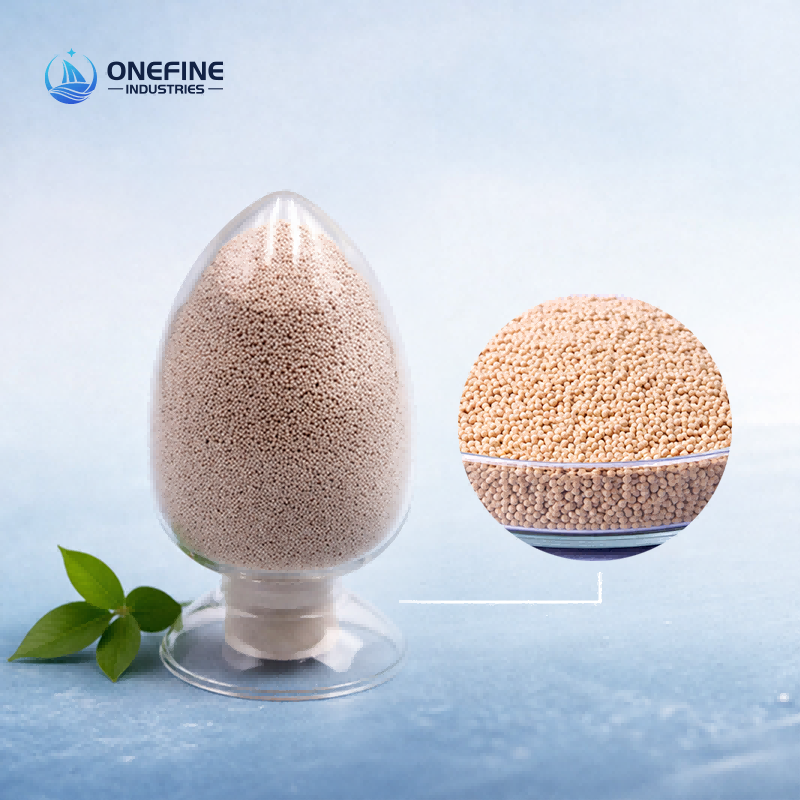
Oxygen Generator Molecular Sieve (13X & Li-LSX)
Premium oxygen generator molecular sieve for PSA/VPSA oxygen generators and medical oxygen concentrators. Available in 13X sodium type and Li-LSX lithium type — high N₂ adsorption capacity, excellent N₂/O₂ selectivity, and 3-5 year service life. Bulk supply with MOQ from 1 ton, serving industrial buyers across the Middle East.
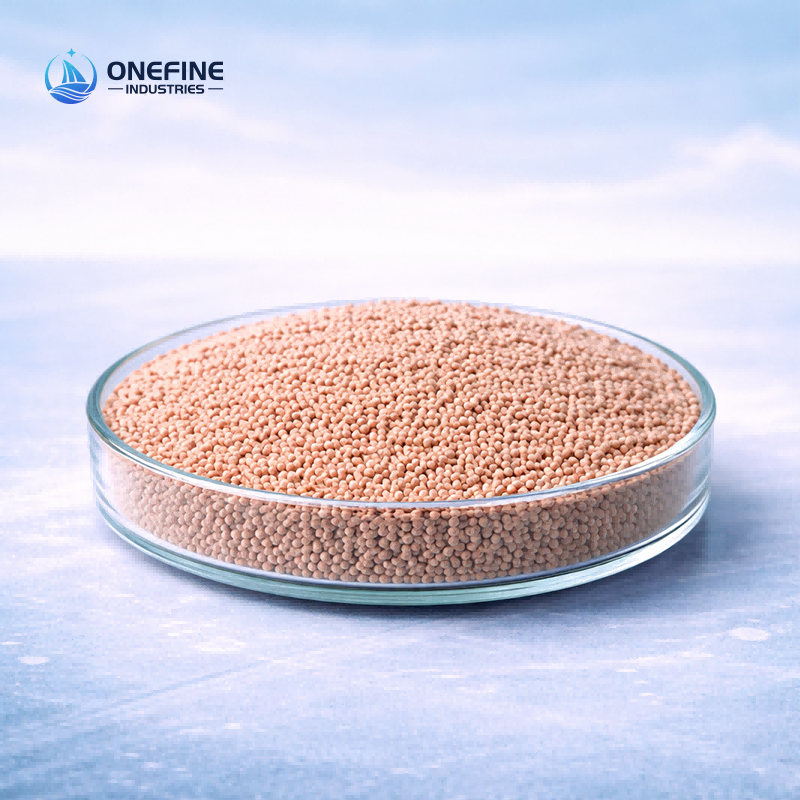
4A Molecular Sieve
General-purpose 4A molecular sieve desiccant for industrial air drying, solvent dehydration, CO2 removal, and static packaging applications. High capacity, long service life.
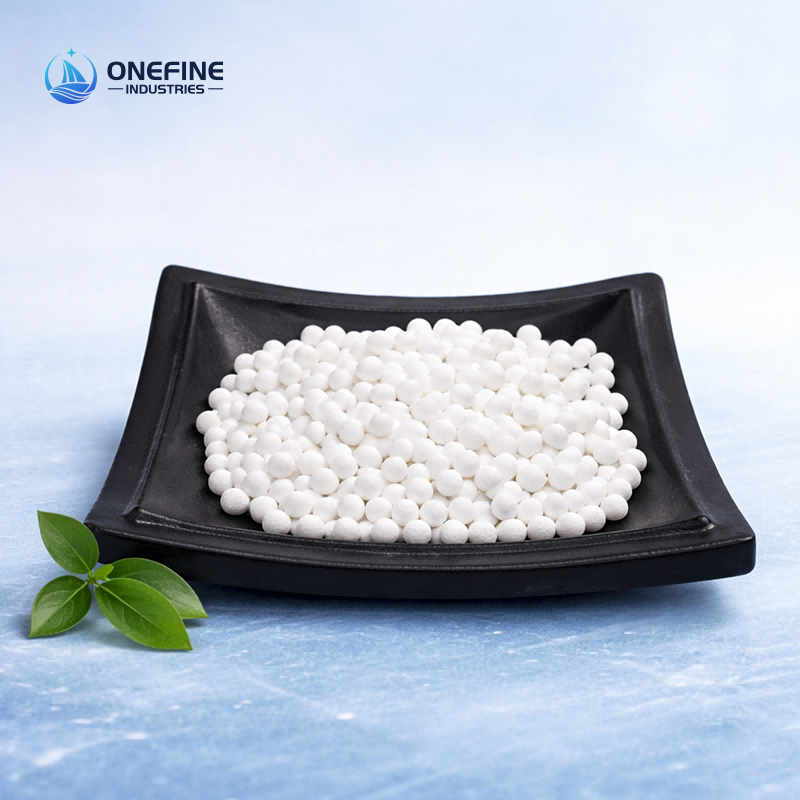
Activated Alumina for Purification
High-performance activated alumina (γ-Al₂O₃) adsorbent and desiccant for industrial gas/liquid drying, water defluoridation, and purification. White spherical beads with high surface area (≥300 m²/g), excellent crush strength, and full thermal regenerability. Available in multiple particle sizes for compressed air dryers, water treatment, and catalyst carrier applications.