Copper-Nickel Desulfurization Catalyst
A Cu-Ni dual-system desulfurization catalyst for oil refining guard-bed applications. Removes inorganic and organic sulfur, trace chlorine, and arsenic impurities in a single step. Supplied in pre-reduced form for immediate use. Ideal as a protection agent for precious metal catalysts in reforming, hydrocracking, and isomerization units.
Get QuoteKey Attributes
- High Purification — Outlet sulfur ≤ 0.5 ppm (100 ppm inlet) or ≤ 0.2 ppm (5 ppm inlet).
- Dual-Metal Catalysis — CuO + NiO synergy for superior desulfurization.
- Multi-Impurity Removal — Removes H₂S, organic sulfur, Cl, and As in one bed.
- Pre-Reduced Form — Ready-to-use, no on-site reduction needed.
- Wide Feedstock Range — Compatible with naphtha, reforming, hydrocracking, and isomerization feeds.
- Long Service Life — Stable activity under extended industrial operation.
- Precious Metal Guard — Protects downstream Pt/Pd catalysts from poisoning.
Applications
- Catalytic Reforming Guard — Protects reforming catalysts from S, Cl, As poisoning.
- Hydrocracking Pretreatment — Removes trace impurities before hydrocracking reactors.
- Isomerization Guard — Shields isomerization catalysts from deactivation.
- Alkylation Feed Purification — Removes S and Cl from alkylation feedstocks.
- Naphtha Desulfurization — Deep sulfur removal for naphtha streams.
- Petrochemical Feed Polishing — Final purification for sensitive downstream processes.
- General Refinery Guard — Versatile pre-treatment across multiple refinery units.
- Startup & Commissioning Changeouts — Pre-reduced form shortens guard-bed changeout time during plant startup or turnaround.
- LPG & Light Naphtha Purification — Removes residual sulfur and arsenic from light hydrocarbon streams.
Product Description
What Is a Copper-Nickel Desulfurization Catalyst?
Key Takeaways:
- Immediate Deployment: Supplied in a pre-reduced metallic state (Cu⁰ and Ni⁰) to eliminate on-site reduction steps and accelerate commissioning.
- Multi-Impurity Capture: Irreversibly removes inorganic sulfur (H₂S), organic sulfur, trace chlorine, and arsenic in a single pass.
- Precious Metal Guard: Serves as the primary upstream defense for highly sensitive Pt/Pd-based reforming and hydrocracking catalysts.
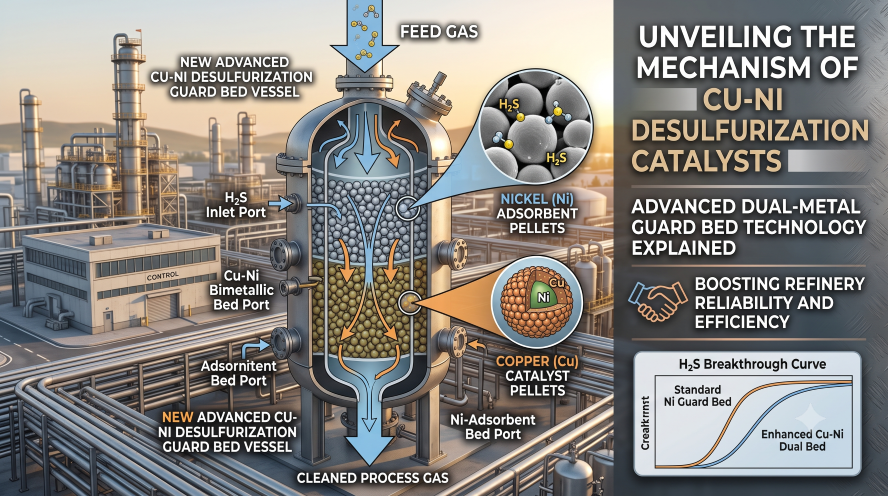
A copper-nickel desulfurization catalyst is a dual-metal guard-bed catalyst specifically engineered for oil refining applications. It combines copper oxide (CuO) and nickel oxide (NiO) as the primary active components, supported on a specialized alumina (Al₂O₃) carrier that also serves as a dispersant. The catalyst is supplied in a pre-reduced metallic state, enabling immediate deployment without the need for on-site reduction.
Unlike conventional single-metal desulfurizers, the Cu-Ni dual-system delivers complementary catalytic mechanisms: copper provides high activity for organic sulfur hydrogenolysis and chemisorption, while nickel enhances hydrogenation activity and extends sulfur breakthrough capacity. Together, they achieve deep purification of refinery feedstocks in a single pass.
For refineries weighing a single-metal CuO/Al₂O₃ system against this dual-metal option, our Desulfurization and Arsenic Removal Catalyst covers the single-metal alternative — the choice largely comes down to whether pre-reduced convenience or a simpler single active phase better fits your commissioning schedule.
Catalyst Composition & Structure
Active Components:
- CuO ≥ 26 wt.% — Primary desulfurization agent; provides high reactivity toward both inorganic (H₂S) and organic sulfur compounds (thiophenes, mercaptans, sulfides)
- NiO ≥ 8 wt.% — Promoter that enhances hydrogenation activity, improves sulfur capacity, and extends catalyst service life
- Support: Al₂O₃ — High-surface-area alumina carrier providing structural integrity, thermal stability, and uniform dispersion of active metals
Supply Form: The catalyst is delivered in pre-reduced (metallic) state, where CuO and NiO have been converted to their active metallic forms (Cu⁰ and Ni⁰) during manufacturing. This eliminates the need for a time-consuming reduction step at the customer's plant and ensures consistent startup performance. An oxidized form can be supplied upon request for applications where pyrophoric handling is a concern.
Desulfurization Mechanism
The catalyst removes sulfur impurities through multiple mechanisms:
1. Inorganic Sulfur Removal (H₂S): H₂S is chemisorbed onto the active Cu-Ni metal surface, forming stable metal sulfides:
- Cu + H₂S → CuS + H₂
- Ni + H₂S → NiS + H₂
2. Organic Sulfur Removal (RSH, RSR, Thiophenes): Organic sulfur compounds undergo hydrogenolysis on the Cu-Ni surface in the presence of hydrogen, releasing H₂S which is then captured:
- R-SH + H₂ → R-H + H₂S (followed by chemisorption)
- Thiophene + 4H₂ → Butane + H₂S (followed by chemisorption)
3. Chlorine and Arsenic Removal:
- Chloride compounds are adsorbed onto the alumina support surface
- Arsenic compounds react with the active metal surface to form stable arsenides
This multi-mechanism approach enables the catalyst to simultaneously address sulfur, chlorine, and arsenic — three of the most common catalyst poisons in refinery operations.
Key Advantages
Superior Purification Performance:
- From 100 ppm inlet H₂S → outlet ≤ 0.5 ppm (>99.5% removal)
- From 5 ppm inlet sulfur → outlet ≤ 0.2 ppm (>96% removal)
- Arsenic: 100 ppb inlet → ≤ 1 ppb outlet
- Chloride: 10 ppm inlet → ≤ 0.5 ppm outlet
Pre-Reduced Convenience: Traditional desulfurization catalysts require an on-site reduction step (heating under hydrogen flow) before they become active. The pre-reduced supply form of this catalyst eliminates this step entirely:
- No reduction equipment or procedure needed
- Immediate catalyst activity upon installation
- Consistent and reproducible startup performance
- Reduced commissioning time and operational complexity
Dual-Active-Metal Synergy: The Cu-Ni combination provides complementary benefits that neither metal alone can achieve:
- Cu excels at organic sulfur hydrogenolysis at moderate temperatures
- Ni enhances H₂S chemisorption capacity and extends sulfur breakthrough
- Together they deliver higher total sulfur capacity than single-metal alternatives
Broad Applicability: The catalyst is compatible with a wide range of refinery feedstocks and unit types, from catalytic reforming to hydrocracking, isomerization, and alkylation. This versatility makes it a practical standard guard-bed solution across the refinery.
Reference Operating Conditions
Process Conditions:
- Temperature: 130–280°C
- Pressure: 0.5–4.0 MPa
- Gas Space Velocity: 1–15 h⁻¹
- Surface Area: ≥ 70 m²/g
Feed Specifications:
- Inlet H₂S: ≤ 100 ppm
- Inlet chloride: ≤ 10 ppm
- Inlet arsenide: ≤ 100 ppb
Performance Output:
- Outlet sulfur: ≤ 0.5 ppm (from 100 ppm inlet), ≤ 0.2 ppm (from 5 ppm inlet)
- Outlet chloride: ≤ 0.5 ppm
- Outlet arsenide: ≤ 1 ppb
- Breakthrough sulfur capacity: ≥ 6 wt.%
Note: Operating conditions are reference values based on industry-standard Cu-Ni desulfurization catalysts. Actual optimal conditions depend on specific feedstock composition and process requirements.
Applications in Refining
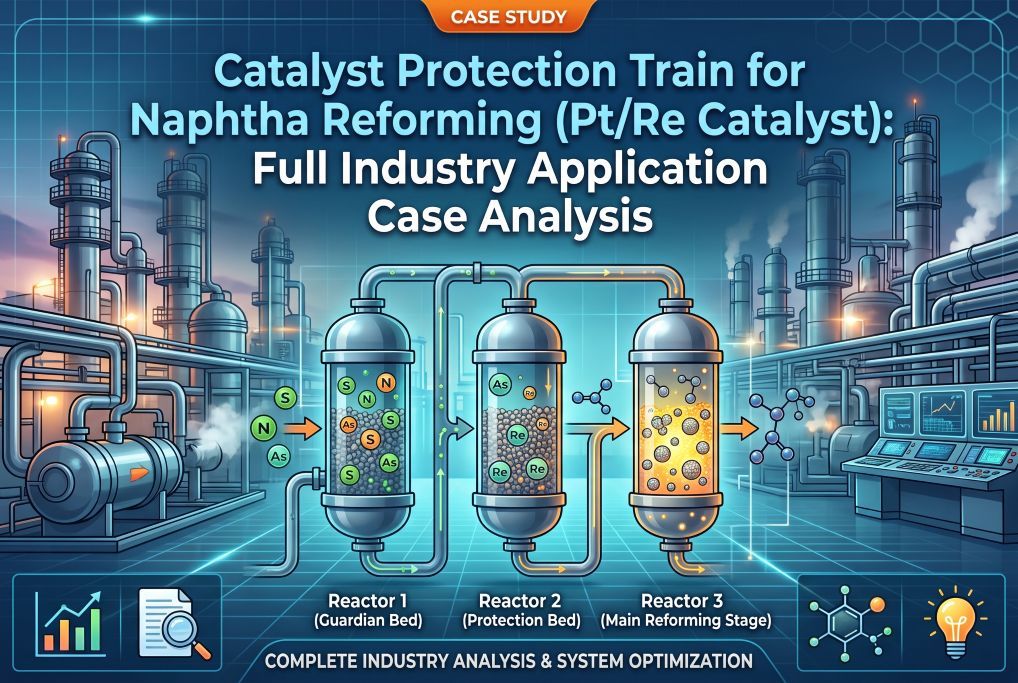
Catalytic Reforming (Most Common Application): Precious metal reforming catalysts (Pt/Re, Pt-Sn, Pt-Ir) are extremely sensitive to sulfur, chlorine, and arsenic poisoning. Even trace levels of these impurities cause rapid deactivation. The Cu-Ni desulfurization catalyst serves as the primary guard bed upstream of the reforming reactor, removing S, Cl, and As to safe levels and extending reforming catalyst life from months to years — the same protective role our Palladium Catalyst for Hydrogenation depends on when paired with an upstream guard bed.
Hydrocracking: Hydrocracking catalysts require clean feedstocks to maintain high conversion rates and product selectivity. The Cu-Ni catalyst pretreats hydrocracker feed by removing sulfur and other poisons that would otherwise accumulate on the hydrocracking catalyst.
Isomerization & Alkylation: Light-end isomerization and alkylation units use acid or metal catalysts that are sensitive to sulfur and arsenic. The Cu-Ni guard catalyst provides reliable upstream purification, ensuring stable operation of these high-value units.
Naphtha Hydrotreating: In naphtha hydrotreating operations, the catalyst can serve as a polishing guard bed after the main hydrotreater, catching any residual sulfur that escapes the primary desulfurization stage.
Service Life & Regeneration
Service Life: The catalyst operates on a chemisorption mechanism — sulfur, chlorine, and arsenic are irreversibly captured on the active metal and support surfaces. When sulfur breakthrough occurs (outlet sulfur exceeds specification), the catalyst has reached the end of its service life.
Typical service life ranges from 1 to 3 years, depending on:
- Inlet sulfur, chlorine, and arsenic concentrations
- Operating temperature and pressure
- Space velocity and feed flow rate
- Required outlet purity specification
Regeneration: The spent catalyst contains metal sulfides (CuS, NiS) and adsorbed arsenic/chlorine compounds. It is not regenerated on-site. Spent catalyst should be sent to a specialized metal recovery facility where copper and nickel can be reclaimed and recycled.
Why Choose Our Copper-Nickel Desulfurization Catalyst?
1. Proven Cu-Ni Dual-System Technology — Copper-nickel dual-metal catalysts are the industry-standard solution for refinery guard-bed desulfurization, with decades of successful deployment across refineries worldwide.
2. Pre-Reduced for Immediate Use — No on-site reduction step required. Install and start — saving commissioning time and eliminating reduction-related operational risks.
3. Multi-Impurity Removal in One Bed — Simultaneously removes sulfur (inorganic + organic), chlorine, and arsenic — replacing what would otherwise require multiple guard-bed stages.
4. Customizable Composition — CuO and NiO content can be adjusted to match your specific feedstock characteristics and performance requirements. Contact our technical team for tailored formulations.
5. Stable & Reliable Performance — Consistent desulfurization efficiency over extended service life, protecting your most valuable downstream catalysts.
6. Broad Operating Window — Effective across 130–280°C and 0.5–4.0 MPa, compatible with most refinery unit operating conditions.
7. Ideal Precious Metal Protector — Specifically designed to safeguard Pt/Pd-based reforming catalysts — the most expensive and sensitive catalysts in your refinery.
What Is a Copper-Nickel Desulfurization Catalyst? (Full Guide)
For a deeper look at the dual-metal mechanism, purification chemistry, and how to select between pre-reduced and single-metal guard-bed options, see our companion guide: What Is a Cu-Ni Desulfurization Catalyst? Dual-Metal Guard Bed Technology Explained.
Packaging & Shipping
We offer flexible packaging and shipping options to suit your project scale and logistics requirements.
Standard Packaging:
- 40 kg sealed steel drums (inner double-layer plastic bags, moisture and oxidation protection — standard for pre-reduced catalyst)
- 25 kg drums available for trial orders and small batches
- 500 kg super sacks for industrial bulk orders
- 1000 kg jumbo bags for large-scale projects
- Custom packaging available on request
Minimum Order Quantity (MOQ):
- 1 ton (entry-level orders accepted — perfect for first-time customers)
- 5+ tons (standard bulk orders)
- Container-level supply for long-term partnerships
Container Loading Capacity:
- 20'GP container: 18-20 tons (palletized)
- 40'GP container: 22-24 tons (palletized)
- 40'HQ container: 24-26 tons
Loading Ports: We ship from major Chinese ports based on your requirements: Shanghai, Qingdao, Tianjin, Ningbo, and Shenzhen.
Lead Time:
- Stock orders: 7-15 days from payment confirmation
- Made-to-order: 20-30 days
Shipping Terms: FOB / CIF / CFR / EXW — flexible based on your destination and preferences.
Handling Note: The pre-reduced form is pyrophoric when exposed to air — drums remain sealed until loading, and inert-atmosphere loading procedures are recommended on-site.
Documents & Certificates
We provide complete documentation for every order:
📄 Technical Data Sheet (TDS) — Confirmed with you during product selection, ensuring exact specifications match your application requirements.
📄 Safety Data Sheet (SDS) — Provided before shipment, meeting all international transportation and handling standards (including pyrophoric-material handling guidance for the pre-reduced form).
📄 Certificate of Analysis (COA) — Issued for each production batch, delivered with your shipment for full quality traceability.
Additional documents available on request: Certificate of Origin (COO), Packing List, Commercial Invoice, Third-party Inspection Report (SGS / BV), Form E (for Middle East destinations with applicable tariff benefits).
FAQ
Q1: What is the difference between pre-reduced and oxidized form? A: Pre-reduced form has the active metals (Cu, Ni) already converted to their metallic state during manufacturing — ready for immediate use. Oxidized form (CuO, NiO) requires an on-site reduction step under hydrogen before becoming active. We supply pre-reduced by default; oxidized form is available upon request.
Q2: What impurities does this catalyst remove? A: It removes inorganic sulfur (H₂S), organic sulfur compounds (mercaptans, sulfides, thiophenes), trace chlorine compounds, and arsenic impurities — all in a single reactor bed.
Q3: What is the purification performance? A: From 100 ppm inlet H₂S, outlet is ≤ 0.5 ppm. From 5 ppm inlet sulfur, outlet is ≤ 0.2 ppm. Arsenic is reduced from 100 ppb to ≤ 1 ppb, and chloride from 10 ppm to ≤ 0.5 ppm.
Q4: What are the typical operating conditions? A: Temperature 130–280°C, pressure 0.5–4.0 MPa, gas space velocity 1–15 h⁻¹, surface area ≥ 70 m²/g.
Q5: How long does the catalyst last? A: Service life typically ranges from 1 to 3 years, depending on inlet impurity concentrations, operating conditions, and required outlet purity. The catalyst is replaced when sulfur breakthrough occurs.
Q6: Can this catalyst be regenerated? A: The adsorption reactions are irreversible under normal conditions. Spent catalyst is not regenerated on-site; it should be sent to a specialized metal recovery facility for copper and nickel reclamation.
Q7: What applications is this catalyst suitable for? A: It is widely used as a guard bed in catalytic reforming, hydrocracking, isomerization, alkylation, and naphtha hydrotreating units — anywhere precious metal or acid catalysts need protection from sulfur, chlorine, and arsenic poisoning.
Need a Custom Solution?
For bulk pricing and grade recommendation, please send your feedstock composition and reactor conditions to us. Our technical team will get back to you within 24 hours with a tailored solution.
Technical Specifications
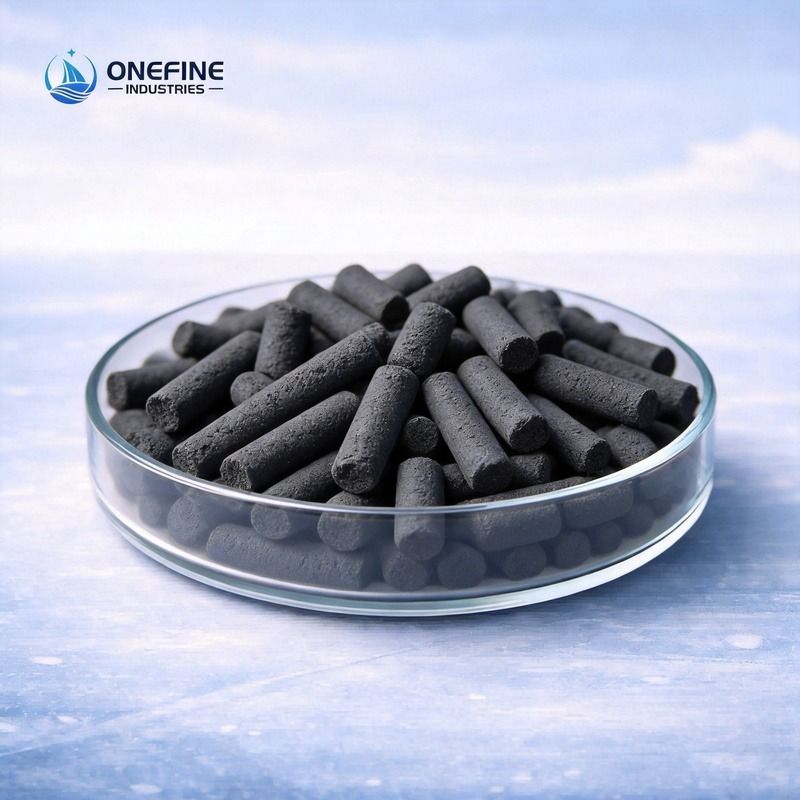
| Appearance | Gray-black strip extrudates |
| Diameter | Φ(3±0.5) mm |
| Bulk Density | 0.75–0.95 kg/L |
| Radial Crush Strength (Mean) | ≥ 40 N/cm |
| Composition (CuO) | ≥ 26% |
| Composition (NiO) | ≥ 8% |
| Active System | Cu-Ni dual-metal |
| Function | Sulfur, chlorine, and arsenic removal |
| Supply State | Pre-reduced form |
| Breakthrough Sulfur Capacity | ≥ 6 wt.% |
Related Products
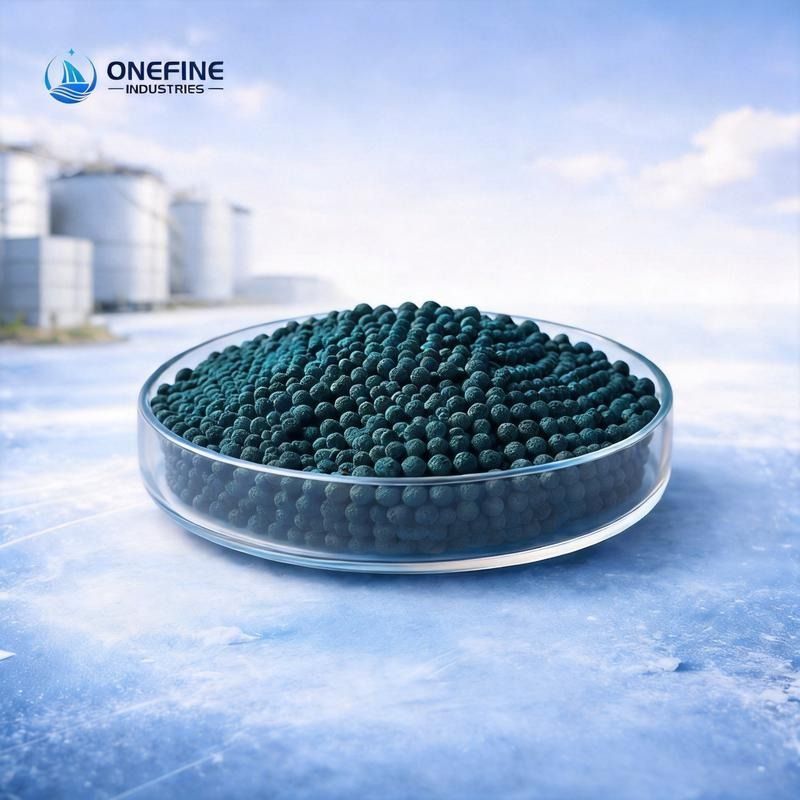
Desulfurization and arsenic removal catalyst
High-performance CuO/Al₂O₃-based desulfurization and arsenic removal catalyst, engineered for the ultra-deep removal of sulfur compounds and volatile arsenides to protect downstream noble metal catalysts. Available in bulk from 1 ton MOQ for Middle East industrial buyers.
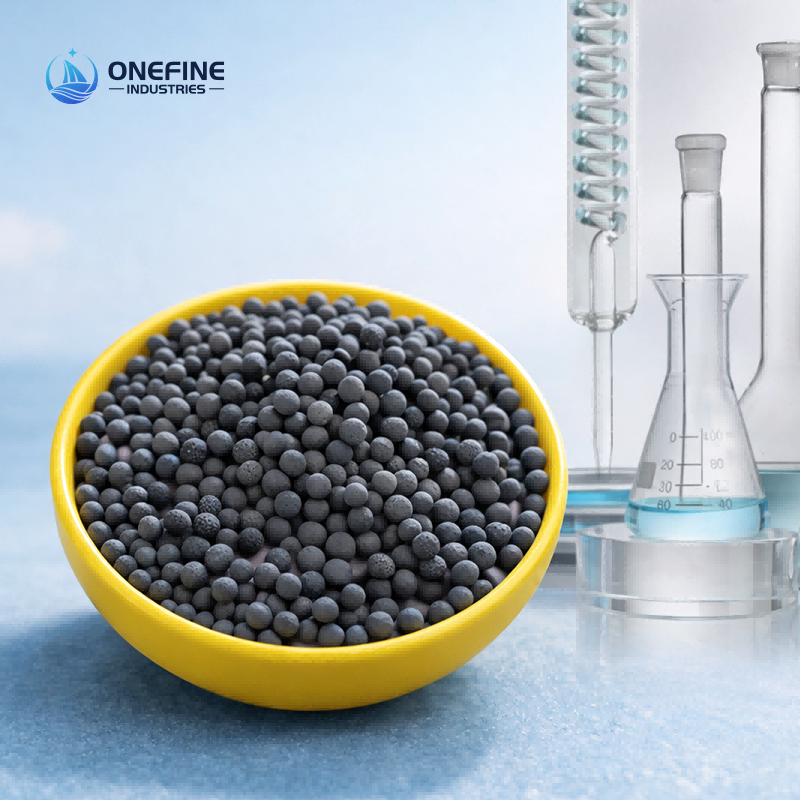
Palladium Catalyst for Hydrogenation (Pd/Al₂O₃)
High-performance palladium on alumina catalyst (Pd/Al₂O₃) for industrial hydrogenation reactions. Available in 0.1-2% Pd loading on alumina support. Exceptional activity, long service life, and excellent selectivity for pharmaceutical, petrochemical, and fine chemical synthesis.