Low Temperature Shift Catalyst (Cu-Zn-Al Series)
Co-precipitation copper-zinc-aluminum low temperature shift (LTS) catalyst delivering exceptional CO conversion at 180–250 °C, with superior low-temperature activity, high mechanical strength, and excellent sulfur tolerance for hydrogen production, syngas, ammonia synthesis, and methanol synthesis processes.
Get QuoteKey Attributes
- High copper dispersion (2–8 nm Cu nanoparticles) enables CO conversion starting from 180 °C.
- Cu-ZnO interfacial synergy enhances H₂O activation and lowers energy consumption at reduced temperatures.
- Al₂O₃ support anchors copper particles and suppresses sintering during long-term operation.
- Crush strength ≥ 80 N/pellet ensures structural integrity in large-scale fixed-bed reactors.
- Co-precipitation process ensures uniform component distribution and reproducible batch quality.
- Compatible with natural gas, naphtha, refinery gas, residue oil, and coal-derived syngas.
- Service life of 3–4 years with Al₂O₃ framework inhibiting copper sintering.
Applications
- Hydrogen production LTS stage polishing CO to 0.2–0.5% after HTS for deep removal.
- Syngas H₂/CO ratio adjustment requiring precise gas composition control.
- Ammonia synthesis plants reducing residual CO to ppm levels to protect downstream catalysts.
- Methanol synthesis operations optimizing syngas composition for maximum conversion.
- Petrochemical CO shift in refinery hydrogen management and chemical complexes.
- PEM fuel cell hydrogen purification trains reducing CO below 10 ppm.
- Energy-saving processes using natural gas, naphtha, refinery gas, residue oil, or coal.
- Second-stage deep CO polishing downstream of high-temperature shift conversion.
- Refinery hydrogen recovery units requiring ppm-level CO control before PSA purification.
- Fertilizer plant syngas trains needing tight CO specification ahead of methanation.
Product Description
Key Takeaway:
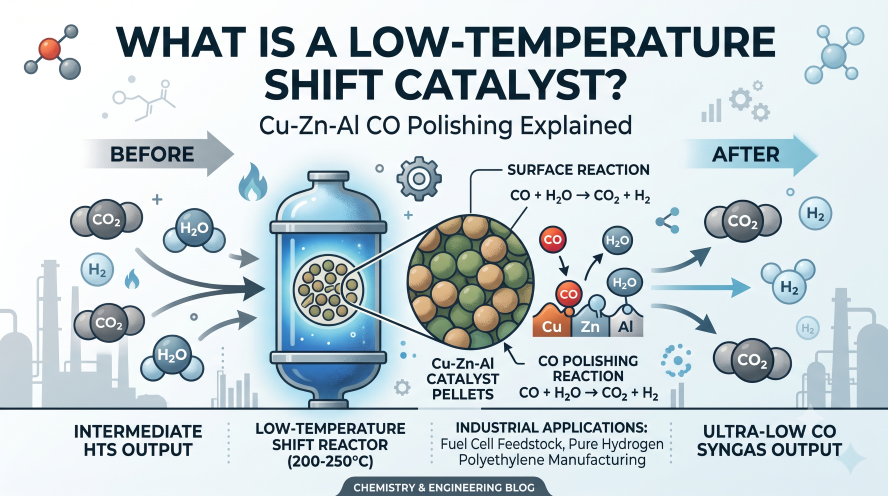
The Cu-Zn-Al Low Temperature Shift Catalyst operates as the second stage in a two-stage shift train, polishing residual CO down to 0.2–0.5% at 180–250 °C after high-temperature shift conversion — but it is highly sulfur-sensitive and requires upstream desulfurization to protect its copper active sites.
What Is Low Temperature Shift Catalyst (Cu-Zn-Al Series)?
The Low Temperature Shift Catalyst (Cu-Zn-Al Series) is a copper-zinc-aluminum based catalyst manufactured via a co-precipitation process. Through the synergistic interaction among all components, the catalyst achieves superior thermal resistance, sulfur tolerance, mechanical strength, and low-temperature catalytic activity, collectively extending its operational service life.
In the Cu-Zn-Al system, CuO is the primary active component — upon reduction during catalyst activation, it forms highly dispersed nano-scale copper particles (2–8 nm) that serve as the true catalytic active sites for the water-gas shift reaction. ZnO functions as both a structural promoter and an electronic modifier: it enhances copper dispersion, strengthens the Cu-ZnO interfacial electronic effect, and improves H₂O activation capability through the well-documented Cu-ZnO synergy. Al₂O₃ provides a high-surface-area support with strong acidic surface sites that anchor copper particles and suppress their migration and agglomeration during prolonged operation, maintaining catalytic activity over the catalyst's lifetime.
The co-precipitation manufacturing process ensures that all three components — Cu, Zn, and Al — are intimately mixed at the molecular level in the precursor, resulting in a catalyst with uniform composition, optimized pore structure, and consistent performance. This catalyst is applicable to hydrogen production, syngas manufacturing, ammonia synthesis, methanol synthesis, and CO shift processes in the petrochemical industry. It is also suitable for energy-saving processes using natural gas, naphtha, refinery gas, residue oil, and coal as raw materials, offering advantages including excellent low-temperature activity, high mechanical strength, and superior sulfur resistance.
How It Works
The water-gas shift reaction (CO + H₂O ⇌ CO₂ + H₂, ΔH = −41.1 kJ/mol) is a mildly exothermic, reversible reaction that is thermodynamically favored at lower temperatures. This makes low-temperature shift (LTS) catalysis the ideal final stage for deep CO removal after high-temperature shift (HTS) conversion.
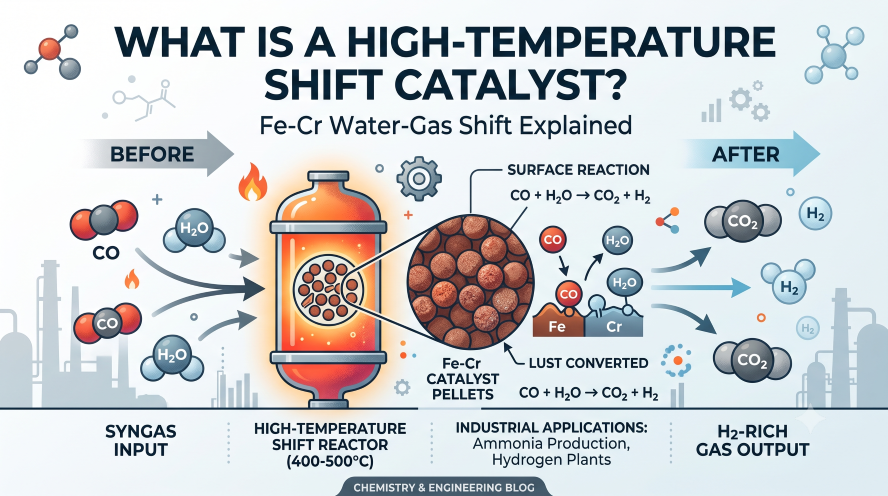
In a typical two-stage shift configuration, the HTS catalyst (Fe-Cr based, operating at 300–520 °C) handles the bulk of CO conversion (approximately 60–75% of the total load), reducing CO from 10–15% down to 3–5%. The LTS catalyst then operates at 180–250 °C — where the thermodynamic equilibrium strongly favors CO conversion — to further reduce CO to 0.2–0.5%, and in optimized configurations, even below 10 ppm for fuel cell applications.
The active catalytic species is metallic copper (Cu⁰) nanoparticles generated in situ during catalyst activation by reduction of CuO with hydrogen. These nanoparticles, typically 2–8 nm in size, provide the active sites where CO adsorption and H₂O dissociation occur. The reaction follows a redox mechanism on the Cu surface, with ZnO playing a critical promotional role through the Cu-ZnO interfacial synergy — ZnO not only stabilizes the copper nanoparticles against sintering but also participates in H₂O activation, enhancing the overall reaction rate.
Al₂O₃ serves as the structural backbone of the catalyst, providing high surface area (40–90 m²/g) and thermal stability. Its strong acidic surface sites effectively anchor copper particles, preventing their migration and coalescence even under prolonged thermal stress. This structural role is key to the catalyst's 3–4 year service life, as it directly addresses the primary deactivation mechanism of LTS catalysts — copper sintering.
The copper active sites in this catalyst are extremely sensitive to sulfur poisoning, so feed gas must be desulfurized upstream using a hydrodesulfurization catalyst combined with a zinc oxide guard bed to reduce sulfur to sub-ppm levels before the gas reaches this catalyst bed. For a deeper look at the sulfur vulnerability every buyer should understand, see our companion guide: What Is a Low Temperature Shift Catalyst?
Why Choose Our Low Temperature Shift Catalyst
- Superior Low-Temperature Activity: Activation temperature as low as 180 °C enables deep CO conversion in the thermodynamically favorable low-temperature regime, achieving outlet CO concentrations of 0.2–0.5% or lower — far below what HTS catalysts can achieve alone.
- High Copper Dispersion: Co-precipitation process produces nano-scale copper particles (2–8 nm) with high dispersion, maximizing the number of active sites per unit mass and delivering exceptional catalytic efficiency.
- Cu-ZnO Synergistic Enhancement: The well-established Cu-ZnO interfacial synergy enhances both CO adsorption and H₂O activation, providing reaction rates significantly higher than either component alone.
- Thermal Stability via Al₂O₃ Framework: Aluminum oxide support anchors copper particles and suppresses sintering, maintaining catalytic activity over 3–4 years of continuous operation with minimal performance degradation.
- High Mechanical Strength: Radial crush strength ≥ 80 N/pellet prevents bed attrition and dust formation in large-scale reactors, ensuring stable pressure drop and long-term mechanical integrity.
- Broad Feedstock Compatibility: Suitable for natural gas, naphtha, refinery gas, residue oil, and coal-derived syngas, providing operational flexibility across diverse industrial configurations.
- Proven Two-Stage Compatibility: Designed to operate downstream of our Shift Catalyst (Fe-Cr Series) for complete CO conversion in a single integrated shift train.
Regeneration
Copper sulfide formation from sulfur poisoning is generally considered irreversible under normal process conditions — there is no standard in-situ regeneration procedure that reliably restores activity lost to sulfur poisoning. Thermal sintering of copper particles is likewise not reversible once significant crystallite growth has occurred. Because of this, prevention through robust upstream desulfurization and controlled activation is the only dependable strategy; the catalyst is replaced at the end of its typical 3–4 year service life rather than regenerated.
Packaging & Shipping
We offer flexible packaging and shipping options to suit your project scale and logistics requirements.
Standard Packaging:
- 25 kg drums (moisture-proof, suitable for trial orders and small batches)
- 150 kg steel drums (standard bulk packaging for industrial orders)
- 500 kg super sacks (most popular for industrial bulk orders)
- 1000 kg jumbo bags (for large-scale projects)
- Custom packaging available on request
Minimum Order Quantity (MOQ):
- 1 ton (entry-level orders accepted — perfect for first-time customers)
- 5+ tons (standard bulk orders)
- Container-level supply for long-term partnerships
Container Loading Capacity:
- 20'GP container: 18–20 tons (palletized)
- 40'GP container: 22–24 tons (palletized)
- 40'HQ container: 24–26 tons
Loading Ports: We ship from major Chinese ports based on your requirements: Shanghai, Qingdao, Tianjin, Ningbo, and Shenzhen.
Lead Time:
- Stock orders: 7–15 days from payment confirmation
- Made-to-order: 20–30 days
Shipping Terms: FOB / CIF / CFR / EXW — flexible based on your destination and preferences.
Documents & Certificates
We provide complete documentation for every order:
📄 Technical Data Sheet (TDS) — Confirmed with you during product selection, ensuring exact specifications match your application requirements.
📄 Safety Data Sheet (SDS) — Provided before shipment, meeting all international transportation and handling standards.
📄 Certificate of Analysis (COA) — Issued for each production batch, delivered with your shipment for full quality traceability.
Additional documents available on request: Certificate of Origin (COO), Packing List, Commercial Invoice, Third-party Inspection Report (SGS / BV), Form E (for Middle East destinations with applicable tariff benefits).
FAQ
What is the difference between low-temperature shift (LTS) and high-temperature shift (HTS) catalysts?
HTS catalysts (Fe-Cr based) operate at 300–520 °C and handle the bulk CO conversion (60–75% of total load), reducing CO from 10–15% to 3–5%. LTS catalysts (Cu-Zn-Al based) operate at 180–250 °C where thermodynamic equilibrium favors deeper CO conversion, polishing CO down to 0.2–0.5% or lower. They are typically used in series for complete CO removal.
Why is the LTS catalyst so sensitive to sulfur?
The active copper sites in LTS catalysts are extremely sensitive to sulfur poisoning. Even trace amounts of H₂S (above 0.1 ppm) in the feed gas can form Cu-S compounds that irreversibly block active sites and cause permanent deactivation. Therefore, LTS catalysts must always be preceded by adequate desulfurization units to reduce sulfur to sub-ppm levels.
How is the catalyst activated before use?
The fresh catalyst contains CuO which must be reduced to metallic copper (Cu⁰) before it becomes catalytically active. Activation is performed using a controlled temperature-programmed reduction with dilute hydrogen (typically 1–5% H₂ in N₂), gradually increasing temperature from ambient to 200–250 °C. The reduction must be carefully controlled to prevent thermal runaway (the reduction reaction is exothermic) and copper sintering, which would reduce active surface area.
What is the role of each component (CuO, ZnO, Al₂O₃)?
CuO is the primary active component — after reduction it forms nano-scale Cu⁰ particles (2–8 nm) that are the actual catalytic sites. ZnO enhances copper dispersion, provides electronic promotion through the Cu-ZnO interfacial synergy, and assists in H₂O activation. Al₂O₃ provides high surface area support and structural stability, anchoring copper particles to prevent sintering during long-term operation.
What is the typical service life of this catalyst?
Under standard operating conditions with proper feed gas purification and controlled operation, the typical service life is 3–4 years. Actual lifetime depends on feedstock quality, operating temperature stability, sulfur exposure, thermal cycling frequency, and the quality of the initial activation procedure.
Can this catalyst be used alone, or does it require an HTS stage upstream?
This LTS catalyst is designed to operate downstream of an HTS catalyst in a two-stage configuration. Using it alone on high-CO feed gas would result in excessive heat release (the WGS reaction is exothermic), potential thermal runaway, and rapid catalyst deactivation. The HTS stage removes the bulk CO load, allowing the LTS catalyst to operate in its optimal temperature window for deep CO polishing.
What particle size is available?
The standard size is Φ5×5 mm cylindrical pellets. Other sizes are available upon request to meet specific reactor design requirements and pressure drop considerations.
How does co-precipitation improve catalyst performance compared to impregnation methods?
Co-precipitation mixes all metal components (Cu, Zn, Al) at the molecular level during the precipitation step, ensuring intimate contact and uniform distribution throughout the catalyst matrix. This results in higher copper dispersion, more consistent pore structure, better Cu-ZnO interfacial contact, and more reproducible batch-to-batch performance compared to impregnation methods where components may distribute unevenly.
Need a Custom Solution?
For bulk pricing and grade recommendation, please send your feedstock composition and reactor conditions to us. Our technical team will get back to you within 24 hours with a tailored solution.
Technical Specifications
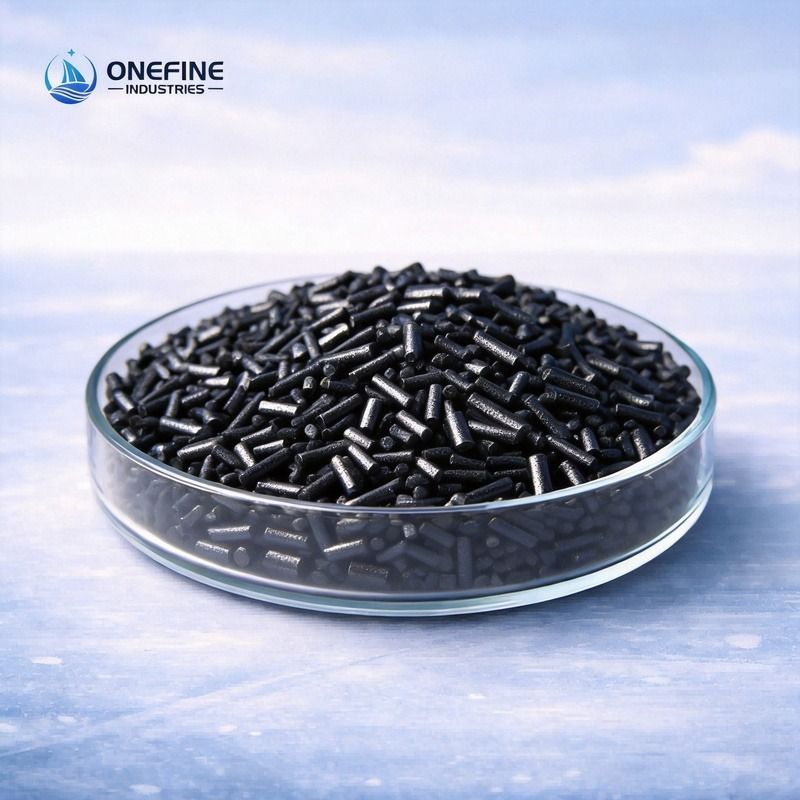
| Appearance | Cylindrical |
| Category | Cu-Zn-Al |
| Size | Φ5×5 mm |
| Bulk Density | 1.40±0.15 kg/L |
| Specific Surface Area | 40–90 m²/g |
| Pore Volume | 0.17–0.30 ml/g |
| Radial Crush Strength | ≥ 80 N/pellet |
| CuO Content | ≥ 36.0 wt.% |
| ZnO Content | ≥ 36.0 wt.% |
| Al₂O₃ Content | Balance |
| Operating Temperature | 180–250 °C |
| Operating Pressure | 0.5–6.0 MPa |
| Gas Hourly Space Velocity (GHSV) | 3,000–12,000 h⁻¹ |
| Service Life | 3–4 years (typical) |
Related Products
Shift Catalyst (Fe-Cr Series)
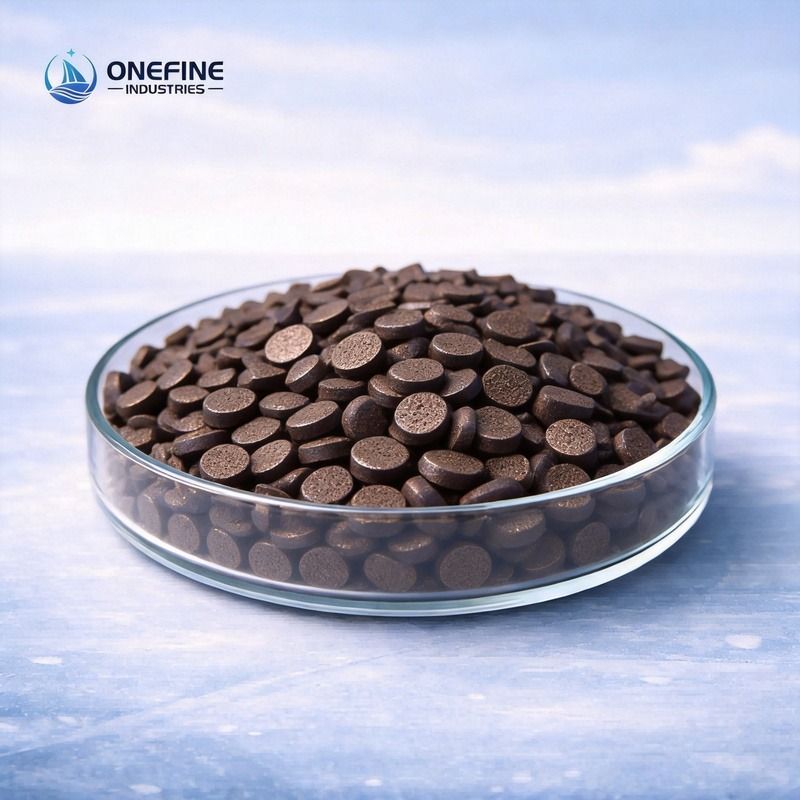
Fifth-generation iron-chromium water-gas shift catalyst manufactured via co-precipitation from nitrate precursors, delivering high CO conversion activity, low sulfur content, excellent mechanical strength, and extended service life for hydrogen production, syngas, ammonia synthesis, and methanol synthesis processes.
Zinc oxide desulfurization catalyst
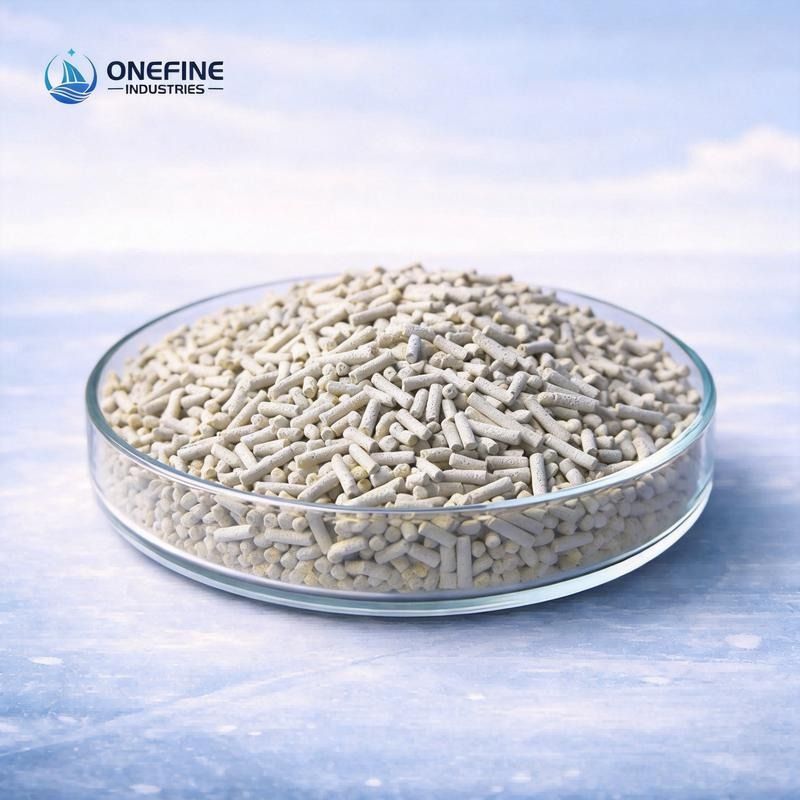
High-purity zinc oxide (ZnO) desulfurization catalyst for fine removal of H₂S from natural gas, synthesis gas, hydrogen, and hydrocarbon feeds. Achieves outlet sulfur levels below 0.1 ppm through irreversible chemisorption. High sulfur capacity, long service life, and strong resistance to steam.
Co-Mo Hydrogenation Catalyst
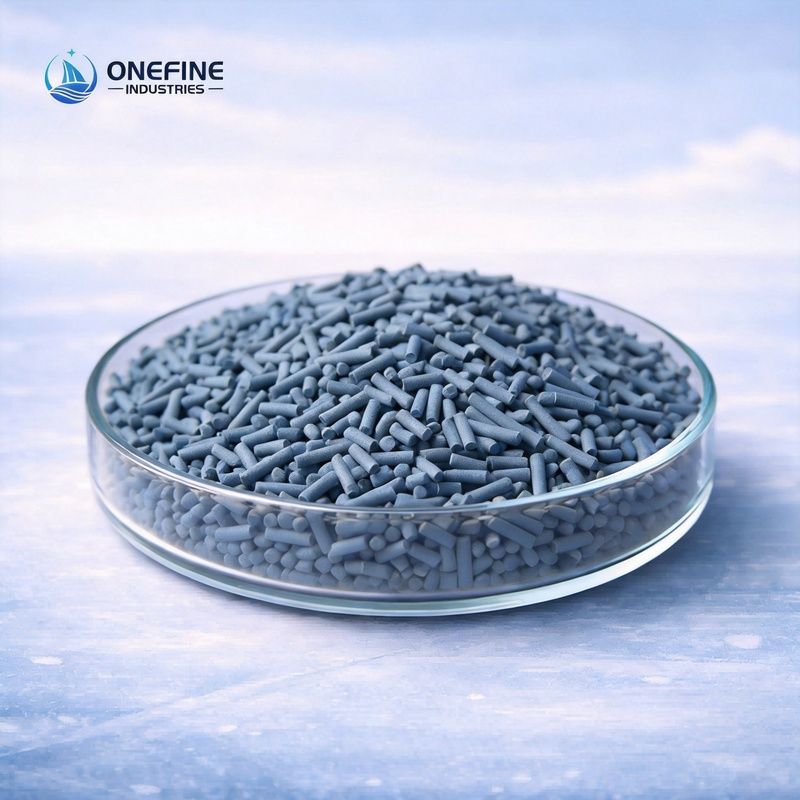
A high-performance cobalt-molybdenum (Co-Mo) hydrogenation catalyst designed for hydrodesulfurization (HDS) and hydrotreating of petroleum fractions and synthesis gas. Features low light-off temperature, high mechanical strength, and excellent stability. Widely used in ammonia plant feed purification, naphtha pretreatment, refinery reforming feed desulfurization, and natural gas sweetening. Available with MOQ from 1 ton, customizable appearance, particle size, and active component loading.