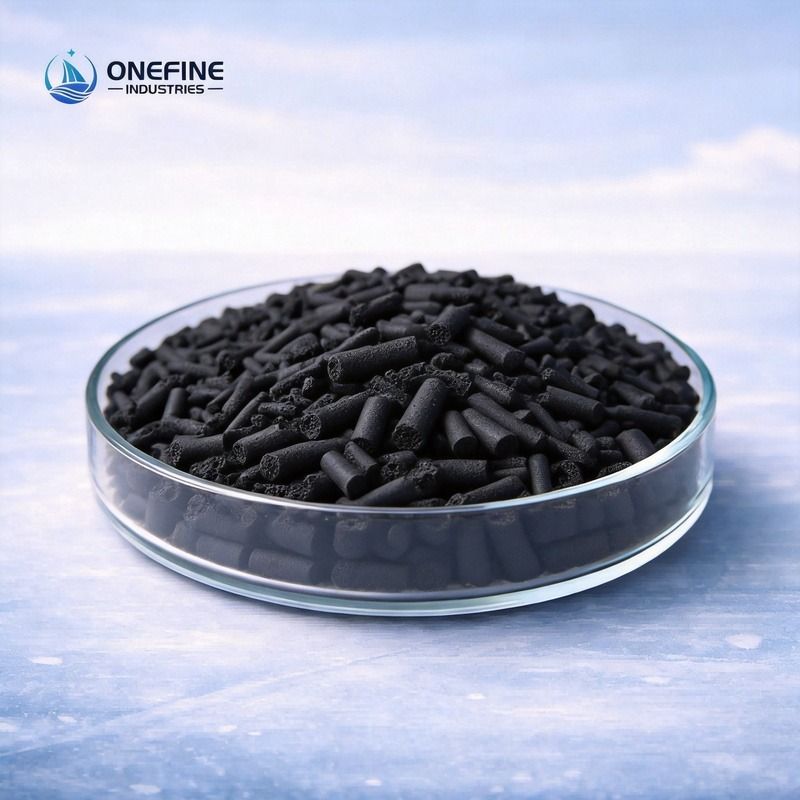
Deeply Refined Catalyst
A high-performance deeply refined catalyst based on copper oxide and zinc oxide active components, designed for deep purification of liquid hydrocarbons and synthesis gas. Achieves total sulfur removal down to ≤ 20 ppb through efficient desulfurization, dearsenication, dephosphorization, and deoxygenation. Features high mechanical strength, stable operation, and excellent low-temperature activity.
Get QuoteKey Attributes
- Dual Active Component System — CuO and ZnO work synergistically for high desulfurization activity with excellent low-temperature performance.
- Ultra-Deep Desulfurization — Achieves total sulfur removal down to ≤ 20 ppb, protecting sensitive downstream catalysts.
- Multi-Function Purification — Simultaneously removes sulfur, arsenic, phosphorus, and oxygen compounds in a single guard bed.
- High-Performance Alumina Support — γ-Al₂O₃ support provides high porosity and large surface area for excellent adsorption and thermal stability.
- High Mechanical Strength — Radial crush strength ≥ 80 N/cm ensures stable fixed-bed operation without particle breakage.
- Wide Operating Window — Effective from ambient to 250°C and pressures up to 3.5 MPa for flexible process design.
- Stable Long-Term Performance — Consistent activity over extended service periods with minimal deactivation.
Applications
- Liquid Hydrocarbon Deep Desulfurization — Removes sulfur species from LPG, naphtha, and light hydrocarbons to ≤ 20 ppb total sulfur.
- Synthesis Gas Deep Purification — Protects methanol and Fischer-Tropsch catalysts by removing trace sulfur from syngas.
- Dearsenication of Hydrocarbon Feeds — Removes trace arsenic compounds that poison downstream noble metal catalysts.
- Dephosphorization for Catalyst Protection — Eliminates phosphorus impurities to prevent fouling of sensitive catalysts.
- Deoxygenation of Process Gases — Removes oxygen compounds from syngas and hydrogen streams for downstream protection.
- Refinery Feed Preparation — Final guard bed after hydrotreating for ultra-low impurity specifications.
- Ammonia & Methanol Plant Feed Gas Polishing — Final purification before synthesis reactors to ensure catalyst longevity.
- Hydrogen Stream Purification — Protects downstream hydrogenation units and PSA hydrogen purification systems from trace sulfur, arsenic, and oxygen impurities.
- Protection of Noble Metal Reforming Catalysts — Serves as a final guard bed upstream of platinum-group reforming catalysts, preventing irreversible poisoning.
Product Description
What Is a Deeply Refined Catalyst?
Key Takeaways:
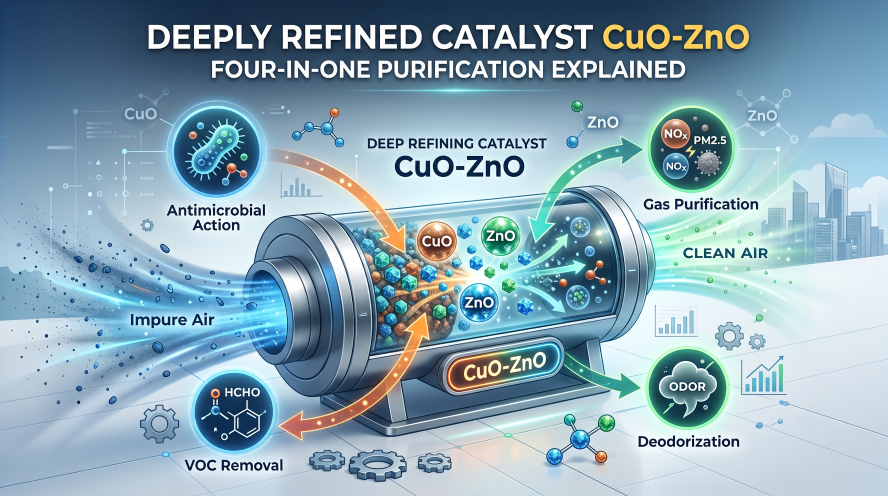
- Four-in-One Purification: Simultaneously removes sulfur, arsenic, phosphorus, and oxygen compounds in a single guard bed.
- Ultra-Low Purity Limits: Achieves total sulfur removal down to ≤ 20 ppb, safeguarding sensitive downstream synthesis catalysts.
- Dual-Active Metals: Utilizes an optimized CuO-ZnO active system to enable excellent low-temperature performance (from 20°C).
A deeply refined catalyst is a specialized purification material designed for the final-stage removal of trace impurities — sulfur, arsenic, phosphorus, and oxygen compounds — from liquid hydrocarbons and synthesis gas streams. It employs copper oxide (CuO) and zinc oxide (ZnO) as primary active components supported on a high-surface-area alumina (Al₂O₃) matrix.
The catalyst is engineered to achieve ultra-deep purification levels, reducing total sulfur content to ≤ 20 ppb and simultaneously removing arsenic, phosphorus, and oxygen species that would otherwise poison sensitive downstream catalysts.
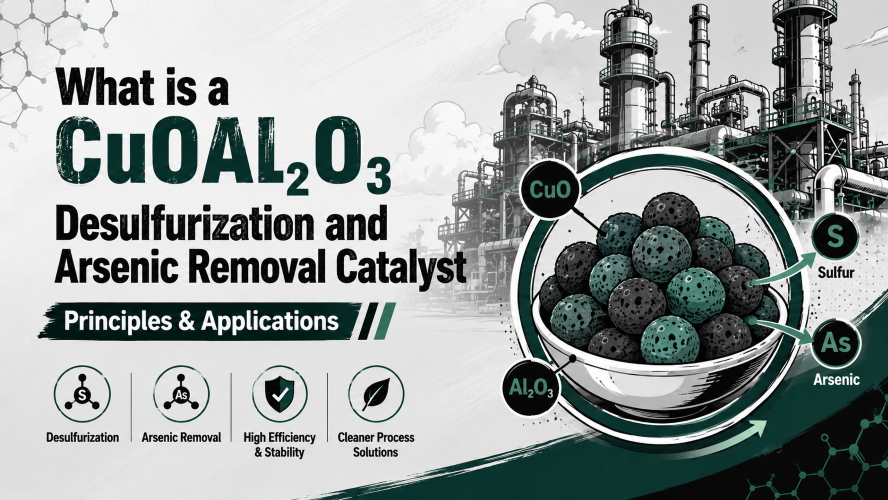
For buyers who only need dedicated sulfur and arsenic removal without the broader phosphorus/oxygen scope, our Desulfurization and Arsenic Removal Catalyst offers a more focused, lower-cost solution for that narrower application. For a deeper look at how the four-in-one chemistry works and when this broader scope is the right call, see our companion guide: What Is a Deeply Refined Catalyst?
Active Component Chemistry
The catalytic performance of the deeply refined catalyst is derived from the synergistic interaction between its three key components:
Copper Oxide (CuO) — Alkaline Promoter & Primary Active Site
- CuO serves as the alkaline promoter that enhances electron transfer efficiency during desulfurization reactions
- Lowers the activation energy required for breaking C–S, C–As, and C–P bonds
- Increases the number of active reaction sites available on the catalyst surface
- Significantly improves low-temperature activity, enabling effective purification even at ambient conditions
- Content: ≥ 35 wt.%
Zinc Oxide (ZnO) — Co-Active Component
- ZnO provides complementary desulfurization activity through chemisorption of H₂S and reactive sulfur species
- Effective across the full operating temperature range (ambient to 250°C)
- Works synergistically with CuO to achieve deeper sulfur removal than either component alone
- Content: ≥ 35 wt.%
Alumina Support (Al₂O₃) — Structural Foundation
- The γ-alumina support provides high porosity, high dispersion, and large specific surface area
- Ensures uniform distribution of active components throughout the catalyst body
- Offers excellent adsorption capacity for trace impurities
- Maintains thermal stability under operating conditions, preventing structural degradation over extended service periods
- Content: Balance
Multi-Function Purification Mechanism
Unlike single-purpose guard bed materials, the deeply refined catalyst simultaneously addresses multiple impurity classes:
- Desulfurization: Removes H₂S, mercaptans (RSH), sulfides (R₁SR₂), disulfides (RSSR), thiophenes, COS, and CS₂ through catalytic conversion and chemisorption
- Dearsenication: Captures trace arsenic compounds (AsH₃, organic arsenic species) that irreversibly poison noble metal catalysts
- Dephosphorization: Eliminates phosphorus-containing impurities (PH₃, organic phosphorus compounds) that cause fouling and deactivation
- Deoxygenation: Removes oxygen compounds to protect oxygen-sensitive downstream catalysts
This multi-function capability eliminates the need for multiple guard beds, simplifying process design and reducing capital investment.
Operating Conditions
The catalyst operates across two distinct application ranges:
Liquid Hydrocarbon Purification:
- Temperature: 20 – 130°C (low-temperature operation)
- Pressure: 0.5 – 3.5 MPa
- Applicable feeds: LPG, naphtha, light hydrocarbons, refinery streams
- Achieves total sulfur ≤ 20 ppb
Synthesis Gas Purification:
- Temperature: Ambient – 250°C
- Pressure: Ambient – 3.0 MPa
- Applicable feeds: Syngas for methanol synthesis, ammonia synthesis, Fischer-Tropsch synthesis, hydrogen streams
- Achieves total sulfur ≤ 20 ppb
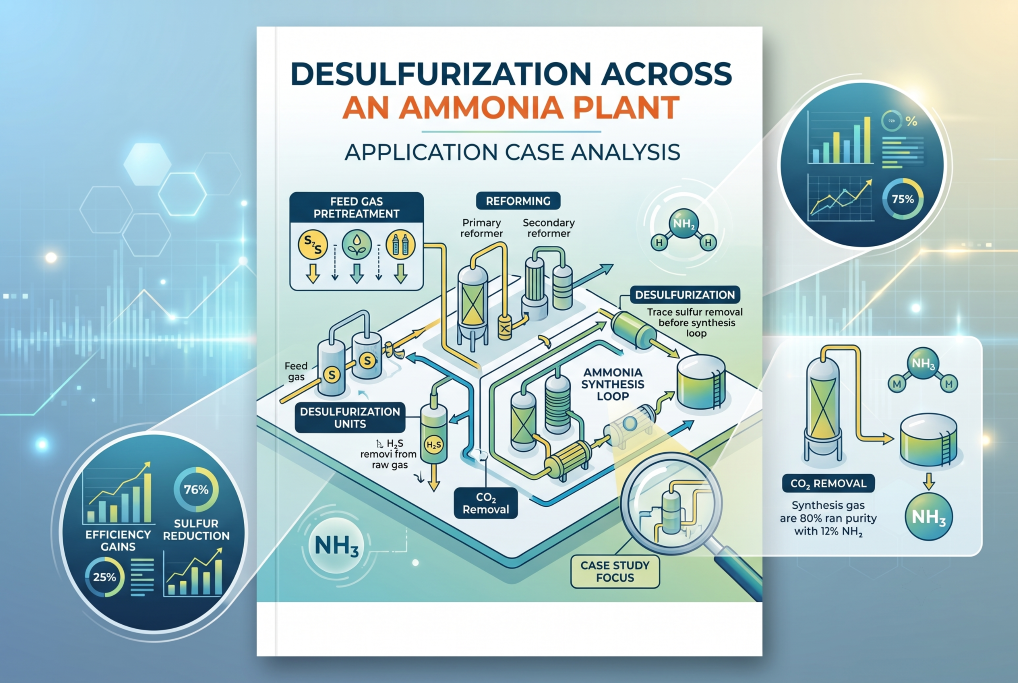
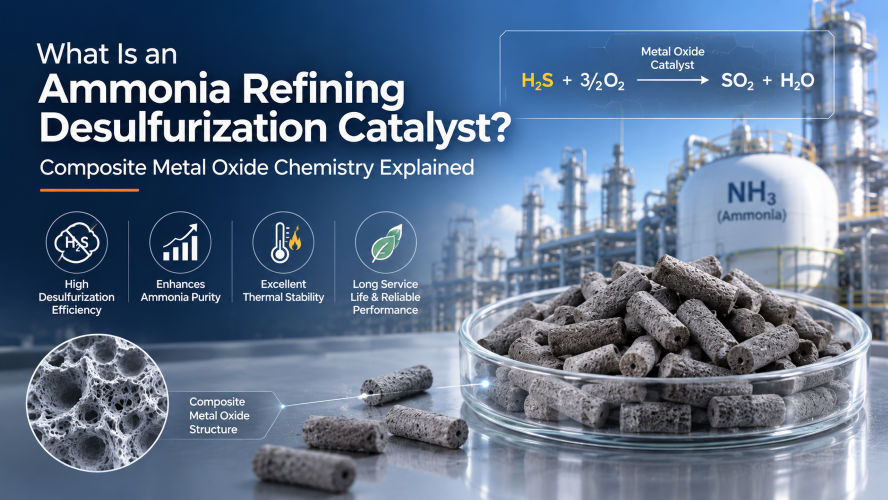
The wide operating window provides flexibility in process design and allows the catalyst to serve as a universal guard bed material across multiple purification applications. For ammonia and methanol plants specifically, this catalyst is often used alongside our Ammonia Refining Desulfurization Catalyst depending on feed gas humidity and impurity profile.
Key Advantages
- High Mechanical Strength: Radial crush strength ≥ 80 N/cm ensures structural integrity in fixed-bed operation, preventing particle breakage and maintaining low pressure drop throughout the service cycle.
- Excellent Low-Temperature Activity: CuO promoter enables effective purification at temperatures as low as ambient, reducing energy consumption and enabling use in low-temperature process configurations.
- Simple Operation: No presulfiding or complex activation procedures required. The catalyst can be loaded directly into the reactor and placed into service.
- Stable Performance: Engineered for consistent activity over extended service periods with gradual, predictable deactivation — allowing planned maintenance rather than unexpected shutdowns.
Why Choose Our Deeply Refined Catalyst?
1. Proven CuO-ZnO-Al₂O₃ Formulation
Our catalyst uses an optimized ratio of copper oxide (≥ 35%) and zinc oxide (≥ 35%) on a high-performance alumina support, delivering superior purification activity compared to single-component alternatives.
2. Ultra-Deep Sulfur Removal to ≤ 20 ppb
Achieves total sulfur specifications that protect even the most sensitive downstream catalysts, including methanol synthesis catalysts, Fischer-Tropsch catalysts, and noble metal reforming catalysts.
3. Four-in-One Purification
Simultaneously removes sulfur, arsenic, phosphorus, and oxygen compounds — eliminating the need for multiple specialized guard beds and reducing your total equipment investment.
4. Flexible Operating Range
Effective from ambient temperature to 250°C and pressures up to 3.5 MPa, covering both liquid hydrocarbon and synthesis gas applications with a single catalyst design.
5. High Mechanical Durability
Radial crush strength ≥ 80 N/cm ensures reliable fixed-bed operation without particle degradation, maintaining consistent performance and low pressure drop over the full service cycle.
6. Simple Installation & Operation
No complex presulfiding or activation procedures required. Standard loading procedures and immediate service capability minimize startup time and operational complexity.
7. Customizable Supply
We can adjust formulation ratios, particle sizes, and packaging to match your specific process requirements, reactor configurations, and purity targets.
Packaging & Shipping
We offer flexible packaging and shipping options to suit your project scale and logistics requirements.
Standard Packaging:
- 25 kg steel drums (moisture-proof, suitable for trial orders and small batches)
- 150 kg steel drums (standard bulk packaging for industrial orders)
- 500 kg super sacks (most popular for industrial bulk orders)
- 1000 kg jumbo bags (for large-scale projects)
- Custom packaging available on request
Minimum Order Quantity (MOQ):
- 1 ton (entry-level orders accepted — perfect for first-time customers)
- 5+ tons (standard bulk orders)
- Container-level supply for long-term partnerships
Container Loading Capacity:
- 20'GP container: 18-20 tons (palletized)
- 40'GP container: 22-24 tons (palletized)
- 40'HQ container: 24-26 tons
Loading Ports: We ship from major Chinese ports based on your requirements: Shanghai, Qingdao, Tianjin, Ningbo, and Shenzhen.
Lead Time:
- Stock orders: 7-15 days from payment confirmation
- Made-to-order: 20-30 days
Shipping Terms: FOB / CIF / CFR / EXW — flexible based on your destination and preferences.
Documents & Certificates
We provide complete documentation for every order:
📄 Technical Data Sheet (TDS) — Confirmed with you during product selection, ensuring exact specifications match your application requirements.
📄 Safety Data Sheet (SDS) — Provided before shipment, meeting all international transportation and handling standards.
📄 Certificate of Analysis (COA) — Issued for each production batch, delivered with your shipment for full quality traceability.
Additional documents available on request: Certificate of Origin (COO), Packing List, Commercial Invoice, Third-party Inspection Report (SGS / BV), Form E (for Middle East destinations with applicable tariff benefits).
Regeneration
This catalyst removes sulfur, arsenic, phosphorus, and oxygen compounds through chemisorption, forming stable compounds within the catalyst structure. Consistent with other CuO/Al₂O₃-based guard bed chemistries, it is generally treated as a non-regenerable, sacrificial material under typical operating conditions — once the bed is saturated, it is discharged and replaced rather than regenerated in place. Contact our technical team to discuss whether regeneration is feasible for your specific feed and operating conditions.
Storage & Handling
Storage: Store in a cool, dry, well-ventilated area. Protect from moisture, chemical contamination, and physical impact. Avoid exposure to acidic or alkaline atmospheres. Shelf life exceeds 3 years when stored properly in original sealed packaging.
Handling: Use appropriate personal protective equipment (PPE) when handling — catalyst dust may cause respiratory irritation. Avoid inhalation of dust and contact with skin or eyes.
FAQ
Q1: What is the primary application of the Deeply Refined Catalyst? A: It is designed for deep purification of liquid hydrocarbons (LPG, naphtha, light hydrocarbons) and synthesis gas, removing sulfur to ≤ 20 ppb along with arsenic, phosphorus, and oxygen impurities.
Q2: What are the main active components? A: The catalyst contains copper oxide (CuO ≥ 35 wt.%) and zinc oxide (ZnO ≥ 35 wt.%) as primary active components, supported on a high-surface-area γ-alumina (Al₂O₃) matrix.
Q3: What temperature range does this catalyst operate in? A: For liquid hydrocarbon purification, the operating temperature is 20–130°C. For synthesis gas purification, it operates from ambient temperature to 250°C.
Q4: Does this catalyst require presulfiding before use? A: No. Unlike hydrodesulfurization catalysts, the deeply refined catalyst does not require presulfiding or complex activation. It can be loaded directly and placed into service.
Q5: What impurities does this catalyst remove? A: It simultaneously removes sulfur compounds (H₂S, mercaptans, sulfides, thiophenes, COS, CS₂), arsenic compounds, phosphorus compounds, and oxygen compounds — providing four-in-one purification in a single guard bed.
Q6: How is the catalyst packaged? A: It is packaged in sealed steel drums or lined fiber drums with inner plastic liners to prevent moisture absorption and contamination. Custom packaging options are available upon request.
Need a Custom Solution?
For bulk pricing and grade recommendation, please send your feedstock composition & reactor conditions to us. Our technical team will get back to you within 24 hours with a tailored solution.
Technical Specifications
| Appearance | Black cylindrical extrudates |
| Particle Size | Φ5×5 mm |
| Bulk Density | 1.35 ± 0.15 kg/L |
| Radial Crush Strength (Mean) | ≥ 80 N/cm |
| Composition | CuO ≥ 35%, ZnO ≥ 35%, Balance Al₂O₃ |
| Operating Temperature (Liquid Hydrocarbons) | 20 – 130°C |
| Operating Temperature (Synthesis Gas) | Ambient – 250°C |
| Operating Pressure (Liquid Hydrocarbons) | 0.5 – 3.5 MPa |
| Operating Pressure (Synthesis Gas) | Ambient – 3.0 MPa |
| Desulfurization Precision | Total sulfur ≤ 20 ppb |
Related Products
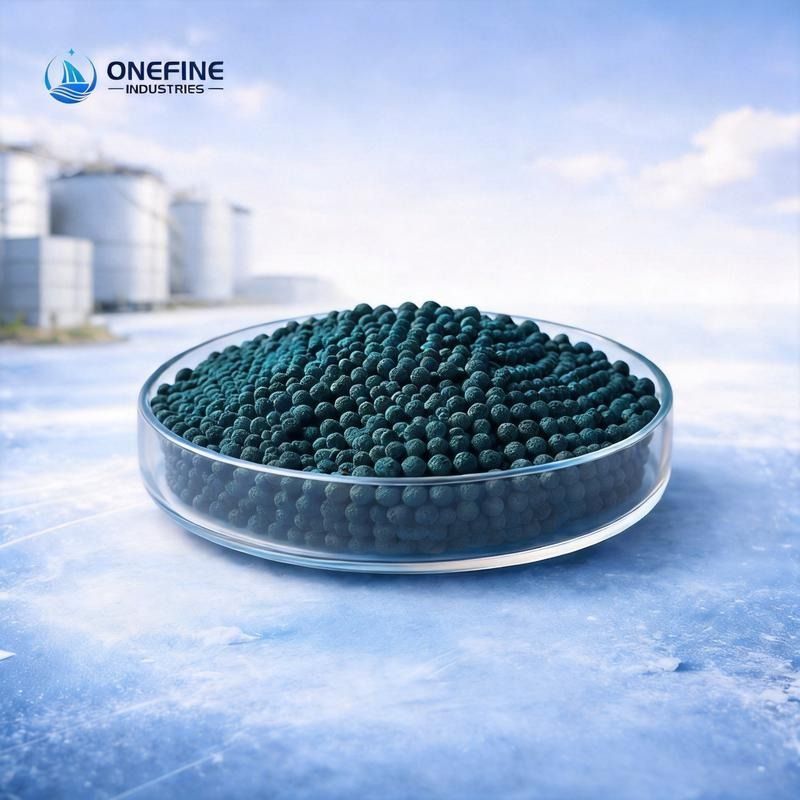
Desulfurization and arsenic removal catalyst
High-performance CuO/Al₂O₃-based desulfurization and arsenic removal catalyst, engineered for the ultra-deep removal of sulfur compounds and volatile arsenides to protect downstream noble metal catalysts. Available in bulk from 1 ton MOQ for Middle East industrial buyers.
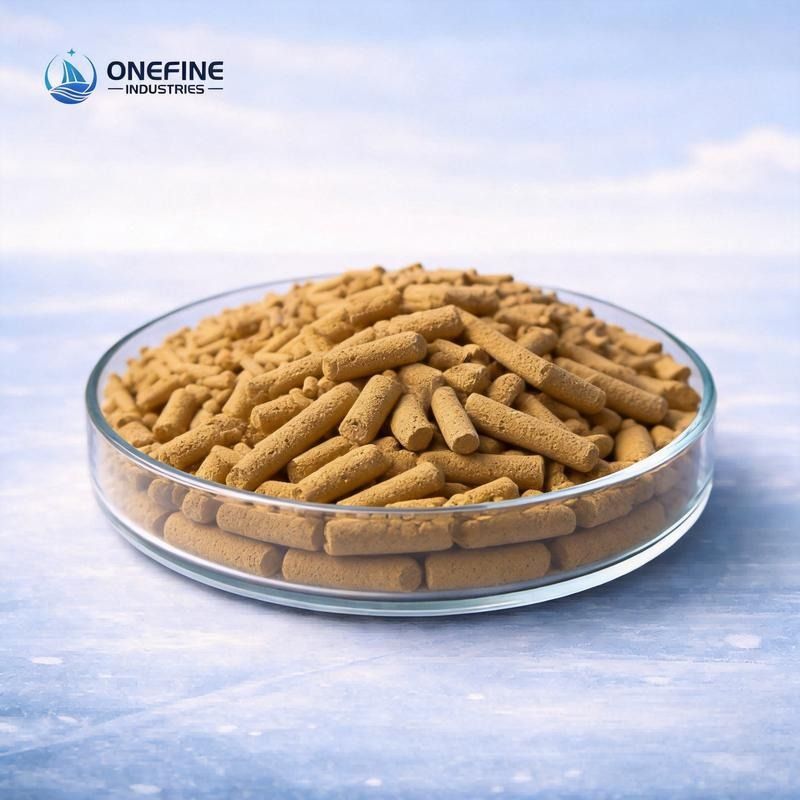
Ammonia refining desulfurization catalyst
A composite metal oxide-based desulfurization catalyst with multiple promoters, designed for H₂S removal in ammonia refining units of sour water strippers at refineries. Reduces H₂S to below 0.5 mg/m³ under low-temperature conditions. Also removes HCl and organic sulfur impurities. Exceptional water resistance.
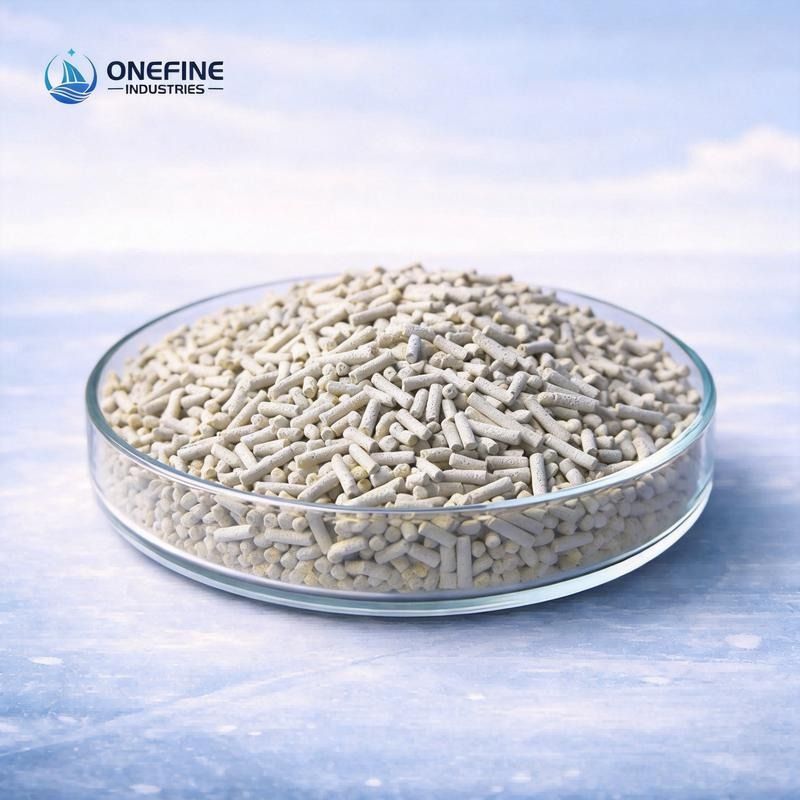
Zinc oxide desulfurization catalyst
High-purity zinc oxide (ZnO) desulfurization catalyst for fine removal of H₂S from natural gas, synthesis gas, hydrogen, and hydrocarbon feeds. Achieves outlet sulfur levels below 0.1 ppm through irreversible chemisorption. High sulfur capacity, long service life, and strong resistance to steam.