What Is a Deeply Refined Catalyst? CuO-ZnO Four-in-One Purification Explained
Introduction
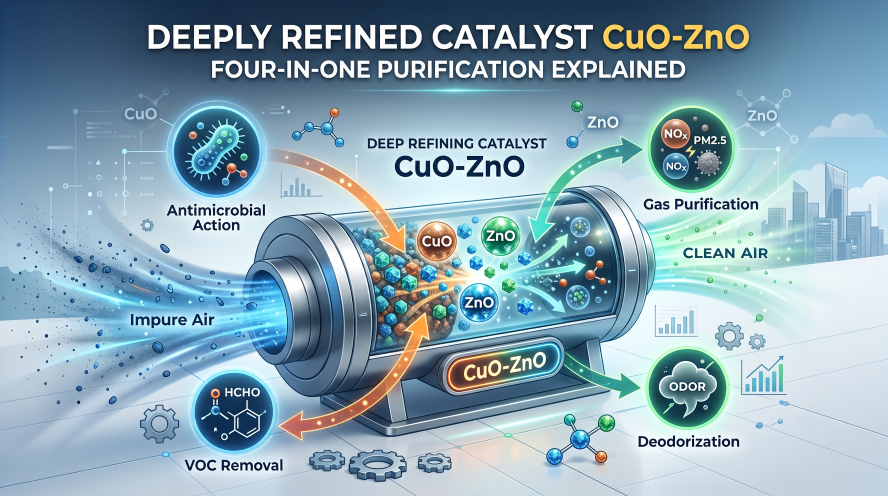
If your process stream carries more than just sulfur — trace arsenic, phosphorus, or oxygen compounds alongside it — a single-function desulfurization catalyst may not be enough to protect your downstream units. A deeply refined catalyst is built specifically for this situation: one guard bed, four impurity classes removed, down to ultra-low ppb levels. This guide walks through how the CuO-ZnO chemistry works, where it fits in a purification train, and how to decide whether your operation actually needs this broader scope or whether a narrower, lower-cost option is the better fit.
Key Takeaways:
- Mechanism: Combines copper oxide (promoter) and zinc oxide (chemisorption) to break C-S/C-As bonds and capture trace impurities.
- Process Consolidation: Eliminates the need for multiple specialized guard beds by handling mixed impurity profiles simultaneously.
- Application Range: Highly effective for final feed gas polishing ahead of ammonia and methanol synthesis reactors.
How Does a Deeply Refined Catalyst Work?
At its core, a deeply refined catalyst combines two active metal oxides — copper oxide (CuO) and zinc oxide (ZnO) — on a high-surface-area alumina support. CuO acts as an alkaline promoter, lowering the activation energy needed to break sulfur, arsenic, and phosphorus bonds and boosting activity even at ambient temperature. ZnO complements this by chemisorbing H₂S and other reactive sulfur species across a wider temperature window, up to 250°C.
The alumina matrix itself isn't just a carrier — its high porosity and large surface area ensure the active components stay well-dispersed, which is part of why this catalyst holds up mechanically (crush strength ≥ 80 N/cm) over long service cycles without breaking down into fines that would raise pressure drop.
Why "Four-in-One" Matters for Guard Bed Design
Most guard bed catalysts are built around a single impurity: sulfur only, or arsenic only. A deeply refined catalyst is engineered to handle sulfur, arsenic, phosphorus, and oxygen compounds simultaneously in one bed. For plants running liquid hydrocarbon feeds (LPG, naphtha) or synthesis gas with a mixed impurity profile, this consolidation means one reactor and one catalyst charge instead of two or three separate guard beds — less equipment, less pressure drop across the train, and a simpler maintenance schedule.
That said, "four-in-one" isn't automatically the right answer for every plant. If your feed genuinely only carries sulfur and trace arsenic — nothing else — a narrower catalyst can be the more cost-effective choice.
When to Choose a Narrower Alternative Instead
This is where feed composition should drive the decision, not just impurity labels on a datasheet. Our Desulfurization and Arsenic Removal Catalyst is built specifically for sulfur-plus-arsenic protection ahead of palladium-based hydrogenation catalysts — read more in our dedicated guide if that narrower scope matches your feed profile. Paying for phosphorus and oxygen removal capacity you don't need adds cost without adding protection.
Application in Ammonia and Methanol Plants
One of the most common places this catalyst shows up is final feed gas polishing ahead of ammonia and methanol synthesis reactors, where even trace sulfur or oxygen compounds can permanently damage the synthesis catalyst. Depending on your feed gas humidity and impurity profile, you may instead — or additionally — need our Ammonia Refining Desulfurization Catalyst, which is optimized for high-humidity saturated gas streams. Our selection guide covers how feed gas moisture content should guide that choice.
Operating Considerations
The catalyst is designed for straightforward installation: no presulfiding, no complex activation sequence — it can be loaded directly into the reactor and placed into service. It covers two distinct operating windows, 20–130°C for liquid hydrocarbons and ambient–250°C for synthesis gas, at pressures up to 3.5 MPa, which gives process engineers flexibility when integrating it into an existing purification train. Full specifications, including composition ratios and mechanical strength data, are available on our Deeply Refined Catalyst product page.
Recommended Products from Sorbsieve
- Deeply Refined Catalyst — Four-in-one CuO-ZnO guard bed for liquid hydrocarbons and synthesis gas (see product page above)
- Desulfurization and Arsenic Removal Catalyst — Focused sulfur + arsenic protection for palladium-based hydrogenation systems (see guide above)
- Ammonia Refining Desulfurization Catalyst — Optimized for high-humidity ammonia/methanol feed gas polishing (see guide above)
FAQ
Q1: How is a deeply refined catalyst different from a standard desulfurization catalyst? A: A standard desulfurization catalyst targets sulfur compounds only. A deeply refined catalyst additionally removes arsenic, phosphorus, and oxygen compounds in the same bed, consolidating what would otherwise require multiple guard beds into one.
Q2: My feed only has sulfur and arsenic — do I still need this catalyst? A: Not necessarily. If your feed profile genuinely doesn't contain phosphorus or oxygen impurities, a dedicated sulfur-plus-arsenic catalyst can achieve the same protection at lower cost.
Q3: Can this catalyst be used in both liquid and gas phase applications? A: Yes. It's engineered with two distinct operating windows — 20–130°C for liquid hydrocarbons and ambient–250°C for synthesis gas — so the same catalyst design serves both service types.
Q4: How do I know if my ammonia plant needs this catalyst or a different desulfurization catalyst? A: It largely comes down to feed gas humidity and the specific impurity mix in your feed gas. It's worth sharing your feed gas analysis with our technical team so we can recommend the right guard bed configuration for your specific process.
Looking for Bulk Supply of Deeply Refined Catalyst?
Sorbsieve is a trusted bulk supplier of Deeply Refined Catalyst and complete industrial adsorbents, serving industrial buyers across the Middle East.
We provide:
- ✅ Container-level supply (20'GP / 40'GP / 40'HQ)
- ✅ Full documentation (COA / TDS / SDS / COO)
- ✅ Multiple packaging options
- ✅ Technical support for catalyst selection and system optimization
- ✅ Fast quote response for industrial inquiries
Contact our team for bulk pricing, product samples, and technical consultation.
Related Products
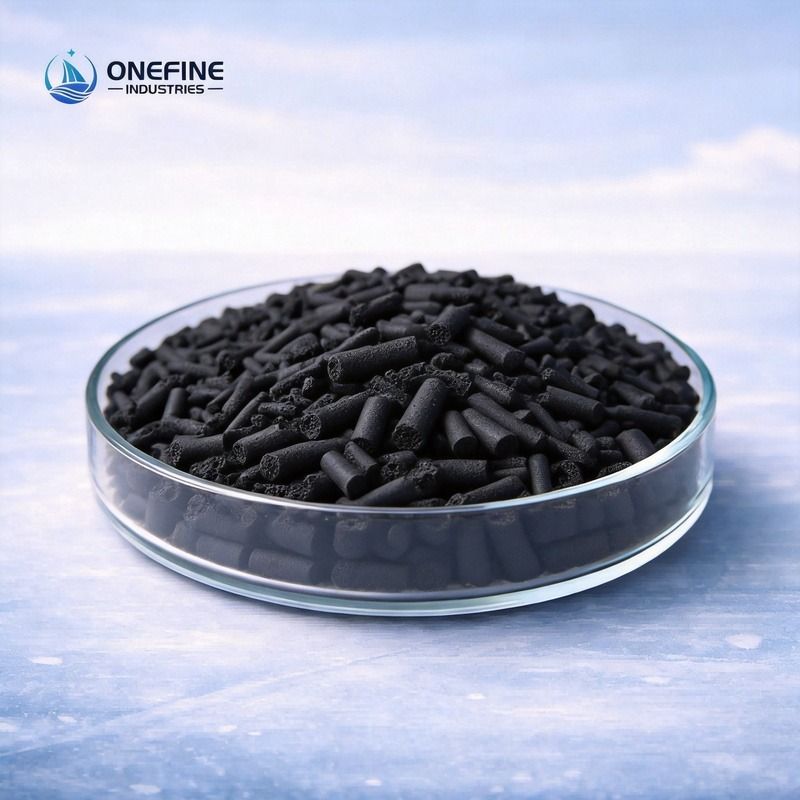
Deeply Refined Catalyst
A high-performance deeply refined catalyst based on copper oxide and zinc oxide active components, designed for deep purification of liquid hydrocarbons and synthesis gas. Achieves total sulfur removal down to ≤ 20 ppb through efficient desulfurization, dearsenication, dephosphorization, and deoxygenation. Features high mechanical strength, stable operation, and excellent low-temperature activity.
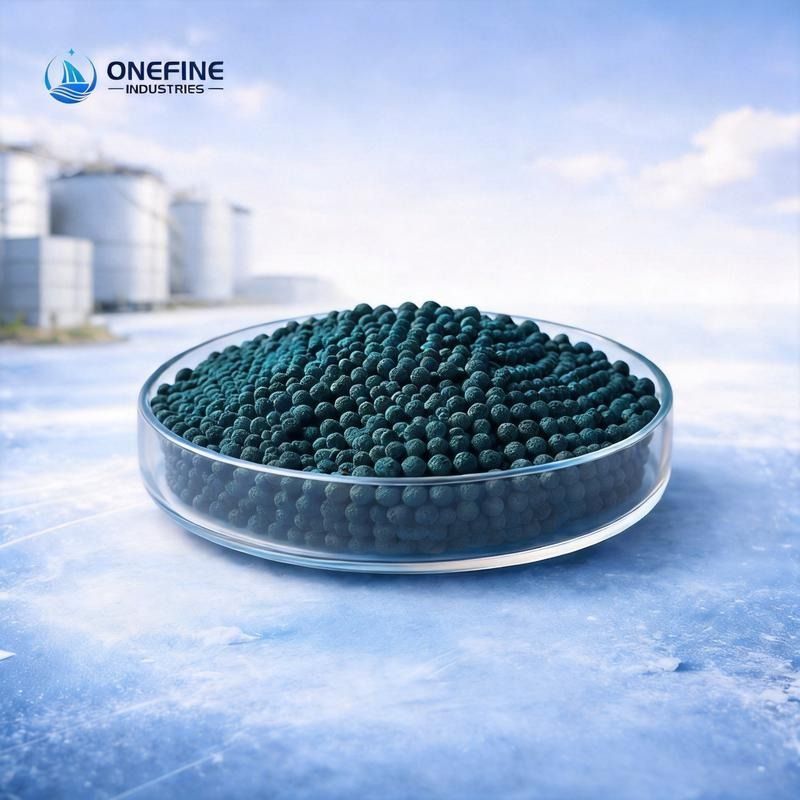
Desulfurization and arsenic removal catalyst
High-performance CuO/Al₂O₃-based desulfurization and arsenic removal catalyst, engineered for the ultra-deep removal of sulfur compounds and volatile arsenides to protect downstream noble metal catalysts. Available in bulk from 1 ton MOQ for Middle East industrial buyers.
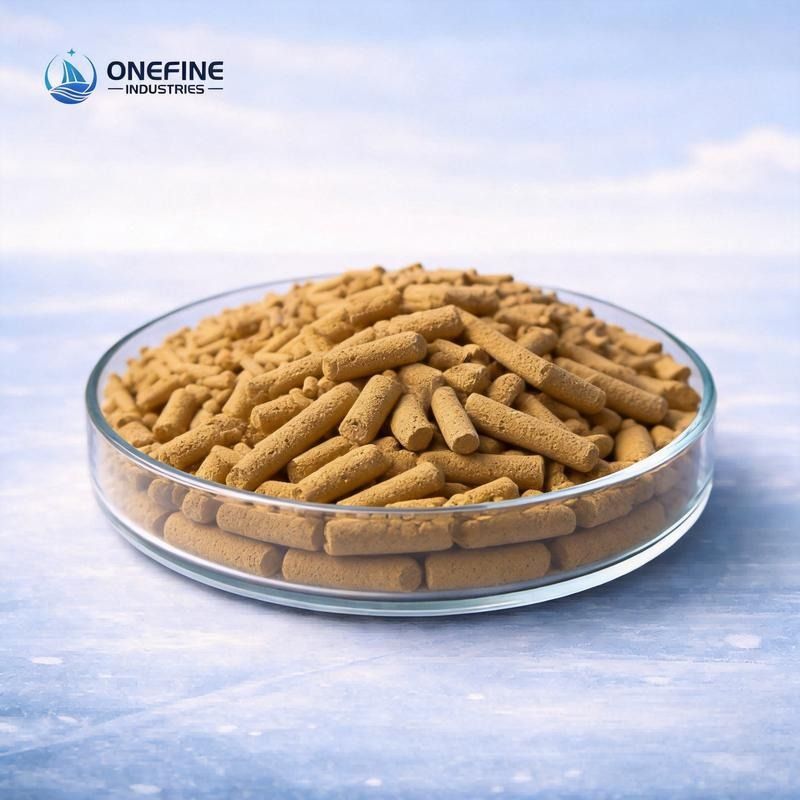
Ammonia refining desulfurization catalyst
A composite metal oxide-based desulfurization catalyst with multiple promoters, designed for H₂S removal in ammonia refining units of sour water strippers at refineries. Reduces H₂S to below 0.5 mg/m³ under low-temperature conditions. Also removes HCl and organic sulfur impurities. Exceptional water resistance.
Related Reading
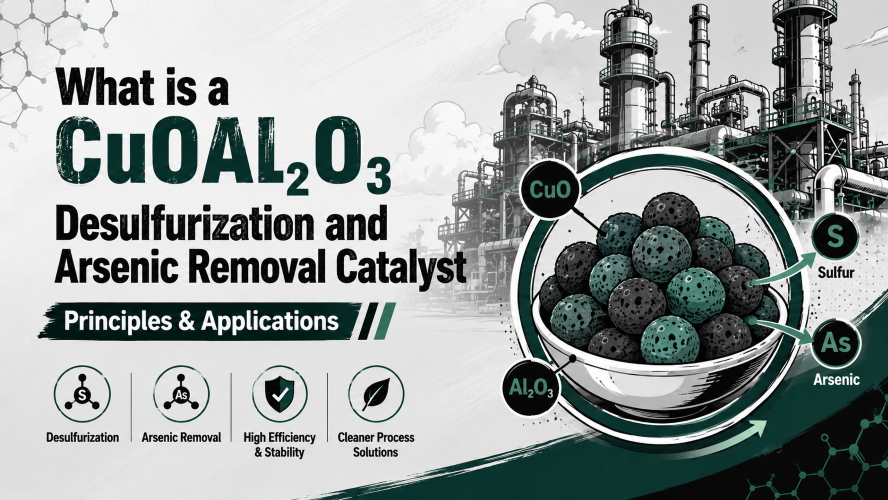
What is a CuO/Al₂O₃ Desulfurization and Arsenic Removal Catalyst? Principles & Applications
A guide to CuO/Al₂O₃ desulfurization and arsenic removal catalysts — how irreversible chemisorption works, key specifications, and how these sacrificial guard beds protect sensitive noble metal catalysts in refineries and petrochemical plants.
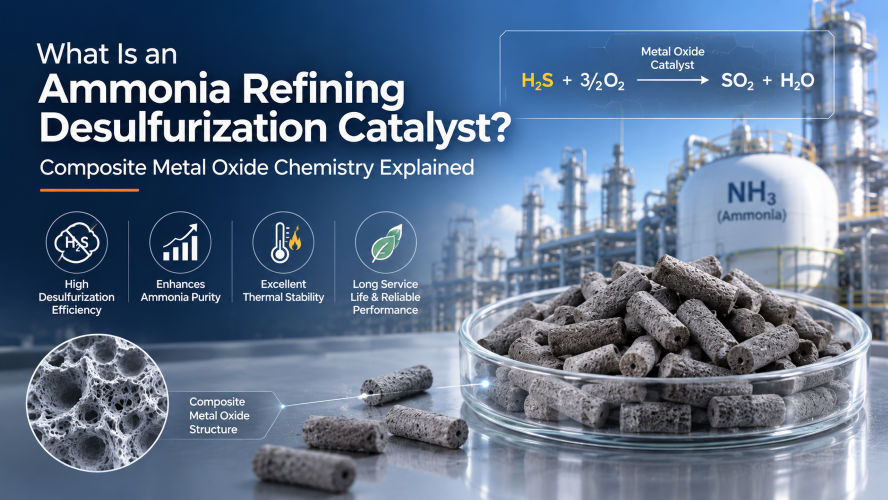
What Is an Ammonia Refining Desulfurization Catalyst? Composite Metal Oxide Chemistry Explained
Ammonia refining desulfurization catalysts use composite metal oxides to remove H₂S from wet, sour gas streams where conventional ZnO desulfurizers struggle. Learn how the chemistry works and when to choose this catalyst over standard alternatives.