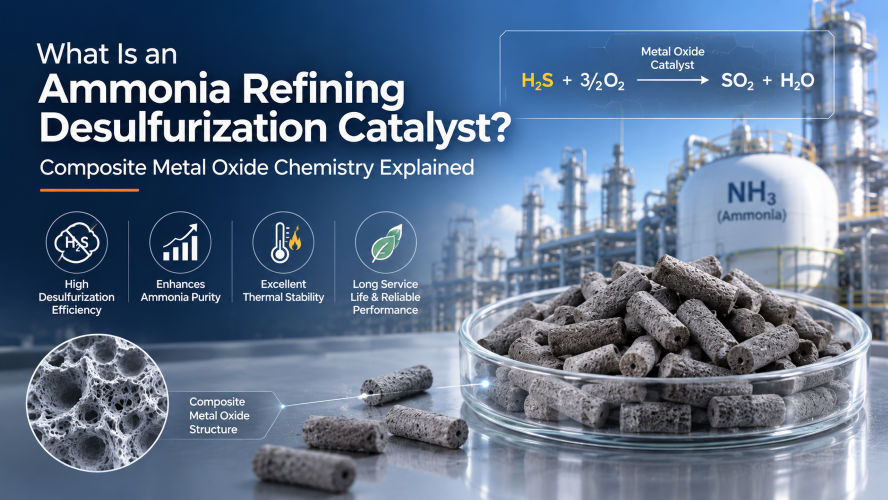
What Is an Ammonia Refining Desulfurization Catalyst? Composite Metal Oxide Chemistry Explained
Key Takeaways:
- Sour Water Stripper Solution: Engineered specifically for moisture-saturated ammonia refining gas streams.
- Structural Resilience: Defeats the mudification failures common to conventional ZnO desulfurizers in wet service.
- Composite Chemistry: Blends active, modification, and structural promoters for sustained low-temp activity.
- All-in-One Guard Bed: Eliminates the need for separate beds by handling H₂S, HCl, and organic sulfur together.
Introduction
Refinery sour water stripper units produce ammonia-rich gas streams saturated with moisture — a condition that conventional zinc oxide desulfurizers were never designed to handle well. An ammonia refining desulfurization catalyst solves this specific problem: a composite metal oxide formulation engineered to remove hydrogen sulfide (H₂S), hydrogen chloride (HCl), and organic sulfur compounds even in fully wet, saturated gas conditions. This guide explains how the chemistry works, why water resistance matters, and how to decide whether this catalyst — or a conventional alternative — fits your process.
Why Wet Gas Streams Are a Problem for Conventional Desulfurizers
Most industrial desulfurization catalysts are formulated and tested under relatively dry conditions. When exposed to continuous moisture — boiling water condensate, saturated vapor, or prolonged water immersion — many desulfurizing materials gradually soften, lose structural integrity, or "mudify," turning from solid extrudates into a paste-like mass that can no longer function as a fixed bed.
Refinery sour water stripper ammonia refining is one of the harshest environments for this: the gas stream leaving the stripper is essentially saturated with water vapor, often carrying trace acid gases like HCl alongside H₂S. A desulfurizer that can't withstand sustained wet exposure will fail prematurely, causing channeling, pressure drop spikes, and loss of desulfurization performance.
The Chemistry Behind Composite Metal Oxide Desulfurization
Unlike single-component desulfurizers, a composite metal oxide catalyst combines multiple functional promoters into one formulation:
- Active promoters enhance the core H₂S chemisorption reaction, improving both speed and depth of sulfur removal.
- Modification promoters adjust the surface chemistry of the active phase, helping the catalyst maintain activity across a range of moisture and temperature conditions.
- Structural promoters reinforce the physical framework of the extrudate, which is what gives this class of catalyst its resistance to water-induced breakdown.
The result is a material that can sustain 60 hours of continuous boiling water exposure, or 60 days of full water immersion, without mudification or hardening — while still achieving outlet H₂S concentrations below 0.5 mg/m³. Beyond H₂S, the same composite formulation hydrolyzes organic sulfur species (COS, CS₂, mercaptans) and removes HCl, making it a multi-pollutant solution in a single bed rather than requiring separate guard beds for each contaminant.
When to Choose This Catalyst vs. a Conventional ZnO Desulfurizer
This is the selection question most buyers actually face, and it comes down to gas stream moisture content:
- Choose a ZnO-based desulfurization catalyst when your gas stream is relatively dry and you need deep, precise H₂S polishing — ZnO chemisorption is well understood, cost-effective, and performs excellently under standard low-moisture conditions.
- Choose an ammonia refining (composite metal oxide) desulfurization catalyst when your gas stream is saturated or wet — such as sour water stripper off-gas — where a conventional ZnO bed would be at risk of mudification and premature failure.
For a detailed side-by-side on ZnO chemistry and typical application range, see our Zinc Oxide desulfurization catalyst guide.
Two Density Grades for Different Bed Configurations
The catalyst is available in a standard grade (0.95±0.15 kg/L, ≥40 N/cm crush strength) suited to general service, and a high-density grade (1.15±0.15 kg/L, 130 N/cm crush strength) built for high-pressure or tall-bed reactors where mechanical integrity under load is critical. The higher crush strength of the dense grade reduces the risk of bed compaction and dusting over long service runs.
If your feed gas also carries phosphorus or oxygen compounds alongside sulfur and HCl, our Deeply Refined Catalyst covers all four contaminant classes in a single bed.
Recommended Products from Sorbsieve
- Ammonia Refining Desulfurization Catalyst — full specifications, packaging, and technical documentation.
- Zinc Oxide Desulfurization Catalyst — see comparison section above for when this is the better fit.
FAQ
Q: How is this different from a standard ZnO desulfurizer in terms of water tolerance?
A: Conventional ZnO desulfurizers are formulated for relatively dry service and are prone to mudification under sustained moisture exposure. The composite metal oxide formulation is specifically engineered to withstand 60 hours of boiling water or 60 days of immersion without structural breakdown.
Q: Does this catalyst only remove H₂S?
A: No. It also hydrolyzes organic sulfur compounds (COS, CS₂, mercaptans) and removes HCl, making it a multi-pollutant solution suited to complex sour gas streams.
Q: Is this catalyst suitable outside of refinery sour water stripper applications?
A: Yes. While it's optimized for that specific service, the same chemistry is effective in synthesis gas desulfurization and hydrogen production units wherever moisture resistance is a priority.
Looking for Bulk Supply of Ammonia Refining Desulfurization Catalyst?
Sorbsieve is a trusted bulk supplier of ammonia refining desulfurization catalyst and complete industrial adsorbents, serving industrial buyers across the Middle East.
We provide:
- ✅ Container-level supply (20'GP / 40'GP / 40'HQ)
- ✅ Full documentation (COA / TDS / SDS / COO)
- ✅ Multiple packaging options
- ✅ Technical support for catalyst selection and system optimization
- ✅ Fast quote response for industrial inquiries
Contact our team for bulk pricing, product samples, and technical consultation.
Related Products
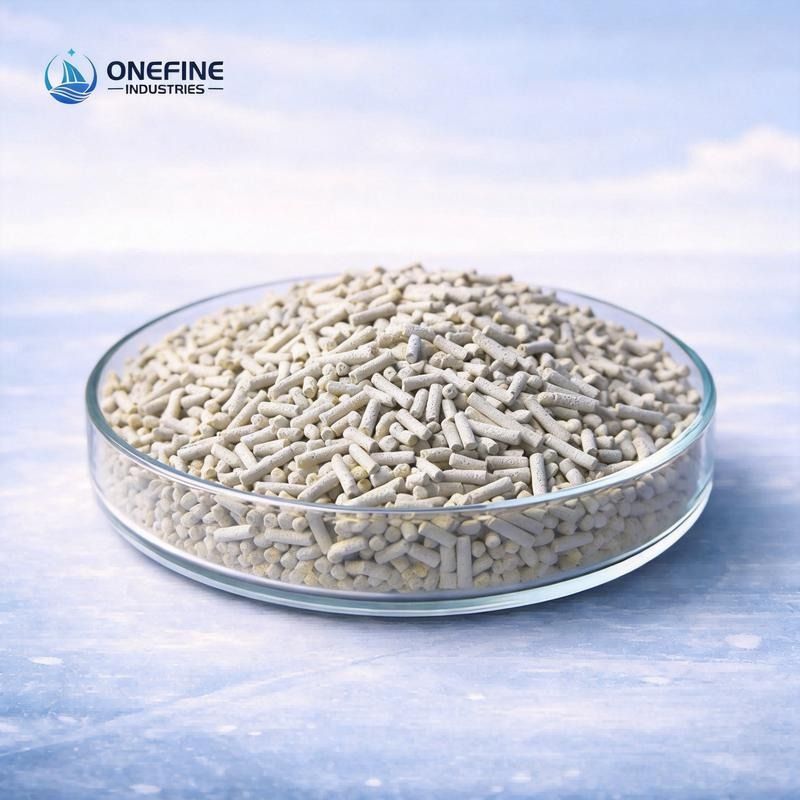
Zinc oxide desulfurization catalyst
High-purity zinc oxide (ZnO) desulfurization catalyst for fine removal of H₂S from natural gas, synthesis gas, hydrogen, and hydrocarbon feeds. Achieves outlet sulfur levels below 0.1 ppm through irreversible chemisorption. High sulfur capacity, long service life, and strong resistance to steam.
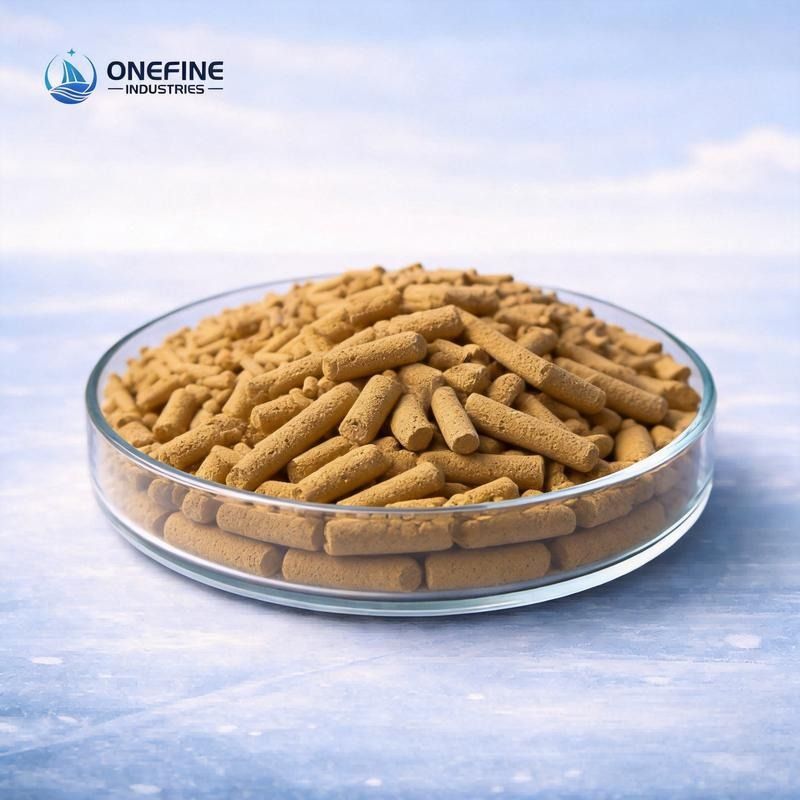
Ammonia refining desulfurization catalyst
A composite metal oxide-based desulfurization catalyst with multiple promoters, designed for H₂S removal in ammonia refining units of sour water strippers at refineries. Reduces H₂S to below 0.5 mg/m³ under low-temperature conditions. Also removes HCl and organic sulfur impurities. Exceptional water resistance.
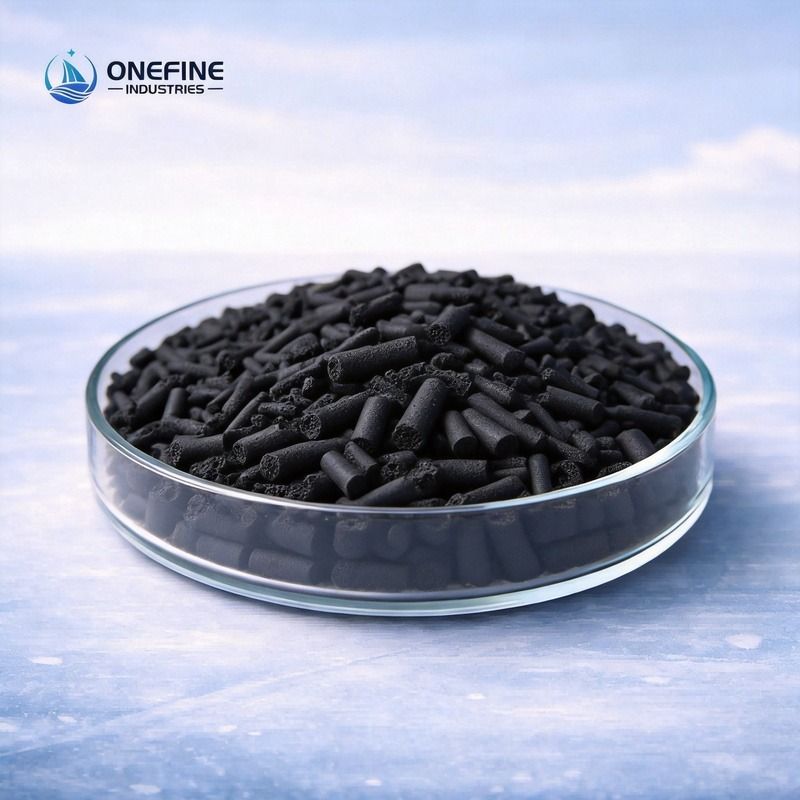
Deeply Refined Catalyst
A high-performance deeply refined catalyst based on copper oxide and zinc oxide active components, designed for deep purification of liquid hydrocarbons and synthesis gas. Achieves total sulfur removal down to ≤ 20 ppb through efficient desulfurization, dearsenication, dephosphorization, and deoxygenation. Features high mechanical strength, stable operation, and excellent low-temperature activity.
Related Reading
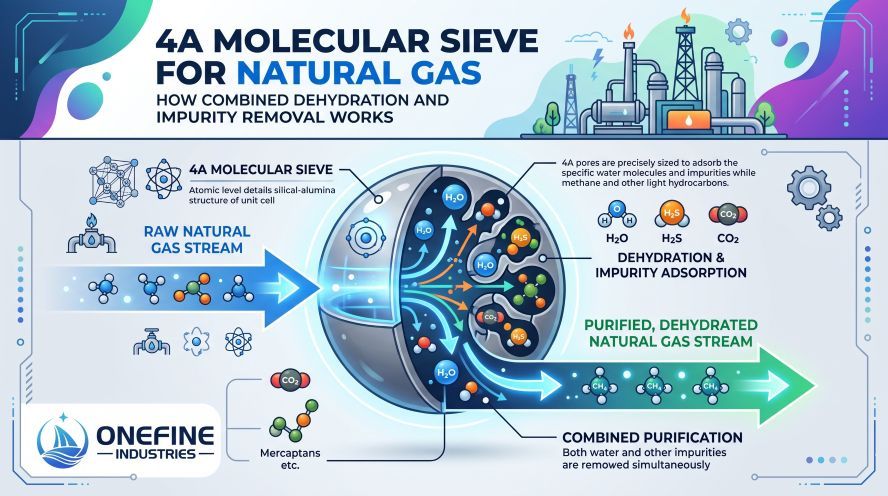
4A Molecular Sieve for Natural Gas: How Combined Dehydration and Impurity Removal Works
4A molecular sieve can dry natural gas and pull moderate CO₂/H₂S out of the same stream in one bed — how its larger pore enables that dual role, where it fits in the treatment train, and when 3A is the better call instead.
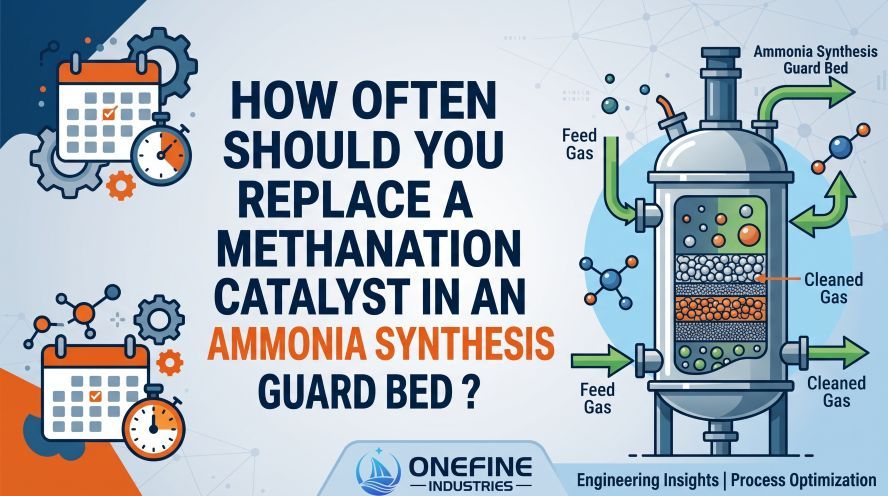
How Often Should You Replace a Methanation Catalyst in an Ammonia Synthesis Guard Bed?
There's no fixed replacement interval for a methanation catalyst — service life depends almost entirely on how well the upstream desulfurization train protects it. Here's how to read the real warning signs.

How Do You Know When to Replace an Ultra-Precision Desulfurization Catalyst?
Four real warning signs — total sulfur creep, falling COS conversion, rising pressure drop, and downstream poisoning — that tell you an Ultra-Precision Desulfurization Catalyst bed needs replacing.