Desulfurization Across an Ammonia Plant: Application Case Analysis
Overview
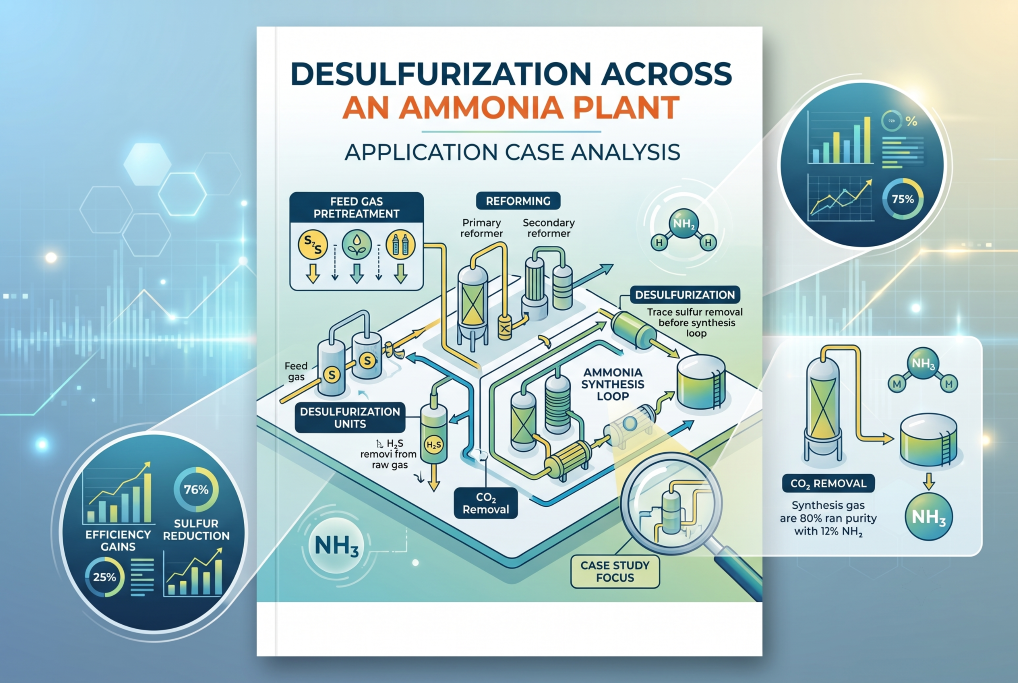
Sulfur management in an ammonia plant isn't a single decision made once — it's a series of different desulfurization duties spread across the process train, each with its own gas condition, purity target, and failure mode if done wrong. Feed gas arrives with its own sulfur load, sour water stripper off-gas is saturated with moisture, and synthesis gas ahead of the ammonia converter needs polishing to protect catalysts that cost far more to replace than the guard bed protecting them.
This case walks through three points in a typical ammonia plant where desulfurization is required, and which catalyst technology fits each one — not as a product comparison, but as a look at how a single system uses different tools for different jobs.
Key Takeaways
- Feed Gas Treatment: Iron oxide provides low-cost bulk H₂S removal for wet feeds, while Zinc Oxide drives precise, deep chemisorption for dry feeds.
- Sour Water Strippers: Ammonia-rich, water-saturated off-gas strictly requires water-resistant Ammonia Refining Desulfurization Catalysts to prevent mudification.
- Synthesis Gas Polishing: Zinc oxide acts as the final guard layer, polishing sulfur to extremely low levels to protect downstream methanation catalysts.
Stage 1: Feed Gas Desulfurization
Process Context
Before natural gas or other hydrocarbon feedstock enters the reforming section, sulfur compounds must be removed to protect the reforming catalyst — one of the most sulfur-sensitive catalysts in the entire plant. Feed gas composition varies by source: pipeline gas is typically dry, while associated gas or field gas can carry more moisture and variable H₂S loads.
How This Stage Works
For dry to moderately wet feed gas requiring precise, deep desulfurization, a Zinc Oxide Desulfurization Catalyst bed is the standard choice — it operates at elevated temperature (200-400°C) and drives H₂S to very low outlet concentrations through chemisorption. Where feed gas carries higher moisture content or where bulk H₂S removal at lower cost is the priority ahead of a polishing step, an Iron Oxide Desulfurization Catalyst bed handles the job at ambient temperature, tolerating wet conditions that would be less ideal for other technologies.
Catalyst Fit for This Stage
- Dry to moderate-moisture feed, deep polishing required: Zinc Oxide Desulfurization Catalyst
- Wet feed gas, bulk removal ahead of polishing, ambient-temperature operation preferred: Iron Oxide Desulfurization Catalyst
Stage 2: Sour Water Stripper Off-Gas Treatment
Process Context
Sour water strippers generate an ammonia-rich off-gas stream that is essentially saturated with water vapor — one of the most challenging conditions for desulfurization in the entire plant. This stream often carries H₂S alongside trace HCl and organic sulfur species, and it needs to be cleaned before further processing or routing to flare or recovery systems.
How This Stage Works
Conventional zinc oxide beds are not well suited to this duty — sustained exposure to saturated, condensing moisture can cause the material to soften or "mudify," losing its structural integrity as a fixed bed. This is the specific gap an Ammonia Refining Desulfurization Catalyst is built to close: a composite metal oxide formulation engineered for water resistance, capable of sustained exposure to boiling water or full immersion without breaking down, while still removing H₂S, HCl, and organic sulfur in a single bed.
Catalyst Fit for This Stage
- Saturated, wet ammonia gas from sour water strippers: Ammonia Refining Desulfurization Catalyst — purpose-built for this exact condition, where a standard ZnO bed would be at risk of premature failure
Stage 3: Synthesis Gas Polishing
Process Context
Ahead of the ammonia synthesis loop, synthesis gas must be polished to very low sulfur levels to protect the methanation and ammonia synthesis catalysts downstream — both of which are highly sensitive to sulfur poisoning, and both of which are expensive and disruptive to replace if damaged.
How This Stage Works
This is a precision polishing duty on gas that has typically already had bulk sulfur removed upstream. Zinc oxide's high-temperature chemisorption mechanism is well suited to driving outlet H₂S down to the low levels these catalysts require, functioning as the final guard layer before the gas reaches the synthesis catalysts.
Catalyst Fit for This Stage
- Final polishing ahead of methanation and synthesis catalysts: Zinc Oxide Desulfurization Catalyst
Why the Same Plant Uses Different Catalysts at Different Points
The common thread across all three stages isn't "which catalyst is best" — it's matching catalyst chemistry to the specific gas condition at each point in the process:
- Gas moisture content is often the deciding factor: dry-to-moderate feed and polishing duties favor zinc oxide's high-temperature chemisorption, while saturated or wet streams call for the water-resistant composite formulation in an ammonia refining desulfurization catalyst.
- Bulk removal vs. precision polishing also matters: iron oxide's low-cost, ambient-temperature operation suits bulk duty ahead of a polishing stage, while zinc oxide is reserved for the deep, precise removal that protects the most sulfur-sensitive catalysts.
- Multi-contaminant streams (H₂S plus HCl and organic sulfur, as in sour water stripper gas) benefit from a single-bed multi-pollutant solution rather than stacking multiple guard beds.
Sharing your gas composition and moisture conditions at each point in your process is the fastest way to confirm which technology fits which stage. For deeper technical background, see our Zinc Oxide desulfurization guide and Ammonia Refining Desulfurization Catalyst guide.
Recommended Products from Sorbsieve
- Iron Oxide Desulfurization Catalyst — low-cost, ambient-temperature bulk H₂S removal, tolerant of wet feed gas
- Zinc Oxide Desulfurization Catalyst — high-temperature, deep desulfurization for precision polishing duties
- Ammonia Refining Desulfurization Catalyst — water-resistant composite formulation for saturated, wet gas streams and multi-pollutant removal
Contact our team for bulk pricing and grade recommendation based on your gas composition and process conditions.
Supply Information
Sorbsieve supplies Iron Oxide, Zinc Oxide, and Ammonia Refining Desulfurization Catalysts to industrial buyers across the Middle East and internationally.
Standard packaging options:
- 25 kg drums (suitable for trial orders and small-batch systems)
- 150 kg steel drums
- 500 kg super sacks (most popular for industrial bulk orders)
- 1,000 kg jumbo bags (standard for plant-scale orders)
Minimum order quantity: 1 ton (trial orders accepted)
Container loading: 20'GP: 18-20 tons | 40'GP: 22-24 tons | 40'HQ: 24-26 tons
Loading ports: Shanghai, Qingdao, Tianjin, Ningbo, Shenzhen
Documents provided: COA (per batch) / TDS (pre-sale) / SDS (pre-shipment) / COO / Packing List
Looking for Bulk Supply of Desulfurization Catalysts?
Sorbsieve is a trusted bulk supplier of Iron Oxide, Zinc Oxide, and Ammonia Refining Desulfurization Catalysts, serving industrial buyers across the Middle East.
We provide:
- ✅ Container-level supply (20'GP / 40'GP / 40'HQ)
- ✅ Full documentation (COA / TDS / SDS / COO)
- ✅ Multiple packaging options
- ✅ Technical support for catalyst selection based on your gas composition and process stage
- ✅ Fast quote response for industrial inquiries
Contact our team for bulk pricing, grade confirmation, and technical consultation.
Related Products
Zinc oxide desulfurization catalyst
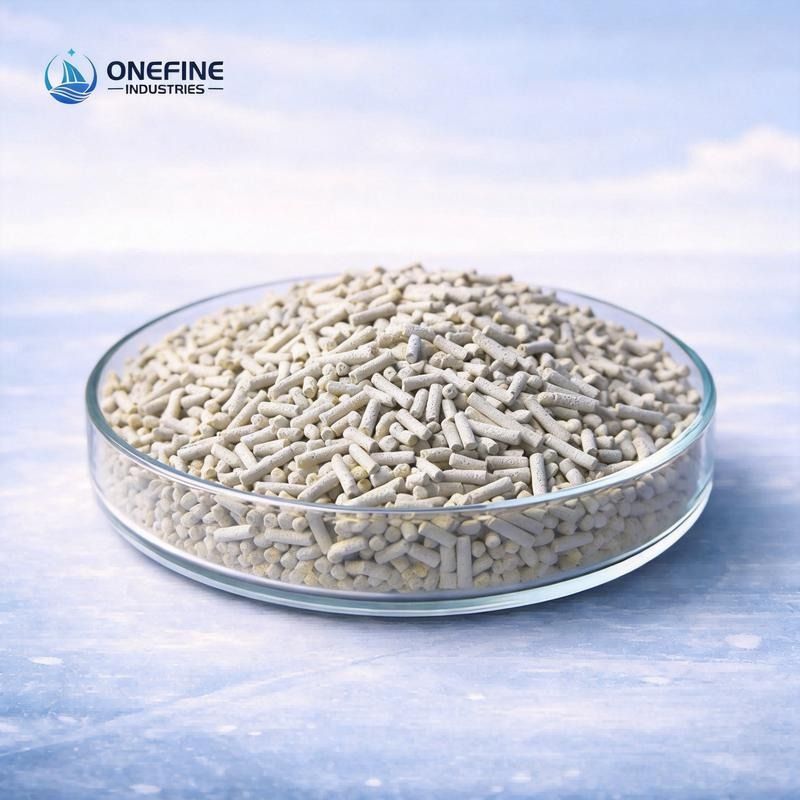
High-purity zinc oxide (ZnO) desulfurization catalyst for fine removal of H₂S from natural gas, synthesis gas, hydrogen, and hydrocarbon feeds. Achieves outlet sulfur levels below 0.1 ppm through irreversible chemisorption. High sulfur capacity, long service life, and strong resistance to steam.
Ammonia refining desulfurization catalyst
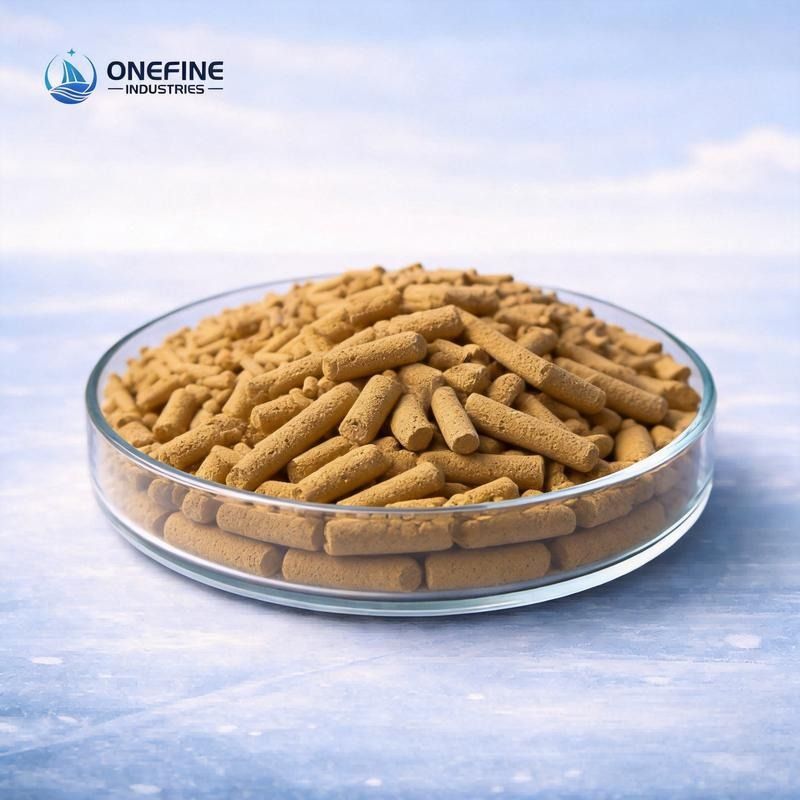
A composite metal oxide-based desulfurization catalyst with multiple promoters, designed for H₂S removal in ammonia refining units of sour water strippers at refineries. Reduces H₂S to below 0.5 mg/m³ under low-temperature conditions. Also removes HCl and organic sulfur impurities. Exceptional water resistance.
Iron Oxide Desulfurization Catalyst
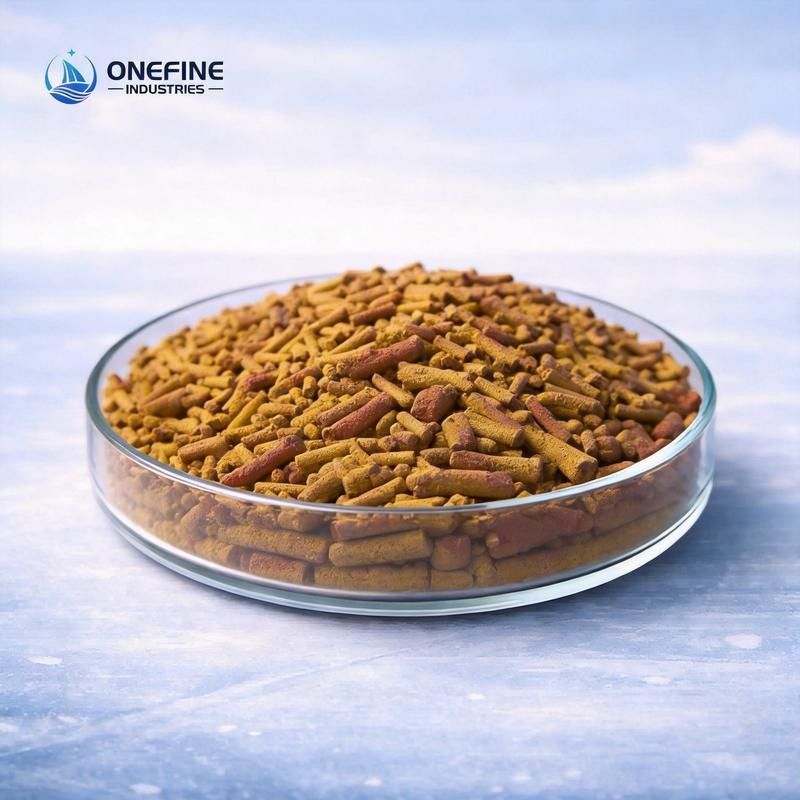
High-efficiency iron oxide-based desulfurization catalyst for deep removal of H₂S from natural gas, biogas, syngas, coke oven gas, and various industrial gas streams. Features high sulfur capacity, excellent water resistance, and room-temperature operation — a cost-effective solution for both bulk and precision desulfurization applications.
Related Reading
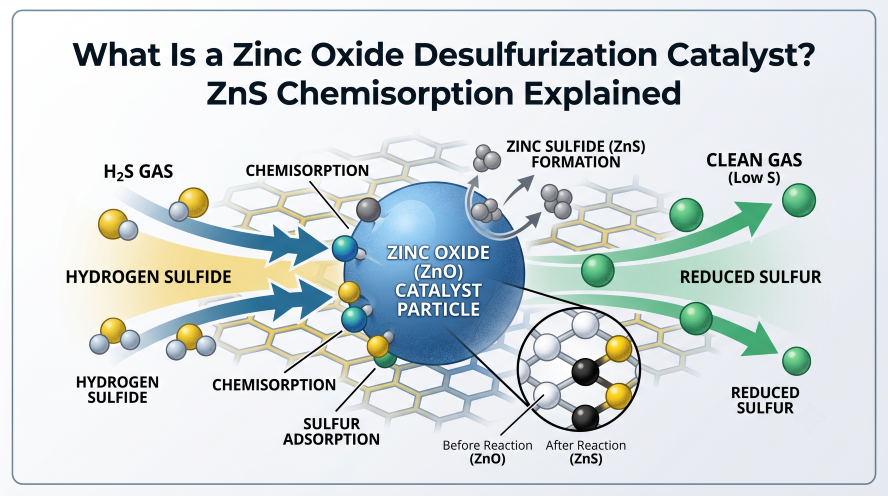
What Is a Zinc Oxide Desulfurization Catalyst? ZnS Chemisorption Explained
A plain-language guide to zinc oxide (ZnO) desulfurization catalyst: how it removes H₂S down to sub-ppm levels, where it fits in a desulfurization train, and how to decide if you need it.
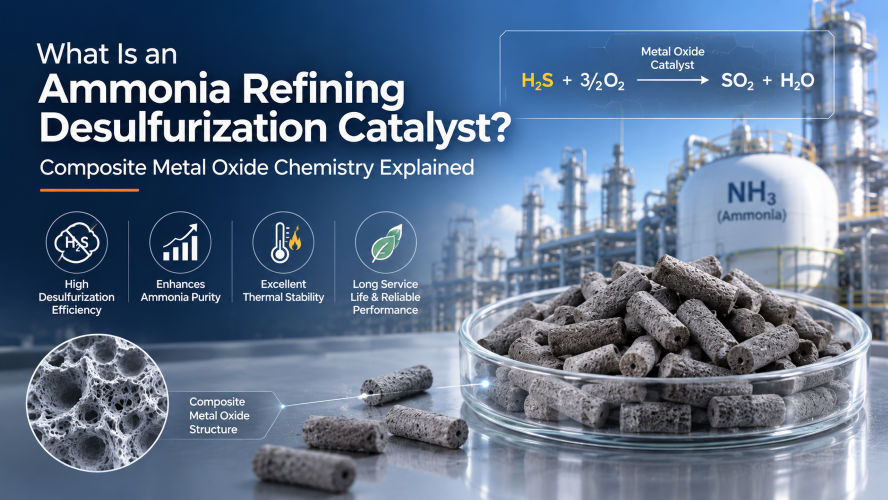
What Is an Ammonia Refining Desulfurization Catalyst? Composite Metal Oxide Chemistry Explained
Ammonia refining desulfurization catalysts use composite metal oxides to remove H₂S from wet, sour gas streams where conventional ZnO desulfurizers struggle. Learn how the chemistry works and when to choose this catalyst over standard alternatives.