Zinc oxide desulfurization catalyst
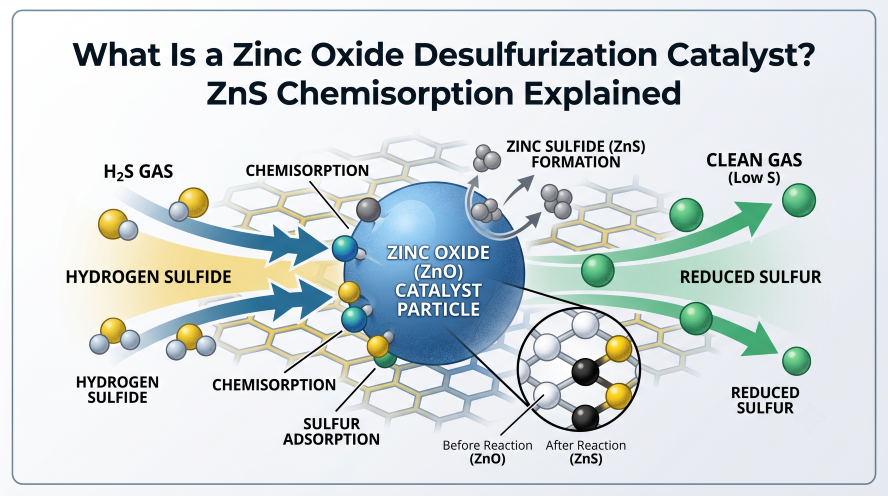
High-purity zinc oxide (ZnO) desulfurization catalyst for fine removal of H₂S from natural gas, synthesis gas, hydrogen, and hydrocarbon feeds. Achieves outlet sulfur levels below 0.1 ppm through irreversible chemisorption. High sulfur capacity, long service life, and strong resistance to steam.
Get QuoteKey Attributes
- Ultra-Deep Desulfurization (<0.1 ppm) – Irreversible chemisorption reaction (ZnO + H₂S → ZnS + H₂O) drives outlet sulfur levels below 0.1 ppm, protecting downstream catalysts (reforming, methanation, methanol synthesis, low-temperature shift) from sulfur poisoning.
- High-Purity ZnO Active Phase (≥95 wt.%) – The exceptionally high ZnO loading maximizes sulfur capacity per unit volume. Higher ZnO content directly translates to higher theoretical sulfur capacity and longer bed life, reducing replacement frequency and operating costs.
- High Sulfur Capacity (≥30% at 350°C) – The theoretical sulfur capacity of pure ZnO is ~40 wt.%; practical products achieve ≥30% at 350°C and ≥20% at 220°C. This means each ton of catalyst can remove 200–300 kg of sulfur before breakthrough, providing extended service life.
- Broad Operating Temperature Range (200–400°C) – Effective across low-, medium-, and high-temperature desulfurization applications. Performs reliably in both dry gas streams and wet conditions (steam/feed ratio 1–1.5), maintaining structural integrity and activity throughout the temperature envelope.
- Excellent Mechanical Strength (≥40 N/cm) – High radial crush strength resists attrition and bed compaction under industrial operating pressures up to 4.0 MPa, minimizing fines generation and pressure drop increase over extended run lengths.
- Organic Sulfur Conversion Capability – Beyond direct H₂S chemisorption, ZnO can also convert and absorb simple organic sulfur compounds such as COS and CS₂ through thermal hydrolysis and direct reaction, providing broader sulfur removal coverage than simple physical adsorbents.
Applications
- Natural Gas Sweetening (Fine HDS) – Removes residual H₂S from natural gas and LNG feedstocks to below 0.1 ppm after upstream amine treatment. Essential for protecting downstream cryogenic processing equipment and meeting pipeline gas sulfur specifications.
- Hydrogen & Ammonia Synthesis Gas Purification – Positioned downstream of hydrodesulfurization reactors and ZnO beds in hydrogen production (steam reforming) and ammonia synthesis plants. Final guard polishing step that prevents sulfur poisoning of the reforming catalyst, shift catalyst, and methanation catalyst.
- Methanol Synthesis Feed Protection – Protects copper-based methanol synthesis catalysts, which are extremely sensitive to sulfur poisoning. Even trace sulfur (ppb level) causes rapid and irreversible deactivation of Cu/ZnO/Al₂O₃ methanol catalysts. ZnO desulfurizer is the standard last-line protection.
- Refinery Light Hydrocarbon Treating – Removes H₂S and light organic sulfur from naphtha, LPG, and refinery light ends after hydrotreating. Ensures downstream catalytic reforming and isomerization units receive sulfur-free feed.
- Biogas & Coal-Derived Syngas Upgrading – Eliminates H₂S from biogas (anaerobic digestion) and coal-derived syngas. Prevents corrosion in pipelines and engines, and protects fuel cell systems that require ultra-low sulfur feed gas.
- Shift Gas & CO₂ Stream Purification – Removes H₂S from water-gas shift streams and captured CO₂ streams in carbon capture applications. Critical for producing CO₂ suitable for food-grade applications, enhanced oil recovery (EOR), or urea production.
- Petrochemical Cracked Gas Purification – Protects sulfur-sensitive downstream polymerization catalysts (e.g., Ziegler-Natta and metallocene systems) in ethylene and propylene units by removing trace H₂S from cracked gas streams.
- PSA Hydrogen Purification Feed Guard – Positioned ahead of pressure swing adsorption (PSA) units to protect adsorbent beds from sulfur contamination, supporting high-purity hydrogen production for industrial and fuel cell applications.
- Coke Oven Gas & Town Gas Treatment – Fine desulfurization of coke oven gas or town/city gas prior to distribution, protecting pipeline infrastructure and downstream combustion equipment from sulfur-related corrosion.
Product Description
What Is a Zinc Oxide Desulfurization Catalyst?
Key Takeaways:
- Ultra-Deep Precision: Utilizes irreversible chemisorption (ZnO + H₂S → ZnS + H₂O) to reduce outlet H₂S to <0.1 ppm.
- High Purity & Capacity: Contains ≥95 wt.% ZnO, achieving ≥30% sulfur capacity at 350°C for extended bed life.
- Downstream Protection: Acts as the critical final guard bed to prevent sulfur poisoning in reforming, methanation, and methanol synthesis catalysts.
- Broad Operating Envelope: Highly stable across 200–400°C and tolerant to moderate wet streams (1–1.5 steam/feed ratio).
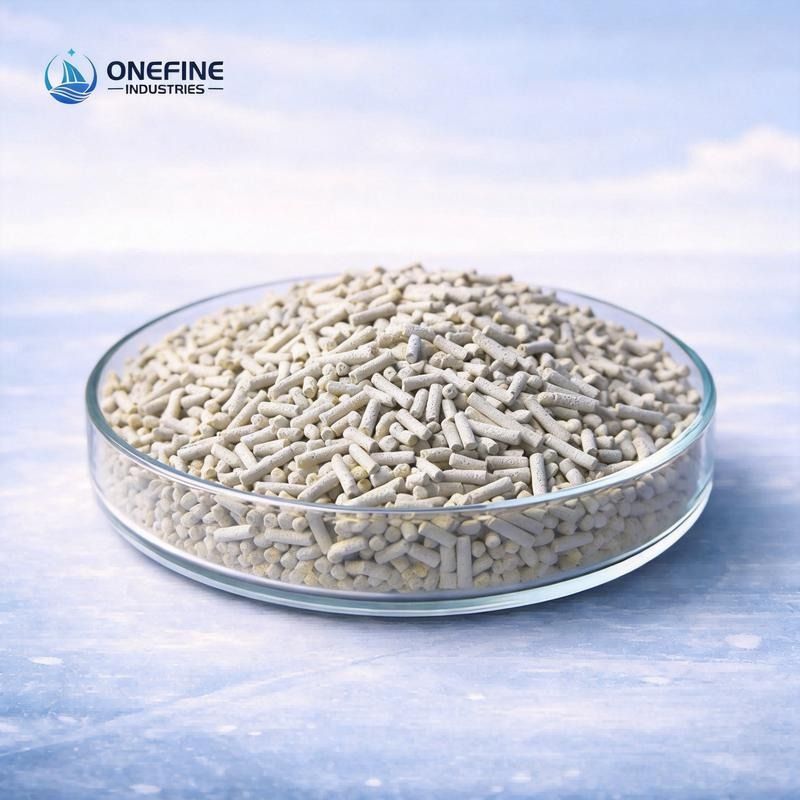
A zinc oxide (ZnO) desulfurization catalyst is a high-purity, non-regenerable solid adsorbent used for fine (precision) removal of hydrogen sulfide (H₂S) from gas and liquid hydrocarbon feeds. The active component is crystalline ZnO at ≥95 wt.% content, formed into dense extrudates that provide high mechanical strength and low pressure drop in fixed-bed reactor service.
The desulfurization mechanism is an irreversible chemisorption reaction:
ZnO(s) + H₂S(g) → ZnS(s) + H₂O(g) (ΔG < 0 across 100–1000°C)
Hydrogen sulfide molecules in the feed gas diffuse to the ZnO surface, dissociate into H and HS⁻/S²⁻ species, and react with lattice Zn²⁺ ions to form thermodynamically stable zinc sulfide (ZnS). The reaction is exothermic and proceeds spontaneously across a wide temperature range. Once converted to ZnS, the material cannot be regenerated by simple thermal or pressure swing — the spent catalyst is replaced.
ZnO desulfurizers serve as the final "polishing" step in multi-stage desulfurization schemes, where upstream hydrodesulfurization (Co-Mo Hydrogenation Catalyst or Ni-Mo Hydrogenation Catalyst) handles bulk sulfur removal, and the ZnO bed captures the remaining trace H₂S to below 0.1 ppm.
Desulfurization Chemistry & Mechanism
The H₂S removal by ZnO is a solid-state lattice diffusion-controlled reaction. Two growth mechanisms are recognized in the literature:
Inward growth (shrinking core model): HS⁻/S²⁻ ions from the gas phase diffuse inward through the forming ZnS product layer to reach the unreacted ZnO core. The ZnS layer grows progressively inward while the ZnO core shrinks. This mechanism is dominant at higher temperatures (300–400°C) where lattice diffusion is faster.
Outward growth (hollow core–shell model): Zn²⁺ and O²⁻ ions from the inner ZnO core migrate outward through the ZnS layer. Zn²⁺ reacts with external S²⁻ to form additional ZnS at the particle surface, while O²⁻ combines with H⁺ to form H₂O. This creates a hollow cavity in the particle center and can achieve faster kinetics by avoiding long-range diffusion through the bulk oxide.
Regardless of the dominant mechanism, the reaction proceeds until the adsorbent reaches sulfur saturation — typically 20–30% sulfur by weight for commercial high-purity products.
In addition to H₂S, ZnO can convert and absorb simple organic sulfur compounds through thermal hydrolysis and direct reaction:
- COS: ZnO + COS → ZnS + CO₂
- CS₂: 2ZnO + CS₂ → 2ZnS + CO₂
- Mercaptans (e.g., C₂H₅SH): ZnO + C₂H₅SH → ZnS + C₂H₄ + H₂O
Technical Specifications
- Appearance: White or light yellow extrudates
- Particle Size: Φ(4 ± 0.5) mm
- Bulk Density: 0.95 – 1.25 kg/L
- Radial Crush Strength (mean): ≥40 N/cm
- ZnO Content: 95 ± 5 wt.%
- Operating Temperature: 200 – 400°C
- Operating Pressure: Ambient – 4.0 MPa
- Recommended H₂S in Feed: <250 ppm
- Target Outlet Sulfur: <0.1 ppm
- Breakthrough Sulfur Capacity: ≥20% (220°C), ≥30% (350°C)
- Loss on Ignition: ≤2%
- Attrition Rate: ≤6% wt
- Available Forms: Extrudate (length 4–15 mm, customizable)
Note: Particle size and component content can be customized according to customer requirements.
Key Benefits
- Sub-ppm desulfurization precision — Achieves outlet total sulfur below 0.1 ppm, meeting the most stringent requirements of reforming, methanol synthesis, and fuel cell feed gas specifications
- Maximum ZnO utilization — At ≥95 wt.% ZnO content, the active component utilization rate exceeds 90% at 300–400°C, approaching the theoretical sulfur capacity
- Steam-tolerant operation — Maintains activity and structural integrity in the presence of water vapor (steam/feed ratio 1–1.5), unlike many competing adsorbents that degrade in wet conditions
- Long service life — High sulfur capacity (≥30% at 350°C) combined with high bulk density means more sulfur removal per reactor volume, extending run lengths between catalyst change-outs
- Broad feed compatibility — Effective on natural gas, synthesis gas, hydrogen, refinery light ends, coal gas, biogas, and shifted gas streams
- No regeneration required — The irreversible chemisorption mechanism provides consistent performance until breakthrough, with no risk of sulfur slip from incomplete regeneration
⚠️ Application Note: ZnO desulfurizers are non-regenerable — once saturated with sulfur, the material must be replaced. Plan for adequate bed sizing and spare catalyst inventory to avoid unplanned shutdowns. For applications requiring regenerable sulfur removal, consider amine-based or iron oxide-based systems for bulk H₂S removal upstream, reserving ZnO for final polishing.
Applications
- Natural Gas Sweetening (Fine HDS) – Removes residual H₂S from natural gas and LNG feedstocks to below 0.1 ppm after upstream amine treatment. Essential for protecting downstream cryogenic processing equipment and meeting pipeline gas sulfur specifications.
- Hydrogen & Ammonia Synthesis Gas Purification – Positioned downstream of hydrodesulfurization reactors and ZnO beds in hydrogen production (steam reforming) and ammonia synthesis plants. Final guard polishing step that prevents sulfur poisoning of the reforming catalyst, shift catalyst, and methanation catalyst.
- Methanol Synthesis Feed Protection – Protects copper-based methanol synthesis catalysts, which are extremely sensitive to sulfur poisoning. Even trace sulfur (ppb level) causes rapid and irreversible deactivation of Cu/ZnO/Al₂O₃ methanol catalysts. ZnO desulfurizer is the standard last-line protection.
- Refinery Light Hydrocarbon Treating – Removes H₂S and light organic sulfur from naphtha, LPG, and refinery light ends after hydrotreating. Ensures downstream catalytic reforming and isomerization units receive sulfur-free feed.
- Biogas & Coal-Derived Syngas Upgrading – Eliminates H₂S from biogas (anaerobic digestion) and coal-derived syngas. Prevents corrosion in pipelines and engines, and protects fuel cell systems that require ultra-low sulfur feed gas.
- Shift Gas & CO₂ Stream Purification – Removes H₂S from water-gas shift streams and captured CO₂ streams in carbon capture applications. Critical for producing CO₂ suitable for food-grade applications, enhanced oil recovery (EOR), or urea production.
- Petrochemical Cracked Gas Purification – Protects sulfur-sensitive downstream polymerization catalysts (e.g., Ziegler-Natta and metallocene systems) in ethylene and propylene units by removing trace H₂S from cracked gas streams.
- PSA Hydrogen Purification Feed Guard – Positioned ahead of pressure swing adsorption (PSA) units to protect adsorbent beds from sulfur contamination, supporting high-purity hydrogen production for industrial and fuel cell applications.
- Coke Oven Gas & Town Gas Treatment – Fine desulfurization of coke oven gas or town/city gas prior to distribution, protecting pipeline infrastructure and downstream combustion equipment from sulfur-related corrosion.
Process Integration
ZnO desulfurization catalysts are deployed in fixed-bed, downflow reactors as the final guard bed in multi-stage desulfurization trains:
- Feed Preparation: The feed gas (natural gas, syngas, refinery gas) is heated to the operating temperature (200–400°C). For liquid feeds (naphtha, light oil), the feed is vaporized and mixed with hydrogen-rich recycle gas.
- Upstream Bulk Desulfurization: A hydrodesulfurization catalyst (Co-Mo, Ni-Mo, or Nickel-Molybdenum-Tungsten Catalyst for higher-severity feeds) converts organic sulfur compounds (thiophenes, mercaptans, disulfides) to H₂S in the presence of hydrogen. This step reduces total sulfur to below 1–5 ppm.
- ZnO Polishing Bed: The partially desulfurized stream passes through the ZnO catalyst bed, where residual H₂S is irreversibly chemisorbed to below 0.1 ppm. The bed is typically sized for 1–3 years of service depending on feed sulfur content and flow rate.
- Monitoring & Change-Out: Outlet sulfur is continuously monitored (online H₂S analyzers or periodic sampling). Rising outlet sulfur indicates approaching breakthrough. At breakthrough, the reactor is isolated, cooled under inert gas, and the spent ZnO catalyst is unloaded and replaced.
Typical Operating Conditions
- Natural gas fine HDS: 300–400°C, 1.0–4.0 MPa, GHSV 1000–3000 h⁻¹, feed H₂S <250 ppm
- Syngas / H₂ purification: 300–400°C, 1.0–3.0 MPa, GHSV 1000–2000 h⁻¹, feed H₂S <100 ppm
- Methanol synthesis feed: 200–350°C, 2.0–5.0 MPa, GHSV 500–1500 h⁻¹, feed H₂S <10 ppm
- Low-temperature operation: 180–250°C, Ambient–3.0 MPa, GHSV 500–1000 h⁻¹, feed H₂S <50 ppm
Bed Design Guidelines
- Bed depth-to-diameter ratio: Recommended ≥3:1 to ensure sufficient gas residence time and uniform flow distribution
- Dual-reactor configuration: Two ZnO reactors in series improve overall ZnO utilization and provide redundancy for on-line change-out
- Guard layer: A layer of inert refractory balls (top and bottom) protects the catalyst bed from flow maldistribution and mechanical damage
- Inlet distribution: Proper gas distribution is critical — channeling reduces effective bed utilization and causes premature breakthrough
Sulfur Capacity & Service Life
The sulfur capacity of ZnO desulfurizer depends on operating temperature, feed composition, and ZnO utilization efficiency:
- 200°C: Breakthrough sulfur capacity ≥10–15%, ZnO utilization rate ~60–70%
- 220°C: Breakthrough sulfur capacity ≥20%, ZnO utilization rate ~75–80%
- 300°C: Breakthrough sulfur capacity ≥25–28%, ZnO utilization rate ~85–90%
- 350°C: Breakthrough sulfur capacity ≥30%, ZnO utilization rate ~90–95%
- 400°C: Breakthrough sulfur capacity ≥30–35%, ZnO utilization rate ~90–95%
Actual service life depends on feed H₂S concentration, gas flow rate, operating temperature, and bed sizing, and should be calculated on a per-project basis together with our technical team.
Choosing Between ZnO and Related Desulfurization Options
Zinc oxide is a strong default for high-temperature, precision H₂S polishing, but several situations call for a different technology instead:
- Bulk removal ahead of ZnO polishing: For high sulfur loads, pairing ZnO with a low-cost, ambient-temperature bulk stage — such as our Iron Oxide Desulfurization Catalyst — often reduces overall bed size and cost versus a single oversized ZnO vessel.
- Saturated or wet gas streams: Conventional ZnO beds risk mudification under sustained moisture. For sour water stripper off-gas or other saturated streams, our Ammonia Refining Desulfurization Catalyst is purpose-built for that condition.
- Feeds carrying meaningful COS: Plain ZnO doesn't react with carbonyl sulfide at typical operating temperatures. If COS is a real contributor to total sulfur, our Ultra-Precision Desulfurization Catalyst hydrolyzes and captures sulfur in a single bifunctional bed.
- Near-ambient temperature service: Where feed is already cool and heating for ZnO's 200–400°C window isn't practical, our Activated Carbon Fine Desulfurization Catalyst handles H₂S oxidation and COS hydrolysis at ambient-to-50°C conditions.
Deactivation & End-of-Life
ZnO desulfurizers deactivate exclusively through sulfur saturation — there is no coke formation, thermal sintering, or competitive poisoning mechanism under normal operating conditions. This makes ZnO one of the most predictable and reliable desulfurization materials in terms of service life.
Poisoning considerations:
- Oxygen: Feed gas oxygen content should not exceed 0.5%. Excessive O₂ can oxidize the ZnO surface and reduce breakthrough sulfur capacity
- Chlorine: Chlorine in any form (HCl, organic chlorides) degrades desulfurization performance and should be removed upstream
- Heavy metals: Not typically a concern for gas-phase applications; relevant only for liquid feed processing
Spent catalyst handling: Saturated ZnO catalyst (now ZnS) is classified as non-hazardous in most jurisdictions. Spent material can be sent to zinc smelters for metal recovery, or disposed of as general industrial solid waste per local regulations.
Packaging & Shipping
We offer flexible packaging and shipping options to suit your project scale and logistics requirements.
Standard Packaging:
- 25 kg drums (moisture-proof, suitable for trial orders and small batches)
- 150 kg steel drums (standard bulk packaging for industrial orders)
- 500 kg super sacks (most popular for industrial bulk orders)
- 1000 kg jumbo bags (for large-scale projects)
- Custom packaging available on request
Minimum Order Quantity (MOQ):
- 1 ton (entry-level orders accepted — perfect for first-time customers)
- 5+ tons (standard bulk orders)
- Container-level supply for long-term partnerships
Container Loading Capacity:
- 20'GP: 18–20 tons
- 40'GP: 22–24 tons
- 40'HQ: 24–26 tons
Loading Ports: Shanghai, Qingdao, Tianjin, Ningbo, Shenzhen.
Lead Time:
- Stock orders: 7–15 days from payment confirmation
- Made-to-order: 20–30 days
Shipping Terms: FOB / CIF / CFR / EXW — flexible based on destination and requirements.
Documents & Certificates
Complete documentation provided with every order:
📄 Technical Data Sheet (TDS) — Confirmed during product selection to ensure exact specifications match your application.
📄 Safety Data Sheet (SDS) — Provided before shipment, compliant with international transportation and handling standards.
📄 Certificate of Analysis (COA) — Issued per production batch for full quality traceability.
Additional documents available on request: Certificate of Origin (COO), Packing List, Commercial Invoice, Third-party Inspection Report (SGS / BV), Form E (for applicable tariff preferences).
Frequently Asked Questions
How does ZnO desulfurization differ from amine-based H₂S removal? Amine systems (MDEA, DEA) are regenerable and used for bulk H₂S removal at high concentrations (thousands of ppm). ZnO is non-regenerable and used for fine (precision) desulfurization at low concentrations (<250 ppm). In practice, amine treatment is used first for bulk removal, followed by ZnO polishing to achieve sub-ppm outlet sulfur.
Can ZnO desulfurizer remove organic sulfur compounds? ZnO can convert and absorb simple organic sulfur species (COS, CS₂, light mercaptans) through thermal hydrolysis and direct reaction. However, for feeds containing complex organic sulfur (thiophenes, dibenzothiophenes), an upstream hydrodesulfurization catalyst (Co-Mo or Ni-Mo) is required to first convert these compounds to H₂S before the ZnO bed.
Is ZnO desulfurizer regenerable? No. The reaction ZnO + H₂S → ZnS is thermodynamically irreversible under practical conditions. Once the catalyst is saturated with sulfur, it must be replaced. This is why ZnO is used as a polishing/final guard bed rather than a bulk desulfurization stage.
What temperature gives the best sulfur capacity? Higher temperatures (300–400°C) give the best ZnO utilization rate (>90%) and highest sulfur capacity (≥30%). At lower temperatures (180–220°C), the reaction is kinetically limited by lattice diffusion, reducing utilization to 60–80% and sulfur capacity to 10–20%.
How long does a ZnO desulfurizer bed last? Service life depends on feed H₂S concentration, flow rate, operating temperature, and bed sizing. Typical industrial installations achieve 1–3 years of service before breakthrough. Dual-reactor configurations allow on-line change-out without process shutdown.
What is the difference between ZnO and iron oxide desulfurizers? Iron oxide (Fe₂O) desulfurizers are lower-cost, suitable for ambient-to-low-temperature bulk H₂S removal at higher sulfur concentrations, and some grades are regenerable. ZnO operates at higher temperatures, achieves much lower outlet sulfur (<0.1 ppm vs. ~1–10 ppm for iron oxide), and is used for precision desulfurization. The two are often used in series: iron oxide for bulk removal, ZnO for final polishing.
Conclusion
For a plain-language walkthrough of how this chemistry works and how to decide if you need a ZnO polishing bed, see our guide: What Is a Zinc Oxide Desulfurization Catalyst?
Zinc oxide desulfurization catalyst is the industry-standard choice for precision H₂S polishing, delivering sub-0.1 ppm outlet sulfur to protect sulfur-sensitive downstream catalysts and equipment across natural gas, syngas, hydrogen, refinery, and petrochemical applications. Its non-regenerable but highly predictable performance makes it a reliable last line of defense in multi-stage desulfurization systems.
Looking for Bulk Supply of Zinc Oxide Desulfurization Catalyst?
Sorbsieve is a trusted bulk supplier of zinc oxide desulfurization catalyst and complete industrial adsorbents/catalysts, serving industrial buyers across the Middle East. For bulk pricing and grade recommendation, please send your feedstock composition and operating conditions to our technical team — we'll get back to you within 24 hours with a tailored solution.
Technical Specifications
| Appearance | White or pale yellow strips |
| Particle Size | Φ(4 ± 0.5) mm |
| Bulk Density | 0.95 – 1.25 kg/L |
| Radial Crush Strength (mean) | ≥40 N/cm |
| ZnO Content | 95 ± 5 wt.% |
| Operating Temperature | 200 – 400°C |
| Operating Pressure | Ambient – 4.0 MPa |
| Recommended H₂S in Feed | <250 ppm |
| Target Outlet Sulfur | <0.1 ppm |
| Breakthrough Sulfur Capacity | ≥20% (220°C), ≥30% (350°C) |
| Loss on Ignition | ≤2% |
| Attrition Rate | ≤6% wt |
| Available Forms | Extrudate (customizable length 4–15 mm) |
Related Products
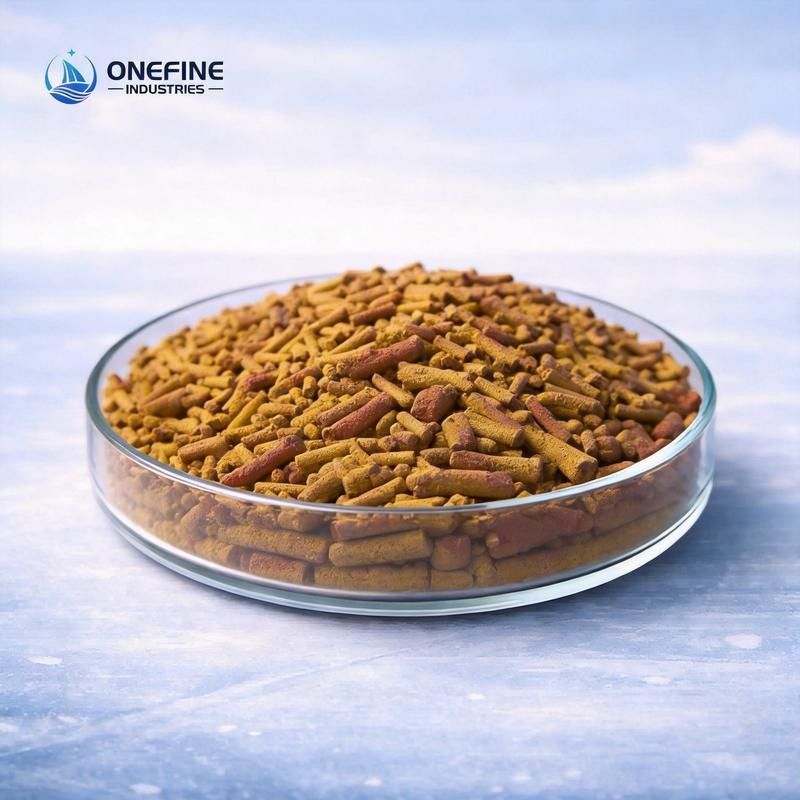
Iron Oxide Desulfurization Catalyst
High-efficiency iron oxide-based desulfurization catalyst for deep removal of H₂S from natural gas, biogas, syngas, coke oven gas, and various industrial gas streams. Features high sulfur capacity, excellent water resistance, and room-temperature operation — a cost-effective solution for both bulk and precision desulfurization applications.
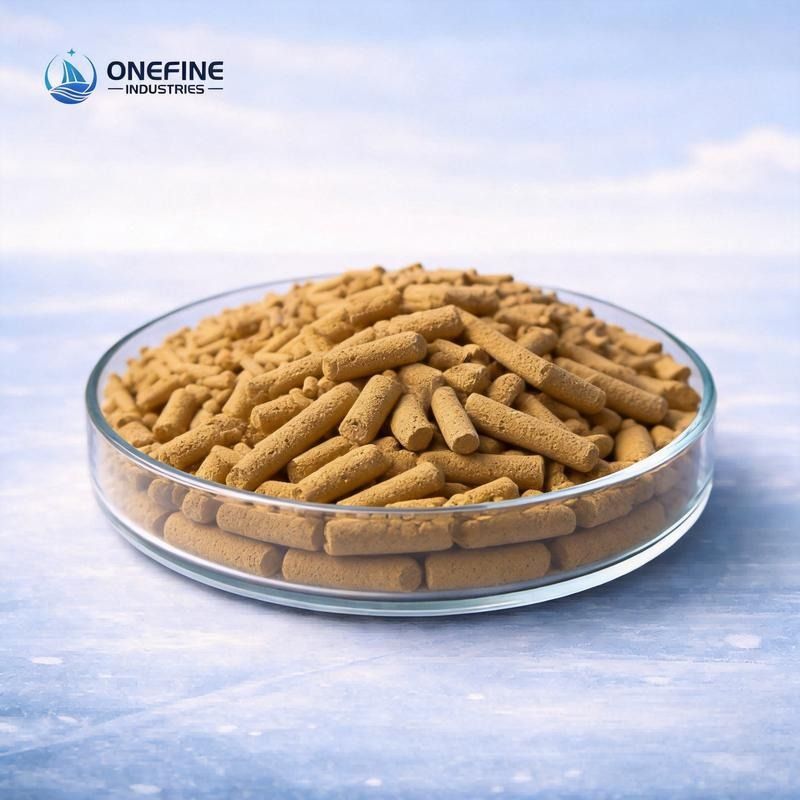
Ammonia refining desulfurization catalyst
A composite metal oxide-based desulfurization catalyst with multiple promoters, designed for H₂S removal in ammonia refining units of sour water strippers at refineries. Reduces H₂S to below 0.5 mg/m³ under low-temperature conditions. Also removes HCl and organic sulfur impurities. Exceptional water resistance.
Ultra-precision Desulfurization Catalyst
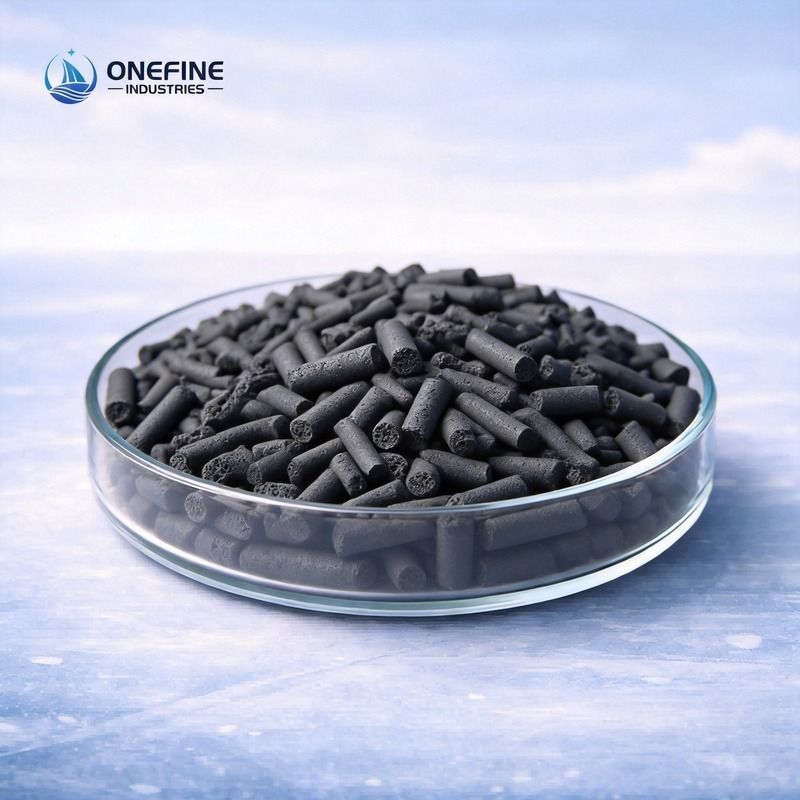
A bifunctional desulfurization catalyst that couples COS hydrolysis and H₂S adsorption in a single reactor, achieving ultra-deep sulfur removal in one step. Effectively removes H₂S, COS, and trace RSH from process gases. Features high surface area, fast reaction kinetics, and broad operating range. Ideal for final purification of synthesis gas, natural gas, and light hydrocarbons.
Related Applications
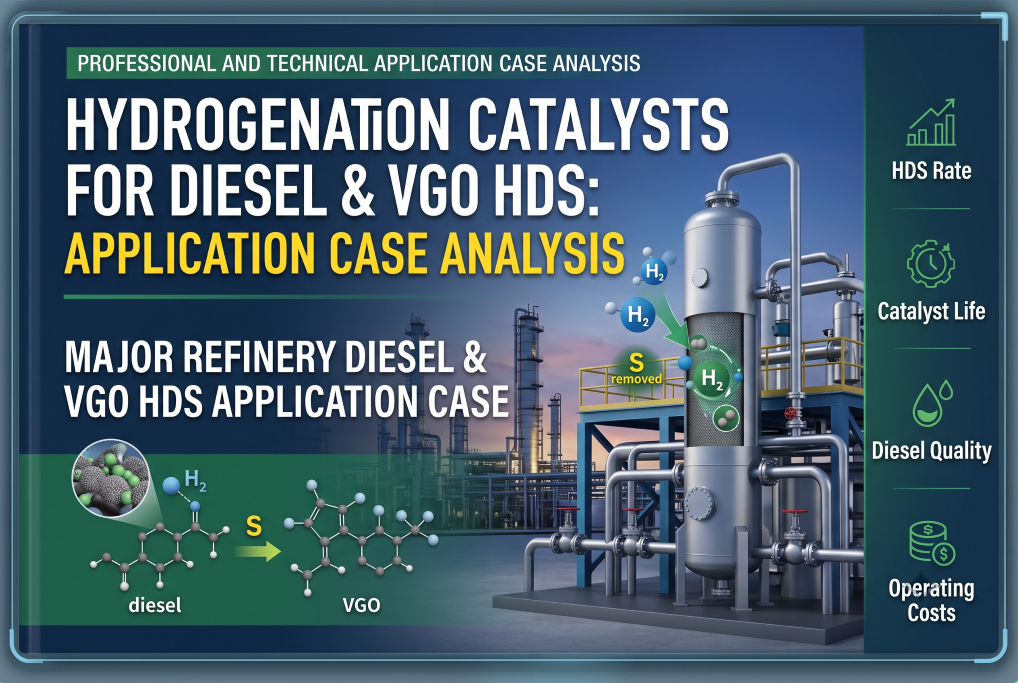
Hydrogenation Catalysts for Diesel & VGO HDS: Application Case Analysis
How Co-Mo, Ni-Mo, and Ni-Mo-W hydrogenation catalysts are selected across reformer feed protection, diesel ULSD production, and VGO pretreatment — matching catalyst chemistry to feed severity.
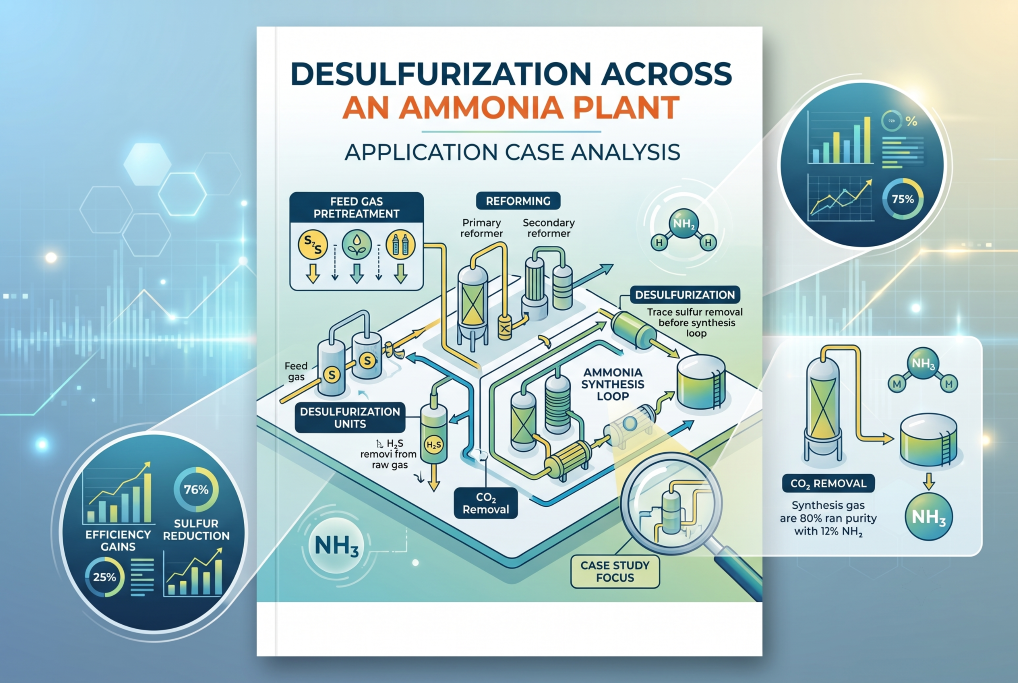
Desulfurization Across an Ammonia Plant: Application Case Analysis
How Iron Oxide, Zinc Oxide, and Ammonia Refining desulfurization catalysts are used across three different stages of a single ammonia plant — feed gas treatment, sour water stripper off-gas, and synthesis gas polishing.