What Is a Zinc Oxide Desulfurization Catalyst? ZnS Chemisorption Explained
If your process feeds copper-based methanol catalysts, ammonia reforming catalysts, or any other catalyst that's sensitive to trace sulfur, you've probably run into the term "ZnO desulfurizer" or "zinc oxide guard bed." It's one of the simplest materials in industrial gas purification — and also one of the most misunderstood, because people often confuse it with bulk H₂S removal systems like amine units. This guide explains what a zinc oxide desulfurization catalyst actually does, how the chemistry works at a practical level, and how to know whether it's the right fit for your system.
What Is a Zinc Oxide Desulfurization Catalyst?
Key Takeaways:
- The Core Function: A solid, non-regenerable material designed for fine desulfurization, permanently locking away H₂S as solid zinc sulfide (ZnS).
- Bulk vs. Polishing: Unlike amine units (which handle bulk H₂S removal), ZnO acts as a precision polishing step to achieve sub-ppm sulfur purity.
- Irreversible Chemistry: The chemisorption reaction proceeds spontaneously between 200–400°C; once saturated, the spent material must be replaced.
- Process Integration: Typically installed downstream of hydrotreating catalysts (Co-Mo or Ni-Mo) which convert refractory organic sulfur into reactive H₂S first.
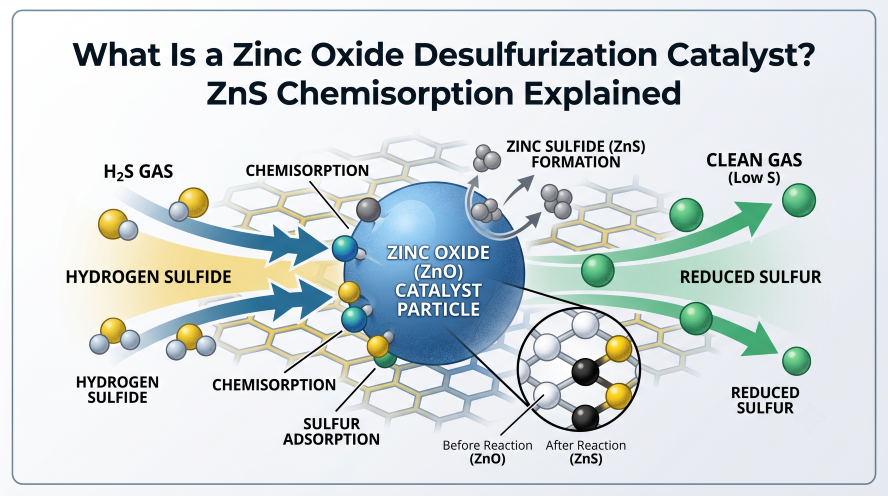
A zinc oxide desulfurization catalyst is a solid material, typically formed into extrudates, that reacts directly with hydrogen sulfide (H₂S) in a gas stream and locks it away as solid zinc sulfide (ZnS). It's used for fine desulfurization — pulling H₂S down from a few hundred ppm to well below 0.1 ppm — rather than bulk removal from high-sulfur feeds.
For full technical specifications, operating ranges, and bed design guidance, see our Zinc Oxide Desulfurization Catalyst product page.
Why "Fine" Desulfurization Is a Different Job
Not all desulfurization is the same job. Two very different problems show up in industrial gas processing:
- Bulk removal — feed gas contains high H₂S (thousands of ppm), and the goal is to strip most of it out economically. Amine scrubbing is the standard tool here, because it's regenerable and handles large sulfur loads.
- Fine polishing — feed gas already has low H₂S (typically under 250 ppm) after upstream treatment, but even trace sulfur will poison a downstream catalyst. This is where ZnO comes in.
The reason this distinction matters: copper-based methanol synthesis catalysts can be permanently deactivated by sulfur at the parts-per-billion level. Reforming and shift catalysts are similarly sensitive. No amine system can reliably guarantee that kind of purity on its own — you need a dedicated polishing step, and ZnO is the standard material for it.
How the Chemistry Works
The reaction is straightforward:
ZnO + H₂S → ZnS + H₂O
This is a direct chemisorption reaction — H₂S reacts with the zinc oxide lattice and is permanently converted to solid zinc sulfide. Because the reaction is thermodynamically favorable across a wide temperature range, it proceeds reliably at typical process conditions (200–400°C) without needing a catalyst promoter or special activation step.
The practical consequence of this chemistry is important: ZnO is not regenerable. Once the material is saturated with sulfur, it's spent, and the bed needs replacing. This is different from amine solvents or some pressure-swing adsorbents, which can be cycled and reused. It's a trade-off — ZnO gives you deeper, more reliable desulfurization, in exchange for being a consumable rather than a regenerable system.
Where It Fits in a Desulfurization Train
ZnO is almost never the only desulfurization step — it's typically the last one. A common configuration looks like this:
- Bulk removal (amine treatment, or for organic sulfur, an upstream hydrotreating step)
- Organic sulfur conversion — compounds like thiophenes and mercaptans don't react directly with ZnO efficiently, so a hydrodesulfurization catalyst such as Co-Mo Hydrogenation Catalyst or Ni-Mo Hydrogenation Catalyst first converts them into H₂S
- ZnO polishing bed — captures the remaining H₂S down to sub-0.1 ppm
For higher-severity feeds with more refractory organic sulfur, some plants use Nickel-Molybdenum-Tungsten Catalyst upstream instead. If you're not sure which hydrotreating catalyst matches your feed severity, that's a question worth raising with your technical supplier before finalizing the ZnO bed size — the two steps are designed together, not independently.
Do You Actually Need a ZnO Bed?
A quick way to think about it: if your downstream equipment is a catalyst (methanol synthesis, reforming, shift, methanation) or a sulfur-sensitive process (fuel cells, some polymerization catalysts), you almost certainly need fine desulfurization. If your downstream equipment just needs "low sulfur" in a looser sense — general combustion, for example — bulk removal alone may be sufficient, and a ZnO bed may be adding cost without adding value.
The right answer depends on your feed sulfur level, your downstream sulfur tolerance, and your operating temperature window. This isn't something to guess at — send us your feedstock composition and downstream catalyst specifications, and our technical team can help confirm whether a ZnO bed is needed and how to size it.
When a Different Technology Fits Better
ZnO is the default for precision, high-temperature H₂S polishing, but a few real-world conditions call for something else:
- High sulfur loads: Pairing ZnO with a low-cost, ambient-temperature bulk stage such as Iron Oxide Desulfurization Catalyst often reduces overall bed size versus one oversized ZnO vessel.
- Saturated or wet gas streams: Conventional ZnO risks mudification under sustained moisture — that's the specific gap Ammonia Refining Desulfurization Catalyst is built to close.
- Feeds carrying real COS levels: Plain ZnO is essentially blind to carbonyl sulfide. If that's a real contributor to your total sulfur, Ultra-Precision Desulfurization Catalyst hydrolyzes and captures sulfur in one bifunctional bed instead of two stages.
- Near-ambient temperature service: Where heating feed for ZnO's 200–400°C window isn't practical, Activated Carbon Fine Desulfurization Catalyst handles the same duty at ambient-to-50°C.
Recommended Products from Sorbsieve
- Zinc Oxide Desulfurization Catalyst — full specifications, operating conditions, and bed design guidelines
- Co-Mo Hydrogenation Catalyst — upstream organic sulfur conversion for moderate-severity feeds
- Nickel-Molybdenum Hydrogenation Catalyst — upstream organic sulfur conversion, alternative active phase
Frequently Asked Questions
Is a ZnO desulfurizer the same as an amine unit? No. Amine units are regenerable solvent systems designed for bulk H₂S removal at high concentrations. ZnO is a non-regenerable solid used for fine polishing at low concentrations, typically installed downstream of amine treatment or hydrotreating.
Can I skip the upstream hydrotreating step and feed organic sulfur directly to ZnO? Not effectively. ZnO reacts efficiently with H₂S but has limited capability against complex organic sulfur compounds like thiophenes. Feeds with significant organic sulfur content need a hydrodesulfurization step first to convert that sulfur to H₂S.
How do I know what size ZnO bed I need? Bed sizing depends on feed H₂S concentration, gas flow rate, operating temperature, and desired service life between change-outs. This is a project-specific calculation — our technical team can help size a bed once we have your feed and flow data.
Does ZnO desulfurizer work in wet gas streams? Yes. ZnO maintains its structure and activity in the presence of moderate steam content, which makes it suitable for both dry and wet process gas applications.
Looking for Bulk Supply of Zinc Oxide Desulfurization Catalyst?
Sorbsieve is a trusted bulk supplier of zinc oxide desulfurization catalyst and complete industrial adsorbents/catalysts, serving industrial buyers across the Middle East.
We provide:
- ✅ Container-level supply (20'GP / 40'GP / 40'HQ)
- ✅ Full documentation (COA / TDS / SDS / COO)
- ✅ Multiple packaging options
- ✅ Technical support for desulfurization system selection and bed sizing
- ✅ Fast quote response for industrial inquiries
Contact our team for bulk pricing, product samples, and technical consultation.
Related Products
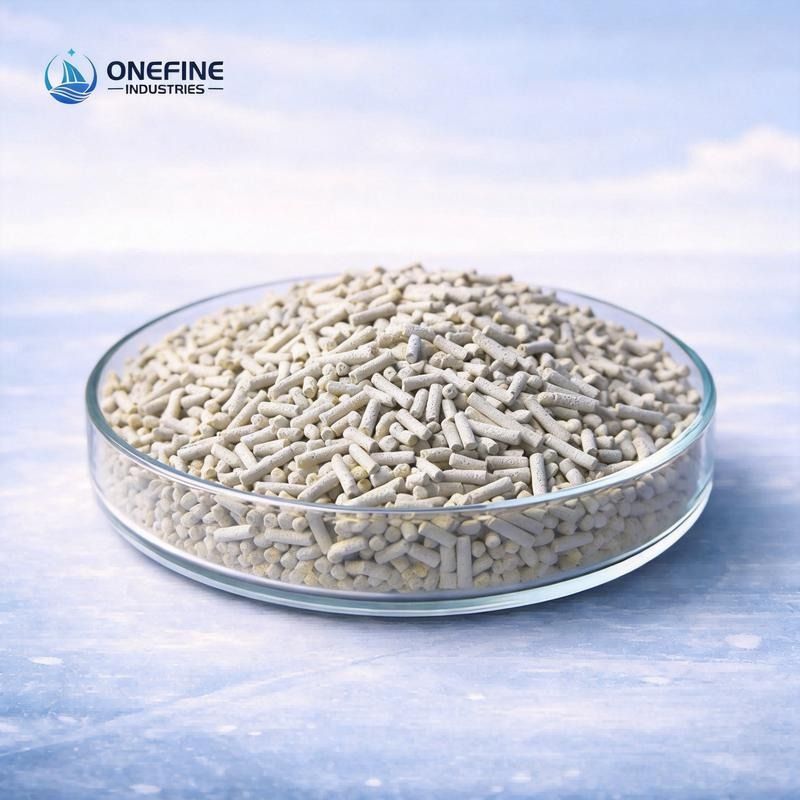
Zinc oxide desulfurization catalyst
High-purity zinc oxide (ZnO) desulfurization catalyst for fine removal of H₂S from natural gas, synthesis gas, hydrogen, and hydrocarbon feeds. Achieves outlet sulfur levels below 0.1 ppm through irreversible chemisorption. High sulfur capacity, long service life, and strong resistance to steam.
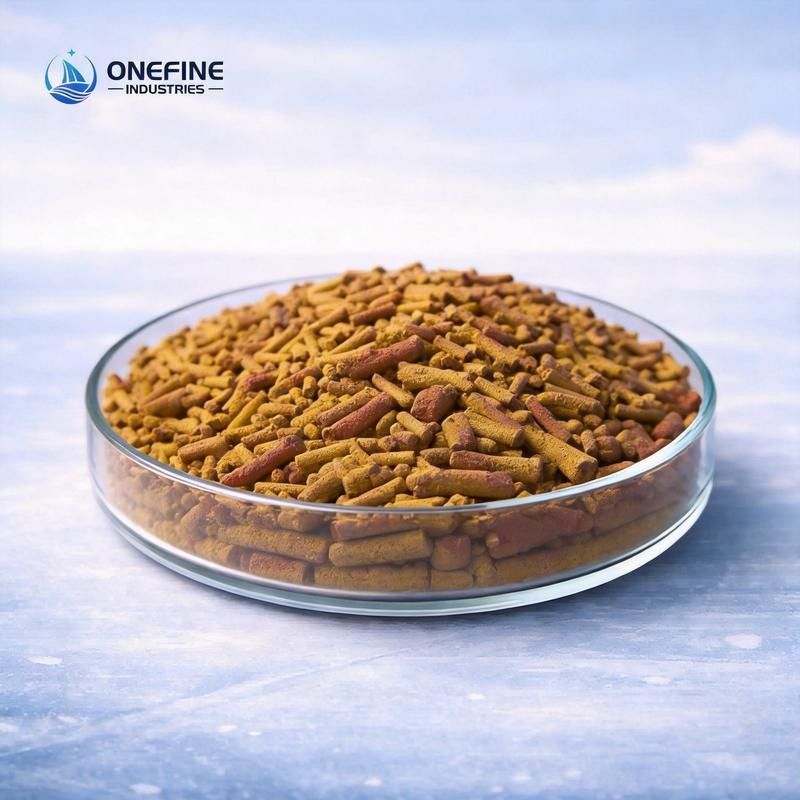
Iron Oxide Desulfurization Catalyst
High-efficiency iron oxide-based desulfurization catalyst for deep removal of H₂S from natural gas, biogas, syngas, coke oven gas, and various industrial gas streams. Features high sulfur capacity, excellent water resistance, and room-temperature operation — a cost-effective solution for both bulk and precision desulfurization applications.
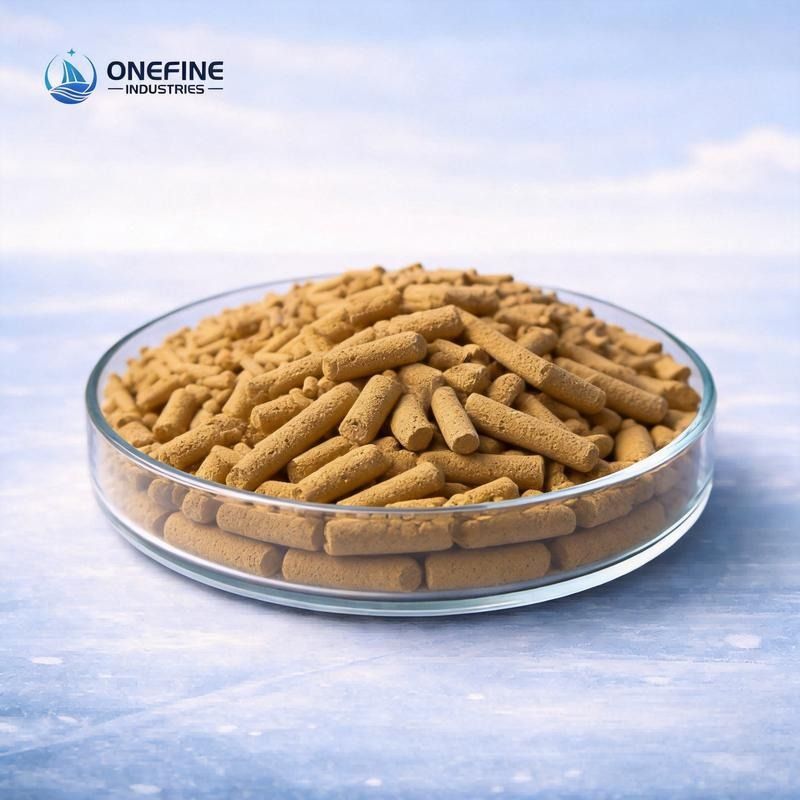
Ammonia refining desulfurization catalyst
A composite metal oxide-based desulfurization catalyst with multiple promoters, designed for H₂S removal in ammonia refining units of sour water strippers at refineries. Reduces H₂S to below 0.5 mg/m³ under low-temperature conditions. Also removes HCl and organic sulfur impurities. Exceptional water resistance.
Related Applications
Hydrogenation Catalysts for Diesel & VGO HDS: Application Case Analysis
How Co-Mo, Ni-Mo, and Ni-Mo-W hydrogenation catalysts are selected across reformer feed protection, diesel ULSD production, and VGO pretreatment — matching catalyst chemistry to feed severity.
Desulfurization Across an Ammonia Plant: Application Case Analysis
How Iron Oxide, Zinc Oxide, and Ammonia Refining desulfurization catalysts are used across three different stages of a single ammonia plant — feed gas treatment, sour water stripper off-gas, and synthesis gas polishing.
Related Reading
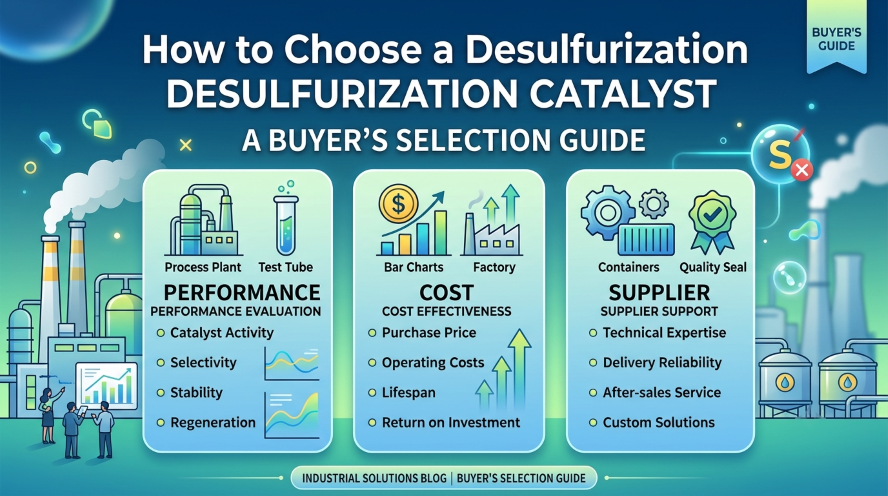
How to Choose a Desulfurization Catalyst: A Buyer's Selection Guide
With seven different desulfurization catalysts in play — each suited to a different feed condition or protection target — picking the right one comes down to a handful of questions about your process. This guide walks through the decision framework.

What Is an Ultra-Precision Desulfurization Catalyst? Bifunctional COS Hydrolysis Explained
A plain-language guide to how bifunctional ultra-precision desulfurization catalysts combine COS hydrolysis and H₂S adsorption in one reactor bed — and when this one-step approach makes more sense than conventional two-stage ZnO desulfurization.