What Is an Ultra-Precision Desulfurization Catalyst? Bifunctional COS Hydrolysis Explained
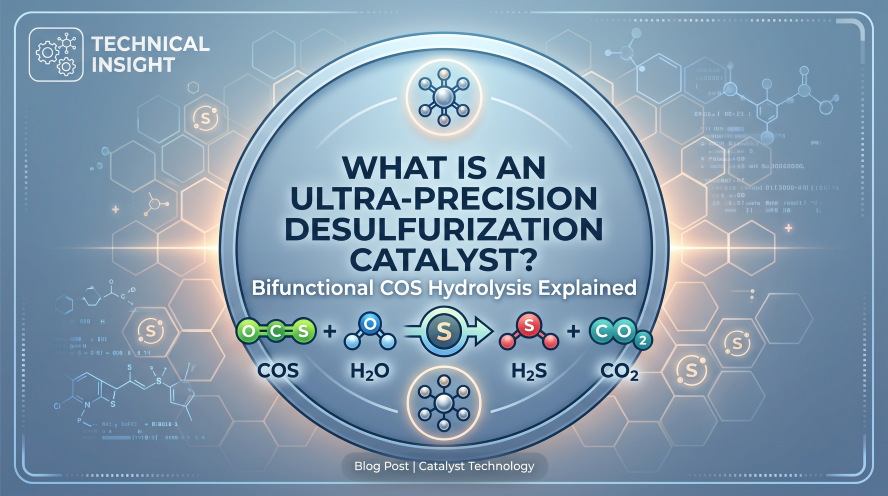
If your process gas still carries trace sulfur after conventional treatment, chances are the culprit is carbonyl sulfide (COS) — a sulfur compound that most standard desulfurizers can't touch directly. An ultra-precision desulfurization catalyst solves this by doing two jobs in one reactor: converting COS into H₂S, then capturing that H₂S on the spot. The result is total sulfur below 10 ppb, achieved in a single bed instead of two. Here's how it actually works, and how to know whether it's the right fit for your system.
Key Takeaways:
- The COS Challenge: Carbonyl sulfide (COS) is chemically stable and easily slips past conventional single-function ZnO desulfurizers.
- One-Step Reaction: Ultra-precision catalysts hydrolyze COS into H₂S and immediately chemisorb the H₂S on a ZnO-Al₂O₃ composite support.
- System Economics: Replaces traditional two-stage configurations, significantly reducing vessel footprint and pressure drop.
Why COS Is the Hard Part of Deep Desulfurization
Most industrial gas streams — synthesis gas, natural gas, refinery fuel gas — contain a mix of sulfur species. H₂S is the easy part: it reacts readily with zinc oxide and gets adsorbed out. COS is different. It's chemically stable and largely inert toward plain ZnO at normal conditions, which is why conventional single-function desulfurizers often let COS slip through to downstream catalysts that are extremely sulfur-sensitive.
The fix used to mean two separate reactor beds: one catalyst to hydrolyze COS into H₂S, and a second ZnO bed to adsorb it. That works, but it costs more vessel space, adds pressure drop, and complicates the flowsheet.
How the Bifunctional Design Works
An ultra-precision desulfurization catalyst is built on a ZnO + Al₂O₃ composite support loaded with active promoters, and it runs two reactions in the same bed:
- COS hydrolysis: COS + H₂O → H₂S + CO₂
- H₂S adsorption: H₂S + ZnO → ZnS + H₂O
Because both reactions happen on the same catalyst body, there's no need to route gas through a second reactor. The COS gets converted and immediately mopped up in one pass, which is how the catalyst reaches total sulfur below 10 ppb — well past what a conventional single-stage ZnO desulfurizer can achieve on its own.
One-Step vs. Two-Step: When Does It Matter?
This is really a buyer selection question, and it comes down to how much COS is actually in your feed gas.
Choose a bifunctional ultra-precision catalyst when:
- Your feed contains meaningful COS alongside H₂S
- Downstream catalysts (methanol synthesis, ammonia synthesis, hydrogenation) need protection below 10 ppb total sulfur
- Reactor footprint and pressure drop are real constraints
Conventional Zinc Oxide Desulfurization Catalyst may still be the simpler, more economical choice when:
- COS is a minor or negligible component of the feed
- A 10–100 ppb outlet sulfur level is acceptable for your downstream process
- You already have an existing ZnO desulfurization bed in place and don't want to change the flowsheet
For a full side-by-side breakdown of outlet sulfur levels, operating temperature ranges, and process footprint, see our Zinc Oxide Desulfurization Catalyst guide. If you prefer the traditional two-stage configuration outright — a dedicated hydrolysis step followed by a separate scavenger — our COS Hydrolysis Catalyst covers that narrower role on its own.
Where This Catalyst Gets Used
The most common application is as a final guard bed ahead of sulfur-sensitive catalysts — particularly methanol and ammonia synthesis catalysts, which can deactivate rapidly if total sulfur creeps above 10 ppb. It also shows up in natural gas polishing (meeting pipeline sulfur specs), refinery fuel gas cleanup, and LPG/light hydrocarbon purification ahead of petrochemical processing. The full specification range — operating temperature, pressure, space velocity — is covered on the product page.
Recommended Products from Sorbsieve
- Ultra-Precision Desulfurization Catalyst — Bifunctional COS hydrolysis + H₂S adsorption, total sulfur < 10 ppb in one reactor bed.
- Zinc Oxide Desulfurization Catalyst — Conventional single-function ZnO desulfurizer, the simpler two-stage-compatible alternative.
FAQ
Q1: Is a bifunctional catalyst always better than conventional ZnO desulfurization? A: Not necessarily — it depends on how much COS is in your feed. If COS is negligible, a conventional ZnO desulfurizer is often simpler and more economical. The bifunctional design earns its keep when COS is a real contributor to your total sulfur load.
Q2: Can this catalyst replace an existing two-stage COS hydrolysis + ZnO system? A: In many cases, yes — it's designed to consolidate both functions into one bed. Whether it's a drop-in replacement depends on your existing reactor sizing and process conditions, so it's worth confirming with our technical team before making the switch.
Q3: Does adding COS hydrolysis capability reduce the catalyst's H₂S adsorption capacity? A: No — the composite ZnO-Al₂O₃ support is formulated so both functions operate together without materially reducing overall adsorption capacity or service life.
Q4: What feed conditions should I check before selecting this catalyst? A: Feed oxygen content (should stay below 0.5%) and whether your feed has enough moisture to drive COS hydrolysis are the two most relevant checks. Our team can review your gas composition and recommend the right configuration.
Looking for Bulk Supply of Ultra-Precision Desulfurization Catalyst?
Sorbsieve is a trusted bulk supplier of Ultra-Precision Desulfurization Catalyst and complete industrial adsorbents, serving industrial buyers across the Middle East.
We provide:
- ✅ Container-level supply (20'GP / 40'GP / 40'HQ)
- ✅ Full documentation (COA / TDS / SDS / COO)
- ✅ Multiple packaging options
- ✅ Technical support for catalyst selection and system optimization
- ✅ Fast quote response for industrial inquiries
Contact our team for bulk pricing, product samples, and technical consultation.
Related Products
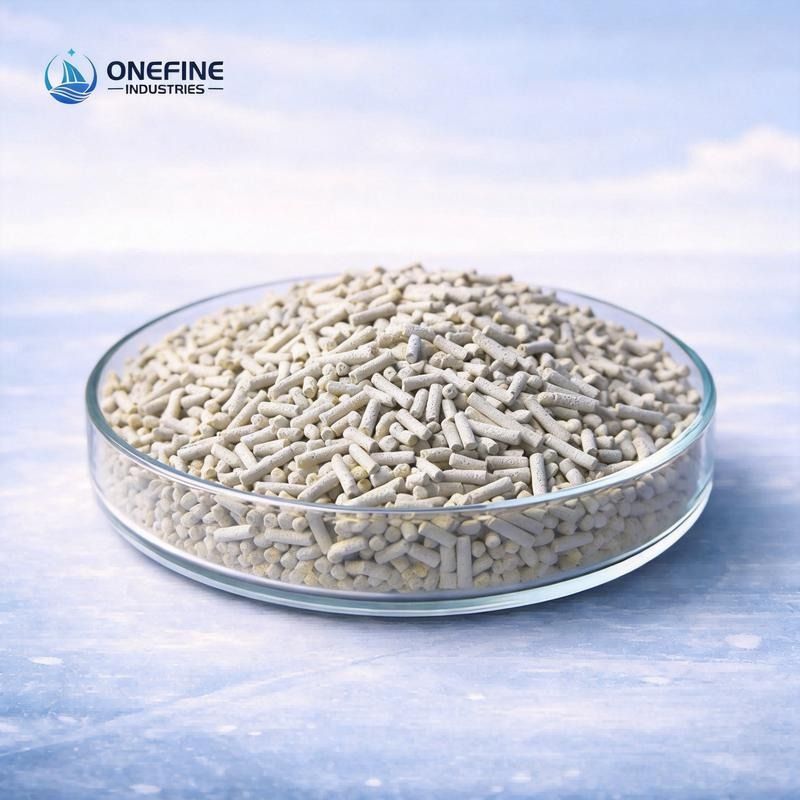
Zinc oxide desulfurization catalyst
High-purity zinc oxide (ZnO) desulfurization catalyst for fine removal of H₂S from natural gas, synthesis gas, hydrogen, and hydrocarbon feeds. Achieves outlet sulfur levels below 0.1 ppm through irreversible chemisorption. High sulfur capacity, long service life, and strong resistance to steam.
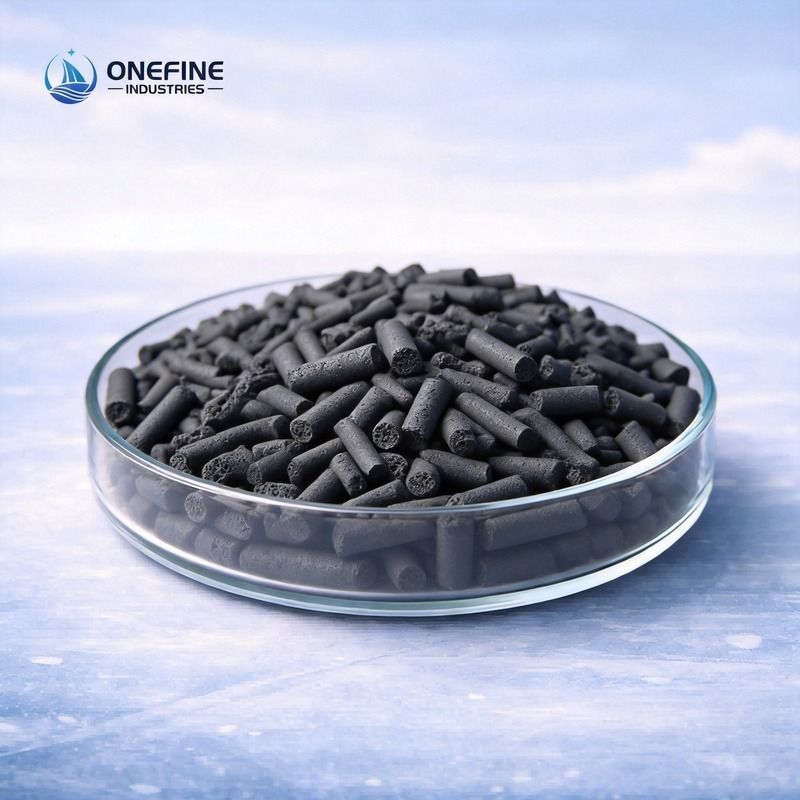
Ultra-precision Desulfurization Catalyst
A bifunctional desulfurization catalyst that couples COS hydrolysis and H₂S adsorption in a single reactor, achieving ultra-deep sulfur removal in one step. Effectively removes H₂S, COS, and trace RSH from process gases. Features high surface area, fast reaction kinetics, and broad operating range. Ideal for final purification of synthesis gas, natural gas, and light hydrocarbons.
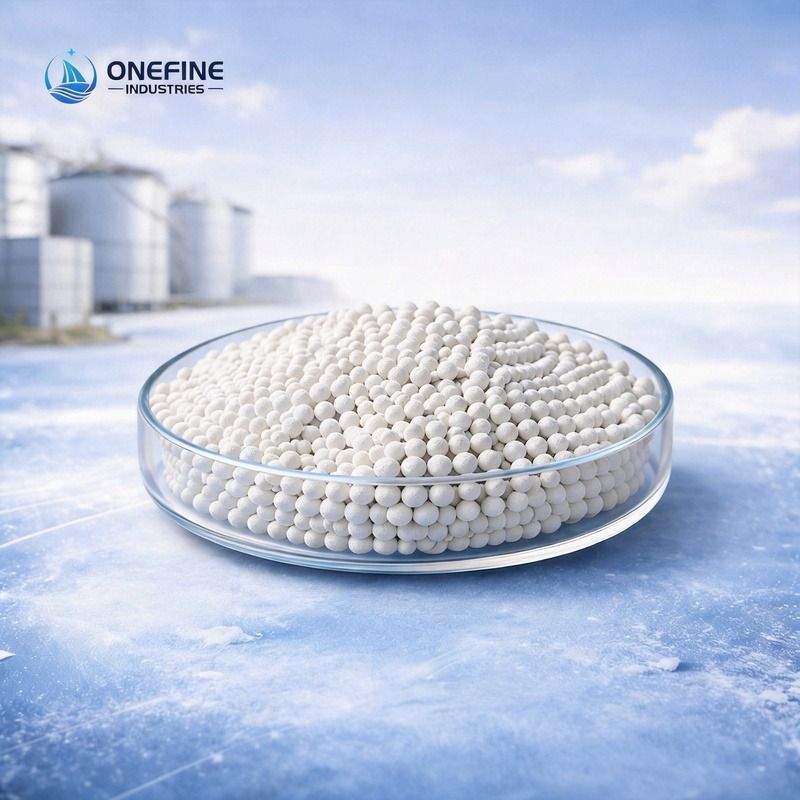
COS Hydrolysis Catalyst
High-efficiency γ-Al2O3 supported COS hydrolysis catalyst designed to convert carbonyl sulfide into easily removable H2S with ≥95% conversion efficiency across diverse hydrocarbon streams.
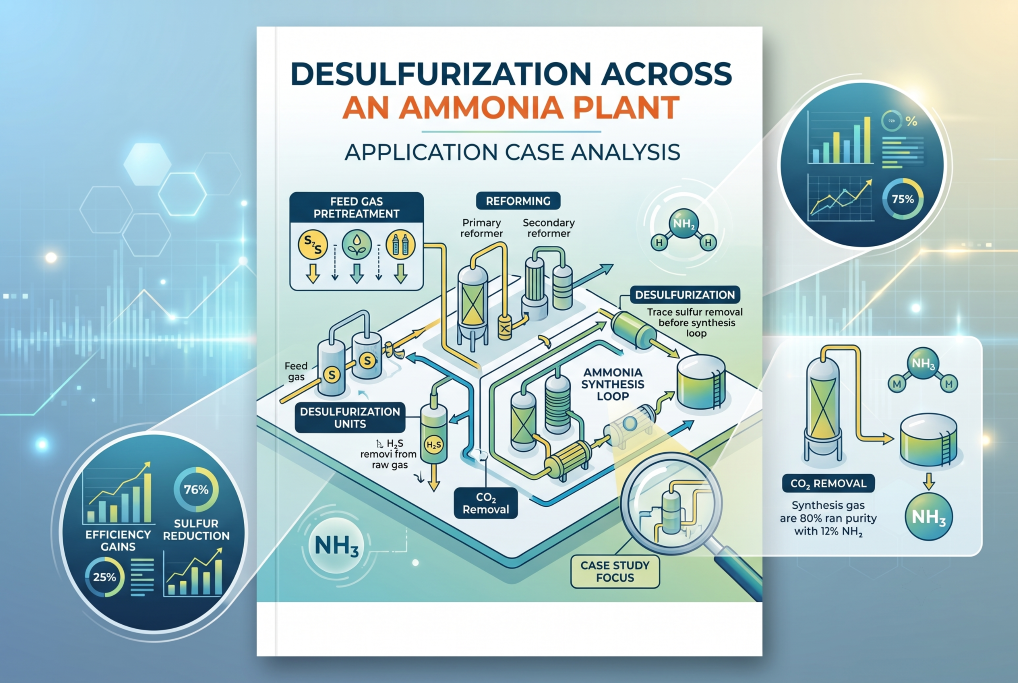
Related Reading
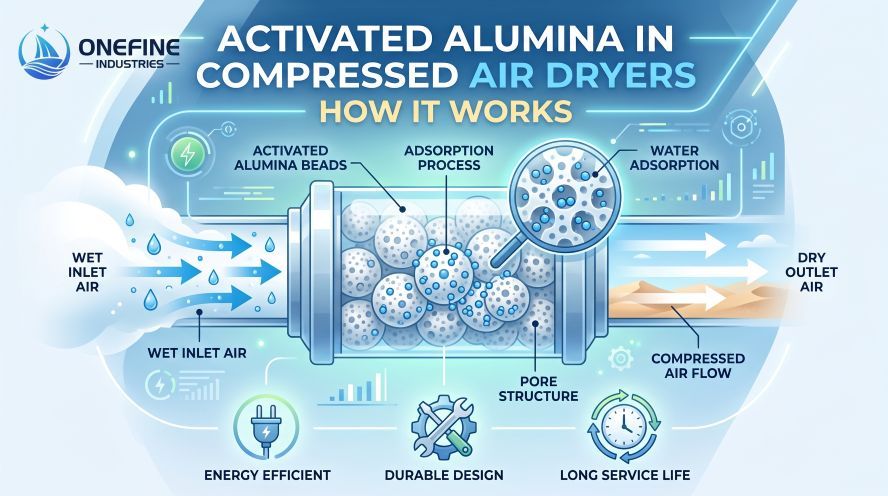
Activated Alumina in Compressed Air Dryers: How It Works
How activated alumina serves as the primary desiccant in heat-reactivated and heatless compressed air dryers, and when it's layered with molecular sieve for deeper dehydration.
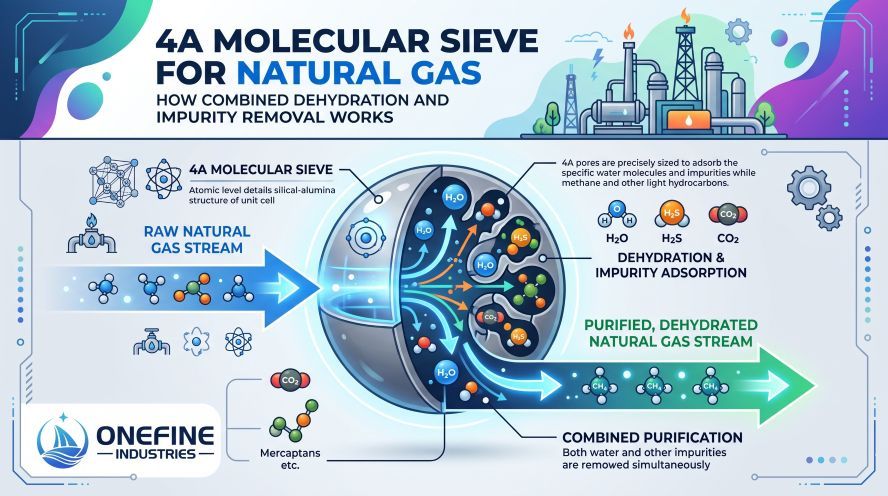
4A Molecular Sieve for Natural Gas: How Combined Dehydration and Impurity Removal Works
4A molecular sieve can dry natural gas and pull moderate CO₂/H₂S out of the same stream in one bed — how its larger pore enables that dual role, where it fits in the treatment train, and when 3A is the better call instead.
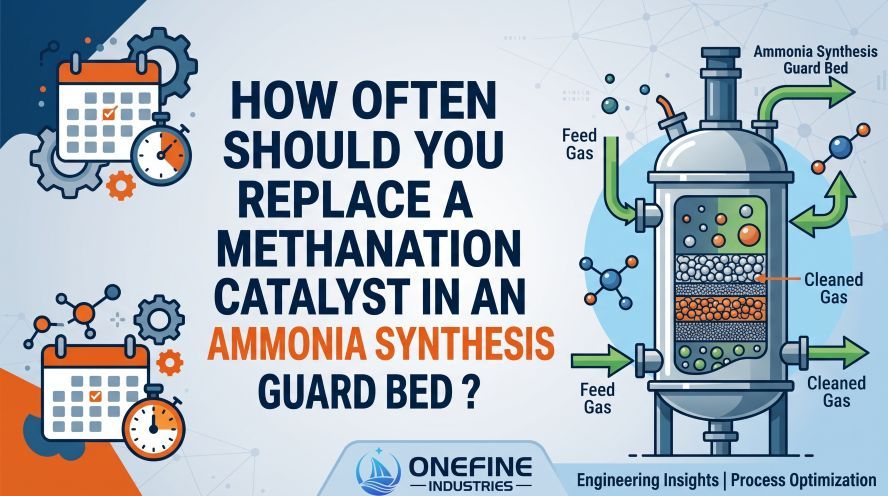
How Often Should You Replace a Methanation Catalyst in an Ammonia Synthesis Guard Bed?
There's no fixed replacement interval for a methanation catalyst — service life depends almost entirely on how well the upstream desulfurization train protects it. Here's how to read the real warning signs.