COS Hydrolysis Catalyst
High-efficiency γ-Al2O3 supported COS hydrolysis catalyst designed to convert carbonyl sulfide into easily removable H2S with ≥95% conversion efficiency across diverse hydrocarbon streams.
Get QuoteKey Attributes
- Highly active alumina matrix lowers activation energy, achieving ≥95% COS-to-H2S conversion.
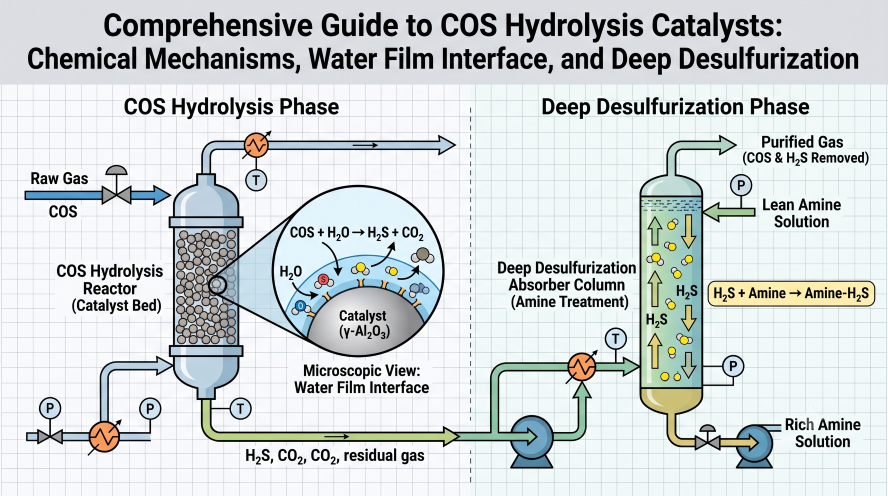
- Unique water-film interface mechanism facilitates rapid nucleophilic attack by trace moisture already present in the feed.
- Exceptionally broad operating range: pressures up to 5.0 MPa and temperatures up to 250°C.
- High mechanical crush strength (≥40 N) ensures structural stability and limits pressure drop in deep reactor beds.
- Versatile across both gas-phase and liquid-phase hydrocarbon streams (space velocities 100–3500 h-1).
- Custom particle sizing available to match specific reactor fluid-dynamic requirements.
- Seamlessly integrates with downstream metal oxide guard beds to achieve ultra-deep total sulfur removal.
Applications
- Hydrolysis of trace COS in coal gasification syngas to protect methanol synthesis catalysts.
- Conversion of COS in steam methane reforming (SMR) streams upstream of ammonia synthesis loops.
- Pre-treatment of liquid LPG fractions to meet standard copper strip corrosion specifications.
- Trace sulfur elimination in fluid catalytic cracking (FCC) dry gas streams.
- Purification of polymer-grade propylene and ethylene to protect sensitive Ziegler-Natta catalysts.
- Deep desulfurization of fluid feedstocks in propane dehydrogenation (PDH) facilities.
- Removal of COS from food-grade CO2 streams prior to final beverage carbonation.
- Upgrading of straight-run naphtha streams in complex petroleum refining networks.
Product Description
What is COS Hydrolysis Catalyst?
Key Takeaways
- High Conversion Efficiency: Achieves ≥95% conversion of stable carbonyl sulfide (COS) into reactive H₂S for deep desulfurization trains.
- Water-Film Mechanism: Surface hydroxyl groups trap trace moisture to create a micro-water film interface, facilitating rapid nucleophilic attack on COS.
- Broad Operational Window: Maintains high catalytic activity from ambient temperatures up to 250°C and pressures up to 5.0 MPa.
The COS Hydrolysis Catalyst is an advanced industrial catalyst manufactured using macroporous pseudo-boehmite as the precursor, calcined into a highly optimized gamma-alumina (γ-Al2O3) carrier. It is specifically engineered to eliminate trace carbonyl sulfide (COS) from industrial process streams. Unlike hydrogen sulfide (H2S), COS is a non-polar, weakly reactive sulfur compound that is notoriously difficult to remove using conventional physical adsorbents or standard amine scrubbing units.
To overcome this, the catalyst relies on a catalytic hydrolysis mechanism rather than direct adsorption. By loading high-content active metallic promoters onto the high-surface-area γ-Al2O3 matrix, the catalyst lowers the activation energy required for water molecules to attack the carbon-sulfur double bond. The fundamental endothermic chemical reaction is:
COS + H2O ⇌ H2S + CO2
A critical operational feature of this catalyst is its reliance on a "micro-water film interface." Surface hydroxyl groups (-OH) on the alumina structure trap trace amounts of moisture present in the feed stream. This creates a localized, microscopic aqueous interface where the gas-phase COS rapidly dissolves, undergoes nucleophilic attack by the polarized water molecules, and instantly converts into highly reactive H2S and inert CO2. The newly formed H2S can then be easily scrubbed downstream using solid metal oxide scavengers.
For the full reaction kinetics and engineering deep-dive behind this mechanism, see our Comprehensive Guide to COS Hydrolysis Catalysts.
Key Benefits
- High Conversion Efficiency: Achieves a guaranteed COS hydrolysis conversion rate of ≥95%, ensuring deep desulfurization targets are reliably met in sensitive petrochemical loops.
- Broad Operational Window: Maintains high catalytic activity from ambient temperatures up to 250°C, and from atmospheric pressure up to 5.0 MPa.
- Synergistic Desulfurization: Designed to function as the primary conversion stage in a multi-bed desulfurization train, pairing with downstream H2S scavengers.
- Optimal Macroporous Architecture: Large pore volumes and high specific surface area accelerate intra-particle gas diffusion and prevent capillary condensation of heavy hydrocarbons.
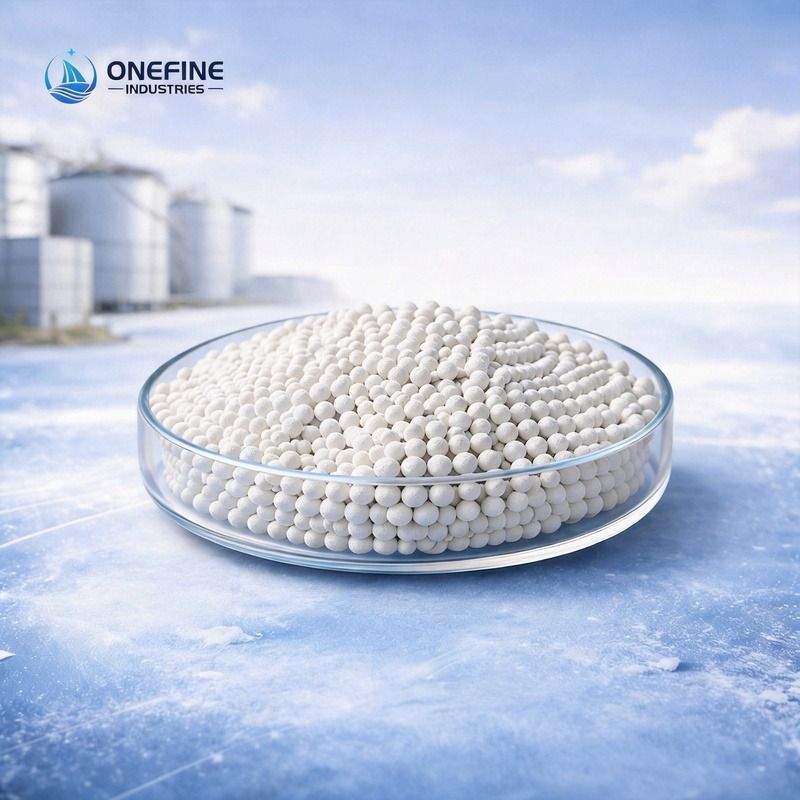
- High Mechanical Integrity: Robust white spherical beads with ≥40 N crush strength prevent physical attrition and premature pressure drop accumulation in deep beds.
- Multi-Phase Versatility: Operates across space velocities of 100–3500 h-1, compatible with syngas, LPG, light olefins, liquid naphtha, and food-grade CO2 streams.
Applications in Detail
Synthesis Gas (Syngas) Purification: In coal gasification and steam methane reforming (SMR) plants, raw syngas contains significant COS. This catalyst is installed upstream of the methanol or ammonia synthesis loops. By converting COS into H2S, it allows downstream Zinc Oxide Desulfurization Catalyst guard beds to completely capture the sulfur, strictly protecting the highly sensitive copper- or iron-based synthesis catalysts from irreversible sulfidation.
Light Olefins & Polymer-Grade Propylene: Feedstocks derived from FCC or PDH units often contain trace COS that poisons Ziegler-Natta polymerization catalysts. Running the light olefin stream through this catalyst bed ensures ≥95% conversion, achieving the ultra-low total sulfur limits required for polymer-grade monomer production.
LPG & Naphtha Sweetening: Because COS does not respond well to standard amine scrubbing or caustic washes, the hydrolysis reactor is positioned upstream of the caustic treater. The resulting H2S is subsequently neutralized by the caustic solution, bringing the LPG up to commercial copper strip corrosion standards.
Food-Grade CO2 Recovery: Carbon dioxide captured from fermentation or chemical off-gases must meet stringent purity standards before beverage carbonation use. This catalyst hydrolyzes trace sulfur contaminants in the CO2 matrix, followed by activated carbon polishing beds.
Choosing Between a Two-Step and One-Step Configuration: For buyers who prefer a single guard vessel that combines COS conversion and H2S capture in one bed, Sorbsieve also supplies the Ultra-Precision Desulfurization Catalyst, a bifunctional catalyst that performs hydrolysis and adsorption in a single stage. The two-step configuration described on this page (this catalyst followed by a dedicated ZnO bed) typically offers greater sulfur capacity and easier individual bed replacement; the one-step option offers a smaller vessel footprint.
Packaging & Shipping
We offer flexible packaging and shipping options to suit your project scale and logistics requirements.
Standard Packaging:
- 25 kg drums (moisture-proof, suitable for trial orders and small batches)
- 150 kg steel drums (standard bulk packaging for industrial orders)
- 500 kg super sacks (most popular for industrial bulk orders)
- 1000 kg jumbo bags (for large-scale projects)
- Custom packaging available on request
Minimum Order Quantity (MOQ):
- 1 ton (entry-level orders accepted — perfect for first-time customers)
- 5+ tons (standard bulk orders)
- Container-level supply for long-term partnerships
Container Loading Capacity:
- 20'GP container: 18–20 tons (palletized)
- 40'GP container: 22–24 tons (palletized)
- 40'HQ container: 24–26 tons
Loading Ports: We ship from major Chinese ports based on your requirements: Shanghai, Qingdao, Tianjin, Ningbo, and Shenzhen.
Lead Time:
- Stock orders: 7–15 days from payment confirmation
- Made-to-order: 20–30 days
Shipping Terms: FOB / CIF / CFR / EXW — flexible based on your destination and preferences.
Documents & Certificates
We provide complete documentation for every order:
📄 Technical Data Sheet (TDS) — Confirmed with you during product selection, ensuring exact specifications match your application requirements.
📄 Safety Data Sheet (SDS) — Provided before shipment, meeting all international transportation and handling standards.
📄 Certificate of Analysis (COA) — Issued for each production batch, delivered with your shipment for full quality traceability.
Additional documents available on request: Certificate of Origin (COO), Packing List, Commercial Invoice, Third-party Inspection Report (SGS / BV), Form E (for Middle East destinations with applicable tariff benefits).
Regeneration
Because the COS hydrolysis process is a continuous catalytic reaction rather than physical adsorption, the active sites are not stoichiometrically consumed by the sulfur species. Under clean feedstock conditions, the catalyst does not require frequent thermal regeneration and typically exhibits a continuous operational lifespan of 2 to 4 years.
However, the catalyst is susceptible to permanent deactivation through specific poisoning mechanisms. The most severe threat is oxygen (O2) contamination: trace oxygen causes the newly formed H2S to prematurely oxidize into elemental sulfur or SO2, which then reacts with the alumina carrier to form stable, inactive aluminum sulfates — a process known as sulfation that permanently destroys the micro-pore structure. Heavy hydrocarbon condensation can also cause physical coking. If mild coking occurs without severe sulfate poisoning, the catalyst can occasionally be subjected to a controlled high-temperature (>250°C) steam-nitrogen purge, though total recovery of the initial ≥95% conversion efficiency is rarely achieved.
FAQ
Q1: Why is a hydrolysis catalyst required instead of just using a standard Zinc Oxide (ZnO) desulfurizer?
Standard ZnO beds are exceptionally efficient at capturing hydrogen sulfide (H2S) through a direct chemical reaction, but they are kinetically blind to carbonyl sulfide (COS) at typical operating temperatures. Because COS lacks the reactive polarity of H2S, it will simply slip through a ZnO bed unreacted. The hydrolysis catalyst acts as a mandatory pre-treatment stage, chemically unlocking the sulfur molecule and converting the stable COS into reactive H2S, which the subsequent ZnO bed can then permanently capture as solid ZnS.
Q2: Does the feed stream require the addition of water for this catalyst to function?
Yes, the reaction is strictly dependent on the presence of H2O as a chemical reactant. However, the stoichiometric water requirement is extremely low. In most industrial syngas, LPG, or refining streams, the inherent trace moisture already present in the gas is more than sufficient to form the necessary catalytic water film. If the feed gas is highly desiccated, a micro-injection of steam upstream of the reactor is necessary to sustain the ≥95% hydrolysis conversion rate.
Q3: Can this catalyst be manufactured in different sizes to optimize reactor pressure drops?
Yes. While the standard product is supplied as Φ 2.0–5.0 mm white spherical beads, customized particle dimensions can be produced according to specific client reactor engineering requirements to minimize bed pressure drop or optimize mass transfer rates.
Q4: What causes premature failure of the COS hydrolysis bed?
The primary causes of premature deactivation are oxygen ingress and chloride poisoning. Trace oxygen triggers the oxidation of H2S into elemental sulfur, which physically plugs the macropores or forms sulfates that permanently neutralize the alumina's basic active sites. Strict control of feed gas oxygen levels and upstream chloride scavenging are mandatory to ensure the catalyst achieves its multi-year lifespan.
Need a Custom Solution?
For bulk pricing and grade recommendation, please send your feed composition and desulfurization target requirements to us. Our technical team will get back to you within 24 hours with a tailored solution.
Technical Specifications
| Appearance | White spherical beads |
| Particle Size (Φ) | 2.0–5.0 mm (customizable on request) |
| Bulk Density | 0.75 ± 0.10 kg/L |
| Average Crush Strength | ≥40 N |
| Operating Temperature | Ambient to 250°C |
| Operating Pressure | Ambient to 5.0 MPa |
| Space Velocity | 100–3500 h-1 |
| COS Conversion Rate | ≥95% |
| Carrier Material | Macroporous γ-Al2O3 |
| Specific Surface Area | ≥250 m2/g |
| Pore Volume | ≥0.40 ml/g |
Related Products
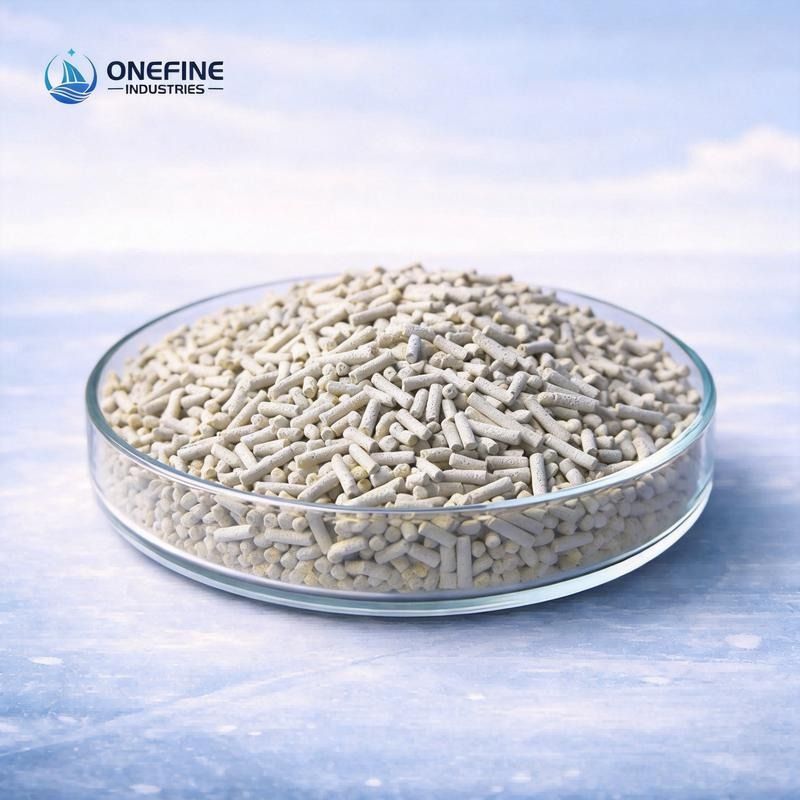
Zinc oxide desulfurization catalyst
High-purity zinc oxide (ZnO) desulfurization catalyst for fine removal of H₂S from natural gas, synthesis gas, hydrogen, and hydrocarbon feeds. Achieves outlet sulfur levels below 0.1 ppm through irreversible chemisorption. High sulfur capacity, long service life, and strong resistance to steam.
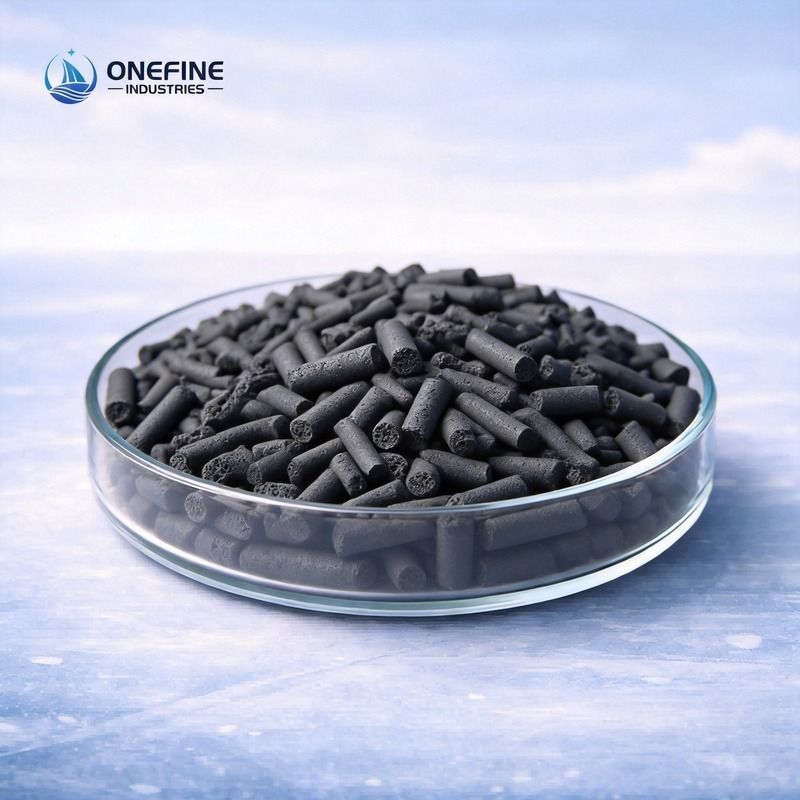
Ultra-precision Desulfurization Catalyst
A bifunctional desulfurization catalyst that couples COS hydrolysis and H₂S adsorption in a single reactor, achieving ultra-deep sulfur removal in one step. Effectively removes H₂S, COS, and trace RSH from process gases. Features high surface area, fast reaction kinetics, and broad operating range. Ideal for final purification of synthesis gas, natural gas, and light hydrocarbons.