Propylene Purification Adsorbent
A CuO-ZnO adsorbent designed for the removal of CO from polymer-grade propylene feedstock, while also removing trace amounts of O₂, H₂S, COS, AsH₃, PH₃, and other impurities. Prepared by co-precipitation method with uniformly dispersed active components. Features high selectivity, high activity, excellent mechanical strength, large capacity, and easy operation. Protects polymerization catalysts from poisoning and ensures stable polypropylene production.
Get QuoteKey Attributes
- Selectively removes CO from polymer-grade propylene to below detectable limits.
- Simultaneously captures trace O₂, H₂S, COS, AsH₃, and PH₃ in a single guard bed.
- Co-precipitation CuO-ZnO formulation ensures uniform dispersion and high activity.
- Radial crush strength ≥ 80 N/cm for stable high-pressure industrial service.
- Operates from ambient to 150 °C and atmospheric to 6.0 MPa.
- High adsorption capacity extends service life and reduces replacement frequency.
- Simple loading and operation without complex pre-treatment or activation.
Applications
- Protects Ziegler-Natta and metallocene catalysts from CO and sulfur poisoning.
- Deep purification of polymer-grade propylene before polymerization reactors.
- Removes CO and trace contaminants from steam cracker propylene product streams.
- Purifies propylene feedstock for cumene and acrylonitrile production units.
- Treats propylene-containing streams from catalytic cracking recovery units.
- Guard bed protection for polypropylene plants of all process types.
- Multi-contaminant removal for diverse propylene-based petrochemical processes.
- Final-stage trace impurity guard bed downstream of upstream drying and desulfurization units in propylene purification trains.
- Suitable for both gas-phase and liquid-phase propylene purification configurations.
Product Description
What Is a Propylene Purification Adsorbent?
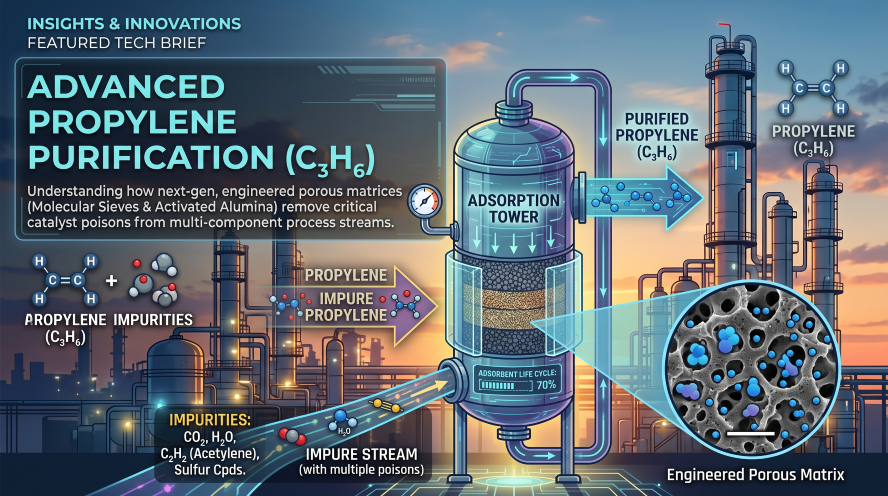
A propylene purification adsorbent is a CuO-ZnO adsorbent specifically developed for the removal of CO from polymer-grade propylene feedstock. It also effectively removes trace amounts of O₂, H₂S, COS, AsH₃, PH₃, and other impurities that can poison downstream polymerization catalysts. These trace contaminants cause catalyst deactivation and disrupt normal polypropylene production. The adsorbent is prepared by a co-precipitation method, ensuring uniform dispersion of active components (CuO-ZnO) for high selectivity and activity. It features high mechanical strength, large adsorption capacity, excellent performance, and convenient operation, making it ideal for propylene purification in polypropylene production units.
Key Takeaways
- Purpose: Removes CO plus trace O₂, H₂S, COS, AsH₃, and PH₃ from polymer-grade propylene in a single guard bed.
- Mechanism: CuO-ZnO active components made by co-precipitation, working through catalytic oxidation and chemisorption.
- Why it matters: Protects Ziegler-Natta and metallocene polymerization catalysts from irreversible poisoning.
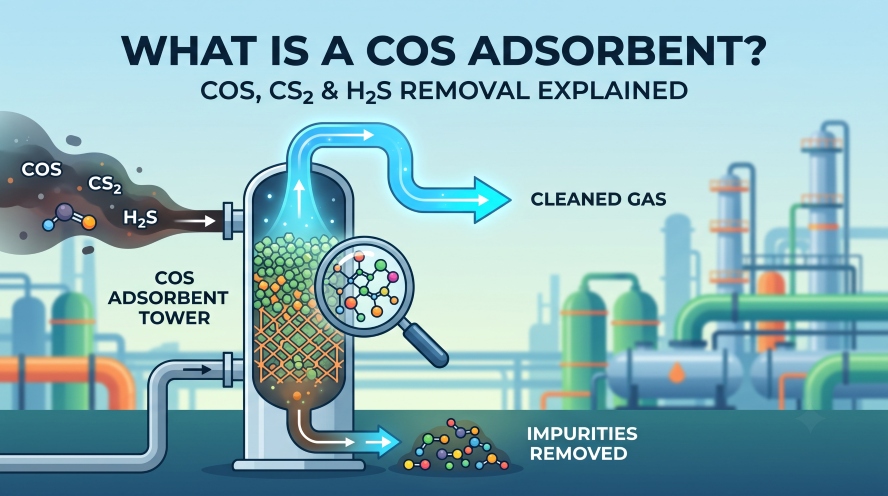
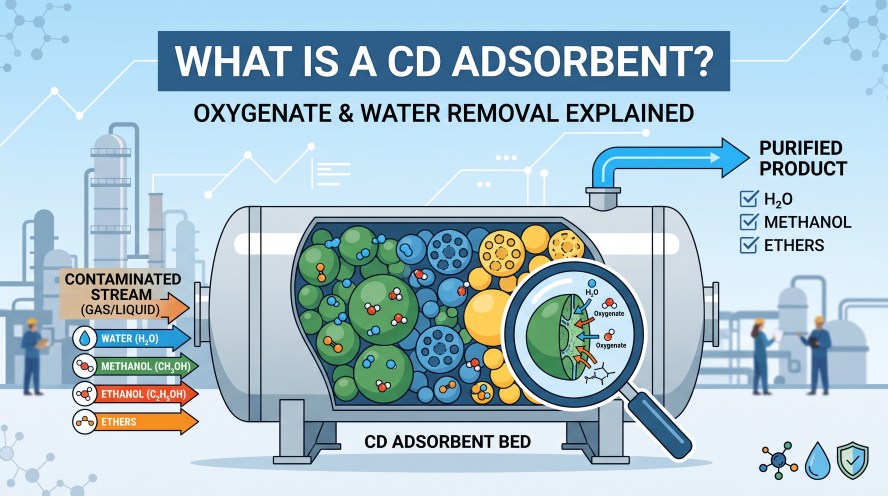
- Where it fits: Final trace-impurity guard bed in the propylene purification train, typically downstream of drying and desulfurization stages such as COS Adsorbent and CD Adsorbent.
Composition & Structure
Active Components:
- CuO (Copper Oxide) — Primary active component for CO removal through catalytic oxidation and chemisorption
- ZnO (Zinc Oxide) — Co-active component enhancing selectivity and providing support for copper oxide dispersion
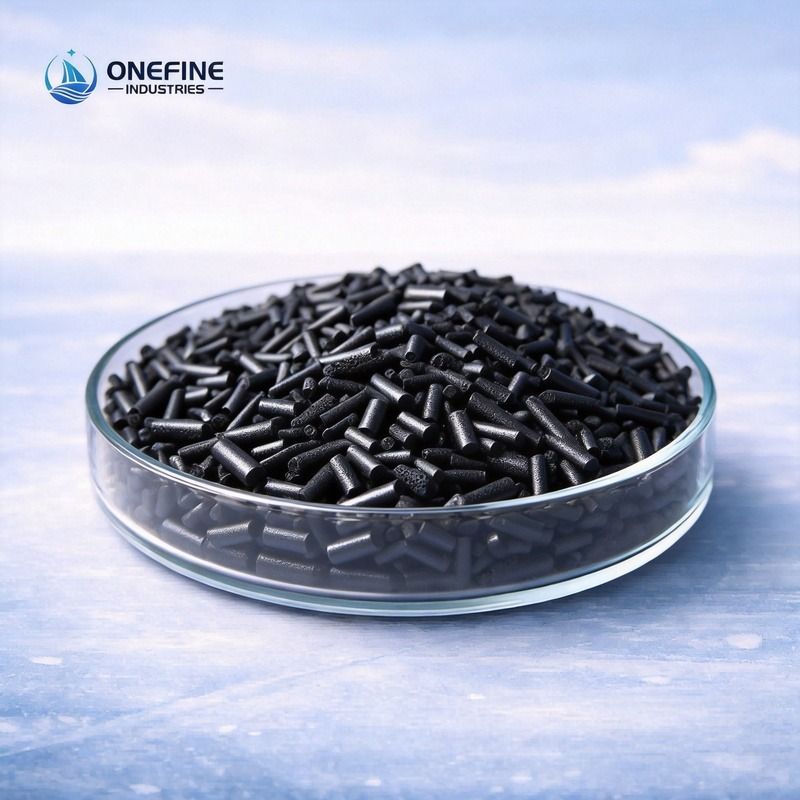
Physical Form: The adsorbent is manufactured using a co-precipitation process followed by pelleting, producing uniform black cylindrical pellets (Φ5×5 mm, with Φ5×3 mm and Φ3×3 mm also available). This cylindrical shape ensures good flow distribution, low pressure drop, and excellent mechanical strength (radial crush strength ≥ 80 N/cm) for industrial service.
Purification Mechanism
The adsorbent removes contaminants through catalytic and chemisorption mechanisms:
1. CO Removal:
- CO is oxidized to CO₂ on the CuO-ZnO active surface
- In the presence of trace O₂, CO + ½O₂ → CO₂ (catalytic oxidation)
- Even at ambient temperature, the CuO-ZnO system exhibits high CO conversion efficiency
2. Multi-Contaminant Capture:
- O₂ is removed through catalytic reduction or direct chemisorption on Cu sites
- H₂S and COS are captured by CuO through sulfidation: CuO + H₂S → CuS + H₂O
- AsH₃ and PH₃ are irreversibly chemisorbed on the active metal surface
This multi-mechanism approach enables comprehensive purification of propylene streams in a single guard bed.
Key Advantages
Co-Precipitation Technology:
- Uniform dispersion of CuO and ZnO active components ensures consistent performance
- High surface area and intimate contact between active phases provide superior activity
High Selectivity & Activity:
- Specifically targets CO without excessive reaction with propylene
- High activity at ambient to moderate temperatures reduces energy consumption
Robust Mechanical Properties:
- Radial crush strength ≥ 80 N/cm withstands high-pressure operation and thermal cycling
- Low attrition rate minimizes fines generation and pressure drop increase
Large Capacity:
- High adsorption capacity extends service life
- Reduces replacement frequency and operating costs
Simple Operation:
- No complex pre-treatment or activation required
- Easy loading and straightforward operation in existing guard bed vessels
Reference Operating Conditions
Process Conditions:
- Temperature: Ambient–150°C
- Pressure: Atmospheric–6.0 MPa
- Liquid Space Velocity: 0.5–6 h⁻¹
Feed Specifications:
- Polymer-grade propylene streams
- Also applicable to other olefin streams requiring CO and trace contaminant removal
Performance Output:
- CO removal to below detectable limits
- Trace O₂, H₂S, COS, AsH₃, PH₃ removal to ppb levels
Applications in Polypropylene Production
PP Polymerization Feed Guard (Primary Application): Polymerization catalysts used in polypropylene production — including Ziegler-Natta and metallocene catalysts — are extremely sensitive to trace contaminants. CO, O₂, H₂S, COS, AsH₃, and PH₃ can all cause irreversible catalyst deactivation, leading to reduced polymer yield, off-spec product, and unplanned shutdowns. The propylene purification adsorbent serves as the critical guard bed upstream of the polymerization reactor, delivering product-spec purity propylene. It is typically installed as the final stage of a purification train, following upstream desulfurization and dehydration steps such as those handled by COS Adsorbent and CD Adsorbent. For the ethylene equivalent of this same guard bed role, see our Ethylene Purification Adsorbent.
Cracked Gas Purification: In steam cracking units, the propylene product stream contains trace amounts of CO from the cracking process. This CO must be removed to very low levels before the propylene can be used as polymerization feedstock.
Refinery Propylene Streams: Propylene-containing streams from catalytic cracking units (PRU — Propylene Recovery Units) and other refinery processes may contain CO, sulfur compounds, and other contaminants. The adsorbent purifies these streams to meet polymerization-grade specifications.
Cumene & Acrylonitrile Production Feed: Propylene used in cumene (isopropylbenzene) and acrylonitrile production processes also requires deep purification to protect downstream catalysts and ensure product quality.
Service Life
The adsorbent operates primarily on a sacrificial (chemisorption) mechanism. Service life depends on:
- Inlet contaminant concentrations (CO, O₂, H₂S, COS, AsH₃, PH₃)
- Operating temperature and pressure
- Space velocity and feed flow rate
- Required outlet purity specification
The adsorbent is replaced once its capacity is exhausted, with the replacement interval determined by actual operating conditions. For guidance on expected service life under your specific feed composition, contact our technical team — see our companion guide, What Is a Propylene Purification Adsorbent? for a deeper look at selection and operating considerations.
Why Choose Our Propylene Purification Adsorbent?
1. CO-Focused Purification
Specifically designed for CO removal from polymer-grade propylene, with proven performance in PP production.
2. Multi-Contaminant Removal
Simultaneously removes CO, O₂, H₂S, COS, AsH₃, and PH₃ in a single guard bed.
3. Co-Precipitation Technology
Uniform active component dispersion ensures high selectivity, activity, and consistent batch-to-batch quality.
4. High Mechanical Strength
Radial crush strength ≥ 80 N/cm for reliable operation under high pressure.
5. Wide Operating Window
Ambient to 150°C and atmospheric to 6.0 MPa, compatible with diverse process configurations.
6. Large Capacity & Long Service Life
High adsorption capacity reduces replacement frequency and operating costs.
7. Customizable Supply
Size (Φ5×5 mm, Φ5×3 mm, or Φ3×3 mm) and formulation can be adjusted to match specific process requirements. Contact our technical team for tailored solutions.
Packaging & Shipping
- Packaging: Sealed steel drums (25 kg or 40 kg net weight) with inner double-layer plastic bags to prevent moisture absorption and contamination during transport.
- MOQ: 1 ton
- Container Loading: Standard 20' or 40' containers (FCL); LCL available for smaller orders
- Ports: Flexible — shipped from major Chinese ports based on buyer location and shipping line availability
- Lead Time: Contact our team for current lead times based on order volume
Documents & Certificates
- Certificate of Analysis (COA)
- Safety Data Sheet (SDS/MSDS)
- Certificate of Origin
- Packing List & Commercial Invoice
Storage & Handling
Storage: Store in a cool, dry, well-ventilated area. Protect from moisture, chemical contamination, and physical impact. Keep sealed until loading. Shelf life exceeds 3 years when stored properly in original unopened packaging.
Handling: Use appropriate personal protective equipment (PPE) when handling. Avoid inhalation of dust and contact with skin or eyes. Sieve before loading to remove fines.
FAQ
Q1: What contaminants does this adsorbent remove?
It primarily removes CO from polymer-grade propylene feedstock, while also removing trace amounts of O₂, H₂S, COS, AsH₃, PH₃, and other impurities that can poison polymerization catalysts.
Q2: What is the active composition?
The active components are CuO (copper oxide) and ZnO (zinc oxide), prepared by co-precipitation method for uniform dispersion and high activity.
Q3: What are the operating conditions?
Temperature: Ambient–150°C. Pressure: Atmospheric–6.0 MPa. Liquid space velocity: 0.5–6 h⁻¹.
Q4: What particle sizes are available?
Standard size is Φ5×5 mm cylindrical pellets. Φ5×3 mm and Φ3×3 mm are also available. Custom sizes can be provided upon request.
Q5: Why is CO removal critical for polypropylene production?
Trace CO in propylene feedstock poisons Ziegler-Natta and metallocene polymerization catalysts, causing reduced catalyst activity, lower polymer yield, and off-spec product. Removing CO to below detectable limits is essential for stable PP production.
Q6: What is the mechanical strength of the adsorbent?
The radial crush strength is ≥ 80 N/cm, providing excellent mechanical integrity for high-pressure industrial service.
Q7: How does this fit into a full propylene purification train?
It is typically the final guard bed stage, installed downstream of desulfurization and dehydration steps to deliver polymerization-grade purity propylene.
Closing CTA
Ready to secure a reliable bulk supply of Propylene Purification Adsorbent for your Middle East operations? Contact Sorbsieve's technical team today for a customized quote and technical data sheet.
Need a Custom Solution?
For bulk pricing and grade recommendation, please send your feed composition and required CO/trace contaminant outlet specifications to us. Our technical team will get back to you within 24 hours with a tailored solution.
Technical Specifications
| Appearance | Black cylindrical pellets |
| Active Components | CuO–ZnO |
| Size | Φ(5×5) mm (5×3 or 3×3 mm available) |
| Bulk Density | 1.45±0.15 kg/L |
| Specific Surface Area | 30–60 m²/g |
| Pore Volume | 0.15–0.30 ml/g |
| Radial Crush Strength | ≥ 80 N/cm |
| CO Outlet Concentration | < 0.1 ppm |
| Operating Temperature | Ambient–150 °C |
| Operating Pressure | Atmospheric–6.0 MPa |
| Liquid Space Velocity | 0.5–6 h⁻¹ |
| Service Life | Depends on operating conditions |
Related Products
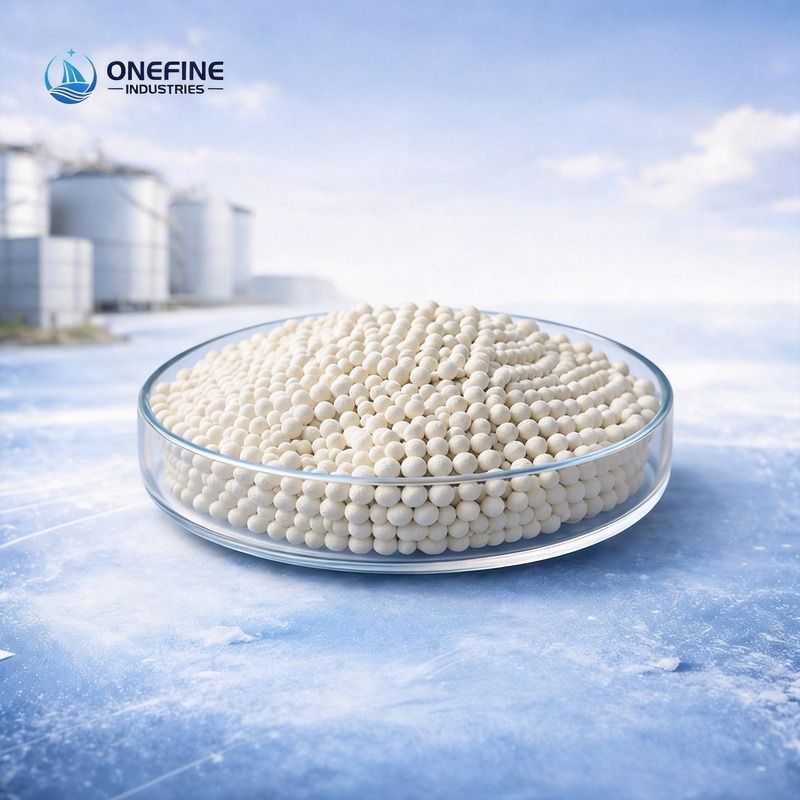
COS adsorbent
An advanced purification adsorbent catalyst based on specialty alumina with active components. Performance equivalent to imported Selexsorb COS adsorbent. Strong chemical adsorption capacity for selective removal of trace COS, CS₂, and H₂S from cracked C₂–C₄ unsaturated hydrocarbon streams. Also effectively removes CO₂, H₂O, chlorides, cyanides, and other common poisons. Operates at ambient to low temperatures for deep feedstock purification.
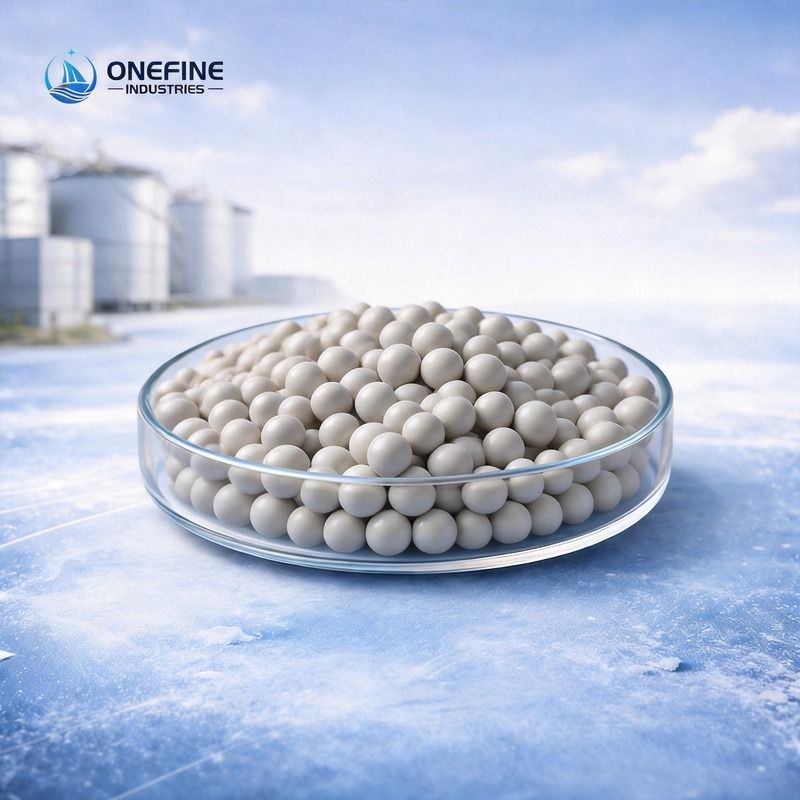
CD adsorbent
An advanced purification adsorbent catalyst based on specialty alumina with special modifiers. Performance equivalent to imported Selexsorb CD adsorbent. Strong chemical adsorption capacity for selective removal of trace oxygenated organic compounds (alcohols, ethers, aldehydes, ketones, peroxides) from C₂–C₄ unsaturated hydrocarbon streams in polyethylene and polypropylene units. Also effectively adsorbs water and mercaptans for deep feedstock purification. Operates at ambient to low temperatures.
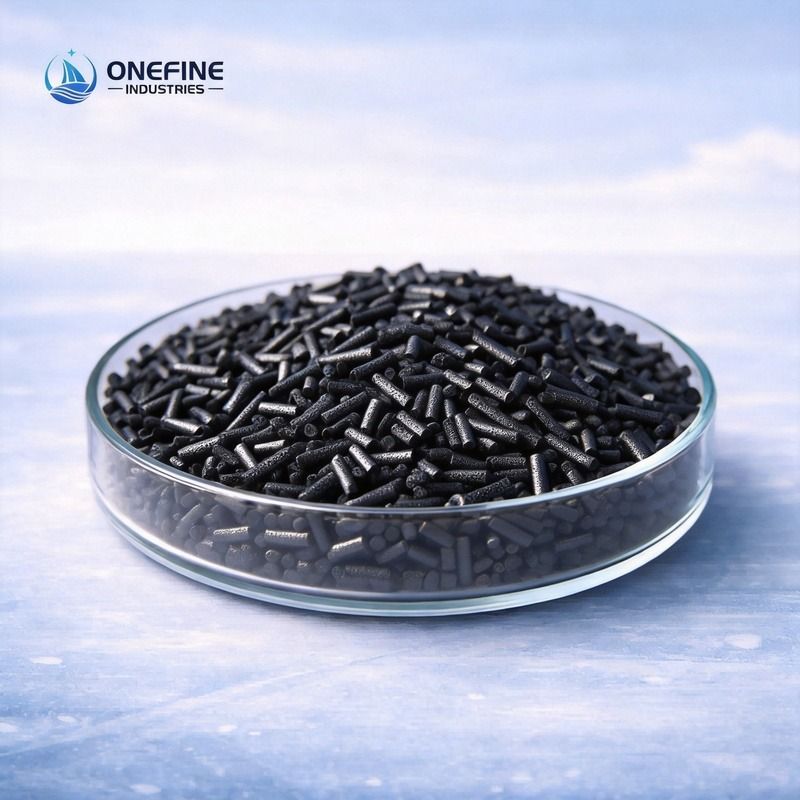
Ethylene Purification Adsorbent
A CuO-ZnO adsorbent designed for the removal of CO from polymer-grade ethylene feedstock, while also removing trace amounts of O₂, H₂S, COS, AsH₃, and PH₃. Prepared by co-precipitation method with uniformly dispersed active components. Features high selectivity, high activity, excellent mechanical strength, large capacity, and easy operation. Protects polymerization catalysts from poisoning and ensures stable polyethylene production.