Desulfurization and arsenic removal catalyst
High-performance CuO/Al₂O₃-based desulfurization and arsenic removal catalyst, engineered for the ultra-deep removal of sulfur compounds and volatile arsenides to protect downstream noble metal catalysts. Available in bulk from 1 ton MOQ for Middle East industrial buyers.
Get QuoteKey Attributes
- Standard ≥ 8.0% CuO active phase ensures a high specific capacity for volatile arsenides and hydrogen sulfide
- Premium Al₂O₃ carrier provides a large surface area (≥ 170 m²/g) to maximize gas-solid contact
- Optimized macropore structure (≥ 0.40 ml/g) facilitates rapid mass transfer and diffusion of large sulfur and arsenic molecules
- High mechanical integrity (≥ 40 N) guarantees resistance to crushing and attrition under industrial flow conditions
- Flexible manufacturing allows CuO loading customization up to 30% to handle exceptionally sour feedstocks
- Achieves a consistent de-arsenication rate of ≥ 99 wt%, keeping product streams strictly within specification
Applications
- Arsenic and sulfur removal from straight-run gasoline and light diesel distillates
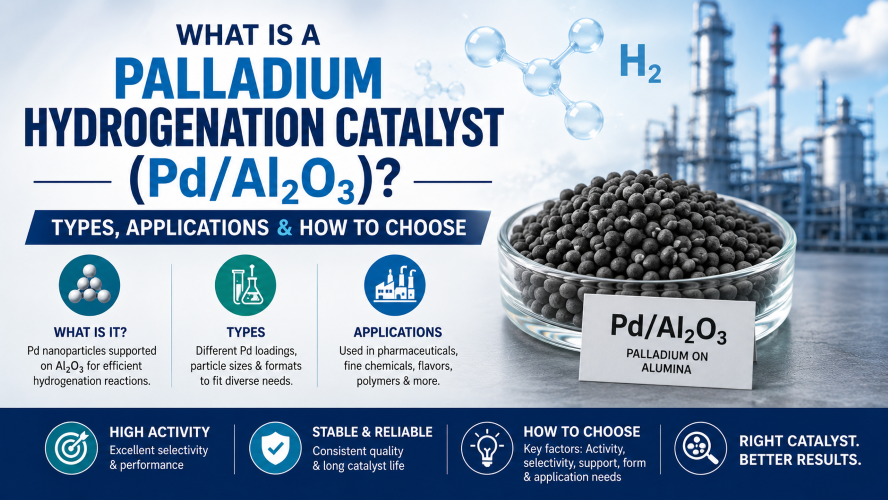
- Pre-treatment guard bed protection for highly sensitive Pt and Pd noble metal reforming catalysts such as Palladium Catalyst for Hydrogenation
- Purification of natural gas and associated gas streams prior to deep processing
- Removal of arsine (AsH₃) and phosphine (PH₃) from polymer-grade ethylene and propylene feeds
- Deep desulfurization of synthesis gas in methanol and ammonia production facilities
- Treatment of fluid catalytic cracking (FCC) dry gas to prevent downstream unit corrosion
- Contaminant scavenging in coal-to-liquid (CTL) and coal-to-gas (CTG) chemical plants
- General hydrocarbon feedstock polishing where trace heavy metal poisoning is a risk
Product Description
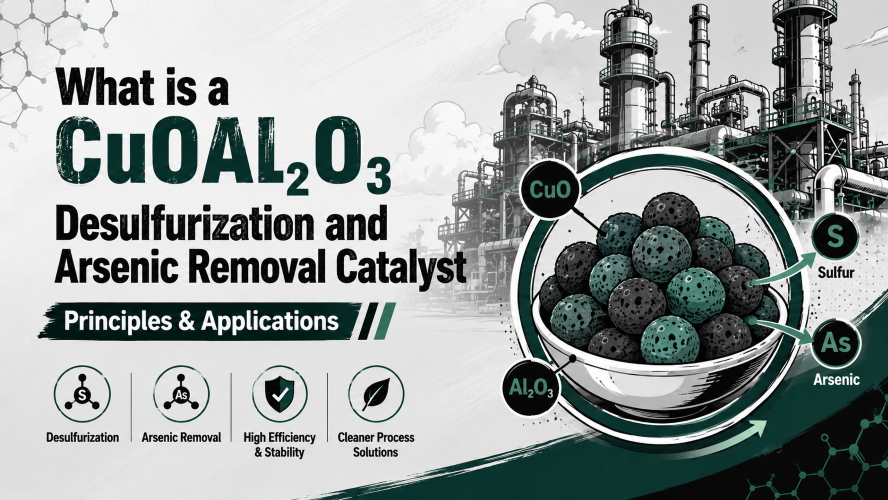
What is Desulfurization and Arsenic Removal Catalyst?
Key Takeaways:
- Dual-Action Chemisorption: Permanently removes both hydrogen sulfide (H₂S) and volatile arsenides (AsH₃) via unbreakable chemical bonds.
- Noble Metal Protection: Acts as a critical sacrificial guard bed to prevent the poisoning of sensitive Pt and Pd downstream catalysts.
- High-Capacity Active Phase: Standard ≥8.0% CuO loading on a high-surface-area alumina matrix (≥170 m²/g), customizable up to 30% for heavily sour feeds.
- Industrial Reliability: High crush strength (≥40 N/particle) ensures minimal pressure drop and avoids bed plugging in refinery flow conditions.
The Desulfurization and Arsenic Removal Catalyst is a specialized mixed-metal oxide scavenger, primarily composed of copper oxide (CuO) supported on a high-surface-area alumina (Al₂O₃) matrix. It is engineered to simultaneously remove hydrogen sulfide (H₂S) and volatile arsenides (such as arsine, AsH₃) from hydrocarbon gases and liquids via irreversible chemisorption, forming stable copper sulfides and arsenides.
For a deeper look at the chemisorption principle and how these guard beds are engineered, see our guide: What is a CuO/Al₂O₃ Desulfurization and Arsenic Removal Catalyst?
Sorbsieve supplies this catalyst in bulk, from 1 ton MOQ up to container-level orders, for industrial buyers across the Middle East.
Key Benefits
- Complete Catalyst Protection: Prevents the permanent and costly poisoning of sensitive downstream noble metal catalysts (e.g., Pt, Pd)
- High Adsorption Capacity: Formulated with ≥ 8.0% CuO active phase to ensure maximum sulfur and arsenic retention
- Customizable Formulation: The active component can be tailored up to 25% or 30% for heavily contaminated streams
- Mechanical Stability: Excellent average crush strength (≥ 40 N/particle) minimizes dusting and prevents reactor bed plugging
Applications
This catalyst is widely deployed as a sacrificial guard bed in oil refining and petrochemical complexes. It effectively purifies straight-run gasoline, light diesel distillates, and natural gas streams, ensuring the total arsenic and sulfur levels meet the stringent requirements of downstream catalytic processing units, including reforming units using catalysts such as Palladium Catalyst for Hydrogenation.
For buyers whose feed also carries phosphorus or oxygen compounds beyond sulfur and arsenic, our Deeply Refined Catalyst offers a broader four-in-one guard bed. For reforming and hydrocracking feeds where chlorine is also present alongside sulfur and arsenic, our Copper-Nickel Desulfurization Catalyst combines all three contaminants in a single pre-reduced dual-metal system.
Packaging & Shipping
We offer flexible packaging and shipping options to suit your project scale and logistics requirements.
Standard Packaging:
- 25 kg drums (moisture-proof, suitable for trial orders and small batches)
- 150 kg steel drums (standard bulk packaging for industrial orders)
- 500 kg super sacks (most popular for industrial bulk orders)
- 1000 kg jumbo bags (for large-scale projects)
- Custom packaging available on request
Minimum Order Quantity (MOQ):
- 1 ton (entry-level orders accepted — perfect for first-time customers)
- 5+ tons (standard bulk orders)
- Container-level supply for long-term partnerships
Container Loading Capacity:
- 20'GP container: 18–20 tons (palletized)
- 40'GP container: 22–24 tons (palletized)
- 40'HQ container: 24–26 tons
Loading Ports: We ship from major Chinese ports based on your requirements: Shanghai, Qingdao, Tianjin, Ningbo, and Shenzhen.
Lead Time:
- Stock orders: 7-15 days from payment confirmation
- Made-to-order: 20-30 days
Shipping Terms: FOB / CIF / CFR / EXW — flexible based on your destination and preferences.
Documents & Certificates
We provide complete documentation for every order:
📄 Technical Data Sheet (TDS) — Confirmed with you during product selection, ensuring exact specifications match your application requirements.
📄 Safety Data Sheet (SDS) — Provided before shipment, meeting all international transportation and handling standards.
📄 Certificate of Analysis (COA) — Issued for each production batch, delivered with your shipment for full quality traceability.
Additional documents available on request: Certificate of Origin (COO), Packing List, Commercial Invoice, Third-party Inspection Report (SGS / BV), Form E (for Middle East destinations with applicable tariff benefits).
Regeneration
Due to the permanent nature of the chemical bonds formed during the chemisorption of arsenic and sulfur onto the copper active sites, this catalyst is typically a non-regenerable, sacrificial material. Once the bed is saturated, it is discharged and safely replaced.
FAQ
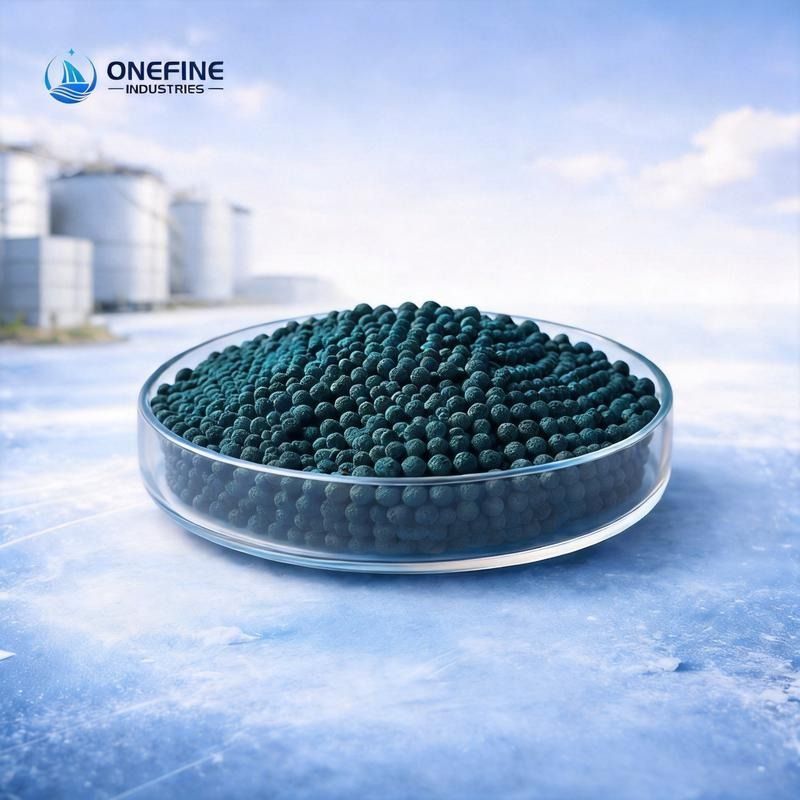
Q1: Can the active component content be adjusted based on our feed conditions? A1: Yes. While the standard CuO content is ≥ 8.0% (dark green beads), we can customize the loading up to 25% or 30% for high-contamination applications. These higher-loaded variants typically exhibit a black color.
Q2: What is the typical operating temperature for this catalyst? A2: It provides excellent removal efficiency across a wide range, typically operating efficiently up to 280°C depending on whether the feed is in a liquid or gas phase.
Q3: Why is arsenic removal critical for refinery processes? A3: Arsenic acts as a severe, permanent poison to many catalytic processes. Even minute traces can permanently deactivate noble metal catalysts (like platinum and palladium), leading to massive efficiency losses and premature catalyst replacement.
Q4: What is the minimum order quantity? A4: Our MOQ starts from 1 ton, suitable for trial orders. We also support 5+ ton standard bulk orders and container-level supply for long-term partnerships.
Need a Custom Solution?
For bulk pricing and grade recommendation, please send your feed sulfur/arsenic content & operating temperature requirements to us. Our technical team will get back to you within 24 hours with a tailored solution.
Technical Specifications
| Appearance | Dark green spherical beads (higher CuO-loaded variants appear black) |
| Particle Size (Φ) | 2.0–5.0 mm |
| Bulk Density | 0.80 ± 0.10 kg/L |
| Average Crush Strength | ≥ 40 N/particle |
| CuO Content | ≥ 8.0% (customizable up to 25% or 30% for heavily contaminated streams) |
| Al₂O₃ Content | ≥ 75% |
| Specific Surface Area | ≥ 170 m²/g |
| Pore Volume | ≥ 0.40 ml/g |
| De-arsenic Rate | ≥ 99 wt% |
| Operating Temperature | Up to 280°C (liquid or gas phase) |
| Operating Pressure | Up to 1.6 MPa |
Related Products
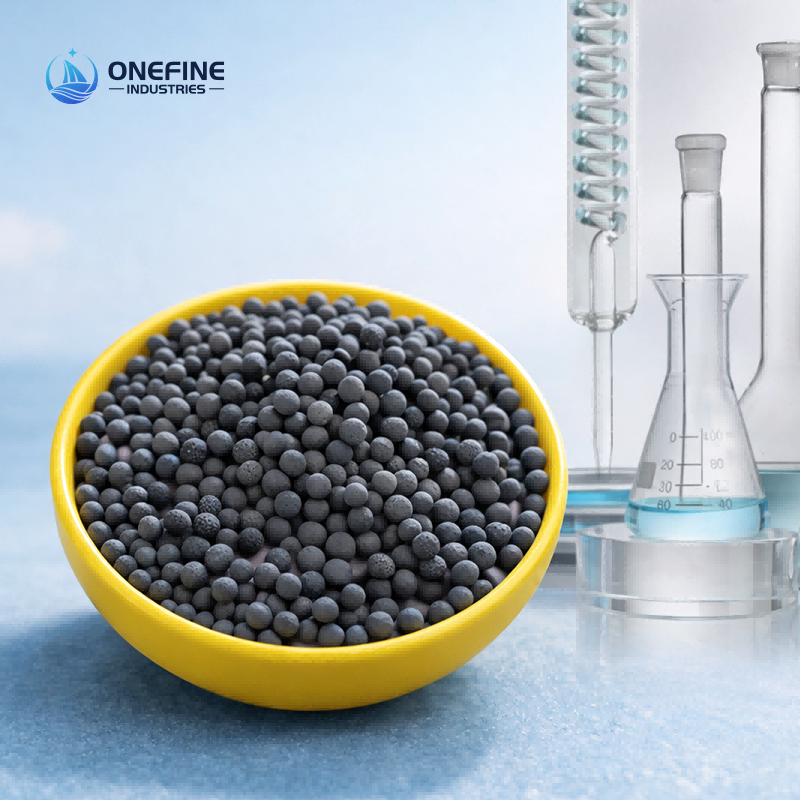
Palladium Catalyst for Hydrogenation (Pd/Al₂O₃)
High-performance palladium on alumina catalyst (Pd/Al₂O₃) for industrial hydrogenation reactions. Available in 0.1-2% Pd loading on alumina support. Exceptional activity, long service life, and excellent selectivity for pharmaceutical, petrochemical, and fine chemical synthesis.
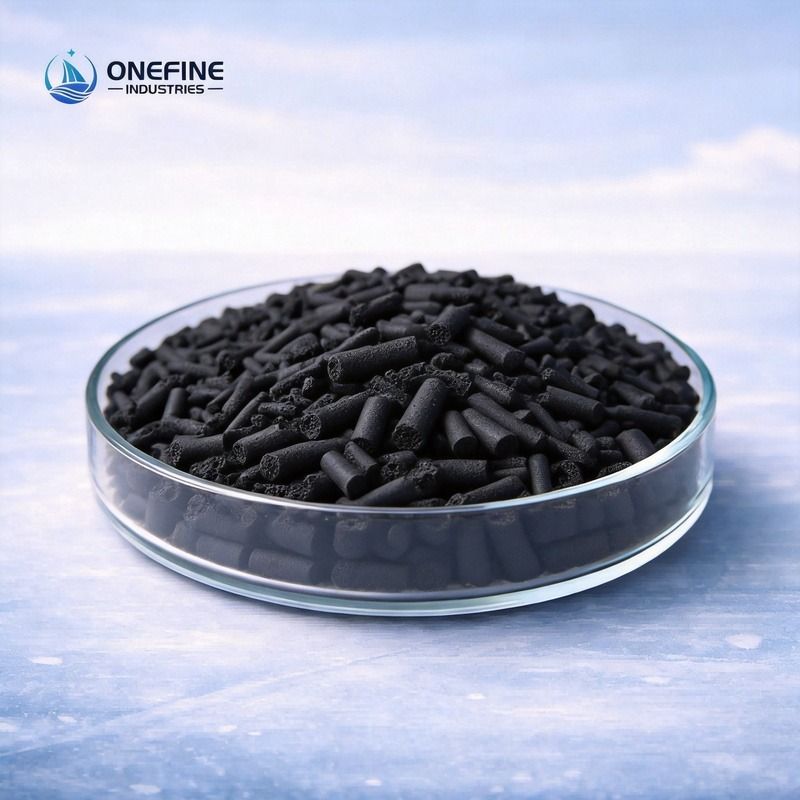
Deeply Refined Catalyst
A high-performance deeply refined catalyst based on copper oxide and zinc oxide active components, designed for deep purification of liquid hydrocarbons and synthesis gas. Achieves total sulfur removal down to ≤ 20 ppb through efficient desulfurization, dearsenication, dephosphorization, and deoxygenation. Features high mechanical strength, stable operation, and excellent low-temperature activity.
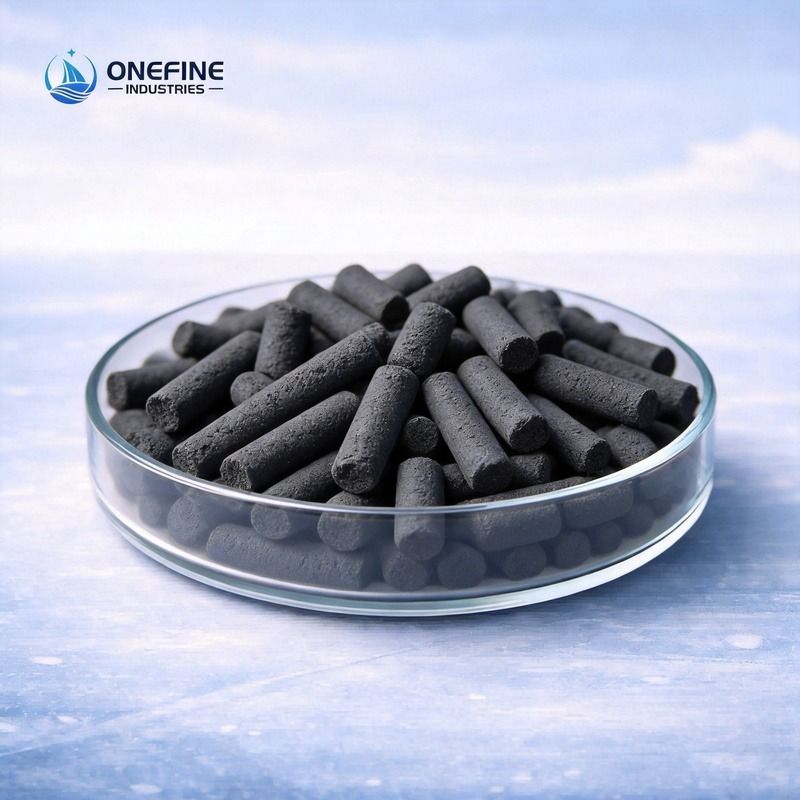
Copper-Nickel Desulfurization Catalyst
A Cu-Ni dual-system desulfurization catalyst for oil refining guard-bed applications. Removes inorganic and organic sulfur, trace chlorine, and arsenic impurities in a single step. Supplied in pre-reduced form for immediate use. Ideal as a protection agent for precious metal catalysts in reforming, hydrocracking, and isomerization units.