What is a Palladium Hydrogenation Catalyst? Pd/Al₂O₃ Explained
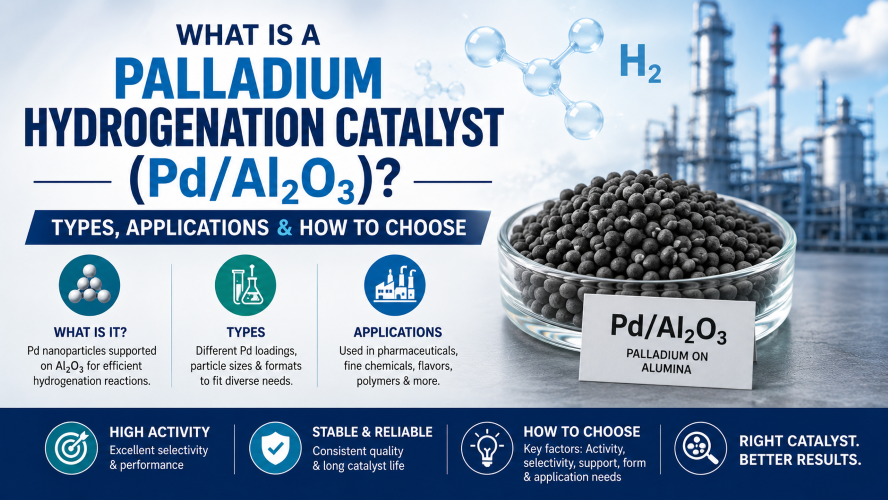
If you work in pharmaceutical manufacturing, petrochemical processing, or fine chemical synthesis, you've likely encountered palladium hydrogenation catalyst — one of the most widely used noble metal catalysts in industrial chemistry. Palladium on alumina (Pd/Al₂O₃) enables selective, efficient hydrogenation reactions under relatively mild conditions, making it a workhorse catalyst across dozens of industries.
But what exactly makes palladium so effective for hydrogenation, and how do you choose the right Pd loading for your process? This guide breaks down how Pd/Al₂O₃ works, where it's used, and what factors matter when selecting a grade for your application.
Key Takeaways:
- Core Mechanism: Palladium acts as the active site to adsorb and dissociate molecular hydrogen for addition to unsaturated organic bonds.
- Support Function: The alumina (Al₂O₃) support maximizes surface area (95-350 m²/g) and prevents palladium nanoparticle agglomeration.
- Loading Selection: Choosing Pd loading (0.1% to 2%) depends on balancing desired reaction kinetics and cost sensitivity.
- Lifespan & Recovery: Deactivated Pd/Al₂O₃ catalysts can be reactivated via thermal or chemical treatment, and offer high precious metal recovery value at end of life.
How Pd/Al₂O₃ Works
Palladium hydrogenation catalyst consists of palladium metal nanoparticles dispersed across a high-surface-area alumina (Al₂O₃) support. During a hydrogenation reaction, palladium acts as the active site: it adsorbs molecular hydrogen (H₂) onto its surface and dissociates it into individual, reactive hydrogen atoms. These atoms then transfer to unsaturated bonds in the organic substrate — such as double bonds in alkenes, triple bonds in alkynes, or nitro groups — converting them to their saturated form.
Palladium belongs to the platinum group of noble metals, prized for catalysis because of its unfilled d-orbital electronic structure. This structure allows palladium to bind hydrogen and organic molecules strongly enough to activate them, while still releasing the finished product efficiently — a balance that keeps the reaction moving without the catalyst surface becoming "poisoned" by strongly bound intermediates.
The alumina support isn't just a carrier — it plays several functional roles. It maximizes the exposed surface area of the palladium (typically 95-350 m²/g for the support itself), prevents the tiny palladium nanoparticles (commonly 2-10 nm) from clumping together and losing activity over time, and gives the catalyst enough mechanical strength to be packed into industrial reactors without crushing under operating pressure.
Pd Loading Options Explained
Palladium hydrogenation catalyst is typically sold at different palladium loadings — the percentage of palladium by weight relative to the alumina support. Choosing the right loading is mostly a balance between reaction speed and cost, since palladium is a precious metal.
- 0.1% Pd — Suited to light hydrogenation reactions where reaction rate isn't critical, and cost sensitivity is high. Common in large-volume, lower-value processes.
- 0.5% Pd — A frequent choice for standard pharmaceutical and fine chemical reactions where moderate activity is sufficient.
- 1% Pd — The general-purpose workhorse loading for most hydrogenation applications, balancing activity and cost.
- 2% Pd — Used where fast reaction kinetics or difficult substrates demand higher catalytic activity, even at greater cost per unit.
Beyond loading, carrier form matters for reactor design. Spherical Pd/Al₂O₃ (commonly 2-4 mm) is favored for both batch slurry reactors and fixed-bed continuous reactors because it packs uniformly and maintains good flow characteristics — reducing pressure drop and channeling issues in continuous operations.
Key Applications
Palladium hydrogenation catalyst is used wherever a process needs selective, controlled addition of hydrogen to organic molecules:
- Pharmaceutical and API synthesis — nitro group reduction (converting nitroaromatics to anilines), debenzylation of protecting groups, and other selective steps that must preserve sensitive functional groups
- Petrochemical processing — selective removal of trace acetylene from ethylene streams, and aromatic hydrogenation for solvent and intermediate production
- Fine chemicals and agrochemicals — vitamin, fragrance, and pesticide intermediate synthesis requiring precise, selective hydrogenation
- Polymer and specialty chemicals — production of hydrogenated rubber and saturated surfactants for automotive, construction, and personal care applications
Each of these applications tends to favor a different Pd loading and carrier configuration — for example, pharmaceutical synthesis commonly uses 1-2% Pd for balance of activity and selectivity, while fixed-bed petrochemical processes favor sphere formulations for mechanical durability under continuous operation. For full specifications by application, see our Palladium Catalyst for Hydrogenation product page.
Protecting the Palladium Investment: Because palladium is highly sensitive to trace sulfur, arsenic, and chlorine poisoning, petrochemical and refinery installations typically run a dedicated guard bed upstream of the Pd/Al₂O₃ reactor. Our Desulfurization and Arsenic Removal Catalyst handles sulfur and arsenic ahead of the hydrogenation step, while our Copper-Nickel Desulfurization Catalyst addresses sulfur, chlorine, and arsenic together for reforming and hydrocracking feed protection.
Regeneration & Precious Metal Recovery
Unlike many industrial catalysts that are simply discarded after deactivation, palladium hydrogenation catalyst retains significant value even at end of life, because palladium itself is a recoverable precious metal.
Regeneration — Before recovery becomes necessary, deactivated Pd/Al₂O₃ can often be reactivated through solvent washing (removing adsorbed organic contaminants), controlled thermal treatment (burning off carbon deposits), or reductive reactivation using hydrogen at elevated temperature to restore active palladium sites.
Recovery — Once a catalyst can no longer be regenerated, the palladium is recovered through pyrometallurgical or hydrometallurgical processing. Modern refineries can recover a large majority of the palladium content from spent catalyst, and many suppliers offer buy-back or toll-processing programs — meaning the initial catalyst investment is partially offset at end of life.
For full regeneration methods, recovery process details, and storage/handling guidance, see our complete Palladium Catalyst for Hydrogenation product page.
Recommended Products from Sorbsieve
Palladium Catalyst for Hydrogenation (Pd/Al₂O₃) — Available in 0.1%, 0.5%, 1%, and 2% Pd loading, spherical form (2-4 mm), bulk supply with full documentation (COA/TDS/SDS).
FAQ
1. What's the difference between Pd/Al₂O₃ and Pd/C (palladium on carbon) catalyst? Pd/Al₂O₃ uses an alumina support, which is generally more mechanically robust and easier to handle than carbon-supported palladium, and is less prone to certain deactivation pathways. Carbon-supported catalysts (Pd/C) are sometimes preferred for reactions requiring very high surface area, but alumina supports offer better stability for many industrial fixed-bed applications.
2. How do I choose the right Pd loading for my reaction? It depends on your substrate, desired reaction rate, and cost sensitivity. Lower loadings (0.1-0.5%) work for high-volume, less demanding reactions; higher loadings (1-2%) suit difficult substrates or processes needing fast kinetics. Sharing your feedstock composition and reactor conditions with our technical team will get you a specific recommendation.
3. Can spent palladium catalyst be sold back or recycled? Yes — palladium is a valuable precious metal, and many suppliers, including Sorbsieve, can discuss buy-back or toll-processing arrangements for spent catalyst, since recovery rates are typically high.
4. Is palladium catalyst safe to store and handle? Pd/Al₂O₃ is relatively stable compared to carbon-supported catalysts, but should still be stored sealed in a cool, dry environment away from oxidizers, and handled with standard PPE (gloves, safety glasses) to avoid dust inhalation and skin contact.
Looking for Bulk Supply of Palladium Hydrogenation Catalyst?
Sorbsieve is a trusted bulk supplier of palladium hydrogenation catalyst (Pd/Al₂O₃) and complete industrial adsorbents and catalysts, serving industrial buyers across the Middle East.
We provide:
- ✅ Container-level supply (20'GP / 40'GP / 40'HQ)
- ✅ Full documentation (COA / TDS / SDS / COO)
- ✅ Multiple packaging options
- ✅ Technical support for Pd loading selection and reactor configuration
- ✅ Fast quote response for industrial inquiries
Contact our team for bulk pricing, product samples, and technical consultation.
Related Products
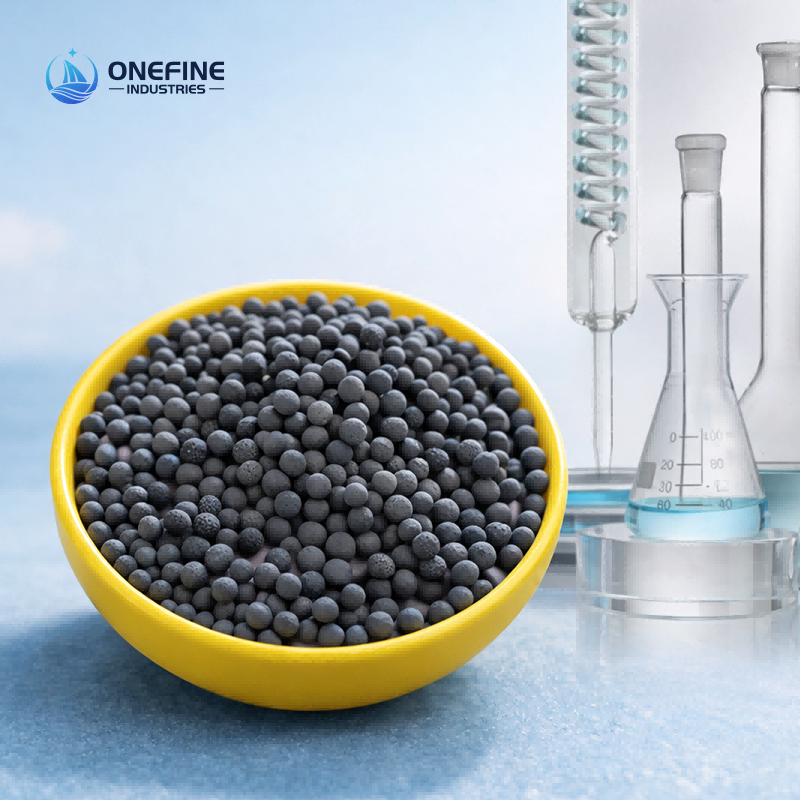
Palladium Catalyst for Hydrogenation (Pd/Al₂O₃)
High-performance palladium on alumina catalyst (Pd/Al₂O₃) for industrial hydrogenation reactions. Available in 0.1-2% Pd loading on alumina support. Exceptional activity, long service life, and excellent selectivity for pharmaceutical, petrochemical, and fine chemical synthesis.
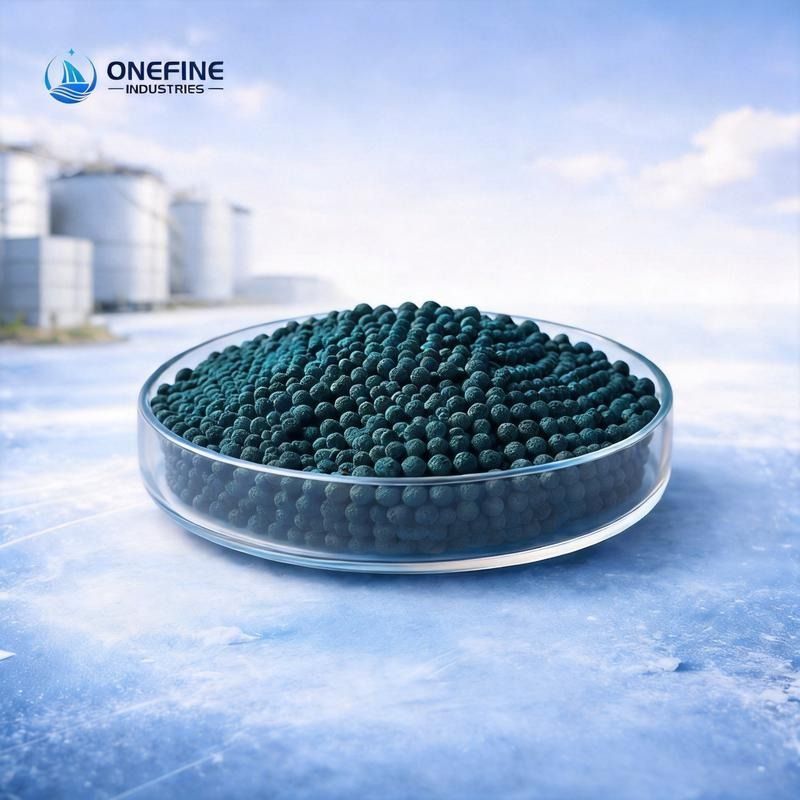
Desulfurization and arsenic removal catalyst
High-performance CuO/Al₂O₃-based desulfurization and arsenic removal catalyst, engineered for the ultra-deep removal of sulfur compounds and volatile arsenides to protect downstream noble metal catalysts. Available in bulk from 1 ton MOQ for Middle East industrial buyers.
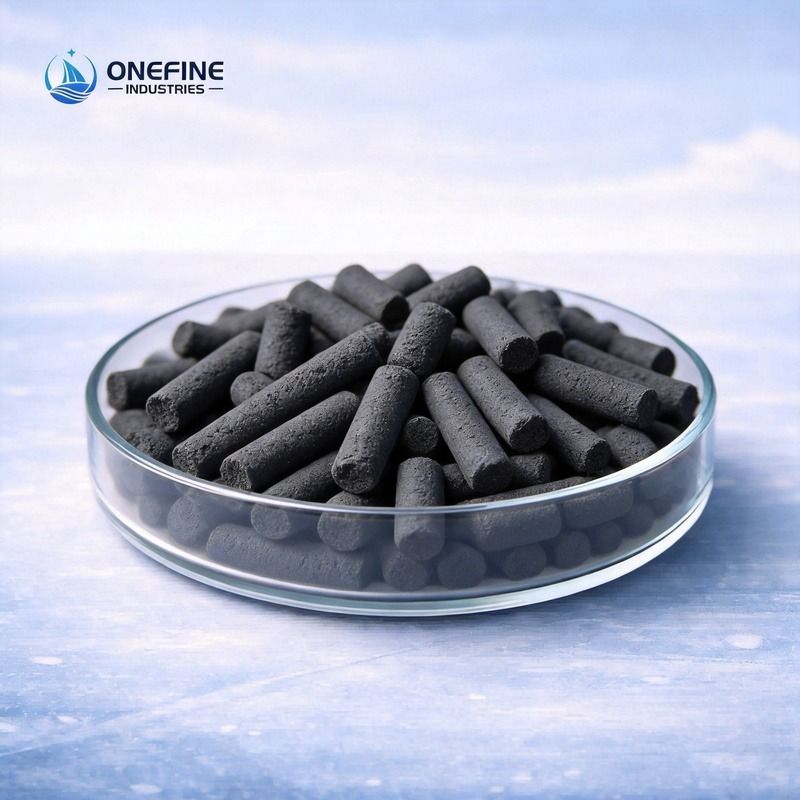
Copper-Nickel Desulfurization Catalyst
A Cu-Ni dual-system desulfurization catalyst for oil refining guard-bed applications. Removes inorganic and organic sulfur, trace chlorine, and arsenic impurities in a single step. Supplied in pre-reduced form for immediate use. Ideal as a protection agent for precious metal catalysts in reforming, hydrocracking, and isomerization units.
Related Reading
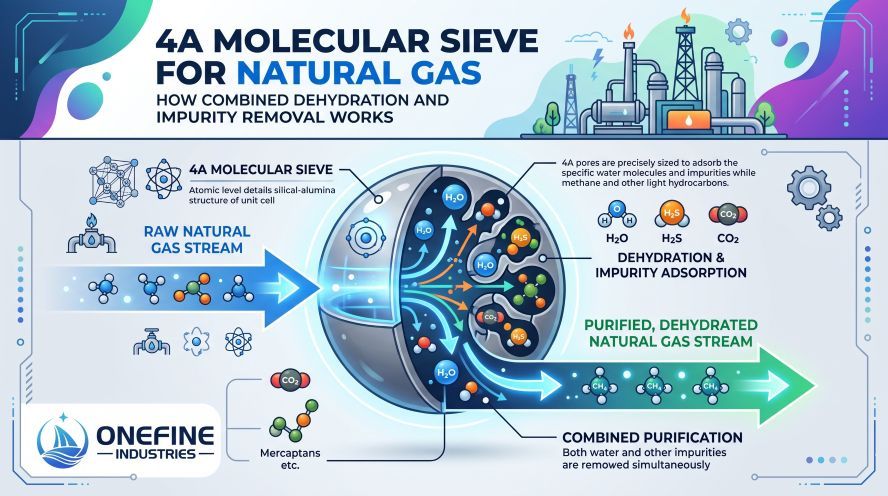
4A Molecular Sieve for Natural Gas: How Combined Dehydration and Impurity Removal Works
4A molecular sieve can dry natural gas and pull moderate CO₂/H₂S out of the same stream in one bed — how its larger pore enables that dual role, where it fits in the treatment train, and when 3A is the better call instead.
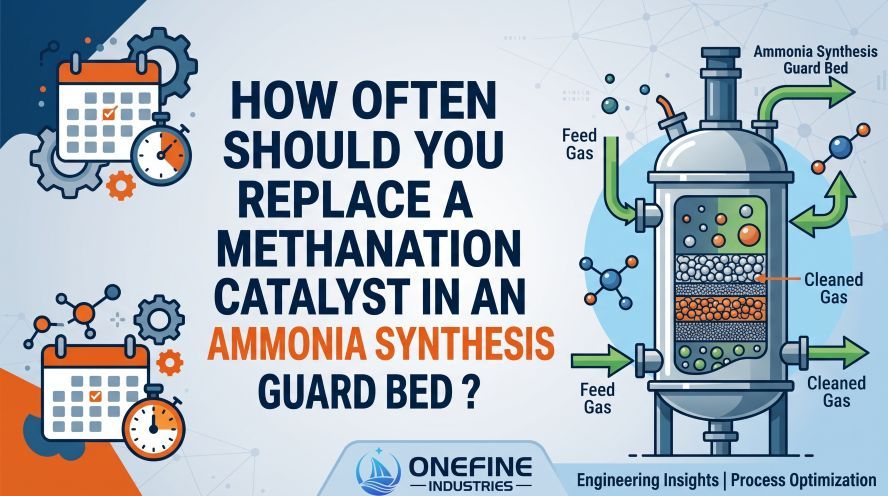
How Often Should You Replace a Methanation Catalyst in an Ammonia Synthesis Guard Bed?
There's no fixed replacement interval for a methanation catalyst — service life depends almost entirely on how well the upstream desulfurization train protects it. Here's how to read the real warning signs.
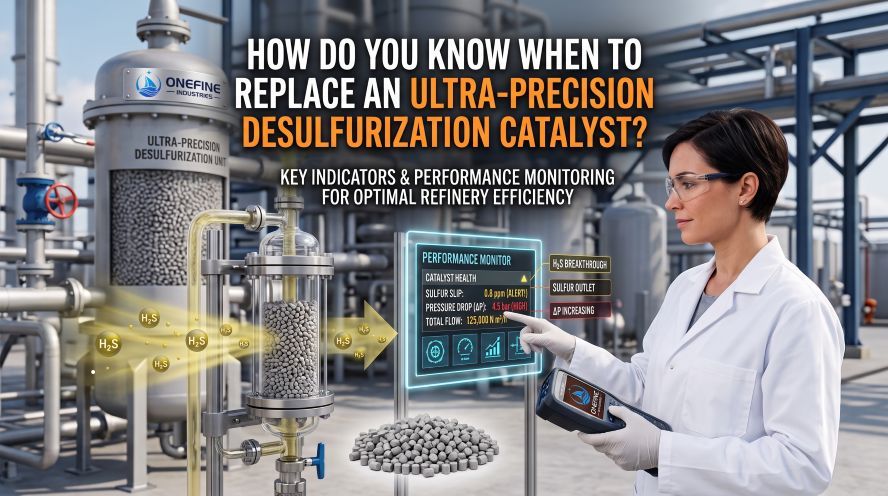
How Do You Know When to Replace an Ultra-Precision Desulfurization Catalyst?
Four real warning signs — total sulfur creep, falling COS conversion, rising pressure drop, and downstream poisoning — that tell you an Ultra-Precision Desulfurization Catalyst bed needs replacing.