5A Molecular Sieve (Calcium Type)
Calcium-exchanged 5A molecular sieve for PSA oxygen enrichment, natural gas sweetening, n-isoparaffin separation, and simultaneous desulfurization & decarbonization. Bulk supply with MOQ from 1 ton, serving industrial buyers across the Middle East.
Get QuoteKey Attributes
- Calcium-exchanged type with precise 5Å pore opening
- Superior N₂/O₂ selectivity ideal for PSA/VPSA oxygen generation
- Simultaneous desulfurization and decarbonization in a single bed
- High adsorption capacity for n-paraffins, CO₂, H₂S, and water
- Effective n-/iso-paraffin separation for petrochemical refining
- 2-3 year service life with proper regeneration procedures
- Available in beads, pellets, and powder for flexible system design
- High crushing strength withstands high-pressure cycling conditions
- Excellent thermal stability up to 400°C continuous operation
- Fully regenerable via thermal swing or pressure swing processes
- Low pressure drop due to uniform particle size distribution
- Industrial-grade quality for reliable long-cycle performance
Applications
- PSA / VPSA medical and industrial oxygen generation
- Natural gas desulfurization (H₂S removal) and decarbonization (CO₂ removal)
- n-Paraffin and isoparaffin separation in refineries
- Air separation plant (ASU) pre-purification systems
- Industrial gas purification and drying
- Solvent recovery and hydrocarbon separation
- Hydrogen purification and syngas treatment
- Biogas upgrading to pipeline-quality biomethane
- Refrigerant drying and purification
- LPG (liquefied petroleum gas) sweetening
- Petrochemical process stream purification
- Static dehydration for heavy-duty industrial packaging
Product Description
Key Takeaways:
- 5A molecular sieve is calcium-exchanged type A zeolite with a 5Å pore opening, adsorbing n-paraffins, CO₂, H₂S, and water while excluding branched/cyclic molecules
- Its N₂/O₂ selectivity makes it the standard choice for PSA/VPSA oxygen enrichment (80-90% purity) and for simultaneous natural gas desulfurization and decarbonization
- Available in beads, pellets, and powder, fully regenerable via pressure swing or thermal swing methods, with 2-3 year typical service life
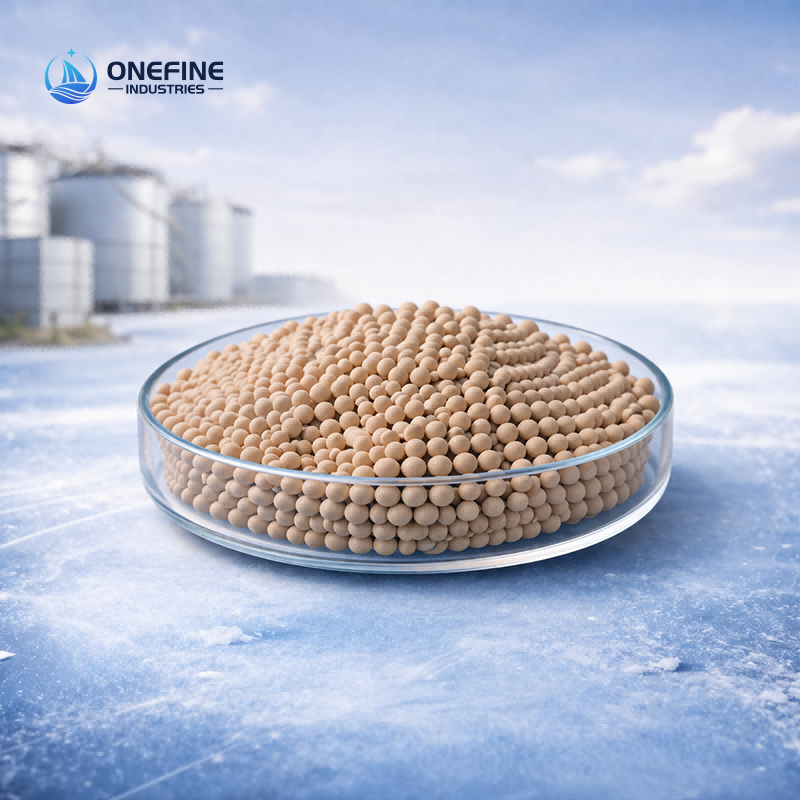
5A molecular sieve is a calcium-exchanged form of type A zeolite with a uniform pore size of approximately 5 angstroms (0.5 nm). Produced by exchanging the sodium ions in 4A molecular sieve with calcium ions, the resulting 5Å pore opening can adsorb molecules smaller than 5 angstroms while excluding larger molecules such as iso-paraffins, aromatics, and cyclic compounds.
This calcium-type molecular sieve is engineered for selective adsorption applications, most notably PSA oxygen enrichment, natural gas sweetening, and n-/isoparaffin separation. Its ability to simultaneously remove water, carbon dioxide, and hydrogen sulfide makes it a versatile workhorse in gas processing and petrochemical industries. For a deeper dive into how it works and how it compares to other sieve types, see our complete 5A molecular sieve guide.
Key Benefits
- N₂/O₂ selectivity: Preferential adsorption of nitrogen over oxygen enables efficient oxygen enrichment in PSA/VPSA systems, typically producing 80-90% purity oxygen — a cost-effective option where ultra-high purity isn't required. For higher-purity 90%+ applications, 13X and Li-LSX molecular sieve are used instead
- Dual desulfurization & decarbonization: Removes both H₂S and CO₂ from natural gas and biogas streams in a single adsorbent bed, reducing capital and operating costs
- n-/Iso-paraffin separation: Selectively adsorbs normal paraffins while excluding branched paraffins, enabling efficient separation in refinery applications
- High adsorption capacity: Offers excellent dynamic loading for water, CO₂, H₂S, and linear hydrocarbons across a wide range of operating conditions
- Long cycle life: Withstands thousands of pressure swing cycles with minimal attrition and stable performance
- Multiple product forms: Available in beads, pellets, and powder to accommodate different reactor designs and process requirements
- Excellent mechanical strength: High crush resistance and low attrition rate ensure reliable performance in high-pressure and high-cycle systems
- Fully regenerable: Can be repeatedly regenerated via thermal swing (TSA) or pressure swing (PSA) methods without significant performance degradation
- Deep purification capability: Achieves ppm-level impurity removal for demanding industrial gas specifications
Applications
PSA & VPSA Oxygen Enrichment
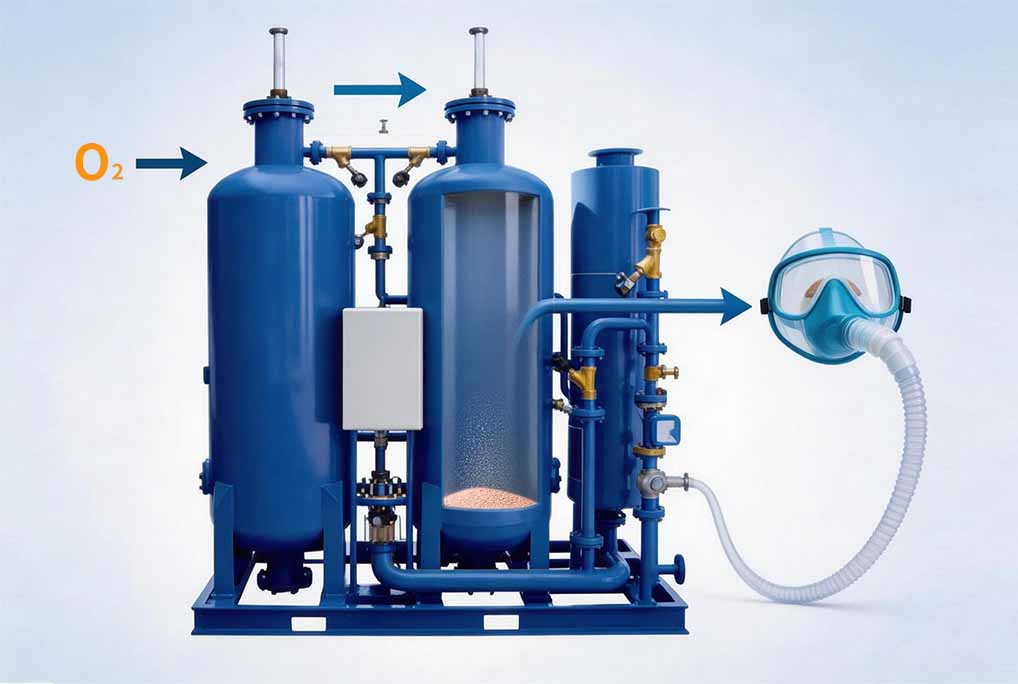
5A molecular sieve has been used in pressure swing adsorption (PSA) and vacuum pressure swing adsorption (VPSA) oxygen generation systems, offering oxygen purity in the 80-90% range from ambient air — suitable for industrial cutting and welding, wastewater treatment, aquaculture, and combustion enrichment applications where ultra-high purity isn't required. For higher-purity applications (90%+), including medical oxygen supply, 13X and Li-LSX molecular sieves are the modern standard. The adsorbent bed is alternately pressurized (adsorption) and depressurized (regeneration) for continuous oxygen production.
Natural Gas Sweetening & Processing
In natural gas treatment, 5A molecular sieve provides simultaneous dehydration, desulfurization (H₂S and mercaptans removal), and decarbonization (CO₂ removal) in a single adsorption unit. This multi-contaminant removal capability reduces equipment footprint and operating costs compared to separate treatment systems. Suitable for pipeline-quality gas production, LNG pre-treatment, and associated gas processing.
n-/Iso-Paraffin Separation
5A molecular sieve selectively adsorbs normal paraffins (n-alkanes) while excluding branched paraffins (iso-alkanes) and cyclic hydrocarbons due to its precise 5Å pore size. This property is exploited in the petroleum refining industry for:
- Separating n-paraffins from naphtha and kerosene fractions
- Producing high-purity n-paraffins for surfactant and detergent manufacturing
- Improving the octane rating of gasoline by removing normal paraffins
- Recovering valuable n-paraffin feedstocks from refinery streams
Air Separation Plant Pre-Purification
In cryogenic air separation units (ASUs), 5A molecular sieve is used in front-end purification systems to remove water vapor, carbon dioxide, and trace hydrocarbons from feed air, preventing freeze-up and blockage in cryogenic heat exchangers and distillation columns.
Industrial Gas Purification
5A molecular sieve is widely used for purifying various industrial gas streams: hydrogen gas purification (removing CO, CO₂, and water), syngas conditioning, inert gas drying and purification, rare gas (argon, neon) purification, and nitrogen gas polishing.
Biogas Upgrading
5A molecular sieve is an effective adsorbent for biogas upgrading, where carbon dioxide, hydrogen sulfide, and water vapor are removed to produce pipeline-quality biomethane — well-suited for raw biogas from anaerobic digestion, landfill gas, and agricultural waste treatment facilities.
Petrochemical Processing & LPG Sweetening
Applied across solvent drying and recovery, hydrocarbon stream purification, olefin drying (ethylene, propylene), aromatic stream treatment, and catalyst protection beds. Also removes hydrogen sulfide, mercaptans, and moisture from liquefied petroleum gas (LPG) to meet product quality specifications and prevent corrosion in storage and distribution systems.
Regeneration Guide
5A molecular sieve is fully regenerable, and proper regeneration is critical for maintaining adsorption performance and maximizing service life. The regeneration method depends on the application and system design.
Pressure Swing Regeneration (PSA/VPSA): The primary regeneration method for oxygen generation and gas separation applications. The adsorbent bed is depressurized to near ambient or sub-atmospheric pressure, causing adsorbed nitrogen and other species to desorb. A portion of the product gas is used as purge to sweep desorbed materials from the bed. Typical cycle times range from 30 seconds to several minutes, with thousands of cycles achievable before performance degradation becomes significant.
Thermal Swing Regeneration (TSA): Used primarily for natural gas drying, static dehydration, and applications where regeneration is less frequent. The saturated bed is heated to 200-320°C using a dry purge gas. Adsorbed water, H₂S, CO₂, and hydrocarbons are thermally desorbed and carried away by the purge gas. After heating, the bed is cooled to operating temperature before returning to service. Typical regeneration cycle: 4-12 hours.
Regeneration Best Practices:
- PSA/VPSA applications: Ensure proper equalization steps to minimize product loss and maximize recovery
- TSA applications: Use dry, clean regeneration gas free of heavy hydrocarbons that could coke on the molecular sieve
- Gradual temperature changes: Ramp temperatures at 50-100°C per hour to avoid thermal shock to the crystals and binder
- Uniform flow distribution: Use properly designed inlet distributors to prevent channeling and ensure complete bed regeneration
- Monitor breakthrough: Track outlet impurity levels to determine when regeneration is needed and confirm regeneration completeness
- Prevent contamination: Protect the molecular sieve bed from liquid water, oil, and heavy organic contaminants which can permanently reduce capacity
- Periodic inspection: Schedule regular bed inspections to check for attrition, channeling, or fluidization issues
Packaging & Shipping
We offer flexible packaging and shipping options to suit your project scale and logistics requirements.
Standard Packaging:
- 25 kg drums (moisture-proof, suitable for trial orders and small batches)
- 150 kg steel drums (standard bulk packaging for industrial orders)
- 500 kg super sacks (most popular for industrial bulk orders)
- 1000 kg jumbo bags (for large-scale projects)
- Custom packaging available on request
Minimum Order Quantity (MOQ):
- 1 ton (entry-level orders accepted — perfect for first-time customers)
- 5+ tons (standard bulk orders)
- Container-level supply for long-term partnerships
Container Loading Capacity:
- 20'GP container: 18-20 tons (palletized)
- 40'GP container: 22-24 tons (palletized)
- 40'HQ container: 24-26 tons
Loading Ports: We ship from major Chinese ports based on your requirements: Shanghai, Qingdao, Tianjin, Ningbo, and Shenzhen.
Lead Time:
- Stock orders: 7-15 days from payment confirmation
- Made-to-order: 20-30 days
Shipping Terms: FOB / CIF / CFR / EXW — flexible based on your destination and preferences.
Storage Guidelines:
- Store in original, unopened packaging in a cool, dry warehouse
- Shelf life: 24 months from date of manufacture in unopened packaging
- Once opened, reseal tightly after each use to prevent moisture adsorption
Documents & Certificates
We provide complete documentation for every order:
📄 Technical Data Sheet (TDS) — Confirmed with you during product selection, ensuring exact specifications match your application requirements.
📄 Safety Data Sheet (SDS) — Provided before shipment, meeting all international transportation and handling standards.
📄 Certificate of Analysis (COA) — Issued for each production batch, delivered with your shipment for full quality traceability.
Additional documents available on request: Certificate of Origin (COO), Packing List, Commercial Invoice, Third-party Inspection Report (SGS / BV), Form E (for Middle East destinations with applicable tariff benefits).
Frequently Asked Questions
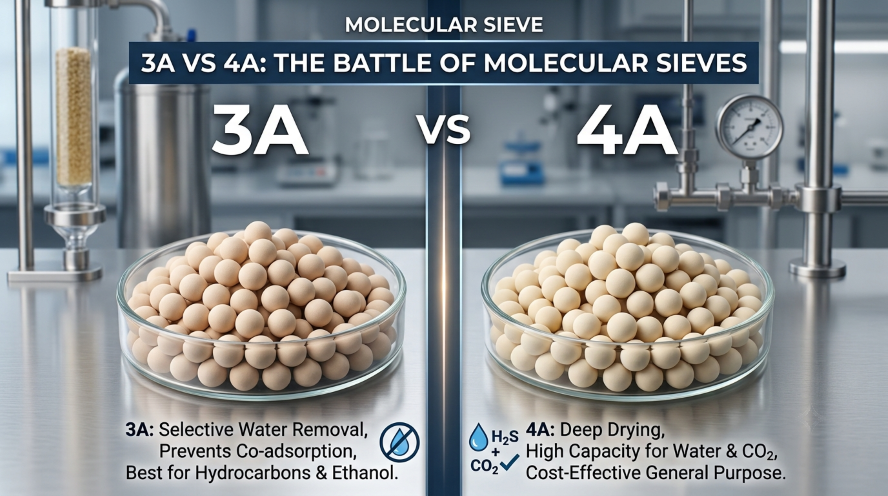
What is the difference between 4A and 5A molecular sieve? The primary difference is the exchangeable cation and resulting pore size. 4A molecular sieve contains sodium ions and has a 4Å pore opening, while 5A molecular sieve has calcium ions exchanged for sodium, resulting in a larger 5Å pore opening. This larger pore size allows 5A to adsorb larger molecules such as n-paraffins and gives it better nitrogen/oxygen selectivity than 4A for oxygen enrichment applications. For a full side-by-side breakdown, see our 3A vs 4A comparison guide. 5A also generally has higher CO₂ and H₂S capacity than 4A. Learn more in our What is 4A Molecular Sieve guide.
What purity of oxygen can 5A molecular sieve produce? In a well-designed PSA system, 5A molecular sieve typically produces 80-90% oxygen purity from ambient air. For higher purity (90%+), including medical-grade oxygen, 13X or Li-LSX molecular sieve is recommended. Purity also depends on system design, cycle time, operating pressure, and feed air conditions.
How long does 5A molecular sieve last in PSA oxygen service? Under normal operating conditions with proper maintenance, 5A molecular sieve typically provides 18,000-30,000 hours (approximately 2-3 years) of service life in PSA oxygen generation. Actual lifespan depends on cycle frequency, operating pressure, feed air quality, presence of contaminants, and regeneration efficiency.
Can 5A molecular sieve remove both H₂S and CO₂? Yes, one of the key advantages of 5A molecular sieve is its ability to simultaneously remove water, carbon dioxide, and hydrogen sulfide from gas streams — particularly valuable for natural gas treatment and biogas upgrading, where multiple contaminants must be removed to meet pipeline specifications.
How do you regenerate 5A molecular sieve? 5A molecular sieve can be regenerated via two primary methods: (1) Pressure swing regeneration (PSA/VPSA) — depressurization and product gas purge, used for oxygen enrichment and gas separation; (2) Thermal swing regeneration (TSA) — heating to 200-320°C with dry purge gas, used for drying and less frequent regeneration.
What particle size should I choose? Beads are the most common form for PSA and general gas processing applications. 1.6-2.5mm beads offer faster kinetics and are preferred for short-cycle PSA systems, while 3-5mm beads provide lower pressure drop and are suitable for deeper beds and longer-cycle TSA applications. Pellets (1/16", 1/8") are often used for fixed-bed drying and gas purification.
Is 5A molecular sieve suitable for liquid phase applications? 5A molecular sieve can be used in liquid phase applications such as n-paraffin separation from liquid hydrocarbon streams and solvent drying. However, proper pre-treatment is essential to avoid fouling from heavy contaminants, and longer contact times may be required compared to gas phase service.
Need a Custom Solution?
For bulk pricing and grade recommendation, please send your moisture content & gas flow rate requirements to us. Our technical team will get back to you within 24 hours with a tailored solution.
Technical Specifications
| Pore Diameter | 5Å (0.5 nm) |
| Crystal Type | Calcium Aluminosilicate (Ca-A) |
| SiO₂/Al₂O₃ Ratio | 2.0 |
| Bulk Density (Beads) | 0.68-0.78 g/cm³ |
| Bulk Density (Pellets) | 0.65-0.75 g/cm³ |
| Crushing Strength (Beads) | ≥30 N per bead |
| Crushing Strength (Pellets) | ≥35 N/cm |
| Water Adsorption Capacity | ≥21% wt (25°C, RH 50%) |
| N₂ Adsorption Capacity | ≥10.5% wt (25°C, 1 bar) |
| O₂ Adsorption Capacity | ≥3.5% wt (25°C, 1 bar) |
| CO₂ Adsorption Capacity | ≥12% wt (25°C, 1 bar) |
| H₂S Adsorption Capacity | ≥1.5% wt (25°C, 1 bar) |
| Loss on Ignition | ≤1.5% |
| Attrition Rate | ≤0.1% wt |
| Max Operating Temperature | 400°C |
| PH Value | 8-10 |
| Available Forms | Beads, Pellets, Powder |
Related Products
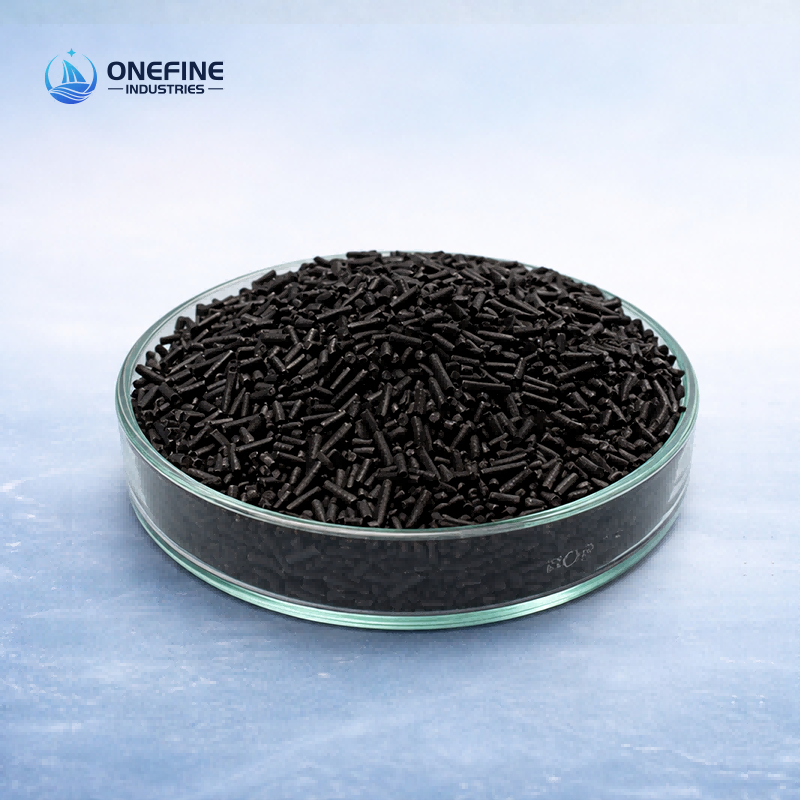
Carbon Molecular Sieve for Nitrogen Generation (CMS)
High-performance carbon molecular sieve (CMS) for PSA nitrogen generators. Uniform micropore distribution (0.3-0.5nm) ensures efficient oxygen-nitrogen separation. Delivers 95-99.999% nitrogen purity with 3-5 year service life. Bulk supply for industrial buyers worldwide.
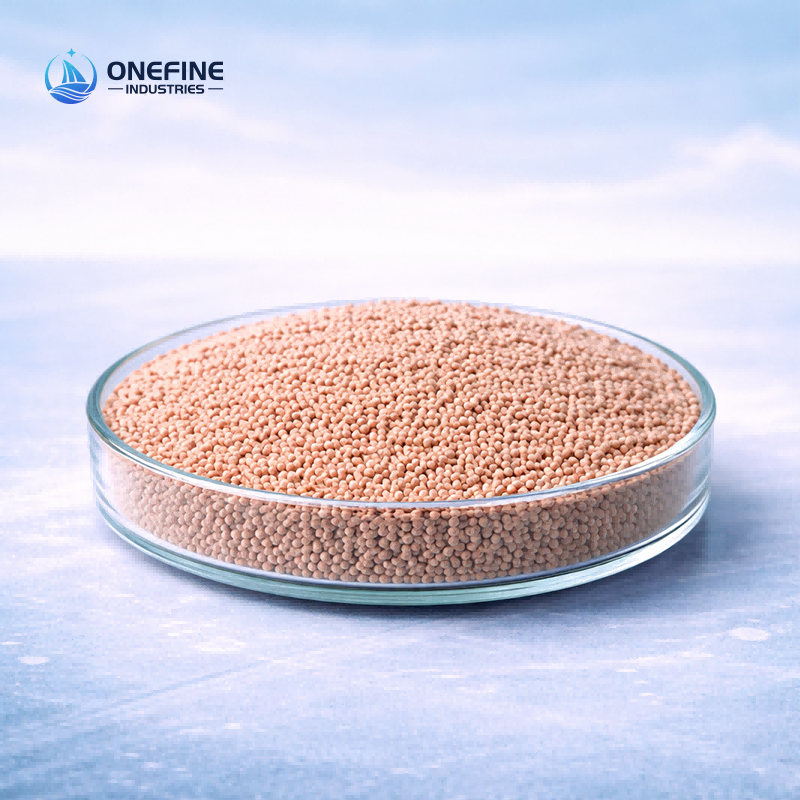
4A Molecular Sieve
General-purpose 4A molecular sieve desiccant for industrial air drying, solvent dehydration, CO2 removal, and static packaging applications. High capacity, long service life.
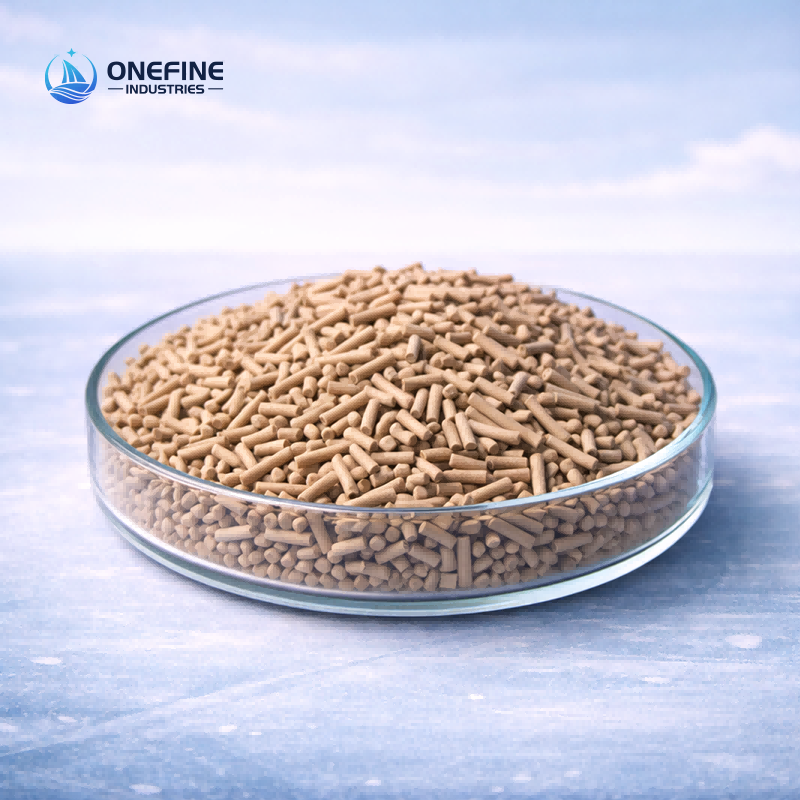
13X Molecular Sieve (Sodium X Type)
Sodium-type 13X molecular sieve with 10Å pore size for air separation pre-purification, natural gas sweetening, solvent recovery, and industrial gas drying. High adsorption capacity, industrial-grade performance.
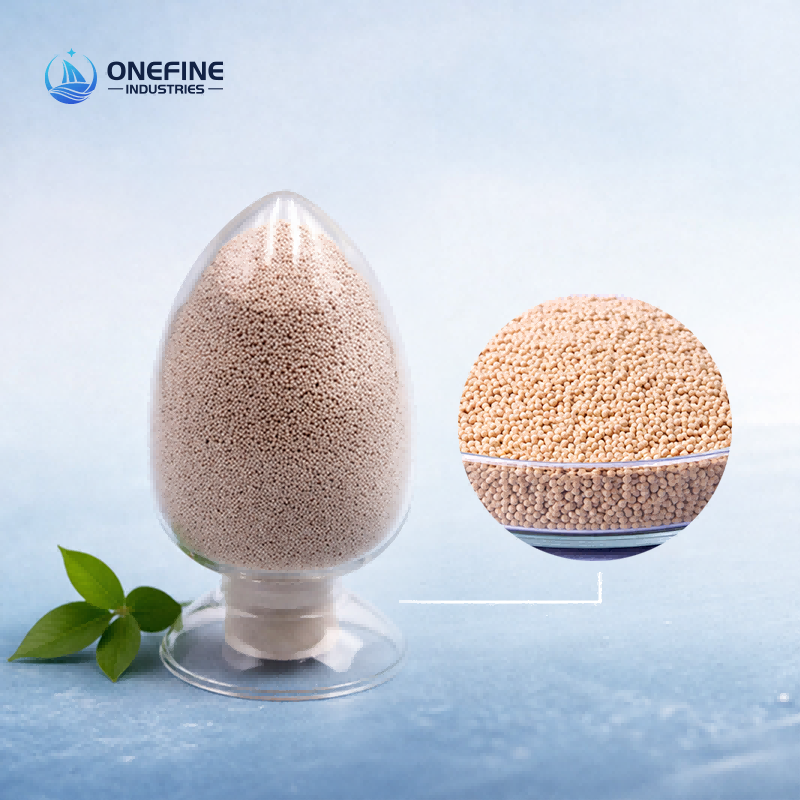
Oxygen Generator Molecular Sieve (13X & Li-LSX)
Premium oxygen generator molecular sieve for PSA/VPSA oxygen generators and medical oxygen concentrators. Available in 13X sodium type and Li-LSX lithium type — high N₂ adsorption capacity, excellent N₂/O₂ selectivity, and 3-5 year service life. Bulk supply with MOQ from 1 ton, serving industrial buyers across the Middle East.