ZSM-5 Catalyst for VOCs Treatment
High-silica ZSM-5 zeolite catalyst for catalytic oxidation and adsorption of volatile organic compounds (VOCs). MFI topology with tunable SiO₂/Al₂O₃ ratio, excellent thermal stability, and high surface area. Available in powder and 3mm cylinder forms for diverse VOC abatement systems.
Get QuoteKey Attributes
- High-silica MFI framework with intersecting 3D micropore channels for shape-selective adsorption and catalysis
- Tunable SiO₂/Al₂O₃ ratio (25-300) to optimize acidity, hydrophobicity, and catalytic activity for specific VOC compounds
- Excellent thermal stability—crystal structure maintained after calcination at 1100°C, suitable for high-temperature regeneration cycles
- Large specific surface area (≥340-380 m²/g) provides abundant active sites for VOC adsorption and catalytic oxidation
- High crystallinity (≥95%) ensures consistent performance and long-term durability in demanding industrial environments
- Dual form availability—powder for slurry/impregnation applications and 3mm cylinders for fixed-bed reactor packing
- Hydrophobic character at high Si/Al ratios allows effective VOC adsorption even in humid gas streams
- Regenerable through thermal treatment—restores adsorption capacity and catalytic activity for cost-effective long-term operation
Applications
- Catalytic oxidation of VOCs in thermal oxidizers (RTO/RCO) for industrial exhaust treatment
- Fixed-bed catalytic reactors for low-concentration VOC removal from chemical manufacturing emissions
- Plasma-catalytic oxidation systems for toluene, xylene, and BTX compound abatement
- Paint, coating, and printing industry VOC emission control systems
- Pharmaceutical manufacturing exhaust gas purification
- Petrochemical refining and storage tank VOC recovery and treatment
- As catalyst support for Pt, Pd, Cu, and Ag in noble-metal-loaded VOC oxidation catalysts
- Adsorption-concentration systems for high-volume, low-concentration VOC streams
- Automotive exhaust and industrial flue gas denitration (DeNOx) applications
- Methanol-to-olefins (MTO) and methanol-to-gasoline (MTG) catalytic conversion processes
Product Description
What is ZSM-5 Catalyst for VOCs?
Key Takeaways:
- Shape-selective VOC adsorption: MFI micropore channels (5.1-5.8 Å) specifically capture dilute toluene and xylene streams.
- Tunable hydrophobicity: SiO₂/Al₂O₃ ratio adjustable from 25 to 300 to optimize performance in highly humid exhaust streams.
- High thermal stability: Crystal structure remains stable up to 1100°C, supporting thousands of thermal regeneration cycles.
- Noble metal support: Large specific surface area (≥340 m²/g) provides an ideal platform for Pt/Pd in RTO/RCO catalytic oxidation.
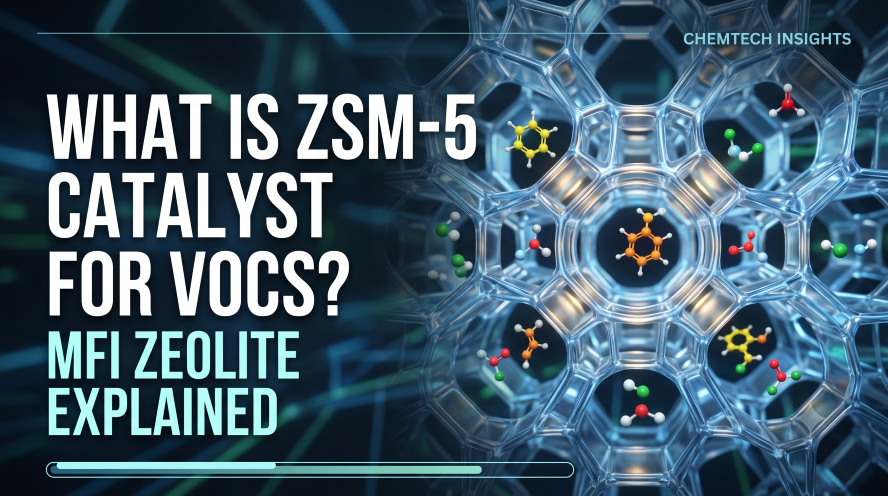
ZSM-5 (Zeolite Socony Mobil-5) is a high-silica aluminosilicate zeolite with the MFI framework topology, characterized by its unique intersecting three-dimensional micropore channel system. The two sets of 10-membered ring channels—straight channels (5.3 × 5.6 Å) and sinusoidal channels (5.1 × 5.5 Å)—provide shape-selective molecular sieving capability that is fundamental to its effectiveness in VOC treatment applications.
As a catalyst for volatile organic compound (VOC) abatement, ZSM-5 serves two critical functions: as a high-capacity adsorbent that concentrates dilute VOC streams, and as a catalyst support for noble metals (Pt, Pd, Cu, Ag) that enables catalytic oxidation of adsorbed VOCs to CO₂ and H₂O. The combination of large surface area (≥340-380 m²/g), strong Brønsted acidity, thermal stability (up to 1100°C), and tunable hydrophobicity makes ZSM-5 one of the most widely used zeolite catalysts in environmental catalysis.
Sorbsieve supplies ZSM-5 catalyst in bulk quantities to industrial buyers across the Middle East, with flexible MOQ starting from 1 ton for trial orders.
For a deeper look at how ZSM-5's structure and Si/Al ratio drive its VOC performance, see our guide: What is ZSM-5 Catalyst for VOCs? MFI Zeolite Explained.
Key Benefits
- Shape-selective adsorption: MFI micropore channels (5.1-5.8 Å) selectively adsorb VOC molecules (kinetic diameter <1 nm) while excluding larger molecules, concentrating dilute streams for efficient treatment
- Tunable acidity: SiO₂/Al₂O₃ ratio adjustable from 25 to 300, allowing optimization of acid site density and strength for specific VOC compounds and reaction conditions
- Excellent thermal stability: Crystal structure maintained after calcination at 1100°C, enabling repeated high-temperature regeneration cycles without performance degradation
- High surface area for metal dispersion: ≥340-380 m²/g BET surface area provides ideal platform for uniform dispersion of noble metal nanoparticles (Pt, Pd, Cu, Ag), maximizing catalytic utilization efficiency
- Hydrophobic character: High Si/Al ratio ZSM-5 exhibits strong hydrophobicity, maintaining VOC adsorption capacity in humid gas streams where hydrophilic adsorbents fail
- Regenerable and cost-effective: Fully regenerable through thermal swing (300-500°C) or pressure swing processes, reducing replacement frequency and operating costs
- Versatile form factors: Powder form (325+ mesh) for catalyst preparation and impregnation; 3mm cylinders for direct fixed-bed reactor packing with low pressure drop
Product Forms
Powder (325+ mesh): Fine powder form with crystal size 0.2-10 μm, ideal for use as catalyst support, impregnation substrate, and laboratory research. Maximum surface area exposure for metal loading.
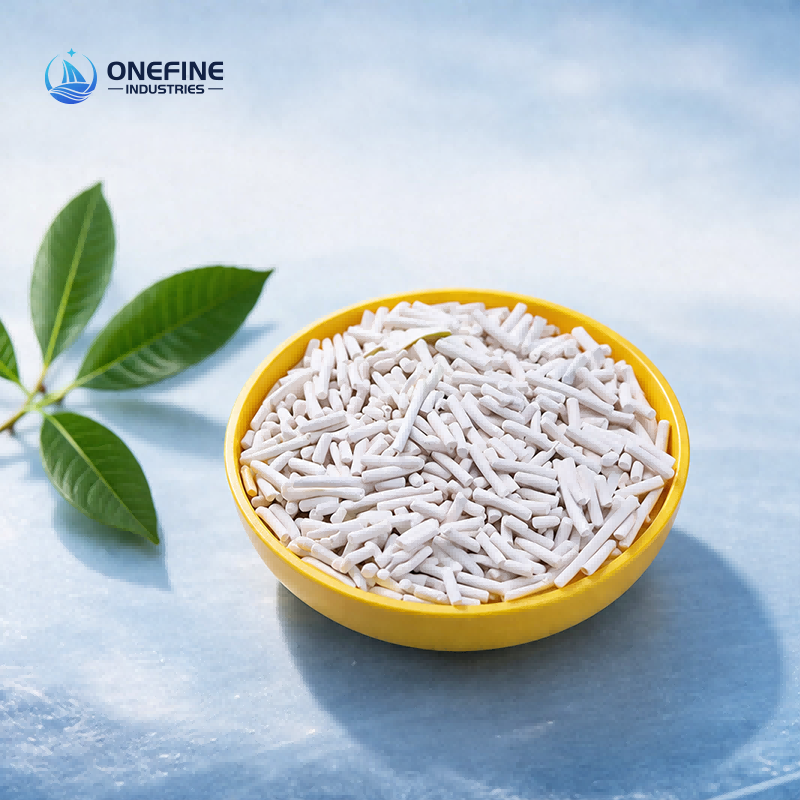
Cylinder (Φ3mm): Extruded cylindrical form optimized for fixed-bed and fluidized-bed reactor applications. Provides good mechanical strength, uniform flow distribution, and low pressure drop in industrial VOC treatment systems.
Applications
Catalytic Oxidation of VOCs (RTO/RCO Systems)
ZSM-5 serves as the primary catalyst support in regenerative thermal oxidizers (RTO) and regenerative catalytic oxidizers (RCO) for industrial VOC abatement. When loaded with noble metals (Pt, Pd) or transition metals (Cu, Mn), ZSM-5-based catalysts achieve complete oxidation of VOCs to CO₂ and H₂O at significantly lower temperatures (200-400°C) compared to thermal-only oxidation (800-1000°C), reducing fuel consumption and operating costs.
The MFI pore structure selectively adsorbs aromatic VOCs (toluene, xylene, benzene) and aliphatic hydrocarbons, concentrating them at active metal sites for efficient oxidation. Recent research (ACS, 2025) demonstrates that Cu/ZSM-5 bifunctional catalysts achieve toluene adsorption capacity of 23.3 mg/g at 150°C with 89.2% COx yield during in-situ oxidation.
Plasma-Catalytic VOC Removal
ZSM-5 is employed in plasma-catalytic oxidation systems for low-concentration VOC removal. Research published in Environmental Science (RSC, 2025) demonstrates that Au/HZSM-5 catalysts achieve nearly 100% toluene conversion and 97.5% CO₂ selectivity in air plasma catalytic oxidation using cycled storage-discharge (CSD) mode. The high-silica ZSM-5 framework provides large VOC storage capacity while the supported noble metal ensures complete oxidation.
Paint, Coating & Printing Industry Emissions
The paint, coating, and printing industries generate complex VOC mixtures including toluene, xylene, ethyl acetate, and various solvents. ZSM-5-based catalytic systems effectively treat these emissions through:
- Adsorption concentration: Capturing VOCs from large-volume, low-concentration exhaust streams
- Catalytic oxidation: Converting concentrated VOCs to CO₂ and H₂O at reduced temperatures
- Solvent recovery: Desorbing captured solvents for recycling in closed-loop systems
Petrochemical & Chemical Manufacturing
Petrochemical refineries and chemical plants generate significant VOC emissions from storage tanks, loading operations, process vents, and wastewater treatment. ZSM-5 catalysts are deployed for:
- Storage tank vapor recovery and treatment
- Process vent emission control
- Wastewater treatment off-gas purification
- Fugitive emission abatement
Catalyst Support for Noble Metal Systems
ZSM-5 is the preferred support material for noble metal VOC oxidation catalysts due to its high surface area, thermal stability, and ion-exchange capability:
- Pt/ZSM-5: High-activity catalyst for aromatic VOC oxidation, achieving T90 (90% conversion temperature) as low as 190°C for toluene
- Pd/ZSM-5: Effective for alkene and aromatic hydrogenation/oxidation in VOC treatment
- Cu/ZSM-5: Cost-effective transition metal alternative with good VOC adsorption and oxidation performance
- Ag/ZSM-5: Used in formaldehyde and low-temperature VOC oxidation applications
Methanol Conversion & Green Chemistry
Beyond VOC treatment, ZSM-5 is extensively used in methanol-to-olefins (MTO), methanol-to-gasoline (MTG), and biomass conversion processes. The tunable Si/Al ratio allows optimization for specific reaction pathways:
- Low Si/Al (12-30): Higher acidity for cracking and conversion reactions
- Medium Si/Al (30-80): Balanced acidity for selective catalysis
- High Si/Al (100-300): Hydrophobic character for separation and adsorption applications
Selection Guide
By SiO₂/Al₂O₃ Ratio
- Low ratio (25-50): High acid site density, suitable for catalytic cracking, isomerization, and reactions requiring strong acidity
- Medium ratio (50-100): Balanced acidity and hydrophobicity, ideal for general VOC adsorption and catalytic oxidation
- High ratio (100-300): Strong hydrophobicity, excellent for VOC adsorption in humid environments and as noble metal catalyst support
By Form
- Powder (325+ mesh): Catalyst preparation, impregnation, laboratory research, slurry-phase applications
- Cylinder (Φ3mm): Fixed-bed reactors, fluidized-bed systems, industrial VOC treatment units, direct reactor packing
By Application
- VOC adsorption & concentration: High Si/Al ratio (100-300), powder or cylinder
- Noble metal catalyst support: Medium-high Si/Al ratio (50-200), powder for impregnation
- Catalytic cracking/isomerization: Low-medium Si/Al ratio (25-80), cylinder for fixed-bed reactors
- Plasma-catalytic oxidation: High Si/Al ratio (100-300), cylinder for reactor integration
Packaging & Shipping
We offer flexible packaging and shipping options to suit your project scale and logistics requirements.
Standard Packaging:
- 25 kg drums (moisture-proof, suitable for trial orders and small batches)
- 150 kg steel drums (standard bulk packaging for industrial orders)
- 500 kg super sacks (most popular for industrial bulk orders)
- 1000 kg jumbo bags (for large-scale projects)
- Custom packaging available on request
Minimum Order Quantity (MOQ):
- 1 ton (entry-level orders accepted — perfect for first-time customers)
- 5+ tons (standard bulk orders)
- Container-level supply for long-term partnerships
Container Loading Capacity:
- 20'GP container: 18-20 tons (palletized)
- 40'GP container: 22-24 tons (palletized)
- 40'HQ container: 24-26 tons
Loading Ports: We ship from major Chinese ports based on your requirements: Shanghai, Qingdao, Tianjin, Ningbo, and Shenzhen.
Lead Time:
- Stock orders: 7-15 days from payment confirmation
- Made-to-order: 20-30 days
Shipping Terms: FOB / CIF / CFR / EXW — flexible based on your destination and preferences.
Documents & Certificates
We provide complete documentation for every order:
📄 Technical Data Sheet (TDS) — Confirmed with you during product selection, ensuring exact specifications match your application requirements.
📄 Safety Data Sheet (SDS) — Provided before shipment, meeting all international transportation and handling standards.
📄 Certificate of Analysis (COA) — Issued for each production batch, delivered with your shipment for full quality traceability.
Additional documents available on request: Certificate of Origin (COO), Packing List, Commercial Invoice, Third-party Inspection Report (SGS / BV), Form E (for Middle East destinations with applicable tariff benefits).
Safety and Handling
Storage
- Store in sealed containers in a dry environment to prevent moisture absorption
- Protect from contamination with dust, oils, and chemical vapors
- Keep away from strong acids and alkalis that may damage the zeolite framework
Handling
- Wear appropriate PPE: dust mask, safety glasses, gloves
- Avoid inhalation of fine powder—use local exhaust ventilation when handling powder form
- ZSM-5 powder may cause mild respiratory irritation with prolonged exposure
- Cylinder form poses minimal handling risk
Regeneration
- Thermal regeneration: Heat to 300-500°C under air or inert gas flow for 2-4 hours to remove adsorbed VOCs and restore capacity
- Avoid rapid temperature changes to prevent thermal shock to crystals
- Monitor adsorption capacity after each regeneration cycle to assess long-term performance
Frequently Asked Questions
What is the optimal SiO₂/Al₂O₃ ratio for VOC treatment? For VOC adsorption in humid environments, higher ratios (100-300) are preferred due to increased hydrophobicity. For catalytic oxidation applications where acid sites are needed, medium ratios (50-100) provide a balance of acidity and stability. The optimal ratio depends on the specific VOC compounds, gas composition, and process conditions.
How does ZSM-5 compare to activated carbon for VOC adsorption? ZSM-5 offers several advantages over activated carbon: higher thermal stability (regeneration at 300-500°C vs. 100-150°C), better performance in humid conditions due to tunable hydrophobicity, shape-selective adsorption for specific VOC molecules, and no risk of spontaneous combustion. Activated carbon has higher total adsorption capacity for some VOCs but ZSM-5 is preferred for high-temperature and catalytic applications.
Can ZSM-5 be regenerated? Yes, ZSM-5 is fully regenerable through thermal swing adsorption (heating to 300-500°C) or pressure swing processes. The zeolite framework is thermally stable up to 1100°C, allowing thousands of regeneration cycles with minimal performance degradation. Regeneration frequency depends on VOC loading, gas concentration, and operating conditions.
What noble metals can be loaded on ZSM-5 for VOC oxidation? Common noble metals include platinum (Pt), palladium (Pd), gold (Au), and silver (Ag). Transition metals like copper (Cu), manganese (Mn), and cobalt (Co) are also used as cost-effective alternatives. The choice depends on target VOC compounds, required conversion temperature, and budget considerations.
What is the service life of ZSM-5 catalyst in VOC treatment? With proper operation and regular regeneration, ZSM-5 catalyst typically provides 3-5 years of service life in VOC treatment applications. Factors affecting service life include operating temperature, VOC concentration, presence of catalyst poisons (sulfur, silicon, phosphorus compounds), and regeneration practices.
Need a Custom Solution?
For bulk pricing and grade recommendation, please send your SiO₂/Al₂O₃ ratio and target VOC compound requirements to us. Our technical team will get back to you within 24 hours with a tailored solution.
Technical Specifications
| SiO₂/Al₂O₃ Ratio | 25-300 mol/mol (tunable) |
| Framework Topology | MFI (Zeolite Socony Mobil-5) |
| Pore Diameter | 5.1-5.8 Å (0.51-0.58 nm), 10-membered ring channels |
| Specific Surface Area | ≥340-380 m²/g (BET, N₂ adsorption) |
| Relative Crystallinity | ≥95% (XRD) |
| Na₂O Content | ≤0.1 wt% |
| Loss on Ignition | ≤5 wt% (1000°C) |
| Thermal Stability | Crystal structure stable up to 1100°C |
| Crystal Size (Powder) | 0.2-10 μm (depending on grade) |
| Available Forms | Powder (325+ mesh), Cylinder (Φ3mm) |
| Cation Form | H⁺ (acid form), Na⁺, NH₄ (exchangeable) |
| CAS No. | 1318-02-1 |
Related Products
No related products.