Dechlorination Catalyst
High-performance Na₂CO₃/Al₂O₃-based dechlorination catalyst designed for ultra-deep hydrogen chloride (HCl) removal from hydrocarbon streams with high chlorine capacity and minimal green oil formation.
Get QuoteKey Attributes
- remium active Na₂CO₃/Al₂O₃ formulation ensures high reactivity and strong chemical affinity for HCl
- High breakthrough chlorine capacity (≥8 wt%) significantly extends bed replacement cycles and lowers operational costs
- Rapid chemisorption kinetics achieve ultra-deep chloride removal with outlet HCl ≤0.1 ppm
- Engineered pore matrix minimizes side reactions, preventing green oil and organic chloride formation in olefin feeds
- Excellent mechanical crush strength (≥30 N) minimizes attrition, fine dusting, and bed pressure drops
- Versatile operational range accommodates wide liquid and gas space velocities (300–3000 h⁻¹)
- Excellent performance stability from atmospheric pressure up to 4.0 MPa
Applications
- HCl removal from off-gas and recycle hydrogen in catalytic reforming units
- Protection of downstream catalysts in light hydrocarbon isomerization processes
- Trace HCl scavenging from LPG and off-gases in propane dehydrogenation (PDH) units
- Deep dechlorination of synthesis gas in methanol, ammonia, and oxo-synthesis plants
- Guard bed protection for sensitive noble metal hydrotreating catalysts
- Chloride removal from ethylene, propylene, and other light olefin feedstock streams
- Purification of dry gas, liquid hydrocarbons, and refinery fuel gas networks
- Dechlorination of gas streams in coal-to-chemical (CTG/CTL) processing units
Product Description
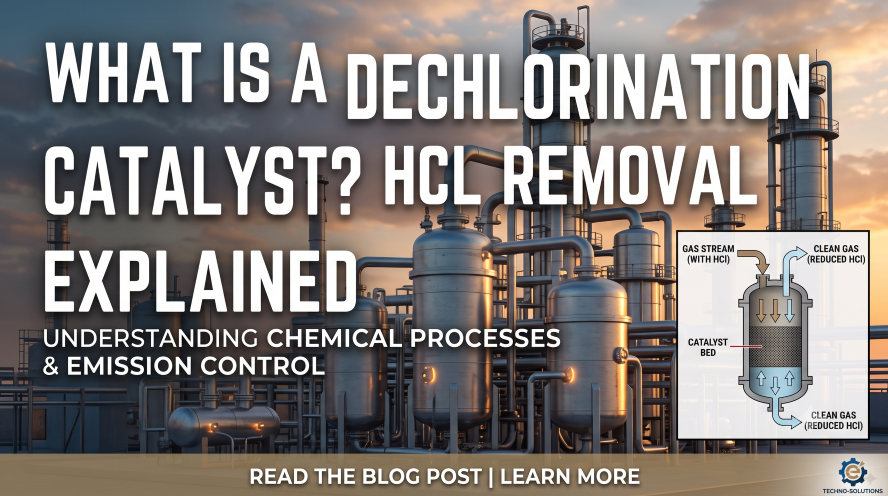
What is Dechlorination Catalyst?
Key Takeaways:
- Ultra-Deep Dechlorination: Rapid chemisorption kinetics achieve outlet HCl concentrations of ≤0.1 ppm with a massive breakthrough capacity of ≥8 wt%.
- Anti-Green Oil Engineering: Features a passivated alumina surface that suppresses unwanted olefin oligomerization in C2-C5 feeds.
- Equipment Protection: Chemically locks volatile HCl as stable NaCl salt, preventing catastrophic downstream corrosion and ammonium chloride (NH₄Cl) fouling.
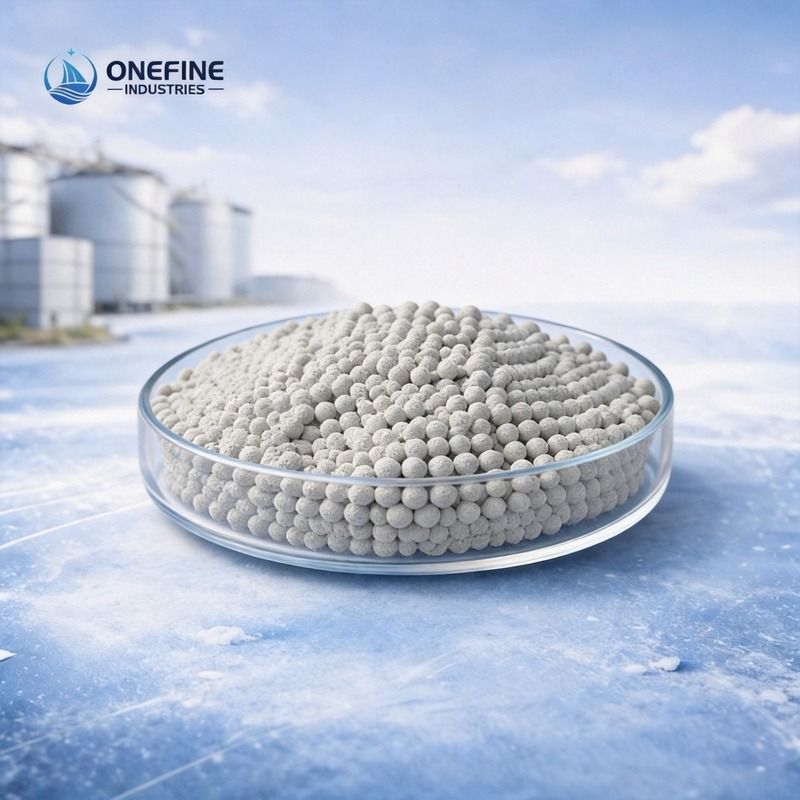
The Dechlorination Catalyst (also referred to as a dechlorination absorbent or chloride guard bed agent) is an engineered chemical sorbent formulated for rapid, ultra-deep removal of trace hydrogen chloride (HCl) and reactive inorganic chlorine from liquid and gaseous hydrocarbon streams. Manufactured using high-purity pseudo-boehmite (Al₂O₃) precursor and highly active sodium carbonate (Na₂CO₃) alkaline promoter through an advanced spherical granulating process, the material combines high specific surface area (≥180 m²/g) with a macro-porous architecture.
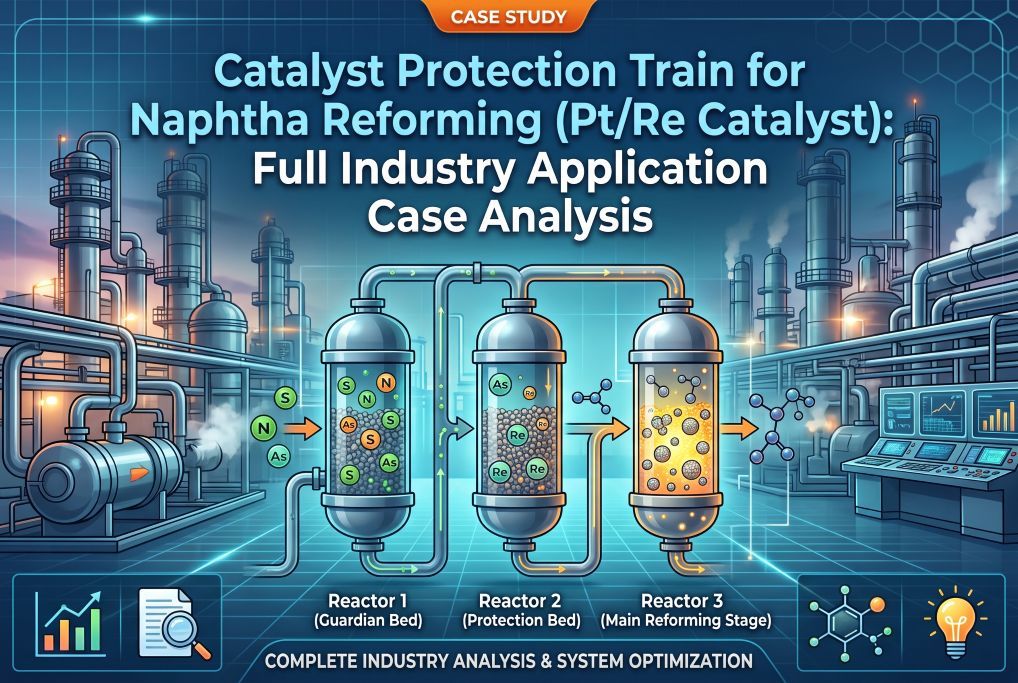
In modern refining and petrochemical processing, trace HCl contamination poses a catastrophic risk to operational stability. Even sub-ppm levels of chloride cause severe aqueous corrosion in distillation overheads, form ammonium chloride (NH₄Cl) salt blockages in exchangers, and irreversibly poison sensitive downstream noble metal catalysts (such as Pt/Re reforming or isomerization catalysts). This dechlorination catalyst serves as a high-capacity sacrificial guard bed, chemisorbing hydrogen chloride to form stable inorganic salts and ensuring long-term downstream operational reliability. For a full breakdown of the underlying chemistry and guard bed best practices, see our Dechlorination Catalyst guide.
Chemical Reaction Mechanism & Anti-Green Oil Formulation
The primary dechlorination process relies on a non-reversible chemisorption reaction between the basic sodium active sites hosted within the porous alumina framework and acidic hydrogen chloride molecules:
Na₂CO₃ (s) + 2HCl (g/l) → 2NaCl (s) + H₂O (g/l) + CO₂ (g)
Unlike basic activated alumina alone, which suffers from pore mouth blockage due to rapid localized surface chlorination, the homogeneously dispersed Na₂CO₃ active component (≤25 wt%) ensures high mass transfer rates deep into the internal pore network, sustaining a high breakthrough chlorine capacity (≥8 wt%).
Furthermore, conventional strongly basic absorbents often induce unwanted oligomerization and condensation side-reactions when treating hydrocarbon streams containing reactive C2-C5 olefins. These side reactions produce heavy, viscous polymers known as "green oil," which coat adsorbent pores, lower chloride uptake, and clog downstream valves. The specialized chemical formulation of this catalyst passivates aggressive Lewis acid sites on the alumina surface, suppressing polymer formation and preventing secondary organic chloride formation, making it the premier choice for olefin-rich feedstocks.
Dedicated Dechlorination vs. Combined S/Cl/As Guard Beds
Some reforming and isomerization units already run a Copper-Nickel Desulfurization Catalyst guard bed upstream, which already addresses sulfur, chlorine, and arsenic together in one pre-reduced dual-metal system. Where that combined system is already sized for your chlorine load, a dedicated dechlorination catalyst may be redundant. Where chlorine is the dominant or sole contaminant — or where an existing Na₂CO₃/Al₂O₃ bed needs a higher-capacity or lower-green-oil-risk replacement — this dechlorination-specific catalyst is typically the more cost-effective, purpose-built choice.
Applications
- Catalytic Reforming Units (CCR / Semi-Regenerative): installed on net hydrogen gas, recycle hydrogen gas, and reformed liquid naphtha streams to scavenge HCl evolved during catalyst chlorination/regeneration cycles
- Light Hydrocarbon Isomerization Units: protects C5/C6 isomerization reactor effluents and solvent recycle loops from acidic chloride contamination
- Dehydrogenation Processes (PDH/BDH): scavenges trace chlorides from propane and butane dehydrogenation off-gases, preventing downstream fractionator corrosion
- Synthesis Gas Plants: purifies syngas (CO + H₂) upstream of sensitive methanol synthesis, ammonia synthesis, and oxo-aldehyde reactors
- Olefin Monomer Purification: treats polymer-grade ethylene, propylene, and liquid LPG streams to satisfy strict chloride-sensitivity specifications for polymerization catalysts
Packaging & Shipping
We offer flexible packaging and shipping options to suit your project scale and logistics requirements.
Standard Packaging:
- 25 kg drums (moisture-proof, suitable for trial orders and small batches)
- 150 kg steel drums (standard bulk packaging for industrial orders)
- 500 kg super sacks (most popular for industrial bulk orders)
- 1000 kg jumbo bags (for large-scale projects)
- Custom packaging available on request
Minimum Order Quantity (MOQ):
- 1 ton (entry-level orders accepted — perfect for first-time customers)
- 5+ tons (standard bulk orders)
- Container-level supply for long-term partnerships
Container Loading Capacity:
- 20'GP container: 18-20 tons (palletized)
- 40'GP container: 22-24 tons (palletized)
- 40'HQ container: 24-26 tons
Loading Ports: We ship from major Chinese ports based on your requirements: Shanghai, Qingdao, Tianjin, Ningbo, and Shenzhen.
Lead Time:
- Stock orders: 7-15 days from payment confirmation
- Made-to-order: 20-30 days
Shipping Terms: FOB / CIF / CFR / EXW — flexible based on your destination and preferences.
Documents & Certificates
We provide complete documentation for every order:
📄 Technical Data Sheet (TDS) — Confirmed with you during product selection, ensuring exact specifications match your application requirements.
📄 Safety Data Sheet (SDS) — Provided before shipment, meeting all international transportation and handling standards.
📄 Certificate of Analysis (COA) — Issued for each production batch, delivered with your shipment for full quality traceability.
Additional documents available on request: Certificate of Origin (COO), Packing List, Commercial Invoice, Third-party Inspection Report (SGS/BV), Form E (for Middle East destinations with applicable tariff benefits).
Guard Bed Operation & Service Life
The dechlorination catalyst functions as an irreversible chemical absorbent. As hydrogen chloride reacts with active sodium carbonate, the material is continuously converted into solid sodium chloride within the matrix. Because the chemisorption reaction cannot be thermally or chemically regenerated in situ, the catalyst is operated as a sacrificial bed.
Monitoring is typically performed by analytical measurement of chlorine levels at the reactor outlet. Once the effluent HCl concentration approaches the threshold limits or the bed reaches its stoichiometric capacity (≥8 wt% Cl⁻ loading), the guard reactor is bypassed, isolated, and spent material is safely unloaded for fresh catalyst replacement.
FAQ
Q1: What causes HCl buildup in refining processes, and why is dechlorination mandatory?
In catalytic reforming and isomerization units, organic chlorides (such as perchloroethylene or trichloroethane) are continuously injected to maintain optimal platinum catalyst acid function. Hydrogen chloride (HCl) is continuously stripped off into the effluent gas and liquid streams. Unchecked HCl forms highly corrosive hydrochloric acid in downstream condensation zones and reacts with trace ammonia to form NH₄Cl salt plugs. Guard bed dechlorination eliminates these operational hazards at the source.
Q2: How does this catalyst prevent "green oil" formation compared to standard basic adsorbents?
Green oil forms when strong solid base sites or unpassivated acidic alumina sites catalyze the condensation and oligomerization of reactive olefins (such as ethylene, propylene, or butadiene). Our catalyst utilizes an optimized Na₂CO₃/Al₂O₃ structural balance that moderates overall surface basicity and acidity, allowing selective chemisorption of HCl while suppressing olefin polymerization side-reactions.
Q3: Can this dechlorination catalyst handle liquid-phase hydrocarbon streams?
Yes. The spherical particle shape and controlled pore matrix provide high structural stability against fluid shear and liquid leaching. The catalyst operates effectively in both gas and liquid hydrocarbons (including LPG, light naphtha, and liquid olefins) at space velocities ranging from 300 h⁻¹ up to 3000 h⁻¹.
Q4: Can the spent dechlorination catalyst be regenerated?
No. Dechlorination via active sodium carbonate is a non-reversible chemical reaction that produces inert sodium chloride (NaCl). Once the active sites are fully consumed and breakthrough occurs (≥8 wt% chlorine uptake), the spent material must be discharged and replaced with fresh catalyst.
Need a Custom Solution?
For bulk pricing and grade recommendation, please send your feedstock composition & operating temperature requirements to us. Our technical team will get back to you within 24 hours with a tailored solution.
Technical Specifications
| Appearance | White spherical beads |
| Particle Size (Φ) | 2.0–5.0 mm / 1.0–3.0 mm |
| Bulk Density | 0.80 ± 0.10 kg/L |
| Average Crush Strength | ≥30 N (Φ2-5mm) / ≥15 N (Φ1-3mm) |
| Na₂CO₃ Content | ≤25% |
| Al₂O₃ Content | ≥60% |
| Breakthrough Chlorine Capacity | ≥8% |
| Outlet Gas HCl Content | ≤0.1 ppm |
| Operating Temperature | Ambient to 150°C |
| Operating Pressure | Ambient to 4.0 MPa |
| Liquid/Gas Space Velocity | 300–3000 h⁻¹ |
| Specific Surface Area | ≥180 m²/g |
| Pore Volume | ≥0.35 cm³/g |