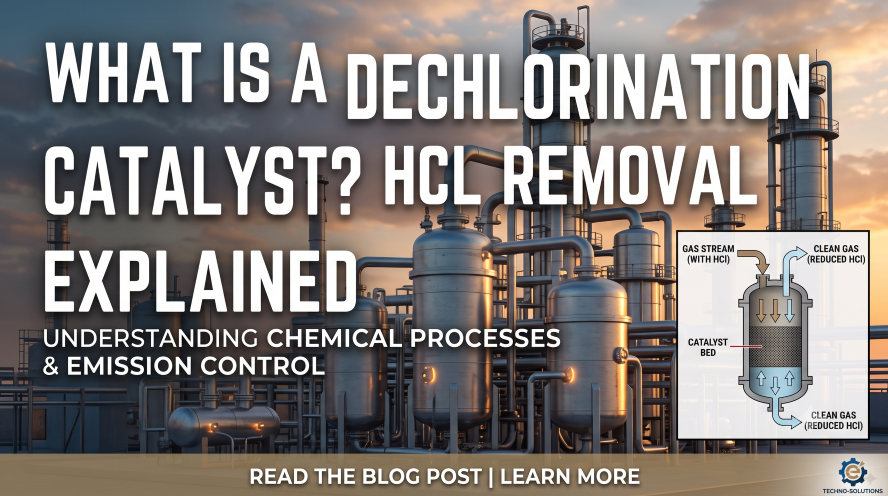
In modern petroleum refining, petrochemical processing, and synthesis gas (syngas) production, trace chloride contamination represents one of the most destructive operational hazards. Gaseous hydrogen chloride (HCl) and trace organic chlorides are routinely introduced into hydrocarbon streams during Continuous Catalytic Reforming (CCR) catalyst regeneration, isomerization catalyst activation, hydrotreating, or crude oil desalting. Left untreated, even low ppm concentrations of HCl cause catastrophic downstream equipment corrosion, ammonium chloride (NH₄Cl) salt precipitation, compressor fouling, and irreversible poisoning of precious metal catalysts.
To protect critical downstream assets, high-performance dechlorination catalysts (also referred to as dechlorination absorbents or chloride guard bed absorbents) are deployed in sacrificial guard vessels. These solid-phase sorbents chemically scavenge active chloride species, converting volatile acid gases into stable, fixed inorganic mineral salts.
Key Takeaways:
- Mechanism: Converts highly corrosive gaseous hydrogen chloride (HCl) and trace organochlorides into permanent, stable inorganic mineral salts.
- The Green Oil Threat: Unpassivated strong acid sites catalyze reactive olefins into viscous polymeric residues that cause pressure drop spikes.
- Critical Applications: Mandatory for treating net gas and effluents in CCR, light naphtha isomerization, and PDH units.
1. The Chemistry of Dechlorination: Reaction Mechanisms & Kinetics
Dechlorination absorbents operate primarily through chemisorption and solid-state neutralization rather than simple physical molecular sieving. The structural backbone typically consists of high-surface-area pseudoboehmite (γ-Al₂O₃), impregnated with active alkali metal promoters — most commonly sodium carbonate (Na₂CO₃).
Primary Neutralization Reaction:
Na₂CO₃ (s) + 2HCl (g) → 2NaCl (s) + H₂O (g) + CO₂ (g)
- High Reaction Rate & Mass Transfer: the extensive pore network provides immediate access to active sites, enabling rapid reaction kinetics even at high space velocities (GHSV up to 4,000 h⁻¹)
- Irreversible Chloride Trapping: the resulting sodium chloride is permanently locked inside the ceramic backbone, preventing desorptive chlorine breakthrough across typical operating temperatures (ambient up to 250°C)
- Gas-Phase vs. Liquid-Phase Mass Transfer: gas-phase molecules diffuse rapidly into active micropores, while liquid-phase applications (liquid reformate, pentane fractions, LPG) exhibit lower mass-transfer rates and require optimized mesopore channels to prevent liquid bypass
2. Deep Dive: Green Oil Mitigation & Acid Site Passivation
In olefin-rich hydrocarbon streams — such as reformate net gas, FCC dry gas, or ethylene/propylene cracker feeds — a major operational challenge is the unwanted formation of green oil: a viscous, dark liquid mixture of heavy hydrocarbon oligomers.
How Green Oil Forms: trace HCl acts as a powerful acid catalyst. When unsaturated olefins contact strong acid sites on standard activated alumina, an acidic oligomerization reaction produces polymeric residue that deposits inside adsorbent pores, blocking access to active sites, causing premature chlorine breakthrough, and increasing bed pressure drop.
Anti-Green Oil Formulation Engineering:
- Surface Acid Passivation: neutralizing strong Lewis acid sites on the alumina surface using alkaline promoters
- Pore Structure Optimization: broader mesopores shorten the residence time of reactive olefins within constrained micro-cavities
- Controlled Basicity: suppressing polymer condensation while maintaining aggressive chemical reactivity toward HCl
3. Key Refinery & Petrochemical Application Scenarios
A. Continuous Catalytic Reforming (CCR) Units — organic chloride promoters continuously injected to re-disperse platinum active sites convert into HCl, contaminating recycle hydrogen and net reformate. Guard vessels scrub HCl down to trace levels, protecting recycle gas compressors and downstream isomerization reactors. Some units run a Copper-Nickel Desulfurization Catalyst upstream instead, which addresses sulfur, chlorine, and arsenic together — the choice between a dedicated dechlorination bed and a combined guard bed usually comes down to whether chlorine is the dominant contaminant or one of several.
B. Isomerization Processing — light naphtha (C5/C6) isomerization systems use chlorinated alumina catalysts requiring continuous organic chloride injection; unreacted HCl exiting the stabilizer overhead forms corrosive condensates and ammonium chloride salts. Dedicated absorbents on stabilizer overhead and liquid product streams keep piping and exchangers salt-free.
C. Propane Dehydrogenation (PDH) & Olefin Purification — polymer-grade ethylene and propylene feeds require near-zero chloride, since trace HCl poisons polymerization catalysts. Deep dechlorination beds protect polymer yields and prevent stress corrosion cracking.
D. Synthesis Gas (Syngas) & Coal Chemical Processing — syngas from steam methane reforming or coal gasification contains HCl and trace organochlorides that deactivate copper-based methanol synthesis and water-gas shift catalysts; high-capacity beds purify raw syngas at elevated temperatures before downstream synthesis.
4. Guard Bed Engineering, Loading & Operation Best Practices
Mechanical Loading Protocols:
- Dense Phase Loading is recommended over traditional sock loading for large industrial reactors, creating a uniform bed structure and eliminating channeling
- Inert Support Layers: bottom layers support bed weight and ensure uniform outlet flow; top layers prevent turbulence and crush damage from high-velocity inlet impact
Hydrocarbon Dew Point & Moisture Control: operating above the hydrocarbon and water dew point is critical. Trace molecular moisture enhances solid-state ion diffusion of HCl into Na₂CO₃, but free liquid water condensation causes leaching of active sodium salts and mechanical softening.
Breakthrough Monitoring: outlet chlorine concentration should be monitored using online analyzers or colorimetric sampling. As concentrations approach the threshold limit, a planned bed replacement or dual-bed lead-lag rotation should be initiated.
5. Industrial Troubleshooting & Failure Mode Analysis
Issue: Sudden pressure drop spikes across the bed
- Root Cause: unpassivated alumina base inducing olefin polymerization (green oil buildup), gluing absorbent beads together
- Corrective Action: transition to passivated, anti-green oil modified dechlorination absorbents with optimized surface basicity
Issue: Downstream heat exchanger plugging & corrosion
- Root Cause: ammonium chloride salt deposition from unscrubbed HCl reacting with trace ammonia
- Corrective Action: verify guard bed operating temperature stays within kinetic limits and confirm breakthrough has not occurred
Recommended Products from Sorbsieve
- Dechlorination Catalyst — full specifications, packaging, and technical documentation
FAQ
Q1: How does upstream dechlorination prevent ammonium chloride (NH₄Cl) fouling?
When process streams contain trace ammonia alongside HCl, gaseous ammonium chloride forms reversibly. As gases cool in downstream exchangers, NH₄Cl precipitates as a hard white salt, causing under-deposit corrosion and line plugging. Removing HCl upstream via chemisorption breaks the equilibrium, eliminating salt formation entirely.
Q2: What is the main operational difference between gas-phase and liquid-phase dechlorination guard beds?
Gas-phase units operate at higher space velocities (GHSV 1,000–4,000 h⁻¹) with rapid gas diffusion kinetics. Liquid-phase guard beds operate at lower liquid hourly space velocities (LHSV 1.0–3.0 h⁻¹) due to liquid film diffusion resistance, requiring specially engineered mesoporous absorbents to avoid liquid bypass.
Q3: What causes pressure drop spikes in a dechlorination guard bed, and how can it be diagnosed?
Sudden pressure drop increases typically indicate green oil buildup from olefin polymerization on unpassivated alumina surfaces, which glues absorbent beads together and restricts flow. Switching to a passivated, anti-green oil formulation resolves this failure mode.
Looking for Bulk Supply of Dechlorination Catalyst?
Sorbsieve is a trusted bulk supplier of dechlorination catalyst and complete industrial adsorbents, serving industrial buyers across the Middle East.
We provide:
- ✅ Container-level supply (20'GP / 40'GP / 40'HQ)
- ✅ Full documentation (COA / TDS / SDS / COO)
- ✅ Multiple packaging options
- ✅ Technical support for dechlorination catalyst selection and system optimization
- ✅ Fast quote response for industrial inquiries
Contact our team for bulk pricing, product samples, and technical consultation.
Related Products
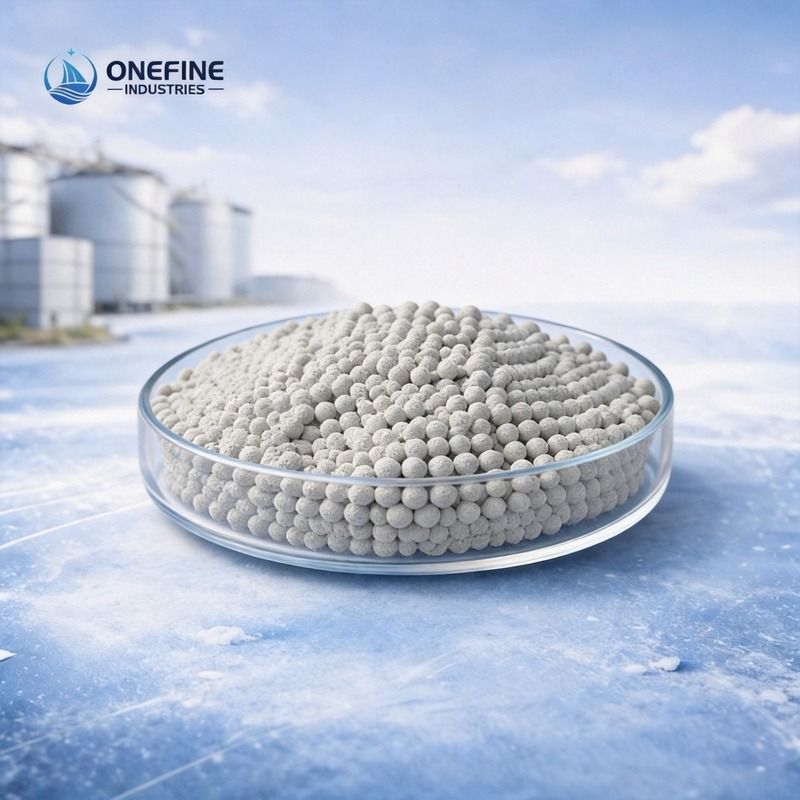
Dechlorination Catalyst
High-performance Na₂CO₃/Al₂O₃-based dechlorination catalyst designed for ultra-deep hydrogen chloride (HCl) removal from hydrocarbon streams with high chlorine capacity and minimal green oil formation.
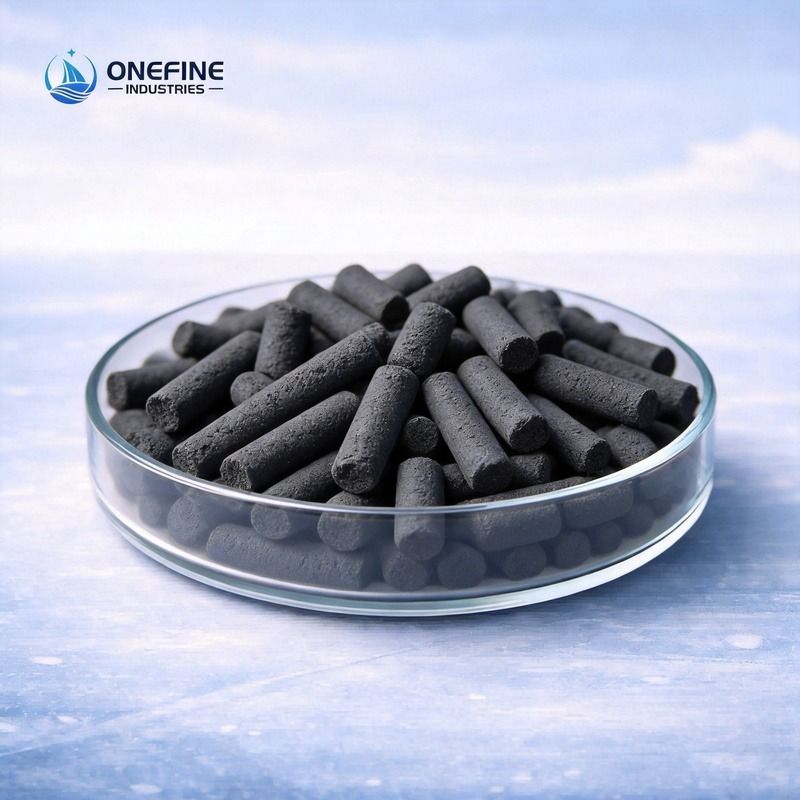
Copper-Nickel Desulfurization Catalyst
A Cu-Ni dual-system desulfurization catalyst for oil refining guard-bed applications. Removes inorganic and organic sulfur, trace chlorine, and arsenic impurities in a single step. Supplied in pre-reduced form for immediate use. Ideal as a protection agent for precious metal catalysts in reforming, hydrocracking, and isomerization units.
Related Reading
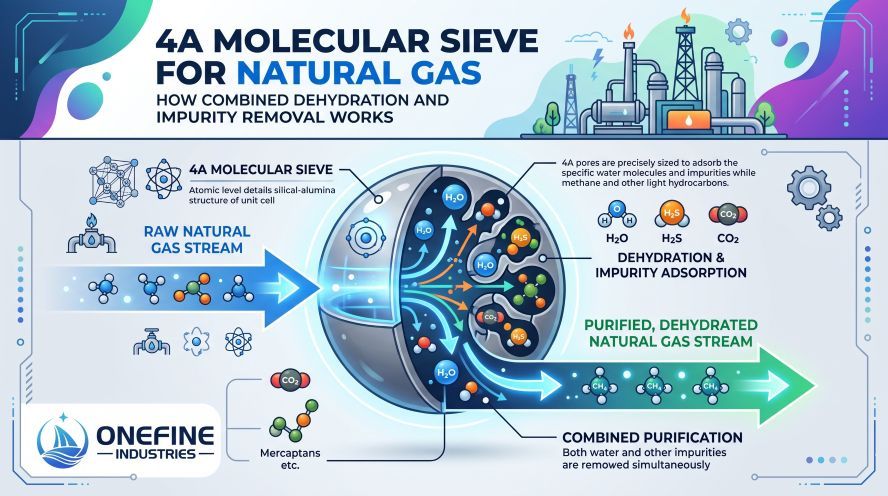
4A Molecular Sieve for Natural Gas: How Combined Dehydration and Impurity Removal Works
4A molecular sieve can dry natural gas and pull moderate CO₂/H₂S out of the same stream in one bed — how its larger pore enables that dual role, where it fits in the treatment train, and when 3A is the better call instead.
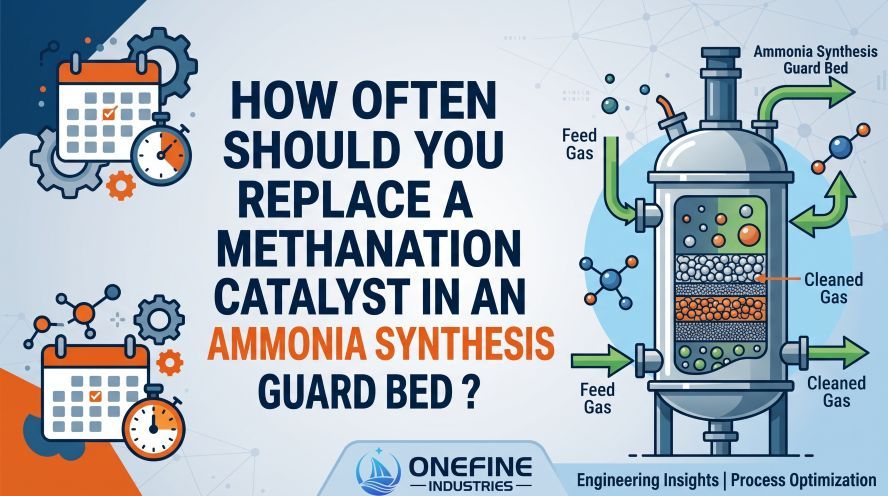
How Often Should You Replace a Methanation Catalyst in an Ammonia Synthesis Guard Bed?
There's no fixed replacement interval for a methanation catalyst — service life depends almost entirely on how well the upstream desulfurization train protects it. Here's how to read the real warning signs.
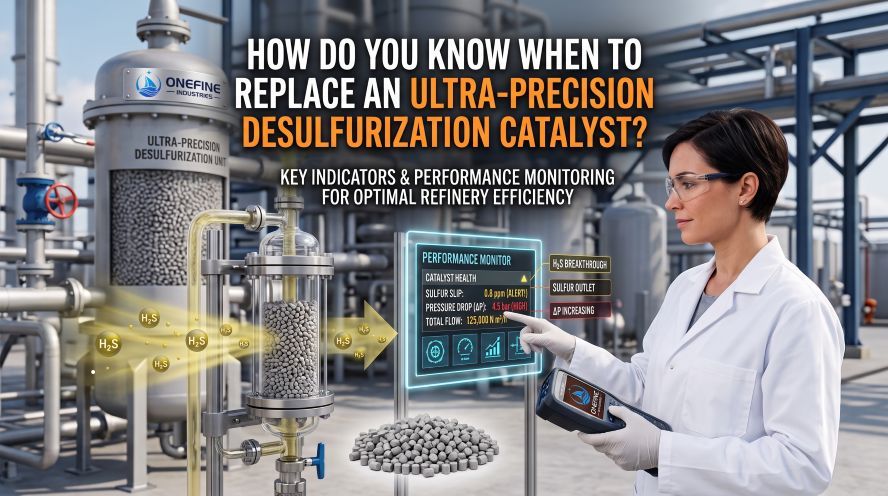
How Do You Know When to Replace an Ultra-Precision Desulfurization Catalyst?
Four real warning signs — total sulfur creep, falling COS conversion, rising pressure drop, and downstream poisoning — that tell you an Ultra-Precision Desulfurization Catalyst bed needs replacing.