How Do You Know When to Replace a High or Low Temperature Shift Catalyst?
Key Takeaways
- High-temperature shift (HTS) catalysts degrade gradually through thermal sintering, indicated by a flattening temperature profile and a widening gap in CO conversion.
- Low-temperature shift (LTS) catalysts fail chemically due to trace sulfur or chloride poisoning, often revealed by a deactivation zone advancing downward through the bed.
- While rising CO slip signals capacity loss in both, LTS failure is frequently triggered by condensation events or chloride migration from upstream wet upsets.
- Because HTS and LTS age on entirely different timelines and via different mechanisms, an LTS poisoning event does not mean the upstream HTS bed also requires replacement.
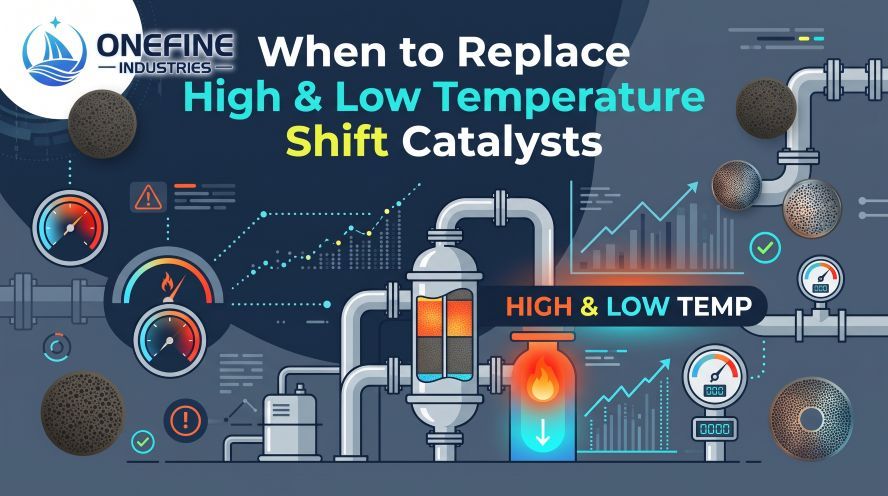
A water-gas shift train runs on two very different catalysts doing the same job in two stages. If your CO slip is creeping up, the real question isn't just "is it time?" — it's "which bed is failing, and why?" HTS and LTS catalysts age through almost opposite mechanisms, so the warning signs — and what they mean for your turnaround plan — look nothing alike.
Why HTS and LTS Fail for Different Reasons
A high-temperature shift catalyst runs hot enough that the dominant threat to its life is physical: slow thermal sintering of the active iron crystallites, which chromium oxide is added specifically to slow down. A low temperature shift catalyst runs much cooler, closer to the gas dew point, where the dominant threat is chemical — trace sulfur and chloride poisoning the copper surface. One degrades gradually and predictably over years. The other can degrade unevenly, driven by whatever contaminant slipped through the upstream guard beds. Reading the signals correctly starts with knowing which failure mode you're actually looking at.
Signs Your High-Temperature Shift Catalyst Needs Replacement
- A widening gap between actual and equilibrium CO conversion. HTS beds are designed to approach — not reach — equilibrium at the operating temperature. As iron crystallites sinter and lose active surface area, outlet CO drifts further from that theoretical line, and the gap keeps growing rather than holding steady.
- A flattening temperature profile. A healthy HTS bed shows a clear reaction exotherm. As activity declines, that temperature rise across the bed becomes smaller and less distinct — the reaction is doing less work.
- Gradual, not sudden, pressure drop increase. Unlike LTS, HTS pressure drop problems are usually mechanical (catalyst breakage, dust) rather than poison-driven, so a slow rise over years is consistent with normal aging rather than a contamination event.
- An unplanned excursion toward over-reduction. If steam-to-gas ratio drops too low for the operating temperature, iron oxide can over-reduce toward metallic iron — a different, faster failure mode than ordinary sintering, and one worth ruling out separately if CO slip jumps suddenly rather than creeping.
Signs Your Low Temperature Shift Catalyst Needs Replacement
- Rising CO slip that doesn't track a single cause. LTS beds typically hold a tight, low CO slip at the outlet. Because LTS life is governed mainly by poisoning rather than thermal aging, a rising trend here is the headline signal — but it needs the next three signs to tell you why.
- A deactivation zone moving down the bed. Sulfur poisons the top of the bed first, converting copper to CuS before settling as stable ZnS, and the poisoned, inactive zone advances downward over time. A shifting temperature profile — the active (hot) zone retreating deeper into the bed — is the practical way this shows up on your instruments.
- Chloride-driven sintering, especially after wet upsets. Chloride forms mobile copper chloride when the bed gets wet, which both migrates deeper into the catalyst and accelerates local sintering because of its low melting point. A condensation event upstream is often the real trigger behind an otherwise unexplained activity drop.
- Higher methanol in the condensate. Methanol as a byproduct is a sign that the copper surface chemistry has shifted away from clean shift activity — a useful secondary confirmation alongside rising CO slip.
- Rising pressure drop tied to wetting, not just dust. Condensation can wash poisons deeper into the bed and raise pressure drop at the same time, so the two symptoms often arrive together on the LTS side.
Should You Replace Both at the Same Time?
Not necessarily. Because HTS and LTS age through different mechanisms and on different timelines, it's common for one bed to need attention well before the other — an LTS poisoning event doesn't mean the HTS bed upstream is also due. The two catalysts work as a system, but their replacement schedules rarely move in lockstep. For a closer look at when it makes sense to run a single-stage system versus a two-stage HTS–LTS train in the first place, see our HTS and LTS comparison guide.
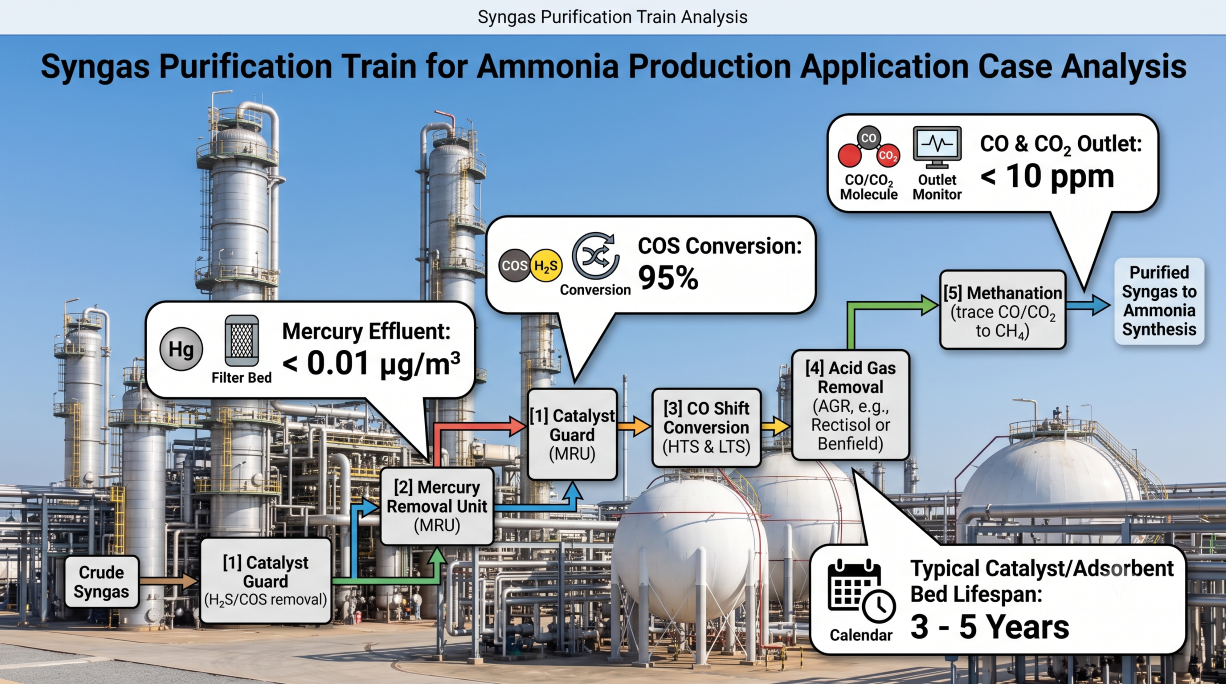
Both catalysts also sit inside a larger purification sequence rather than standing alone. For a view of how the HTS and LTS stages fit alongside methanation, mercury removal and COS hydrolysis in a full ammonia-plant syngas train, see our application case on syngas purification train.
Recommended Products from Sorbsieve
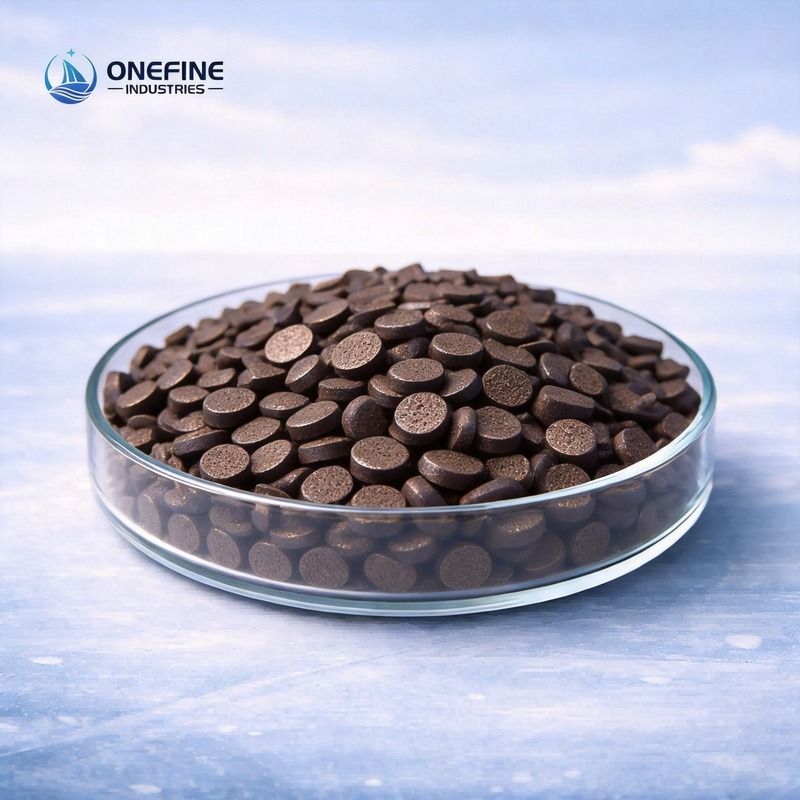
- Fe-Cr shift catalyst — for high-temperature, bulk CO conversion ahead of a low-temperature polishing stage
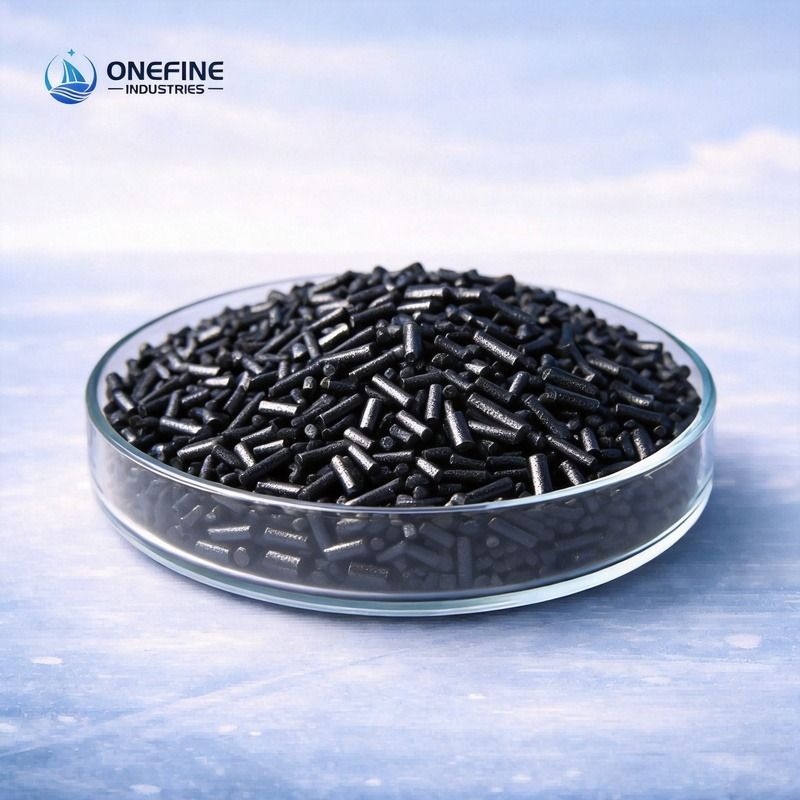
- Cu-Zn-Al shift catalyst — for deep CO polishing downstream of an HTS bed
FAQ
How long does a typical HTS or LTS catalyst bed last? It depends heavily on gas composition, upstream guard bed performance, and steam-to-gas ratio control — there's no single service life that applies across plants. Tracking the trends above (CO slip, temperature profile, pressure drop) is a more reliable guide than a fixed calendar interval.
Can a poisoned LTS catalyst be regenerated instead of replaced? Sulfur poisoning on LTS is generally not reversible once sulfur has converted to stable ZnS — the poisoned zone is effectively spent. Mechanical issues like dust-driven pressure drop are a different story, but chemical poisoning calls for replacement of the affected portion of the bed.
Does sulfur slip damage the HTS catalyst too? HTS catalysts are considerably more tolerant of sulfur than LTS catalysts — sulfur poisoning is primarily an LTS concern. If sulfur is reaching your shift train at levels that worry you, the upstream desulfurization system is usually the better place to look first.
What's the first thing to check if CO slip suddenly jumps? Rule out a process upset before assuming catalyst failure — a sudden jump (rather than a gradual drift) often points to a steam ratio excursion, a wet upset, or an instrument issue rather than end-of-life catalyst activity.
Looking for Bulk Supply of High or Low Temperature Shift Catalyst?
Sorbsieve is a trusted bulk supplier of high and low temperature shift catalysts and complete industrial adsorbents, serving industrial buyers across the Middle East.
We provide:
- ✅ Container-level supply (20'GP / 40'GP / 40'HQ)
- ✅ Full documentation (COA / TDS / SDS / COO)
- ✅ Multiple packaging options
- ✅ Technical support for shift catalyst selection and guard bed system optimization
- ✅ Fast quote response for industrial inquiries
Contact our team for bulk pricing, product samples, and technical consultation.
Related Products
Shift Catalyst (Fe-Cr Series)
Fifth-generation iron-chromium water-gas shift catalyst manufactured via co-precipitation from nitrate precursors, delivering high CO conversion activity, low sulfur content, excellent mechanical strength, and extended service life for hydrogen production, syngas, ammonia synthesis, and methanol synthesis processes.
Low Temperature Shift Catalyst (Cu-Zn-Al Series)
Co-precipitation copper-zinc-aluminum low temperature shift (LTS) catalyst delivering exceptional CO conversion at 180–250 °C, with superior low-temperature activity, high mechanical strength, and excellent sulfur tolerance for hydrogen production, syngas, ammonia synthesis, and methanol synthesis processes.
Related Reading
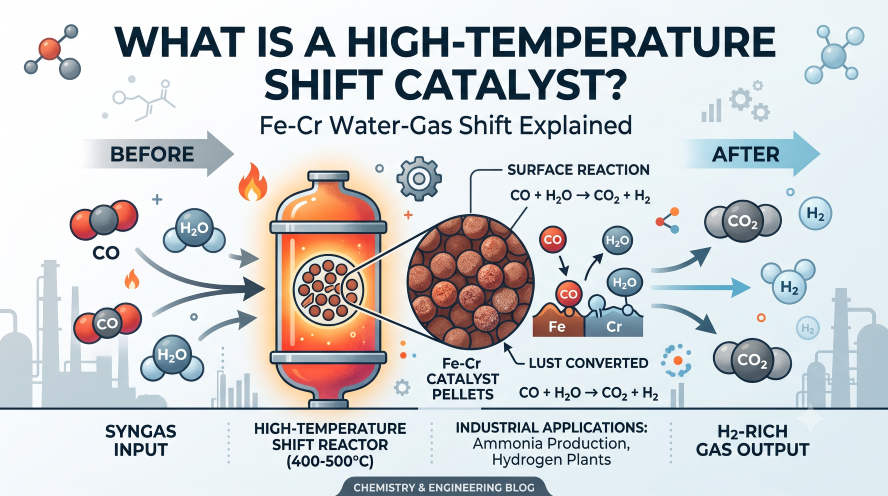
What Is a High-Temperature Shift Catalyst? Fe-Cr Water-Gas Shift Explained
A practical guide to how Fe-Cr high-temperature shift catalysts work, why they're built the way they are, and how HTS fits alongside LTS in a complete shift train.
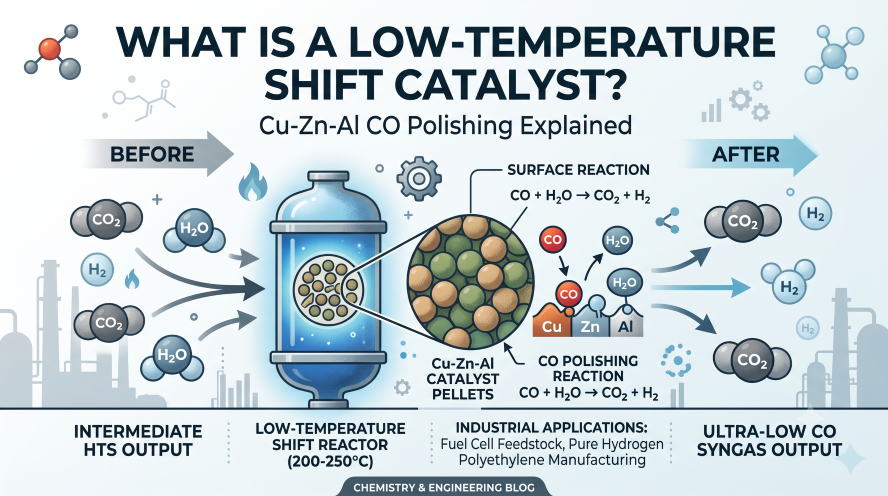
What Is a Low Temperature Shift Catalyst? Cu-Zn-Al CO Polishing Explained
A practical guide to how Cu-Zn-Al low temperature shift catalysts work, why sulfur protection is critical, and how LTS completes a two-stage shift train.
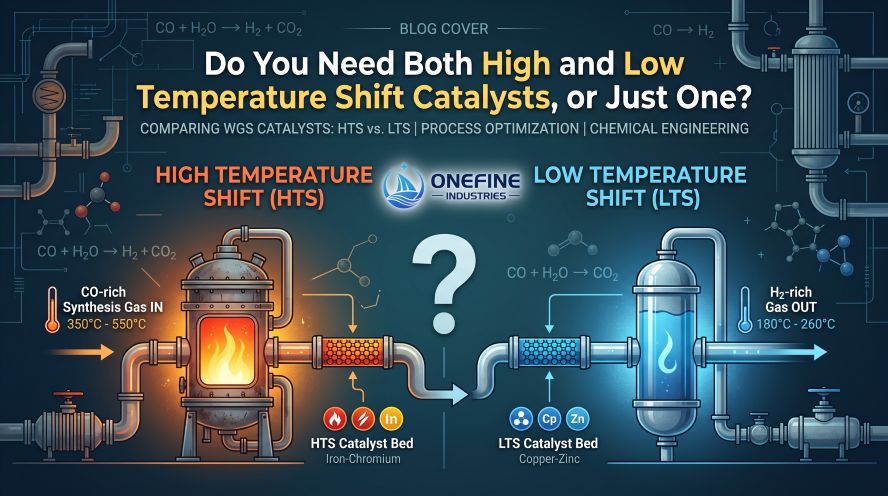
Do You Need Both High and Low Temperature Shift Catalysts, or Just One?
HTS and LTS aren't competing choices — they're two stages of the same reaction. Here's how to tell whether your process needs both or just one.