Technical & Troubleshooting Guides
Practical sizing, troubleshooting, and technical guidance for molecular sieve systems.
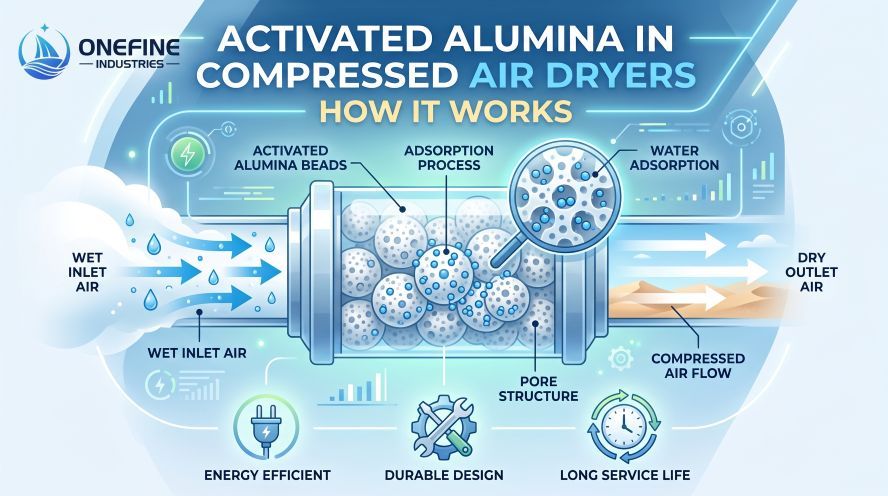
Activated Alumina in Compressed Air Dryers: How It Works
How activated alumina serves as the primary desiccant in heat-reactivated and heatless compressed air dryers, and when it's layered with molecular sieve for deeper dehydration.
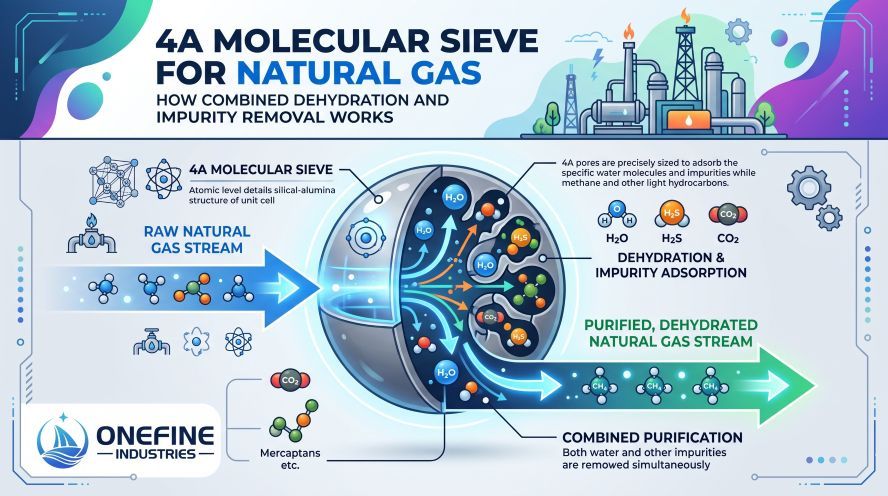
4A Molecular Sieve for Natural Gas: How Combined Dehydration and Impurity Removal Works
4A molecular sieve can dry natural gas and pull moderate CO₂/H₂S out of the same stream in one bed — how its larger pore enables that dual role, where it fits in the treatment train, and when 3A is the better call instead.
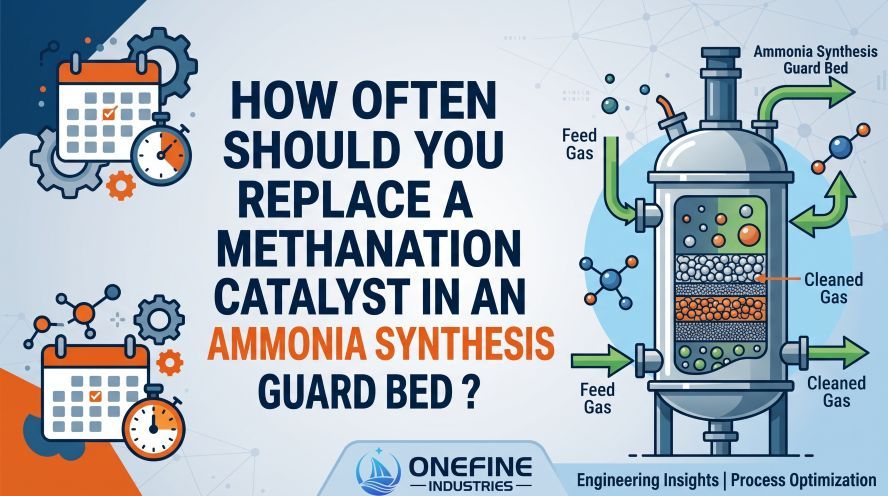
How Often Should You Replace a Methanation Catalyst in an Ammonia Synthesis Guard Bed?
There's no fixed replacement interval for a methanation catalyst — service life depends almost entirely on how well the upstream desulfurization train protects it. Here's how to read the real warning signs.

How Do You Know When to Replace an Ultra-Precision Desulfurization Catalyst?
Four real warning signs — total sulfur creep, falling COS conversion, rising pressure drop, and downstream poisoning — that tell you an Ultra-Precision Desulfurization Catalyst bed needs replacing.
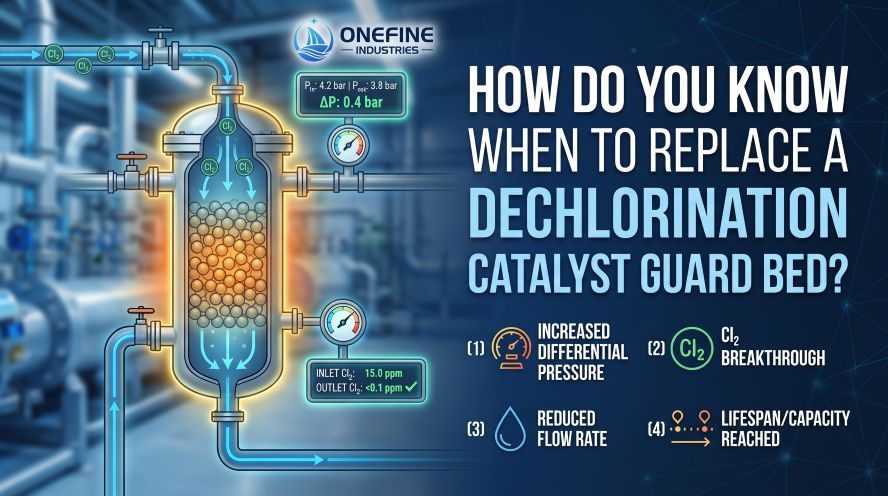
How Do You Know When to Replace a Dechlorination Catalyst Guard Bed?
There's no fixed calendar date for replacing a dechlorination catalyst guard bed. This guide covers the three signals that actually matter — outlet chlorine breakthrough, organic chloride slip even when HCl looks clean, and rising pressure drop from green oil fouling — and why watching HCl alone isn't enough.

How Do You Know When to Replace Oxygen Generator Molecular Sieve in a PSA Oxygen Concentrator?
Learn the practical warning signs — from declining oxygen purity to bed attrition — that indicate it's time to replace Oxygen Generator Molecular Sieve in a PSA system.

3A Molecular Sieve for Transformer Oil Purification: How Online Dehydration Works
Online molecular sieve purification systems continuously remove moisture from transformer oil without taking the transformer out of service. This guide explains how 3A Molecular Sieve dehydrates oil at the molecular level, where 4A fits as an alternative, and how this differs from desiccant breathers and oil reclamation.
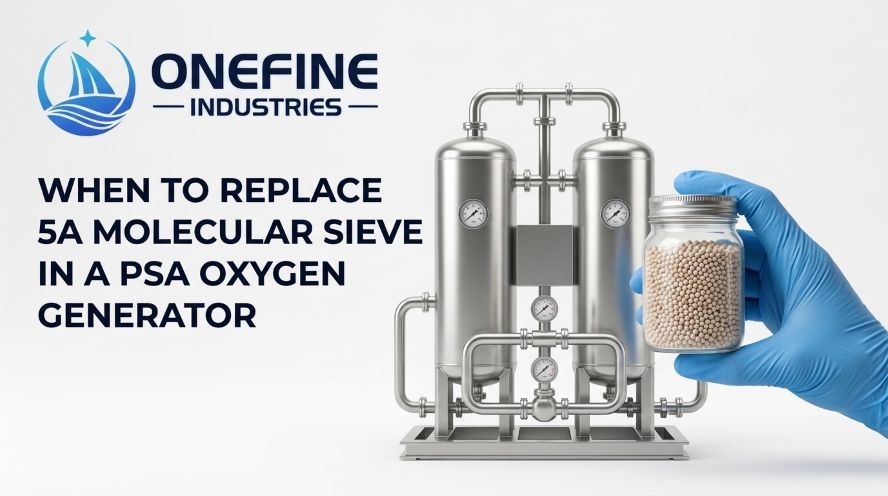
How Do You Know When to Replace 5A Molecular Sieve in a PSA Oxygen Generator?
PSA oxygen systems regenerate 5A molecular sieve on every pressure cycle — but regeneration isn't the same as replacement. Here's how to tell the difference before purity drops for good.
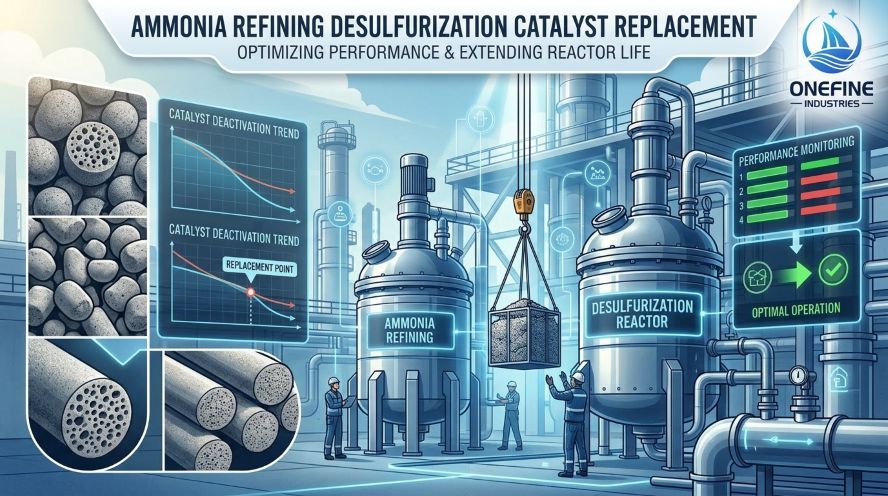
How Do You Know When to Replace an Ammonia Refining Desulfurization Catalyst?
The practical warning signs that tell you an Ammonia Refining Desulfurization Catalyst needs replacing — before sulfur breaks through into your ammonia synthesis loop.
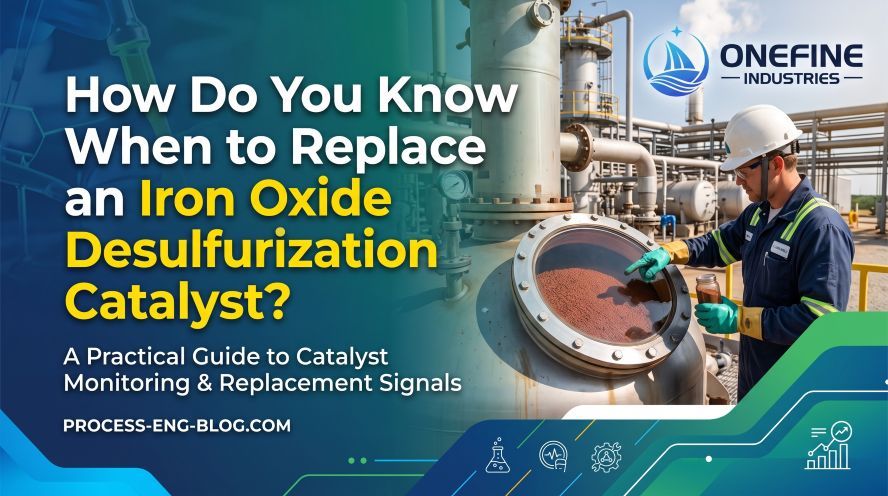
How Do You Know When to Replace an Iron Oxide Desulfurization Catalyst?
Learn the operating signals — outlet H₂S, temperature profile, pressure drop — that indicate an Iron Oxide desulfurization catalyst bed needs replacement, and the factors that shift its service life.
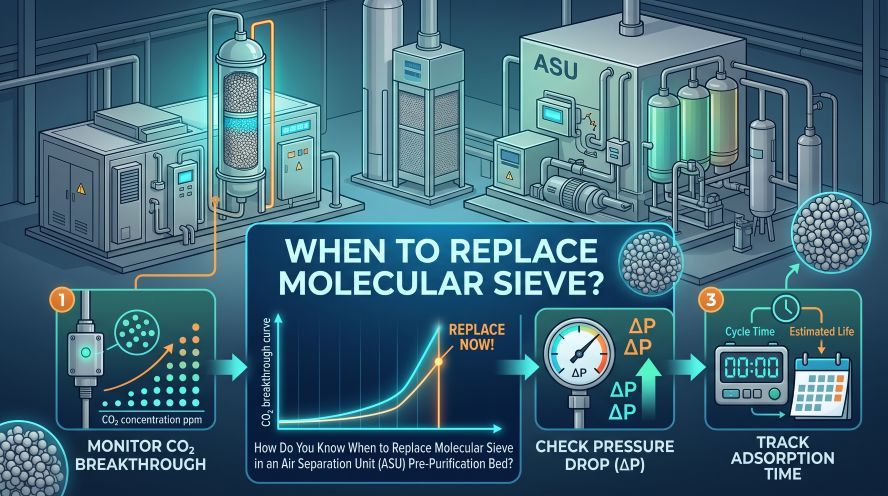
How Do You Know When to Replace Molecular Sieve in an Air Separation Unit (ASU) Pre-Purification Bed?
Rising pressure drop and CO2/moisture breakthrough are the two most reliable signs an ASU pre-purification molecular sieve bed needs replacement — but neither should be judged on a single reading. This guide walks through the warning signs, what's actually degrading inside the bed, and how to separate normal aging from a genuine end-of-life signal.
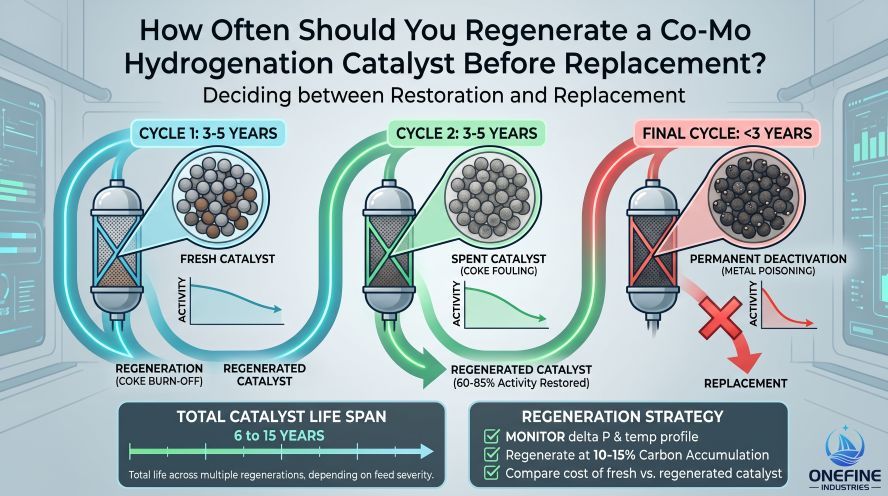
How Often Should You Regenerate a Co-Mo Hydrogenation Catalyst Before Replacement?
How many times can you regenerate a Co-Mo hydrogenation catalyst before replacement makes more economic sense? A breakdown of deactivation mechanisms, warning signs, and the regeneration-vs-replace decision.