How Do You Know When to Replace a COS Hydrolysis or Activated Carbon Fine Desulfurization Catalyst?
Key Takeaways
- A COS hydrolysis catalyst loses activity rather than capacity, typically signaled by rising COS slip while H₂S stays low.
- An activated carbon fine desulfurization bed gradually consumes its sulfur-holding capacity, leading to progressive H₂S breakthrough.
- Small COS increases can easily go unnoticed inside total sulfur readings, making speciated sulfur analysis critical for accurate guard bed diagnostics.
- A rising pressure drop usually points to fines, liquid carryover, or fouling rather than the chemical exhaustion of the catalyst.
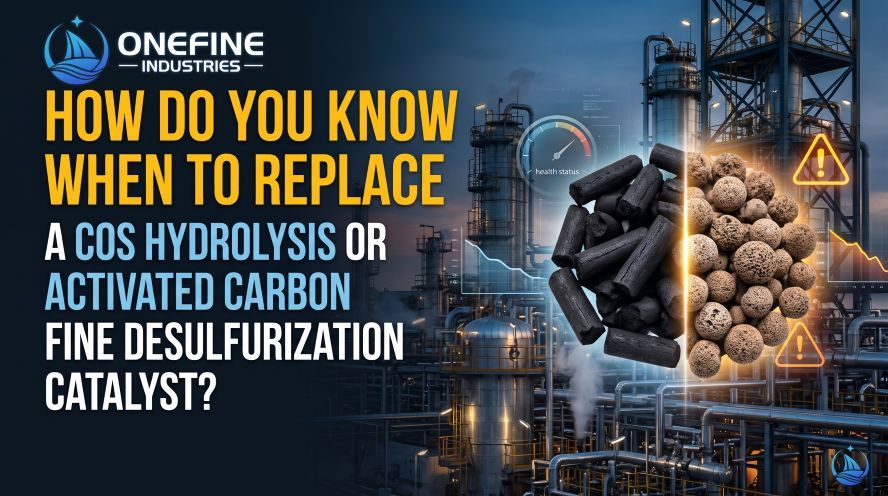
COS hydrolysis catalysts and activated carbon fine desulfurization catalysts usually sit near the end of a desulfurization train, where the job is no longer bulk sulfur removal but protecting sulfur-sensitive catalysts further downstream. At that position, a bed rarely fails loudly. Instead, trace sulfur starts to slip, and the first visible damage may appear in the downstream catalyst rather than in the guard bed itself.
The two beds also lose performance in different ways. One is a conversion catalyst that loses activity, and the other is a conversion-and-retention bed that gradually uses up its capacity. Reading one bed's signals as if they belonged to the other is a common route to changing out too early or too late. This guide explains what to watch for in each case, how to separate a process problem from a spent bed, and how to plan the replacement.
Why These Two Beds Fail in Different Ways
A COS hydrolysis catalyst converts carbonyl sulfide and water into hydrogen sulfide and carbon dioxide. The catalyst itself is not designed to hold the sulfur. The H₂S it produces moves on to a separate capture stage, typically a zinc oxide bed in a two-step configuration. Because it converts rather than stores, a COS hydrolysis catalyst does not "fill up". It loses activity, and the result is unconverted COS passing through. The underlying reaction chemistry, including the role of the surface water film, is covered in our COS hydrolysis basics.
An activated carbon fine desulfurization catalyst combines conversion and retention in one bed. Organic sulfur such as COS is converted to H₂S, and the sulfur is then oxidized and held inside the carbon pore structure. That retained sulfur gradually consumes the bed's working capacity. The oxidation and hydrolysis mechanisms are explained in our fine desulfurization basics.
In practical terms, the main question differs for each bed:
- COS hydrolysis catalyst: Is it still converting COS efficiently? This is an activity question.
- Activated carbon fine desulfurization catalyst: How much sulfur-holding capacity is left? This is a capacity question.
Replacement Signals for a COS Hydrolysis Catalyst
1. COS slip rises while H₂S stays low. This is the key signature of a hydrolysis catalyst losing activity. If outlet COS climbs while the downstream H₂S capture stage is still performing normally, the conversion step is the weak point. A capture bed designed mainly for H₂S cannot be relied on to stop COS that was never converted.
2. Total sulfur readings look acceptable, but COS is not measured separately. At guard-bed concentrations, a small COS increase can be lost inside a total sulfur number. If the downstream catalyst is showing sulfur-related activity loss with no obvious source, speciated sulfur analysis (COS measured on its own) is the first thing to check.
3. Holding conversion requires operating changes. If the unit is being pushed toward the edge of its approved operating window just to keep COS slip under control, the catalyst is likely approaching the end of its useful activity. Confirm the acceptable window with your technical team rather than continuing to adjust.
Rule out these causes before replacing:
- Water balance: Hydrolysis consumes water, so too little slows the reaction. Too much can also inhibit it, and liquid water can damage the bed. A drift in feed moisture can look exactly like catalyst deactivation.
- Oxygen ingress: Oxygen in the feed can promote sulfate formation on the catalyst surface, which is generally difficult to reverse. If oxygen has been present, the activity loss may be permanent, and the oxygen source needs to be fixed before a fresh charge goes in.
- Higher COS load: A change in upstream feed composition can raise the COS load beyond what the bed was sized for. In that case the catalyst is not spent; the duty has changed.
Replacement Signals for an Activated Carbon Fine Desulfurization Catalyst
1. Gradual H₂S or total sulfur breakthrough at the outlet. As capacity is used up, the active zone moves through the bed toward the outlet. Outlet sulfur typically rises progressively rather than all at once. If the vessel has intermediate sampling points, the movement of the sulfur front through the bed gives the clearest early warning.
2. Breakthrough arrives earlier than expected after a feed upset. A period of high sulfur in the feed uses up capacity much faster than normal operation. If breakthrough comes noticeably ahead of schedule, check the operating history for sulfur upsets before assuming the material underperformed.
3. Performance drops while sulfur loading is still low. The oxidation route depends on suitable operating conditions, including the presence of the required oxygen and moisture. If outlet quality worsens while the bed has clearly not used much of its capacity, the cause is more likely a condition problem than a spent bed. Confirm the correct operating conditions with your technical team before ordering a replacement.
4. Rising pressure drop. This usually points to fines, liquid carryover, or fouling rather than chemical exhaustion. It may still force a change-out, but the root cause should be fixed first or the fresh charge will suffer the same problem.
Because this bed's performance follows its capacity, tracking the cumulative sulfur it has processed against the design basis gives a useful forecast of when replacement will be needed.
A Side-by-Side Diagnostic Checklist
When outlet quality changes, use the symptom to narrow down which stage is responsible:
- Outlet COS rising, H₂S still low: Most likely loss of COS hydrolysis activity, or a water or temperature drift affecting conversion.
- Outlet H₂S rising gradually: In a two-step configuration, look first at the zinc oxide capture bed, not the hydrolysis catalyst. In an activated carbon fine desulfurization bed, the sulfur front is approaching the outlet.
- Sudden step change after an upset: Check for liquid carryover, oxygen ingress, or a sulfur slug before replacing anything.
- Pressure drop rising: A mechanical or fouling problem rather than a chemistry problem.
- Downstream catalyst losing activity, guard bed readings normal: Confirm that COS is measured separately and that the analyzer is suitable for trace-level detection.
This checklist matters most in two-step trains. Replacing a COS hydrolysis catalyst when the real problem is a saturated H₂S capture bed wastes a full charge and leaves the actual issue in place.
Planning the Change-Out
Review whether like-for-like is still the right choice. If feed composition, moisture, or oxygen levels have changed since the original design, the replacement is a good opportunity to revisit the technology choice. Our deep desulfurization comparison explains when a two-step hydrolysis route, an integrated activated carbon bed, or a one-step bifunctional catalyst fits best.
Consider what the bed is protecting. The cost of late replacement is usually not the guard bed itself but the downstream catalyst it protects. Copper-, nickel-, and palladium-based catalysts can suffer lasting damage from trace sulfur. For a closer look at how these guard beds work together in practice, see our application case on downstream catalyst protection.
Handle spent material safely. A spent activated carbon fine desulfurization bed contains retained sulfur, and spent catalysts in general should be unloaded and handled according to the Safety Data Sheet (SDS) and your site procedures.
Order ahead of the turnaround. Since both beds give gradual warning, there is usually enough time to plan replacement around a scheduled shutdown instead of reacting to an emergency.
Recommended Products from Sorbsieve
- COS Hydrolysis Catalyst — Converts COS to H₂S ahead of a zinc oxide capture stage in two-step deep desulfurization trains.
- Activated Carbon Fine Desulfurization Catalyst — Combines organic sulfur conversion and sulfur retention in a single bed.
- Also consider the Ultra-Precision Desulfurization Catalyst, a one-step bifunctional option for COS hydrolysis and H₂S removal worth reviewing at change-out.
FAQ
Can a COS hydrolysis catalyst be regenerated instead of replaced?
It depends on why activity was lost. Deactivation linked to sulfate formation or permanent poisoning is generally managed by replacement. Losses caused by operating conditions, such as a water balance problem, may recover once conditions are corrected. Confirm the specific case with your technical team before deciding.
Can I add more zinc oxide downstream instead of replacing the COS hydrolysis catalyst?
Usually not. Zinc oxide is mainly designed to capture H₂S. If COS is not being converted upstream, extra H₂S capture capacity does not address the COS that is slipping through. The conversion step has to be restored.
Why is my downstream catalyst losing activity when the guard bed outlet looks clean?
The most common reason is that sulfur is being measured as a total value, or with an analyzer that is not sensitive enough at trace levels. COS in particular can pass unnoticed. Speciated sulfur analysis at the guard bed outlet is the first check.
Should both beds be replaced at the same time?
Not necessarily. They deplete for different reasons and at different rates, so each should be judged on its own signals. Aligning both change-outs with the same scheduled shutdown can still make practical sense if both are close to their limits.
Looking for Bulk Supply of COS Hydrolysis Catalyst and Activated Carbon Fine Desulfurization Catalyst?
Sorbsieve is a trusted bulk supplier of COS Hydrolysis Catalyst, Activated Carbon Fine Desulfurization Catalyst and complete industrial adsorbents, serving industrial buyers across the Middle East.
We provide:
- ✅ Container-level supply (20'GP / 40'GP / 40'HQ)
- ✅ Full documentation (COA / TDS / SDS / COO)
- ✅ Multiple packaging options
- ✅ Technical support for deep desulfurization catalyst selection and system optimization
- ✅ Fast quote response for industrial inquiries
Contact our team for bulk pricing, product samples, and technical consultation.
Related Products
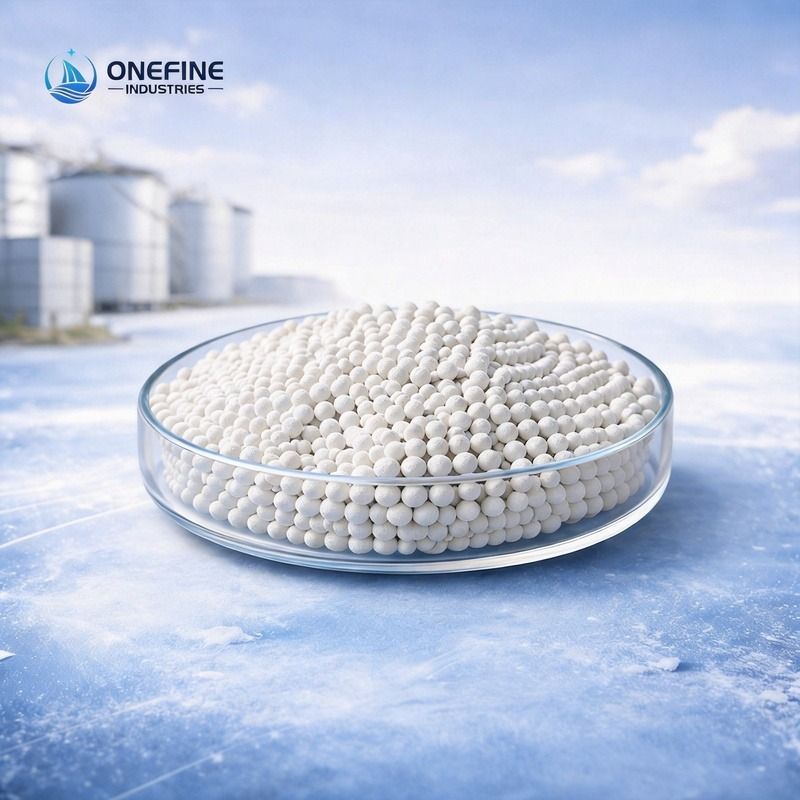
COS Hydrolysis Catalyst
High-efficiency γ-Al2O3 supported COS hydrolysis catalyst designed to convert carbonyl sulfide into easily removable H2S with ≥95% conversion efficiency across diverse hydrocarbon streams.
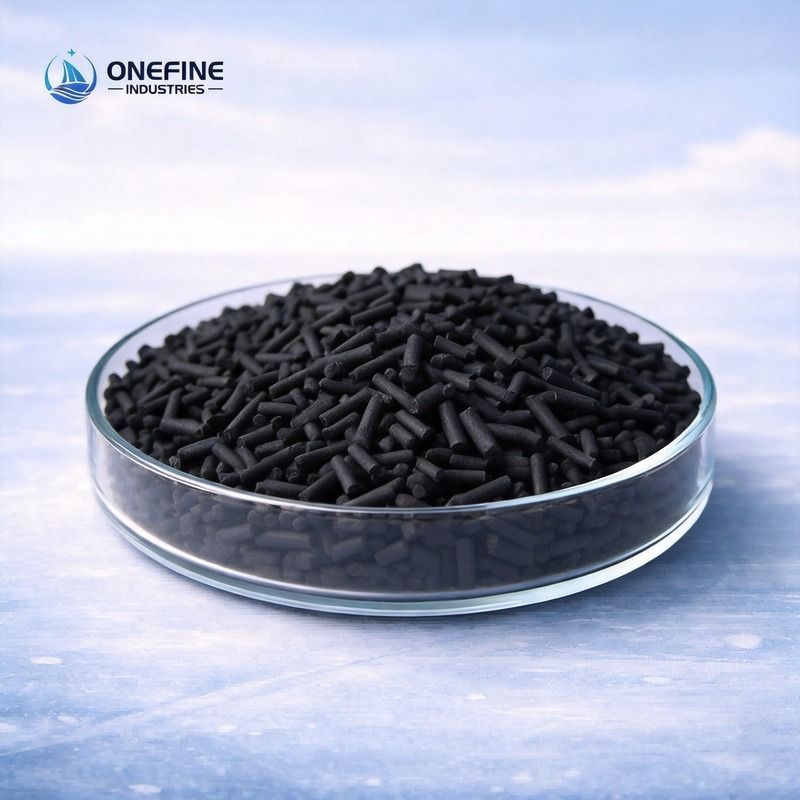
Activated Carbon Fine Desulfurization Catalyst
High-capacity activated carbon supported fine desulfurization catalyst designed for simultaneous H2S oxidation and COS hydrolysis in syngas, LPG, and CO2 streams, achieving ≥12 wt% breakthrough sulfur capacity.
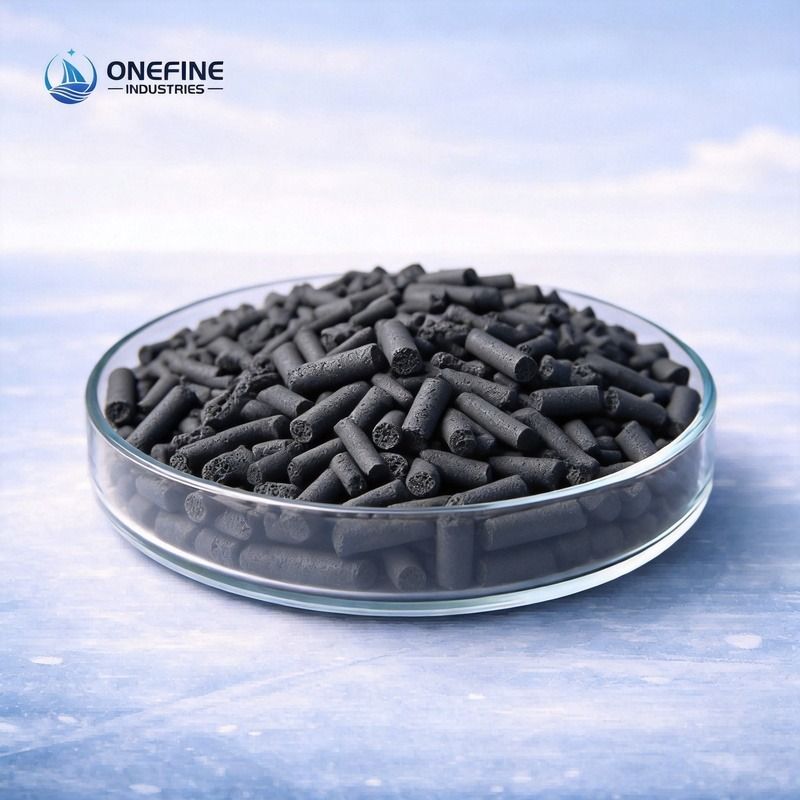
Ultra-precision Desulfurization Catalyst
A bifunctional desulfurization catalyst that couples COS hydrolysis and H₂S adsorption in a single reactor, achieving ultra-deep sulfur removal in one step. Effectively removes H₂S, COS, and trace RSH from process gases. Features high surface area, fast reaction kinetics, and broad operating range. Ideal for final purification of synthesis gas, natural gas, and light hydrocarbons.
Related Applications
Deep Desulfurization for Sulfur-Sensitive Downstream Catalysts: Application Case Analysis
How three deep desulfurization technologies — COS hydrolysis, activated carbon fine desulfurization, and one-step ultra-precision adsorption — protect sulfur-sensitive downstream catalysts from trace sulfur poisoning.
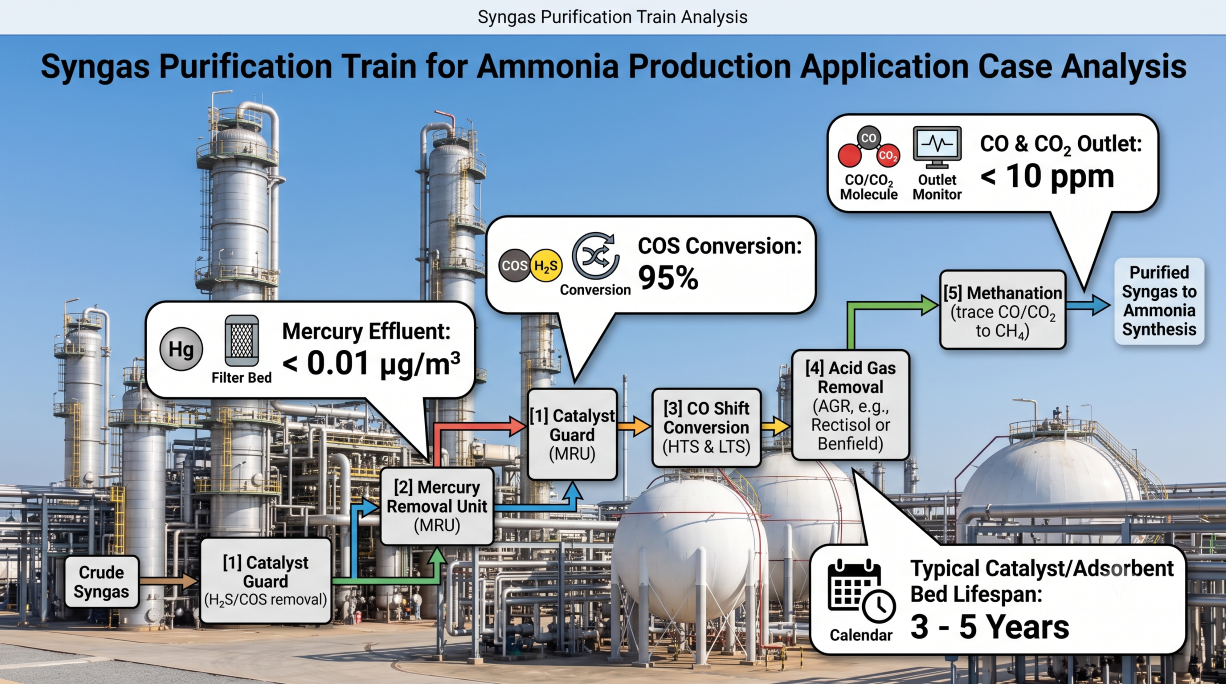
Syngas Purification Train for Ammonia Production: Application Case Analysis
This application case explores the five-stage shift-methanation-mercury-COS purification train (HTS, LTS, Methanation, Mercury Removal, and COS Hydrolysis) that conditions raw syngas before it reaches the ammonia synthesis loop — distinct from front-end feed gas desulfurization, this sequence protects the synthesis catalyst and cryogenic equipment from trace carbon oxides, sulfur compounds, and heavy metals.
Related Reading
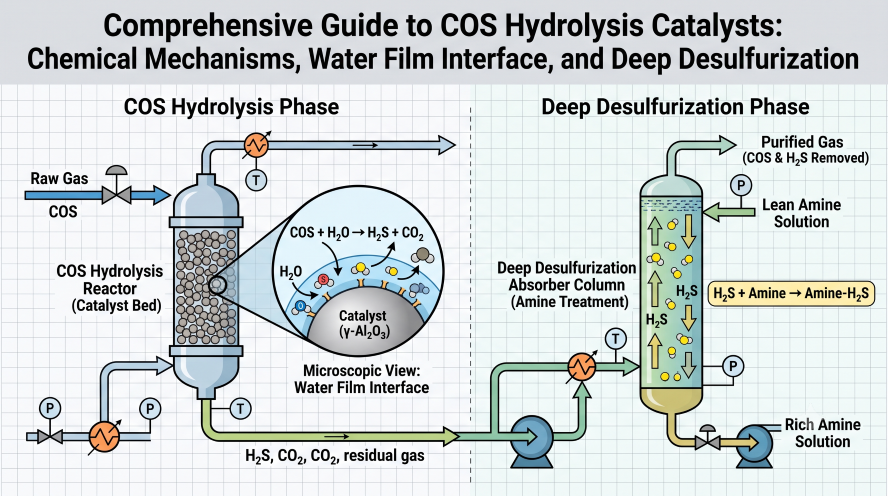
Comprehensive Guide to COS Hydrolysis Catalysts: Chemical Mechanisms, Water Film Interface, and Deep Desulfurization
Carbonyl sulfide (COS) is a highly stable, non-polar contaminant that easily slips past traditional zinc oxide desulfurization beds and amine scrubbing units. This technical guide explains why COS hydrolysis is needed, how the water-film reaction works, and how it fits into a real plant's desulfurization train.
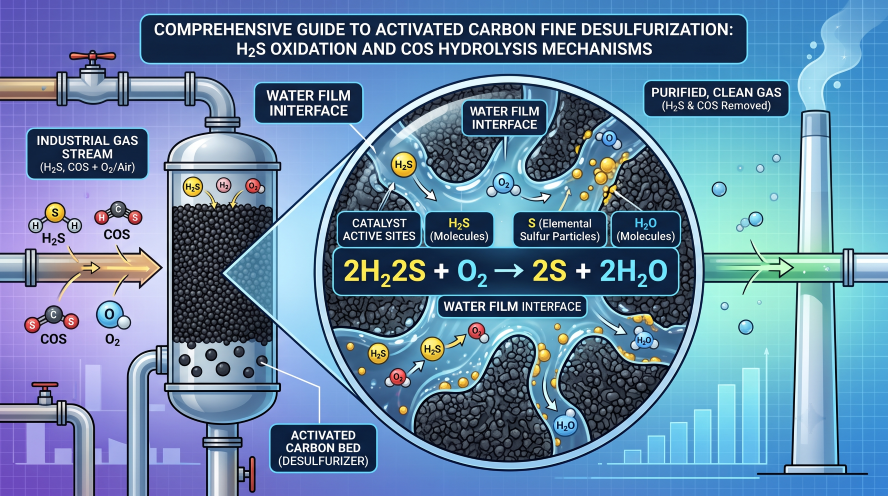
Comprehensive Guide to Activated Carbon Fine Desulfurization: H2S Oxidation and COS Hydrolysis Mechanisms
Explore the dual-mechanism of activated carbon fine desulfurization catalysts. Learn how the micro-water film promotes carbonyl sulfide (COS) hydrolysis and how trace oxygen facilitates catalytic hydrogen sulfide (H2S) oxidation for ultra-deep sulfur removal in syngas and LPG streams.
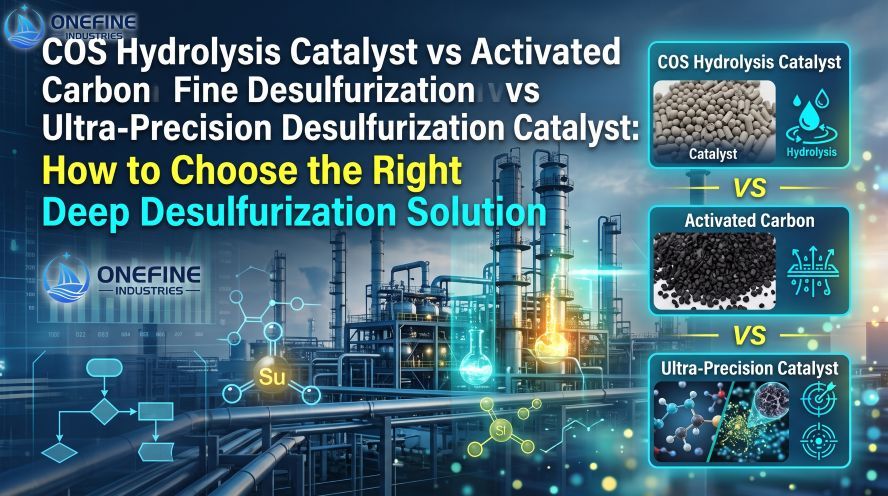
COS Hydrolysis Catalyst vs Activated Carbon Fine Desulfurization vs Ultra-Precision Desulfurization Catalyst: How to Choose the Right Deep Desulfurization Solution
Three deep desulfurization technologies, one real decision: standalone COS hydrolysis, activated carbon fine desulfurization, or a bifunctional ultra-precision catalyst. Here's how to choose based on feed gas, footprint, and maintenance — not marketing language.