Deep Desulfurization for Sulfur-Sensitive Downstream Catalysts: Application Case Analysis
Industry Context
Key Takeaways
- Trace sulfur binds irreversibly to active metal sites in copper, nickel, and palladium catalysts, causing permanent capacity loss.
- COS Hydrolysis Catalyst converts COS to H₂S for downstream polishing, ideal for streams dominated by COS.
- Activated Carbon Fine Desulfurization combines hydrolysis and oxidation in a single bed for mixed sulfur profiles.
- Ultra-Precision Desulfurization handles COS conversion and H₂S adsorption in the same bed for space-constrained systems.
Some catalysts tolerate a few ppm of sulfur in the feed. Others don't tolerate any. Copper-based methanol synthesis catalysts, nickel-based methanation catalysts, and palladium hydrogenation catalysts all fall into the second category — trace sulfur binds irreversibly to the active metal sites, and once poisoned, that capacity doesn't come back. For plants running these catalysts, the deep desulfurization stage ahead of them isn't a formality. It's what determines whether the downstream catalyst reaches its expected service life or fails early.
Why Trace Sulfur Is a Different Problem Than Bulk Sulfur
Bulk desulfurization — getting feed gas from hundreds of ppm down to single-digit ppm — is a well-understood step most purification trains already have in place. The harder problem is the last mile: taking that single-digit ppm sulfur down to the sub-ppm or even sub-ppb level that sulfur-sensitive catalysts require. At that level, the sulfur species present (H₂S, COS, mercaptans) matter as much as the total sulfur count, because different species respond to different removal mechanisms.
Three Technology Paths, One Goal
Rather than a single fixed design, deep desulfurization ahead of a sulfur-sensitive catalyst is typically solved with one of three technology paths, each suited to a different feed profile:
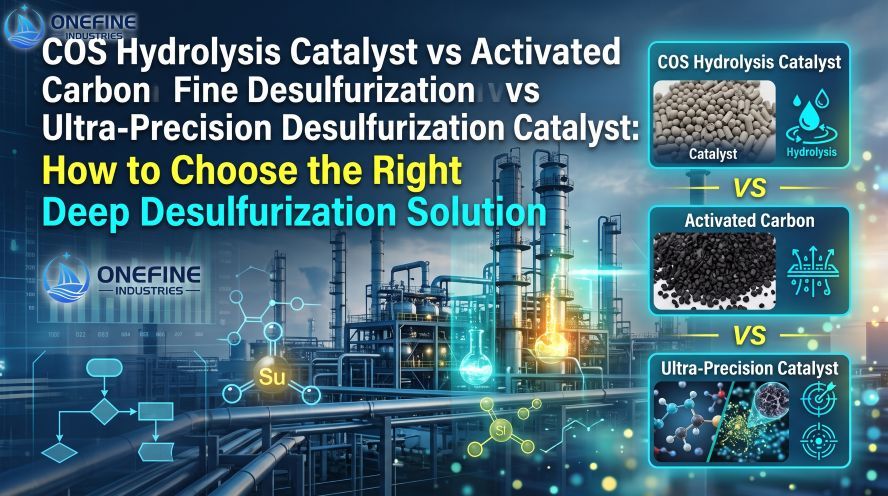
COS Hydrolysis Catalyst converts COS to H₂S, which is then handled by a downstream polishing step. This path fits streams where COS is the dominant species that conventional adsorbents struggle to remove directly.
Activated Carbon Fine Desulfurization Catalyst combines hydrolysis and oxidation in a single bed, targeting streams with a mixed sulfur profile where a two-step approach would add unnecessary complexity.
Ultra-Precision Desulfurization Catalyst takes a one-step dual-function route — COS conversion and H₂S adsorption in the same bed — which simplifies the train where a compact footprint matters more than handling the widest possible range of sulfur species.
Matching the Path to Your Feed
There's no single "best" option among the three — the right choice depends on which sulfur species dominate your feed, how much moisture and oxygen sensitivity your system can tolerate, and how much bed volume you have available. A feed with a clean COS profile and existing downstream polishing capacity may not need the complexity that a mixed-sulfur, space-constrained system requires. Buyers working through this decision can see the full technical comparison — conversion mechanism, moisture/oxygen sensitivity, and regeneration logic for all three — in our deep desulfurization comparison guide.
What stays constant across all three paths is the stakes downstream: a methanol synthesis or methanation catalyst that gets poisoned by sulfur breakthrough isn't a maintenance inconvenience — it's a capital loss that deep desulfurization is specifically designed to prevent.
Recommended Products from Sorbsieve
- COS Hydrolysis Catalyst
- Activated Carbon Fine Desulfurization Catalyst
- Ultra-Precision Desulfurization Catalyst
Looking for Bulk Supply of Deep Desulfurization Catalysts?
Sorbsieve is a trusted bulk supplier of deep desulfurization catalysts and complete industrial adsorbents, serving industrial buyers across the Middle East.
We provide:
- ✅ Container-level supply (20'GP / 40'GP / 40'HQ)
- ✅ Full documentation (COA / TDS / SDS / COO)
- ✅ Multiple packaging options
- ✅ Technical support for deep desulfurization technology selection
- ✅ Fast quote response for industrial inquiries
Contact our team for bulk pricing, product samples, and technical consultation.
Related Products
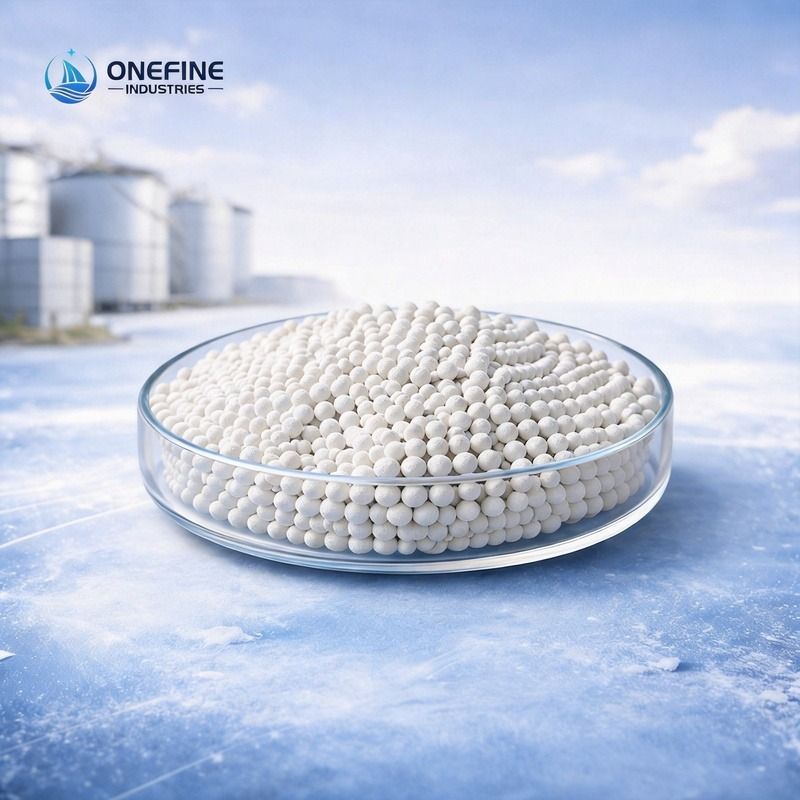
COS Hydrolysis Catalyst
High-efficiency γ-Al2O3 supported COS hydrolysis catalyst designed to convert carbonyl sulfide into easily removable H2S with ≥95% conversion efficiency across diverse hydrocarbon streams.
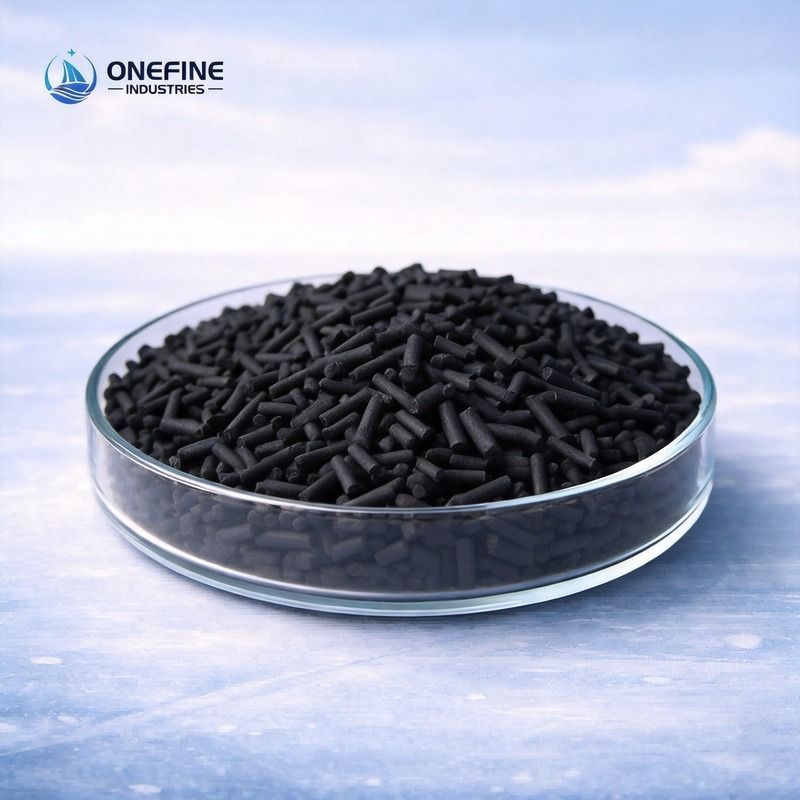
Activated Carbon Fine Desulfurization Catalyst
High-capacity activated carbon supported fine desulfurization catalyst designed for simultaneous H2S oxidation and COS hydrolysis in syngas, LPG, and CO2 streams, achieving ≥12 wt% breakthrough sulfur capacity.
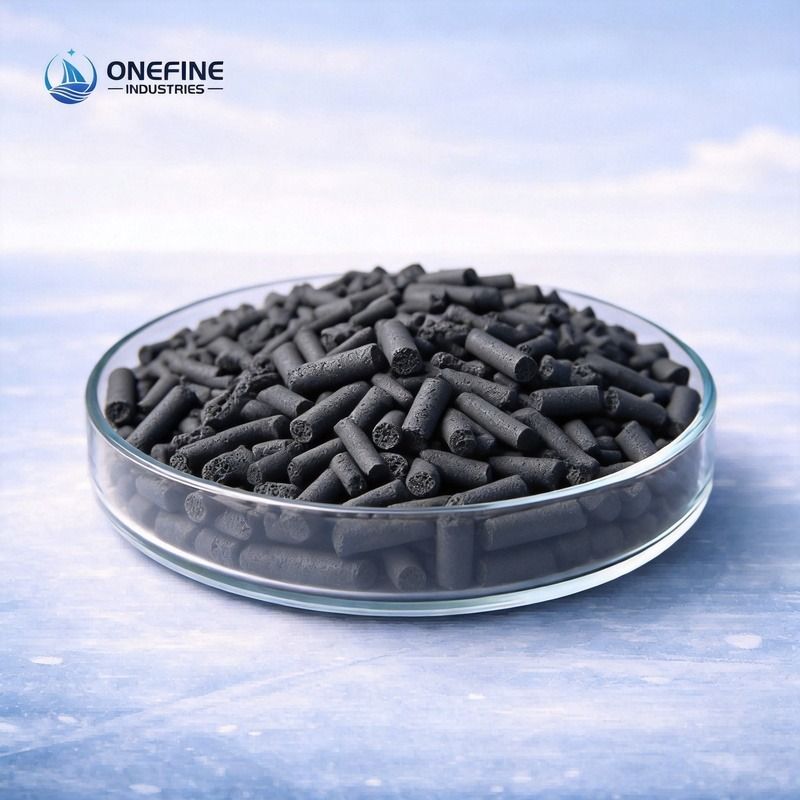
Ultra-precision Desulfurization Catalyst
A bifunctional desulfurization catalyst that couples COS hydrolysis and H₂S adsorption in a single reactor, achieving ultra-deep sulfur removal in one step. Effectively removes H₂S, COS, and trace RSH from process gases. Features high surface area, fast reaction kinetics, and broad operating range. Ideal for final purification of synthesis gas, natural gas, and light hydrocarbons.