Activated Carbon Fine Desulfurization Catalyst
High-capacity activated carbon supported fine desulfurization catalyst designed for simultaneous H2S oxidation and COS hydrolysis in syngas, LPG, and CO2 streams, achieving ≥12 wt% breakthrough sulfur capacity.
Get QuoteKey Attributes
- Dual-functional capability simultaneously executes COS hydrolysis and H2S catalytic oxidation.
- Exceptional breakthrough sulfur capacity (≥12 wt%) drastically extends continuous operational run times.
- Engineered micro-water film interface rapidly accelerates the breakdown of stable COS molecules.
- Highly effective at low and near-ambient temperatures (up to 50°C), eliminating the need for feed pre-heating.
- Robust mechanical crush strength (≥45 N/cm) ensures structural integrity under variable space velocities.
- Flexible production permits customized sizing and irregular granular shapes for specific reactor geometries.
- Accommodates a broad pressure envelope from atmospheric conditions up to 5.0 MPa.
Applications
- Deep H2S and COS removal from synthesis gas in coal chemical and reforming facilities.
- Low-temperature purification of food-grade CO2 for beverage carbonation and packaging.
- Sweetening of liquid LPG streams to pass standard copper strip corrosion compliance tests.
- Trace sulfur scavenging in fluid catalytic cracking (FCC) light oil and naphtha fractions.
- Polishing of natural gas feeds upstream of cryogenic liquefaction (LNG) processes.
- Treatment of biogas and landfill gas to protect downstream combustion engines from acid gas corrosion.
- Final-stage desulfurization of hydrogen-rich streams in petroleum refinery networks.
- Odor control and volatile sulfur compound (VSC) mitigation in industrial off-gas venting.
Product Description
What is Activated Carbon Fine Desulfurization Catalyst?
Key Takeaways
- Dual-Functional Guard Bed: Simultaneously executes water-film COS hydrolysis and direct H₂S catalytic oxidation within a single reactor bed.
- Massive Sulfur Loading: Delivers an exceptional breakthrough sulfur capacity of ≥12 wt%, drastically extending operational run times.
- Low-Temperature Operation: Highly effective at ambient to low temperatures (up to 50°C), making it ideal for polishing LPG, syngas, and food-grade CO₂ streams.
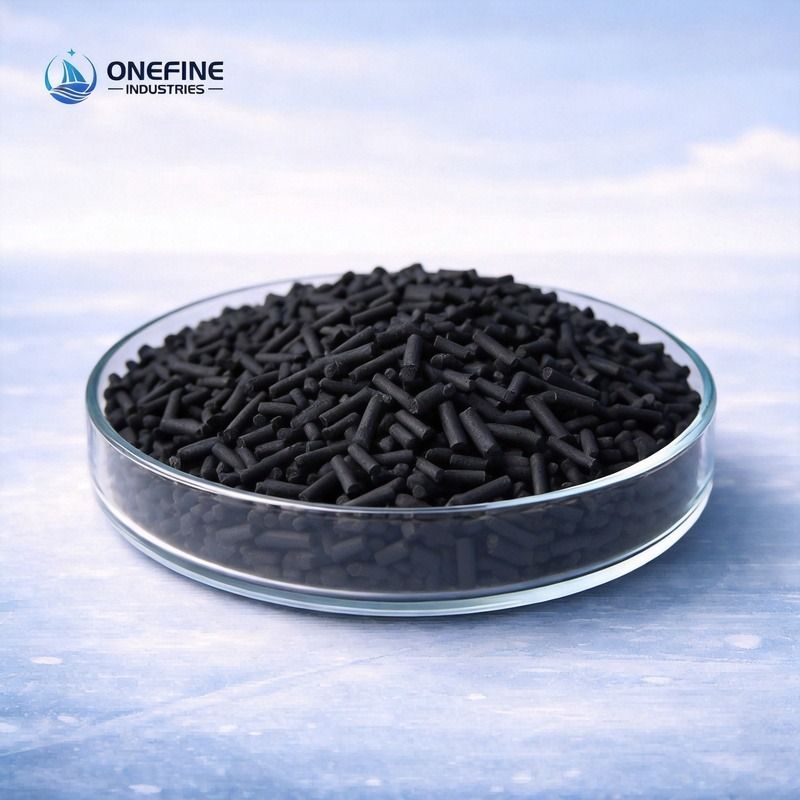
The Activated Carbon Fine Desulfurization Catalyst is a highly advanced, multi-functional purification scavenger utilizing premium-grade activated carbon as its structural carrier. Engineered with an exceptionally developed microporous and mesoporous architecture, this catalyst boasts a massive specific surface area (typically ≥800 m²/g). It is specifically designed for the ultra-deep removal of hydrogen sulfide (H2S), carbonyl sulfide (COS), and trace organic sulfur compounds from various industrial feedstocks, including synthesis gas, liquefied petroleum gas (LPG), light oil products, and food-grade carbon dioxide (CO2).
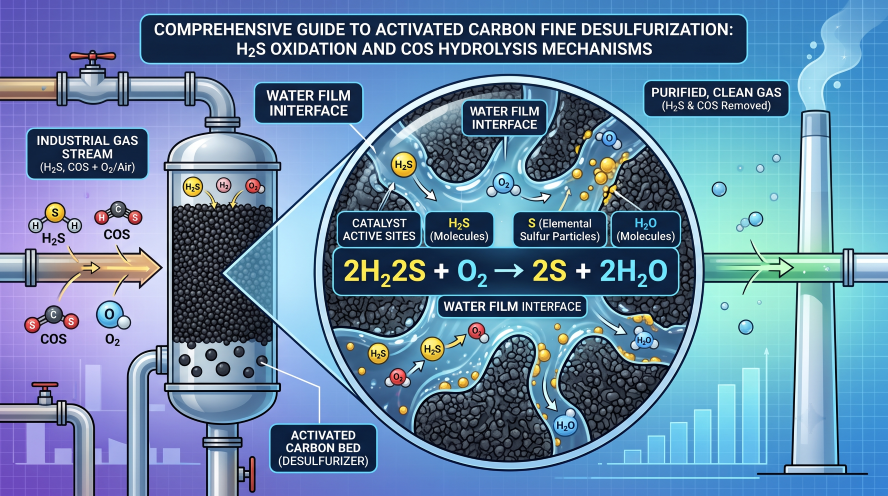
Unlike standard physical adsorbents, this catalyst operates via a dual-mechanism chemical pathway. For COS removal, the highly porous carbon surface traps trace moisture to form a "micro-water film interface." This localized aqueous zone dramatically accelerates the hydrolysis of COS into reactive H2S and CO2. Simultaneously, the catalyst facilitates the direct catalytic oxidation of the newly formed and pre-existing H2S. In the presence of trace oxygen (O2), the basic sites on the activated carbon catalyze the reaction: 2H2S + O2 → 2S + 2H2O. The resulting elemental sulfur is irreversibly deposited and securely locked deep within the extensive micropore network, completely removing the sulfur contaminants from the gas or liquid stream.
For the full reaction kinetics behind both mechanisms, see our Comprehensive Guide to Activated Carbon Fine Desulfurization.
Key Benefits
- Exceptional Sulfur Loading Capacity: Delivers a guaranteed breakthrough sulfur capacity of ≥12 wt%, significantly extending the operational lifespan of the guard bed and reducing the frequency of hazardous material change-outs.
- Dual-Action Purification: Uniquely capable of performing both COS hydrolysis (converting stable COS to H2S) and direct H2S catalytic oxidation within a single reactor bed, streamlining the desulfurization train.
- Broad Operational Window: Maintains high catalytic activity and structural stability from ambient temperatures up to 50°C and handling pressures from atmospheric up to 5.0 MPa.
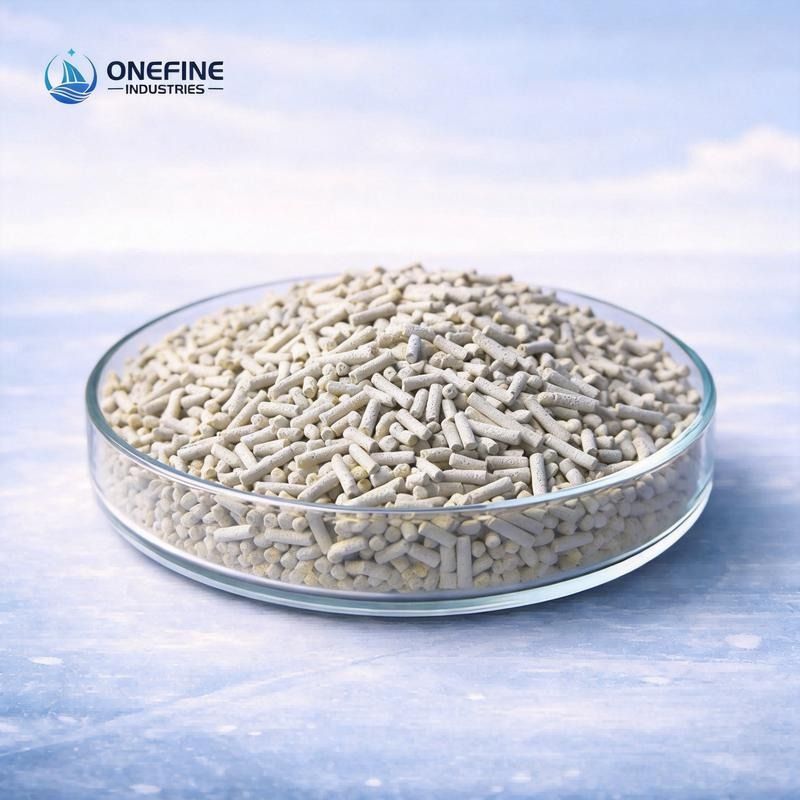
- Optimized Mass Transfer Dynamics: Formulated primarily as Φ 4 ± 1 mm black cylindrical pellets, providing an ideal balance of low bed pressure drop and high geometric surface area for rapid gas-solid contact.
- High Mechanical Integrity: Features a robust radial crush strength of ≥45 N/cm, effectively preventing physical attrition, fines generation, and fluid channeling even under high space velocity conditions (100–2500 h-1).
- Customizable Geometries: While standardly supplied as cylindrical extrudates, the production process is highly adaptable, allowing for customized spherical sizes or irregular granular shapes to meet specific client reactor engineering and void fraction requirements.
Applications in Detail
Synthesis Gas (Syngas) Fine Desulfurization: In coal gasification and reforming operations, raw syngas must be entirely stripped of sulfur to protect downstream noble metal and copper/zinc catalysts. This catalyst is deployed downstream of bulk acid gas removal units to scavenge residual H2S and hydrolyze slipping COS, ensuring total sulfur entering the methanol or ammonia synthesis loop remains well below 0.1 ppmwt.
Liquefied Petroleum Gas (LPG) Sweetening: Used in liquid-phase applications to treat off-spec LPG streams. The catalyst effectively removes dissolved H2S and trace organic sulfur compounds, ensuring the final product consistently passes the stringent ASTM D1838 Class 1a copper strip corrosion test without the need for complex liquid caustic wash systems.
Food-Grade CO2 Purification: Carbon dioxide recovered from fermentation or chemical plant off-gases often contains trace malodorous sulfur compounds. This activated carbon catalyst excels at low-temperature (ambient to 50°C) polishing, removing these trace contaminants to meet the ultra-strict purity and olfactory specifications required for the beverage carbonation industry.
Light Oil and Naphtha Treatment: Applied in the purification of fluid catalytic cracking (FCC) light naphtha or straight-run oil fractions. The extensive mesoporous structure accommodates larger liquid-phase hydrocarbon molecules, allowing trace sulfur compounds to diffuse into the active sites for conversion and capture, upgrading fuel quality and protecting downstream reforming catalysts.
Choosing Between Comparable Sulfur Removal Options: Buyers evaluating fine desulfurization options for low-temperature service often compare this catalyst against two related Sorbsieve products. The COS Hydrolysis Catalyst performs COS hydrolysis alone and requires a separate downstream H2S scavenger, while the Ultra-Precision Desulfurization Catalyst is also bifunctional but captures H2S via adsorption rather than oxidation. For buyers whose process runs hot rather than near-ambient, the Zinc Oxide Desulfurization Catalyst remains the standard choice at elevated operating temperatures.
Packaging & Shipping
We offer flexible packaging and shipping options to suit your project scale and logistics requirements.
Standard Packaging:
- 25 kg drums (moisture-proof, suitable for trial orders and small batches)
- 150 kg steel drums (standard bulk packaging for industrial orders)
- 500 kg super sacks (most popular for industrial bulk orders)
- 1000 kg jumbo bags (for large-scale projects)
- Custom packaging available on request
Minimum Order Quantity (MOQ):
- 1 ton (entry-level orders accepted — perfect for first-time customers)
- 5+ tons (standard bulk orders)
- Container-level supply for long-term partnerships
Container Loading Capacity:
- 20'GP container: 18–20 tons (palletized)
- 40'GP container: 22–24 tons (palletized)
- 40'HQ container: 24–26 tons
Loading Ports: We ship from major Chinese ports based on your requirements: Shanghai, Qingdao, Tianjin, Ningbo, and Shenzhen.
Lead Time:
- Stock orders: 7–15 days from payment confirmation
- Made-to-order: 20–30 days
Shipping Terms: FOB / CIF / CFR / EXW — flexible based on your destination and preferences.
Documents & Certificates
We provide complete documentation for every order:
📄 Technical Data Sheet (TDS) — Confirmed with you during product selection, ensuring exact specifications match your application requirements.
📄 Safety Data Sheet (SDS) — Provided before shipment, meeting all international transportation and handling standards. Given the pyrophoric handling precautions for spent material, SDS review is strongly recommended before first use.
📄 Certificate of Analysis (COA) — Issued for each production batch, delivered with your shipment for full quality traceability.
Additional documents available on request: Certificate of Origin (COO), Packing List, Commercial Invoice, Third-party Inspection Report (SGS / BV), Form E (for Middle East destinations with applicable tariff benefits).
Regeneration
The operational mechanism of this fine desulfurization catalyst involves the irreversible catalytic oxidation of H2S into solid elemental sulfur, which physically precipitates and permanently occupies the internal microporous volume of the activated carbon carrier. Because this solid sulfur deposition fundamentally alters and blocks the pore architecture, the catalyst acts as a non-regenerable, sacrificial guard material under standard industrial operating protocols.
Attempting to thermally regenerate the saturated carbon bed is highly discouraged in typical petrochemical settings. Vaporizing the trapped elemental sulfur requires exceedingly high temperatures, which would risk severe thermal degradation of the carbon skeleton, potential ignition if residual oxygen is present, and the release of highly concentrated, toxic sulfur dioxide (SO2) or sulfur vapors. Once the bed reaches its maximum breakthrough capacity (≥12 wt% sulfur loading), the saturated catalyst must be systematically isolated, safely discharged, and replaced with a fresh batch to guarantee continuous, uninterrupted ultra-deep desulfurization efficiency.
FAQ
Q1: Does this catalyst require the continuous injection of oxygen to function?
Yes, trace oxygen is fundamentally required to drive the catalytic oxidation of H2S into elemental sulfur (2H2S + O2 → 2S + 2H2O). However, the stoichiometric oxygen requirement is extremely minimal. In many standard industrial syngas or off-gas streams, the inherent background oxygen concentration is already sufficient to sustain the reaction. If the feed stream is strictly anaerobic, a highly controlled micro-injection of air or oxygen upstream of the guard bed is necessary to facilitate the chemical conversion.
Q2: How does the "micro-water film" improve COS hydrolysis?
Carbonyl sulfide (COS) is a highly stable, non-polar molecule that resists direct physical adsorption. The activated carbon surface selectively adsorbs trace moisture (H2O) from the gas stream, condensing it into microscopic aqueous films within the pores. When gas-phase COS dissolves into this polarized water film, the activation energy for hydrolysis is significantly lowered, allowing water molecules to rapidly cleave the carbon-sulfur bond, converting inert COS into reactive H2S and CO2.
Q3: Why choose activated carbon over a standard Zinc Oxide (ZnO) catalyst?
While ZnO is an exceptional desulfurizer at elevated temperatures (200–400°C), its kinetic reactivity drops precipitously at near-ambient conditions. This activated carbon catalyst is specifically engineered for low-temperature operation (ambient to 50°C), making it the superior choice for polishing low-temperature gas streams, liquid LPG, or temperature-sensitive CO2 feeds without requiring expensive upstream heating equipment.
Q4: Can this product handle variable flow rates and high space velocities?
Absolutely. The robust Φ 4 ± 1 mm cylindrical extrudates possess a radial crush strength of ≥45 N/cm, providing structural stability against fluid shear. This allows the catalyst bed to efficiently process gas hourly space velocities (GHSV) ranging from 100 h-1 up to 2500 h-1 without risking bead attrition, dust generation, or premature pressure drop spikes across the reactor.
Need a Custom Solution?
For bulk pricing and grade recommendation, please send your feed composition and desulfurization target requirements to us. Our technical team will get back to you within 24 hours with a tailored solution.
Technical Specifications
| Appearance | Black cylindrical pellets |
| Diameter (Φ) | 4 ± 1 mm (customizable) |
| Bulk Density | 0.55 ± 0.10 kg/L |
| Radial Crush Strength | ≥45 N/cm |
| Operating Temperature | Ambient to 50°C |
| Operating Pressure | Ambient to 5.0 MPa |
| Space Velocity | 100–2500 h-1 |
| Breakthrough Sulfur Capacity | ≥12 wt% |
| Carrier Material | Premium activated carbon |
| Specific Surface Area | ≥800 m²/g |
| Pore Volume | ≥0.50 cm³/g |
Related Products
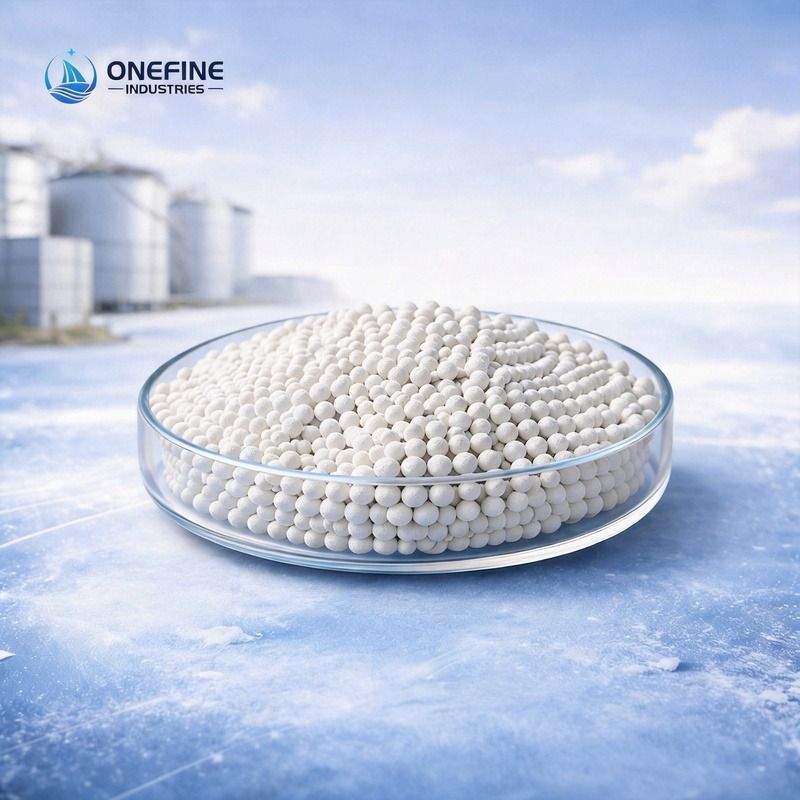
COS Hydrolysis Catalyst
High-efficiency γ-Al2O3 supported COS hydrolysis catalyst designed to convert carbonyl sulfide into easily removable H2S with ≥95% conversion efficiency across diverse hydrocarbon streams.
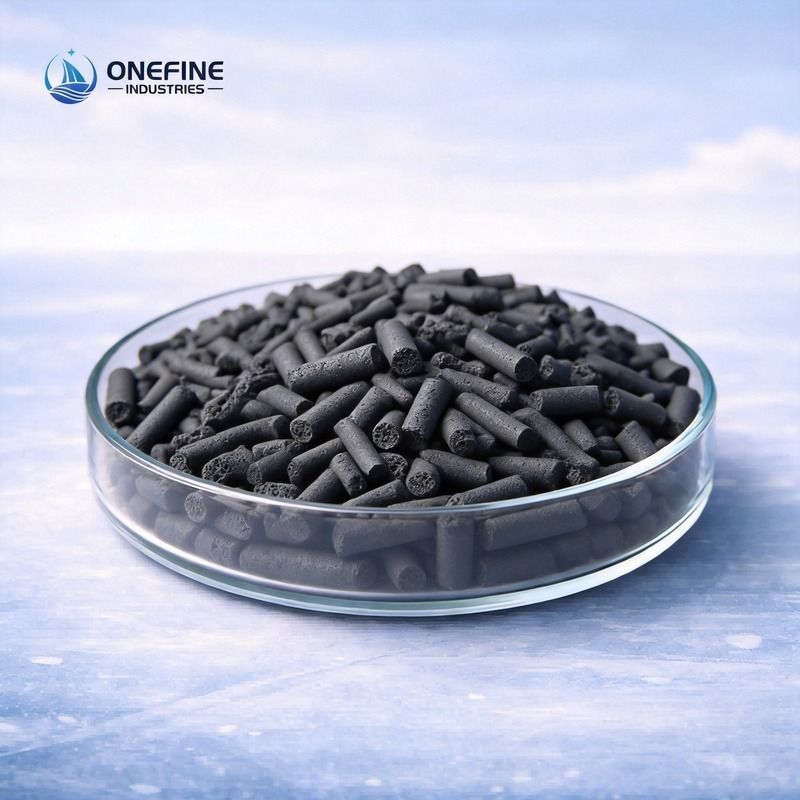
Ultra-precision Desulfurization Catalyst
A bifunctional desulfurization catalyst that couples COS hydrolysis and H₂S adsorption in a single reactor, achieving ultra-deep sulfur removal in one step. Effectively removes H₂S, COS, and trace RSH from process gases. Features high surface area, fast reaction kinetics, and broad operating range. Ideal for final purification of synthesis gas, natural gas, and light hydrocarbons.
Zinc oxide desulfurization catalyst
High-purity zinc oxide (ZnO) desulfurization catalyst for fine removal of H₂S from natural gas, synthesis gas, hydrogen, and hydrocarbon feeds. Achieves outlet sulfur levels below 0.1 ppm through irreversible chemisorption. High sulfur capacity, long service life, and strong resistance to steam.