Ultra-precision Desulfurization Catalyst
A bifunctional desulfurization catalyst that couples COS hydrolysis and H₂S adsorption in a single reactor, achieving ultra-deep sulfur removal in one step. Effectively removes H₂S, COS, and trace RSH from process gases. Features high surface area, fast reaction kinetics, and broad operating range. Ideal for final purification of synthesis gas, natural gas, and light hydrocarbons.
Get QuoteKey Attributes
- Bifunctional Design — Couples COS hydrolysis and H₂S adsorption in one reactor, no separate beds needed.
- Ultra-Deep Desulfurization — Total sulfur < 10 ppb, protects sensitive downstream catalysts.
- High Surface Area Support — ZnO + Al₂O₃ composite ensures high active component dispersion and adsorption capacity.
- Fast Reaction Kinetics — Space velocity up to 6000 h⁻¹, compact reactor design.
- Broad Temperature Range — Effective 5°C to 400°C, covers low and high-temperature applications.
- Wide Pressure Compatibility — Ambient to 10.0 MPa, suitable for diverse process conditions.
- Multi-Species Removal — Removes H₂S, COS, and trace RSH in single bed.
Applications
- Methanol Synthesis Gas Guard Bed — Reduces total sulfur (H₂S + COS) to < 10 ppb ahead of methanol synthesis catalysts, which are highly sensitive to sulfur poisoning.
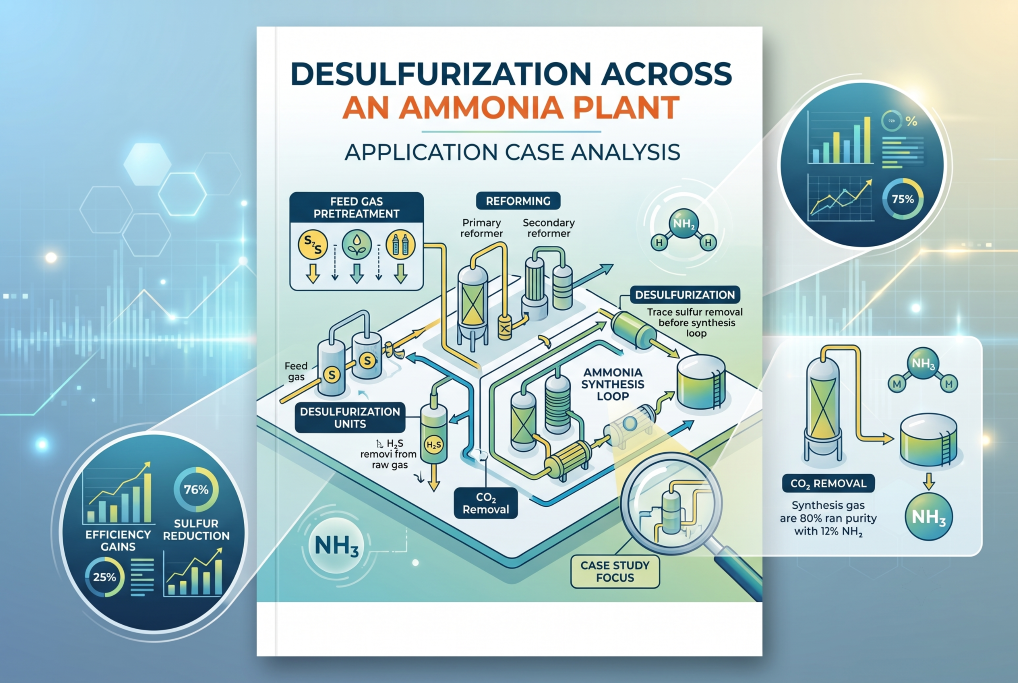
- Ammonia Synthesis Gas Guard Bed — Protects ammonia synthesis catalysts from trace sulfur, helping extend catalyst service life.
- Natural Gas Polishing — Final step to meet pipeline specs and protect downstream equipment.
- Hydrogen Stream Purification — Protects fuel cells and hydrogenation catalysts from sulfur poisoning.
- Refinery Fuel Gas — Meets emission standards and prevents corrosion.
- LPG & Light Hydrocarbon — Removes trace sulfur before petrochemical processing.
- Methanation Feed Protection — Prevents catalyst poisoning in ammonia and hydrogen plants.
- Coal Gas Cleaning — Final polishing after conventional desulfurization to ultra-low sulfur.
Product Description
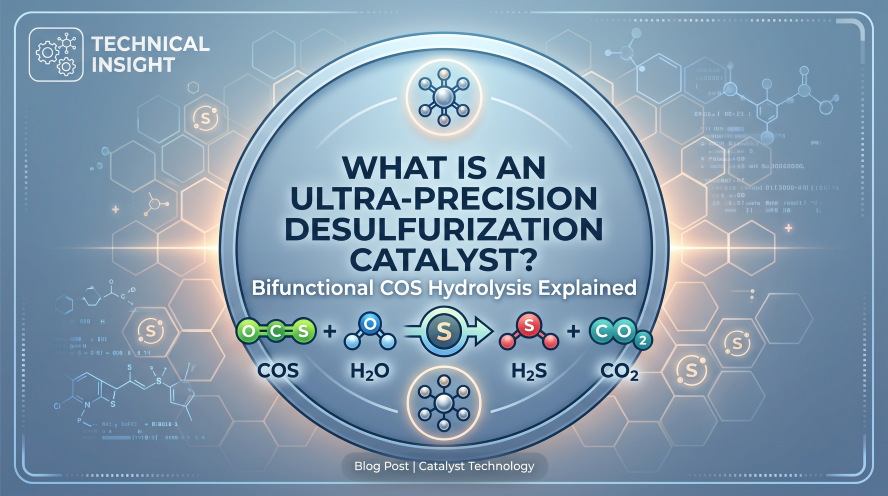
What Is an Ultra-precision Desulfurization Catalyst?
Key Takeaways:
- Bifunctional Efficiency: Combines COS hydrolysis and H₂S adsorption into a single reactor bed to streamline process gas treatment.
- Ultra-Deep Removal: Achieves total sulfur limits of < 10 ppb (H₂S + COS), protecting methanol and ammonia synthesis catalysts.
- Broad Compatibility: Operates effectively across a massive temperature window from 5°C to 400°C at pressures up to 10.0 MPa.
An ultra-precision desulfurization catalyst is a specialized bifunctional purification material designed for the final-stage removal of trace sulfur compounds from process gases. Unlike conventional desulfurizers that target only H₂S, this catalyst simultaneously performs two critical functions:
- COS Hydrolysis — Catalytically converts carbonyl sulfide (COS) to H₂S and CO₂: COS + H₂O → H₂S + CO₂
- H₂S Adsorption — Chemisorbs the generated H₂S (and any original H₂S in the feed) onto the zinc oxide surface: H₂S + ZnO → ZnS + H₂O
By coupling these two reactions in a single reactor bed, the catalyst achieves ultra-deep sulfur removal (< 10 ppb total sulfur) in one step, significantly simplifying process configuration compared to traditional two-stage systems that require separate COS hydrolysis and ZnO adsorption beds. For a deeper look at how these two reactions work together, see our Ultra-Precision Desulfurization Catalyst guide.
Catalyst Composition & Structure
Support System: The catalyst uses a composite support of zinc oxide (ZnO) and aluminum oxide (Al₂O₃), which serves multiple functions:
- ZnO acts as both a support component and an active desulfurization agent, reacting with H₂S to form stable zinc sulfide (ZnS)
- Al₂O₃ provides high surface area, thermal stability, and structural integrity
- The composite support ensures uniform dispersion of active components throughout the catalyst body
Active Promoters: High-performance active components are added to the ZnO-Al₂O₃ support using specialized preparation techniques. These promoters enhance:
- COS hydrolysis activity at lower temperatures
- H₂S adsorption capacity and kinetics
- Overall sulfur removal efficiency
Physical Characteristics:
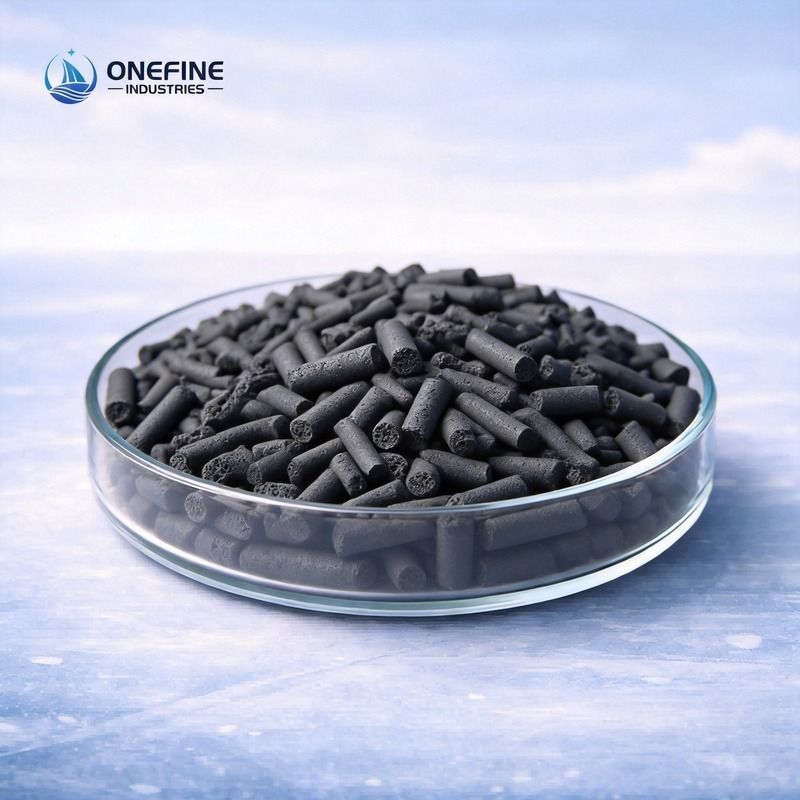
- Gray strip extrudates with Φ(4±0.5) mm diameter
- Bulk density: 1.25±0.15 kg/L
- Radial crush strength: ≥60 N/cm
- High surface area for maximum active site exposure
Key Advantages
One-Step Deep Desulfurization: Traditional deep desulfurization requires two separate reactor beds:
- COS hydrolysis catalyst (converts COS to H₂S)
- ZnO adsorbent (removes H₂S)
The ultra-precision catalyst combines both functions in a single bed, offering:
- Reduced catalyst volume and reactor size
- Lower pressure drop across the system
- Simplified process configuration and piping
- Reduced capital and operating costs
Broad Operating Range: The catalyst is effective across a wide range of conditions:
- Temperature: 5°C to 400°C — suitable for both low-temperature gas purification and high-temperature industrial processes
- Pressure: Ambient to 10.0 MPa — compatible with atmospheric and high-pressure systems
- Space velocity: Up to 6000 h⁻¹ — enables compact reactor designs
Multi-Species Removal: In addition to H₂S and COS, the catalyst can also remove trace amounts of mercaptans (RSH), providing comprehensive sulfur removal in a single purification step.
Operating Conditions
Typical Application Conditions:
- Temperature: 5–400°C (optimal performance at 200–350°C for COS hydrolysis)
- Pressure: Ambient–10.0 MPa
- Gas space velocity: 1000–6000 h⁻¹
- Liquid space velocity: 0.5–5.0 h⁻¹ (for liquid hydrocarbon applications)
Feed Requirements:
- Feed oxygen content should be < 0.5% to prevent oxidation of active components
- For feeds with high organic sulfur content, a pre-hydration step may be beneficial to provide water for COS hydrolysis
Performance:
- Outlet total sulfur (H₂S + COS): < 10 ppb
- Breakthrough sulfur capacity: ≥ 20 wt.% (at 220°C)
Applications in Detail
Synthesis Gas Purification: Methanol synthesis catalysts and ammonia synthesis catalysts are extremely sensitive to sulfur poisoning. Even trace levels of H₂S and COS (above 10 ppb) can cause rapid deactivation. The ultra-precision desulfurization catalyst serves as the final guard bed, reducing total sulfur to < 10 ppb and extending synthesis catalyst life to 5–6 years.
Natural Gas Treatment: For natural gas meeting pipeline specifications, the catalyst provides final polishing after conventional amine scrubbing or iron oxide desulfurization, ensuring total sulfur < 10 ppb and preventing corrosion in downstream pipelines and equipment.
Refinery Applications: In refineries, the catalyst is used for:
- Final purification of fuel gas to meet environmental emission standards
- Protection of precious metal catalysts in catalytic reforming units
- Desulfurization of LPG and light hydrocarbon streams before petrochemical processing
Comparison with Conventional Desulfurizers
Ultra-precision Catalyst vs. Conventional Zinc Oxide Desulfurization Catalyst :
- COS Removal: Ultra-precision catalyst achieves hydrolysis + adsorption; conventional ZnO only adsorbs COS with limited efficiency
- H₂S Removal: Both effective via adsorption mechanism
- Outlet Sulfur: Ultra-precision achieves < 10 ppb; conventional ZnO typically achieves 10–100 ppb
- Process Steps: Ultra-precision requires one reactor bed; conventional requires two separate beds (COS hydrolysis + ZnO adsorption)
- Operating Temperature: Ultra-precision operates at 5–400°C; conventional ZnO operates at 200–400°C
The ultra-precision catalyst's ability to hydrolyze COS eliminates the need for a separate COS hydrolysis reactor, saving space, reducing pressure drop, and simplifying operations. For applications where COS is not a significant concern and simpler process economics are preferred, conventional ZnO desulfurization may still be the more cost-effective choice — see our comparison guide for details. For buyers who prefer the traditional two-stage configuration — a dedicated hydrolysis step followed by a separate H₂S scavenger, typically offering greater sulfur capacity and easier individual bed replacement — our COS Hydrolysis Catalyst covers that narrower hydrolysis-only role.
Regeneration & Service Life
The catalyst operates on an adsorption mechanism — H₂S reacts with ZnO to form ZnS, which is stable and irreversible under normal operating conditions. When sulfur breakthrough occurs (outlet sulfur exceeds specification), the catalyst must be replaced.
Service Life Factors:
- Feed sulfur content (higher inlet sulfur = shorter life)
- Operating temperature (higher temperature = higher sulfur capacity)
- Space velocity (higher velocity = shorter contact time)
- Typical service life: 1–3 years depending on feed conditions
Disposal: Spent catalyst contains zinc sulfide (ZnS) and should be disposed of or regenerated by specialized metal recovery companies. Zinc can be recovered and reused.
Why Choose Our Ultra-precision Desulfurization Catalyst?
1. Bifunctional Efficiency
Combines COS hydrolysis and H₂S adsorption in one reactor, eliminating the need for separate beds and reducing your total catalyst investment.
2. Ultra-Low Sulfur Outlet
Achieves total sulfur < 10 ppb, protecting your most sensitive downstream catalysts and extending their service life.
3. Wide Operating Flexibility
Effective from 5°C to 400°C and pressures up to 10.0 MPa, compatible with diverse process conditions across chemical, petrochemical, and refining applications.
4. High Activity & Compact Design
Fast reaction kinetics allow operation at high space velocities (up to 6000 h⁻¹), enabling smaller reactors and lower catalyst volumes.
5. Multi-Species Capability
Removes H₂S, COS, and trace RSH in a single bed, providing comprehensive sulfur removal without additional equipment.
6. Proven ZnO-Al₂O₃ Technology
Based on decades of industrial experience with zinc oxide desulfurization, enhanced with advanced promoters and optimized support structure.
7. Customizable Supply
We can adjust formulation, particle size, and packaging to match your specific process requirements and reactor configurations.
Packaging & Shipping
We offer flexible packaging and shipping options to suit your project scale and logistics requirements.
Standard Packaging:
- 25 kg drums (moisture-proof, suitable for trial orders and small batches)
- 150 kg steel drums (standard bulk packaging for industrial orders)
- 500 kg super sacks (most popular for industrial bulk orders)
- 1000 kg jumbo bags (for large-scale projects)
- Custom packaging available on request
Minimum Order Quantity (MOQ):
- 1 ton (entry-level orders accepted — perfect for first-time customers)
- 5+ tons (standard bulk orders)
- Container-level supply for long-term partnerships
Container Loading Capacity:
- 20'GP container: 18-20 tons (palletized)
- 40'GP container: 22-24 tons (palletized)
- 40'HQ container: 24-26 tons
Loading Ports: We ship from major Chinese ports based on your requirements: Shanghai, Qingdao, Tianjin, Ningbo, and Shenzhen.
Lead Time:
- Stock orders: 7-15 days from payment confirmation
- Made-to-order: 20-30 days
Shipping Terms: FOB / CIF / CFR / EXW — flexible based on your destination and preferences.
Handling Note: Catalyst is packed in sealed steel drums or lined fiber drums with inner plastic liner to prevent moisture absorption and contamination during transport and storage. Store in a cool, dry, well-ventilated area, protected from moisture and acidic atmospheres. Shelf life exceeds 3 years when stored properly in original sealed packaging. Use appropriate PPE when handling — catalyst dust may cause respiratory irritation.
Documents & Certificates
We provide complete documentation for every order:
📄 Technical Data Sheet (TDS) — Confirmed with you during product selection, ensuring exact specifications match your application requirements.
📄 Safety Data Sheet (SDS) — Provided before shipment, meeting all international transportation and handling standards.
📄 Certificate of Analysis (COA) — Issued for each production batch, delivered with your shipment for full quality traceability.
Additional documents available on request: Certificate of Origin (COO), Packing List, Commercial Invoice, Third-party Inspection Report (SGS / BV), Form E (for Middle East destinations with applicable tariff benefits).
FAQ
Q1: What makes this catalyst "ultra-precision"? A: It achieves total sulfur (H₂S + COS) < 10 ppb in a single step, compared to conventional ZnO desulfurizers which typically achieve only 10–100 ppb.
Q2: What is the advantage of bifunctional design? A: It combines COS hydrolysis and H₂S adsorption in one reactor bed, eliminating the need for separate COS hydrolysis and ZnO adsorption reactors, saving space and reducing costs.
Q3: What sulfur species does this catalyst remove? A: It removes H₂S, COS (by hydrolysis to H₂S followed by adsorption), and trace amounts of mercaptans (RSH).
Q4: What is the operating temperature range? A: The catalyst is effective from 5°C to 400°C, with optimal COS hydrolysis performance at 200–350°C.
Q5: How long does the catalyst last? A: Service life depends on feed sulfur content and operating conditions, typically 1–3 years. When sulfur breakthrough occurs, the catalyst must be replaced.
Q6: Can this catalyst be regenerated? A: The adsorption reaction (ZnO + H₂S → ZnS + H₂O) is irreversible under normal conditions. Spent catalyst should be sent to specialized metal recovery companies for zinc reclamation.
Need a Custom Solution?
For bulk pricing and grade recommendation, please send your process gas sulfur content and operating conditions to us. Our technical team will get back to you within 24 hours with a tailored solution.
Technical Specifications
| Appearance | Gray strip extrudates |
| Diameter | Φ(4±0.5) mm |
| Bulk Density | 1.25 ± 0.15 kg/L |
| Radial Crush Strength (Mean) | ≥ 60 N/cm |
| Support | ZnO + Al₂O₃ with active promoters |
| Function | COS hydrolysis + H₂S adsorption (bifunctional) |
| Target Species | H₂S, COS, trace RSH |
| Operating Temperature | 5 – 400°C |
| Operating Pressure | Ambient – 10.0 MPa |
| Desulfurization Precision | Total sulfur < 10 ppb (H₂S + COS) |
Related Products
Zinc oxide desulfurization catalyst
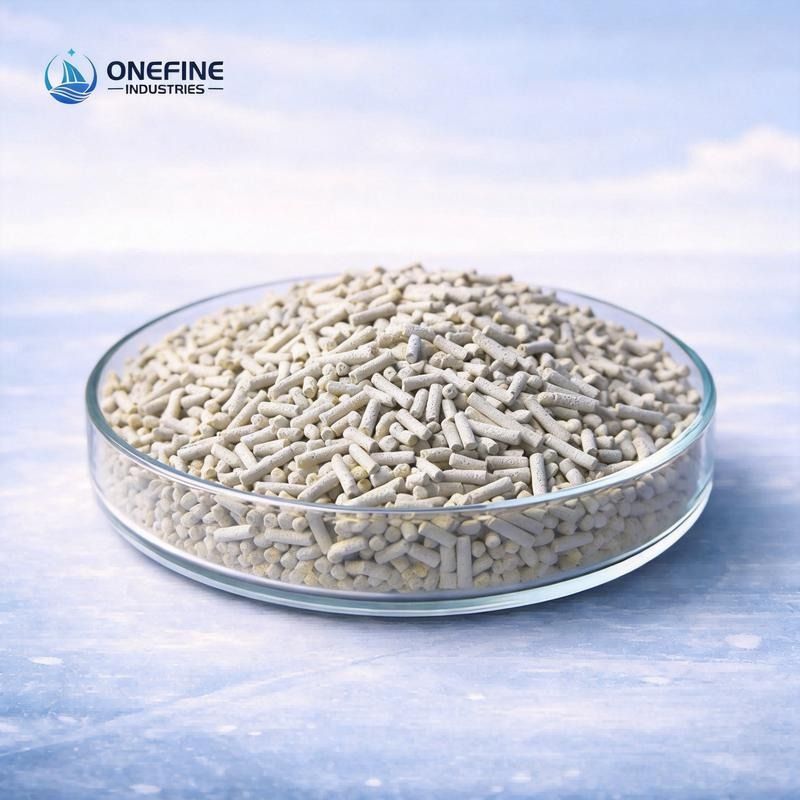
High-purity zinc oxide (ZnO) desulfurization catalyst for fine removal of H₂S from natural gas, synthesis gas, hydrogen, and hydrocarbon feeds. Achieves outlet sulfur levels below 0.1 ppm through irreversible chemisorption. High sulfur capacity, long service life, and strong resistance to steam.
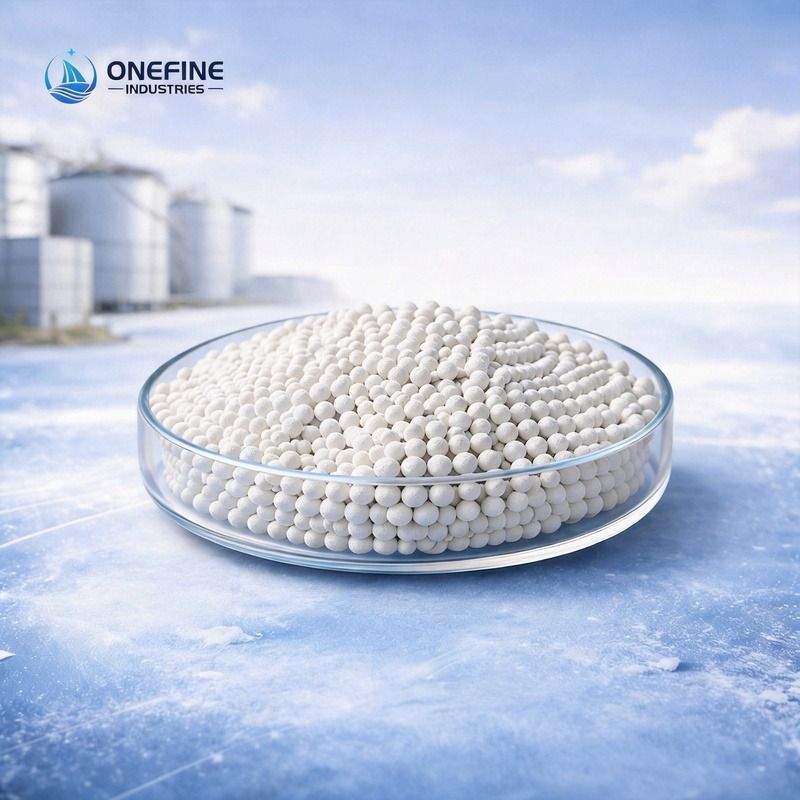
COS Hydrolysis Catalyst
High-efficiency γ-Al2O3 supported COS hydrolysis catalyst designed to convert carbonyl sulfide into easily removable H2S with ≥95% conversion efficiency across diverse hydrocarbon streams.