Ni-Mo-W hydrogenation catalyst
A trimetallic nickel-molybdenum-tungsten (Ni-Mo-W) hydrogenation catalyst engineered for ultra-deep hydrodesulfurization of challenging petroleum feeds. Combines the synergistic HDS activity of Mo-W mixed sulfide phases with Ni promoter for superior refractory sulfur removal. Widely used in diesel ULSD production, heavy gas oil upgrading, and severe hydrotreating service. Customizable appearance, particle size, and component loading.
Get QuoteKey Attributes
- Trimetallic Ni-Mo-W-S Active Phase – Unlike binary Ni-Mo-S or Co-Mo-S systems, the addition of tungsten creates a mixed (Mo,W)S₂ crystalline structure promoted by nickel (3–6 wt.%). This multi-site architecture provides complementary reaction pathways — Ni-Mo-S sites handle direct desulfurization (DDS) of less refractory sulfur species, while Ni-Mo-W-S sites dominate hydrogenation-mediated (HYD) removal of alkyl-dibenzothiophenes — broadening the effective HDS window and supporting higher activity for refractory compounds like dibenzothiophene compared to conventional Ni-Mo/Al₂O₃ systems.
- Flexible Metal Loading & Trial-Order Friendly – NiO (3–6 wt.%), MoO₃ (4–7 wt.%), and WO₃ (9–13 wt.%) content, along with particle appearance and size, can be adjusted to match your specific feedstock and reactor design. Combined with a 1-ton MOQ, this makes it practical to trial a tailored formulation before committing to container-level volumes.
- Enhanced Refractory Sulfur Removal – The Mo-W mixed sulfide phase is particularly effective against the most difficult sulfur compounds in heavy feeds — 4,6-dimethyldibenzothiophene (4,6-DMDBT), benzothiophenes with bulky alkyl substituents, and sulfur species embedded in polycyclic aromatic structures. The tungsten component extends the catalyst's deep-HDS capability beyond what Mo alone can achieve, supporting compliance with ultra-low sulfur diesel (ULSD <10 ppm) and jet fuel specifications from challenging feeds.
- Higher Bulk Density for Compact Bed Design – At 0.75 ± 0.10 kg/L, this catalyst has higher bulk density than standard Ni-Mo formulations. The denser packing allows more active metal per reactor volume, reducing bed height requirements and supporting revamp of existing reactors for higher throughput without vessel modification.
- Fine Particle Geometry (Φ2.0 mm) – The smaller Φ2.0 ± 0.5 mm extrudate diameter reduces intraparticle diffusion path length compared to larger pellets, improving active site accessibility for bulky sulfur molecules in heavy gas oils and vacuum residues. The trilobe/quadrilobe cross-section maximizes external surface area while maintaining adequate mechanical strength for industrial service.
- Wide Operating Envelope (160–450°C / 1.5–5.0 MPa) – Covers both light-feed sweetening at mild conditions and severe deep-HDS of heavy feeds at elevated severity. The broad temperature and pressure range allows a single catalyst SKU to serve multiple process units — from naphtha pretreatment to vacuum gas oil hydrotreating — simplifying inventory management for multi-unit refineries.
Applications
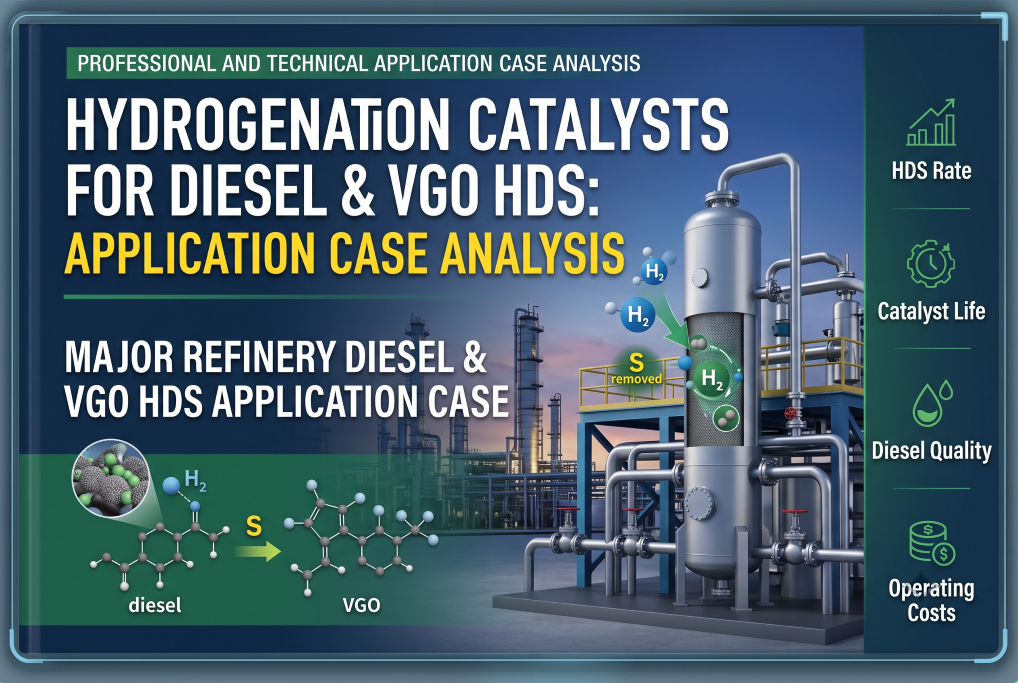
- Ultra-Low-Sulfur Diesel (ULSD) Production – The primary application. Ni-Mo-W catalysts support <10 ppm sulfur in diesel products from feeds containing high levels of refractory 4,6-dimethyldibenzothiophene (4,6-DMDBT). The trimetallic active phase provides the hydrogenation activity needed for the HYD desulfurization pathway. Supports compliance with IMO 2020, Euro VI, and China National VI specifications.
- Heavy Gas Oil & Vacuum Residue Hydrotreating – Processes high-boiling feeds containing polycyclic aromatic sulfur compounds, elevated nitrogen levels, and metal contaminants. The Mo-W-S active phase shows greater resistance to aromatic poisoning compared to Mo-S alone, helping maintain HDS activity in feeds where conventional catalysts deactivate more rapidly.
- FCC Feedstock Pretreatment – Hydrotreats heavy catalytic cracking feedstocks to remove sulfur, nitrogen, and Conradson carbon precursors before the FCC unit. Sulfur removal in FCC feed reduces SOₓ emissions from the regenerator and improves gasoline yield.
- Coker Distillate Upgrading – Delayed coker naphtha and gas oil contain elevated levels of olefins, dienes, nitrogen, and sulfur. The trimetallic catalyst simultaneously saturates olefins, removes sulfur, and cracks nitrogen compounds — producing a stable, specification-ready stream for downstream blending or further processing.
- Bio-Oil & Renewable Feedstock Hydrotreating – Emerging application for co-processing pyrolysis bio-oils, vegetable oils, and animal fats in conventional hydrotreaters. The Ni-Mo-W system handles both sulfur removal and oxygenate hydrogenation, supporting refinery integration of renewable feedstocks.
- Residue Desulfurization – For atmospheric and vacuum residue feeds with elevated sulfur and metal content. Ni-Mo-W catalysts provide the hydrogenation activity needed to help break down asphaltenic sulfur structures that resist conventional HDS catalysts, supporting production of low-sulfur fuel oil and feed preparation for delayed coking or residue FCC.
- Vacuum Gas Oil (VGO) Pretreatment for Hydrocracking – Ahead of downstream hydrocracking units, Ni-Mo-W catalysts reduce sulfur, nitrogen, and polycyclic aromatics in VGO feeds, helping protect hydrocracking catalysts from poisoning and extending their service life.
- Naphtha Hydrotreating – For lighter feeds requiring sulfur and olefin removal before catalytic reforming, the wide operating envelope of Ni-Mo-W allows the same catalyst platform to be used at milder severity alongside heavier-feed applications.
Product Description
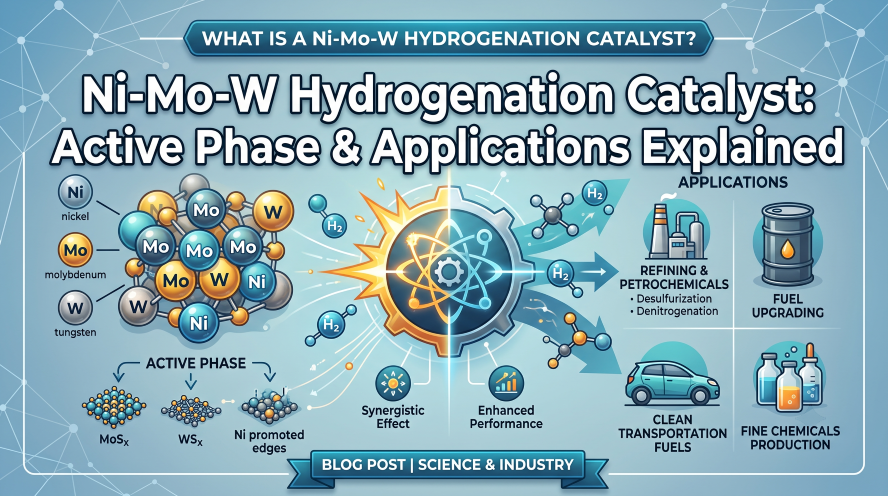
What Is a Ni-Mo-W Hydrogenation Catalyst?
Key Takeaways:
- Trimetallic Active Phase: Utilizes a mixed (Mo,W)S₂ crystalline structure promoted by nickel, providing superior hydrogenation-mediated (HYD) desulfurization.
- Refractory Sulfur Removal: Excels at treating heavy feeds containing difficult sulfur compounds like 4,6-dimethyldibenzothiophene (4,6-DMDBT) to meet ULSD specifications.
- Heavy Feed Application: Highly effective for heavy gas oil, vacuum residue, and FCC feedstock pretreatment due to enhanced resistance against aromatic poisoning.
- Dense Bed Design: Higher bulk density (0.75 ± 0.10 kg/L) allows more active metal per reactor volume, ideal for revamping existing reactors for higher throughput.
A nickel-molybdenum-tungsten (Ni-Mo-W) hydrogenation catalyst is a trimetallic hydrotreating catalyst system designed for demanding desulfurization applications in petroleum refining. It consists of nickel oxide (NiO), molybdenum trioxide (MoO₃), and tungsten trioxide (WO₃) impregnated on a high-surface-area γ-alumina (γ-Al₂O₃) support. Upon presulfiding, the active metals are converted to a mixed sulfide phase — (Mo,W)S₂ crystallites promoted by nickel sulfide (Ni₃S₂) — forming the catalytically active Ni-Mo-W-S multi-site architecture.
The inclusion of tungsten distinguishes this catalyst from standard Ni-Mo or Co-Mo binary systems. In the mixed (Mo,W)S₂ crystalline structure, tungsten atoms substitute into the MoS₂ lattice, altering the electronic structure of the active phase toward more metallic behavior. The addition of Ni further enhances this metallic character, creating a highly active sulfide phase with strong hydrogenation capability.
Compared with binary Ni-Mo/Al₂O₃ systems, trimetallic Ni-Mo-W catalysts generally demonstrate higher hydrodesulfurization activity for refractory sulfur compounds such as dibenzothiophene, attributed to a larger fraction of active metals incorporated into the trimetallic Ni-Mo(W)-S phase compared to the sites present in binary systems.
The catalyst is available in trilobe or quadrilobe extrudate geometries at Φ2.0 ± 0.5 mm diameter, suited for deep-bed hydrotreating of heavy feeds where intraparticle diffusion of bulky sulfur molecules is rate-limiting. For a broader explainer on how this active phase works and where it fits versus binary systems, see our Ni-Mo-W catalyst guide.
Active Phase Chemistry: Why Trimetallic Outperforms Binary
The catalytic advantage of Ni-Mo-W over binary systems stems from the electronic and structural changes introduced by tungsten:
Oxide form (as shipped):
- Promoters: NiO (3–6 wt.%)
- Active metals: MoO₃ (4–7 wt.%) + WO₃ (9–13 wt.%)
- Support: γ-Al₂O₃ (balance)
- The oxide form is stable for storage and transport
Sulfide form (after presulfiding):
- Active phase: Mixed (Mo,W)S₂ crystallites promoted by Ni₃S₂
- The Ni-Mo-W-S structure creates multiple types of active sites operating in parallel
- Tungsten incorporation increases the metallic character of the sulfide lattice, supporting hydrogen activation and transfer to sulfur-containing molecules
Why Ni-Mo-W (vs. Ni-Mo, Co-Mo, or Ni-W alone)?
- Ni-Mo-W generally provides higher HDS activity than Ni-Mo Hydrogenation Catalyst for refractory sulfur compounds (dibenzothiophenes, alkyl-DBTs), attributed to the metallic character enhancement from W
- Tends to show stronger hydrogenation activity compared to Co-Mo Hydrogenation Catalyst, as the trimetallic Ni-Mo-W-S system creates more active edge sites than binary systems alone
- More economical than pure Ni-W for most refinery applications while approaching Ni-W-level aromatic saturation activity
- The MoO₃/(WO₃ + MoO₃) ratio can be tuned: lower ratios (more W) favor severe HDS of heavy feeds; higher ratios (more Mo) favor general-purpose hydrotreating
A note on tungsten content and HDS performance: Within trimetallic Ni-Mo-W systems, increasing the tungsten proportion relative to molybdenum is generally associated with improved deep-HDS effectiveness on high-sulfur, refractory feeds, particularly at higher NiO loadings — though the optimal ratio depends on specific feed characteristics and should be confirmed against your feedstock assay.
Reaction Profile
Ni-Mo-W catalysts drive four reaction families relevant to deep upgrading of heavy and refractory petroleum feeds:
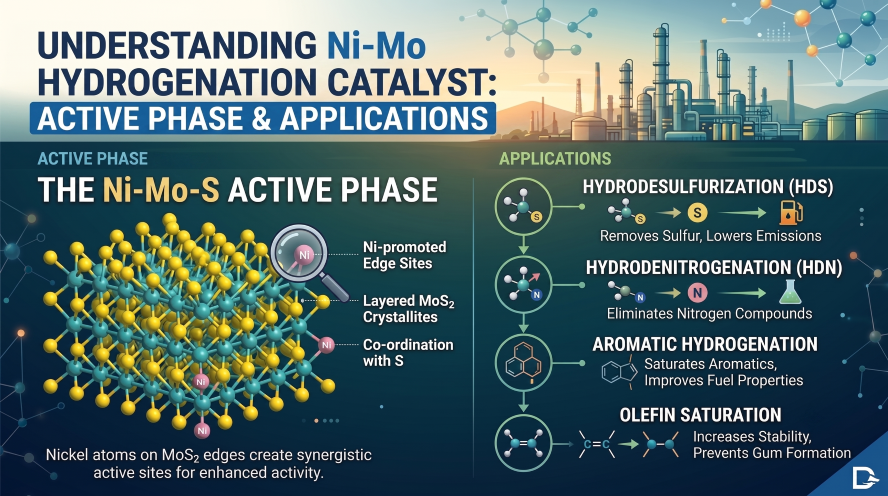
1. Deep Hydrodesulfurization via HYD Pathway The most important differentiator. Refractory sulfur compounds like 4,6-dimethyldibenzothiophene (4,6-DMDBT) are difficult to desulfurize through the direct desulfurization (DDS) pathway because steric hindrance from methyl groups blocks the sulfur atom from the active site. The Ni-Mo-W-S phase is well-suited to the alternative hydrogenation (HYD) pathway: first hydrogenating one aromatic ring in the dibenzothiophene structure (reducing steric hindrance), then cleaving the C–S bond. The enhanced metallic character of the Mo-W-S lattice provides the hydrogenation activity this pathway requires.
2. Hydrodenitrogenation (HDN) Nitrogen compounds (pyridines, quinolines, indoles, carbazoles) require aromatic ring hydrogenation before C–N bond cleavage can occur — a more demanding reaction than HDS. The Ni-Mo-W system's hydrogenation activity, driven by the metallic sulfide phase, helps saturate nitrogen-containing aromatic rings, enabling NH₃ release. This matters for feeds where residual nitrogen would poison downstream hydrocracking, catalytic reforming, or FCC catalysts.
3. Aromatic Saturation Polyaromatic compounds in heavy feeds (naphthalenes, phenanthrenes, pyrenes) are partially saturated by the Ni-Mo-W catalyst, improving product cetane number (diesel), reducing gum formation tendency, and enhancing stability of finished fuels.
4. Olefin Hydrogenation & Feed Stabilization In coker distillates and bio-oil feeds, olefins and conjugated dienes are hydrogenated to stable saturated hydrocarbons. This helps prevent gum formation during storage, reduces reactivity that could cause fouling in downstream units, and prepares the feed for blending or further processing.
Process Integration
Ni-Mo-W hydrogenation catalysts are deployed in fixed-bed downflow reactors within refinery hydrotreating or hydroprocessing units:
- Feed Preparation: Raw feedstock (diesel, heavy gas oil, vacuum residue) is blended with hydrogen-rich recycle gas. The H₂/oil ratio is optimized based on feed sulfur content, nitrogen level, and aromaticity — severe feeds (VGO, residue) require higher hydrogen supply.
- Catalytic Reaction: The mixture passes through the Ni-Mo-W catalyst bed at 250–420°C and 2.0–5.0 MPa. Sulfur, nitrogen, olefin, and aromatic reactions proceed simultaneously across the multi-site Ni-Mo-W-S active phase, producing H₂S, NH₃, and saturated hydrocarbons.
- Separation & Stabilization: Reactor effluent is cooled and separated into gas (H₂S, NH₃, excess H₂) and liquid (hydrotreated product) streams. For liquid hydrotreating, the product is sent to a stripper to remove dissolved H₂S and NH₃, with recycle gas recovered after amine scrubbing. For gas-phase sweetening applications, the generated H₂S is instead captured downstream by a Zinc Oxide guard bed【★内链5:Internal Link → Zinc Oxide Desulfurization Catalyst 产品页,真实上下游工艺关联,决策22例外,本次回补】.
- Guard Bed Configuration: For heavy feeds with high metal content (Ni, V from asphaltenes), a guard bed of low-activity catalyst is installed upstream of the main Ni-Mo-W bed to trap metals and particulates, protecting the trimetallic catalyst from premature poisoning.
Presulfiding for Ni-Mo-W Systems
Ni-Mo-W catalysts require conversion from oxide form to the active multi-metal sulfide phase before feed introduction. The presulfiding protocol has specific requirements:
- Sulfur uptake: Due to the combined MoO₃ (4–7 wt.%) and WO₃ (9–13 wt.%) loading, Ni-Mo-W catalysts typically absorb more sulfur by weight at full sulfidation than binary Ni-Mo, because tungsten also requires sulfidation to WS₂.
- Temperature profile: Presulfiding begins at ~160°C and ramps to 320–360°C over 12–24 hours. The ramp rate must be controlled to manage the exothermic heat of sulfidation from three metal oxides (NiO, MoO₃, WO₃) converting simultaneously.
- Sulfiding agent: DMDS (dimethyl disulfide) or CS₂ is injected into the H₂ stream. H₂S breakthrough in the reactor effluent confirms completion of sulfidation.
- Incomplete sulfidation risk: If WO₃ is not fully converted to WS₂, the tungsten remains as inactive oxide, reducing the catalyst's deep-HDS capability. Monitoring H₂S concentration in the effluent throughout the sulfiding cycle is essential.
Typical Operating Environments
Ni-Mo-W catalysts are primarily deployed in medium-to-severe hydrotreating applications where binary catalysts may not achieve target specifications:
- ULSD Production from Heavy Diesel: Operating at 320–400°C and 3.0–5.0 MPa, targeting <10 ppm sulfur. The trimetallic catalyst's HYD pathway capability helps handle 4,6-DMDBT concentrations that would require impractically low space velocities with binary Ni-Mo.
- Vacuum Gas Oil (VGO) Hydrotreating: Pretreatment before hydrocracking at 350–420°C and 4.0–8.0 MPa. VGO feeds contain elevated nitrogen and polycyclic aromatics. The Ni-Mo-W catalyst's combined HDS/HDN/aromatic saturation capability helps protect downstream hydrocracking catalysts from poisoning.
- Residue & Heavy Feed Processing: For atmospheric/vacuum residue feeds with elevated sulfur content. Operating at the upper end of the temperature range (380–440°C) with guard bed protection. The Mo-W-S active phase shows better resistance to aromatic and asphaltene poisoning than Mo-S alone.
- Bio-Oil Co-Processing: When co-processing pyrolysis bio-oils with petroleum feeds, the Ni-Mo-W catalyst simultaneously handles sulfur removal and oxygenate hydrogenation, managing the diverse reaction types required for bio-feed conversion.
Deactivation & Management
Ni-Mo-W catalysts share common hydrotreating deactivation mechanisms (coke deposition, metal poisoning, thermal sintering) but have additional considerations specific to the trimetallic system:
- Coke Deposition: Heavy aromatic feeds (VGO, residue) deposit polyaromatic coke on the catalyst surface, progressively blocking active sites. Temperature compensation (gradually increasing reactor inlet temperature) maintains product specifications until end-of-run. The higher bulk density of Ni-Mo-W provides more active metal per bed volume, helping extend run length before coke-induced deactivation becomes limiting.
- Metal Poisoning (Ni, V from Asphaltenes): In residue and heavy feed applications, nickel and vanadium from asphaltenic structures deposit irreversibly on the catalyst, blocking pores and active sites. A guard bed configuration is strongly recommended for feeds with elevated metal content.
- Nitrogen Compound Adsorption: High-nitrogen feeds cause temporary activity loss through competitive adsorption of basic nitrogen compounds (pyridines, quinolines) on acidic support sites. This is generally reversible — increasing reaction temperature can temporarily restore activity.
Maximizing Ni-Mo-W catalyst service life:
- Monitor reactor bed temperature profiles — gradual temperature increase (temperature drift) indicates activity loss requiring compensation
- Track product sulfur and nitrogen breakthrough — rising levels signal approaching end-of-run
- Install feed filtration (>25 μm) to remove particulate matter that causes physical fouling
- Avoid water condensation in the reactor (keep dew point below inlet temperature)
- For residue feeds: use graded loading with guard bed to protect the trimetallic catalyst from metal deposition
- Schedule activity-based regeneration rather than fixed-interval turnaround
Regeneration & Economics
Ni-Mo-W catalysts can generally be regenerated multiple times through controlled oxidative coke burn-off followed by resulfidation:
- Regeneration temperature limit: Do not exceed 500°C during oxidative regeneration — temperatures above this threshold risk sintering of the mixed (Mo,W)S₂ phase and irreversible loss of the trimetallic active structure.
- Burn-off protocol: Controlled air/nitrogen mixture with gradual temperature ramp to avoid hot spots that could damage the catalyst. CO and CO₂ in the regeneration off-gas indicate coke combustion completion.
- Resulfidation after regeneration: The regenerated oxide-form catalyst must be fully resulfided before returning to service, following the same presulfiding protocol as initial commissioning.
Economic considerations:
- Higher initial cost per liter than binary Ni-Mo or Co-Mo systems (due to tungsten content and multi-component formulation) — see our What is a Co-Mo Hydrogenation Catalyst? for a fuller cost/performance comparison
- Longer effective run length for severe-feed applications — the trimetallic catalyst can maintain target specifications at higher space velocities or with heavier feeds that would require binary catalyst replacement
- Better activity retention through regeneration cycles due to the thermally stable γ-Al₂O₃ support and the robust multi-metal sulfide phase
- Lower total cost of ownership for ULSD and heavy-feed applications where binary catalysts would require larger catalyst volumes, lower space velocities, or more frequent replacement
Packaging & Shipping
We offer flexible packaging and shipping options to suit your project scale and logistics requirements.
Standard Packaging:
- 25 kg drums (moisture-proof, suitable for trial orders and small batches)
- 150 kg steel drums (standard bulk packaging for industrial orders)
- 500 kg super sacks (most popular for industrial bulk orders)
- 1000 kg jumbo bags (for large-scale projects)
- Custom packaging available on request
Minimum Order Quantity (MOQ):
- 1 ton (entry-level orders accepted — perfect for first-time customers)
- 5+ tons (standard bulk orders)
- Container-level supply for long-term partnerships
Container Loading Capacity:
- 20'GP container: 18-20 tons (palletized)
- 40'GP container: 22-24 tons (palletized)
- 40'HQ container: 24-26 tons
Loading Ports: We ship from major Chinese ports based on your requirements: Shanghai, Qingdao, Tianjin, Ningbo, and Shenzhen.
Lead Time:
- Stock orders: 7-15 days from payment confirmation
- Made-to-order: 20-30 days
Shipping Terms: FOB / CIF / CFR / EXW — flexible based on your destination and preferences.
Ni-Mo-W catalysts are shipped in oxide form, sealed in moisture-barrier packaging (steel drums with polyethylene liners). The γ-Al₂O₃ support is moisture-stable but should be protected from prolonged humidity exposure. Shelf life in original sealed packaging exceeds 5 years. During reactor loading, trilobe/quadrilobe extrudates require careful bed distribution to avoid channeling — mechanical loading with vibration-assisted leveling is recommended over sock loading for multi-lobe shapes.
Documents & Certificates
We provide complete documentation for every order:
📄 Technical Data Sheet (TDS) — Confirmed with you during product selection, ensuring exact specifications match your application requirements.
📄 Safety Data Sheet (SDS) — Provided before shipment, meeting all international transportation and handling standards.
📄 Certificate of Analysis (COA) — Issued for each production batch, delivered with your shipment for full quality traceability.
Additional documents available on request: Certificate of Origin (COO), Packing List, Commercial Invoice, Third-party Inspection Report (SGS / BV), Form E (for Middle East destinations with applicable tariff benefits).
FAQ
Q: What is the difference between Ni-Mo-W and standard Ni-Mo hydrogenation catalyst? A: Ni-Mo-W adds tungsten to the active phase, forming a mixed (Mo,W)S₂ sulfide structure. This generally supports higher hydrodesulfurization activity for refractory sulfur compounds and heavier feeds compared to binary Ni-Mo, at a higher cost per liter due to the additional tungsten content.
Q: What feed sulfur specifications can this catalyst help achieve? A: Ni-Mo-W catalysts are commonly used to support ultra-low-sulfur diesel (ULSD) production at <10 ppm sulfur, along with compliance targets such as IMO 2020, Euro VI, and China National VI, depending on feed characteristics and unit operating conditions.
Q: How many times can this catalyst be regenerated? A: Ni-Mo-W catalysts can generally be regenerated multiple times through controlled oxidative burn-off and resulfidation, provided regeneration temperature stays below 500°C to avoid sintering of the trimetallic active phase.
Q: Can particle size and metal loading be customized? A: Yes. Appearance, particle size, and NiO/MoO₃/WO₃ content can be adjusted according to your feedstock and reactor requirements — please share your feed assay and operating conditions for a tailored recommendation.
Need a Custom Solution?
For bulk pricing and grade recommendation, please send your feedstock composition & reactor conditions to us. Our technical team will get back to you within 24 hours with a tailored solution.
Technical Specifications
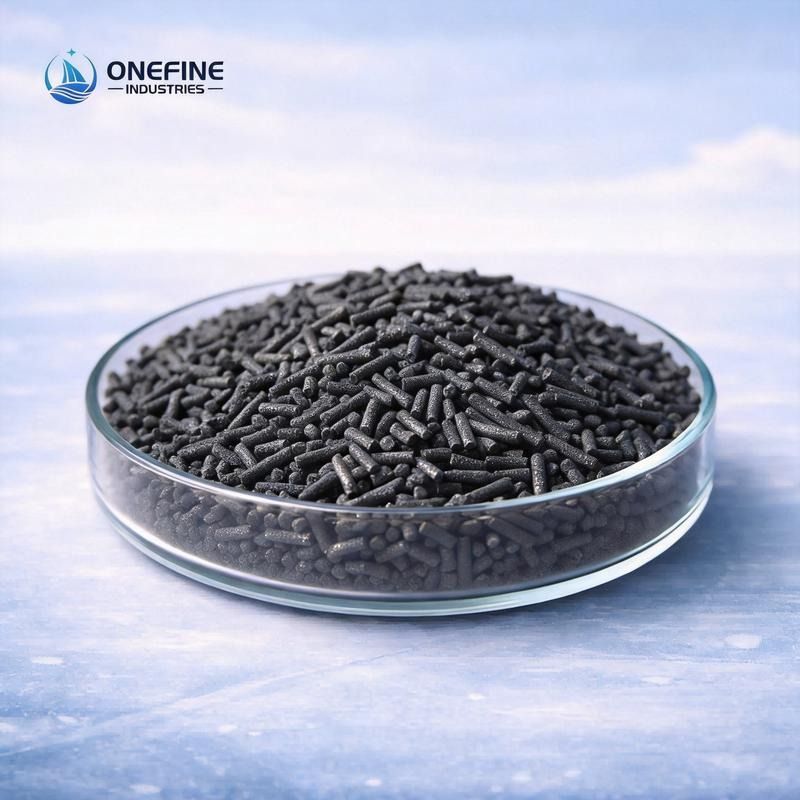
| Appearance | Trilobe or quadrilobe extrudates (customizable) |
| Particle Size | Φ2.0 ± 0.5 mm (customizable upon request) |
| Bulk Density | 0.75 ± 0.10 kg/L |
| NiO Content | 3–6 wt.% (customizable) |
| MoO₃ Content | 4–7 wt.% (customizable) |
| WO₃ Content | 9–13 wt.% (customizable) |
| Al₂O₃ Content | Balance (γ-Al₂O₃ support) |
| Operating Temperature | 160–450°C |
| Operating Pressure | 1.5–5.0 MPa |
| Target Reactions | Hydrodesulfurization (HDS), hydrodenitrogenation (HDN), aromatic saturation, olefin hydrogenation |
| Applicable Feeds | Diesel, heavy gas oil, vacuum residue, FCC feedstock, coker distillate, bio-oils |
| Form | Extrudate (trilobe / quadrilobe – customer's choice) |
Related Products
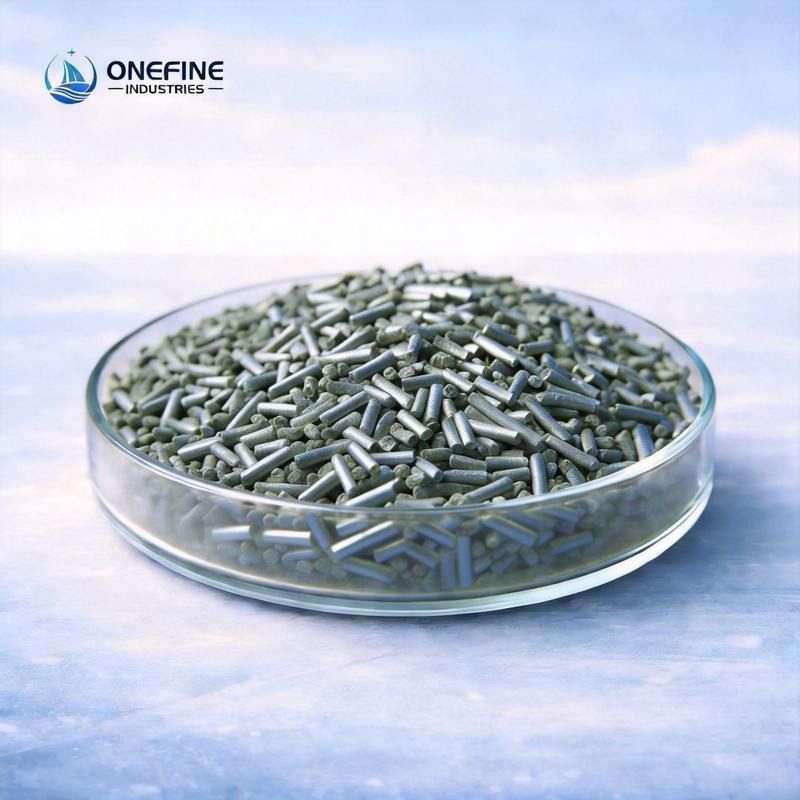
Ni-Mo Hydrogenation Catalyst
A high-performance nickel-molybdenum (Ni-Mo) hydrogenation catalyst designed for hydrodesulfurization (HDS) and hydrodenitrogenation (HDN) of medium to heavy petroleum fractions. Features superior hydrogenation activity, excellent stability, and long service life. Widely used in diesel hydrotreating, gas oil upgrading, and refractory sulfur removal. MOQ from 1 ton. Customizable appearance, particle size, and active component loading.
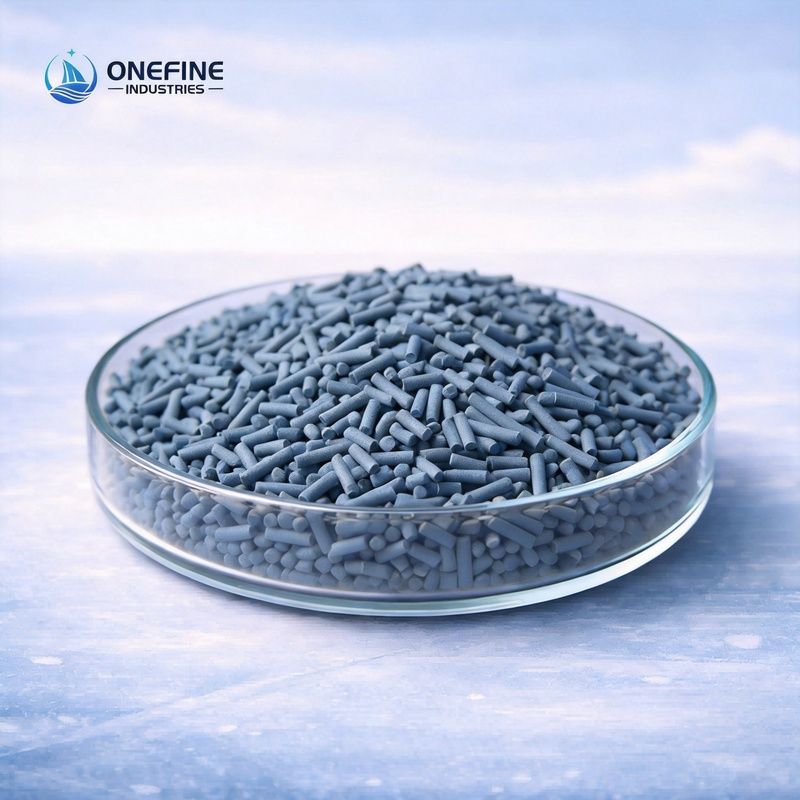
Co-Mo Hydrogenation Catalyst
A high-performance cobalt-molybdenum (Co-Mo) hydrogenation catalyst designed for hydrodesulfurization (HDS) and hydrotreating of petroleum fractions and synthesis gas. Features low light-off temperature, high mechanical strength, and excellent stability. Widely used in ammonia plant feed purification, naphtha pretreatment, refinery reforming feed desulfurization, and natural gas sweetening. Available with MOQ from 1 ton, customizable appearance, particle size, and active component loading.
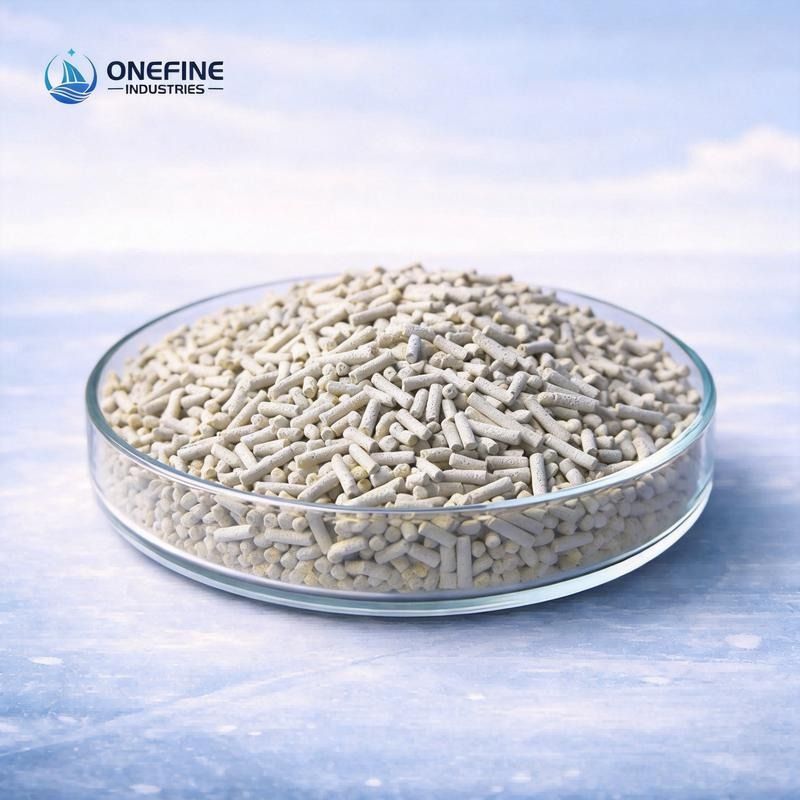
Zinc oxide desulfurization catalyst
High-purity zinc oxide (ZnO) desulfurization catalyst for fine removal of H₂S from natural gas, synthesis gas, hydrogen, and hydrocarbon feeds. Achieves outlet sulfur levels below 0.1 ppm through irreversible chemisorption. High sulfur capacity, long service life, and strong resistance to steam.