What is a Co-Mo Hydrogenation Catalyst? Active Phase & Applications Explained
If you're sourcing a catalyst for hydrodesulfurization (HDS), you've likely come across "Co-Mo hydrogenation catalyst" as one of the standard options — alongside Ni-Mo and Ni-W systems. But what actually makes Co-Mo effective, and when is it the right choice over other hydrotreating catalysts?
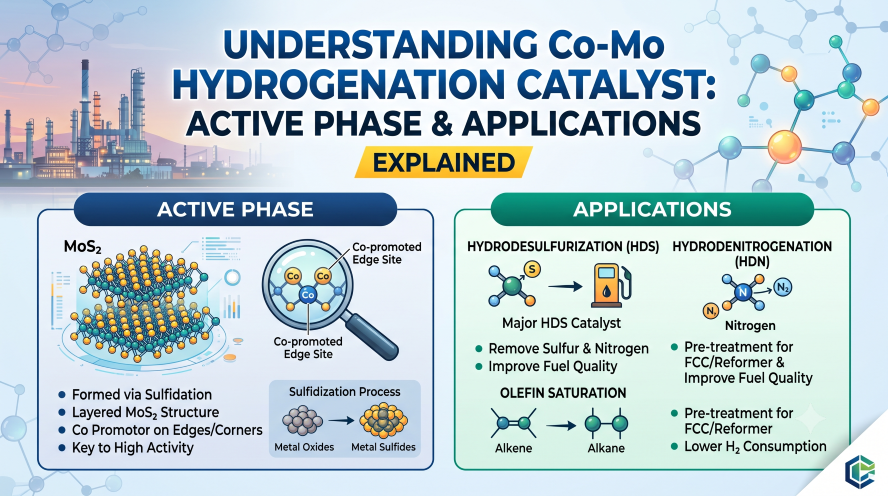
A Co-Mo hydrogenation catalyst combines cobalt oxide and molybdenum trioxide on a γ-alumina support. Once activated through presulfiding, it becomes highly effective at removing sulfur, nitrogen, and olefins from petroleum fractions and gas streams. This guide breaks down how it works, what makes it different from other catalyst systems, and where it's typically applied.
What Is a Co-Mo Hydrogenation Catalyst?
Key Takeaways:
- The Co-Mo-S Active Phase: Performance relies on converting stable oxides into molybdenum disulfide (MoS₂) promoted by cobalt sulfide during presulfiding.
- Co-Mo vs. Ni-Mo: Co-Mo is preferred for lighter feeds prioritizing HDS and selective olefin saturation with lower hydrogen consumption.
- Mandatory Activation: Shipped in stable oxide form; requires strictly controlled presulfiding (gas or liquid phase) to achieve catalytic activity.
- Broad Refining Applications: Essential for naphtha hydrotreating, ULSD production, and natural gas sweetening upstream of ZnO guard beds.
A cobalt-molybdenum (Co-Mo) hydrogenation catalyst is a bimetallic catalyst system built on a high-surface-area γ-Al₂O₃ support, impregnated with cobalt oxide (CoO, typically 2-5 wt.%) and molybdenum trioxide (MoO₃, typically 12-16 wt.%). In its as-shipped form, the catalyst is stable oxide — it only becomes catalytically active after a presulfiding step converts the metal oxides into their sulfide phases.
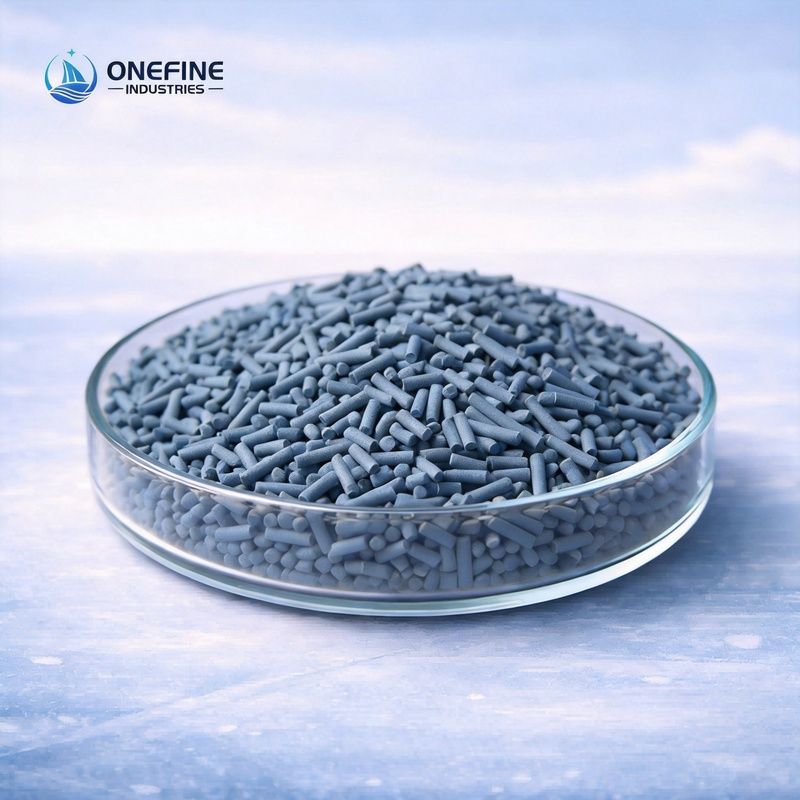
The catalyst is manufactured as extrudates in several shapes — cylindrical, trilobe, or quadrilobe — chosen based on the reactor design and desired balance between mechanical strength and mass transfer efficiency.
Why the Co-Mo-S Active Phase Matters
The real catalytic action happens after presulfiding, when CoO and MoO₃ convert to molybdenum disulfide (MoS₂) promoted by cobalt sulfide (Co₉S₈). This combined structure — often called the "Co-Mo-S phase" — is what actually drives hydrodesulfurization and hydrodenitrogenation reactions.
Cobalt's role here is as a promoter: it increases the number of catalytically active edge sites on the MoS₂ crystallites, making the catalyst far more effective than molybdenum sulfide alone. This is why presulfiding isn't optional — a catalyst that hasn't been properly converted to its sulfide form will show significantly reduced activity, regardless of how well it was manufactured.
Co-Mo vs. Ni-Mo: Which One Do You Need?
Buyers often ask whether they need Co-Mo or Ni-Mo for their hydrotreating unit. The general pattern:
- Co-Mo is typically preferred for lighter feeds — naphtha, kerosene, diesel, and gas streams — where HDS is the primary goal and olefin saturation needs to stay selective (avoiding excessive hydrogenation of valuable olefins).
- Ni-Mo tends to be chosen when higher hydrogenation activity is needed, particularly for hydrodenitrogenation (HDN) of heavier feeds, or where feed sulfur and nitrogen levels are more severe.
Co-Mo systems generally consume less hydrogen for equivalent sulfur removal on light feeds, which can matter for refineries managing hydrogen balance across multiple units.
Where Co-Mo Catalysts Are Used
Common applications include:
- Naphtha hydrotreating ahead of catalytic reforming, protecting platinum reforming catalysts from sulfur and nitrogen poisoning
- Diesel HDS for producing ultra-low-sulfur diesel (ULSD) meeting IMO 2020 / Euro VI standards
- Ammonia plant feed purification, converting organic sulfur to H₂S before steam reforming
- Natural gas and refinery gas sweetening, converting mercaptans and COS ahead of a ZnO guard bed
- Synthesis gas cleaning for methanol production, protecting downstream Cu/ZnO catalysts
For full specifications, operating conditions, and presulfiding procedures, see our Co-Mo Hydrogenation Catalyst product page.
FAQ
Q1: Is Co-Mo catalyst shipped ready to use? No — it ships in oxide form and must go through presulfiding (typically gas-phase or liquid-phase, using DMDS or CS₂) to convert it to its active sulfide state before introducing feed.
Q2: How long does a Co-Mo catalyst typically last? Most Co-Mo catalysts run 3-5 years per cycle before regeneration is needed, with total useful life often reaching 6-15 years across multiple regeneration cycles, depending on feed severity.
Q3: Can Co-Mo catalyst handle natural gas as well as liquid fuels? Yes. Co-Mo systems are effective on both liquid feeds (naphtha, diesel, kerosene) and gaseous feeds (natural gas, refinery gas, synthesis gas), converting organic sulfur species to H₂S for downstream removal.
Recommended Products from Sorbsieve
- Co-Mo Hydrogenation Catalyst — bulk supply, MOQ from 1 ton, container-level orders available
Looking for Bulk Supply of Co-Mo Hydrogenation Catalyst?
Sorbsieve is a trusted bulk supplier of Co-Mo hydrogenation catalyst and complete industrial adsorbents and catalysts, serving industrial buyers across the Middle East.
We provide:
- ✅ Container-level supply (20'GP / 40'GP / 40'HQ)
- ✅ Full documentation (COA / TDS / SDS / COO)
- ✅ Multiple packaging options
- ✅ Technical support for catalyst selection and presulfiding guidance
- ✅ Fast quote response for industrial inquiries
Contact our team for bulk pricing, product samples, and technical consultation.
Related Reading
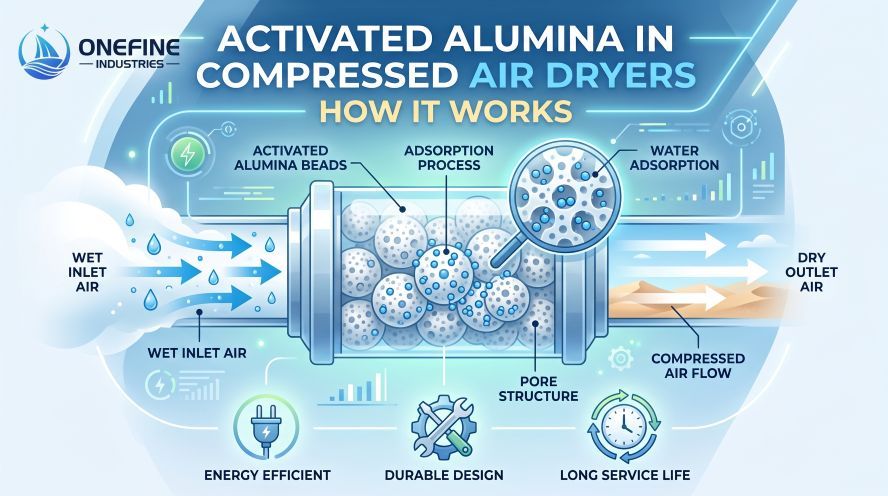
Activated Alumina in Compressed Air Dryers: How It Works
How activated alumina serves as the primary desiccant in heat-reactivated and heatless compressed air dryers, and when it's layered with molecular sieve for deeper dehydration.
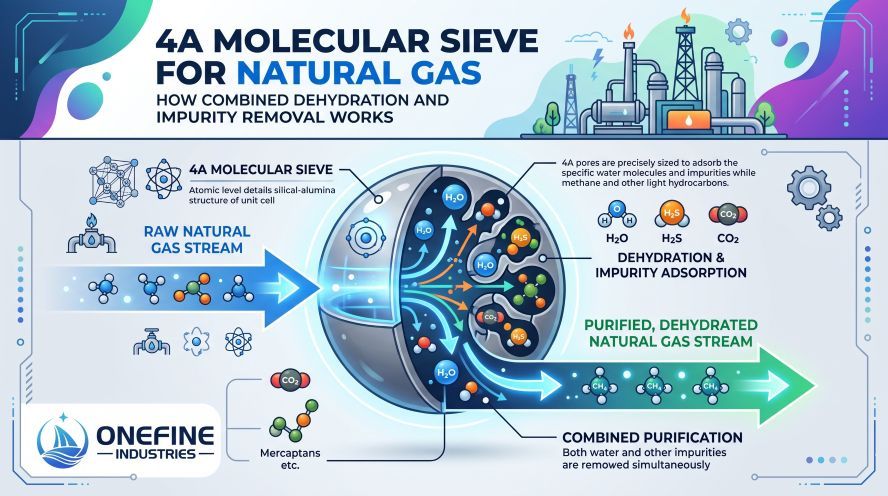
4A Molecular Sieve for Natural Gas: How Combined Dehydration and Impurity Removal Works
4A molecular sieve can dry natural gas and pull moderate CO₂/H₂S out of the same stream in one bed — how its larger pore enables that dual role, where it fits in the treatment train, and when 3A is the better call instead.
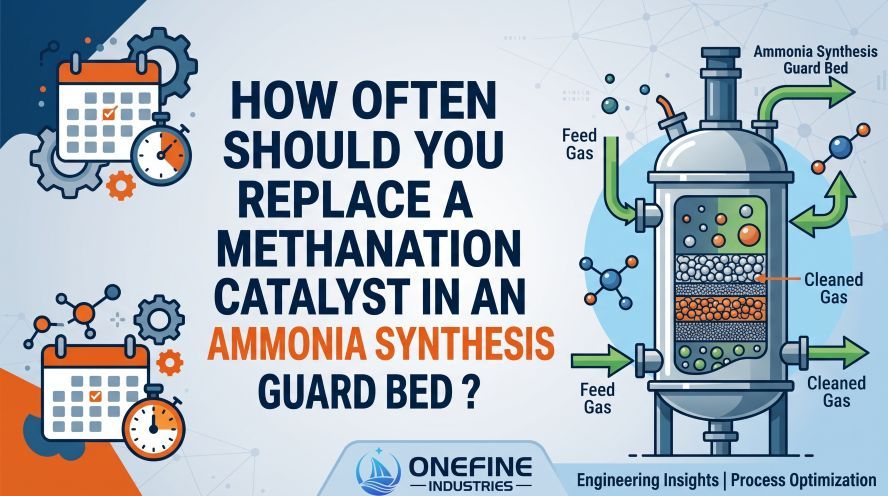
How Often Should You Replace a Methanation Catalyst in an Ammonia Synthesis Guard Bed?
There's no fixed replacement interval for a methanation catalyst — service life depends almost entirely on how well the upstream desulfurization train protects it. Here's how to read the real warning signs.