What is a Ni-Mo-W Hydrogenation Catalyst? Active Phase & Applications Explained
Refiners facing increasingly strict ultra-low-sulfur diesel (ULSD) targets often reach a point where standard nickel-molybdenum (Ni-Mo) catalysts struggle with the most refractory sulfur compounds in heavy feeds — compounds like 4,6-dimethyldibenzothiophene that resist conventional desulfurization routes. A nickel-molybdenum-tungsten (Ni-Mo-W) hydrogenation catalyst adds a third active metal — tungsten — to push hydrodesulfurization performance further, extending catalyst capability into heavier gas oils, vacuum residue, and the toughest ULSD specifications where binary systems fall short. This guide explains how the trimetallic active phase works, where it fits compared to binary Ni-Mo and Co-Mo catalyst systems, and which refinery applications benefit most from the upgrade.
What Is a Ni-Mo-W Hydrogenation Catalyst?
Key Takeaways:
- Trimetallic Architecture: Built on a γ-Al₂O₃ support with nickel, molybdenum, and tungsten, forming the highly active Ni-Mo-W-S phase after presulfiding.
- DDS vs HYD Pathway: While binary catalysts handle direct desulfurization (DDS), the tungsten addition drives the demanding hydrogenation (HYD) pathway needed for refractory sulfur.
- When to Choose Ni-Mo-W: The preferred option over binary Ni-Mo or Co-Mo when facing the most challenging heavy gas oils, vacuum residues, or ultra-low-sulfur diesel (ULSD) targets.
- Presulfiding Protocol: Requires a longer sulfur uptake during activation compared to binary systems to ensure complete conversion of tungsten oxide to WS₂.
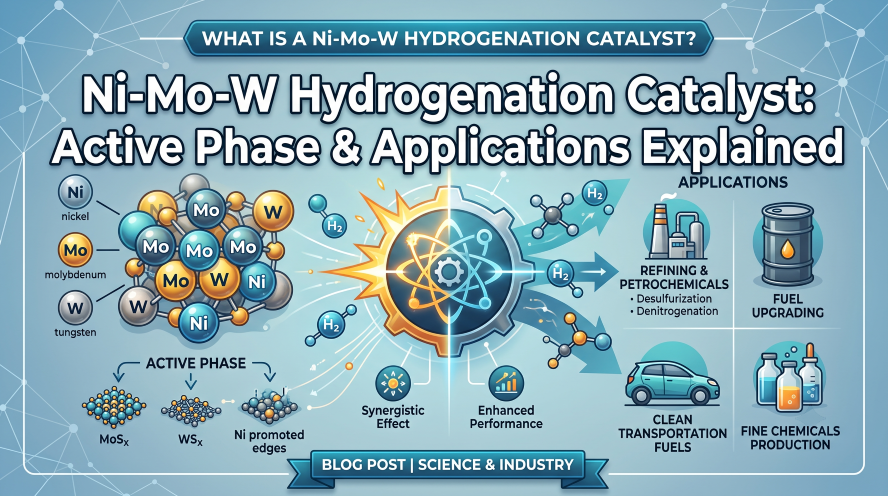
A Ni-Mo-W hydrogenation catalyst is a trimetallic hydrotreating catalyst built on a γ-alumina (γ-Al₂O₃) support, combining nickel oxide (NiO) as a promoter with molybdenum trioxide (MoO₃) and tungsten trioxide (WO₃) as the primary active metals. After presulfiding, these oxides convert into a mixed (Mo,W)S₂ sulfide phase promoted by nickel sulfide — the Ni-Mo-W-S structure that does the actual catalytic work in the reactor.
The tungsten addition is what sets this catalyst apart from standard binary Ni-Mo or Co-Mo systems. Introducing W into the molybdenum sulfide lattice shifts the electronic structure of the active phase toward more metallic behavior, which generally supports stronger hydrogenation activity — particularly useful for sulfur compounds that resist conventional desulfurization routes.
How the Trimetallic Active Phase Works
Sulfur removal in hydrotreating happens through two competing pathways:
- Direct desulfurization (DDS) — the catalyst pulls the sulfur atom straight out of the molecule
- Hydrogenation (HYD) pathway — the catalyst first hydrogenates an aromatic ring next to the sulfur atom, then removes it
Simple sulfur compounds are handled well by DDS. But refractory compounds like 4,6-dimethyldibenzothiophene (4,6-DMDBT) have methyl groups that physically block the DDS route, forcing the reaction through the more demanding HYD pathway. This is exactly where the added metallic character from tungsten helps — the Ni-Mo-W-S phase is generally better equipped to drive the HYD pathway than binary Ni-Mo-S sites, which is why trimetallic catalysts tend to outperform binary systems specifically on the toughest, most refractory sulfur molecules rather than on easy sulfur removal in general.
Ni-Mo-W vs Ni-Mo vs Co-Mo: How to Choose
All three catalyst types are built on the same γ-Al₂O₃ support and presulfiding logic, but they suit different jobs:
- Co-Mo catalysts are generally favored where direct desulfurization dominates and hydrogen consumption needs to stay low — lighter, less refractory feeds.
- Ni-Mo catalysts bring stronger hydrogenation activity than Co-Mo, making them a common choice for feeds with more nitrogen and moderately refractory sulfur.
- Ni-Mo-W catalysts push hydrogenation activity further still, aimed at the most refractory sulfur species in heavy gas oil, vacuum residue, and the toughest ULSD specifications — at a higher cost per liter than either binary option.
In practice, the right choice depends on your feed's sulfur speciation, nitrogen content, and target product specification. If you're unsure which fits your feedstock, our technical team can help you compare options against your feed assay — or see our What is a Co-Mo Hydrogenation Catalyst? for a deeper look at when Co-Mo is the better fit.
Typical Applications
- Ultra-low-sulfur diesel (ULSD) production from feeds with high refractory sulfur content
- Heavy gas oil and vacuum residue hydrotreating, where aromatic and metal contaminant resistance matters
- FCC feedstock pretreatment to reduce sulfur, nitrogen, and coking precursors ahead of the cracker
- Coker distillate upgrading, stabilizing olefin-rich streams while removing sulfur and nitrogen
- Bio-oil co-processing, handling both sulfur removal and oxygenate hydrogenation in renewable feedstock blends
For full specifications, operating ranges, and regeneration guidance, see our complete Ni-Mo-W Hydrogenation Catalyst product page.
Recommended Products from Sorbsieve
- Ni-Mo-W Hydrogenation Catalyst — the trimetallic system covered in this guide, for the most demanding deep-HDS applications
- Ni-Mo Hydrogenation Catalyst — binary alternative for moderately refractory feeds with meaningful nitrogen content
- Co-Mo Hydrogenation Catalyst — binary alternative favoring direct desulfurization with lower hydrogen consumption
FAQ
Q: Is Ni-Mo-W always the better choice over Ni-Mo or Co-Mo? A: Not necessarily. Ni-Mo-W generally costs more per liter and is aimed at the most refractory sulfur applications. For lighter feeds or less demanding sulfur specifications, binary Ni-Mo or Co-Mo catalysts are often the more cost-effective choice.
Q: Does adding tungsten change the presulfiding process? A: Yes — tungsten oxide also needs to be converted to WS₂ during presulfiding, so Ni-Mo-W catalysts typically require a longer sulfur uptake than binary Ni-Mo systems. Monitoring H₂S breakthrough during the sulfiding cycle is important to confirm complete conversion.
Q: Can Ni-Mo-W catalysts be used in existing Ni-Mo reactor systems? A: In many cases, yes, since operating temperature and pressure ranges overlap significantly. But bulk density, pressure drop, and metallurgy compatibility should be checked against your specific reactor design before switching catalyst systems.
Q: How do I know if my feed actually needs a trimetallic catalyst? A: The clearest signal is whether your current catalyst struggles to hit target sulfur specifications on refractory compounds like 4,6-DMDBT despite adequate reactor severity. Share your feed assay with our technical team for a tailored recommendation.
Looking for Bulk Supply of Ni-Mo-W Hydrogenation Catalyst?
Sorbsieve is a trusted bulk supplier of Ni-Mo-W hydrogenation catalyst and complete industrial adsorbents, serving industrial buyers across the Middle East.
We provide:
- ✅ Container-level supply (20'GP / 40'GP / 40'HQ)
- ✅ Full documentation (COA / TDS / SDS / COO)
- ✅ Multiple packaging options
- ✅ Technical support for catalyst selection and system optimization
- ✅ Fast quote response for industrial inquiries
Contact our team for bulk pricing, product samples, and technical consultation.
Related Products
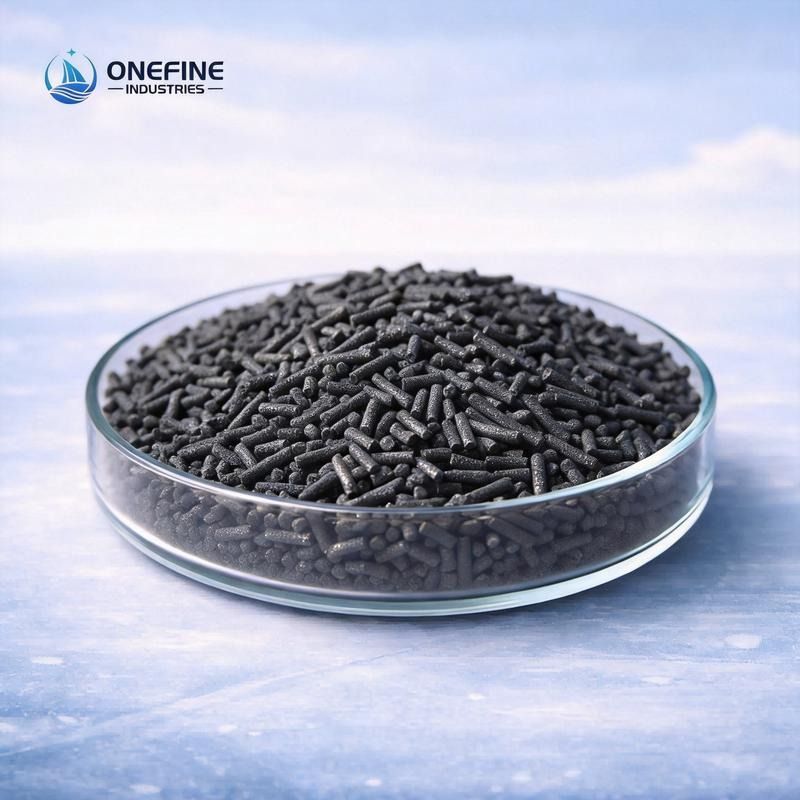
Ni-Mo-W hydrogenation catalyst
A trimetallic nickel-molybdenum-tungsten (Ni-Mo-W) hydrogenation catalyst engineered for ultra-deep hydrodesulfurization of challenging petroleum feeds. Combines the synergistic HDS activity of Mo-W mixed sulfide phases with Ni promoter for superior refractory sulfur removal. Widely used in diesel ULSD production, heavy gas oil upgrading, and severe hydrotreating service. Customizable appearance, particle size, and component loading.
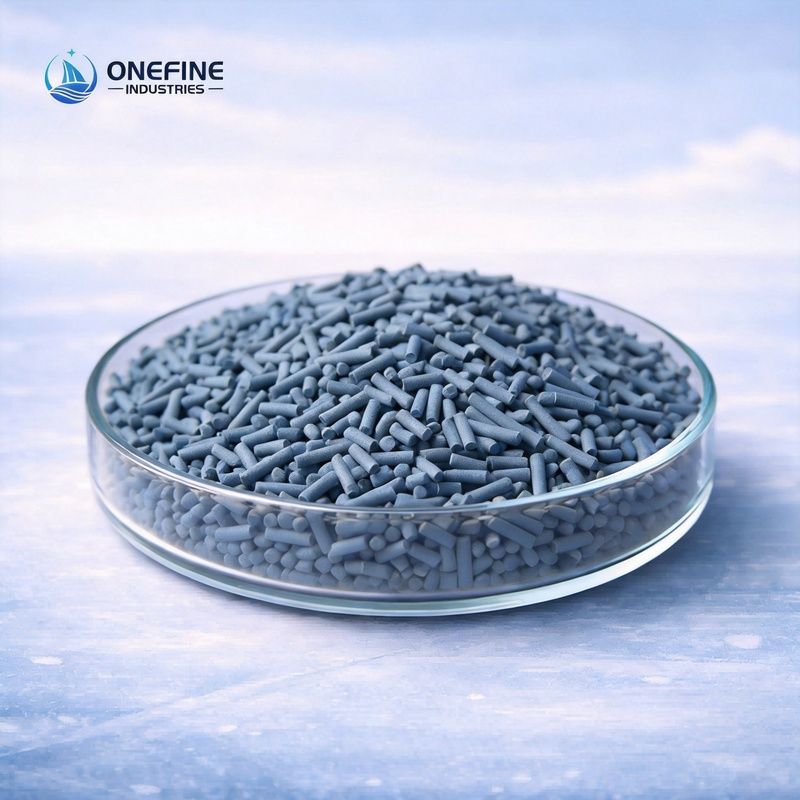
Co-Mo Hydrogenation Catalyst
A high-performance cobalt-molybdenum (Co-Mo) hydrogenation catalyst designed for hydrodesulfurization (HDS) and hydrotreating of petroleum fractions and synthesis gas. Features low light-off temperature, high mechanical strength, and excellent stability. Widely used in ammonia plant feed purification, naphtha pretreatment, refinery reforming feed desulfurization, and natural gas sweetening. Available with MOQ from 1 ton, customizable appearance, particle size, and active component loading.
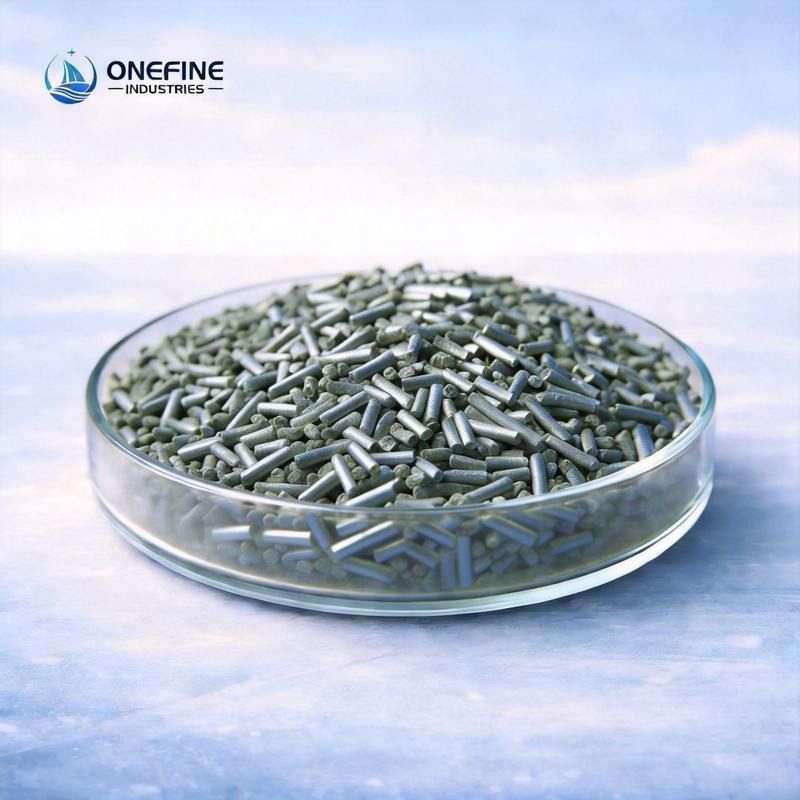
Ni-Mo Hydrogenation Catalyst
A high-performance nickel-molybdenum (Ni-Mo) hydrogenation catalyst designed for hydrodesulfurization (HDS) and hydrodenitrogenation (HDN) of medium to heavy petroleum fractions. Features superior hydrogenation activity, excellent stability, and long service life. Widely used in diesel hydrotreating, gas oil upgrading, and refractory sulfur removal. MOQ from 1 ton. Customizable appearance, particle size, and active component loading.
Related Reading
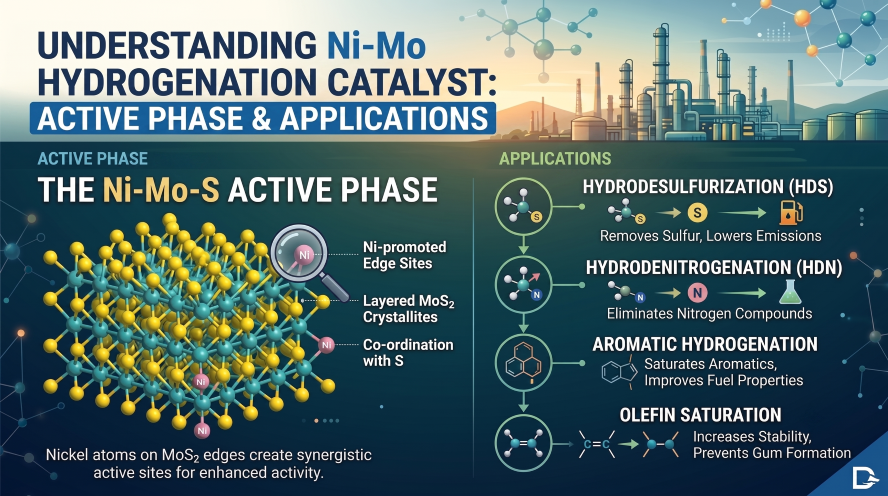
What is a Ni-Mo Hydrogenation Catalyst? Active Phase & Applications Explained
A plain-language guide to Ni-Mo hydrogenation catalysts — how the Ni-Mo-S active phase works, when to choose Ni-Mo over Co-Mo, and where it's used in refinery hydrotreating.
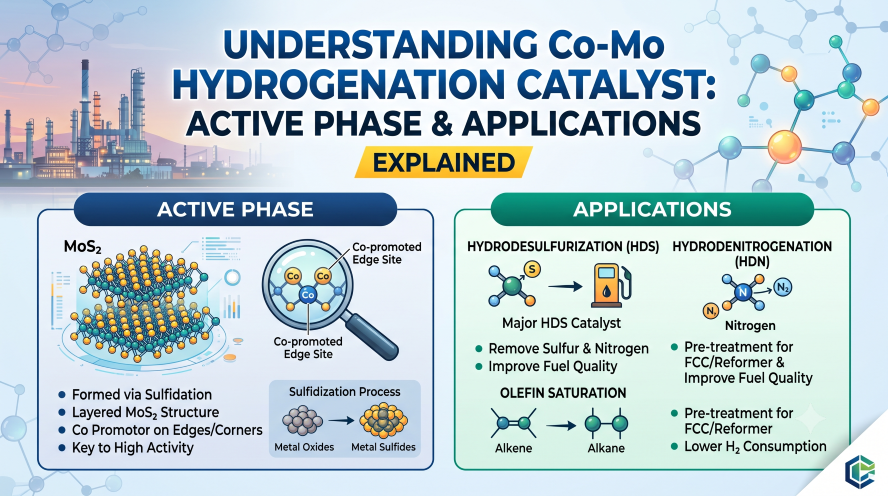
What is a Co-Mo Hydrogenation Catalyst? Active Phase & Applications Explained
A plain-language guide to how cobalt-molybdenum (Co-Mo) hydrogenation catalysts work, why the Co-Mo-S active phase matters, and where this catalyst is used across refining and gas processing.