What is a Ni-Mo Hydrogenation Catalyst? Active Phase & Applications Explained
If your feedstock contains high levels of nitrogen or refractory sulfur compounds, choosing the right hydrotreating catalyst matters. A Ni-Mo (nickel-molybdenum) hydrogenation catalyst is engineered specifically for these demanding conditions — offering strong hydrodesulfurization (HDS) and hydrodenitrogenation (HDN) performance for diesel, gas oil, and other medium-to-heavy petroleum fractions. This guide explains how it works, what makes it different from Co-Mo catalysts, and where it's used.
What Is a Ni-Mo Hydrogenation Catalyst?
Key Takeaways:
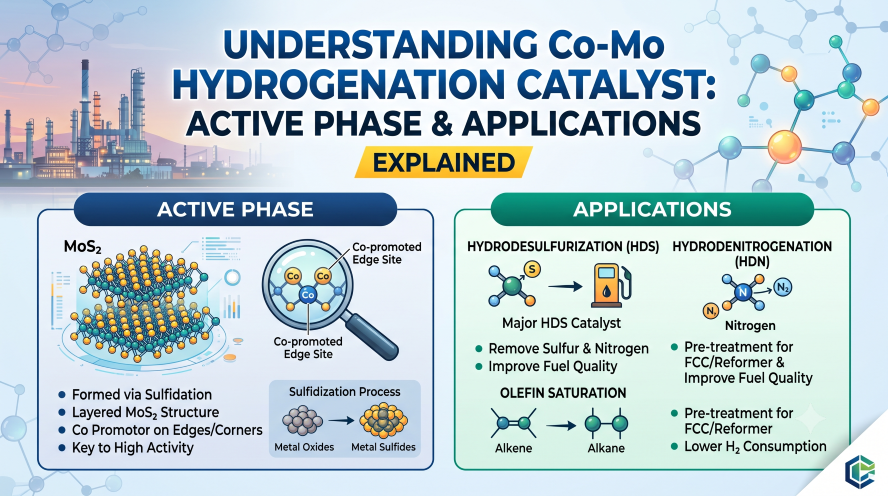
- Core Composition: Consists of nickel oxide (NiO) and molybdenum trioxide (MoO₃) on a γ-alumina support, converting to the active Ni-Mo-S phase after presulfiding.
- Ni-Mo vs Co-Mo: Ni-Mo provides stronger hydrogenation and hydrodenitrogenation (HDN) activity, making it the preferred choice for heavier, high-nitrogen feeds like VGO.
- Presulfiding is Critical: The catalyst is supplied in oxide form and must be activated with a sulfiding agent (e.g., DMDS or CS₂) to trigger HDS and HDN capabilities.
- Primary Applications: Essential for ultra-low-sulfur diesel (ULSD) production, gas oil hydrotreating, and bio-feedstock co-processing units.
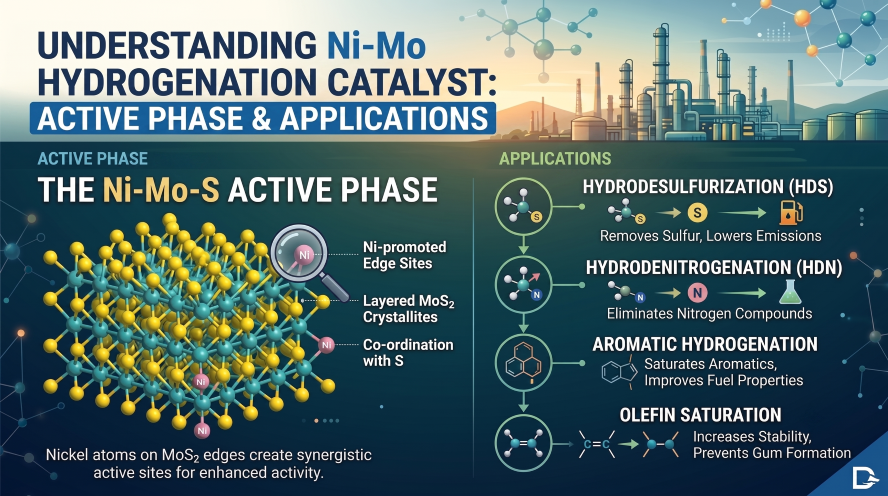
A Ni-Mo hydrogenation catalyst consists of nickel oxide (NiO) and molybdenum trioxide (MoO₃) impregnated on a γ-alumina (γ-Al₂O₃) support, often enhanced with titanium dioxide (TiO₂) for improved thermal stability. Before use, the catalyst is converted from its oxide form to an active sulfide phase — nickel-promoted molybdenum disulfide (Ni-Mo-S) — through a process called presulfiding. This Ni-Mo-S phase is what drives the catalytic reactions that remove sulfur and nitrogen from petroleum feedstocks.
The catalyst is typically supplied as trilobe or quadrilobe extrudates, shapes chosen to maximize surface area and minimize pressure drop in fixed-bed reactors.
How Does It Work?
The catalyst operates in three stages inside a refinery hydrotreating unit:
- Presulfiding — the oxide-form catalyst is converted to its active Ni-Mo-S sulfide phase using a sulfiding agent (typically DMDS or CS₂) under a controlled hydrogen atmosphere. Incomplete presulfiding permanently reduces activity, so this step is closely monitored.
- Hydrotreating — sulfur- and nitrogen-containing feedstock is mixed with hydrogen and passed over the catalyst bed. Organic sulfur compounds break down and release H₂S; nitrogen compounds convert to ammonia (NH₃); olefins and some aromatics are saturated.
- Separation — the H₂S and NH₃ byproducts are separated from the treated product stream, typically through amine scrubbing or water washing.
Ni-Mo vs Co-Mo: How to Choose
Ni-Mo and Co-Mo catalysts serve the same general purpose — hydrotreating — but differ in where they perform best:
- Ni-Mo catalysts generally provide stronger hydrogenation activity and better hydrodenitrogenation (HDN) performance, making them the preferred choice for heavier feeds with higher nitrogen content, such as vacuum gas oil (VGO), coker gas oil, and feeds destined for hydrocracking pretreatment.
- Co-Mo catalysts tend to be more selective for straightforward desulfurization of lighter, lower-nitrogen feeds, and are often the more economical choice when deep HDN isn't required. See our Co-Mo Hydrogenation Catalyst product page for full specifications if that's a better fit for your feedstock.
For feeds requiring even higher hydrogenation activity than standard Ni-Mo — heavy, high-nitrogen streams like VGO destined for hydrocracking pretreatment — our Ni-Mo-W Hydrogenation Catalyst adds tungsten to the active phase for an additional step up in hydrogenation performance.
In practice, the right choice depends on your specific feedstock composition — sulfur type, nitrogen content, and downstream processing requirements all factor into the decision. Our technical team can help match a formulation to your feed profile.
Where Is It Used?
- Diesel hydrodesulfurization (HDS) — producing ultra-low-sulfur diesel (ULSD) that meets IMO 2020, Euro VI, and China National VI standards
- Gas oil hydrotreating — pretreating vacuum gas oil (VGO) and coker gas oil before catalytic cracking or hydrocracking
- Naphtha pretreatment — protecting downstream catalytic reforming catalysts from sulfur and nitrogen poisoning
- Kerosene and jet fuel desulfurization
- Natural gas and refinery gas sweetening — organic sulfur is hydroconverted to H₂S, which is then captured downstream by a Zinc Oxide guard bed
- Bio-feedstock co-processing — handling renewable feedstocks (vegetable oils, animal fats) alongside conventional petroleum feeds
Service Life & Regeneration
With proper operation, Ni-Mo catalysts typically deliver 3-5 years of on-stream life per cycle, and can generally undergo 1-3 regeneration cycles through controlled oxidative coke burn-off followed by resulfidation — giving a total useful life of roughly 6-15 years. Full specifications, operating conditions, and packaging details are available on our Ni-Mo Hydrogenation Catalyst product page.
Recommended Products from Sorbsieve
Looking for the right hydrotreating catalyst for your application? See our full Ni-Mo Hydrogenation Catalyst specifications, packaging options, and MOQ details.
FAQ
Q: What's the difference between Ni-Mo and Co-Mo hydrogenation catalysts? A: Ni-Mo catalysts generally offer higher hydrogenation activity and better HDN performance, making them well suited for heavier, higher-nitrogen feeds. Co-Mo catalysts are typically more selective for lighter, lower-nitrogen feeds. The best choice depends on your feedstock composition and reactor conditions.
Q: Why does the catalyst need to be presulfided? A: The catalyst ships in a stable oxide form. Presulfiding converts it to the active Ni-Mo-S sulfide phase, which is what actually performs the hydrodesulfurization and hydrodenitrogenation reactions. Skipping or rushing this step permanently reduces activity.
Q: Can Ni-Mo catalysts be regenerated? A: Yes. When activity declines due to coke deposition, the catalyst can typically be regenerated 1-3 times through controlled oxidative burn-off, followed by resulfidation before returning to service.
Q: What feedstocks is Ni-Mo catalyst suitable for? A: Diesel, gas oil, naphtha, kerosene, natural gas, and refinery gas — as well as co-processing applications with renewable feedstocks like vegetable oils and animal fats.
Looking for Bulk Supply of Ni-Mo Hydrogenation Catalyst?
Sorbsieve is a trusted bulk supplier of Ni-Mo hydrogenation catalyst and complete industrial adsorbents, serving industrial buyers across the Middle East.
We provide:
- ✅ Container-level supply (20'GP / 40'GP / 40'HQ)
- ✅ Full documentation (COA / TDS / SDS / COO)
- ✅ Multiple packaging options
- ✅ Technical support for catalyst selection and system optimization
- ✅ Fast quote response for industrial inquiries
Contact our team for bulk pricing, product samples, and technical consultation.
Related Products
Ni-Mo-W hydrogenation catalyst
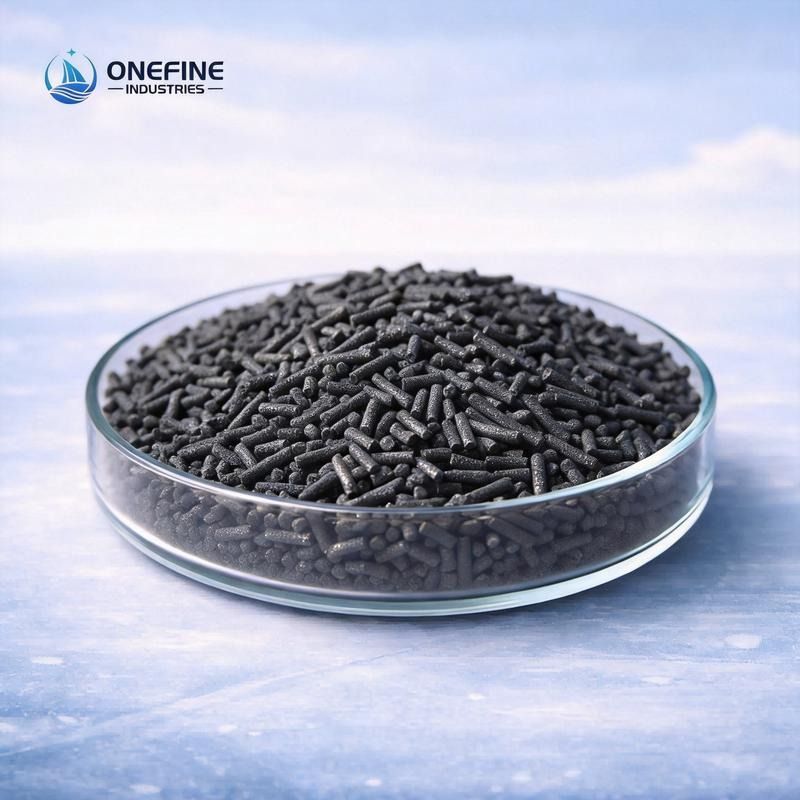
A trimetallic nickel-molybdenum-tungsten (Ni-Mo-W) hydrogenation catalyst engineered for ultra-deep hydrodesulfurization of challenging petroleum feeds. Combines the synergistic HDS activity of Mo-W mixed sulfide phases with Ni promoter for superior refractory sulfur removal. Widely used in diesel ULSD production, heavy gas oil upgrading, and severe hydrotreating service. Customizable appearance, particle size, and component loading.
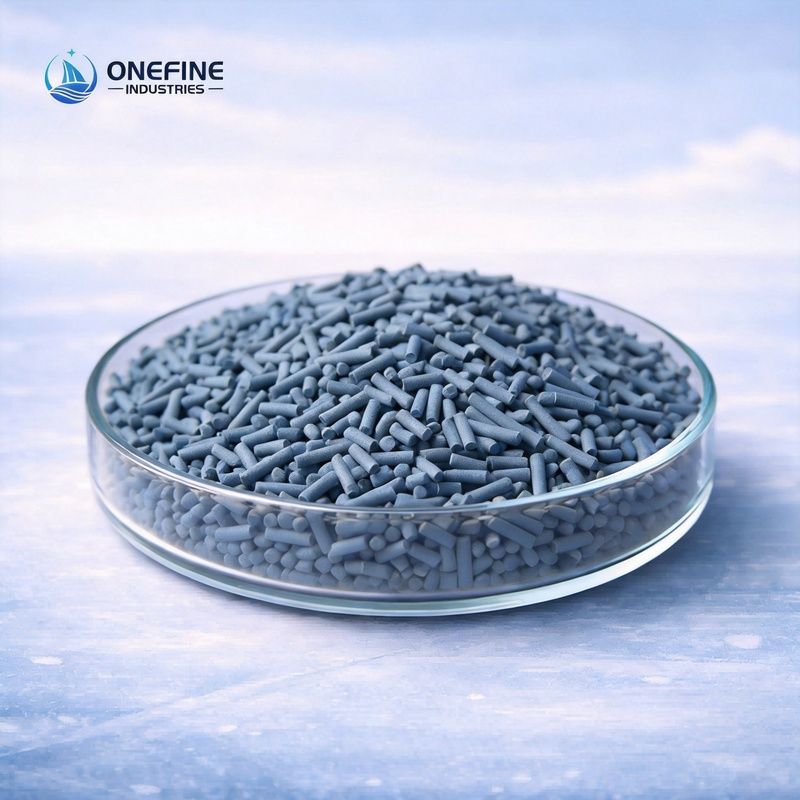
Co-Mo Hydrogenation Catalyst
A high-performance cobalt-molybdenum (Co-Mo) hydrogenation catalyst designed for hydrodesulfurization (HDS) and hydrotreating of petroleum fractions and synthesis gas. Features low light-off temperature, high mechanical strength, and excellent stability. Widely used in ammonia plant feed purification, naphtha pretreatment, refinery reforming feed desulfurization, and natural gas sweetening. Available with MOQ from 1 ton, customizable appearance, particle size, and active component loading.
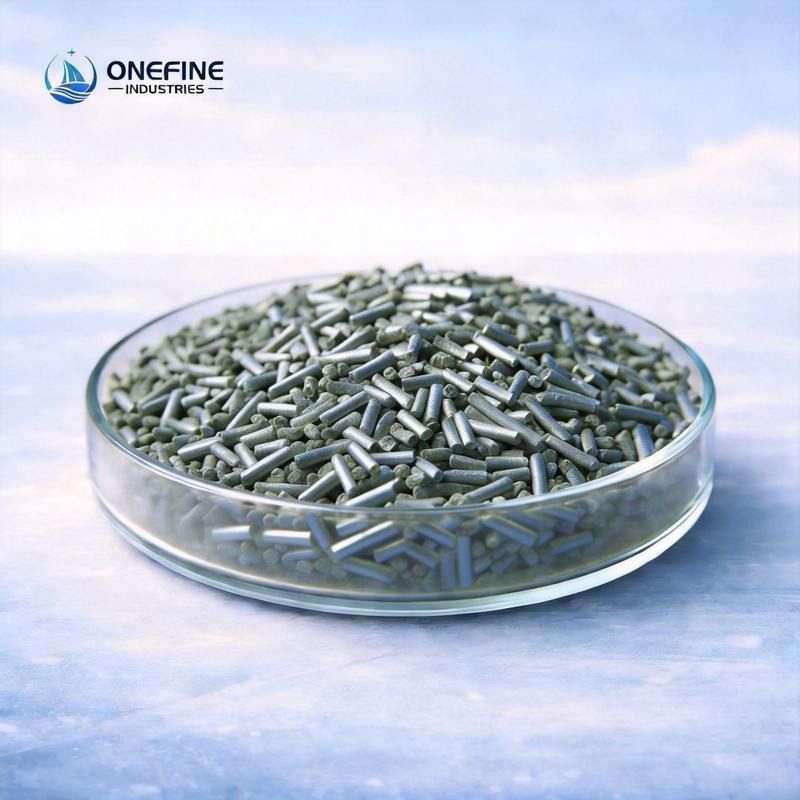
Ni-Mo Hydrogenation Catalyst
A high-performance nickel-molybdenum (Ni-Mo) hydrogenation catalyst designed for hydrodesulfurization (HDS) and hydrodenitrogenation (HDN) of medium to heavy petroleum fractions. Features superior hydrogenation activity, excellent stability, and long service life. Widely used in diesel hydrotreating, gas oil upgrading, and refractory sulfur removal. MOQ from 1 ton. Customizable appearance, particle size, and active component loading.