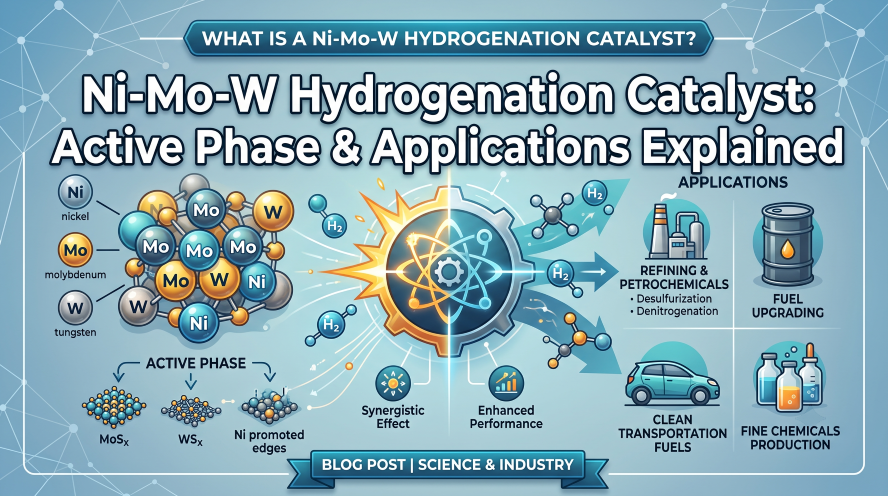
Hydrogenation Catalysts for Diesel & VGO HDS: Application Case Analysis
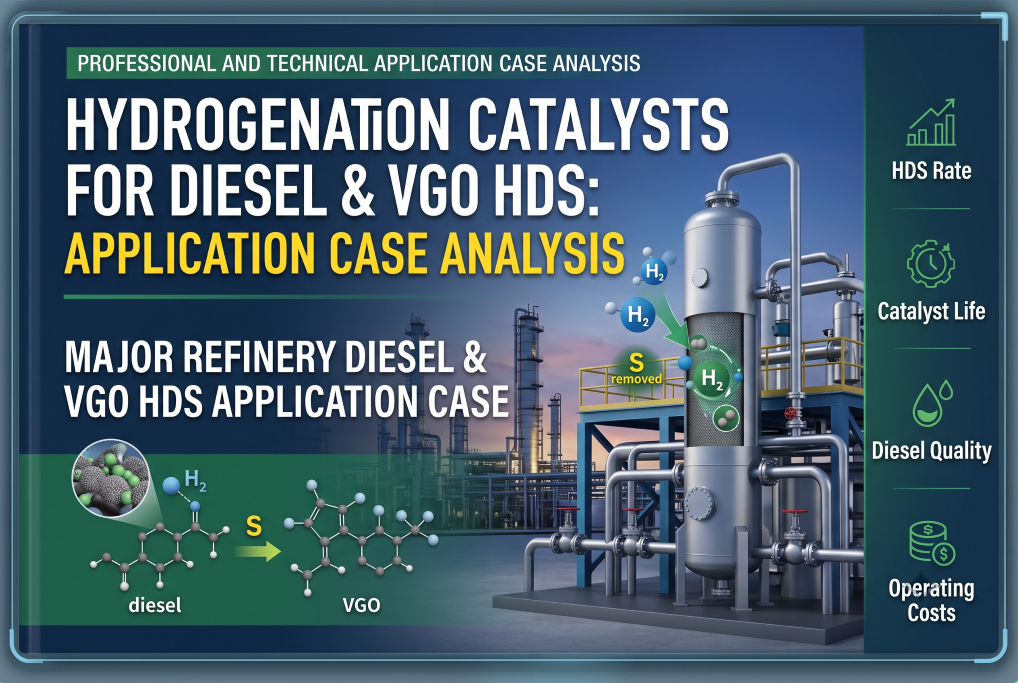
Overview
Refiners producing ultra-low-sulfur diesel (ULSD) and pretreating feedstock for hydrocracking face the same core challenge from very different starting points: feed sulfur speciation, nitrogen content, and refractory compound levels vary widely by crude source and blend, even when the target product specification stays the same. No single hydrotreating catalyst is the right fit for every feed — the choice between Co-Mo, Ni-Mo, and Ni-Mo-W systems comes down to matching catalyst chemistry to feed severity.
This case analysis covers three representative scenarios — reformer feed protection, diesel ULSD production across a range of feed severities, and VGO pretreatment ahead of hydrocracking — showing how catalyst selection logic plays out across a refinery's hydrotreating units.
Key Takeaways
- Feed-Matched Chemistry: Co-Mo is ideal for light, DDS-dominant sulfur removal; Ni-Mo handles moderate nitrogen; Ni-Mo-W tackles the most refractory heavy gas oils.
- Refractory Sulfur Removal: Ni-Mo-W excels at hydrogenating sterically hindered sulfur compounds like 4,6-DMDBT to meet <10 ppm ULSD specifications.
- Hydrocracker Protection: In VGO pretreatment, sustained HDN and aromatic saturation activity prevent irreversible poisoning of downstream hydrocracking beds.
Application 1: Naphtha Hydrotreating & Catalytic Reformer Feed Protection
Process Context
Naphtha feeding a catalytic reformer must be desulfurized to very low levels to protect the platinum reforming catalyst from irreversible sulfur poisoning. Naphtha is a light, low-nitrogen feed where straightforward sulfur removal is the priority — and where preserving valuable olefins and minimizing hydrogen consumption both matter for downstream economics.
How Co-Mo Works in This Application
Co-Mo Hydrogenation Catalyst is well suited to this duty because direct desulfurization (DDS) dominates for the simple sulfur compounds (mercaptans, sulfides, light thiophenes) typical of naphtha. The Co-Mo-S active phase removes these sulfur species efficiently at lower hydrogen consumption than more strongly hydrogenating catalyst systems — a meaningful advantage when a refinery is managing hydrogen balance across multiple units and doesn't want to over-saturate naphtha olefins ahead of reforming.
Catalyst Specification for This Application
- Type: Co-Mo Hydrogenation Catalyst — CoO (2-5 wt.%) and MoO₃ (12-16 wt.%) on γ-Al₂O₃ support
- Form: Cylindrical, trilobe, or quadrilobe extrudates depending on reactor design
- Key requirement: Efficient DDS-pathway sulfur removal with minimal unnecessary hydrogenation of feed olefins
Application 2: Diesel ULSD Production Across Feed Severity
Process Context
Producing diesel at <10 ppm sulfur to meet IMO 2020, Euro VI, or China National VI specifications is now standard across most markets — but the difficulty of getting there depends heavily on how much refractory sulfur (particularly 4,6-dimethyldibenzothiophene, or 4,6-DMDBT) is present in the feed. Two refiners targeting the identical sulfur spec can need very different catalyst systems depending on their crude slate.
How Catalyst Choice Works Across This Range
Sulfur removal proceeds through two pathways — direct desulfurization (DDS), which pulls the sulfur atom straight out of the molecule, and the hydrogenation (HYD) pathway, which first saturates an adjacent aromatic ring before removing sulfur. Simple sulfur compounds are handled well by DDS; refractory compounds like 4,6-DMDBT have methyl groups that sterically block the DDS route, forcing the reaction through the more demanding HYD pathway.
- Lighter, less refractory diesel blends: Co-Mo systems handle these efficiently at lower hydrogen consumption, since DDS activity alone is often sufficient.
- Moderately refractory feeds with meaningful nitrogen content: Ni-Mo Hydrogenation Catalyst brings stronger hydrogenation activity than Co-Mo, handling both the HYD-pathway sulfur removal and the hydrodenitrogenation (HDN) that heavier diesel blends often require.
- The most refractory, high-4,6-DMDBT diesel blends: Ni-Mo-W Hydrogenation Catalyst adds tungsten to the active phase, creating a mixed (Mo,W)S₂ structure that pushes HYD-pathway activity further — the catalyst tier reached for as when binary systems can't hit target spec at practical space velocities.
Catalyst Specification for This Application
- Co-Mo: Standard grade, favored where hydrogen availability is limited or feed is on the lighter end
- Ni-Mo: NiO (2-5 wt.%) + MoO₃ (12-16 wt.%) on TiO₂-enhanced γ-Al₂O₃, for moderate-to-high nitrogen feeds
- Ni-Mo-W: NiO (3-6 wt.%) + MoO₃ (4-7 wt.%) + WO₃ (9-13 wt.%) on γ-Al₂O₃, reserved for the most refractory sulfur applications where the added cost per liter is justified by feed difficulty
For the full selection logic between these three systems, see our Ni-Mo-W vs Ni-Mo vs Co-Mo guide.
Application 3: VGO Pretreatment Ahead of Hydrocracking
Process Context
Vacuum gas oil (VGO) feeding a hydrocracker carries elevated nitrogen and polycyclic aromatic content compared to diesel-range feeds. Both nitrogen compounds and heavy aromatics can poison downstream hydrocracking catalysts if not adequately reduced in the pretreatment step, making HDN performance — not just HDS — the deciding factor in catalyst selection here.
How Ni-Mo and Ni-Mo-W Work in This Application
Ni-Mo is the standard choice for VGO pretreatment where nitrogen content is meaningful but not extreme, combining solid HDS activity with the stronger HDN performance Co-Mo systems don't provide. For heavier or more refractory VGO blends — those with elevated polycyclic aromatic sulfur content alongside nitrogen — Ni-Mo-W's added hydrogenation activity extends catalyst capability further, helping protect the hydrocracking catalyst bed from both nitrogen and aromatic poisoning across a longer run length.
Catalyst Specification for This Application
- Type: Ni-Mo for standard-severity VGO; Ni-Mo-W for heavier, higher-nitrogen, more refractory VGO blends
- Operating range: Both systems operate within the broader 250-420°C hydrotreating envelope typical of VGO pretreatment units
- Key requirement: Sustained HDN and aromatic saturation activity to protect hydrocracking catalyst from poisoning over the run length
Why Catalyst Choice Matters Across HDS Severity
The right hydrogenation catalyst for a given unit comes down to matching active-phase chemistry to feed difficulty, not defaulting to the same system across every application:
- Light feeds, DDS-dominant sulfur, hydrogen-conscious operation → Co-Mo
- Moderate refractory sulfur with meaningful nitrogen content → Ni-Mo
- The most refractory sulfur species (4,6-DMDBT-heavy feeds), heavy gas oil, and vacuum residue → Ni-Mo-W
Using an under-specified catalyst for a severe feed means missing target sulfur or nitrogen specifications, or running at impractically low space velocities; using an over-specified catalyst for a light, easy feed means paying for hydrogenation activity and hydrogen consumption the application doesn't need. Sharing your feed assay with our technical team is the fastest way to confirm which tier fits your unit.
Recommended Products from Sorbsieve
- Co-Mo Hydrogenation Catalyst — for lighter feeds and DDS-dominant sulfur removal with lower hydrogen consumption
- Ni-Mo Hydrogenation Catalyst — for moderate-severity feeds needing combined HDS/HDN performance
- Ni-Mo-W Hydrogenation Catalyst — for the most refractory sulfur species and heaviest feeds
Contact our team for bulk pricing and grade recommendation based on your feed assay and reactor design.
Supply Information
Sorbsieve supplies Co-Mo, Ni-Mo, and Ni-Mo-W hydrogenation catalysts to industrial buyers across the Middle East and internationally.
Standard packaging options:
- 25 kg drums (suitable for trial orders and small-batch systems)
- 150 kg steel drums
- 500 kg super sacks (most popular for industrial bulk orders)
- 1,000 kg jumbo bags (standard for plant-scale orders)
Minimum order quantity: 1 ton (trial orders accepted)
Container loading: 20'GP: 18-20 tons | 40'GP: 22-24 tons | 40'HQ: 24-26 tons
Loading ports: Shanghai, Qingdao, Tianjin, Ningbo, Shenzhen
Documents provided: COA (per batch) / TDS (pre-sale) / SDS (pre-shipment) / COO / Packing List
Looking for Bulk Supply of Hydrogenation Catalysts?
Sorbsieve is a trusted bulk supplier of Co-Mo, Ni-Mo, and Ni-Mo-W hydrogenation catalysts, serving industrial buyers across the Middle East.
We provide:
- ✅ Container-level supply (20'GP / 40'GP / 40'HQ)
- ✅ Full documentation (COA / TDS / SDS / COO)
- ✅ Multiple packaging options
- ✅ Technical support for catalyst tier selection based on your feed assay
- ✅ Fast quote response for industrial inquiries
Contact our team for bulk pricing, grade confirmation, and technical consultation.
Related Products
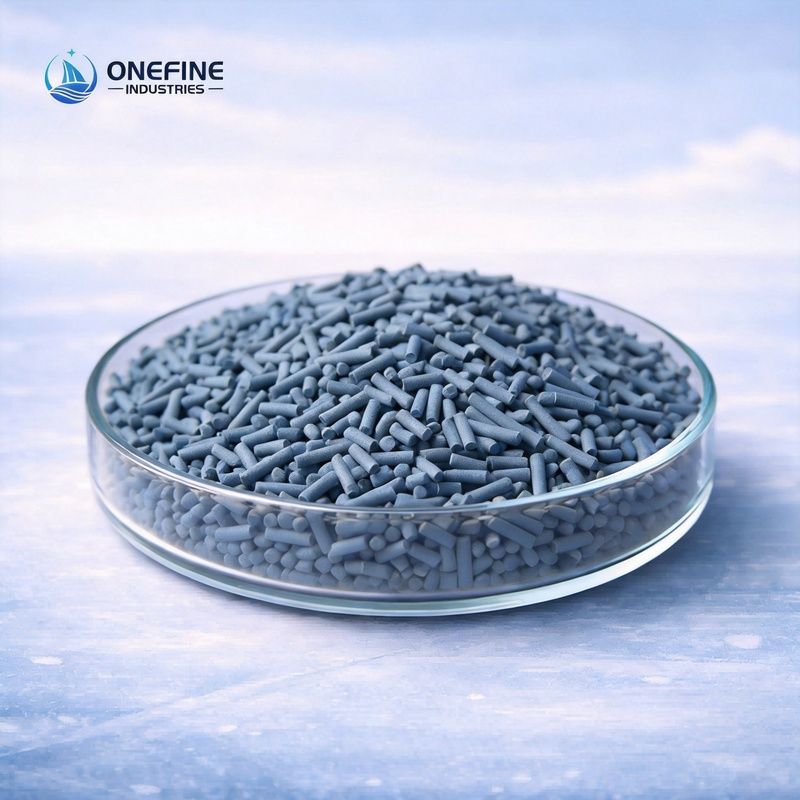
Co-Mo Hydrogenation Catalyst
A high-performance cobalt-molybdenum (Co-Mo) hydrogenation catalyst designed for hydrodesulfurization (HDS) and hydrotreating of petroleum fractions and synthesis gas. Features low light-off temperature, high mechanical strength, and excellent stability. Widely used in ammonia plant feed purification, naphtha pretreatment, refinery reforming feed desulfurization, and natural gas sweetening. Available with MOQ from 1 ton, customizable appearance, particle size, and active component loading.
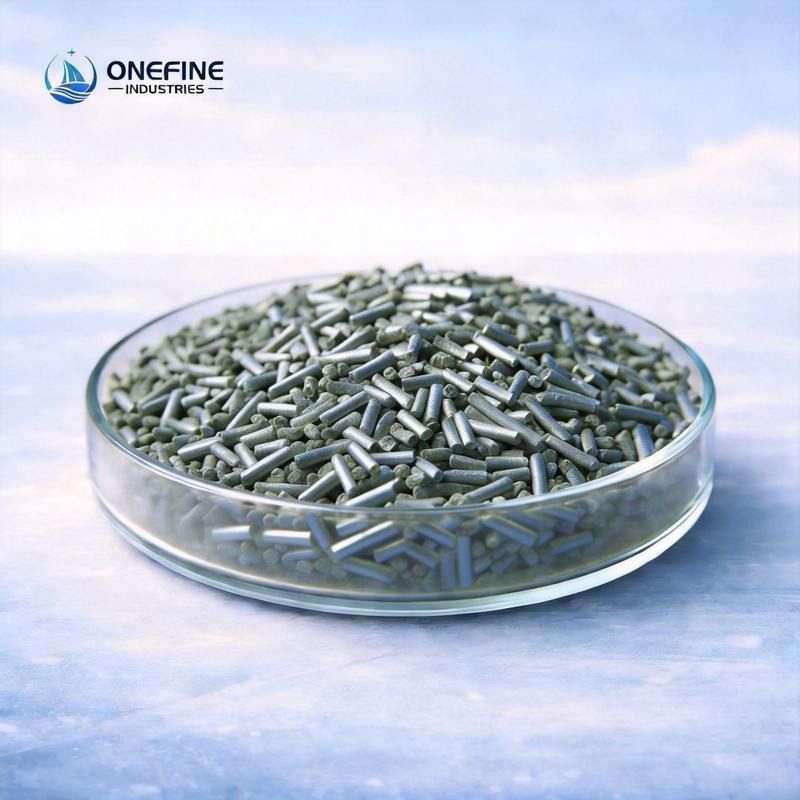
Ni-Mo Hydrogenation Catalyst
A high-performance nickel-molybdenum (Ni-Mo) hydrogenation catalyst designed for hydrodesulfurization (HDS) and hydrodenitrogenation (HDN) of medium to heavy petroleum fractions. Features superior hydrogenation activity, excellent stability, and long service life. Widely used in diesel hydrotreating, gas oil upgrading, and refractory sulfur removal. MOQ from 1 ton. Customizable appearance, particle size, and active component loading.
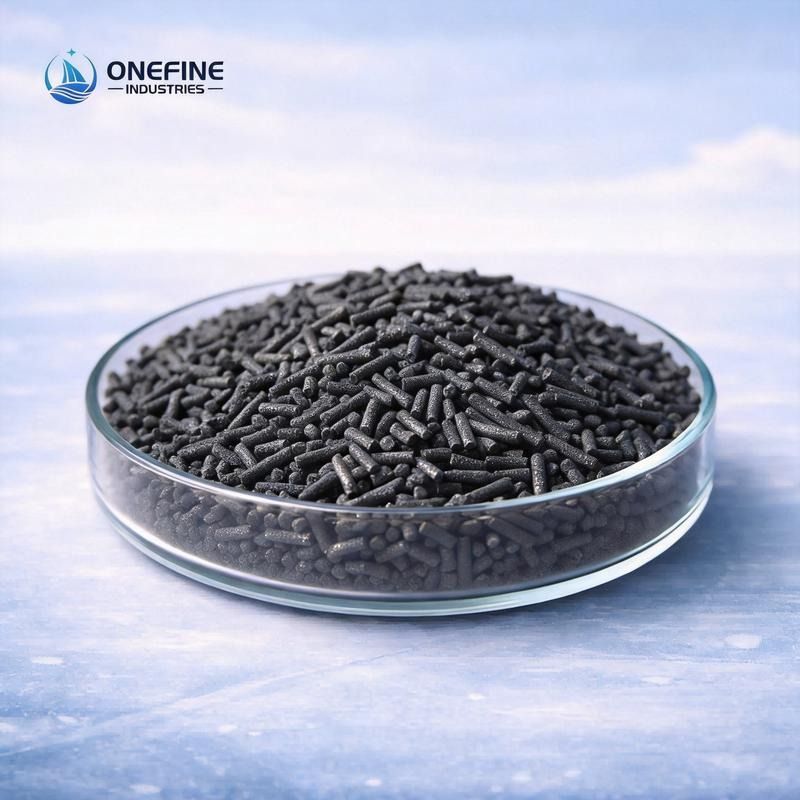
Ni-Mo-W hydrogenation catalyst
A trimetallic nickel-molybdenum-tungsten (Ni-Mo-W) hydrogenation catalyst engineered for ultra-deep hydrodesulfurization of challenging petroleum feeds. Combines the synergistic HDS activity of Mo-W mixed sulfide phases with Ni promoter for superior refractory sulfur removal. Widely used in diesel ULSD production, heavy gas oil upgrading, and severe hydrotreating service. Customizable appearance, particle size, and component loading.