CD adsorbent
An advanced purification adsorbent catalyst based on specialty alumina with special modifiers. Performance equivalent to imported Selexsorb CD adsorbent. Strong chemical adsorption capacity for selective removal of trace oxygenated organic compounds (alcohols, ethers, aldehydes, ketones, peroxides) from C₂–C₄ unsaturated hydrocarbon streams in polyethylene and polypropylene units. Also effectively adsorbs water and mercaptans for deep feedstock purification. Operates at ambient to low temperatures.
Get QuoteKey Attributes
- Selexsorb-Equivalent — Performance matches imported Selexsorb CD adsorbent.
- Oxygenate Removal — Selectively adsorbs alcohols, ethers, aldehydes, ketones, and peroxides.
- Water & Mercaptan Adsorption — Simultaneously removes H₂O and RSH in one bed.
- Chemical Adsorption — Captures trace contaminants at ambient temperature, no preheating needed.
- High Surface Area — 380 m²/g for high capacity and long service life.
- Regenerable — N₂ purge regeneration for multiple service cycles.
- Wide Pressure Range — Atmospheric to 6.0 MPa, adaptable to diverse processes.
Applications
- PE Feed Purification — Removes oxygenates, water, and mercaptans from ethylene monomer streams.
- PP Feed Purification — Protects polymerization catalysts from oxygenate and moisture poisoning.
- Cracked C₂–C₄ Olefins — Deep purification before downstream polymerization or alkylation.
- MTBE/Raffinate Treatment — Eliminates methanol, MTBE, and other oxygenates from C₄ streams.
- Syngas & Hydrogen Drying — Removes water and trace polar contaminants from synthesis gas.
- Alkylation Feed Protection — Protects acid catalysts in alkylation units from oxygenate and moisture deactivation.
- Isomerization Feed Protection — Protects isomerization catalysts from the same class of polar contaminants.
- General Petrochemical Guard Bed — Polar contaminant removal across refining and petrochemical processes.
Product Description
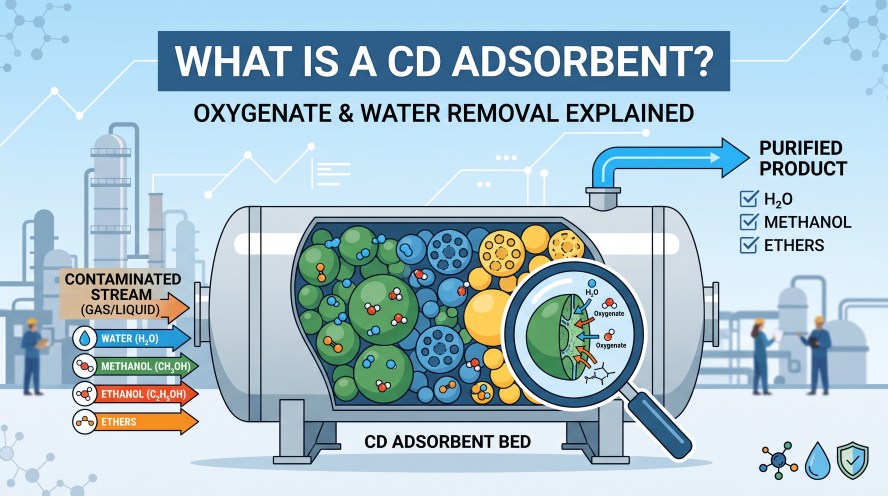
What Is a CD Adsorbent?
Key Takeaways
- Comprehensive Removal: Selectively removes trace oxygenated organic compounds (alcohols, ethers, aldehydes, ketones, peroxides), water, and mercaptans from C₂–C₄ unsaturated hydrocarbon streams.
- Low-Temperature Efficiency: Operates effectively at ambient to low temperatures (10–120 °C) through strong chemical adsorption without requiring feed preheating.
- Selexsorb-Equivalent: Delivers performance equivalent to imported Selexsorb CD adsorbent to protect Ziegler-Natta and metallocene polymerization catalysts in PE and PP units.
A CD adsorbent is an improved high-efficiency purification adsorbent catalyst based on specialty alumina as the carrier with special modifiers. Its performance is equivalent to imported Selexsorb CD adsorbent. Due to strong chemical adsorption on its surface, it can directly and selectively remove trace amounts of oxygen-containing organic compounds — including alcohols, ethers, aldehydes, carboxyl compounds, ketones, and peroxides — from cracked C₂–C₄ unsaturated hydrocarbon monomer and comonomer streams in polyethylene and polypropylene units. It also effectively adsorbs water and mercaptans present in the feedstock, meeting the deep purification requirements for polymerization-grade raw materials. The product operates at ambient to low temperatures, making it ideal for olefin stream purification.
This product is often used downstream of our COS Adsorbent in a two-stage guard bed configuration for polymerization-grade feedstock. For a full breakdown of the oxygenate/water/mercaptan removal chemistry covered here, see our companion guide: What Is a CD Adsorbent?
Composition & Structure
Active Components:
- Specialty Al₂O₃ carrier — High-surface-area alumina base providing excellent structural integrity and thermal stability
- Special modifiers — Enhanced active components providing strong chemical adsorption affinity for polar compounds including oxygenates, water, and mercaptans
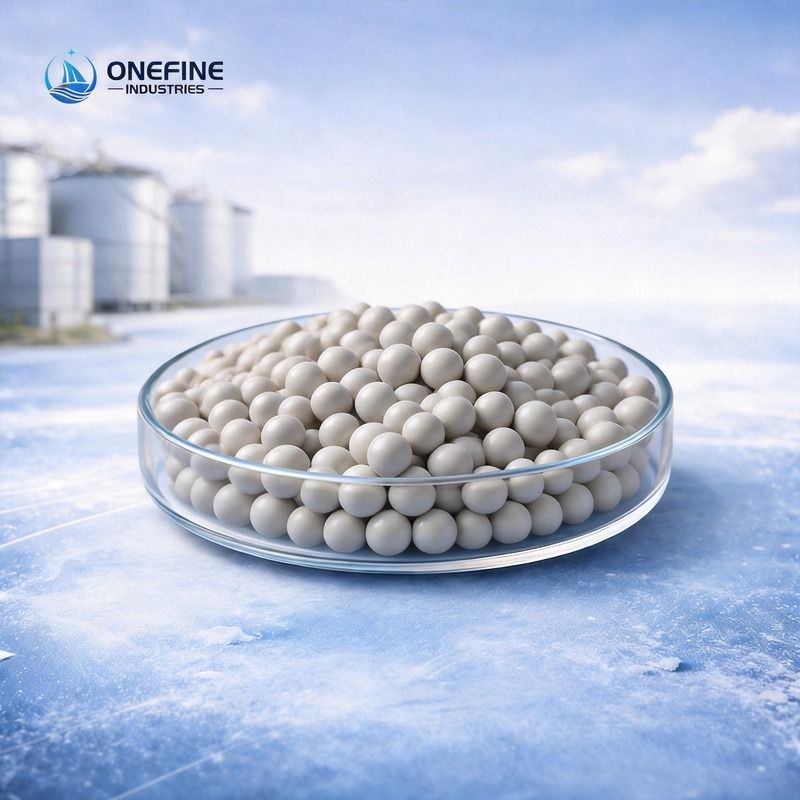
Physical Form: The adsorbent is manufactured using a pebble-rolling process, producing uniform white spherical granules (Φ1.5–3.0 mm). This rounded shape ensures low pressure drop, uniform gas flow distribution, and excellent mechanical strength (≥ 35 N/particle) for industrial service.
Adsorption Mechanism
The adsorbent removes contaminants through strong chemical adsorption on its specially formulated surface:
1. Oxygenate Removal:
- Alcohols, ethers, aldehydes, and ketones are chemisorbed onto the modified alumina surface
- Polar functional groups (–OH, –CHO, –CO–, –O–) interact strongly with active sites
- Peroxides are captured and decomposed on the active surface
2. Water & Mercaptan Capture:
- H₂O is adsorbed by the alumina surface through hydrogen bonding and chemisorption
- Mercaptans (RSH) are captured by active metal sites through acid-base interaction
This multi-mechanism approach enables single-bed deep purification of cracked gas streams, removing multiple polar contaminants simultaneously.
Key Advantages
Selexsorb-Equivalent Performance:
- Performance comparable to imported BASF Selexsorb CD adsorbent
- Provides a cost-effective alternative with proven reliability
High Surface Area & Porosity:
- Surface area 380 m²/g provides abundant active sites for contaminant capture
- Pore volume ≥ 0.35 ml/g ensures excellent diffusion and capacity
Low-Temperature Operation:
- Effective from 10°C to 120°C, suitable for ambient-condition processes
- No preheating required for most applications
Regenerable:
- Can be regenerated with N₂ (99% purity) for multiple service cycles
- Reduces operating costs and material waste
Selective for Olefin Streams:
- Specifically effective for C₂–C₄ unsaturated hydrocarbons
- Does not react with olefins — only targets polar contaminants
Reference Operating Conditions
Process Conditions:
- Temperature: 10–120°C
- Pressure: Atmospheric–6.0 MPa
- Regeneration Gas: N₂ (99%)
Feed Specifications:
- Suitable for cracked C₂–C₄ hydrocarbon streams
- Feed monomer and comonomer streams for PE/PP production
- MTBE raffinate and alkylation feedstocks
Performance Output:
- Deep purification to trace oxygenate levels
- Water/Methanol adsorption capacity ≥ 15 wt.%
Applications in Petrochemical & Polymer Production
Polyethylene & Polypropylene Feed Purification (Primary Application): Polymerization catalysts (Ziegler-Natta, metallocene) are extremely sensitive to trace contaminants including oxygenates, water, and mercaptans. Even ppm-level impurities can cause catalyst deactivation, reduced polymer yield, and off-spec product. The CD adsorbent serves as the guard bed upstream of the polymerization reactor, delivering product-spec purity monomer and comonomer streams.
Cracked C₂–C₄ Olefin Streams: In steam cracking and catalytic cracking units, the C₂–C₄ product streams contain trace oxygenated organic compounds from feed impurities and process byproducts. These contaminants must be removed before downstream polymerization, alkylation, or isomerization units — see our COS Adsorbent for the sulfur-removal stage of the same purification train, and our COS adsorbent guide for how the two products work together. For polymer-grade ethylene or propylene feed, the train typically extends to a third stage — see our Ethylene Purification Adsorbent or Propylene Purification Adsorbent for the final CO removal step.
MTBE & Raffinate Treatment: The C₄ raffinate stream from MTBE manufacturing contains methanol, dimethyl ether, tertiary butyl alcohol, and other oxygenates. The CD adsorbent removes these contaminants to deliver a clean feedstock for petroleum refining and petrochemical processes.
Alkylation & Isomerization Feed Protection: Oxygenates and water deactivate acid catalysts in alkylation and isomerization units. The CD adsorbent protects these catalysts, extending their service life and maintaining product quality.
Syngas & Hydrogen Drying: The adsorbent also serves as a high-performance desiccant for synthesis gas and hydrogen streams, removing water and trace polar contaminants simultaneously.
Service Life & Regeneration
Service Life: The adsorbent operates on a chemisorption mechanism. Service life depends on:
- Inlet contaminant concentrations (oxygenates, water, mercaptans)
- Operating temperature and pressure
- Space velocity and feed flow rate
- Required outlet purity specification
Typical service life ranges from 6 months to 2 years, depending on operating conditions.
Regeneration: The adsorbent can be regenerated using N₂ (99% purity) purge gas at elevated temperatures (maximum 340°C). Regeneration restores a significant portion of adsorption capacity, allowing multiple service cycles. The number of regeneration cycles depends on the severity of contamination and operating conditions.
Why Choose Our CD Adsorbent?
1. Selexsorb-Equivalent Performance
Delivers purification performance comparable to imported BASF Selexsorb CD adsorbent at a competitive cost.
2. Comprehensive Oxygenate Removal
Simultaneously removes alcohols, ethers, aldehydes, ketones, carboxyls, and peroxides — covering the full spectrum of oxygen-containing contaminants.
3. Water & Mercaptan Capture in One Bed
Also removes H₂O and RSH, eliminating the need for separate drying and sulfur removal stages.
4. Low-Temperature Operation
Effective from 10°C, eliminating the need for feed preheating in most applications.
5. High Surface Area & Capacity
380 m²/g surface area and ≥ 0.35 ml/g pore volume ensure high contaminant capacity and extended service life.
6. Regenerable & Cost-Effective
Can be regenerated with N₂ for multiple cycles, reducing operating costs and material waste.
7. Customizable Supply
Composition and particle size can be adjusted to match specific process requirements. Contact our technical team for tailored solutions.
Packaging & Shipping
We offer secure packaging and flexible shipping options for bulk industrial orders.
Standard Packaging:
- 25 kg sealed steel drums with inner double-layer plastic bags (moisture-proof, suitable for trial orders and small batches)
- 40 kg sealed steel drums with inner double-layer plastic bags (standard packaging for bulk orders)
- Custom packaging available on request
Minimum Order Quantity (MOQ):
- 1 ton (entry-level orders accepted — ideal for first-time customers)
- 5+ tons (standard bulk orders)
- Container-level supply for long-term partnerships
Container Loading Capacity:
- 20'GP container: 18-20 tons (palletized)
- 40'GP container: 22-24 tons (palletized)
- 40'HQ container: 24-26 tons
Loading Ports: We ship from major Chinese ports based on your requirements: Shanghai, Qingdao, Tianjin, Ningbo, and Shenzhen.
Lead Time:
- Stock orders: 7-15 days from payment confirmation
- Made-to-order: 20-30 days
Shipping Terms: FOB / CIF / CFR / EXW — flexible based on your destination and preferences.
Storage: Store in a cool, dry, well-ventilated area. Protect from moisture, chemical contamination, and physical impact. Keep sealed until loading. Shelf life exceeds 3 years when stored properly in original unopened packaging.
Handling: Use appropriate personal protective equipment (PPE) when handling. Avoid inhalation of dust and contact with skin or eyes. Sieve before loading to remove fines.
Documents & Certificates
We provide complete documentation for every order:
📄 Technical Data Sheet (TDS) — Confirmed with you during product selection, ensuring exact specifications match your application requirements.
📄 Safety Data Sheet (SDS) — Provided before shipment, meeting all international transportation and handling standards.
📄 Certificate of Analysis (COA) — Issued for each production batch, delivered with your shipment for full quality traceability.
Additional documents available on request: Certificate of Origin (COO), Packing List, Commercial Invoice, Third-party Inspection Report (SGS / BV), Form E (for Middle East destinations with applicable tariff benefits).
FAQ
Q1: What is the difference between this CD adsorbent and imported Selexsorb CD? Our CD adsorbent delivers equivalent performance to BASF Selexsorb CD at a competitive cost. Both are based on specialty alumina with proprietary modifiers and use the same chemisorption mechanism for removing polar compounds from olefin streams.
Q2: What contaminants does this adsorbent remove? It removes oxygenated organic compounds (alcohols, ethers, aldehydes, carboxyl compounds, ketones, peroxides), water (H₂O), and mercaptans (RSH) from hydrocarbon streams. It is specifically designed for cracked C₂–C₄ unsaturated hydrocarbon monomer and comonomer streams.
Q3: What is the operating temperature range? The adsorbent operates effectively at 10–120°C. Its strong chemical adsorption capability allows it to function at ambient temperatures without requiring feed preheating.
Q4: How is the adsorbent regenerated? The adsorbent is regenerated using N₂ (99% purity) purge gas. The maximum regeneration temperature should not exceed 340°C. The number of regeneration cycles depends on contamination severity and operating conditions.
Q5: What is the water/methanol adsorption capacity? The water/methanol adsorption capacity is ≥ 15 wt.%, providing extended service life between regeneration cycles.
Q6: Can this adsorbent be used in polyethylene and polypropylene production? Yes, this is its primary application. It protects Ziegler-Natta and metallocene polymerization catalysts from oxygenate, water, and mercaptan poisoning in both PE and PP production units.
Q7: What particle sizes are available? The standard diameter is Φ1.5–3.0 mm. Custom sizes can be provided to match specific vessel dimensions and process requirements. Please contact our technical team for tailored solutions.
Need a Custom Solution?
For bulk pricing and grade recommendation, please send your feedstock composition & operating conditions to us. Our technical team will get back to you within 24 hours with a tailored solution.
Technical Specifications
| Appearance | White spherical granules |
| Diameter | Φ(1.5–3.0) mm |
| Main Composition | Specialty Al₂O₃ + active components |
| Chemical Composition | Al₂O₃ + modifier |
| Bulk Density | 0.65–0.75 kg/L |
| Crush Strength | ≥ 35 N/particle |
| Specific Surface Area | 380 m²/g |
| Pore Volume | ≥ 0.35 ml/g |
| Operating Pressure | Atmospheric–6.0 MPa |
| Operating Temperature | 10–120 °C |
| Water/Methanol Adsorption Capacity | ≥ 15 wt.% |
| Regeneration Gas Source | N₂ (99%) |
Related Products
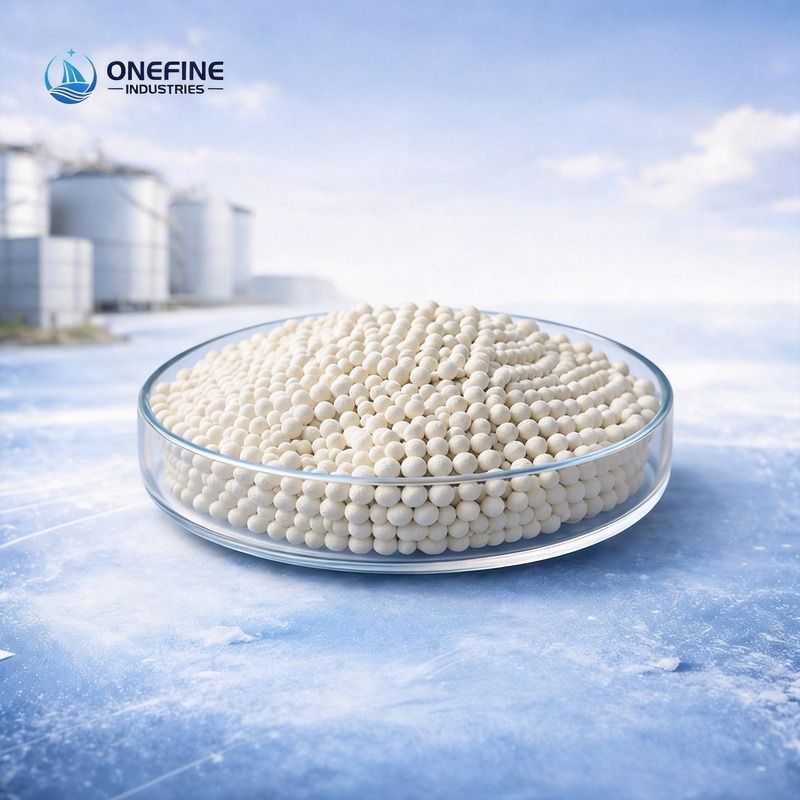
COS adsorbent
An advanced purification adsorbent catalyst based on specialty alumina with active components. Performance equivalent to imported Selexsorb COS adsorbent. Strong chemical adsorption capacity for selective removal of trace COS, CS₂, and H₂S from cracked C₂–C₄ unsaturated hydrocarbon streams. Also effectively removes CO₂, H₂O, chlorides, cyanides, and other common poisons. Operates at ambient to low temperatures for deep feedstock purification.
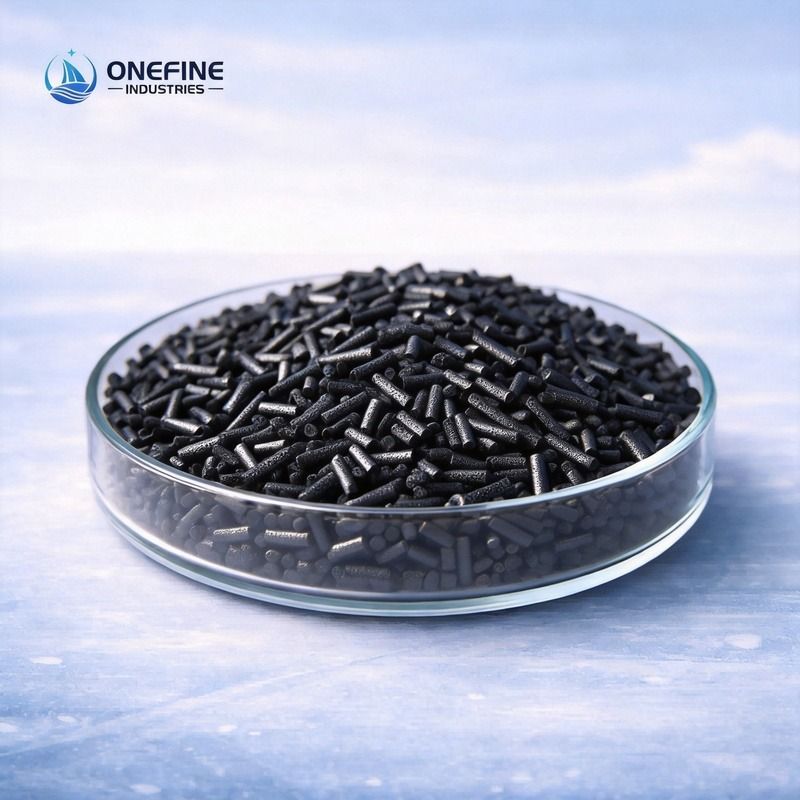
Ethylene Purification Adsorbent
A CuO-ZnO adsorbent designed for the removal of CO from polymer-grade ethylene feedstock, while also removing trace amounts of O₂, H₂S, COS, AsH₃, and PH₃. Prepared by co-precipitation method with uniformly dispersed active components. Features high selectivity, high activity, excellent mechanical strength, large capacity, and easy operation. Protects polymerization catalysts from poisoning and ensures stable polyethylene production.
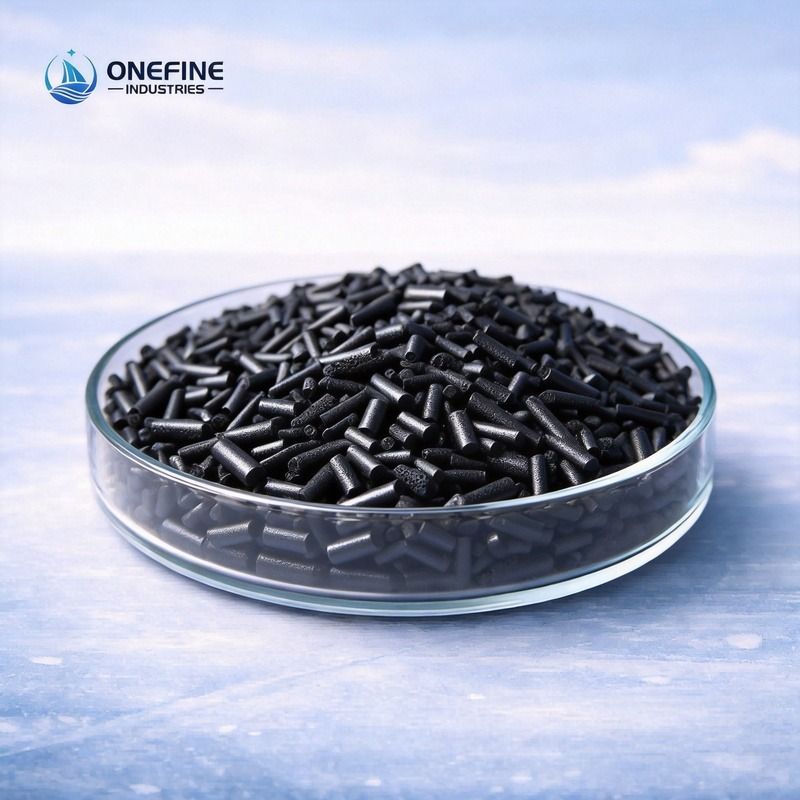
Propylene Purification Adsorbent
A CuO-ZnO adsorbent designed for the removal of CO from polymer-grade propylene feedstock, while also removing trace amounts of O₂, H₂S, COS, AsH₃, PH₃, and other impurities. Prepared by co-precipitation method with uniformly dispersed active components. Features high selectivity, high activity, excellent mechanical strength, large capacity, and easy operation. Protects polymerization catalysts from poisoning and ensures stable polypropylene production.