Key Takeaways
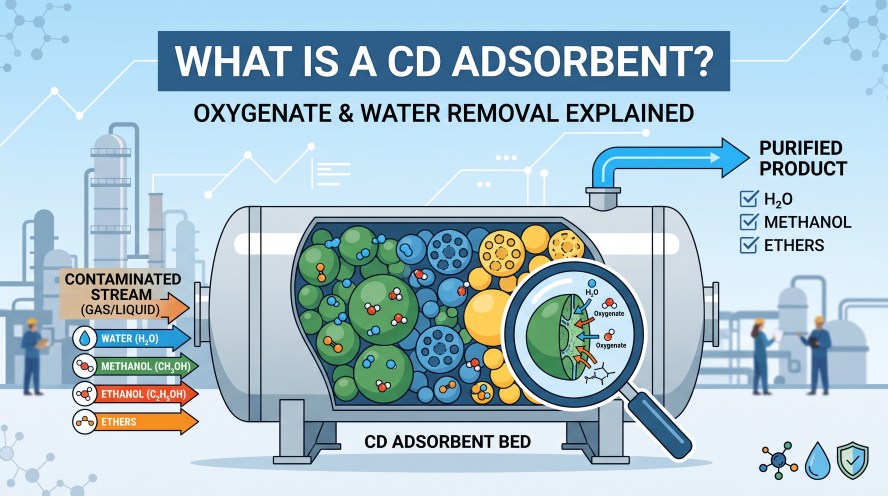
- A CD adsorbent is a specialty alumina-based guard bed material that selectively removes oxygenates (alcohols, ethers, aldehydes, ketones, peroxides), water, and mercaptans from C₂–C₄ olefin streams feeding PE and PP units.
- It delivers performance equivalent to imported Selexsorb CD adsorbent and operates effectively from 10°C without preheating.
- It's regenerable with N₂ purge gas and is commonly paired downstream of a COS adsorbent in a two-stage polymerization-grade purification train.
Introduction
Polyethylene and polypropylene polymerization catalysts — whether Ziegler-Natta or metallocene — are extraordinarily sensitive to trace polar contaminants. Oxygenated organic compounds like alcohols, ethers, aldehydes, and peroxides, along with water and mercaptans, can deactivate active sites even at parts-per-million concentrations. A CD adsorbent is the specialty guard bed material engineered specifically to strip these polar contaminants from cracked C₂–C₄ olefin monomer and comonomer streams before they ever reach the reactor.
What Problem Does It Solve?
Sulfur-focused guard beds handle COS, CS₂, and H₂S, but oxygenates are a different contamination class entirely — and one that ordinary drying or desulfurization beds aren't built to target efficiently. Left in the feed, these polar compounds interfere with catalyst active sites in ways that reduce polymer yield and can push output off-spec. What's needed is a chemisorption surface tuned specifically for oxygen-containing functional groups, plus the ability to simultaneously handle water and mercaptans in the same bed — without adding a separate drying stage.
How a CD Adsorbent Works
Our CD Adsorbent is built on a specialty Al₂O₃ carrier modified with active components that give it strong chemical adsorption affinity for polar compounds. The mechanism operates on two fronts:
Oxygenate removal: Alcohols, ethers, aldehydes, and ketones are chemisorbed onto the modified alumina surface, where polar functional groups (–OH, –CHO, –CO–, –O–) interact strongly with active sites. Peroxides are captured and decomposed on the same surface.
Water and mercaptan capture: Water is adsorbed through hydrogen bonding and chemisorption on the alumina surface, while mercaptans (RSH) are captured by active metal sites through an acid-base interaction.
Because the mechanism is chemical rather than purely physical, the bed performs effectively from 10°C up to 120°C, with no feed preheating required for most applications — an operating cost advantage that matters for continuous polymer-grade feed lines.
Where It Fits in the Process
The primary application is as a guard bed upstream of PE and PP polymerization reactors, but the same chemistry applies wherever polar contaminants threaten downstream catalysts:
- MTBE and raffinate treatment, removing methanol, dimethyl ether, and tertiary butyl alcohol from C₄ raffinate streams
- Alkylation and isomerization feed protection, where oxygenates and water would otherwise deactivate acid catalysts
- Syngas and hydrogen drying, where the adsorbent doubles as a high-performance desiccant alongside its oxygenate-removal role
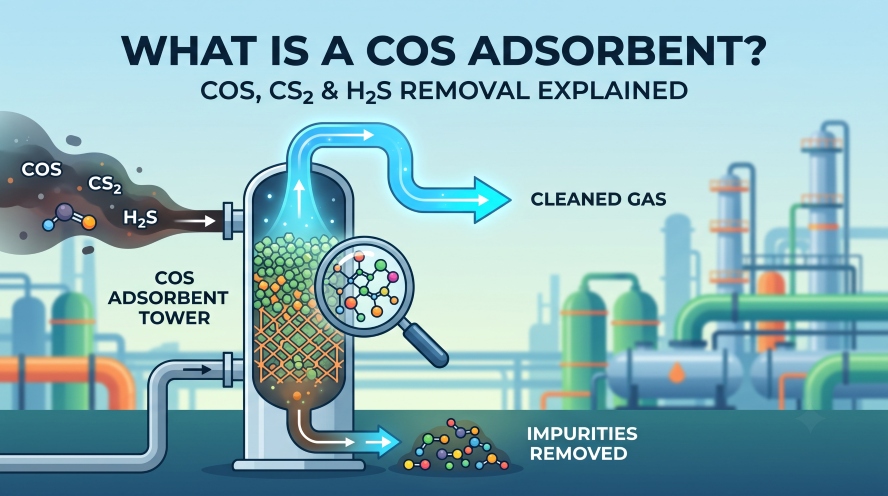
Sulfur compounds — COS, CS₂, H₂S — are a separate contamination class that a CD adsorbent isn't designed to target. That's why it's commonly installed downstream of our COS Adsorbent, which handles sulfur removal first. Together, the two form a complete two-stage guard bed train for polymerization-grade olefin feed — see our COS adsorbent guide for how the sulfur-removal stage works. For polymer-grade ethylene or propylene monomer specifically, the train often extends to a third stage — see our Ethylene or Propylene Purification Adsorbent for the final CO removal step.
It's also worth distinguishing this from a general-purpose product like Activated Alumina, which handles broad dehydration duties across many gas streams without the targeted oxygenate chemistry a CD adsorbent provides. If your feed stream carries polymerization-grade contamination risk specifically from oxygenates, water, and mercaptans, a CD adsorbent is the more precise tool.
Selexsorb-Equivalent Performance
For buyers currently relying on imported Selexsorb CD adsorbent, the domestic equivalent is engineered to match its surface area, pore volume, and adsorption capacity — delivering the same purification outcome with shorter lead time and lower landed cost for buyers across the Middle East.
Regeneration and Service Life
The bed regenerates with N₂ purge gas at 99% purity, at temperatures up to a maximum of 340°C, restoring adsorption capacity for repeated service cycles. Actual service life depends on inlet contaminant load, operating temperature and pressure, space velocity, and your required outlet purity — so it's worth confirming expected cycle length against your specific feed conditions rather than assuming a fixed interval.
FAQ
Q: Do I need both a COS adsorbent and a CD adsorbent, or does one cover everything? They target different contaminant classes — COS adsorbent handles sulfur compounds (COS, CS₂, H₂S) plus CO₂/chlorides/cyanides, while CD adsorbent handles oxygenates, water, and mercaptans. A polymerization-grade purification train typically uses both in sequence rather than relying on either alone.
Q: Why does the regeneration temperature for CD adsorbent go up to 340°C when it operates at just 10–120°C in service? Service temperature and regeneration temperature serve different purposes. The lower service temperature range is what the bed needs to actively adsorb contaminants; the higher regeneration temperature is what's needed to drive off captured oxygenates and water so the bed can be reused.
Q: Can this adsorbent be dropped into an existing vessel sized for imported Selexsorb CD material? The physical form (Φ1.5–3.0 mm spherical granules) matches standard guard bed configurations, so it generally fits existing vessel designs — though bed height and loading should still be confirmed against your vessel's specific geometry.
Recommended Products from Sorbsieve
- CD Adsorbent — the primary oxygenate/water/mercaptan guard bed material covered in this guide
- COS Adsorbent — the companion sulfur-removal stage for the same purification train
- Activated Alumina — general-purpose dehydration and purification for broader gas treatment applications
Looking for Bulk Supply of CD Adsorbent?
Sorbsieve is a trusted bulk supplier of CD adsorbent and complete industrial adsorbents, serving industrial buyers across the Middle East.
We provide:
- ✅ Container-level supply (20'GP / 40'GP / 40'HQ)
- ✅ Full documentation (COA / TDS / SDS / COO)
- ✅ Multiple packaging options
- ✅ Technical support for CD adsorbent selection and system optimization
- ✅ Fast quote response for industrial inquiries
Contact our team for bulk pricing, product samples, and technical consultation.
Related Products
COS adsorbent
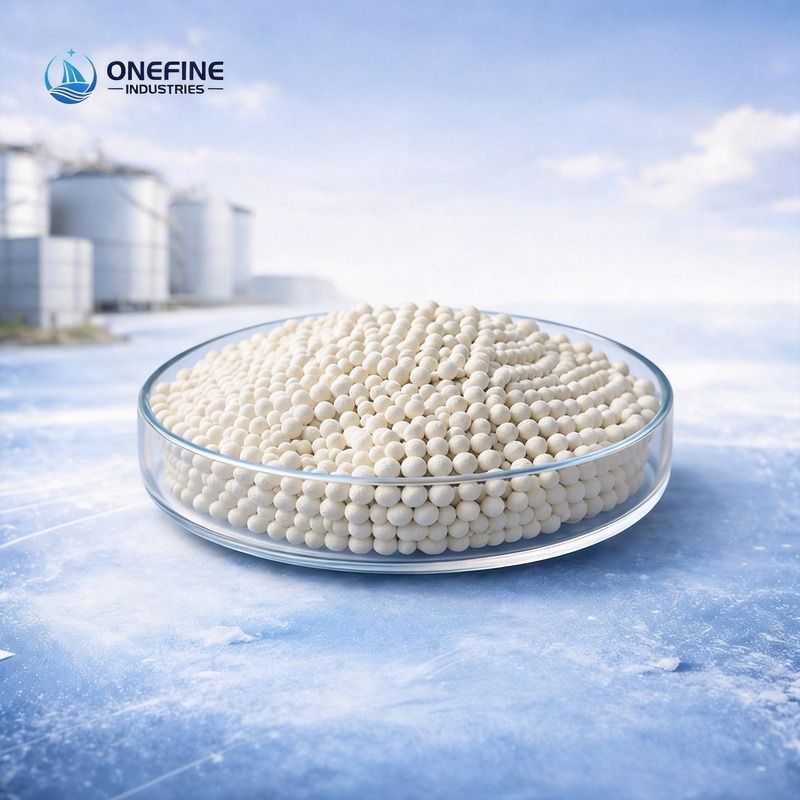
An advanced purification adsorbent catalyst based on specialty alumina with active components. Performance equivalent to imported Selexsorb COS adsorbent. Strong chemical adsorption capacity for selective removal of trace COS, CS₂, and H₂S from cracked C₂–C₄ unsaturated hydrocarbon streams. Also effectively removes CO₂, H₂O, chlorides, cyanides, and other common poisons. Operates at ambient to low temperatures for deep feedstock purification.
CD adsorbent
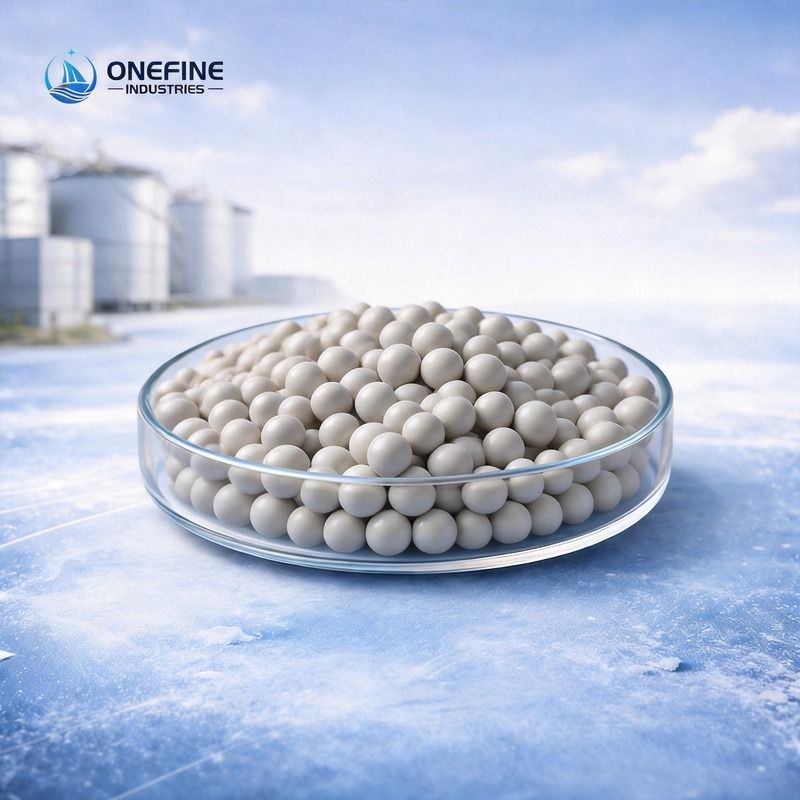
An advanced purification adsorbent catalyst based on specialty alumina with special modifiers. Performance equivalent to imported Selexsorb CD adsorbent. Strong chemical adsorption capacity for selective removal of trace oxygenated organic compounds (alcohols, ethers, aldehydes, ketones, peroxides) from C₂–C₄ unsaturated hydrocarbon streams in polyethylene and polypropylene units. Also effectively adsorbs water and mercaptans for deep feedstock purification. Operates at ambient to low temperatures.
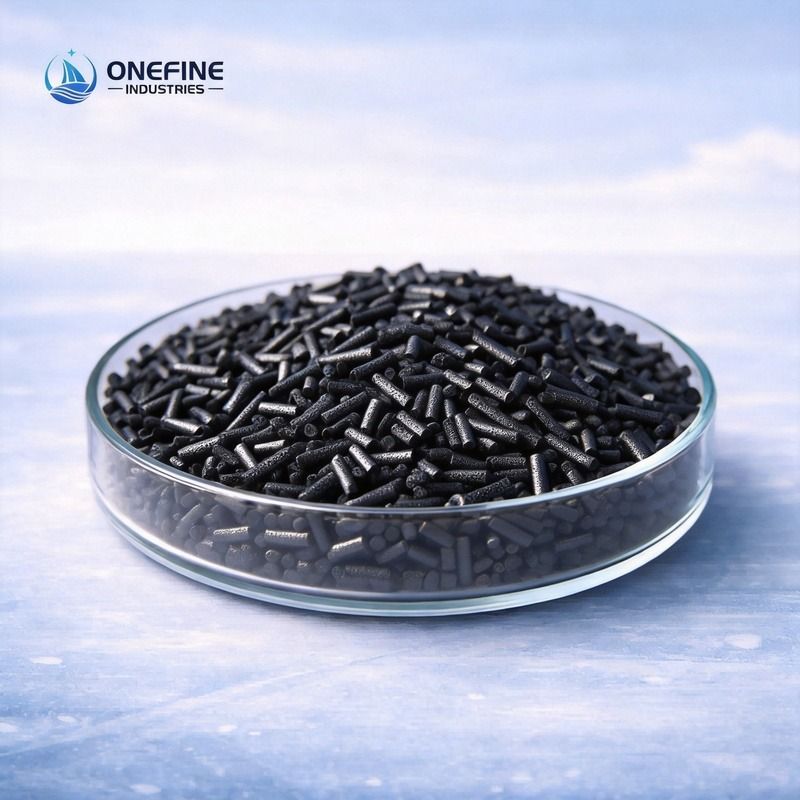
Ethylene Purification Adsorbent
A CuO-ZnO adsorbent designed for the removal of CO from polymer-grade ethylene feedstock, while also removing trace amounts of O₂, H₂S, COS, AsH₃, and PH₃. Prepared by co-precipitation method with uniformly dispersed active components. Features high selectivity, high activity, excellent mechanical strength, large capacity, and easy operation. Protects polymerization catalysts from poisoning and ensures stable polyethylene production.