Shift Catalyst (Fe-Cr Series)
Fifth-generation iron-chromium water-gas shift catalyst manufactured via co-precipitation from nitrate precursors, delivering high CO conversion activity, low sulfur content, excellent mechanical strength, and extended service life for hydrogen production, syngas, ammonia synthesis, and methanol synthesis processes.
Get QuoteKey Attributes
- Optimized pore structure minimizes diffusion resistance and maximizes active site accessibility.
- Significantly reduces inlet steam-to-gas ratio while suppressing Fischer-Tropsch side reactions.
- Structural, electronic, and activity promoters work synergistically to slow sintering deactivation.
- Stable above 500 °C for 10,000+ hours with activity decay below 15%.
- Inherent sulfur ≤ 0.025 wt.% with tolerance up to 50 ppm H₂S in feed gas.
- Crush strength ≥ 80 N/pellet prevents bed attrition in large-scale fixed-bed reactors.
- Compatible with natural gas, naphtha, refinery gas, residue oil, and coal-based feedstocks.
Applications
- Hydrogen production plants for efficient CO-to-H₂ conversion via water-gas shift reaction.
- Syngas manufacturing for H₂/CO ratio adjustment in synthesis gas streams.
- Ammonia synthesis plants requiring deep CO removal to protect downstream synthesis catalysts.
- Methanol synthesis operations for precise syngas composition control.
- Petrochemical CO shift processes in refinery and chemical complex operations.
- Energy-saving processes using natural gas, naphtha, refinery gas, residue oil, or coal as feedstock.
- First-stage bulk CO conversion in two-stage shift trains upstream of low-temperature shift polishing.
- Oil refinery hydrogen plants requiring high-throughput CO conversion under moderate steam ratios.
- Coal-to-chemicals syngas trains where sulfur-tolerant shift performance is required.
- Fertilizer complex hydrogen units integrating shift conversion with downstream ammonia loops.
Product Description
Key Takeaway:
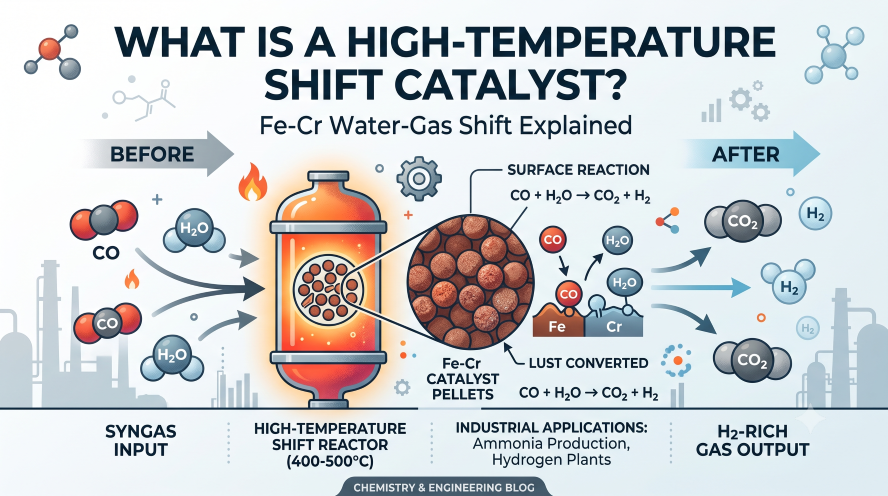
The Fe-Cr Shift Catalyst handles the bulk of CO conversion (60–75% of total load) as the first stage in a two-stage water-gas shift train, operating at 300–520 °C before a low-temperature shift catalyst polishes residual CO.
What Is Shift Catalyst (Fe-Cr Series)?
The Shift Catalyst (Fe-Cr Series) is a fifth-generation iron-chromium based water-gas shift catalyst manufactured using a co-precipitation process with nitrate precursors. Through the addition of carefully optimized structural promoters, electronic promoters, and activity promoters, the catalyst achieves a refined micropore structure and optimized pore size distribution that overcomes internal diffusion limitations. This design significantly reduces the required inlet steam-to-gas ratio while simultaneously mitigating Fischer-Tropsch (F-T) side reactions, improving both process efficiency and product selectivity.
The synergistic interaction among all components enhances the catalyst's thermal resistance, sulfur tolerance, mechanical strength, and low-temperature catalytic activity, collectively extending its operational service life. The Fe₂O₃ phase (≥ 75.0 wt.%) provides the primary active sites for the CO + H₂O ⇌ CO₂ + H₂ reaction, while Cr₂O₃ (≥ 7.0 wt.%) acts as a structural stabilizer that anchors Fe₃O₄ crystallite boundaries and inhibits high-temperature grain growth, maintaining a high-density active interface throughout the catalyst's lifetime.
The shift catalyst is applicable to hydrogen production, syngas manufacturing, ammonia synthesis, methanol synthesis, and CO shift processes in the petrochemical industry. It is also suitable for energy-saving processes using natural gas, naphtha, refinery gas, residue oil, and coal as raw materials, offering advantages including excellent low-temperature activity, high mechanical strength, low inherent sulfur content, and superior sulfur resistance.
How It Works
The water-gas shift reaction (CO + H₂O ⇌ CO₂ + H₂) is a cornerstone reaction in industrial hydrogen and syngas production. In a typical shift conversion unit, the Fe-Cr catalyst operates in the high-temperature shift (HTS) stage, typically handling 60–75% of the total CO conversion load.
The reaction follows the Langmuir-Hinshelwood mechanism, where CO and H₂O molecules adsorb onto different crystal facets of the Fe₃O₄ surface, undergo dissociation and surface migration, and complete the redox cycle mediated by oxygen vacancies. Cr₂O₃ plays a critical structural role by anchoring the Fe₃O₄ crystallite boundaries, suppressing high-temperature grain coarsening and maintaining the high-density active interface necessary for sustained catalytic performance.
The co-precipitation manufacturing process ensures uniform distribution of active components and promoters throughout the catalyst matrix. Structural promoters optimize the pore architecture for efficient mass transfer, electronic promoters enhance the intrinsic activity of iron active sites, and activity promoters improve low-temperature performance. This multi-promoter synergy delivers high CO conversion at reduced steam-to-gas ratios while minimizing unwanted Fischer-Tropsch by-product formation — a common issue with conventional shift catalysts operating under low-steam conditions.
Because the copper-based catalyst used downstream for final CO polishing is highly sensitive to sulfur, the feed gas entering the shift train is typically desulfurized upstream using a hydrodesulfurization catalyst combined with a zinc oxide guard bed to protect catalyst performance across the entire shift train. For a deeper look at how this catalyst works alongside the low-temperature stage, see our companion guide: What Is a High-Temperature Shift Catalyst?
Why Choose Our Shift Catalyst
- Optimized Co-Precipitation Process: Fifth-generation manufacturing technology with controlled nitrate co-precipitation delivers consistent catalyst quality, uniform composition, and reproducible performance batch after batch.
- Superior Low-Temperature Activity: Advanced promoter system achieves high CO conversion at the lower end of the operating temperature range, reducing energy consumption and enabling more efficient process design.
- Minimal Side Reactions: Significantly suppressed Fischer-Tropsch activity at low steam-to-gas ratios prevents unwanted hydrocarbon by-product formation, protecting downstream purification units.
- Ultra-Low Inherent Sulfur: Body sulfur content ≤ 0.025 wt.% ensures the catalyst itself does not introduce sulfur contamination into the process gas stream.
- Extended Service Life: Synergistic component design slows sintering deactivation and maintains structural integrity, with typical service life of 2–3 years under standard operating conditions.
- Broad Feedstock Flexibility: Compatible with natural gas, naphtha, refinery gas, residue oil, and coal-derived feedstocks, making it suitable for diverse industrial configurations.
- Proven Two-Stage Compatibility: Designed to operate as the first stage ahead of our Low Temperature Shift Catalyst (Cu-Zn-Al Series) for complete CO conversion in a single integrated shift train.
Regeneration
Fe-Cr shift catalysts are not typically regenerated once deactivated. Deactivation is driven primarily by gradual crystallite growth (sintering) at operating temperature and, less commonly, sulfur uptake beyond the catalyst's tolerance threshold; both mechanisms are effectively irreversible under normal process conditions. Some activity recovery is possible from mild, reversible poisoning, but replacement at the end of the catalyst's typical 2–3 year service life is the standard industry approach rather than in-situ regeneration.
Packaging & Shipping
We offer flexible packaging and shipping options to suit your project scale and logistics requirements.
Standard Packaging:
- 25 kg drums (moisture-proof, suitable for trial orders and small batches)
- 150 kg steel drums (standard bulk packaging for industrial orders)
- 500 kg super sacks (most popular for industrial bulk orders)
- 1000 kg jumbo bags (for large-scale projects)
- Custom packaging available on request
Minimum Order Quantity (MOQ):
- 1 ton (entry-level orders accepted — perfect for first-time customers)
- 5+ tons (standard bulk orders)
- Container-level supply for long-term partnerships
Container Loading Capacity:
- 20'GP container: 18–20 tons (palletized)
- 40'GP container: 22–24 tons (palletized)
- 40'HQ container: 24–26 tons
Loading Ports: We ship from major Chinese ports based on your requirements: Shanghai, Qingdao, Tianjin, Ningbo, and Shenzhen.
Lead Time:
- Stock orders: 7–15 days from payment confirmation
- Made-to-order: 20–30 days
Shipping Terms: FOB / CIF / CFR / EXW — flexible based on your destination and preferences.
Documents & Certificates
We provide complete documentation for every order:
📄 Technical Data Sheet (TDS) — Confirmed with you during product selection, ensuring exact specifications match your application requirements.
📄 Safety Data Sheet (SDS) — Provided before shipment, meeting all international transportation and handling standards.
📄 Certificate of Analysis (COA) — Issued for each production batch, delivered with your shipment for full quality traceability.
Additional documents available on request: Certificate of Origin (COO), Packing List, Commercial Invoice, Third-party Inspection Report (SGS / BV), Form E (for Middle East destinations with applicable tariff benefits).
FAQ
What is the primary function of a shift catalyst?
A shift catalyst promotes the water-gas shift reaction (CO + H₂O ⇌ CO₂ + H₂), converting carbon monoxide and steam into carbon dioxide and additional hydrogen. This reaction is fundamental to hydrogen production, syngas adjustment, and CO removal in ammonia and methanol synthesis processes.
What is the difference between high-temperature and low-temperature shift catalysts?
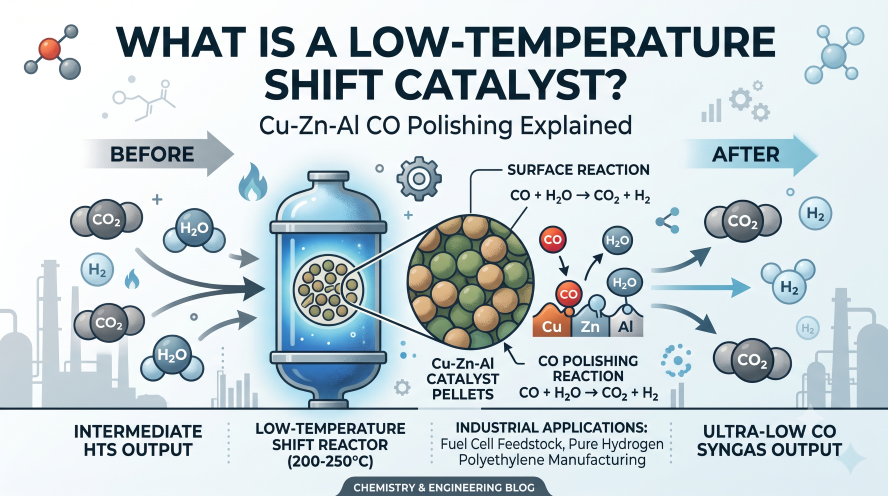
High-temperature shift (HTS) catalysts like this Fe-Cr product operate at 300–520 °C and typically handle the first-stage conversion (60–75% of total CO load). Low-temperature shift (LTS) catalysts (typically Cu-Zn-Al based) operate at 180–250 °C for final CO polishing to very low residual levels. HTS and LTS catalysts are used in series to achieve complete CO conversion.
Why is low sulfur content important in a shift catalyst?
Low inherent sulfur content (≤ 0.025 wt.%) ensures the catalyst does not introduce sulfur contamination into the process gas. Additionally, good sulfur tolerance (up to 50 ppm H₂S in feed) means the catalyst can handle feedstock with moderate sulfur levels without rapid deactivation, extending service intervals.
What feedstocks are compatible with this catalyst?
This catalyst is compatible with a wide range of feedstocks including natural gas, naphtha, refinery gas, residue oil, and coal. It is suitable for both conventional and energy-saving process configurations across hydrogen production, ammonia synthesis, methanol synthesis, and petrochemical applications.
How does the co-precipitation process improve catalyst performance?
Co-precipitation from nitrate precursors ensures uniform distribution of active components (Fe, Cr) and promoters at the molecular level. This results in consistent pore structure, high active site dispersion, and reproducible catalytic performance — advantages over impregnation-based methods where component distribution can be uneven.
What is the typical service life of this catalyst?
Under standard operating conditions, the typical service life is 2–3 years. Actual lifetime depends on feedstock quality, operating temperature, steam-to-gas ratio, sulfur exposure, and the frequency of thermal cycling. Proper operation within specified parameters maximizes catalyst longevity.
Can the catalyst size be customized?
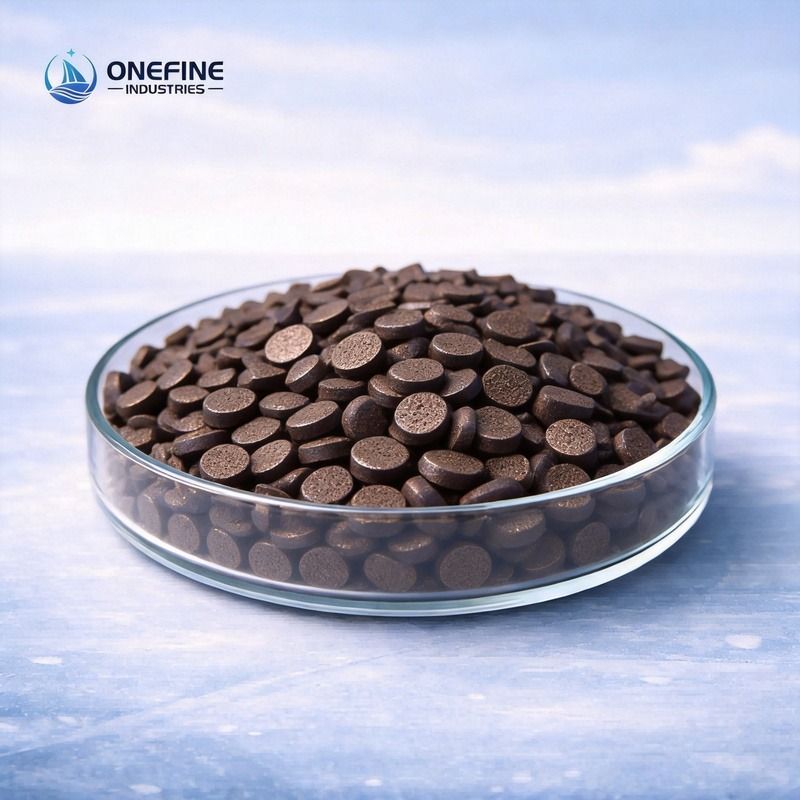
Yes. The standard size is Φ9×7 mm cylindrical pellets, but other sizes are available upon request to meet specific reactor design requirements and pressure drop considerations.
What is the advantage of reduced steam-to-gas ratio?
Lower steam-to-gas ratio reduces energy consumption (less steam generation required), lowers operating costs, and minimizes the risk of Fischer-Tropsch side reactions that produce unwanted hydrocarbon by-products. This catalyst achieves high CO conversion even at reduced steam levels, improving overall process economics.
Need a Custom Solution?
For bulk pricing and grade recommendation, please send your feedstock composition and reactor conditions to us. Our technical team will get back to you within 24 hours with a tailored solution.
Technical Specifications
| Appearance | Cylindrical |
| Category | Fe-Cr |
| Size | Φ9×7 mm |
| Bulk Density | 1.50±0.10 kg/L |
| Specific Surface Area | 25–45 m²/g |
| Pore Volume | 0.15–0.25 ml/g |
| Radial Crush Strength | ≥ 80 N/pellet |
| Fe₂O₃ Content | ≥ 75.0 wt.% |
| Cr₂O₃ Content | ≥ 7.0 wt.% |
| Sulfur Content (as S) | ≤ 0.025 wt.% |
| Operating Temperature | 300–520 °C |
| Operating Pressure | 0.5–6.0 MPa |
| Gas Hourly Space Velocity (GHSV) | 1,500–3,500 h⁻¹ |
| Service Life | 2–3 years (typical) |
Related Products
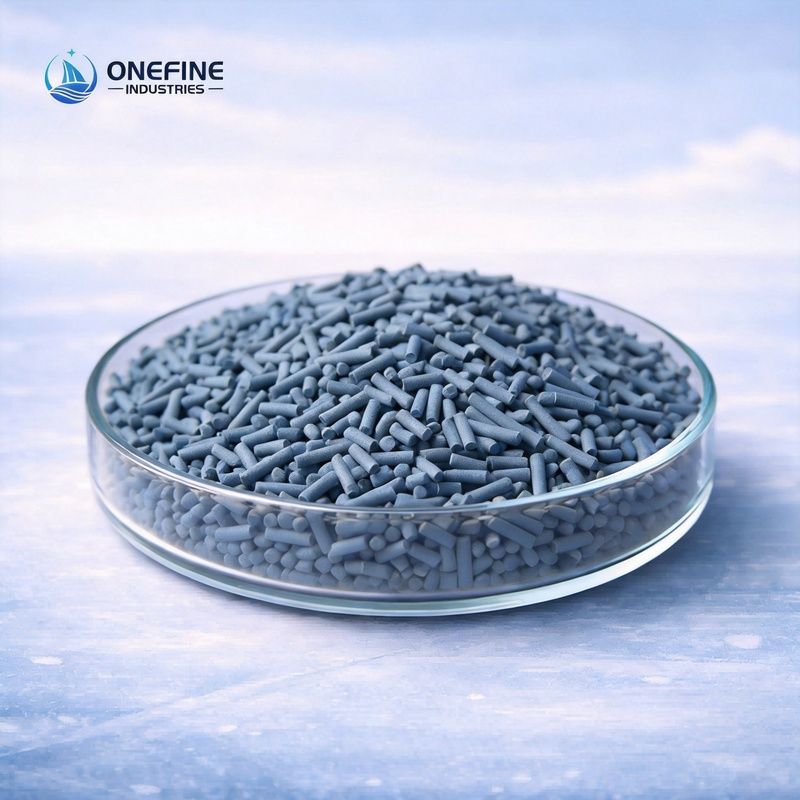
Co-Mo Hydrogenation Catalyst
A high-performance cobalt-molybdenum (Co-Mo) hydrogenation catalyst designed for hydrodesulfurization (HDS) and hydrotreating of petroleum fractions and synthesis gas. Features low light-off temperature, high mechanical strength, and excellent stability. Widely used in ammonia plant feed purification, naphtha pretreatment, refinery reforming feed desulfurization, and natural gas sweetening. Available with MOQ from 1 ton, customizable appearance, particle size, and active component loading.
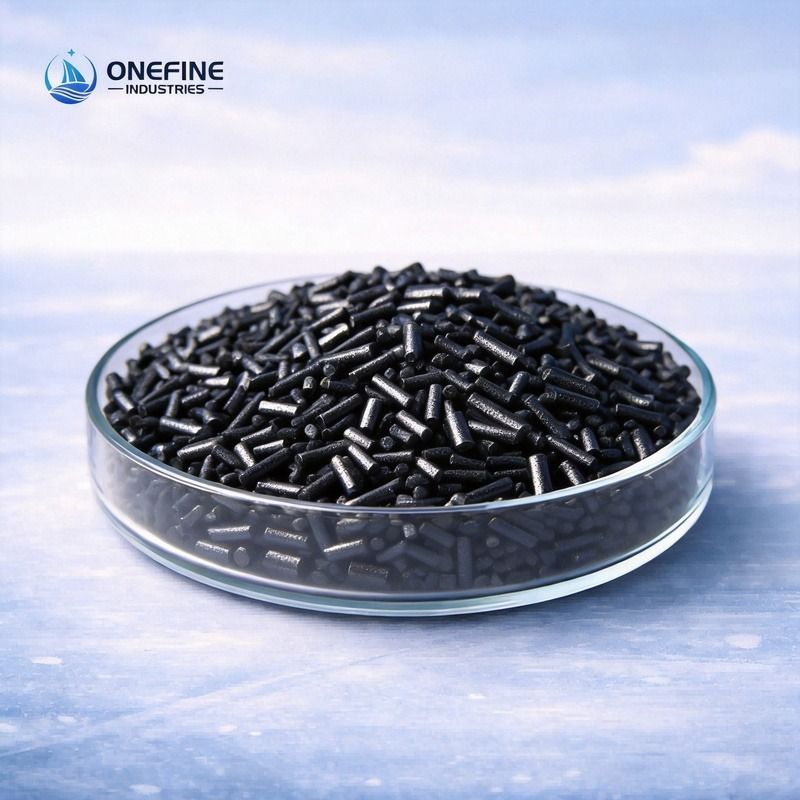
Low Temperature Shift Catalyst (Cu-Zn-Al Series)
Co-precipitation copper-zinc-aluminum low temperature shift (LTS) catalyst delivering exceptional CO conversion at 180–250 °C, with superior low-temperature activity, high mechanical strength, and excellent sulfur tolerance for hydrogen production, syngas, ammonia synthesis, and methanol synthesis processes.
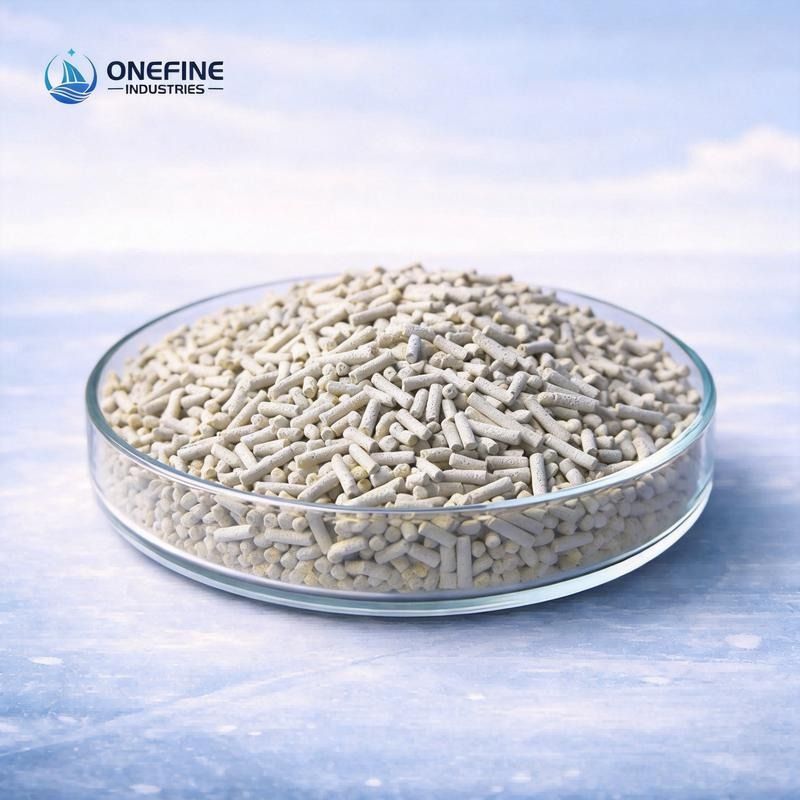
Zinc oxide desulfurization catalyst
High-purity zinc oxide (ZnO) desulfurization catalyst for fine removal of H₂S from natural gas, synthesis gas, hydrogen, and hydrocarbon feeds. Achieves outlet sulfur levels below 0.1 ppm through irreversible chemisorption. High sulfur capacity, long service life, and strong resistance to steam.