How Do You Know When to Replace 4A Molecular Sieve in a Compressed Air or Industrial Gas Drying System?

Key Takeaways
- Granular desiccant in a sachet and fiber/sheet-form desiccant can both use the same core active material — the real difference between them is physical form, not chemistry.
- Sheet-form desiccant is typically made by laminating the active material (commonly calcium chloride) between film layers into a thin, rigid card, which solves packaging and handling problems a granular sachet cannot.
- Choosing between the two formats is a packaging-engineering decision — available space, package shape, and how the product will be inserted during manufacturing — not a moisture-protection decision, since both formats address humidity using the same underlying material.
4A molecular sieve basics covers the material itself — this piece is about knowing when a bed has reached the end of its working life. 4A sieve is the workhorse desiccant in most compressed air and industrial gas drying beds — but like any adsorbent, it doesn't dry forever. The problem is that degradation is usually gradual, not sudden, so plants often keep running a tired bed well past the point where it's actually doing its job. Knowing the real warning signs — not just "it's been a while" — helps you time replacement correctly: not too early (wasting good material) and not too late (risking moisture carryover into downstream equipment). Here's what actually signals that your 4A bed needs attention.
1. Rising Outlet Dew Point Is the Clearest Signal
The most direct evidence of a failing bed is a rising dew point at the dryer outlet. A healthy 4A bed holds the outlet dew point steady within its design range; as the sieve loses adsorption capacity, that dew point starts to creep upward — first as small, repeated rises beyond normal day-to-day variation, then as a clear breakthrough where moisture passes straight through the bed. If your system has a dew point monitor or you run periodic breakthrough checks, a steady upward trend over several regeneration cycles — not just one off-day reading — is the strongest single indicator that the sieve's effective capacity has dropped and replacement should be scheduled.
2. Dusting, Fines, and Bead Breakdown
Physical degradation shows up before performance fully collapses. 4A beads can break down into fine powder from a few common causes: liquid water (rather than vapor) entering the bed and causing thermal shock during regeneration, abrasion from high gas velocity through the bed, and mechanical stress from rapid pressurization or depressurization during cycle switching. The downstream symptom is usually a clogged after-filter — if you're changing filter elements more often than usual, or finding fine powder in the housing, it's worth opening the vessel and checking the bed itself. Significant fines in sieve that's only been in service a short time usually point to a root cause — like a failed aftercooler drain letting liquid water carry over — rather than normal wear, so that upstream issue needs fixing alongside any replacement.
3. Rising Pressure Drop Across the Bed
As beads break down and fines accumulate, the pressure drop across the vessel climbs. This isn't just an efficiency issue — a bed generating excessive pressure drop is usually a bed that has already lost structural integrity, and the fines causing it are often migrating downstream to foul filters and instrumentation. Tracking pressure drop trend alongside dew point gives a fuller picture than either reading alone, since a bed can show a pressure drop problem before dew point fully breaks through.
4. Contamination From Oil, Hydrocarbons, or Particulates
4A sieve beds in compressed air and gas systems are vulnerable to fouling from compressor lubricant carryover, heavier hydrocarbons, or solid particulates that weren't fully removed upstream. Unlike normal moisture cycling, this kind of fouling is often not reversible through standard thermal regeneration — the contaminant blocks pore access rather than simply occupying adsorption sites temporarily. A practical warning sign is regeneration that no longer restores the bed's performance the way it used to, or a noticeably shorter interval before the next breakthrough even after a full regeneration cycle. If pre-filtration or coalescing upstream of the bed isn't adequate, replacing the sieve without fixing the contamination source just resets the clock on the same failure.
5. Age and Regeneration Frequency as Secondary Indicators
Service life for 4A sieve in compressed air and gas drying varies widely depending on contamination load, cycle frequency, and regeneration quality, so there's no single lifespan figure that applies reliably across different systems. Independent of any specific timeline, a bed that needs regenerating more frequently than it used to — or that's simply been in service for an extended period without any performance check — is worth inspecting even in the absence of an obvious dew point problem, since physical attrition accumulates gradually and doesn't always announce itself before it does.
Recommended Products from Sorbsieve
4A Molecular Sieve remains the standard choice for compressed air and industrial gas drying applications where a dependable, general-purpose water capacity is needed. For systems using activated alumina as a front-stage or primary desiccant instead, see our guide on compressed air dryer basics.
FAQ
Q: Can a 4A molecular sieve bed be partially replaced, or does the whole bed need changing? A: It depends on how the degradation is distributed. If fines or contamination are concentrated near the inlet layer, some systems allow a partial top-off or layer replacement. But if dew point breakthrough is confirmed system-wide, a full bed change is the safer approach — partial replacement with sieve of mixed age tends to regenerate unevenly.
Q: Does over-regenerating (too hot, too often) shorten 4A sieve life? A: Yes. Running regeneration temperatures above what your dryer manufacturer specifies for 4A sieve accelerates loss of crystalline structure over time, which shows up as reduced capacity even though the bed looks physically intact. Stick to the regeneration temperature specified for your system rather than assuming hotter always means drier.
Q: Is a gradual dew point rise always a sieve problem, or could it be something else? A: Not always. Before assuming the sieve itself is spent, check for a failed aftercooler drain, a pre-filter that's bypassing, or a valve not fully switching between towers — any of these can produce the same symptom as a genuinely exhausted bed.
Q: How is 4A different from 3A when it comes to replacement signals? A: The warning signs themselves — dew point rise, dusting, pressure drop — are similar across pore sizes. The difference is in application: 3A is chosen specifically to exclude larger co-adsorbed molecules like ethanol, so see our 3A vs 4A comparison if you're troubleshooting a system where selectivity, not just water capacity, is the concern.
Looking for Bulk Supply of 4A Molecular Sieve?
Sorbsieve is a trusted bulk supplier of 4A Molecular Sieve and complete industrial adsorbents, serving industrial buyers across the Middle East.
We provide:
- ✅ Container-level supply (20'GP / 40'GP / 40'HQ)
- ✅ Full documentation (COA / TDS / SDS / COO)
- ✅ Multiple packaging options
- ✅ Technical support for 4A Molecular Sieve selection and system optimization
- ✅ Fast quote response for industrial inquiries
Contact our team for bulk pricing, product samples, and technical consultation.
Related Reading
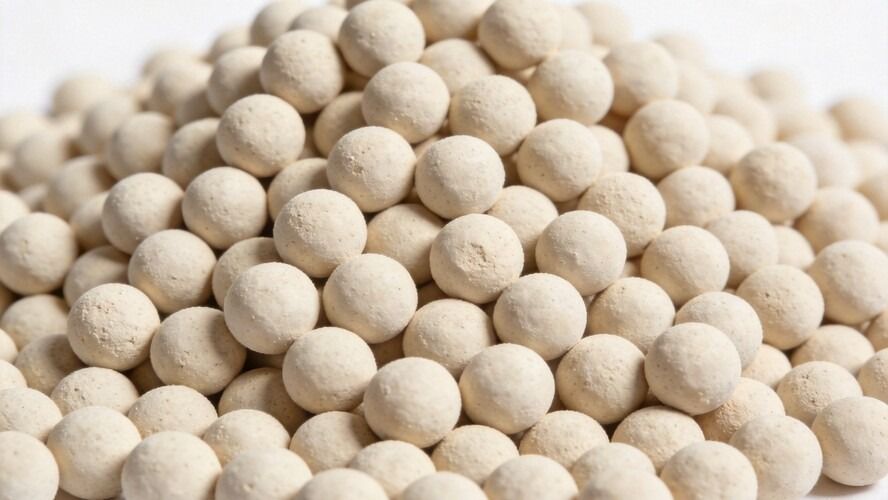
What is 4A Molecular Sieve? Uses, Specifications & How It Works
Everything you need to know about 4A molecular sieve: how it works, its 4Å pore size, physical adsorption process, and main industrial applications like air drying and CO2 removal.
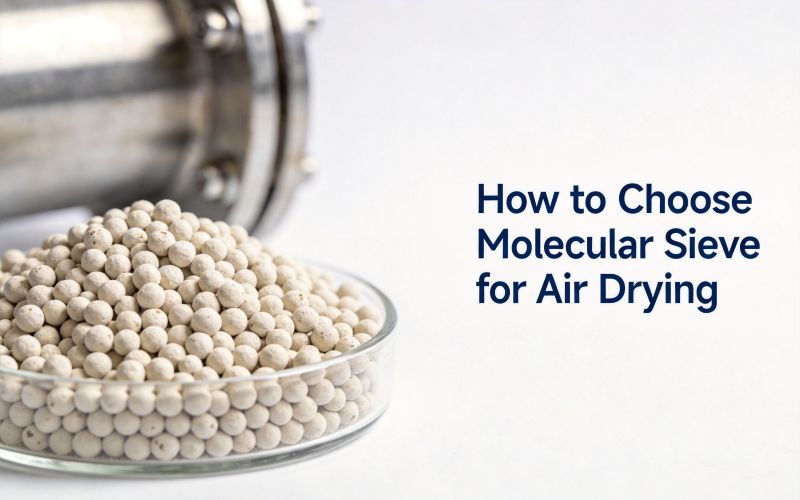
How to Choose Molecular Sieve for Air Drying
A practical guide to selecting the right molecular sieve for compressed air drying applications — covering dew point targets, contaminant removal, form factor, regeneration method, and common selection mistakes to avoid.
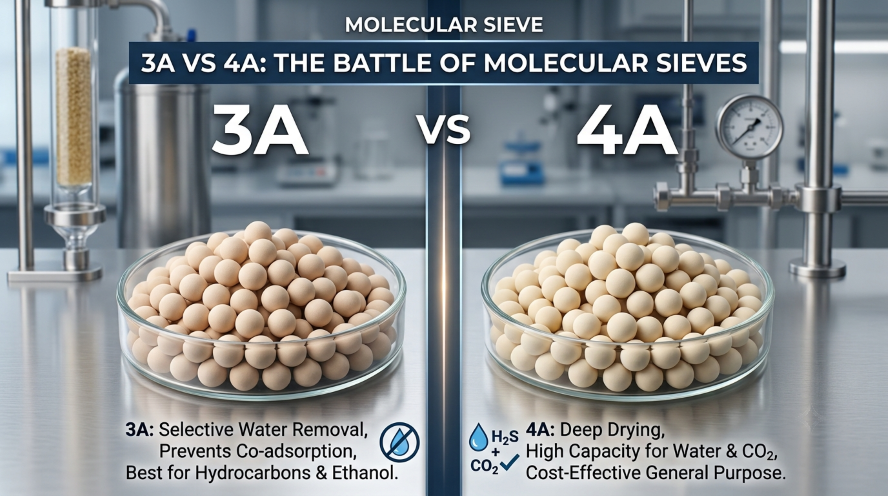
3A vs 4A Molecular Sieve: Key Differences & How to Choose
In-depth guide comparing 3A and 4A molecular sieves. Covers pore size differences, adsorption selectivity, capacity comparison, application scenarios for each type, and practical guidance on selecting the right molecular sieve for your industrial drying or gas separation needs.