Technical & Troubleshooting Guides
Practical sizing, troubleshooting, and technical guidance for molecular sieve systems.
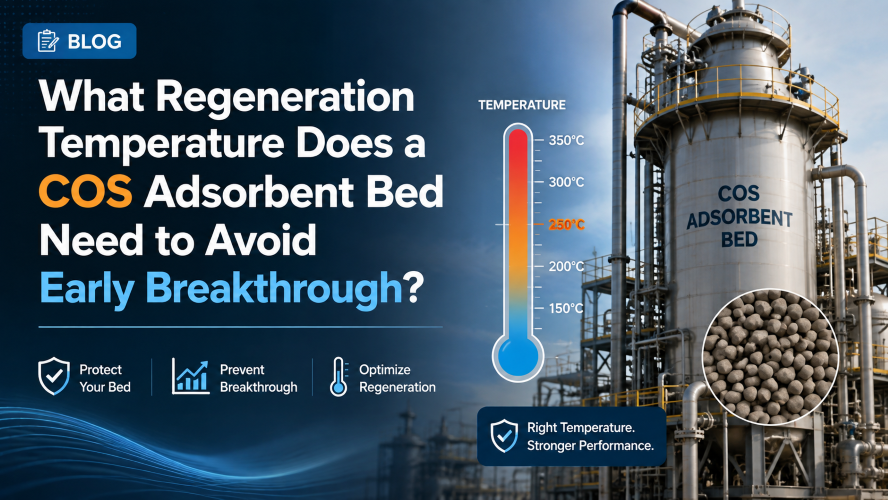
What Regeneration Temperature Does a COS Adsorbent Bed Need to Avoid Early Breakthrough?
A COS adsorbent bed that breaks through earlier than usual often isn't at end of life — it's the regeneration temperature that's drifted off spec. This guide covers how thermal swing regeneration works, what happens when purge temperature runs too low or too high, and how to verify your setup is fully reactivating the bed.
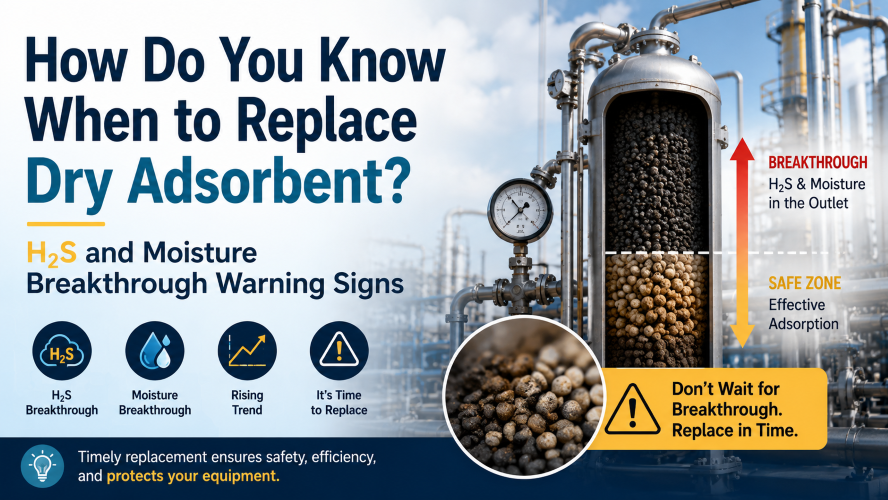
How Do You Know When to Replace Dry Adsorbent? H2S and Moisture Breakthrough Warning Signs
How to recognize early H2S and moisture breakthrough signs in a dry adsorbent bed, what operating conditions shorten service life, and when to plan replacement.
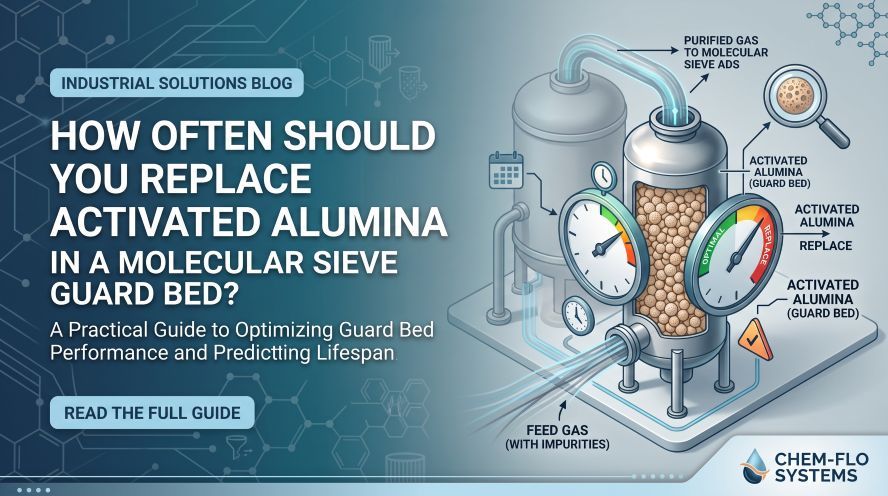
How Often Should You Replace Activated Alumina in a Molecular Sieve Guard Bed?
Activated alumina guard beds protect your molecular sieve system, but they don't last forever. Here's how to tell the difference between a bed that needs regeneration and one that needs full replacement — before a saturated guard bed lets moisture or oil straight through to your CMS or PSA oxygen system.
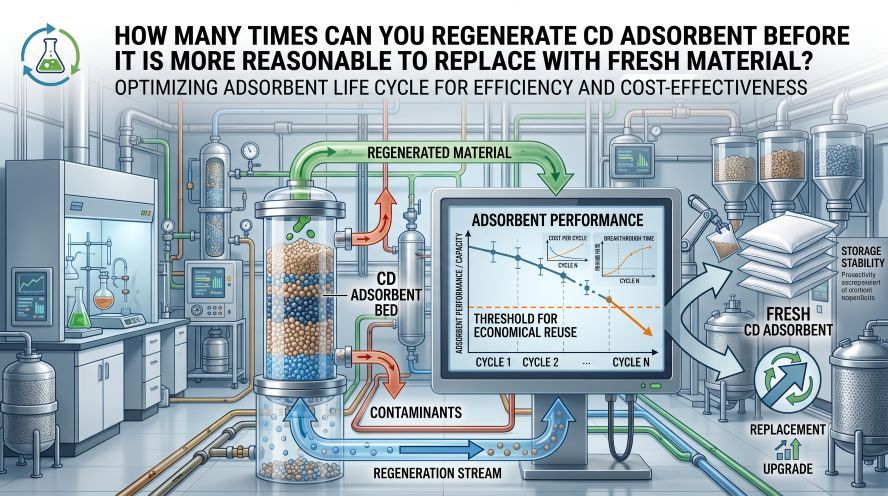
How Many Times Can You Regenerate CD Adsorbent Before Fresh Replacement Makes More Sense?
CD adsorbent is rated for N₂ purge regeneration up to 340°C — but regenerable doesn't mean unlimited. Here's how to read your own operating data to decide when another cycle still makes sense, and when a fresh charge is the safer call.
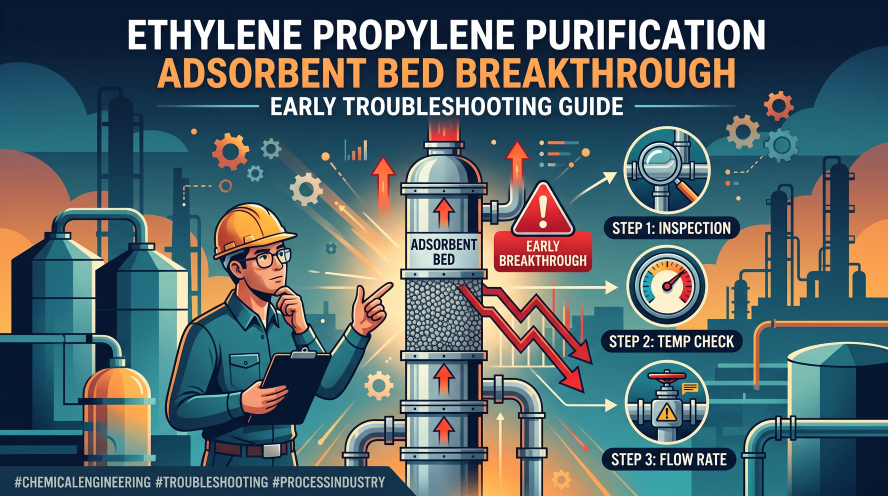
Why Is Your Ethylene/Propylene Purification Adsorbent Bed Breaking Through Early? Troubleshooting Guide
Early breakthrough in a CuO-ZnO ethylene/propylene purification bed is rarely just "the media is used up." This guide breaks down four distinct failure mechanisms — sulfate formation, moisture overload, copper sintering, and COS slip — and how to tell which one is driving your early breakthrough.
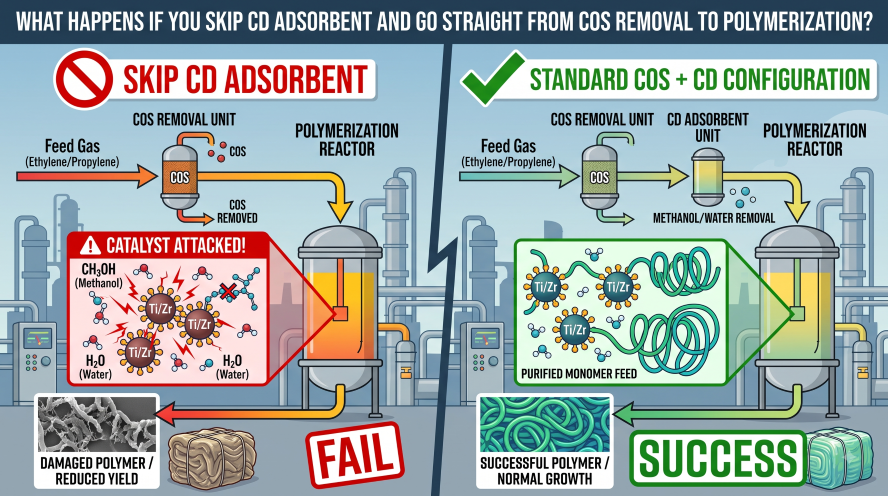
What Happens If You Skip CD Adsorbent and Go Straight from COS Removal to Polymerization?
Bypassing the CD adsorbent bed in an olefin purification train is a serious engineering misstep. This guide explains why oxygenates and moisture that slip past a COS adsorbent bed can permanently poison downstream polymerization catalysts — and why the two beds are not interchangeable.
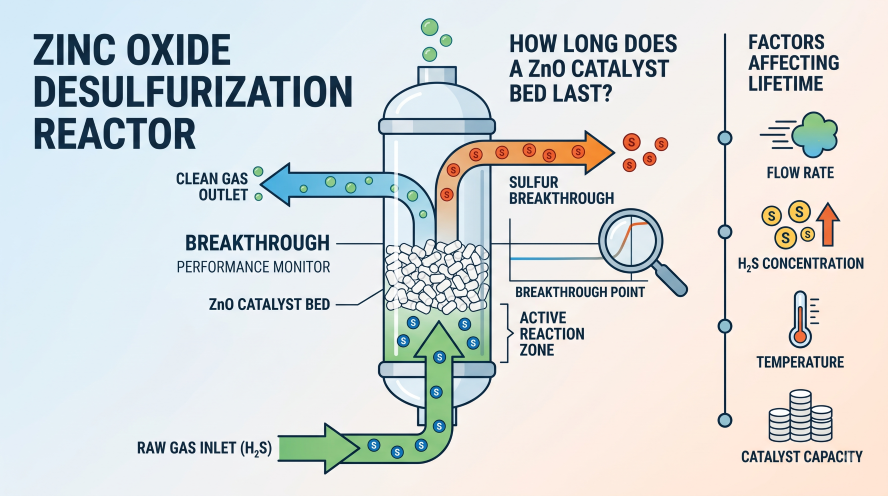
How Long Does a Zinc Oxide Desulfurization Catalyst Bed Last Before Breakthrough?
Discover the thermodynamic and kinetic principles dictating the lifespan of Zinc Oxide (ZnO) desulfurization guard beds. Learn how to calculate theoretical sulfur capacity, understand the Mass Transfer Zone (MTZ), and identify the variables that trigger premature hydrogen sulfide (H₂S) breakthrough.
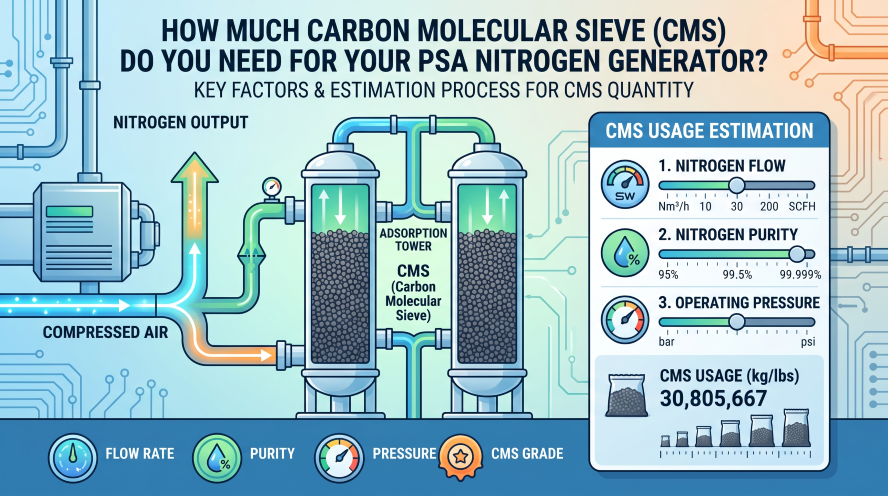
How Much Carbon Molecular Sieve Do You Need for a PSA Nitrogen Generator?
Discover the engineering calculations behind sizing a Pressure Swing Adsorption (PSA) nitrogen generator. Learn how Carbon Molecular Sieve (CMS) kinetic diffusion works, how target nitrogen purity dictates the Air-to-Nitrogen (A/N) ratio, and how to convert your CMS mass requirement into vessel geometry.
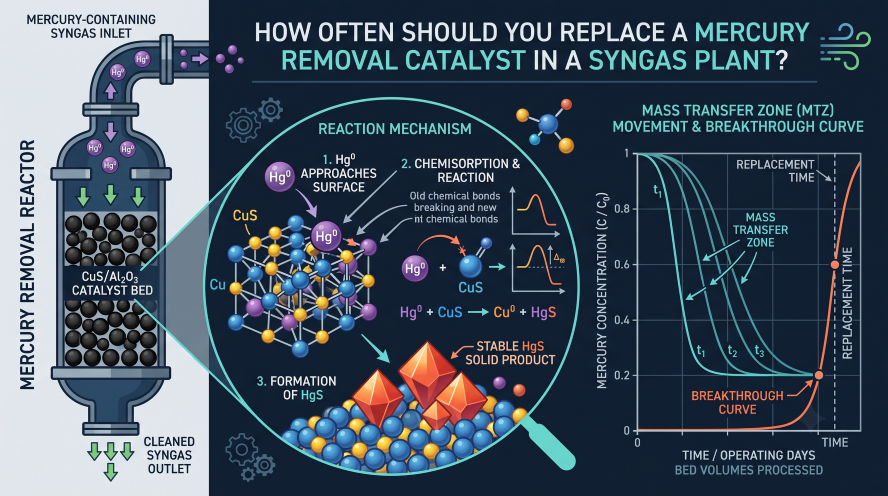
How Often Should You Replace a Mercury Removal Catalyst in a Syngas Plant?
Determining the exact replacement frequency for a mercury removal catalyst in a syngas plant requires analyzing irreversible chemisorption mechanisms, Empty Bed Contact Time (EBCT), and Mass Transfer Zone (MTZ) dynamics. This guide explores how CuS/Al₂O₃ guard beds convert elemental mercury into stable mercury sulfide to maintain sub-0.01 µg/m³ effluent purity across a standard 3 to 5-year operational cycle.
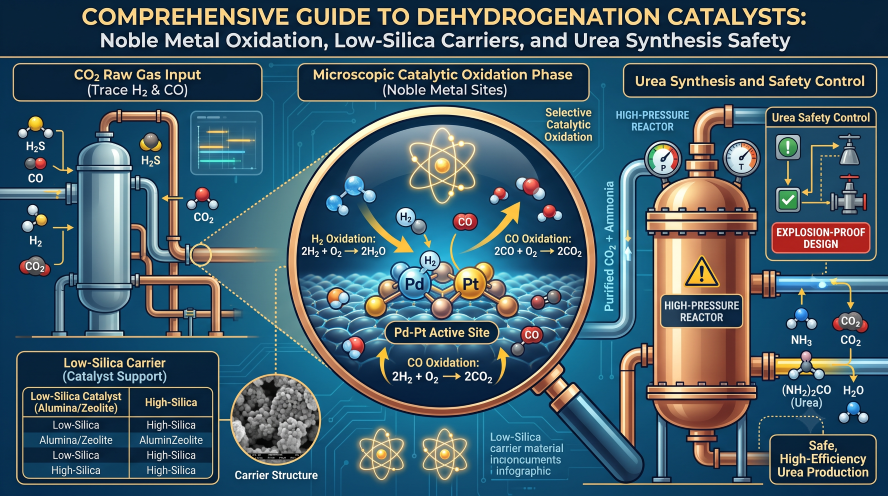
Comprehensive Guide to Dehydrogenation Catalysts: Noble Metal Oxidation, Low-Silica Carriers, and Urea Synthesis Safety
Trace combustible gases like hydrogen and carbon monoxide in carbon dioxide feedstocks present catastrophic explosion risks in high-pressure urea synthesis loops. This guide explains why that risk exists, how a noble metal dehydrogenation catalyst neutralizes it, and what causes these guard beds to eventually fail.
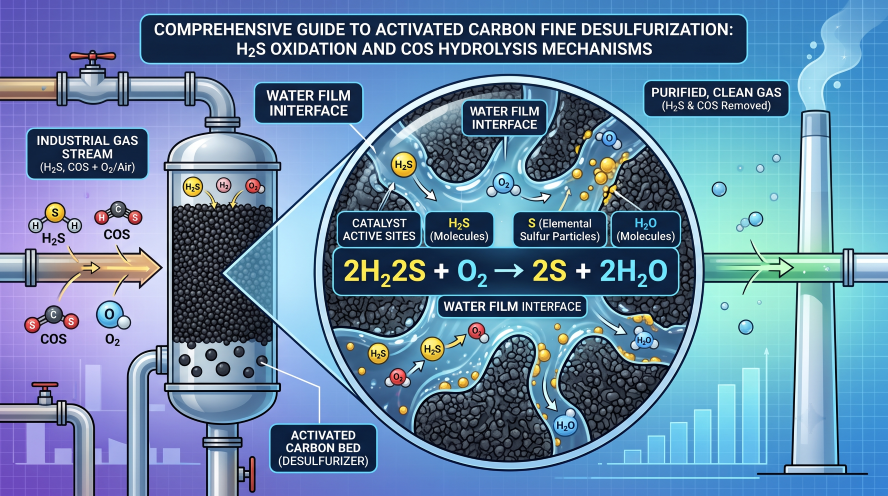
Comprehensive Guide to Activated Carbon Fine Desulfurization: H2S Oxidation and COS Hydrolysis Mechanisms
Explore the dual-mechanism of activated carbon fine desulfurization catalysts. Learn how the micro-water film promotes carbonyl sulfide (COS) hydrolysis and how trace oxygen facilitates catalytic hydrogen sulfide (H2S) oxidation for ultra-deep sulfur removal in syngas and LPG streams.
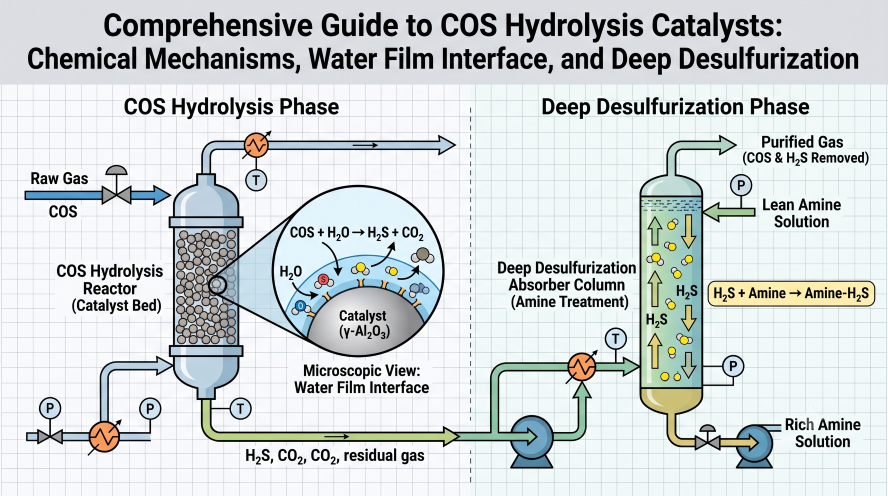
Comprehensive Guide to COS Hydrolysis Catalysts: Chemical Mechanisms, Water Film Interface, and Deep Desulfurization
Carbonyl sulfide (COS) is a highly stable, non-polar contaminant that easily slips past traditional zinc oxide desulfurization beds and amine scrubbing units. This technical guide explains why COS hydrolysis is needed, how the water-film reaction works, and how it fits into a real plant's desulfurization train.