5A vs 13X Molecular Sieve for LPG Purification: Which One Do You Need?
Key Takeaways
- 5A molecular sieve (~5Å pore) is the standard choice for pure LPG dehydration as it excludes most branched-chain hydrocarbons to minimize co-adsorption.
- 13X molecular sieve (~10Å pore) is strictly required when the LPG stream needs simultaneous dehydration and the removal of larger sulfur compounds like H₂S and mercaptans.
- Using 13X solely for dehydration is inefficient, as its larger pores co-adsorb more hydrocarbons, which reduces effective water capacity and requires more frequent regeneration.
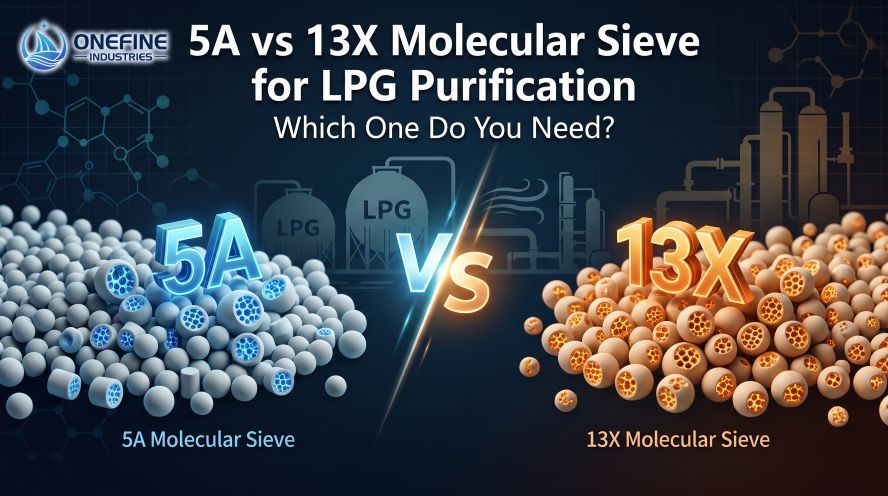
LPG purification trains don't all need the same molecular sieve. For a straightforward liquid-phase dehydration duty, 5A molecular sieve is the conventional choice. But when the LPG stream also carries H₂S, mercaptans, or other sulfur compounds that need to come out alongside the water, 13X takes over. This guide walks through why pore size drives that split, and how to tell which situation you're in.
Why Pore Size Decides the Choice
5A molecular sieve has a pore opening around 5Å — large enough to admit water molecules but small enough to exclude most branched-chain and larger hydrocarbon molecules present in LPG (propane, butane, and their isomers). That selectivity is the whole point for a pure dehydration duty: the sieve adsorbs water and largely leaves the hydrocarbon stream alone, so its working capacity stays dedicated to moisture rather than being eaten into by co-adsorbed hydrocarbons.
13X Molecular Sieve's pore opening is larger, around 10Å. That larger window is what lets it reach sulfur compounds — H₂S, mercaptans, and other larger sulfur-bearing molecules — that 5A's smaller pore simply can't admit. The tradeoff is that the same larger pore also lets in more of the hydrocarbon molecules in the LPG stream, which means 13X is more prone to co-adsorbing hydrocarbons alongside the water and sulfur it's meant to remove. In a liquid hydrocarbon service like LPG, that co-adsorption can reduce the sieve's effective working capacity and shorten the practical interval between regenerations compared to a 5A bed doing pure dehydration.
When 5A Is the Right Call
If the LPG stream only needs moisture removed — no sulfur specification to hit, no mercaptan odor issue to solve — 5A is the standard choice for liquid-phase LPG and propane/butane dehydration. Its smaller pore keeps hydrocarbon co-adsorption to a minimum, which is what makes it the conventional default for this duty across the industry rather than a site-specific preference.
When 13X Is the Right Call
If the LPG stream needs both dehydration and sulfur removal in the same step — H₂S, mercaptans, or other sulfur compounds that have to come down alongside moisture — 13X is the sieve that can actually reach those larger sulfur molecules. Running a 5A bed in that service would dry the LPG but leave the sulfur compounds largely untouched, since 5A's pore is too small to adsorb most of them.
5A Molecular Sieve and 13X Molecular Sieve Side by Side
Pore Size:
- 5A — ~5Å, excludes most branched-chain and larger hydrocarbons
- 13X — ~10Å, admits larger sulfur compounds and more hydrocarbons
What It Removes from LPG:
- 5A — Moisture only
- 13X — Moisture plus H₂S, mercaptans, and other sulfur compounds
Hydrocarbon Co-Adsorption Risk:
- 5A — Low, by design
- 13X — Higher, due to the larger pore admitting more hydrocarbon molecules
Typical LPG Duty:
- 5A — Pure dehydration of propane/butane and LPG streams with no sulfur spec to meet
- 13X — Combined dehydration and desulfurization where sulfur compounds must also be removed
This same pore-size logic is covered in more general terms in our 13X vs 5A comparison guide, which looks at the broader set of applications beyond LPG specifically.
Recommended Products from Sorbsieve
- 5A Molecular Sieve (Calcium Type)
- 13X Molecular Sieve (Sodium X Type)
FAQ
Can I use 13X for LPG dehydration even if I don't need sulfur removal? Technically yes, but it's not the efficient choice. 13X's larger pore co-adsorbs more hydrocarbons than 5A does, which works against your water capacity for no real benefit if sulfur removal isn't part of the duty. 5A is the more efficient choice when dehydration is the only job.
Can 5A handle any sulfur removal at all? 5A's pore size excludes most sulfur compounds found in LPG, such as H₂S and mercaptans, because they're too large to enter its pore structure. If sulfur removal is part of the spec, 5A alone won't get you there.
Does switching to 13X mean I need a bigger bed for the same water removal duty? Not necessarily a bigger bed, but because of hydrocarbon co-adsorption, a 13X bed in LPG service may need more frequent regeneration than an equivalent 5A bed doing pure dehydration, to maintain the same effective water capacity over time.
Is this a one-time choice, or can a plant switch between 5A and 13X later? It's a process design decision tied to what's in your feed — if the LPG composition changes (for example, a new sulfur spec comes into play), the sieve selection should be reassessed accordingly rather than assumed to carry over.
Looking for Bulk Supply of Molecular Sieve for LPG Purification?
Sorbsieve is a trusted bulk supplier of molecular sieve and complete industrial adsorbents, serving industrial buyers across the Middle East.
We provide:
- ✅ Container-level supply (20'GP / 40'GP / 40'HQ)
- ✅ Full documentation (COA / TDS / SDS / COO)
- ✅ Multiple packaging options
- ✅ Technical support for molecular sieve selection and system optimization
- ✅ Fast quote response for industrial inquiries
Contact our team for bulk pricing, product samples, and technical consultation.
Related Products
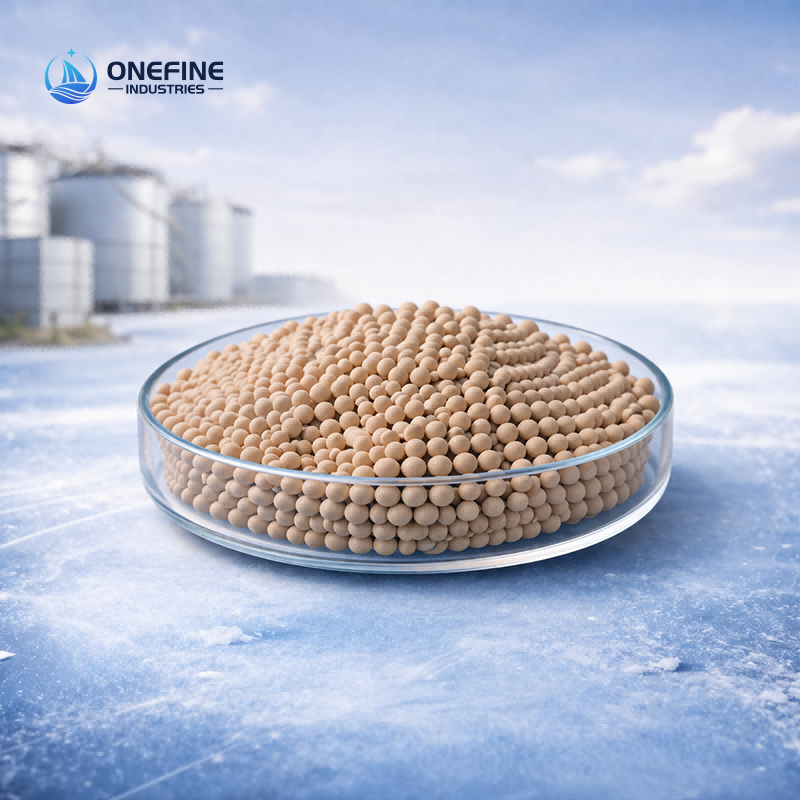
5A Molecular Sieve (Calcium Type)
Calcium-exchanged 5A molecular sieve for PSA oxygen enrichment, natural gas sweetening, n-isoparaffin separation, and simultaneous desulfurization & decarbonization. Bulk supply with MOQ from 1 ton, serving industrial buyers across the Middle East.
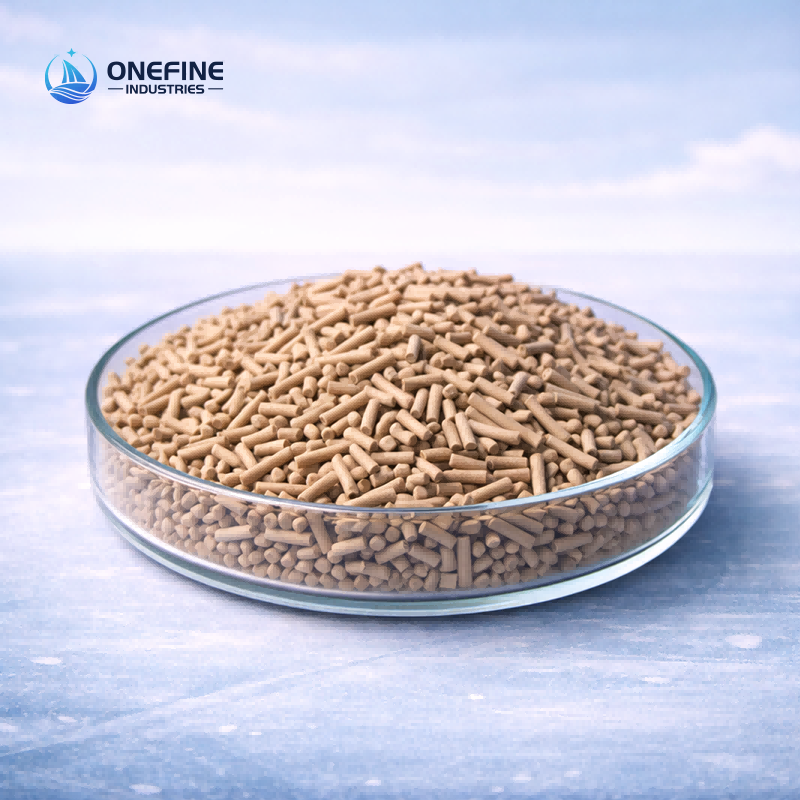
13X Molecular Sieve (Sodium X Type)
Sodium-type 13X molecular sieve with 10Å pore size for air separation pre-purification, natural gas sweetening, solvent recovery, and industrial gas drying. High adsorption capacity, industrial-grade performance.
Related Reading
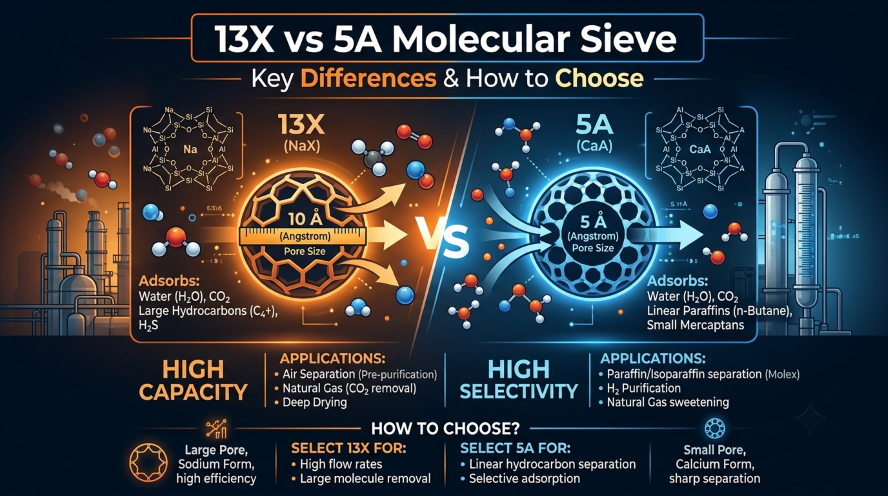
13X vs 5A Molecular Sieve: Key Differences & How to Choose
13X and 5A molecular sieve look similar on paper, but they're built for very different jobs. This guide breaks down the real differences — pore size, selectivity, and application — so you can pick the right one for your system.
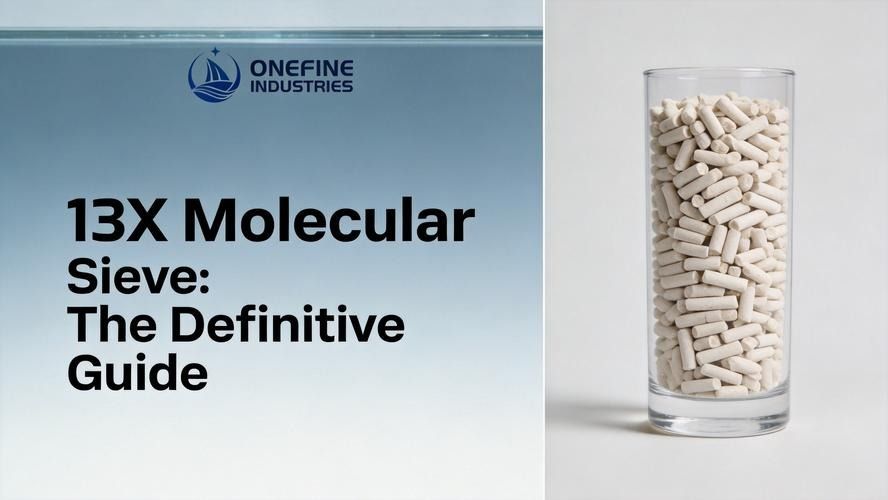
What is 13X Molecular Sieve? Uses, Specifications & How It Works
Everything you need to know about 13X molecular sieves: how they work, key properties, common applications in air separation pre-purification, natural gas sweetening, solvent recovery and industrial gas drying, plus regeneration methods and comparison with other sieve types.
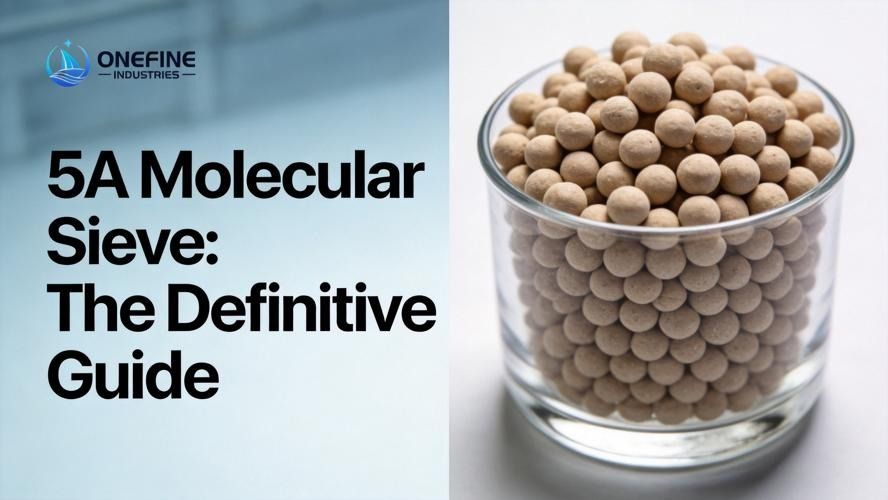
What is 5A Molecular Sieve? Uses, Specifications & How It Works
Everything you need to know about 5A molecular sieves: how they work, key advantages, common applications in PSA oxygen generation, natural gas sweetening, n-paraffin separation and air separation, plus regeneration basics and comparison with other sieve types.