What is 13X Molecular Sieve? Uses, Specifications & How It Works
Introduction
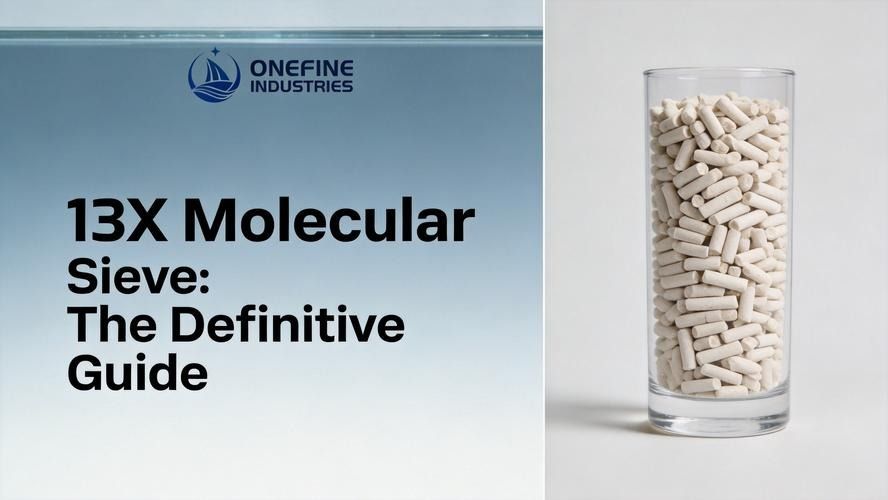
If you work in air separation, natural gas processing, or industrial gas purification, you've probably encountered 13X molecular sieves. With a pore size of approximately 10 angstroms (Å), 13X is the largest-pore member among commonly used industrial molecular sieves — giving it the ability to adsorb molecules that smaller sieves like 3A molecular sieve, 4A molecular sieve, and 5A molecular sieve simply can't touch.
In this guide, we'll explain how 13X molecular sieves work, what makes them different from other types, and how to decide whether 13X is the right choice for your application.
Key Takeaways
- With a uniform ~10Å pore size, 13X offers the widest molecular coverage, capturing water, CO₂, H₂S, mercaptans, and aromatics.
- It is the industry-standard choice for front-end pre-purification in cryogenic air separation plants (preventing cold box freeze-up).
- Fully regenerable via thermal swing (TSA) or pressure swing (PSA), providing a long service life of 3-5 years.
What is a 13X Molecular Sieve?
A 13X molecular sieve is a crystalline sodium aluminosilicate zeolite with a uniform pore size of approximately 10 angstroms (Å) or 1.0 nanometer (nm). It belongs to the faujasite (FAU) framework type — specifically the X-type zeolite structure — which gives it a fundamentally different crystal architecture from the Type A sieves (3A, 4A, 5A).
To understand what a 10 Å pore size actually means in practice, here's how common molecules compare:
Molecules adsorbed by 13X (all smaller than its 10 Å pore):
- Water (H₂O) — ~2.8 Å
- Carbon dioxide (CO₂) — ~3.3 Å
- Hydrogen sulfide (H₂S) — ~3.6 Å
- n-Hexane — ~4.3 Å
- Benzene — ~6.0 Å
- Mercaptans (e.g. methanethiol) — ~5-7 Å
- Triethylamine — ~8.1 Å
Not adsorbed by 13X:
- Very large hydrocarbon molecules exceeding 10 Å in size
This is the core advantage of 13X — it can capture a wider range of impurities in a single bed than any other common molecular sieve type.
How Do 13X Molecular Sieves Work?
13X molecular sieves work through two mechanisms working together:
Size-selective adsorption — The uniform 10 Å pores act as a molecular filter. Molecules smaller than 10 Å can enter the internal pore structure and get trapped on the internal surface. Molecules larger than 10 Å pass through without being adsorbed. This is a purely physical process — no chemical reaction occurs, and the sieve is not consumed.
Electrostatic affinity — The negatively charged aluminosilicate framework and exchangeable sodium cations create strong polar sites inside the pores. These sites preferentially attract polar molecules like water, CO₂, and H₂S — which is why 13X achieves deep purification down to ppm levels even when impurity concentrations are already low.
The result: A gas or liquid stream flows through the sieve bed → impurities smaller than 10 Å are selectively captured → a purified product stream exits the bed.
Once the sieve bed is saturated, it can be fully regenerated by applying heat (thermal swing adsorption, TSA) or reducing pressure (pressure swing adsorption, PSA), restoring nearly all of its original adsorption capacity. This regenerability is what makes 13X economical for long-term industrial use.
13X vs Other Molecular Sieves: Which Should You Choose?
This is the most important question for most buyers. Here's a direct comparison, organized by type:
3A Molecular Sieve
- Pore size: ~3 Å | Crystal type: Type A (LTA)
- Key capability: Water removal only — excludes most other molecules, including ethanol
- Best for: Ethanol dehydration, cracked gas drying
4A Molecular Sieve
- Pore size: ~4 Å | Crystal type: Type A (LTA)
- Key capability: Water, CO₂, and small hydrocarbon removal
- Best for: General-purpose gas and liquid drying
5A Molecular Sieve
- Pore size: ~5 Å | Crystal type: Type A (LTA)
- Key capability: Water, CO₂, H₂S, and n-paraffin separation; high N₂/O₂ selectivity
- Best for: PSA oxygen generation, n-paraffin/iso-paraffin separation
13X Molecular Sieve
- Pore size: ~10 Å | Crystal type: Type X (FAU)
- Key capability: Water, CO₂, H₂S, mercaptans, aromatics, and larger hydrocarbons — the widest molecular coverage of the four
- Best for: Air separation pre-purification, natural gas sweetening, multi-contaminant removal
- Note: Low N₂/O₂ selectivity compared to 5A, and generally offers the highest water and CO₂ capacity among the four types
Decision Guide
Choose 13X when:
- You need to remove mercaptans, aromatics, or larger sulfur compounds
- Your application requires simultaneous removal of multiple impurity types
- High water and CO₂ capacity is a priority
- You're running air separation pre-purification (ASU front-end)
Choose 3A when:
- You only need water removal and want to exclude other molecules (e.g. ethanol dehydration, cracked gas drying)
- Read more in our 3A vs 4A comparison guide
Choose 5A when:
- You need N₂/O₂ separation for PSA oxygen generation
- You need n-paraffin separation from branched hydrocarbons
Choose 4A when:
- General-purpose gas drying without the cost premium of 13X
- CO₂ and small molecule removal alongside water
Not sure which type fits your system? Our air drying selection guide walks through the full decision process step by step.
Key Applications of 13X Molecular Sieves
13X is chosen when the application demands high capacity, wide molecular coverage, or simultaneous multi-contaminant removal. Here are the most common use cases:
Air Separation Unit (ASU) Pre-Purification — The industry-standard choice for front-end purification in cryogenic air separation plants. 13X removes water, CO₂, N₂O, and hydrocarbons simultaneously — preventing freeze-up in the cold box.
Natural Gas Sweetening & Dehydration — 13X removes water, CO₂, H₂S, and mercaptans in a single bed — something no smaller-pore sieve can do.
PSA / VPSA Oxygen and Nitrogen Generation — Used as a pre-purification layer to protect the primary adsorbent (typically 5A) from water and CO₂ contamination. 13X sodium type is itself also used as the economical grade within our Oxygen Generator Molecular Sieve product line for industrial-scale PSA/VPSA systems.
Solvent Recovery — High organic vapor capacity makes 13X effective for capturing and recovering ketones, alcohols, esters, and aromatics from industrial exhaust streams.
Liquid Hydrocarbon Drying — Suitable for drying benzene, toluene, xylene, and other liquid hydrocarbons in refinery and petrochemical applications.
Biogas Upgrading — Removes CO₂, H₂S, water vapor, and siloxanes from raw biogas to produce pipeline-quality biomethane.
Industrial Gas Drying & Purification — Achieves ppm-level impurity removal for nitrogen, oxygen, argon, helium, and specialty gases.
For detailed technical descriptions of each application and full specifications, visit our 13X molecular sieve product page.
Core Specifications at a Glance
- Pore Diameter: ~10 Å (1.0 nm)
- Crystal Structure: Faujasite (FAU), sodium form
- Surface Area: 800-1000 m²/g
- Water Adsorption Capacity: ≥25% wt (25°C, RH 50%)
- CO₂ Adsorption Capacity: ≥18% wt (25°C, 1 bar)
- Max Operating Temperature: 600°C
- Available Forms: Beads (1.6-2.5mm, 3-5mm), Pellets (1/16", 1/8"), Powder
For complete specifications including crushing strength, bulk density, attrition rate, and all adsorption parameters, visit our 13X molecular sieve product page.
Regeneration: TSA, PSA, or VPSA?
13X molecular sieves are fully regenerable — this is what makes them economical for long-term industrial use. The right regeneration method depends on your system design:
TSA (Thermal Swing Adsorption) — Heat bed to 200-315°C with dry purge gas. Typical cycle time: 4-12 hours. Best for: Drying, gas sweetening, solvent recovery.
PSA (Pressure Swing Adsorption) — Depressurize bed, purge with product gas. Typical cycle time: Seconds to minutes. Best for: Air separation, gas separation.
VPSA (Vacuum Pressure Swing) — Vacuum desorption combined with moderate heating. Typical cycle time: Minutes. Best for: Large-scale air separation.
Key principle: The higher the regeneration temperature (TSA) or the lower the desorption pressure (PSA/VPSA), the more completely the sieve is cleaned — and the longer it will last.
For step-by-step regeneration procedures and best practices, refer to the Regeneration Guide on our 13X molecular sieve product page.
Recommended Products from Sorbsieve
Looking for bulk supply of 13X molecular sieve or related adsorbents for your industrial system?
- 13X Molecular Sieve (Sodium X Type) — Industrial-grade beads, pellets, and powder. MOQ 1 ton. Full documentation included.
- 5A Molecular Sieve (Calcium Type) — For PSA oxygen generation and n-paraffin separation
- Carbon Molecular Sieve (CMS) — For PSA nitrogen systems
Frequently Asked Questions
Is 13X molecular sieve the same as 13X zeolite?
Yes, they refer to the same material. "Molecular sieve" and "zeolite" are used interchangeably in industrial contexts. Both describe the crystalline sodium aluminosilicate with a 10 Å pore structure.
Can 13X molecular sieve be used for ethanol dehydration?
No — 13X is not suitable for ethanol dehydration. Because its 10 Å pores are large enough to adsorb ethanol molecules as well as water, it cannot selectively remove water from ethanol. For ethanol dehydration, 3A molecular sieve is the correct choice — its 3 Å pores adsorb water but exclude ethanol.
Can 13X remove mercaptans from natural gas?
Yes — this is one of the primary reasons 13X is chosen over 3A, 4A, and 5A for natural gas sweetening. Its 10 Å pore size is large enough to capture mercaptans and other organic sulfur compounds that smaller sieves cannot adsorb.
How long does 13X molecular sieve last in service?
Under normal operating conditions with proper regeneration, 3-5 years is typical. Key factors that affect service life include regeneration completeness, operating temperature, and exposure to liquid water, oils, or heavy hydrocarbons that can cause permanent fouling.
Conclusion
13X molecular sieve stands apart from 3A, 4A, and 5A because of one key trait: pore size. Its 10 Å opening lets it capture a much wider range of impurities — water, CO₂, H₂S, mercaptans, and aromatics — in a single bed, which is exactly why it's the standard choice for air separation pre-purification and natural gas sweetening applications that other sieves simply can't handle alone.
If your process needs broad, multi-contaminant removal rather than narrow selectivity, 13X is very likely the right fit. When in doubt, share your operating conditions and target impurities with our technical team, and we'll help you confirm the right grade and form factor for your system.
Looking for Bulk Supply of 13X Molecular Sieve?
Sorbsieve is a trusted bulk supplier of 13X molecular sieve and complete industrial adsorbents, serving industrial buyers across the Middle East.
We provide:
- ✅ Container-level supply (20'GP / 40'GP / 40'HQ)
- ✅ Full documentation (COA / TDS / SDS / COO)
- ✅ Multiple packaging options (25kg bags / 150kg drums / 500kg super sacks / 1000kg jumbo bags)
- ✅ Technical support for 13X molecular sieve selection and system optimization
- ✅ Fast quote response for industrial inquiries
Contact our team for bulk pricing, product samples, and technical consultation.
Related Products
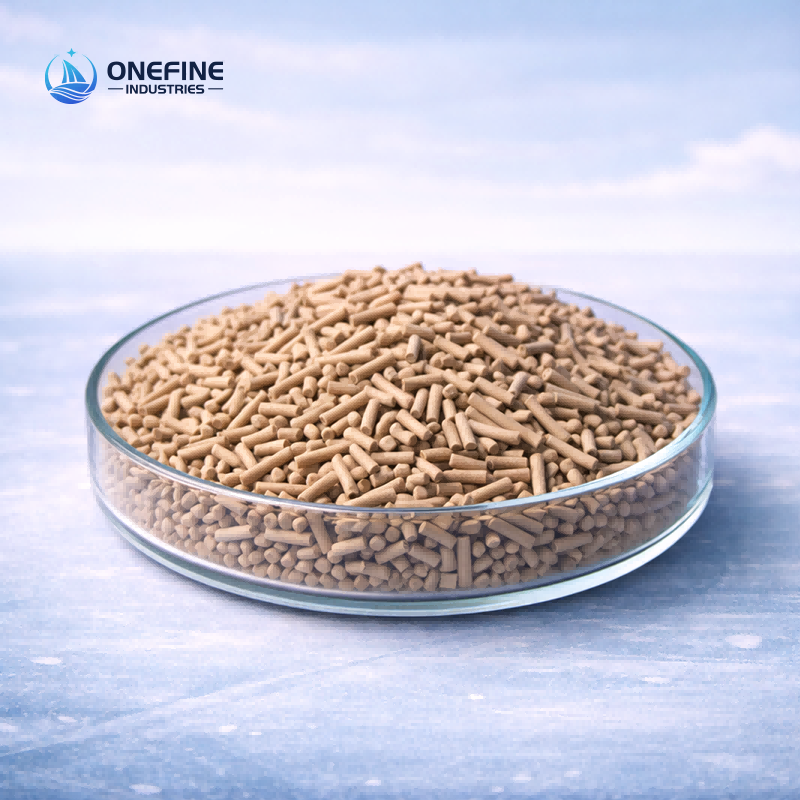
13X Molecular Sieve (Sodium X Type)
Sodium-type 13X molecular sieve with 10Å pore size for air separation pre-purification, natural gas sweetening, solvent recovery, and industrial gas drying. High adsorption capacity, industrial-grade performance.
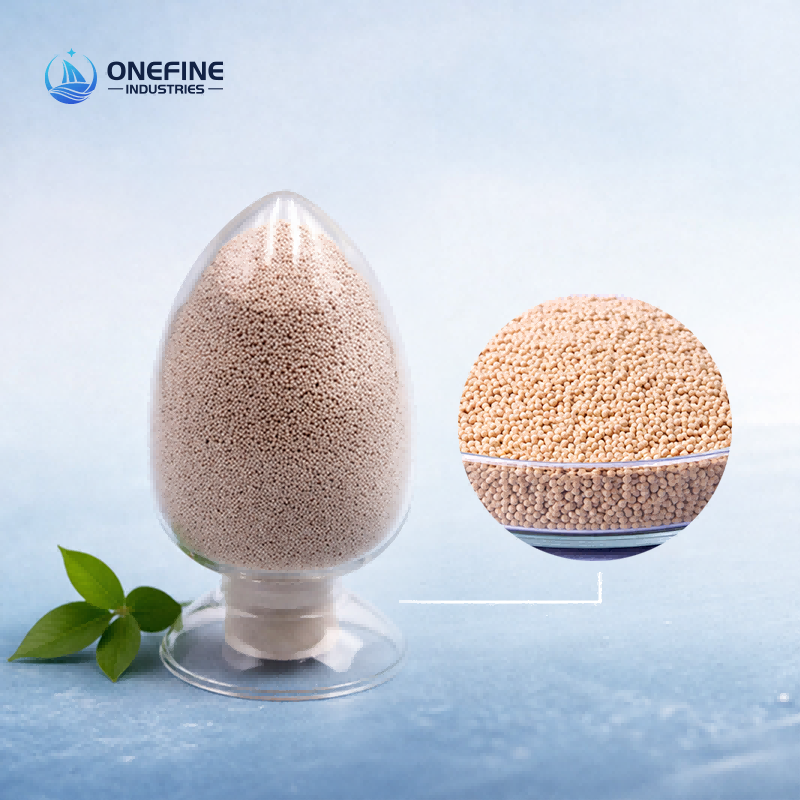
Oxygen Generator Molecular Sieve (13X & Li-LSX)
Premium oxygen generator molecular sieve for PSA/VPSA oxygen generators and medical oxygen concentrators. Available in 13X sodium type and Li-LSX lithium type — high N₂ adsorption capacity, excellent N₂/O₂ selectivity, and 3-5 year service life. Bulk supply with MOQ from 1 ton, serving industrial buyers across the Middle East.
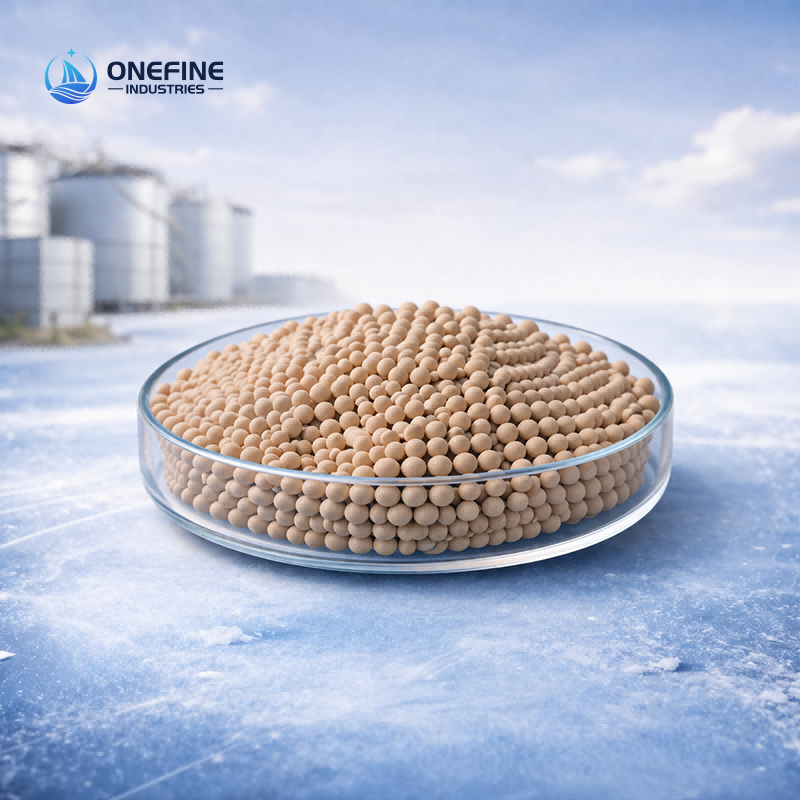
5A Molecular Sieve (Calcium Type)
Calcium-exchanged 5A molecular sieve for PSA oxygen enrichment, natural gas sweetening, n-isoparaffin separation, and simultaneous desulfurization & decarbonization. Bulk supply with MOQ from 1 ton, serving industrial buyers across the Middle East.
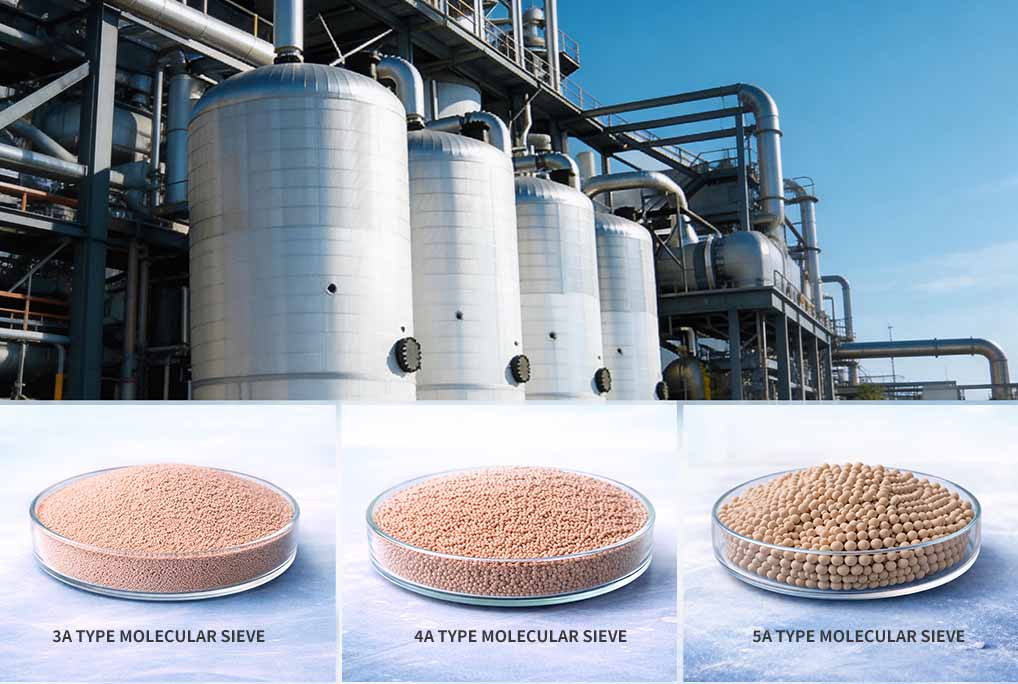
Related Reading
How to Choose Molecular Sieve for Air Drying
A practical guide to selecting the right molecular sieve for compressed air drying applications — covering dew point targets, contaminant removal, form factor, regeneration method, and common selection mistakes to avoid.
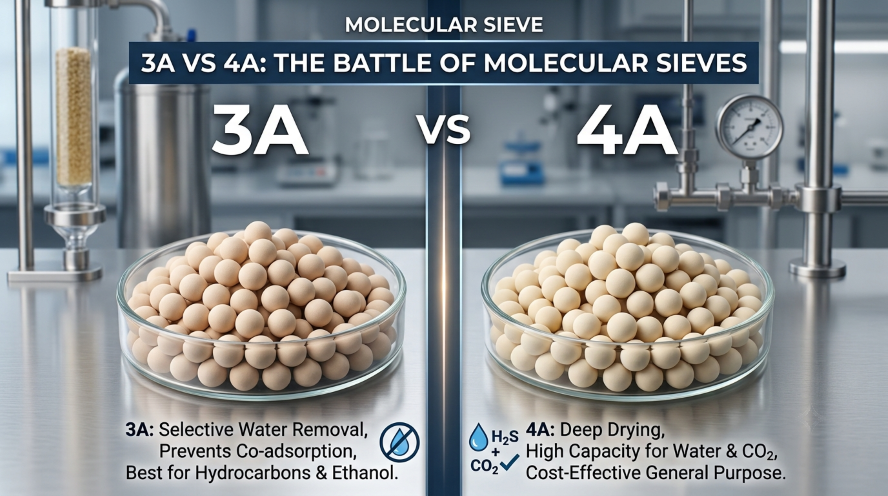
3A vs 4A Molecular Sieve: Key Differences & How to Choose
In-depth guide comparing 3A and 4A molecular sieves. Covers pore size differences, adsorption selectivity, capacity comparison, application scenarios for each type, and practical guidance on selecting the right molecular sieve for your industrial drying or gas separation needs.