What is 5A Molecular Sieve? Uses, Specifications & How It Works
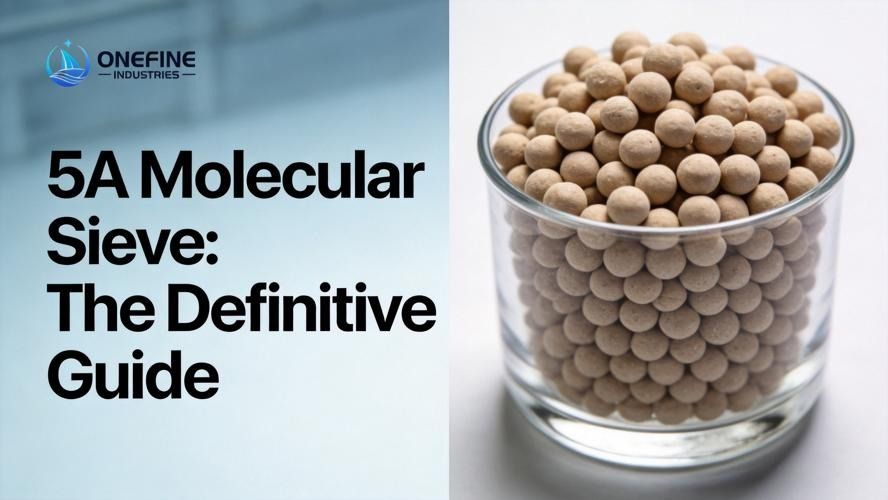
If you work in air separation, natural gas processing, or PSA oxygen generation, you've likely heard of 5A molecular sieves. As a calcium-exchanged Type A zeolite with a 5Å pore size, it bridges the gap between general-purpose 4A sieves and larger-pore 13X sieves — offering unique capabilities for gas separation and purification.
In this guide, we'll cover how 5A molecular sieves work, their key advantages, common applications, how they compare to other sieve types, and how to choose the right grade for your process. For full technical specifications and bulk supply details, see our 5A Molecular Sieve product page.
What is a 5A Molecular Sieve?
Key Takeaways:
- 5A molecular sieve is calcium-exchanged Type A zeolite with a 5Å pore size, adsorbing water, CO₂, H₂S, and n-paraffins while excluding isoparaffins and aromatics
- It is the industry-standard sieve for PSA/VPSA oxygen generation due to its high N₂/O₂ selectivity, and simultaneously handles natural gas dehydration and sweetening
- Its 5Å pore uniquely enables normal paraffin separation from isoparaffins and aromatics, a capability 3A and 4A sieves cannot provide
A 5A molecular sieve is a crystalline calcium aluminosilicate desiccant with a pore size of approximately 5 angstroms (Å). It's produced by replacing sodium ions in 4A zeolite with calcium ions through ion exchange, which opens up the pore structure from 4Å to 5Å.
To put that in perspective:
- A water molecule is about 2.8 Å in diameter
- A carbon dioxide molecule is about 3.3 Å
- A normal paraffin (n-C₄H₁₀) molecule is about 4.9 Å
- An isoparaffin (i-C₄H₁₀) molecule is about 5.6 Å
- A benzene molecule is about 6.0 Å
This means the 5Å pores can adsorb water, CO₂, H₂S, n-paraffins, and other molecules smaller than 5Å, while excluding larger molecules like isoparaffins and aromatics. This selective adsorption makes 5A molecular sieves especially valuable for gas separation applications.
Basic composition:
- Type A crystal structure with calcium exchange
- Calcium-exchanged (Ca²⁺) form of Type A zeolite
- Also known as calcium molecular sieve or 5A zeolite
- Available as beads, pellets, or powder
How Do 5A Molecular Sieves Work?
5A molecular sieves work through size-selective adsorption — a physical process where molecules are trapped on the internal surface of the pore structure.
Here's the simple version:
- A gas or liquid mixture flows through a bed of 5A molecular sieve beads
- Molecules smaller than 5Å (water, CO₂, n-paraffins, etc.) diffuse into the pores and are adsorbed
- Larger molecules (isoparaffins, aromatics) pass through without being adsorbed
- The result is a purified or separated product stream
This is purely a physical process — no chemical reaction occurs. The sieve doesn't get consumed; it simply fills up with adsorbate molecules. Once saturated, it can be regenerated by applying heat or reducing pressure, restoring nearly all of its original adsorption capacity.
Why 5A Molecular Sieves Stand Out
✅ Larger pore size — Can adsorb molecules that 3A and 4A sieves cannot, such as n-paraffins and larger organic molecules
✅ PSA oxygen generation — The preferred sieve for pressure swing adsorption (PSA) oxygen production, offering high N₂/O₂ selectivity
✅ Simultaneous dehydration & sweetening — Removes water, CO₂, and H₂S in a single step for natural gas processing
✅ n-Paraffin separation — Unique ability to separate normal paraffins from isoparaffins and aromatics based on molecular size
✅ High thermal stability — Withstands high regeneration temperatures with minimal structural degradation
✅ Long service life — Can be regenerated hundreds of times with minimal capacity loss
For full technical specifications (bulk density, crush strength, adsorption capacity, operating temperature limits, etc.), visit the 5A Molecular Sieve product page.
Common Applications of 5A Molecular Sieves
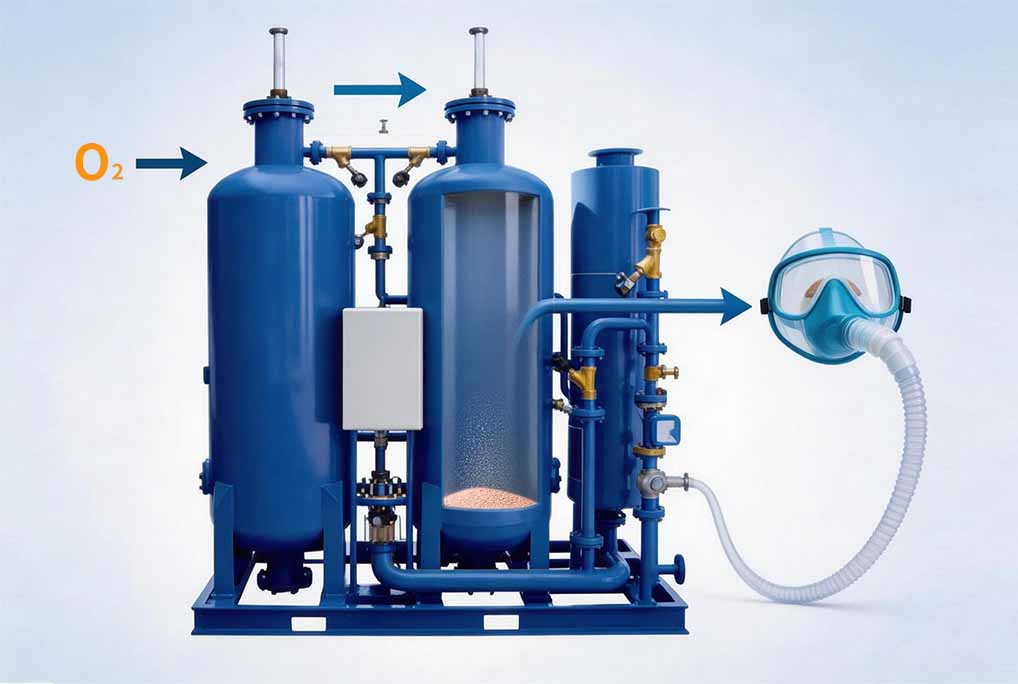
PSA Oxygen Generation — One of the most important applications. 5A selectively adsorbs nitrogen from compressed air, allowing oxygen to pass through as the product gas. Its high nitrogen capacity and selectivity make it the industry standard for medical and industrial oxygen generators.
Natural Gas Dehydration & Sweetening — Simultaneously removes water vapor, carbon dioxide, and hydrogen sulfide, delivering ultra-deep drying while also meeting pipeline sulfur and CO₂ specifications in a single step.
Normal Paraffin Separation — The 5Å pore size is perfectly sized to adsorb normal paraffins while excluding branched isoparaffins and aromatics — widely used in petroleum refining and solvent recovery.
Air Separation Pre-treatment — Used in the pre-purification system of cryogenic air separation units (ASUs) to remove water, CO₂, and hydrocarbons from feed air, preventing freeze-up in downstream cryogenic columns.
Hydrogen Purification — Removes water, CO₂, and methane from hydrogen gas streams, commonly in PSA hydrogen purification systems such as those using carbon molecular sieve for the complementary nitrogen-side separation.
Solvent Drying & Purification — For applications where 4A sieves are too small, 5A is used to dry larger-molecule solvents and remove impurities from chemical process streams.
5A vs 3A vs 4A vs 13X: What's the Difference?
Choosing the right molecular sieve depends on your specific separation needs. Here's how the main types compare:
3A Molecular Sieve
- Pore size: 3 Å
- Cation type: Potassium (K⁺)
- Adsorbs: Only water & very small molecules
- Best for: Selective dehydration (refrigerants, ethanol)
4A Molecular Sieve
- Pore size: 4 Å
- Cation type: Sodium (Na⁺)
- Adsorbs: Water, CO₂, H₂S, small polar molecules
- Best for: General purpose drying, air drying
5A Molecular Sieve
- Pore size: 5 Å
- Cation type: Calcium (Ca²⁺)
- Adsorbs: Water, CO₂, n-paraffins, larger molecules up to 5Å
- Best for: PSA oxygen, n-paraffin separation, natural gas sweetening
13X Molecular Sieve
- Pore size: 10 Å
- Cation type: Sodium (Na⁺)
- Adsorbs: Most molecules under 10Å
- Best for: Deep purification, desulfurization
Key takeaway: 5A molecular sieves are the sweet spot for applications requiring larger pore sizes than 4A but without the lower selectivity of 13X. For a full breakdown of how 4A differs from its neighbors, see our 3A vs 4A comparison guide and What is 4A Molecular Sieve guide. If you're deciding between 5A and 13X specifically for PSA oxygen systems, see our 13X vs 5A comparison guide.
How to Regenerate 5A Molecular Sieves
When the sieve becomes saturated, it needs to be regenerated to restore adsorption capacity, using either:
- Thermal Swing Regeneration (TSA) — heating the bed with dry purge gas, typically used for natural gas dehydration and other static-bed applications
- Pressure Swing Regeneration (PSA/VPSA) — depressurizing and purging with product gas, used for PSA oxygen generation, hydrogen purification, and air separation pre-treatment
Pro tip: For 5A sieves used in oxygen PSA service, proper regeneration is critical for maintaining nitrogen capacity and long sieve life. Follow your PSA system supplier's recommended cycle times and purge ratios.
For detailed step-by-step regeneration procedures and temperature ranges, see the Regeneration Guide on our 5A Molecular Sieve product page.
How to Choose the Right 5A Molecular Sieve
Consider these factors when selecting a 5A molecular sieve:
- Application type: PSA oxygen, natural gas dehydration, or n-paraffin separation — each may require a specialized grade
- Form: Beads (lower pressure drop) vs. pellets (faster mass transfer) vs. powder
- Size: Smaller sizes offer faster adsorption but higher pressure drop
- Grade: Industrial grade vs. high-purity grade for medical oxygen
- Regeneration method: Thermal swing vs. pressure swing operation
- Required purity: Higher purity requirements may need specialized sieve formulations
For PSA oxygen applications, look for oxygen molecular sieve grades specifically formulated for high nitrogen capacity and selectivity — not all 5A sieves are equal when it comes to oxygen generation performance.
Recommended Products from Sorbsieve
- 5A Molecular Sieve — Calcium-exchanged type for PSA oxygen generation, natural gas sweetening, and n-paraffin separation
- 4A Molecular Sieve — General-purpose drying and air dehydration
- Carbon Molecular Sieve for Nitrogen Generation — Complementary adsorbent for PSA nitrogen generation systems
Frequently Asked Questions
Q: Is 5A molecular sieve the same as calcium molecular sieve? A: Yes, 5A molecular sieve is essentially the calcium-exchanged form of Type A zeolite. The calcium ions replace sodium ions, opening the pore size from 4Å to 5Å.
Q: What is 5A molecular sieve used for? A: The primary uses are PSA oxygen generation, natural gas dehydration and sweetening, normal paraffin separation, air separation pre-treatment, and hydrogen purification.
Q: Can 5A molecular sieve be regenerated? A: Yes, 5A molecular sieves can be regenerated hundreds of times using either thermal swing (TSA) or pressure swing (PSA) methods, depending on the application.
Q: What dew point can 5A molecular sieve achieve? A: 5A molecular sieves can achieve very low dew points, making them suitable for cryogenic applications and ultra-deep drying requirements. Exact performance depends on system design — contact our technical team for application-specific guidance.
Looking for Bulk Supply of 5A Molecular Sieve?
Sorbsieve is a trusted bulk supplier of 5A molecular sieve and complete industrial adsorbents, serving industrial buyers across the Middle East.
We provide:
- ✅ Container-level supply (20'GP / 40'GP / 40'HQ)
- ✅ Full documentation (COA / TDS / SDS / COO)
- ✅ Multiple packaging options
- ✅ Technical support for 5A molecular sieve selection and system optimization
- ✅ Fast quote response for industrial inquiries
Contact our team for bulk pricing, product samples, and technical consultation.
Related Products
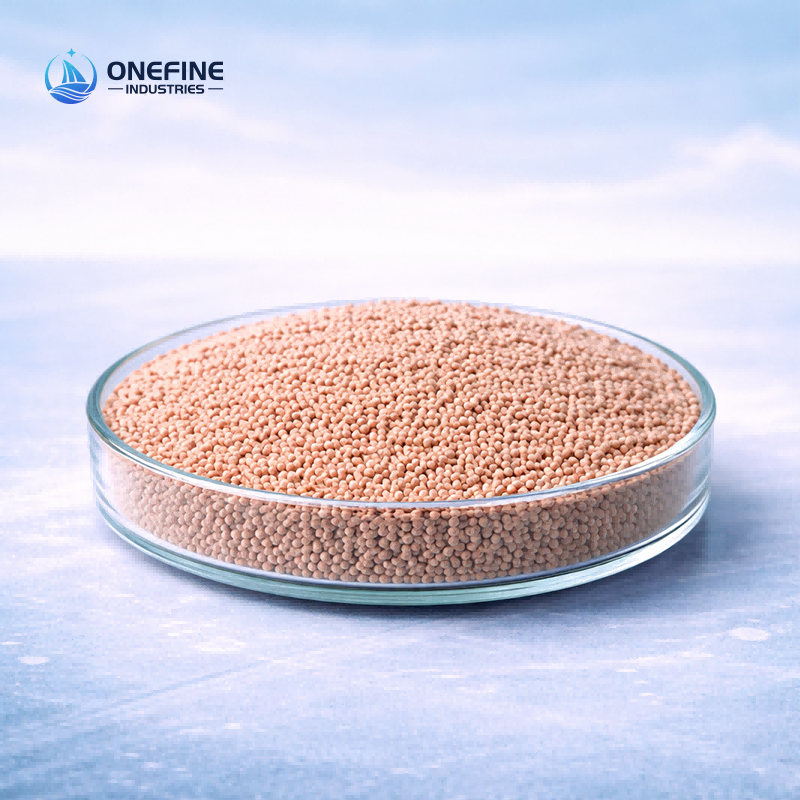
4A Molecular Sieve
General-purpose 4A molecular sieve desiccant for industrial air drying, solvent dehydration, CO2 removal, and static packaging applications. High capacity, long service life.
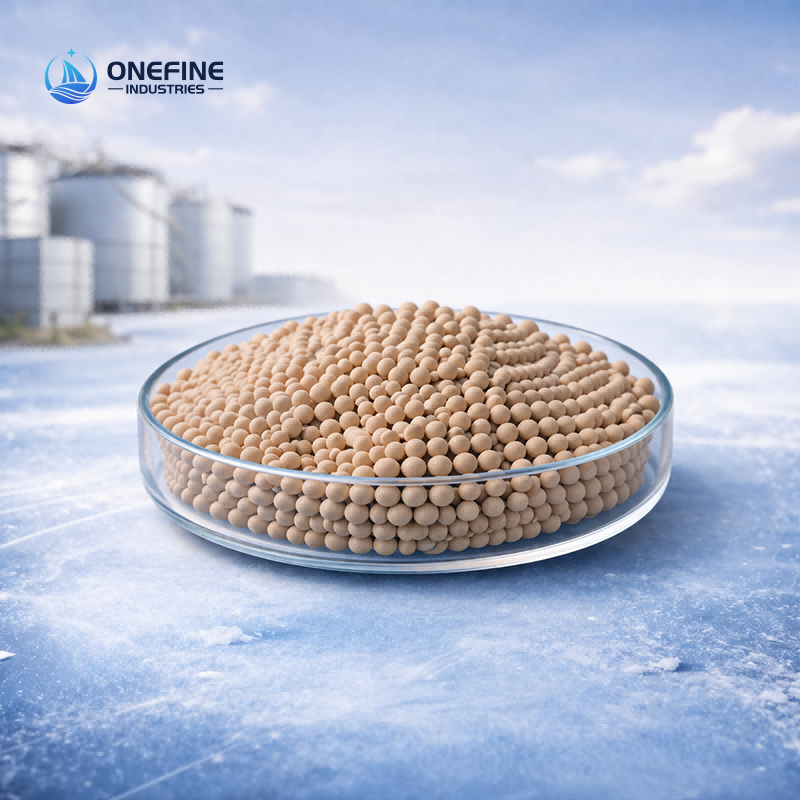
5A Molecular Sieve (Calcium Type)
Calcium-exchanged 5A molecular sieve for PSA oxygen enrichment, natural gas sweetening, n-isoparaffin separation, and simultaneous desulfurization & decarbonization. Bulk supply with MOQ from 1 ton, serving industrial buyers across the Middle East.
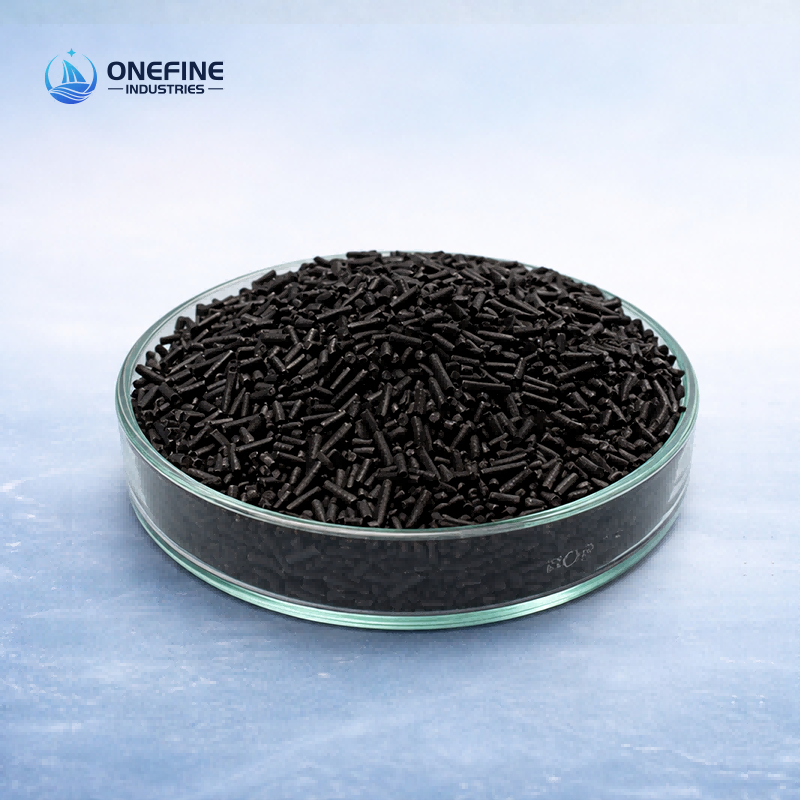
Carbon Molecular Sieve for Nitrogen Generation (CMS)
High-performance carbon molecular sieve (CMS) for PSA nitrogen generators. Uniform micropore distribution (0.3-0.5nm) ensures efficient oxygen-nitrogen separation. Delivers 95-99.999% nitrogen purity with 3-5 year service life. Bulk supply for industrial buyers worldwide.
Related Reading
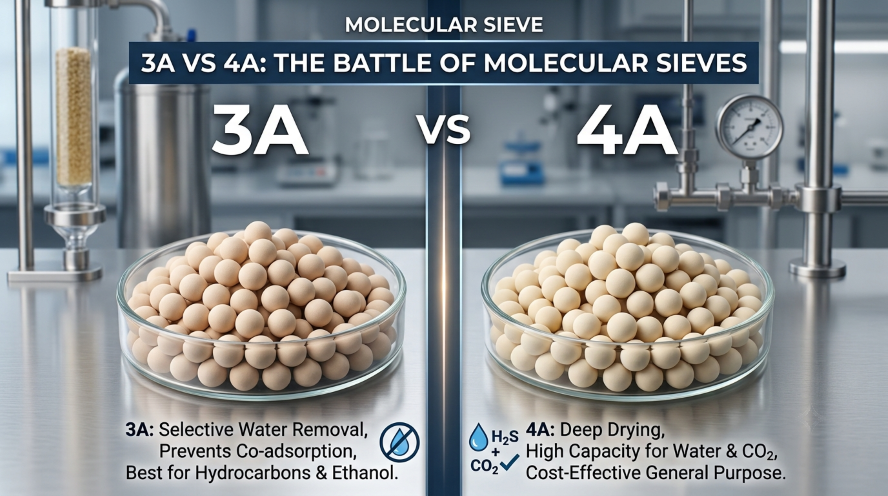
3A vs 4A Molecular Sieve: Key Differences & How to Choose
In-depth guide comparing 3A and 4A molecular sieves. Covers pore size differences, adsorption selectivity, capacity comparison, application scenarios for each type, and practical guidance on selecting the right molecular sieve for your industrial drying or gas separation needs.
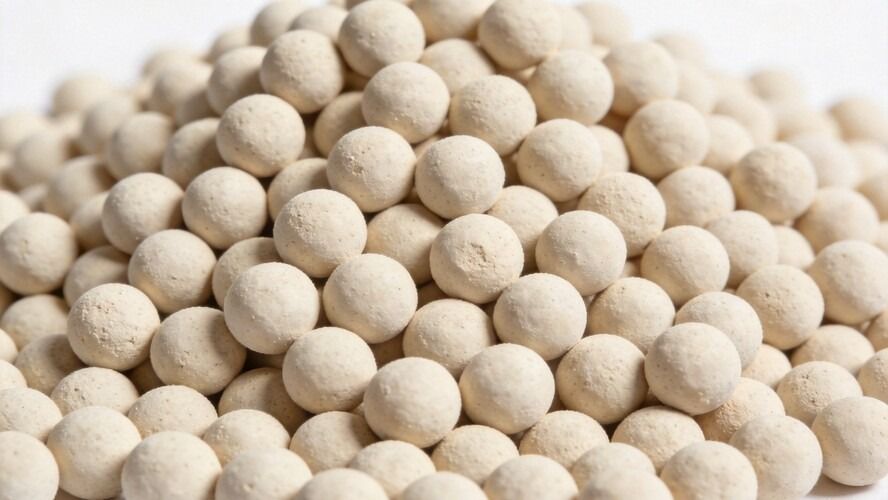
What is 4A Molecular Sieve? Uses, Specifications & How It Works
Everything you need to know about 4A molecular sieve: how it works, its 4Å pore size, physical adsorption process, and main industrial applications like air drying and CO2 removal.
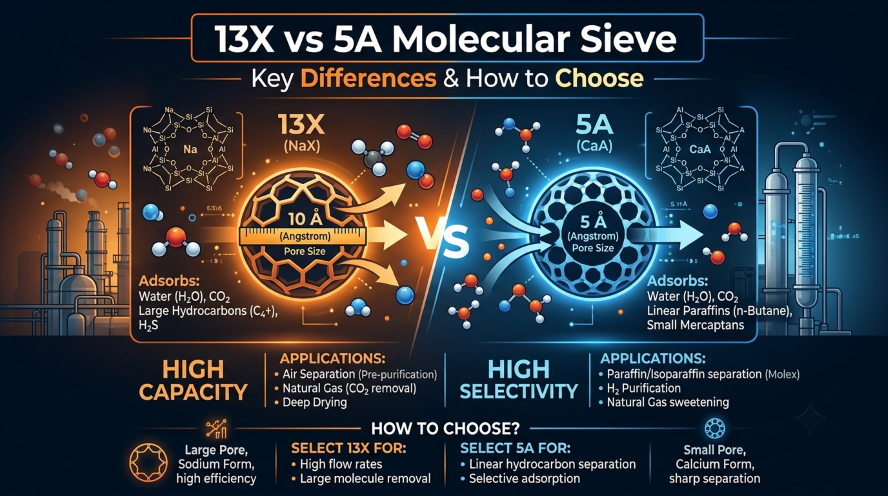
13X vs 5A Molecular Sieve: Key Differences & How to Choose
13X and 5A molecular sieve look similar on paper, but they're built for very different jobs. This guide breaks down the real differences — pore size, selectivity, and application — so you can pick the right one for your system.