Molecular Sieve for Oxygen Generation: Applications in PSA Oxygen Plants, Oxygen Concentrators, and Industrial Air Separation
Overview
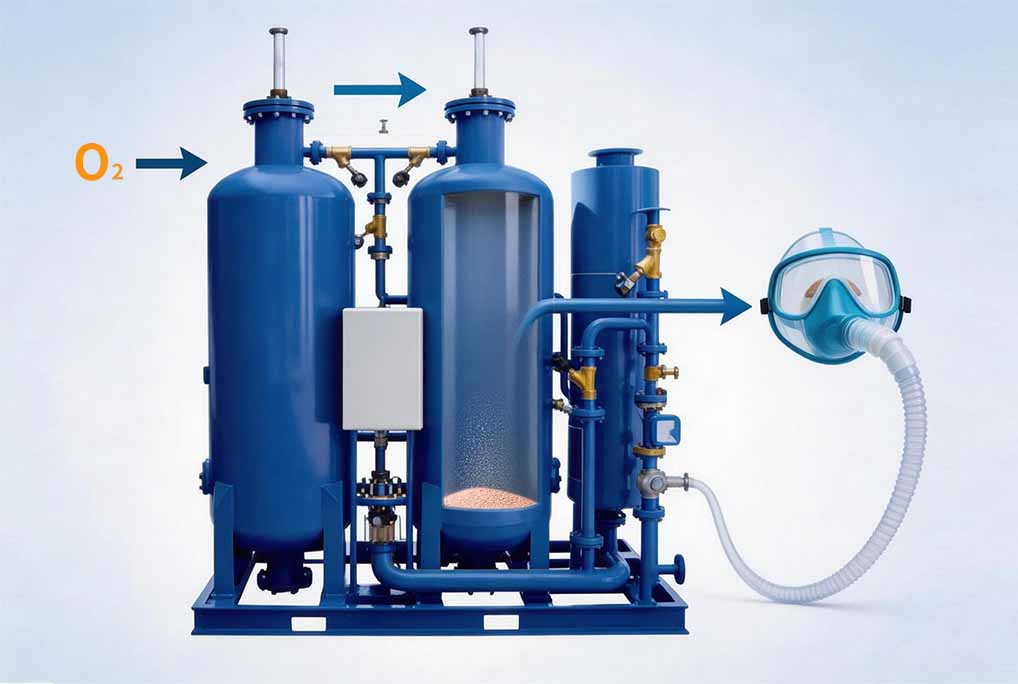
Molecular sieve for oxygen is a highly efficient adsorbent widely used across PSA oxygen plants, oxygen concentrators, and industrial air separation systems. With its strong nitrogen adsorption selectivity, stable regeneration performance, and excellent pressure swing adsorption (PSA) efficiency, molecular sieve plays a critical role in producing high-purity oxygen from compressed air — without directly adsorbing oxygen itself. Instead, it selectively adsorbs nitrogen (N₂), moisture, carbon dioxide (CO₂), and trace impurities from the air, allowing oxygen to pass through as the enriched product gas.
This case analysis covers three distinct application contexts — general industrial PSA oxygen plants, compact oxygen concentrators, and air separation pre-purification — along with the sieve types and specifications relevant to each.
Key Takeaways
- Targeted Separation: 13X and Li-LSX are utilized in PSA systems and concentrators for direct nitrogen adsorption, enriching passing oxygen to 90-93%+ purity.
- ASU Pre-purification: 13X and 4A act as guard beds ahead of cryogenic Air Separation Units (ASUs) to remove trace moisture and CO₂, preventing cold box freeze-ups.
- Application Scale: Scales from compact medical oxygen concentrators to massive industrial glass-melting and wastewater aeration plants.
Application 1: Industrial PSA Oxygen Plants (Glass & Wastewater Sectors)
Process Context
Glass manufacturing furnaces and wastewater treatment aeration systems both benefit from on-site oxygen enrichment, but for different reasons: glass furnaces use oxygen-enriched combustion to raise flame temperature and improve fuel efficiency, while wastewater treatment plants use oxygen to boost aerobic biological activity beyond what ambient air alone can support.
How Molecular Sieve Works in This Application
A representative mid-scale PSA oxygen plant serving either application uses twin adsorption towers filled with oxygen generator molecular sieve. Compressed air enters one tower, where nitrogen, moisture, and CO₂ are selectively adsorbed while oxygen-enriched gas exits as product. The second tower regenerates by depressurizing, and the towers alternate to provide continuous output.
For glass furnace combustion support, oxygen enrichment typically targets 90-93% purity — sufficient to meaningfully raise flame temperature without the cost premium of higher-purity grades. For wastewater aeration, similar purity levels support dissolved oxygen enhancement in activated sludge and aerobic digestion systems.
Molecular Sieve Specification for This Application
- Type: 13X sodium-type molecular sieve is typically sufficient for these industrial-purity applications, offering good separation performance at lower cost than premium lithium-based grades
- Key requirement: Stable cycle performance under continuous multi-shift operation, good mechanical strength to resist attrition over thousands of pressure swing cycles
- Scale: Industrial PSA plants for these applications range from small skid-mounted units to larger centralized systems depending on furnace size or treatment plant capacity
Application 2: Oxygen Concentrators (Brief Overview)
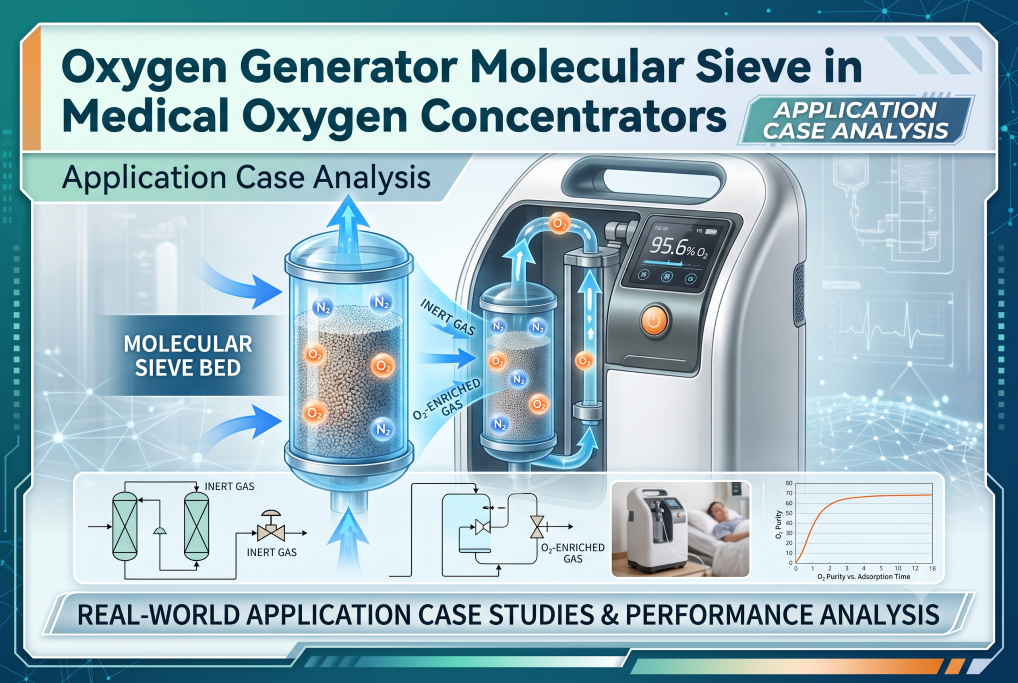
Oxygen concentrators — spanning home, portable, and hospital bedside units — rely on the same PSA principle at a smaller, more compact scale. Because device size and power efficiency matter more in this application than in large industrial plants, Li-LSX (lithium-exchanged, low-silica X-type) molecular sieve is typically preferred over standard 13X, since its higher nitrogen capacity and selectivity allow smaller sieve beds to achieve the same or better oxygen output.
For a detailed look at how concentrator-scale PSA systems are specified and deployed — including hospital ward-level installations — see our related case: Oxygen Generator Molecular Sieve in Medical Oxygen Concentrators.
Application 3: Industrial Air Separation Pre-Purification
Process Context
Large-scale industrial air separation units (ASUs) produce oxygen, nitrogen, and argon through cryogenic distillation — but before air can be cooled to cryogenic temperatures, it must be thoroughly purified. Even trace amounts of water vapor, CO₂, and hydrocarbons in the feed air can freeze solid inside cryogenic heat exchangers, causing blockages that force costly plant shutdowns.
How Molecular Sieve Works in This Application
Unlike PSA oxygen plants where molecular sieve does the actual oxygen/nitrogen separation, in cryogenic ASUs molecular sieve serves a pre-purification role — removing contaminants from feed air before it enters the cold box. 13X molecular sieve and 4A molecular sieve are both used in this role, selected based on the specific contaminant profile and depth of purification required — 13X's larger pore size gives it broader contaminant removal capacity, while 4A offers a more cost-effective option where the feed air is relatively clean.
This pre-purification step protects the entire downstream cryogenic separation process, making molecular sieve quality and proper regeneration cycle design critical to ASU reliability, even though the sieve itself isn't performing the final oxygen/nitrogen/argon separation.
Molecular Sieve Specification for This Application
- Type: 13X for broader multi-contaminant removal; 4A where feed air is cleaner and cost efficiency matters more
- Key requirement: High water and CO₂ adsorption capacity, since even trace residual CO₂ can cause solid deposits in cryogenic equipment
- Regeneration: Typically thermal swing adsorption (TSA), synchronized with the ASU's overall operating cycle
Why Molecular Sieve Type Matters Across These Applications
The right molecular sieve choice depends on what role it's playing:
- 13X or Li-LSX — for applications where the sieve performs the actual N₂/O₂ separation (PSA oxygen plants, concentrators)
- 13X or 4A — for applications where the sieve performs pre-purification ahead of a separate separation process (ASU cold box protection)
Using the wrong type for the wrong role — for example, specifying a premium oxygen-separation sieve where a standard pre-purification sieve would suffice — adds unnecessary cost without improving system performance.
Recommended Products from Sorbsieve
- Oxygen Generator Molecular Sieve (13X & Li-LSX) — for PSA/VPSA oxygen generation and concentrators
- 13X Molecular Sieve — for industrial oxygen purity applications and air separation pre-purification
- 4A Molecular Sieve — for cost-effective air separation pre-purification where feed air is relatively clean
Contact our team for bulk pricing, grade recommendation, and availability based on your specific application and purity requirements.
Supply Information
Sorbsieve supplies molecular sieve for oxygen generation and air separation applications to industrial buyers across the Middle East and internationally.
Standard packaging options:
- 25 kg drums (suitable for trial orders and small-batch systems)
- 150 kg steel drums
- 500 kg super sacks (most popular for industrial bulk orders)
- 1,000 kg jumbo bags (standard for plant-scale orders)
Minimum order quantity: 1 ton (trial orders accepted)
Container loading: 20'GP: 18-20 tons | 40'GP: 22-24 tons | 40'HQ: 24-26 tons
Loading ports: Shanghai, Qingdao, Tianjin, Ningbo, Shenzhen
Documents provided: COA (per batch) / TDS (pre-sale) / SDS (pre-shipment) / COO / Packing List
Looking for Bulk Supply of Molecular Sieve for Oxygen Generation?
Sorbsieve is a trusted bulk supplier of oxygen generator molecular sieve and industrial adsorbents for PSA oxygen plants, concentrators, and air separation systems, serving industrial buyers across the Middle East.
We provide:
- ✅ Container-level supply (20'GP / 40'GP / 40'HQ)
- ✅ Full documentation (COA / TDS / SDS / COO)
- ✅ Multiple packaging options
- ✅ Technical support for sieve type selection based on your application
- ✅ Fast quote response for industrial inquiries
Contact our team for bulk pricing, grade confirmation, and technical consultation.
Related Products
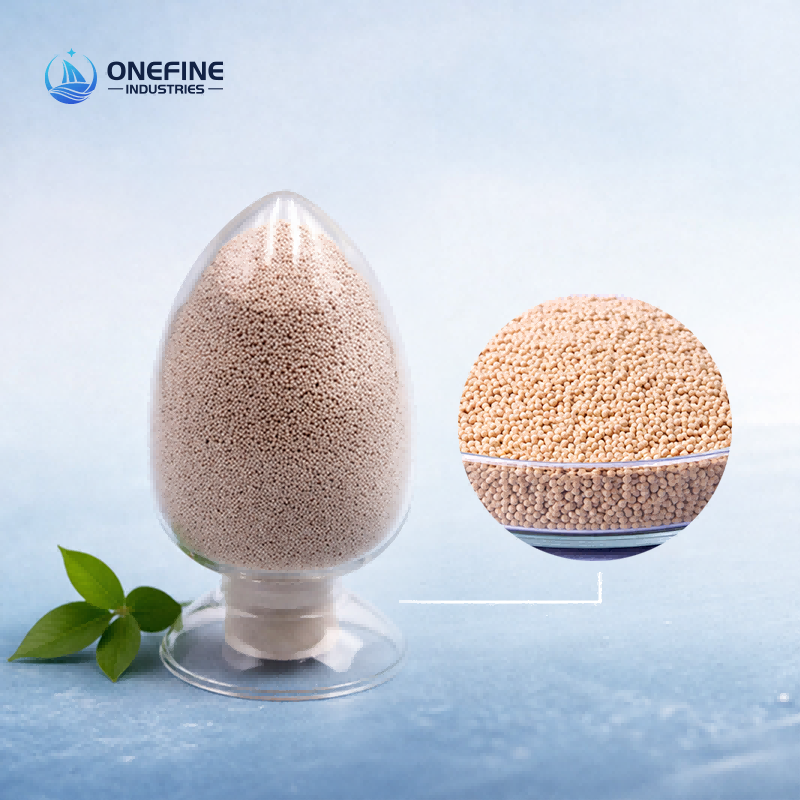
Oxygen Generator Molecular Sieve (13X & Li-LSX)
Premium oxygen generator molecular sieve for PSA/VPSA oxygen generators and medical oxygen concentrators. Available in 13X sodium type and Li-LSX lithium type — high N₂ adsorption capacity, excellent N₂/O₂ selectivity, and 3-5 year service life. Bulk supply with MOQ from 1 ton, serving industrial buyers across the Middle East.
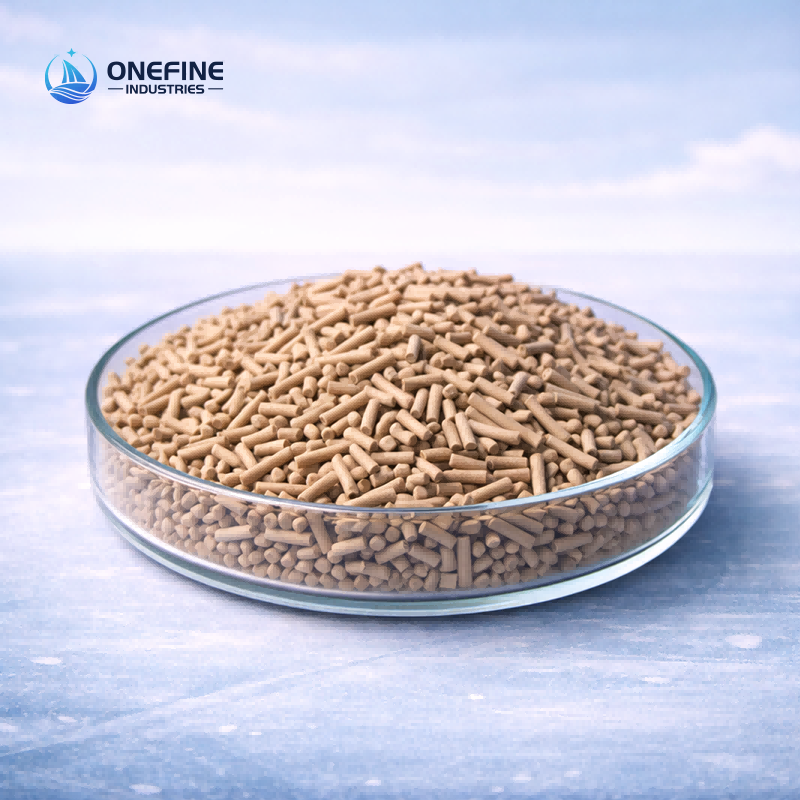
13X Molecular Sieve (Sodium X Type)
Sodium-type 13X molecular sieve with 10Å pore size for air separation pre-purification, natural gas sweetening, solvent recovery, and industrial gas drying. High adsorption capacity, industrial-grade performance.
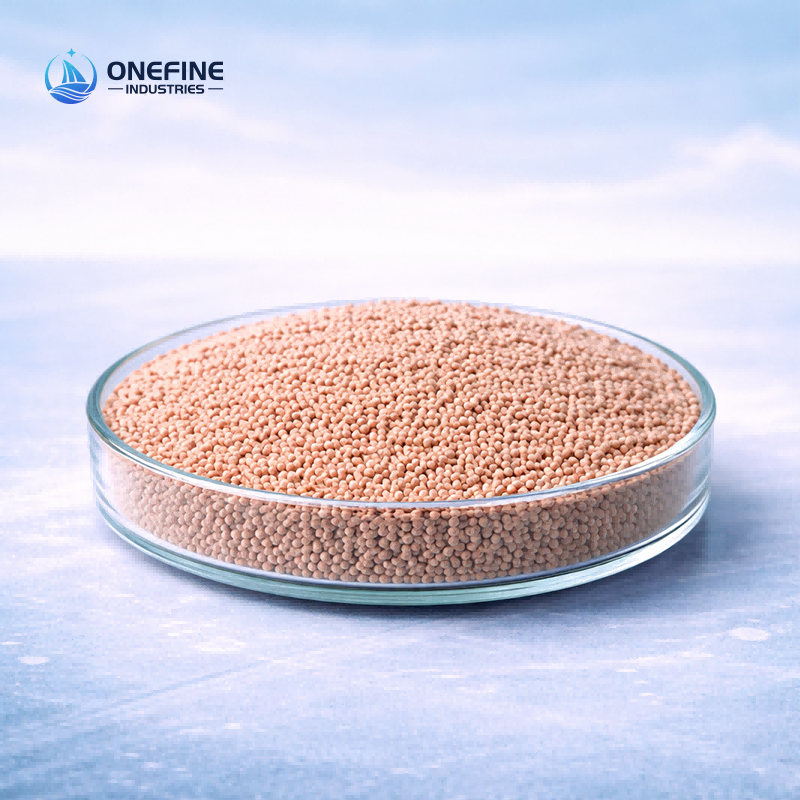
4A Molecular Sieve
General-purpose 4A molecular sieve desiccant for industrial air drying, solvent dehydration, CO2 removal, and static packaging applications. High capacity, long service life.
Related Reading
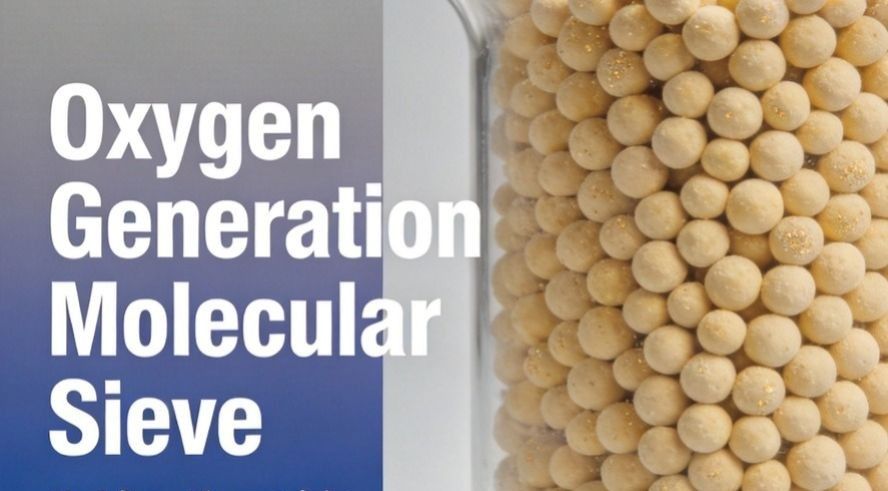
What is Oxygen Generator Molecular Sieve? Complete Guide for Oxygen Generators & Concentrators
Oxygen generator molecular sieve (13X & Li-LSX) is the core adsorbent behind PSA/VPSA oxygen production. This guide covers how it works, key types, applications, and how to choose the right one.
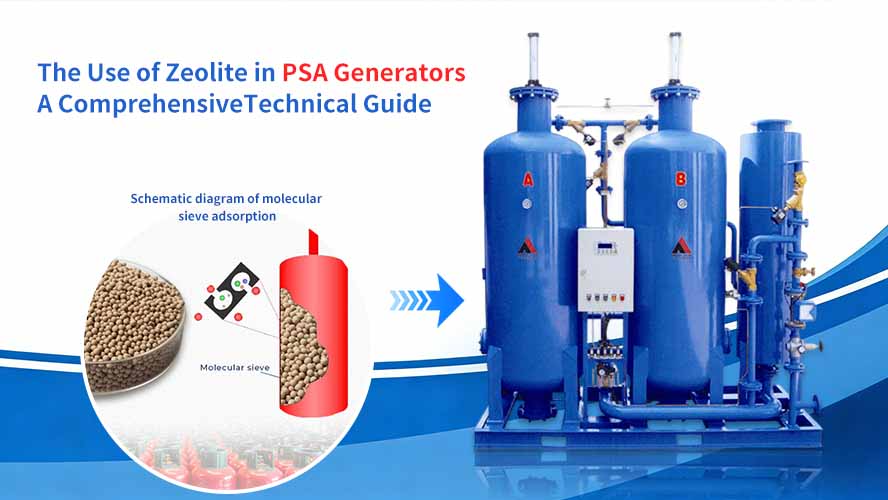
Molecular Sieve in PSA Oxygen Generation: Application Case Analysis
Molecular sieve is the core adsorbent in PSA oxygen generation, separating oxygen from compressed air by selectively adsorbing nitrogen. This case analysis covers a metal cutting facility's PSA oxygen system and the sieve selection factors that drive purity, efficiency, and reliability.