How 5A Molecular Sieve Separates Normal Paraffins from Isoparaffins: Isomerization Recycle and Fuel Dewaxing Explained
Key Takeaways
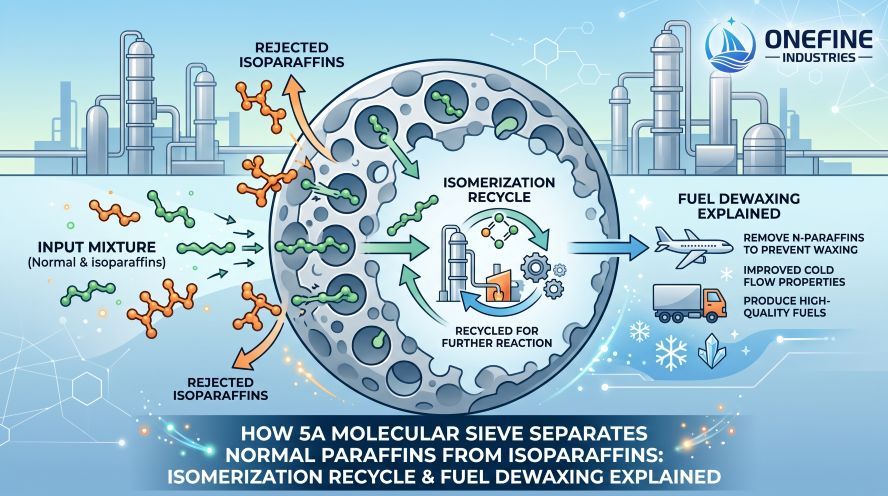
- 5A molecular sieve features a ~5Å pore that physically separates straight-chain (normal) paraffins from bulkier branched (iso) isomers based on molecular shape alone.
- In isomerization units, 5A selectively captures unconverted normal paraffins for reactor recycle, pushing near-complete conversion without yield loss.
- For kerosene and jet fuel treatment, size-selective normal paraffin extraction improves cold-flow freeze points and produces feedstock for linear alkylbenzene (LAB).
- This molecular sieving effect relies purely on kinetic diameter and size exclusion, fundamentally differing from polarity-driven adsorption used in gas drying.
Introduction
Most people researching 5A Molecular Sieve run into PSA oxygen generation first, where the sieve adsorbs nitrogen ahead of oxygen. But 5A's ~5 Å pore also does something completely different: it physically separates straight-chain (normal) paraffins from their branched (iso) counterparts based on molecular shape alone. This shape-selective separation is the working principle behind two real refinery and petrochemical applications — isomerization unit recycle and paraffinic fuel treatment — and it has nothing to do with polarity or moisture, which is how most people first learn about molecular sieves.
The Separation Mechanism: Why 5A's Pore Fits Only Straight Chains
Calcium-exchanged Type A zeolite (5A) has a pore aperture of approximately 5 Å (0.5 nm). Straight-chain, or "normal," paraffin molecules — n-hexane, n-heptane, and similar linear alkanes — have an effective (kinetic) diameter in roughly the 4.3–4.9 Å range, small enough to diffuse into and through the pore structure. Branched isoparaffins, and cyclic or aromatic hydrocarbons, have a bulkier cross-section at the branch point or ring, which is larger than the pore opening. They are excluded, or diffuse so slowly by comparison that the sieve can separate the two populations on a practical timescale.
This is a purely physical, shape-based separation — a molecular sieving effect — rather than the polarity-driven adsorption that lets 5A remove water or CO2 in a gas dehydration application. For a fuller rundown of 5A's specifications and its more common drying/PSA duties, see our What is 5A Molecular Sieve? guide. The same base material is doing two structurally different jobs depending on which property of the target molecule it is exploiting.
Application 1: Isomerization Unit Recycle (Total Isomerization Process-Style Configurations)
Light naphtha isomerization units convert normal C5/C6 paraffins into their higher-octane branched isomers over a catalyst bed, but the reaction is equilibrium-limited — a single pass through the reactor never converts all of the normal paraffins present in the feed. In a "total isomerization" configuration, the reactor effluent is routed through 5A molecular sieve adsorber beds that selectively capture the remaining unconverted normal paraffins while letting the branched isomerate pass through as finished product. The captured normal paraffins are then desorbed (typically with a hydrogen purge) and recycled back to the isomerization reactor for another conversion pass.
This recycle loop is what allows an isomerization unit to push near-complete conversion of the naphtha feed to branched isomers, rather than settling for whatever conversion the reactor achieves in a single pass. For refiners, the practical outcome is a higher-octane gasoline blending component without relying on aromatics or benzene to hit octane targets — a meaningful consideration for fuel specifications that cap benzene and aromatics content.
Application 2: Removing Normal Paraffins from Kerosene and Jet Fuel
Normal paraffins have higher freeze points than branched or cyclic hydrocarbons of the same carbon number, which works against cold-flow performance in kerosene and aviation jet fuel. Passing the fraction through 5A molecular sieve beds selectively adsorbs the straight-chain paraffins responsible for wax crystallization at low temperature, leaving a product with improved freeze-point behavior without the yield loss associated with distillation-based approaches.
The same size-selective extraction of normal paraffins from a kerosene cut is also the basis for producing n-paraffin feedstock for linear alkylbenzene (LAB) production — the precursor to biodegradable detergent surfactants. UOP's Molex process is a well-known commercial example of this liquid-phase adsorptive extraction, though the underlying separation principle is the same size exclusion described above.
Why This Matters for Buyers Comparing 5A to Other Molecular Sieve Types
3A and 4A molecular sieves are sized to exclude most hydrocarbons entirely and are chosen for drying and general gas/liquid dehydration. 13X has a larger pore and is selected when bulkier molecules such as CO2 or larger hydrocarbons need to be adsorbed. 5A sits in the specific window that lets linear hydrocarbon chains in while keeping branched and cyclic structures out — which is exactly why it is the standard choice for both PSA oxygen generation (via a different, polarity-based mechanism) and normal/iso-paraffin separation (via pore-size exclusion). If you're weighing 5A against 3A, 4A, or 13X for a different duty entirely, our 3A vs 4A vs 5A vs 13X selection guide walks through that decision. Buyers sourcing 5A for a paraffin separation duty should confirm with their supplier that the intended application is size-based hydrocarbon separation rather than gas drying, since bead form factor and activation requirements can differ between vapor-phase and liquid-phase adsorption duties.
FAQ
Is 5A molecular sieve used the same way for oxygen generation and paraffin separation? No. In PSA oxygen generation, 5A adsorbs nitrogen preferentially over oxygen through a polarity/quadrupole interaction. In paraffin separation, the same 5A pore excludes branched and cyclic molecules purely by physical size while letting straight-chain paraffins diffuse through. They are two different separation mechanisms happening in the same pore structure — if you landed here looking for PSA oxygen generator replacement signals instead, see this guide.
Can 3A or 4A molecular sieve be used for normal/iso-paraffin separation instead of 5A? No. 3A and 4A pores are too small to admit most hydrocarbon chains at all, so they are not suitable for this type of size-selective hydrocarbon separation. 5A's larger pore aperture is specifically what allows normal paraffins through while excluding branched isomers.
Does removing normal paraffins from kerosene reduce fuel yield significantly? The adsorbed normal-paraffin stream is not waste — in an isomerization loop it is recycled back to the reactor for conversion, and in kerosene/LAB feedstock applications it becomes a separate valuable product stream (n-paraffin feedstock) rather than a yield loss.
What form factor of 5A molecular sieve is used in these processes? Industrial paraffin separation units typically use pelletized or beaded 5A sized for the specific vessel and flow configuration (vapor-phase adsorbers for isomerization recycle vs. liquid-phase adsorbers for kerosene/LAB extraction). Confirm bead size and moisture/activation requirements with your supplier based on your unit's design basis.
Recommended Products from Sorbsieve
- 5A Molecular Sieve (Calcium Type) — engineered for the pore-size precision this separation depends on, alongside our existing product line for PSA oxygen generation duty (already linked above)
Looking for Bulk Supply of 5A Molecular Sieve?
Sorbsieve is a trusted bulk supplier of 5A Molecular Sieve and complete industrial adsorbents, serving industrial buyers across the Middle East.
We provide:
- ✅ Container-level supply (20'GP / 40'GP / 40'HQ)
- ✅ Full documentation (COA / TDS / SDS / COO)
- ✅ Multiple packaging options
- ✅ Technical support for 5A Molecular Sieve selection and system optimization
- ✅ Fast quote response for industrial inquiries
Contact our team for bulk pricing, product samples, and technical consultation.
Related Reading
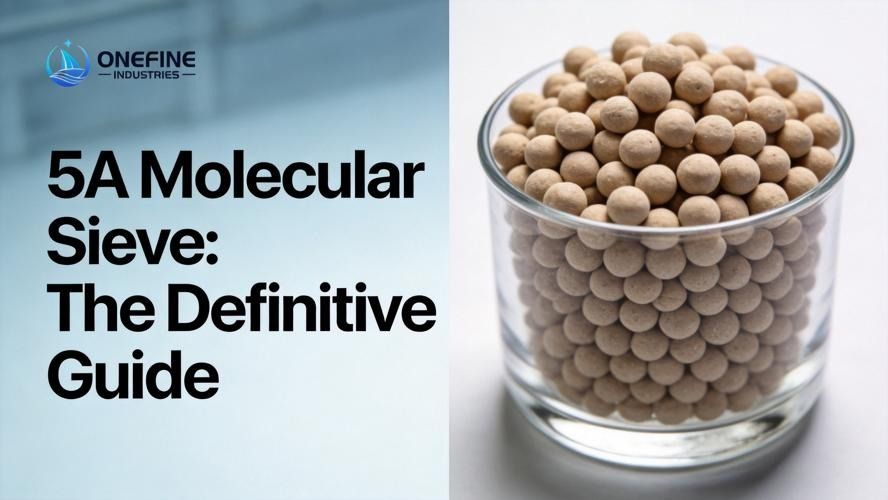
What is 5A Molecular Sieve? Uses, Specifications & How It Works
Everything you need to know about 5A molecular sieves: how they work, key advantages, common applications in PSA oxygen generation, natural gas sweetening, n-paraffin separation and air separation, plus regeneration basics and comparison with other sieve types.
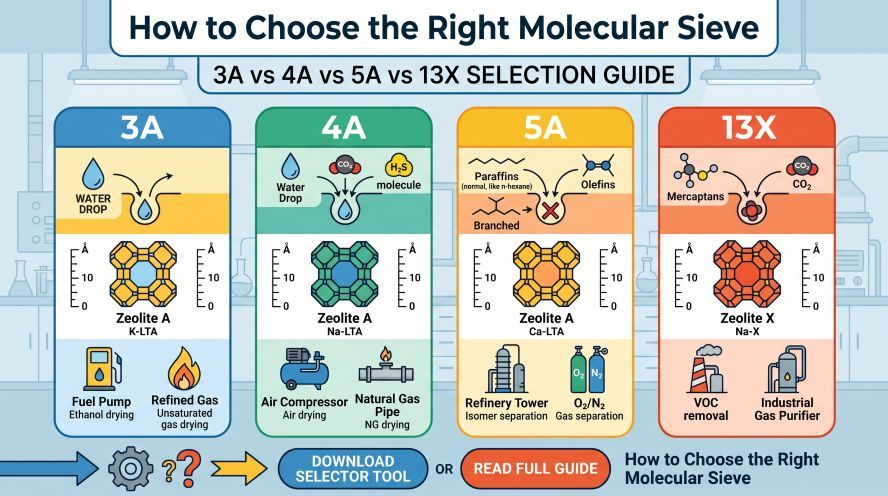
How to Choose the Right Molecular Sieve: 3A vs 4A vs 5A vs 13X Selection Guide
Choosing between 3A, 4A, 5A, and 13X molecular sieve comes down to pore size and what needs to stay in your stream versus what needs to come out. This guide walks through the selection logic by application and target contaminant, plus the most common costly mistakes buyers make when picking the wrong grade.
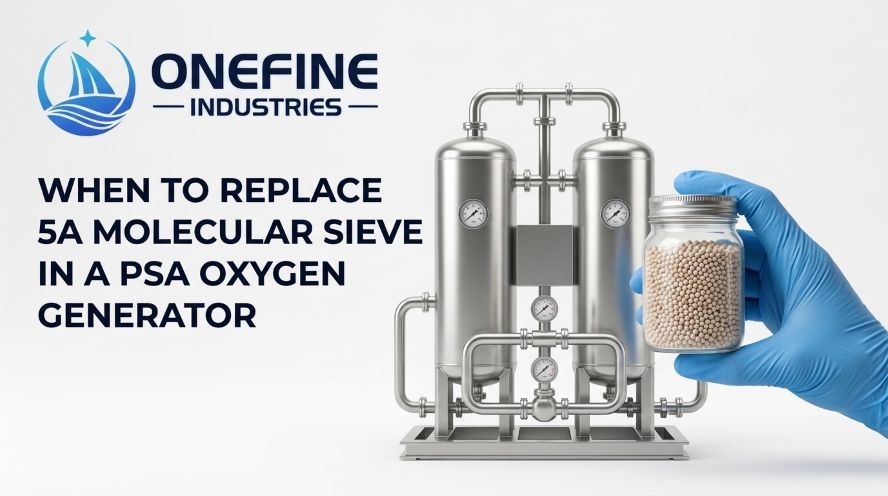
How Do You Know When to Replace 5A Molecular Sieve in a PSA Oxygen Generator?
PSA oxygen systems regenerate 5A molecular sieve on every pressure cycle — but regeneration isn't the same as replacement. Here's how to tell the difference before purity drops for good.