How Do You Know When to Replace 5A Molecular Sieve in a PSA Oxygen Generator?
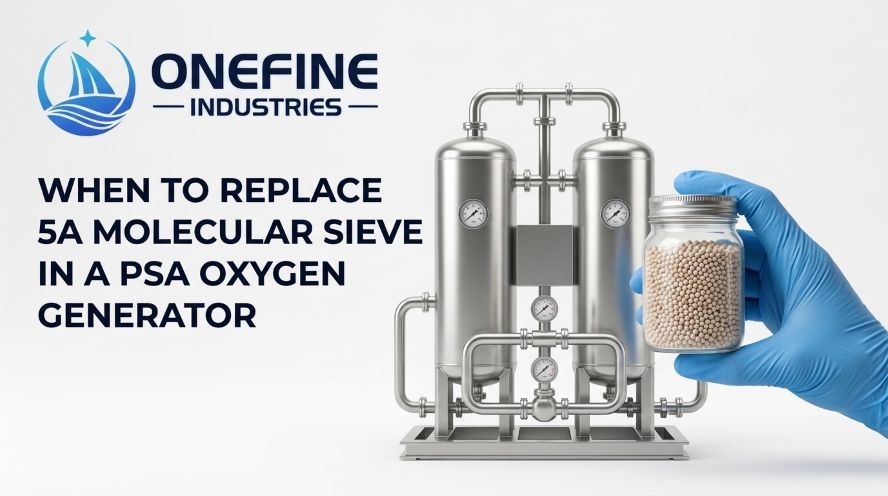
If your PSA oxygen generator is producing lower-purity oxygen than it used to, the first question isn't "how do I regenerate the bed" — the 5A Molecular Sieve inside it is already regenerating itself, dozens of times per hour, through the pressure swing cycle. The real question is whether that built-in regeneration is still working, or whether the sieve has permanently lost capacity and needs to come out of the vessel. Buyers running Molecular Sieve in PSA Oxygen Generation systems often wait too long to make that call, because the early symptoms look identical to a routine process hiccup. This guide walks through the three failure patterns that actually distinguish "still fine" from "replace now."
Key Takeaways
- A gradual, persistent purity decline at the same operating settings is the earliest warning sign of capacity fatigue.
- An upward trend in differential pressure or visible downstream fines indicates mechanical degradation requiring physical replacement.
- Sudden purity drops over days, often accompanied by unusual odors, point to moisture or oil contamination from upstream air feed failures.
- Well-maintained PSA oxygen beds typically run for several years, but actual lifespan depends heavily on feed air quality and cycling frequency.
Regeneration vs. Replacement: Two Different Processes
It helps to separate what happens every few seconds from what happens every few years. In a PSA oxygen system, regeneration is a pressure or vacuum swing event: nitrogen adsorbed onto the 5A during the high-pressure adsorption step is released as vessel pressure drops, and the bed is ready to adsorb again on the next cycle. This is continuous and automatic — it is not the heat-based regeneration described for drying-focused applications in our What is 5A Molecular Sieve overview, and there is no separate "regeneration mode" to trigger.
Replacement is a different decision entirely. It means the sieve's underlying adsorption capacity has degraded to the point where the pressure-swing cycle can no longer restore enough performance, no matter how the system is tuned. The three signs below are what indicate you've crossed that line.
Sign 1: Purity Holds Only If You Compensate
The earliest and most common warning sign is a gradual purity decline at the same operating settings — flow rate, cycle time, and adsorption pressure unchanged, but oxygen purity trending down over weeks or months. Operators typically respond by lengthening the cycle time or nudging up adsorption pressure to hold purity where it needs to be.
That compensation works for a while, which is exactly why it's easy to miss as a warning sign. The pattern to watch for is the trend, not any single reading: if you find yourself adjusting cycle parameters more often just to hold the same output purity, the sieve bed is losing usable adsorption sites, and the compensation range will eventually run out. This is different from a system that briefly dips in purity and recovers on its own — persistent, one-directional drift is the signal that matters.
Sign 2: Rising Pressure Drop and Visible Fines
Pressure cycling puts real mechanical stress on molecular sieve beads — expansion and contraction with every pressure swing, plus friction against the vessel wall and against each other. Over enough cycles, this attrition produces fine dust, and that dust does two things: it raises pressure drop across the bed (the system has to work harder to push air through), and it shows up downstream, typically in outlet filters or buffer tank drains.
If you're seeing an upward trend in differential pressure across the vessel, or finding sieve dust where you didn't before, that's mechanical degradation rather than the slow capacity fatigue described above — and it's a stronger indicator that the bed needs physical replacement rather than parameter tuning.
Sign 3: Sudden Purity Drop from Contamination
The third pattern looks nothing like the first two, and it's the one most often traced back to something upstream rather than the sieve itself. Instead of a gradual trend, purity falls sharply over days rather than months — sometimes with an unusual odor in the product gas or visible discoloration when the bed is inspected.
This is almost always a contamination event, not ordinary wear. The two most common causes are moisture and oil carryover from the feed air system: water vapor is adsorbed by 5A even more readily than nitrogen is, so if an upstream air dryer or filter fails, the sieve's nitrogen-adsorption sites get occupied by water instead, and capacity loss from this kind of poisoning does not reverse on its own. Oil aerosol from a failed compressor coalescing filter behaves similarly, coating the sieve surface and blocking access to the pores. In both cases, checking and restoring the feed air pretreatment system is the first troubleshooting step — but once contamination has reached the sieve, the affected bed typically needs replacement rather than recovery.
How Long Should the Sieve Last?
There's no single number that applies across every installation, because feed air quality and cycling frequency vary so much between systems. As a general, conservative range, well-maintained PSA oxygen beds with proper upstream drying and filtration tend to run for several years before replacement becomes necessary — systems with more aggressive cycling or weaker feed air pretreatment will land toward the shorter end of that range, while stable industrial installations with consistent pretreatment tend to last longer. Rather than relying on age alone, track the trend patterns above; they'll tell you where a specific bed actually stands well before a fixed timeline would.
If replacement is on the table, it's also a reasonable point to reconsider media selection rather than defaulting to a like-for-like swap — see our guide on Oxygen Generator Molecular Sieve (13X & Li-LSX) for how these zeolite types compare on purity and recovery for oxygen PSA duty.
FAQ
Can a water-contaminated 5A molecular sieve bed be dried out and reused?
In some cases, mild moisture exposure can be partially recovered through extended thermal drying outside the vessel, but this is not a reliable fix within a running PSA cycle. Once nitrogen capacity has dropped from moisture poisoning, the standard response is to correct the upstream drying/filtration issue and replace the affected bed rather than attempt in-situ recovery.
Is a gradual purity decline always caused by mechanical wear?
No. Gradual decline is more often capacity fatigue — a slow loss of accessible adsorption sites from repeated cycling and minor fouling — while pressure-drop increases and visible fines point specifically to mechanical attrition. Both eventually require replacement, but they're diagnosed differently, which is why tracking purity and pressure drop as separate trends is worth the effort.
Should I switch from 5A to 13X or Li-LSX when I replace the bed?
That depends on your target purity and recovery requirements — 13X and Li-LSX are generally selected where higher oxygen purity or faster cycle times are the priority. It's worth reviewing against your process specs before assuming a direct like-for-like replacement is the right call. See How Much Molecular Sieve Do You Need for a PSA Oxygen Plant? for sizing considerations either way.
How often should the bed be inspected for these signs?
Purity and differential pressure are typically already monitored continuously by the PSA control system's instrumentation, so the practical habit is reviewing the trend data on a regular schedule rather than waiting for an alarm — and inspecting downstream filters for fines whenever the system is opened for other maintenance.
Recommended Products from Sorbsieve
Looking for Bulk Supply of 5A Molecular Sieve?
Sorbsieve is a trusted bulk supplier of 5A Molecular Sieve and complete industrial adsorbents, serving industrial buyers across the Middle East.
We provide:
- ✅ Container-level supply (20'GP / 40'GP / 40'HQ)
- ✅ Full documentation (COA / TDS / SDS / COO)
- ✅ Multiple packaging options
- ✅ Technical support for 5A Molecular Sieve selection and system optimization
- ✅ Fast quote response for industrial inquiries
Contact our team for bulk pricing, product samples, and technical consultation.
Related Products
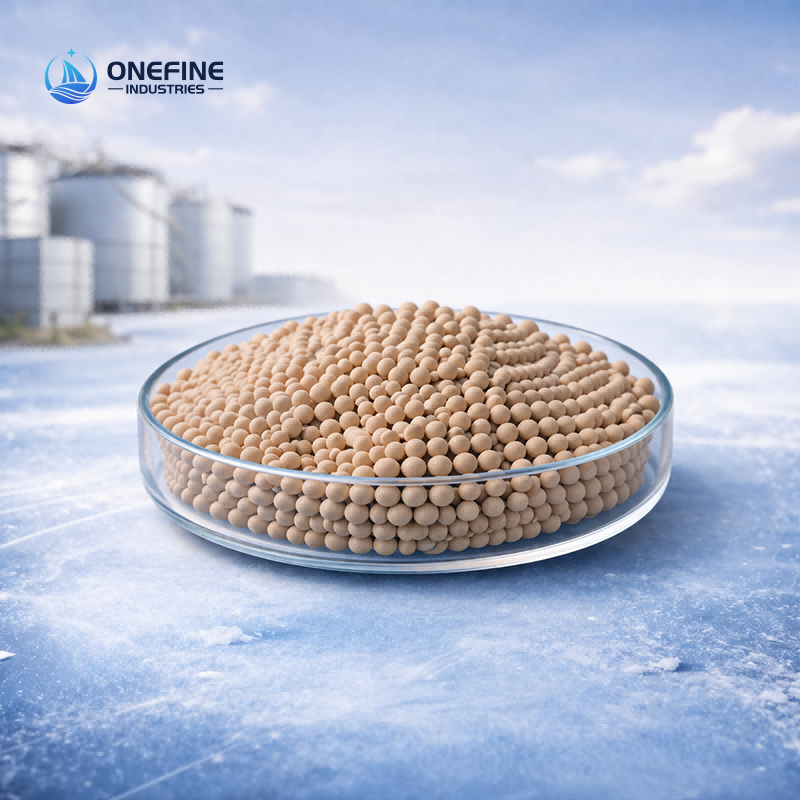
5A Molecular Sieve (Calcium Type)
Calcium-exchanged 5A molecular sieve for PSA oxygen enrichment, natural gas sweetening, n-isoparaffin separation, and simultaneous desulfurization & decarbonization. Bulk supply with MOQ from 1 ton, serving industrial buyers across the Middle East.
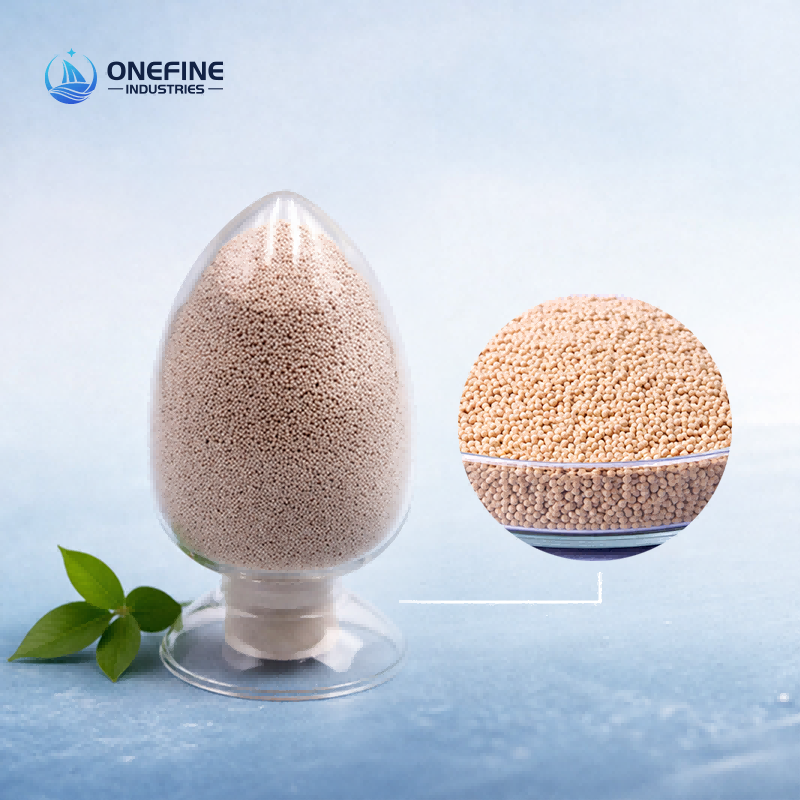
Oxygen Generator Molecular Sieve (13X & Li-LSX)
Premium oxygen generator molecular sieve for PSA/VPSA oxygen generators and medical oxygen concentrators. Available in 13X sodium type and Li-LSX lithium type — high N₂ adsorption capacity, excellent N₂/O₂ selectivity, and 3-5 year service life. Bulk supply with MOQ from 1 ton, serving industrial buyers across the Middle East.
Related Reading
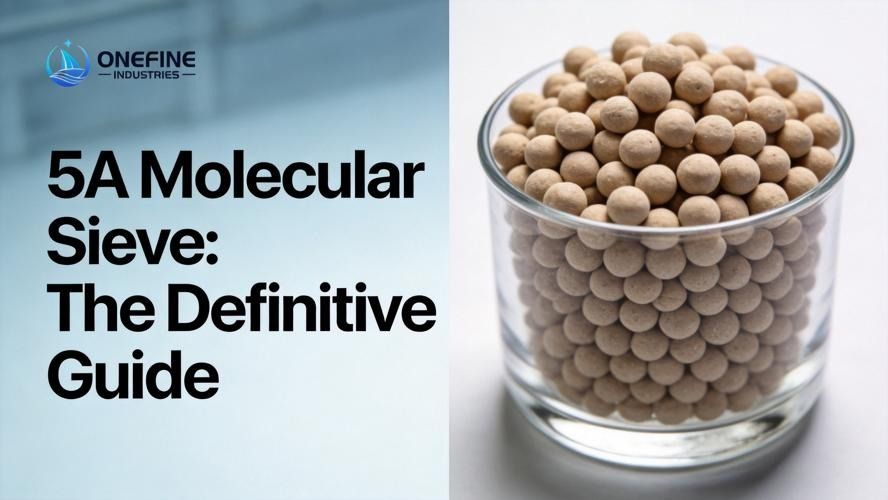
What is 5A Molecular Sieve? Uses, Specifications & How It Works
Everything you need to know about 5A molecular sieves: how they work, key advantages, common applications in PSA oxygen generation, natural gas sweetening, n-paraffin separation and air separation, plus regeneration basics and comparison with other sieve types.
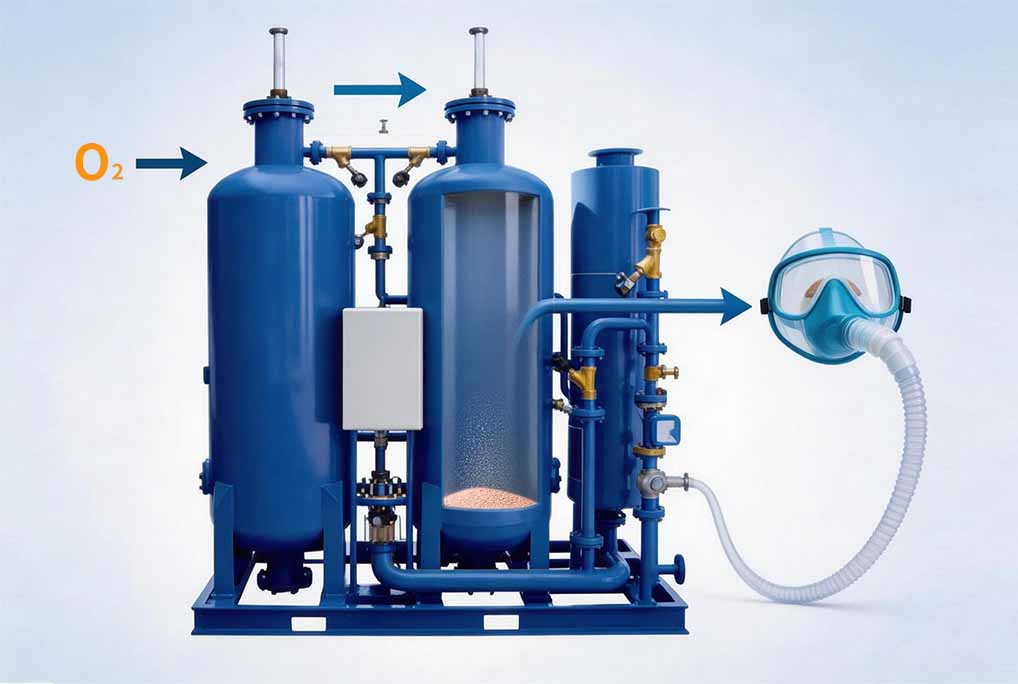
How Much Molecular Sieve Do You Need for PSA Oxygen Plant?
Learn how to estimate molecular sieve quantity for PSA oxygen plants based on flow rate, purity, pressure, and adsorbent type. Includes practical ranges and a real-world sizing example.