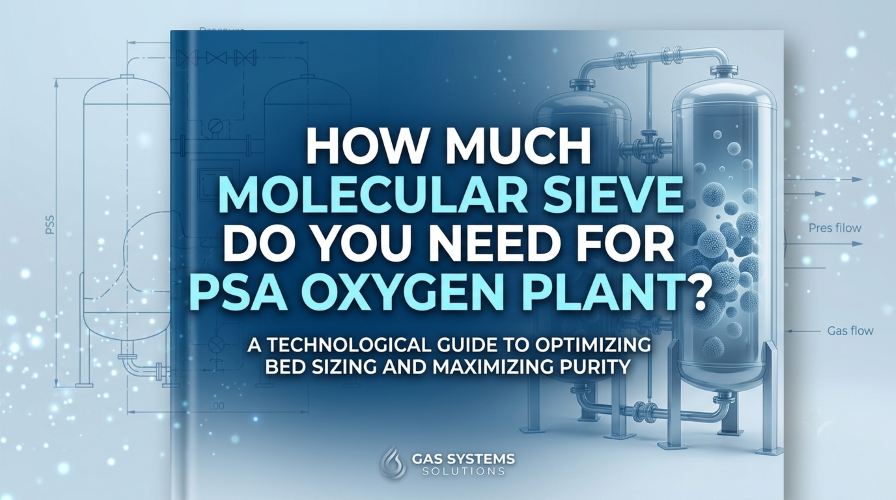
How Much Molecular Sieve Do You Need for PSA Oxygen Plant?
Introduction
Sizing molecular sieve for a PSA oxygen plant is one of the most critical — and most misunderstood — steps in system design. Too little, and your oxygen purity drops. Too much, and you've tied up capital in unnecessary inventory.
Whether you're engineering a new PSA oxygen system, replacing spent adsorbent, or evaluating a supplier quote, knowing how much molecular sieve you actually need saves time, money, and operational headaches.
This guide walks you through the key factors, a practical estimation method, and reference values for systems ranging from 10 Nm³/h to 1,000+ Nm³/h — so you can make a confident purchasing decision.
Key Takeaways
- A practical rule of thumb for estimation is 8 to 15 kg of molecular sieve per Nm³/h of oxygen flow.
- Standard 13X is cost-effective for 90-93% purity, while Li-LSX is typically required for higher purities (93-95.5%) with a lower total bed volume.
- Actual requirement varies heavily based on target purity, operating pressure (typically 2-4 bar), and cycle time.
Quick Answer: How Much Molecular Sieve Do You Need?
If you need a fast reference before diving into the details:
General rule of thumb:
Molecular sieve quantity (kg) ≈ Oxygen flow rate (Nm³/h) × 8 to 15
This range reflects differences in molecular sieve type, target purity, operating pressure, and system design. Li-LSX systems tend to use less material per unit of output; standard 13X systems sit at the higher end.
Fast Reference Range:
- 10 Nm³/h — 80 to 150 kg
- 50 Nm³/h — 400 to 750 kg
- 100 Nm³/h — 800 to 1,500 kg
- 500 Nm³/h — 4,000 to 7,500 kg
- 1,000 Nm³/h — 8,000 to 15,000 kg
⚠️ These are estimation ranges only. Actual quantities depend on your specific system design, operating conditions, and molecular sieve grade. Always confirm with your equipment supplier or request a technical consultation.
What Molecular Sieves Are Used in PSA Oxygen Plants?
PSA oxygen generation relies on the ability of certain zeolite adsorbents to selectively adsorb nitrogen from air, allowing oxygen to pass through as the product gas. The molecular sieve you choose directly affects how much material you need and what purity you can achieve.
13X Molecular Sieve (Sodium X Type)
The most widely used adsorbent for PSA oxygen plants. 13X has a pore size of approximately 10 Å and strong nitrogen affinity under pressure. It's suitable for systems targeting 90-95% oxygen purity and is cost-effective for industrial applications.
13X-HP / Li-LSX (Lithium X Type)
High-performance variants with lithium ion exchange. Li-LSX offers significantly higher nitrogen adsorption capacity per unit weight compared to standard 13X, meaning lower molecular sieve loading for the same output, and a higher achievable purity ceiling — at a higher upfront cost per kilogram, but lower total adsorbent volume.
5A Molecular Sieve
5A molecular sieve is also used in some PSA oxygen system designs, particularly where CO₂ or n-paraffin co-removal alongside nitrogen adsorption is beneficial. For a full look at its properties and applications, see our 5A molecular sieve guide.
Activated Alumina (Pre-treatment Layer)
Before air enters the molecular sieve beds, moisture and CO₂ must be removed. Most PSA oxygen systems include a pre-treatment stage using activated alumina as a desiccant layer. This protects the zeolite from premature saturation and extends its working life. When calculating your total adsorbent requirement, account for both the zeolite layer and the activated alumina pre-treatment volume separately.
For buyers comparing PSA nitrogen and PSA oxygen adsorbents: the separation mechanism is different. PSA nitrogen uses carbon molecular sieve to adsorb oxygen; PSA oxygen uses zeolite (13X, Li-LSX, or 5A) to adsorb nitrogen. To understand how CMS works in the nitrogen context, see our PSA nitrogen generation guide.
Key Factors That Affect Molecular Sieve Quantity
No two PSA oxygen systems are identical. These five variables determine where your actual requirement falls within the estimation range.
1. Target Oxygen Purity
Higher purity requires more selective adsorption and typically more adsorbent bed volume:
- 90-93% purity: Standard industrial grade, lower adsorbent loading acceptable
- 93-95% purity: Most common industrial specification, mid-range loading
- 95-99% purity: Medical or high-purity industrial, typically requires Li-LSX or optimized 13X
Medical-grade PSA oxygen (typically 93-95.5% per pharmacopeia standards) does not necessarily use more adsorbent than industrial grade — but it requires tighter quality control on the adsorbent itself.
2. Oxygen Flow Rate (Nm³/h)
The primary sizing variable. Larger output means larger bed volume and more adsorbent — this is the main number to establish before any calculation.
3. Operating Pressure
Higher adsorption pressure generally increases nitrogen loading capacity per unit of adsorbent, meaning you may need less material. Typical PSA oxygen systems operate between 2-4 bar (adsorption phase). Lower-pressure systems generally require proportionally more adsorbent.
4. PSA Cycle Time
Shorter cycle times (more adsorption/desorption cycles per hour) can extract more capacity from the same adsorbent mass, but place higher mechanical stress on the material. Cycle time is an engineering parameter set by your system designer.
5. Molecular Sieve Type (13X vs. Li-LSX)
As noted above, Li-LSX can meaningfully reduce adsorbent loading compared to standard 13X for equivalent output and purity. If your supplier quote shows significantly different quantities depending on grade, this is usually why.
Calculation Method
A practical starting-point estimate follows this general structure:
Estimated quantity (kg) ≈ Oxygen flow rate (Nm³/h) × Design coefficient (kg per Nm³/h)
The design coefficient itself depends on the factors above — purity target, molecular sieve type, operating pressure, and cycle time — and typically falls within the 8-15 kg per Nm³/h range referenced in the Quick Answer section. As a general pattern: standard 13X at 90-93% purity tends to sit toward the higher end of the range, while Li-LSX at tighter purity targets and favorable operating pressure tends toward the lower end.
Worked example (mid-size system):
For a 200 Nm³/h PSA oxygen plant at 93-95% purity using standard 13X molecular sieve, applying a mid-range coefficient of approximately 11 kg per Nm³/h:
200 Nm³/h × 11 kg/Nm³/h ≈ 2,200 kg of molecular sieve required
This falls comfortably within the 1,600-3,000 kg range for 200 Nm³/h systems noted in the Quick Answer section — a good sanity check on any estimate you calculate.
⚠️ This is a planning-level estimate for budgeting and quote comparison purposes — not a precise engineering design formula. It's a useful starting point for initial quotes and vendor comparisons. For precise system design, actual adsorbent quantity should be calculated from the isotherm data of the specific molecular sieve grade being used, in coordination with your PSA equipment supplier or system integrator. The coefficients referenced above (design coefficient, pressure correction) are general industry rule-of-thumb figures and may vary between suppliers and system designs — treat them as indicative rather than authoritative.
Common PSA Oxygen Plant Sizes & Molecular Sieve Quantities
Small-Scale Systems (10-50 Nm³/h)
- Typical applications: small clinics, laboratory use, local industrial processes
- Estimated molecular sieve required: 80-750 kg
At this scale, standard 13X is almost always used — Li-LSX is rarely cost-justified below 30 Nm³/h. Adsorbent is typically supplied in 25 kg drums for easy handling.
Medium-Scale Systems (50-200 Nm³/h)
- Typical applications: hospital oxygen supply, food processing, water treatment, small industrial plants
- Estimated molecular sieve required: 400-3,000 kg
This is the most common scale for international industrial buyers. Both 13X and Li-LSX are viable options. At 100 Nm³/h, expect to budget for roughly 800-1,500 kg of zeolite plus additional activated alumina for pre-treatment.
Large-Scale Systems (200-1,000 Nm³/h)
- Typical applications: steel plants, chemical processing, large hospitals, industrial gas supply
- Estimated molecular sieve required: 1,600-15,000 kg
At this scale, Li-LSX becomes more attractive due to lower total adsorbent volume and reduced vessel size. Adsorbent is typically supplied in 500 kg or 1,000 kg jumbo bags.
Industrial-Scale Systems (1,000+ Nm³/h)
- Typical applications: air separation units, large-scale industrial oxygen supply
- Estimated molecular sieve required: 8+ metric tons per system
At this scale, engineering-level design and custom adsorbent specifications are standard — consult your system integrator and request a detailed adsorbent proposal.
Real-World Example: 100 Nm³/h Hospital PSA Oxygen Plant
System specifications:
- Oxygen output: 100 Nm³/h
- Target purity: 93-95% (medical grade)
- Molecular sieve selected: Standard 13X
Estimate:
Applying the 100 Nm³/h reference range from the Quick Answer section, this system would require approximately 800-1,500 kg of 13X molecular sieve, with the estimate narrowing based on your specific operating pressure and cycle design.
Pre-treatment layer (activated alumina):
Typically an additional 15-25% of the zeolite volume is needed for the activated alumina pre-treatment layer — roughly 150-300 kg for this system size.
Total adsorbent package: approximately 950-1,800 kg, depending on final design parameters.
If the buyer considers Li-LSX instead: the zeolite requirement would trend toward the lower end of the range (or below it), at a higher cost per kg but a smaller total footprint.
Recommendation: For a first PSA oxygen system at 100 Nm³/h, standard 13X is a practical starting point. For replacement fills or system upgrades, it's worth comparing total lifecycle cost between 13X and Li-LSX — the difference often favors Li-LSX over a multi-year horizon.
Recommended Products from Sorbsieve
- 5A Molecular Sieve — Calcium-exchanged type, used in select PSA oxygen configurations
- Carbon Molecular Sieve for Nitrogen Generation — For PSA nitrogen systems (not oxygen)
- 4A Molecular Sieve — General-purpose drying, commonly used for feed air pre-treatment
13X Molecular Sieve and Oxygen Generator Molecular Sieve (13X & Li-LSX) will be added here once those product pages complete their content upgrade — they are the most directly relevant products for this topic.
Frequently Asked Questions
How often do I need to replace molecular sieve in a PSA oxygen plant?
Under normal operating conditions, molecular sieve in a well-maintained PSA oxygen system typically lasts several years before replacement is required. Factors that shorten service life include moisture breakthrough from a failed pre-treatment stage, contamination from compressor oil carryover, and operating outside design pressure/temperature parameters. Monitoring oxygen purity output over time is the most reliable indicator — a gradual purity decline usually signals adsorbent degradation.
Can I use standard 13X instead of Li-LSX to reduce cost?
Yes, in many applications. Standard 13X is a proven, cost-effective choice for PSA oxygen systems targeting 90-95% purity. The trade-off is higher adsorbent loading and a lower achievable purity ceiling. For systems where vessel size and adsorbent weight aren't major constraints, 13X is a practical, widely used solution. If you're designing a compact system or targeting purity above 95%, Li-LSX is worth the cost comparison.
What's the difference between medical-grade and industrial-grade PSA oxygen?
The difference is primarily in purity specification and quality documentation, not the adsorbent type itself. Medical-grade PSA oxygen typically targets 93-95.5% O₂ purity per pharmacopeia standards and requires stricter production controls and certification. Industrial-grade may accept 90-93% purity with less stringent documentation. Both grades use the same adsorbent materials, but medical applications require tighter quality control on the molecular sieve itself, including COA documentation per batch.
How do I calculate the exact quantity for my specific application?
The formula and coefficients in this guide are for quick estimation — useful for initial budgeting and comparing supplier quotes, but not a substitute for precise engineering design. For exact quantities, precise sizing should be based on the adsorption isotherm data of the specific molecular sieve grade selected, worked out with your PSA equipment supplier or system integrator. To get started, share your target flow rate, purity requirement, and operating pressure with our technical team — we'll help you cross-check your quick estimate. Choosing the right molecular sieve for your application follows similar logic — matching the adsorbent to your specific operating conditions is always the first step.
Conclusion
Sizing molecular sieve for a PSA oxygen plant doesn't have to be complicated. Start with your oxygen flow rate, apply the appropriate range for your target purity and molecular sieve type, then cross-check against the reference table. The result gives you a reliable working estimate before you go to detailed engineering.
For most industrial buyers in the 50-500 Nm³/h range, the total adsorbent requirement falls well within container-load quantities — making bulk supply both practical and cost-effective.
Looking for Bulk Supply of Molecular Sieve for PSA Oxygen Plants?
Sorbsieve is a trusted bulk supplier of molecular sieve and complete industrial adsorbents, serving industrial buyers across the Middle East.
We provide:
- ✅ Container-level supply (20'GP / 40'GP / 40'HQ)
- ✅ Full documentation (COA / TDS / SDS / COO)
- ✅ Multiple packaging options (25 kg drums / 500 kg / 1,000 kg jumbo bags)
- ✅ Technical support for molecular sieve selection and system optimization
- ✅ Fast quote response for industrial inquiries
Contact our team for bulk pricing, product samples, and technical consultation.
Related Products
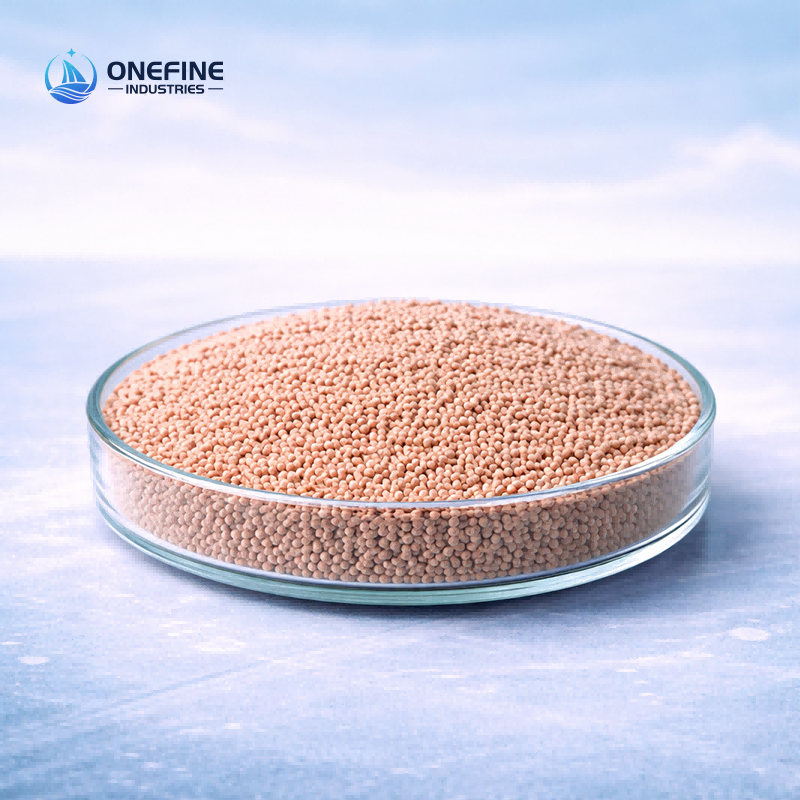
4A Molecular Sieve
General-purpose 4A molecular sieve desiccant for industrial air drying, solvent dehydration, CO2 removal, and static packaging applications. High capacity, long service life.
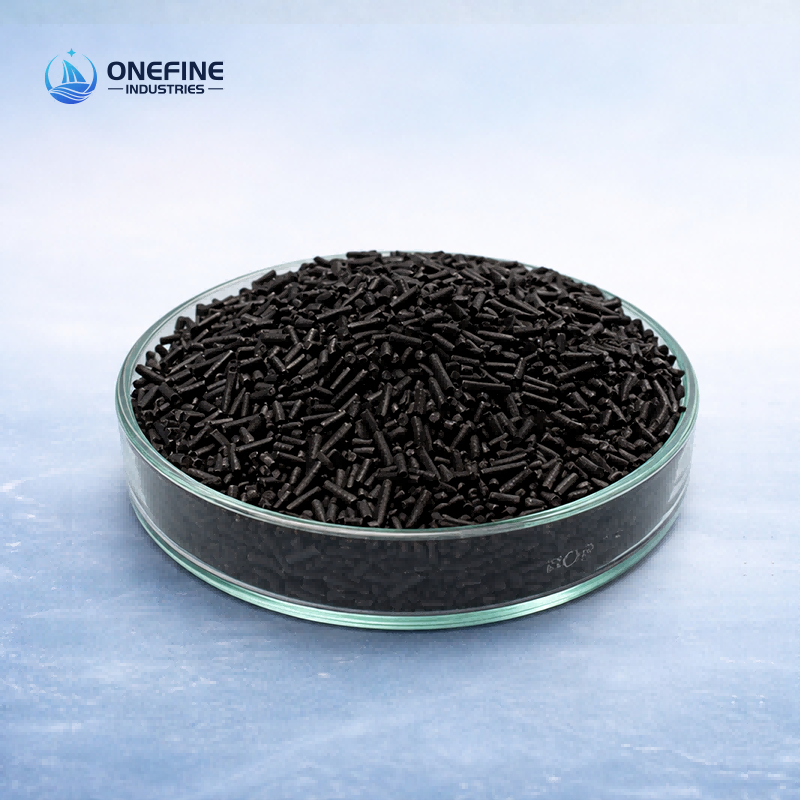
Carbon Molecular Sieve for Nitrogen Generation (CMS)
High-performance carbon molecular sieve (CMS) for PSA nitrogen generators. Uniform micropore distribution (0.3-0.5nm) ensures efficient oxygen-nitrogen separation. Delivers 95-99.999% nitrogen purity with 3-5 year service life. Bulk supply for industrial buyers worldwide.
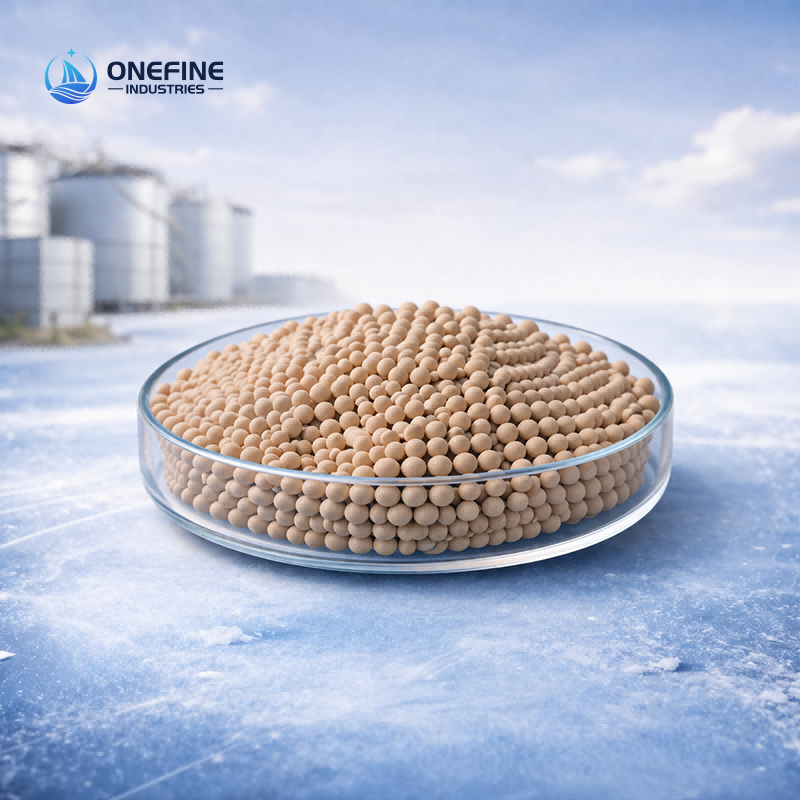
5A Molecular Sieve (Calcium Type)
Calcium-exchanged 5A molecular sieve for PSA oxygen enrichment, natural gas sweetening, n-isoparaffin separation, and simultaneous desulfurization & decarbonization. Bulk supply with MOQ from 1 ton, serving industrial buyers across the Middle East.
Related Applications
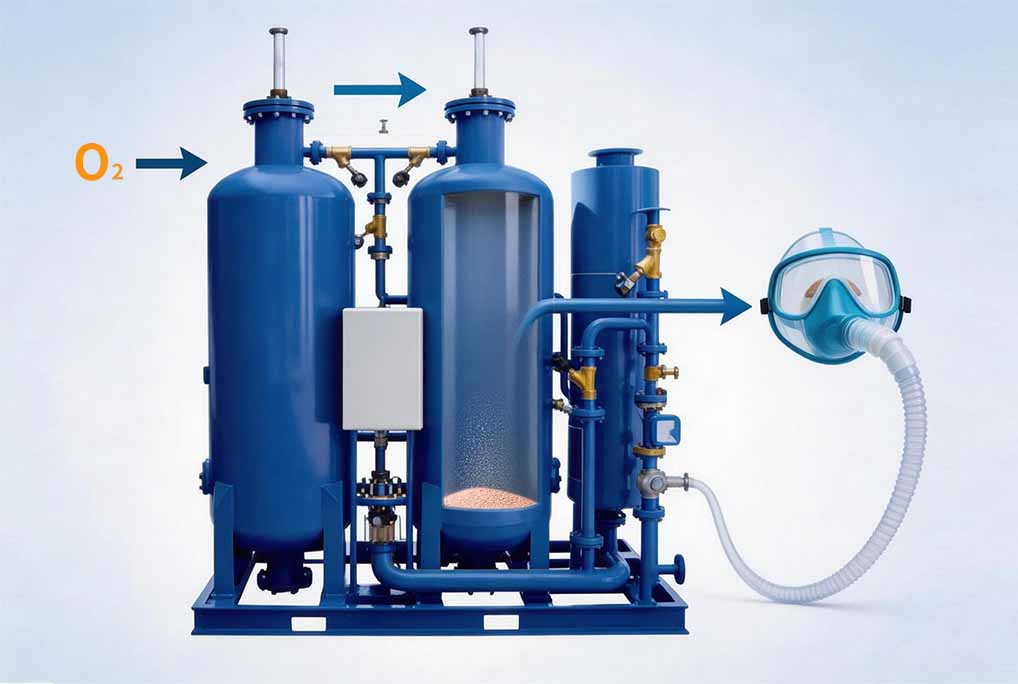
Molecular Sieve for Oxygen Generation: Applications in PSA Oxygen Plants, Oxygen Concentrators, and Industrial Air Separation
Molecular sieve enables oxygen production across industrial PSA plants, compact concentrators, and cryogenic air separation pre-purification. This case covers three distinct application roles and the sieve types suited to each.
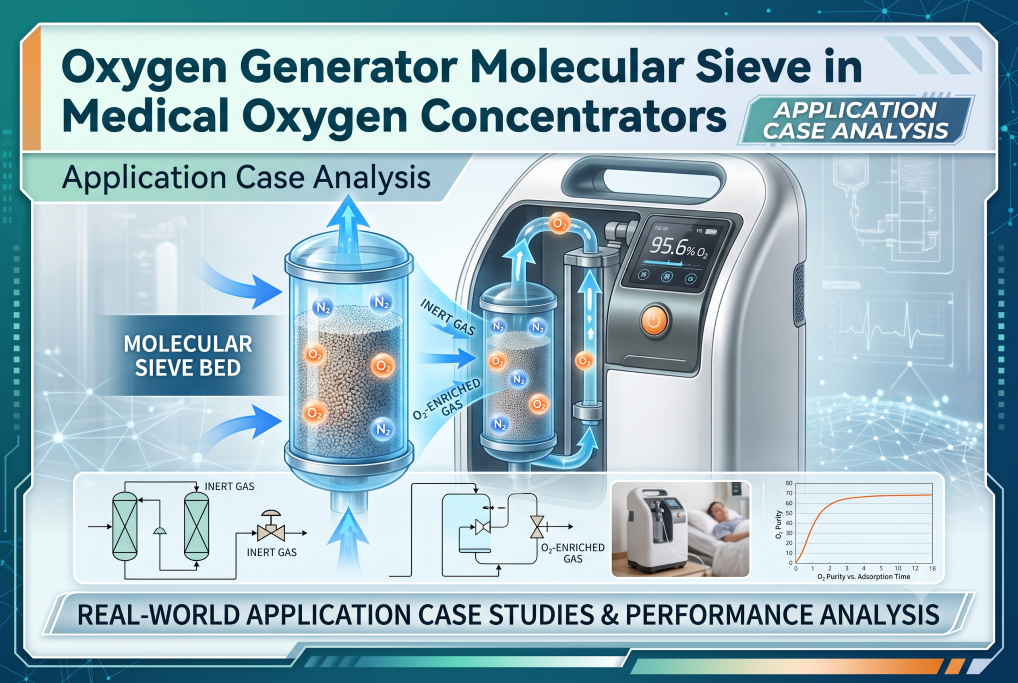
Oxygen Generator Molecular Sieve in Medical Oxygen Concentrators: Application Case Analysis
Oxygen generator molecular sieve is the core technology inside every medical oxygen concentrator. This case analysis covers how PSA-based concentrators work, why sieve quality is critical for patient safety, and key selection factors for medical-grade applications.
Related Reading
Carbon Molecular Sieve: The Ultimate Guide to PSA Nitrogen Generation
A complete guide to carbon molecular sieve technology for on-site PSA nitrogen generation. Learn how CMS works based on kinetic diffusion separation, its key benefits including 50-90% cost savings vs cylinder/liquid nitrogen, industrial applications across food & beverage, chemical, electronics, pharmaceutical and mining industries, how to select the right CMS grade, maintenance tips, and comparisons with membrane and cryogenic nitrogen generation methods.
How to Choose Molecular Sieve for Air Drying
A practical guide to selecting the right molecular sieve for compressed air drying applications — covering dew point targets, contaminant removal, form factor, regeneration method, and common selection mistakes to avoid.
What is 5A Molecular Sieve? Uses, Specifications & How It Works
Everything you need to know about 5A molecular sieves: how they work, key advantages, common applications in PSA oxygen generation, natural gas sweetening, n-paraffin separation and air separation, plus regeneration basics and comparison with other sieve types.