How Do You Know When to Replace 13X Molecular Sieve in a CO2 Removal or Biogas Upgrading System?
Key Takeaways
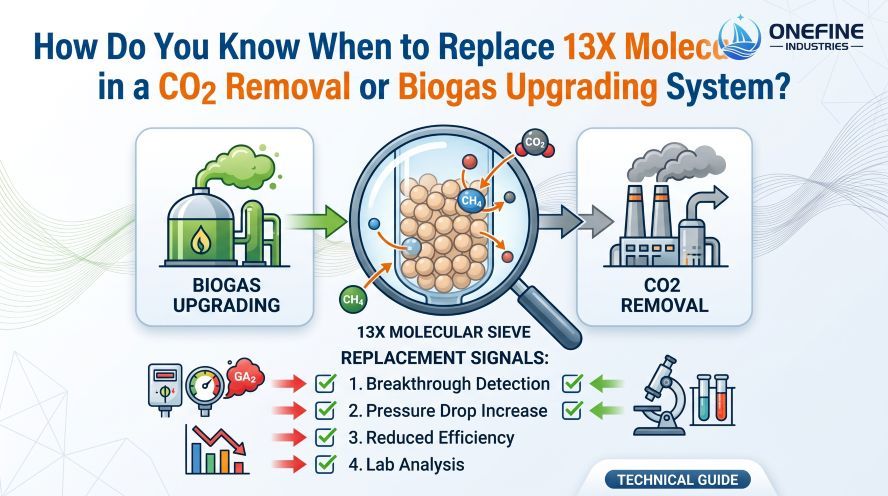
- A shrinking mass-transfer zone and earlier CO2 breakthrough indicate that the 13X bed's real working capacity has fallen below its rated capacity.
- Rising outlet CO2 levels after regeneration at the standard 180-260°C range signal the accumulation of heat-stable contaminants or permanent structural damage.
- Repeated exposure to H2S, SO2, or heavy hydrocarbons causes surface contamination and coking that permanently block active adsorption sites.
- Physical degradation, such as a steadily rising pressure drop or visible dusting, is a reliable sign of failing structural integrity even if adsorption numbers appear acceptable.
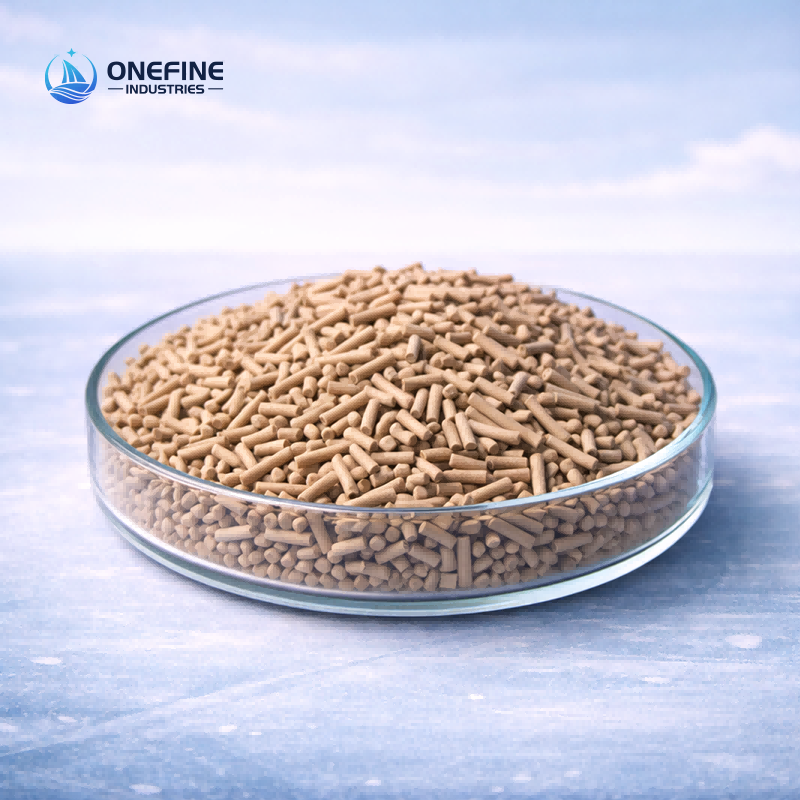
13X molecular sieve is the standard choice for removing CO2 from natural gas, biogas, and other process gas streams — its large pore structure (~10Å, with an effective adsorption pore opening around 9Å) gives it the CO2 capacity that smaller-pore sieves like 4A or 5A can't match. But like any adsorbent, it doesn't last forever. Contamination, thermal aging, and incomplete regeneration all chip away at its working capacity over time, and running a saturated or degraded bed too long means CO2 breakthrough, off-spec gas, and wasted energy on a regeneration cycle that isn't actually restoring the material. This guide walks through the concrete signals — in the outlet gas, the regeneration data, and the physical condition of the sieve — that tell you it's time to swap the bed rather than keep pushing it.
Sign 1: Earlier and Earlier CO2 Breakthrough
The clearest signal is a shrinking mass-transfer zone lifetime: the point where CO2 starts appearing in the outlet gas creeps earlier in each cycle, even though feed conditions (flow rate, CO2 concentration, temperature) haven't changed. This happens because the 13X Molecular Sieve bed's real working capacity has fallen below its rated capacity — fresh 13X typically offers dynamic CO2 adsorption in the range of roughly 14+ NL/g under standard test conditions, and a bed that's losing capacity will need regeneration noticeably more often to hold the same breakthrough point. If your cycle time has quietly dropped by 20-30% compared to when the sieve was fresh, that's a strong indicator the bed is aging, not just having an off day.
Sign 2: Incomplete Regeneration, Even at the Right Temperature
13X needs a genuinely thorough regeneration to desorb both water and CO2 — industry guidance generally places the effective regeneration window in the roughly 180-260°C range, with performance dropping off sharply below about 150°C and permanent crystal damage becoming a risk above roughly 300°C. If you're already running regeneration at a temperature and hold time that used to fully restore the bed, but outlet CO2 levels after regeneration are creeping up cycle over cycle, that's not a temperature problem anymore — it's a sign the sieve has accumulated heat-stable contaminants or structural damage that regeneration simply can't reverse. Chasing the problem with higher temperatures at that point usually accelerates degradation rather than fixing it.
Sign 3: Contamination From H2S, SO2, or Heavy Hydrocarbons
Biogas and sour natural gas streams often carry H2S, SO2, or heavier hydrocarbon fractions alongside the CO2. 13X can tolerate some exposure to these components, and in fact zeolite-based adsorbents are used for sulfur-compound removal in dedicated applications — but in a CO2-removal bed that wasn't designed or pre-treated for heavy sulfur loading, repeated exposure leads to a form of surface contamination and, in hydrocarbon-heavy streams, coking that permanently blocks active adsorption sites. This shows up as a capacity loss that regeneration can't recover, independent of the breakthrough-timing trend in Sign 1. If your feed gas composition includes meaningful H2S or SO2 and you're seeing unexplained capacity decline, contamination — not simple aging — is the more likely cause, and it's worth checking whether upstream desulfurization is adequately protecting the CO2-removal bed.
Sign 4: Physical Degradation — Dusting, Attrition, and Pressure Drop Rise
Beyond chemical aging, 13X beads can suffer mechanical attrition from repeated thermal cycling and gas velocity, especially in systems with frequent temperature-swing regeneration. Watch for a steadily rising pressure drop across the bed, visible dust or fines at the bed outlet or in downstream filters, and — on physical inspection — beads that have become chipped, cracked, or rounded down from their original shape. None of these show up in the outlet gas composition directly, but they're a reliable sign that the bed's structural integrity is failing even if breakthrough timing still looks acceptable, and they typically mean replacement is close whether or not the adsorption numbers have degraded yet. (For a look at 13X replacement signals in a different application context, see our companion guide on when to replace molecular sieve in an ASU pre-purification bed .)
Putting It Together: When to Replace, Not Just Regenerate
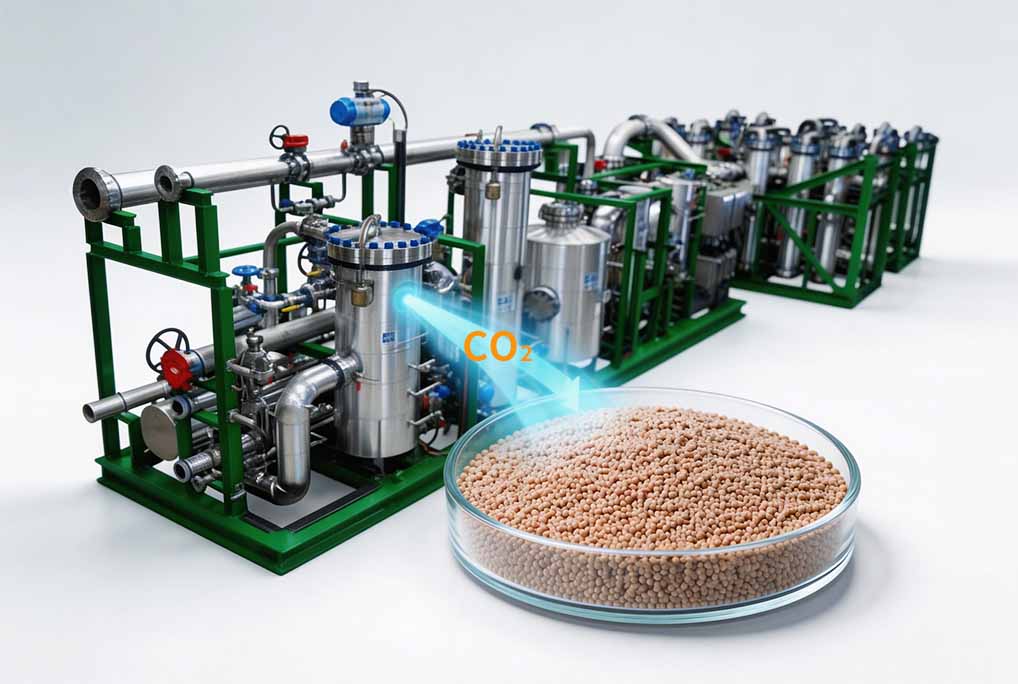
No single signal above is usually enough on its own to justify a full bed change — a slightly early breakthrough one cycle, or a bit more dust than usual, can be normal variation. What matters is the pattern: if breakthrough timing, post-regeneration CO2 levels, and physical bed condition are all trending the same direction over several consecutive cycles, that convergence is what separates "needs a longer regeneration this time" from "needs fresh 13X." Tracking cycle-over-cycle breakthrough time and regeneration-outlet CO2 level, even with simple logging, is the most reliable way to catch the trend early — well before it turns into off-spec product gas or unplanned downtime. This same breakthrough-and-regeneration logic is what we walk through in more system-level detail in our molecular sieve for CO2 removal application case , covering CO2 removal across air separation, natural gas processing, and biogas upgrading systems.
Recommended Products from Sorbsieve
- 13X Molecular Sieve — Our standard bulk-grade 13X for CO2 removal, natural gas processing, and biogas upgrading applications, supplied to Middle East industrial buyers with full documentation and flexible container-level packaging. (already linked above)
- COS Adsorbent — A specialized zeolite adsorbent for streams that also require COS, CS2, or supplementary H2S removal ahead of downstream purification steps, relevant where sulfur-compound pre-treatment is part of the gas train.
FAQ
How long does 13X molecular sieve typically last in a CO2 removal application before replacement? It varies widely with feed gas composition, cycle frequency, and regeneration discipline, so there's no single industry-standard lifespan — some beds run well for 2-3+ years, while heavily contaminated or poorly regenerated systems can see meaningful capacity loss within months. Tracking the trend signals above is more reliable than relying on a fixed replacement schedule.
Can I extend 13X life by simply regenerating at a higher temperature? Only up to a point. Staying within the roughly 180-260°C effective range helps ensure complete regeneration, but pushing well above that — especially past roughly 300°C — risks permanent crystal structure damage rather than restoring capacity, so it isn't a reliable fix for a bed that's already contaminated or structurally degraded.
Is 13X the right molecular sieve for biogas upgrading, or should I consider a different grade? 13X's larger pore structure and higher CO2 working capacity generally make it a stronger fit for CO2-heavy streams like biogas upgrading than smaller-pore grades such as 4A, which is why it's the standard choice for this application — but the right grade always depends on your specific feed composition and target purity, so it's worth confirming against your actual gas analysis.
What's the difference between capacity loss from normal aging and capacity loss from contamination? Normal thermal aging tends to show up as a gradual, steady decline in breakthrough time across many cycles. Contamination-driven capacity loss is often faster and can appear as a step change tied to a specific feed event (a sulfur spike, a hydrocarbon carryover incident), and it's typically not recoverable through standard regeneration — which is the practical way to tell the two apart.
Looking for Bulk Supply of 13X Molecular Sieve?
Sorbsieve is a trusted bulk supplier of 13X Molecular Sieve and complete industrial adsorbents, serving industrial buyers across the Middle East.
We provide:
- ✅ Container-level supply (20'GP / 40'GP / 40'HQ)
- ✅ Full documentation (COA / TDS / SDS / COO)
- ✅ Multiple packaging options
- ✅ Technical support for 13X selection and system optimization
- ✅ Fast quote response for industrial inquiries
Contact our team for bulk pricing, product samples, and technical consultation.
Related Reading
What is 13X Molecular Sieve? Uses, Specifications & How It Works
Everything you need to know about 13X molecular sieves: how they work, key properties, common applications in air separation pre-purification, natural gas sweetening, solvent recovery and industrial gas drying, plus regeneration methods and comparison with other sieve types.
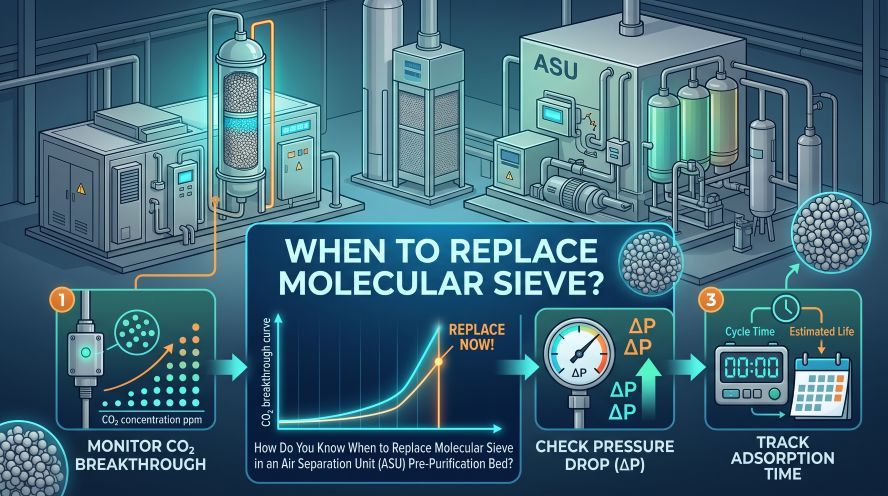
How Do You Know When to Replace Molecular Sieve in an Air Separation Unit (ASU) Pre-Purification Bed?
Rising pressure drop and CO2/moisture breakthrough are the two most reliable signs an ASU pre-purification molecular sieve bed needs replacement — but neither should be judged on a single reading. This guide walks through the warning signs, what's actually degrading inside the bed, and how to separate normal aging from a genuine end-of-life signal.