Molecular Sieve for CO2 Removal: Applications in Air Separation, Natural Gas Processing, and Biogas Upgrading
Overview
Key Takeaways:
- Molecular sieve removes CO2 across air separation, natural gas processing, and biogas upgrading, with 13X and 5A grades selected for CO2 capacity and any co-removal needs
- In biogas upgrading, 13X or 5A molecular sieve selectively adsorbs CO2 to raise raw biogas (35-45% CO2) to pipeline-quality biomethane (95%+ CH4)
- When CO2 itself is the product — food-grade CO2, CCU pre-treatment, liquefaction — 4A molecular sieve is used to dry the gas without adsorbing the CO2
Overview
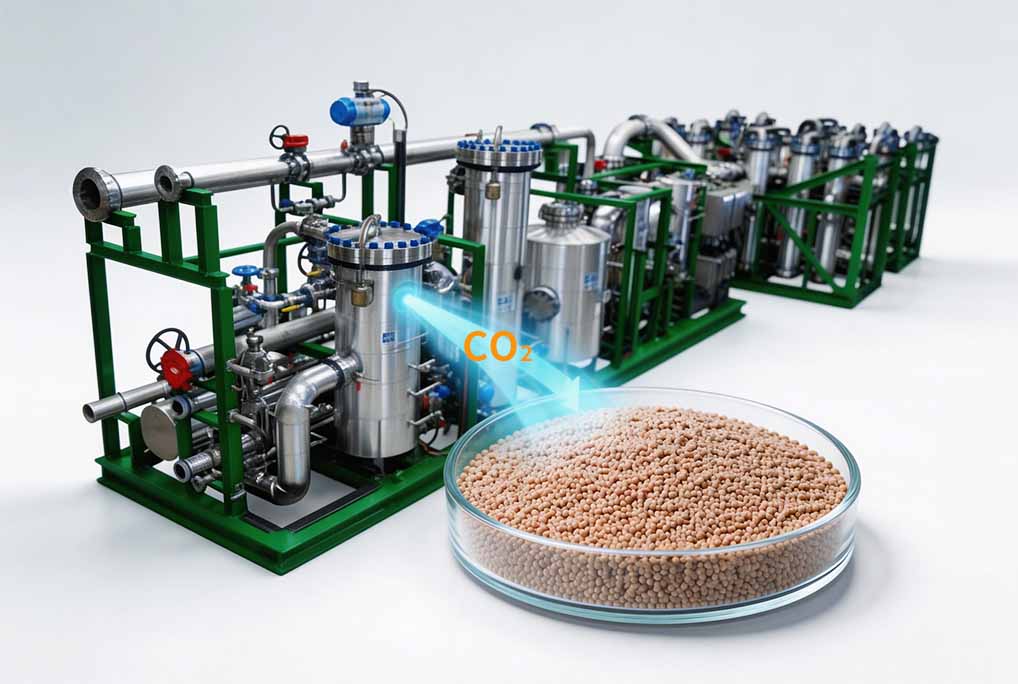
Molecular sieve is a highly efficient adsorbent for carbon dioxide removal across a wide range of industrial gas treatment applications. Its uniform pore structure and strong CO2 selectivity make it a reliable solution wherever CO2 must be reduced, removed, or dried out of a gas stream — from air separation pre-purification to biogas upgrading to CO2 drying ahead of liquefaction.
This case analysis briefly covers CO2 removal's role in air separation and natural gas processing — both detailed in our other application cases — before focusing in depth on two areas not yet covered elsewhere: biogas upgrading to biomethane, and CO2 drying for liquefaction and food-grade applications.
Application 1: Air Separation & Natural Gas Processing (Brief Overview)
CO2 removal is a critical step in both cryogenic air separation and natural gas processing — in ASUs, residual CO2 in feed air can freeze solid inside cryogenic heat exchangers; in natural gas, excess CO2 reduces heating value and can cause freeze-out in low-temperature systems. In both cases, 13X molecular sieve is the standard choice for its large pore size and strong CO2 capacity.
For detailed case analysis of these applications, see our related cases: Molecular Sieve for Oxygen Generation (covers ASU pre-purification) and Molecular Sieve for Natural Gas (covers CO2/H2S removal in gas processing).
Application 2: Biogas Upgrading to Biomethane
Process Context
Raw biogas from anaerobic digestion, landfill gas, or agricultural waste typically contains 35-45% CO2 alongside methane, along with water vapor, hydrogen sulfide, and trace organic contaminants. To convert raw biogas into biomethane suitable for pipeline injection or vehicle fuel, CO2 must be reduced to raise the methane concentration to pipeline-quality specifications (typically 95%+ CH4).
How Molecular Sieve Works in This Application
A representative biogas upgrading facility uses a PSA system with 13X or 5A molecular sieve to selectively adsorb CO2 from the CH4/CO2 mixture — since methane molecules pass through largely unadsorbed while CO2 is captured on the sieve's internal surface. The same PSA bed, or a companion 4A stage, typically handles moisture removal and can support co-removal of trace H2S depending on system design.
Cyclic adsorption and regeneration allow continuous operation as raw biogas is fed into one or more adsorption towers while others regenerate — a similar operating principle to the PSA nitrogen and oxygen systems covered in our other application cases, but tuned for CO2/CH4 rather than N2/O2 separation.
Molecular Sieve Specification for This Application
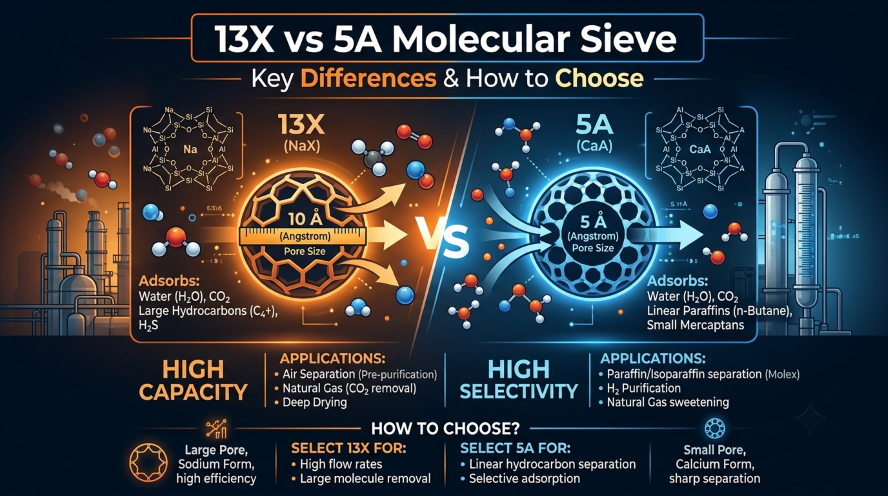
- Type: 13X for broad CO2/impurity capacity; 5A where the system also needs to manage hydrocarbon separation alongside CO2 removal — see our 13X vs 5A comparison guide for the full selection logic
- Key requirement: High CO2 working capacity per cycle to keep bed size and cycle frequency practical for continuous digester gas flow
- Typical outcome: Raw biogas (35-45% CO2) upgraded to 95%+ methane content suitable for grid injection or vehicle fuel use
Scale Considerations
Biogas upgrading systems range from small on-farm digesters producing modest gas volumes to larger municipal or landfill-gas facilities with continuous high-volume flow. Molecular sieve requirements scale with digester capacity and target biomethane purity.
Application 3: CO2 Drying Before Compression, Liquefaction, or Food-Grade Use
Process Context
In many CO2 handling systems, the CO2 stream itself — not a CO2-contaminated process gas — is the product that needs treatment. Food-grade CO2 (for beverage carbonation), CO2 recovery plants, and CO2 liquefaction systems all require the CO2 gas to be dried before compression, storage, or transport. Moisture in CO2 can cause corrosion in pipelines and vessels, ice or hydrate formation, reduced compression efficiency, and damage to valves and instrumentation.
How Molecular Sieve Works in This Application
Here molecular sieve acts purely as a high-efficiency desiccant for CO2 gas itself, rather than removing CO2 from another gas stream. 4A molecular sieve is commonly used for this drying duty, selected over silica gel or activated alumina when a very low dew point is required before liquefaction. This application spans food-grade CO2 systems, beverage carbonation supply, CO2 recovery plants, and increasingly, pre-treatment stages for carbon capture and utilization (CCU) systems.
Molecular Sieve Specification for This Application
- Type: 4A molecular sieve for standard CO2 drying duty
- Key requirement: Deep moisture removal without adsorbing CO2 itself, since the CO2 is the product being dried, not a contaminant being removed
Why Molecular Sieve Type Matters Across CO2 Applications
The right choice depends on what role the sieve is playing:
- Removing CO2 from a gas mixture (air separation, natural gas, biogas, hydrogen purification) → 13X or 5A, chosen for CO2 capacity and any co-removal requirements
- Drying the CO2 gas itself (food-grade CO2, CCU pre-treatment, liquefaction) → 4A, since it dries without capturing the CO2 product
Using a CO2-adsorbing sieve type (13X/5A) where the goal is simply drying a CO2 stream would waste product and reduce system efficiency — matching sieve function to the actual process goal is the starting point for system design.
Recommended Products from Sorbsieve
- 13X Molecular Sieve — for CO2 removal from air, natural gas, and biogas streams
- 5A Molecular Sieve — for CO2 removal combined with hydrocarbon separation
- 4A Molecular Sieve — for drying CO2 gas itself ahead of compression or liquefaction
Contact our team for bulk pricing, grade recommendation, and availability based on your gas composition and process goal.
Supply Information
Sorbsieve supplies molecular sieve for CO2 removal and CO2 drying applications to industrial buyers across the Middle East and internationally.
Standard packaging options:
- 25 kg drums (suitable for trial orders and small-batch systems)
- 150 kg steel drums
- 500 kg super sacks (most popular for industrial bulk orders)
- 1,000 kg jumbo bags (standard for plant-scale orders)
Minimum order quantity: 1 ton (trial orders accepted)
Container loading: 20'GP: 18-20 tons | 40'GP: 22-24 tons | 40'HQ: 24-26 tons
Loading ports: Shanghai, Qingdao, Tianjin, Ningbo, Shenzhen
Documents provided: COA (per batch) / TDS (pre-sale) / SDS (pre-shipment) / COO / Packing List
Looking for Bulk Supply of Molecular Sieve for CO2 Removal?
Sorbsieve is a trusted bulk supplier of 13X, 5A, and 4A molecular sieve for CO2 removal, biogas upgrading, and CO2 drying applications, serving industrial buyers across the Middle East.
We provide:
- ✅ Container-level supply (20'GP / 40'GP / 40'HQ)
- ✅ Full documentation (COA / TDS / SDS / COO)
- ✅ Multiple packaging options
- ✅ Technical support for sieve type selection based on your process goal
- ✅ Fast quote response for industrial inquiries
Contact our team for bulk pricing, grade confirmation, and technical consultation.
Related Products
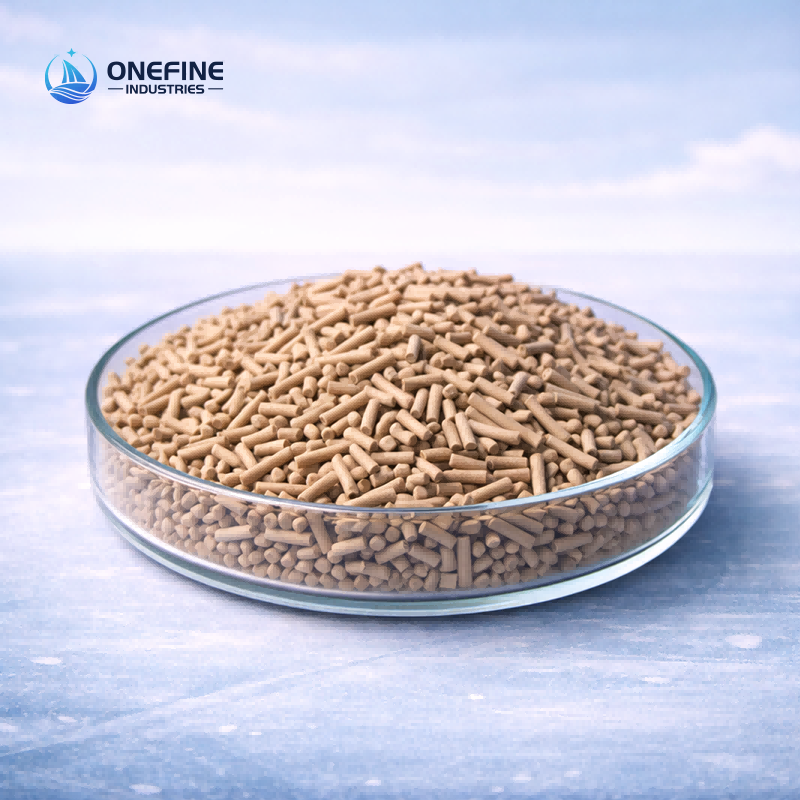
13X Molecular Sieve (Sodium X Type)
Sodium-type 13X molecular sieve with 10Å pore size for air separation pre-purification, natural gas sweetening, solvent recovery, and industrial gas drying. High adsorption capacity, industrial-grade performance.
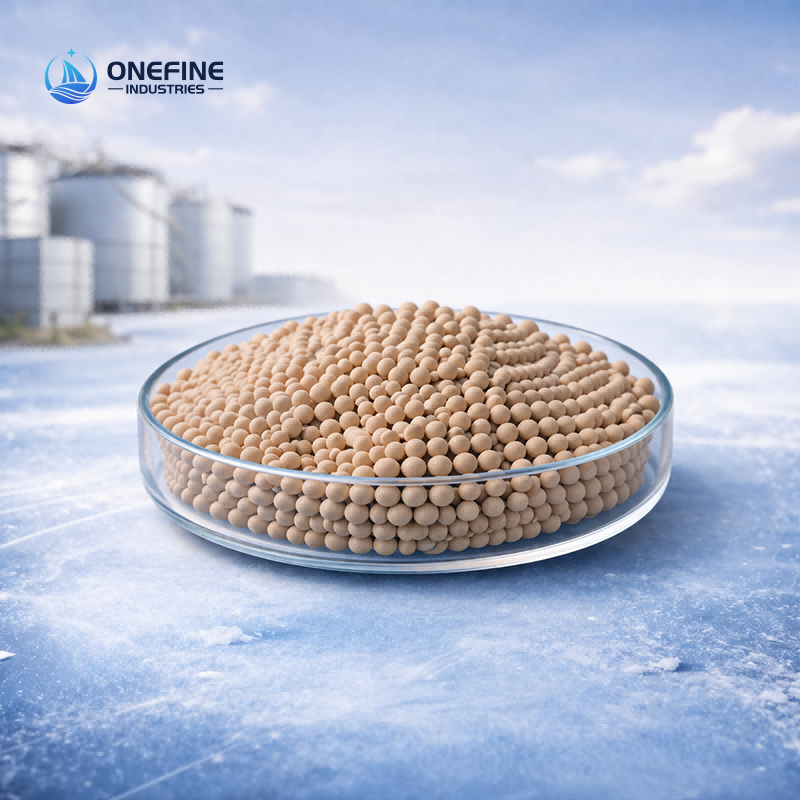
5A Molecular Sieve (Calcium Type)
Calcium-exchanged 5A molecular sieve for PSA oxygen enrichment, natural gas sweetening, n-isoparaffin separation, and simultaneous desulfurization & decarbonization. Bulk supply with MOQ from 1 ton, serving industrial buyers across the Middle East.
4A Molecular Sieve
General-purpose 4A molecular sieve desiccant for industrial air drying, solvent dehydration, CO2 removal, and static packaging applications. High capacity, long service life.
Related Applications
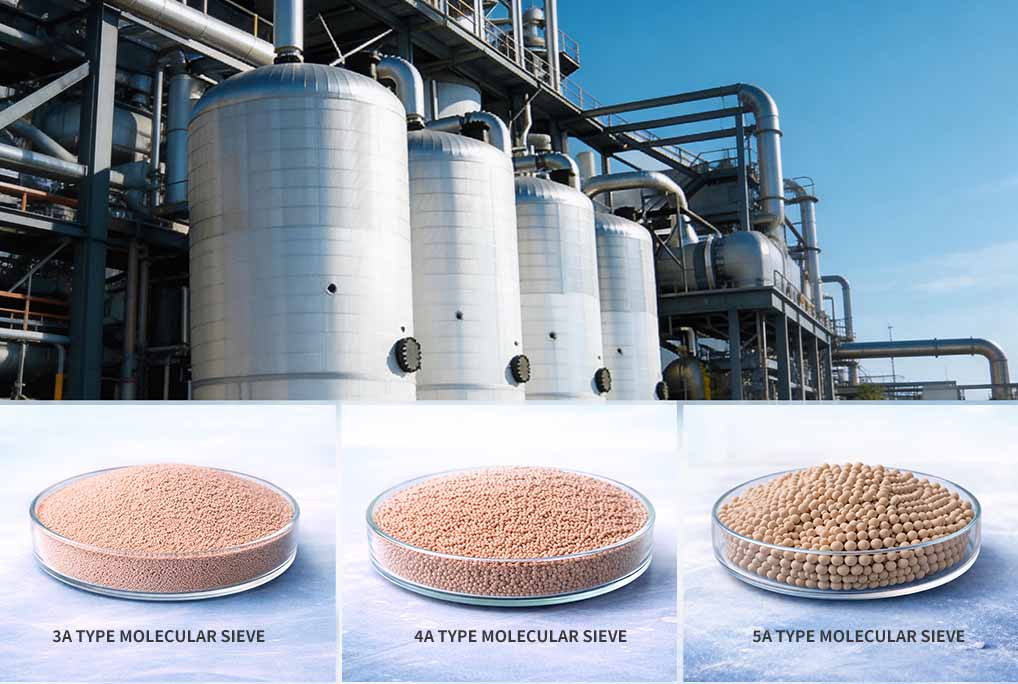
Molecular Sieve for Natural Gas: Applications in Dehydration, CO2 Removal, LNG Pre-Treatment, and Gas Purification
Natural gas requires molecular sieve at nearly every purification stage — from bulk dehydration to the ppm-level purity needed for LNG production. This case covers four core applications (dehydration, CO2/H2S removal, LNG pre-treatment, and gas purification) with the sieve type, specifications, and supply details for each.
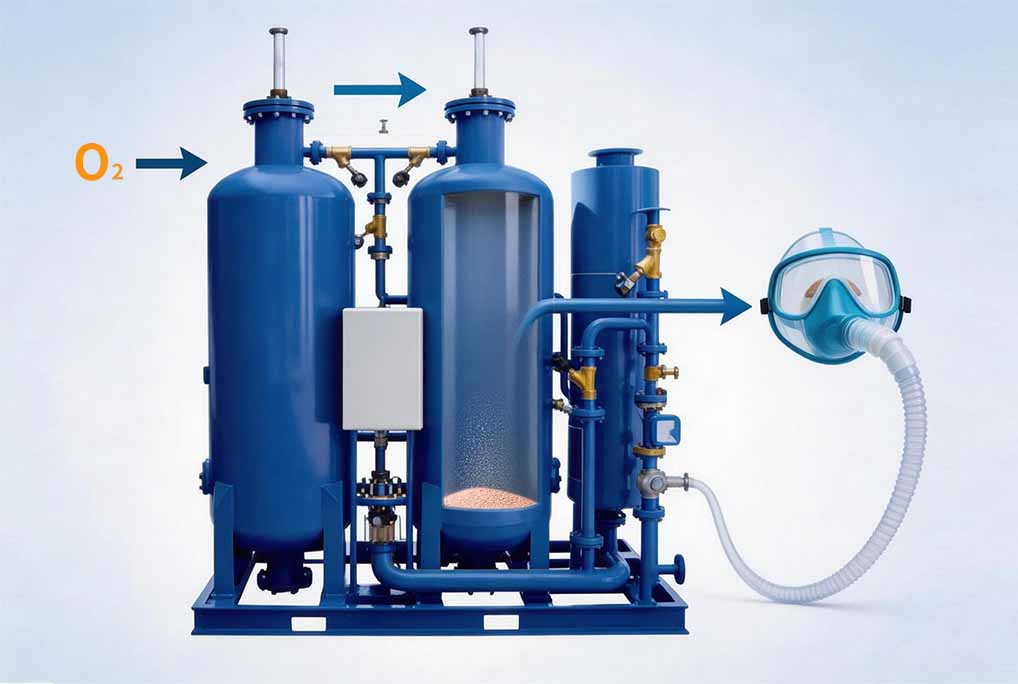
Molecular Sieve for Oxygen Generation: Applications in PSA Oxygen Plants, Oxygen Concentrators, and Industrial Air Separation
Molecular sieve enables oxygen production across industrial PSA plants, compact concentrators, and cryogenic air separation pre-purification. This case covers three distinct application roles and the sieve types suited to each.