How Do You Know When to Replace a Desulfurization and Arsenic Removal Catalyst?
Key Takeaways
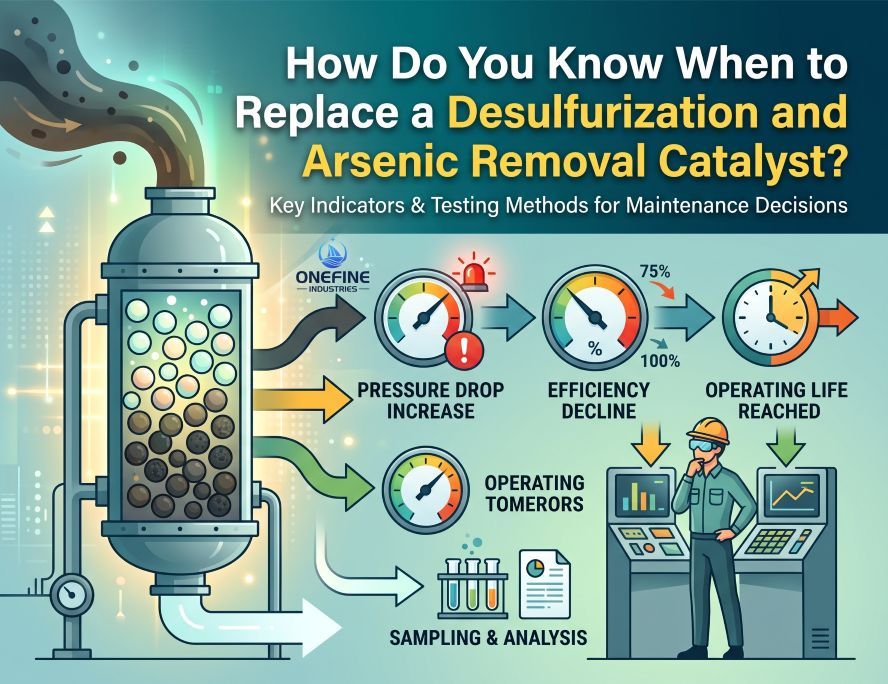
- Sulfur removal offers a gradual warning curve based on capacity, while arsenic bonds strongly and is consumed for good without a linear signal.
- Since feed arsenic concentrations are typically low, periodic laboratory testing of the spent catalyst is required rather than continuous online monitoring.
- A gradual decline in downstream palladium catalyst activity is a critical secondary indicator of arsenic slip from an exhausted upstream guard bed.
A Desulfurization and Arsenic Removal Catalyst carries two separate jobs in the same bed: stripping bulk sulfur compounds and capturing trace arsenic before either poison reaches a downstream hydrogenation stage. Because it's doing two jobs, it can also fail in two different ways — and they don't run on the same clock. Watching only one signal is the most common reason operators are caught off guard by a bed that "still looks fine" on paper but has already let its more dangerous impurity through. Here's what actually separates a bed with life left from one that needs replacing.
Two Poisons, Two Different Failure Modes
Sulfur removal in this catalyst works largely as a capacity question: the bed absorbs H₂S until its sulfur-capture sites are used up, and outlet sulfur concentration rises in a reasonably predictable, trackable way as that capacity depletes. Arsenic removal doesn't behave the same way. Arsenic is widely understood in catalysis to bond very strongly to active metal sites — strongly enough that, once captured, it isn't something a regeneration cycle is expected to reverse. That difference matters operationally: sulfur breakthrough gives you a gradual warning curve, while arsenic capacity, once consumed, is consumed for good. A bed can still be capturing sulfur acceptably while its arsenic capacity is already exhausted underneath that number. For the underlying chemistry behind this dual-function design, see our guide, arsenic removal catalyst basics.
Sulfur Breakthrough: The Signal You Can Actually See Coming
Rising H₂S in the outlet gas is the more straightforward of the two signals to track, and it's the one most operators already monitor as a matter of course. A steady upward trend in outlet sulfur concentration — rather than a single anomalous reading — is the reliable indicator that the bed's sulfur-capture capacity is approaching exhaustion. Because this failure mode is capacity-driven and fairly linear, it's also the easier one to plan around: trending the data over weeks gives a reasonable window to schedule a changeout before the bed is fully spent.
Arsenic Saturation: The Signal You Can't Afford to Miss
This is the harder half of the problem, precisely because arsenic breakthrough doesn't announce itself the way sulfur breakthrough does. Feed arsenic concentrations are typically low enough that outlet monitoring for arsenic specifically isn't part of most plants' routine gas analysis — which means the first sign many operators get is indirect, and by the time it shows up, the bed has often already let arsenic through for some time. The more reliable approach is periodic testing of the spent catalyst itself for arsenic loading, benchmarked against the bed's rated arsenic capacity, rather than relying on sulfur numbers alone to infer overall bed health. If your feedstock's arsenic content is not well characterized, or has shifted upstream, this is the check worth adding before assuming a sulfur-based replacement schedule tells the whole story.
The Downstream Signal You Never Want to Be Your First Warning
For plants running this catalyst as a guard bed ahead of a Palladium Catalyst hydrogenation stage, there's a third signal — but it's the one you want to catch earlier, not rely on. A gradual decline in downstream palladium catalyst activity, without an obvious cause on the palladium side itself, is a classic symptom of arsenic slip from an exhausted guard bed upstream. By the time this shows up, the protection this catalyst exists to provide has already failed, and the cost has shifted from a guard-bed changeout to a hydrogenation catalyst problem. Treat this as confirmation that replacement is overdue, not as the primary way you plan for it.
When Replacement Is a Good Time to Revisit the Configuration
If you're already scheduling a changeout, it's a reasonable moment to double-check that this catalyst is still the right fit for your current feed profile rather than just reordering the same grade by default. Feedstock composition can drift over time, and the choice between a narrow-range guard bed like this one and other desulfurization configurations often depends on exactly how much arsenic and sulfur loading you're actually seeing now, not when the system was first specified. Our comparison guide, zinc oxide comparison guide, walks through how these two guard bed strategies diverge on chemistry, hydrogen atmosphere requirements, and life-cycle logic. If your process conditions have shifted more broadly, desulfurization catalyst selection guide covers the fuller decision tree across all seven of our desulfurization catalyst options.
Recommended Products from Sorbsieve
- Desulfurization and Arsenic Removal Catalyst — dual-function guard bed for sulfur and trace arsenic removal (already linked above)
- Palladium Catalyst — downstream hydrogenation stage this guard bed protects (already linked above)
FAQ
Can a Desulfurization and Arsenic Removal Catalyst bed be regenerated instead of replaced? Sulfur loading has more regeneration flexibility in some desulfurization chemistries, but arsenic capture on this catalyst is generally treated as a one-time capacity, not a reversible one. In practice, once arsenic capacity is exhausted, replacement — not regeneration — is the standard path.
How is arsenic loading actually measured? It's typically done through laboratory analysis of a spent catalyst sample rather than continuous outlet gas monitoring, since feed arsenic levels are often too low for routine online analyzers to track reliably. We can advise on sampling intervals based on your feed arsenic profile.
What happens if I wait too long to replace the bed? The main risk isn't the sulfur side — it's arsenic slip reaching your downstream hydrogenation catalyst, where it can cause activity loss that's far more expensive to address than a timely guard-bed changeout.
Does higher arsenic content in the feed shorten bed life more than higher sulfur content? Both matter, but because arsenic capacity isn't recoverable once used, a feed with higher or less-characterized arsenic content is generally the bigger risk to plan around, even if sulfur numbers look comfortable.
Looking for Bulk Supply of Desulfurization and Arsenic Removal Catalyst?
Sorbsieve is a trusted bulk supplier of Desulfurization and Arsenic Removal Catalyst and complete industrial guard bed solutions, serving industrial buyers across the Middle East.
We provide:
- ✅ Container-level supply (20'GP / 40'GP / 40'HQ)
- ✅ Full documentation (COA / TDS / SDS / COO)
- ✅ Multiple packaging options
- ✅ Technical support for guard bed sizing and replacement scheduling
- ✅ Fast quote response for industrial inquiries
Contact our team for bulk pricing, product samples, and technical consultation.
Related Products
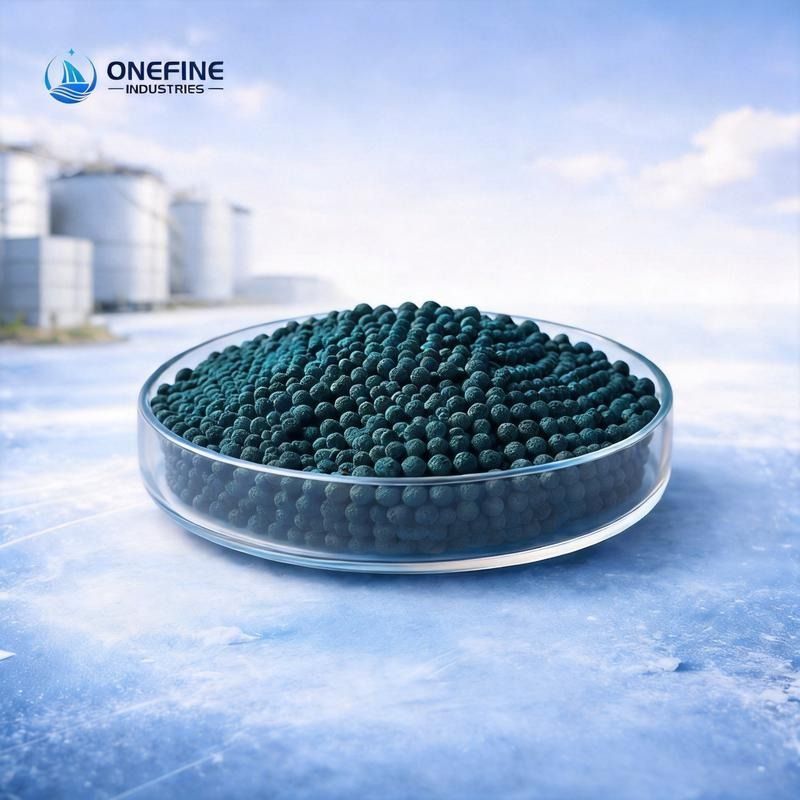
Desulfurization and arsenic removal catalyst
High-performance CuO/Al₂O₃-based desulfurization and arsenic removal catalyst, engineered for the ultra-deep removal of sulfur compounds and volatile arsenides to protect downstream noble metal catalysts. Available in bulk from 1 ton MOQ for Middle East industrial buyers.
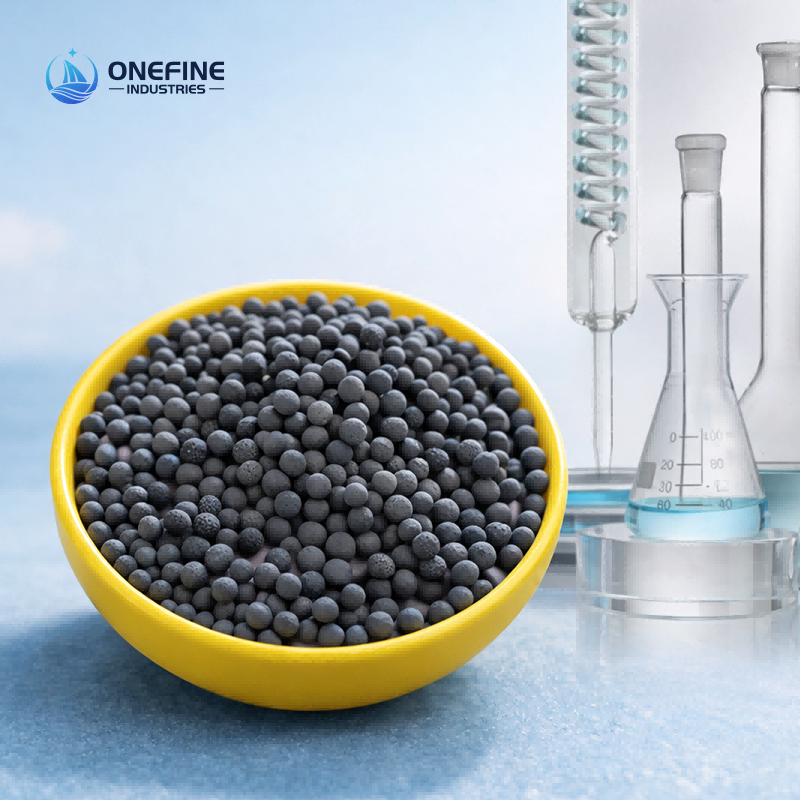
Palladium Catalyst for Hydrogenation (Pd/Al₂O₃)
High-performance palladium on alumina catalyst (Pd/Al₂O₃) for industrial hydrogenation reactions. Available in 0.1-2% Pd loading on alumina support. Exceptional activity, long service life, and excellent selectivity for pharmaceutical, petrochemical, and fine chemical synthesis.
Related Reading
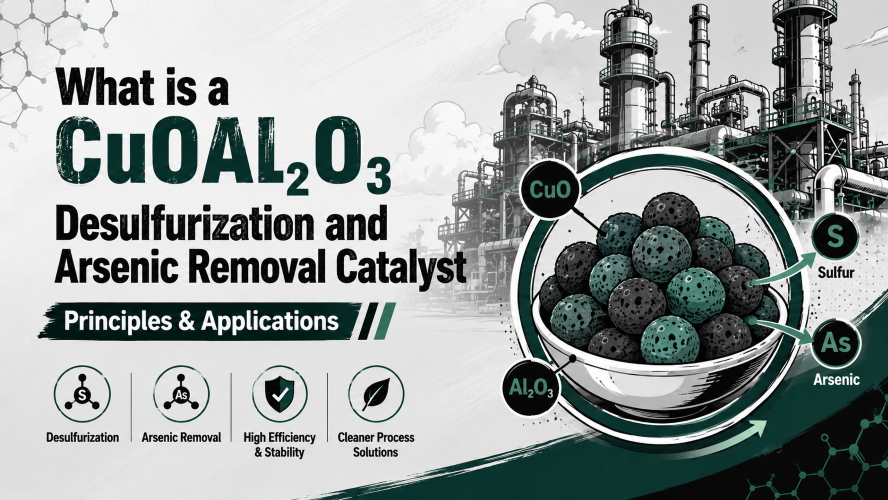
What is a CuO/Al₂O₃ Desulfurization and Arsenic Removal Catalyst? Principles & Applications
A guide to CuO/Al₂O₃ desulfurization and arsenic removal catalysts — how irreversible chemisorption works, key specifications, and how these sacrificial guard beds protect sensitive noble metal catalysts in refineries and petrochemical plants.
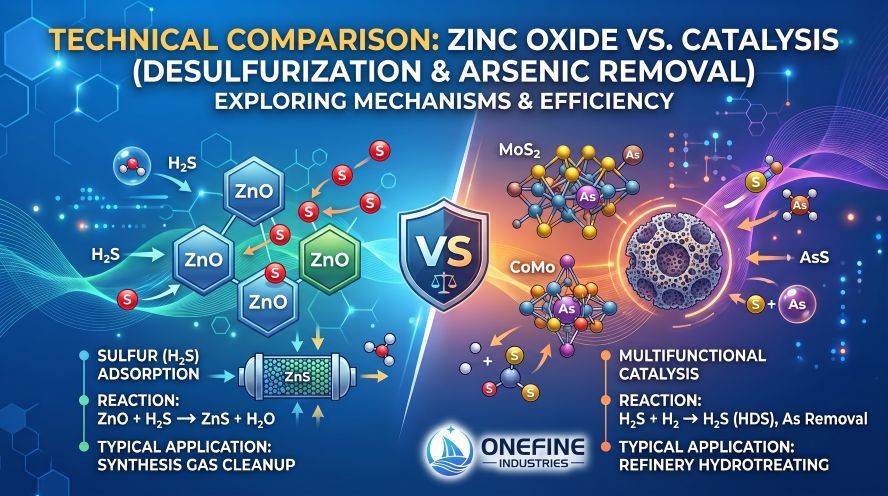
Zinc Oxide vs Desulfurization and Arsenic Removal Catalyst: A Deeper Technical Comparison
Zinc Oxide and Desulfurization/Arsenic Removal Catalyst solve different problems — here's how their chemistry, bed position, service life, and spent-catalyst handling actually differ once arsenic narrows your choice down to these two.
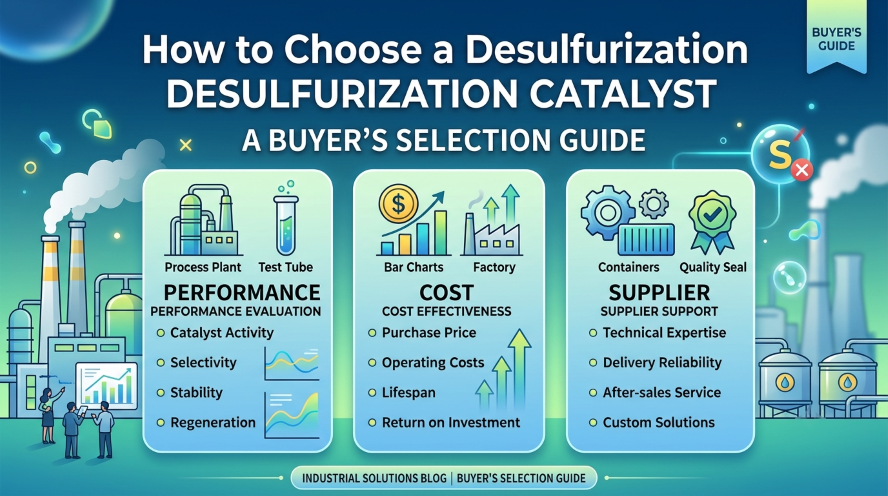
How to Choose a Desulfurization Catalyst: A Buyer's Selection Guide
With seven different desulfurization catalysts in play — each suited to a different feed condition or protection target — picking the right one comes down to a handful of questions about your process. This guide walks through the decision framework.