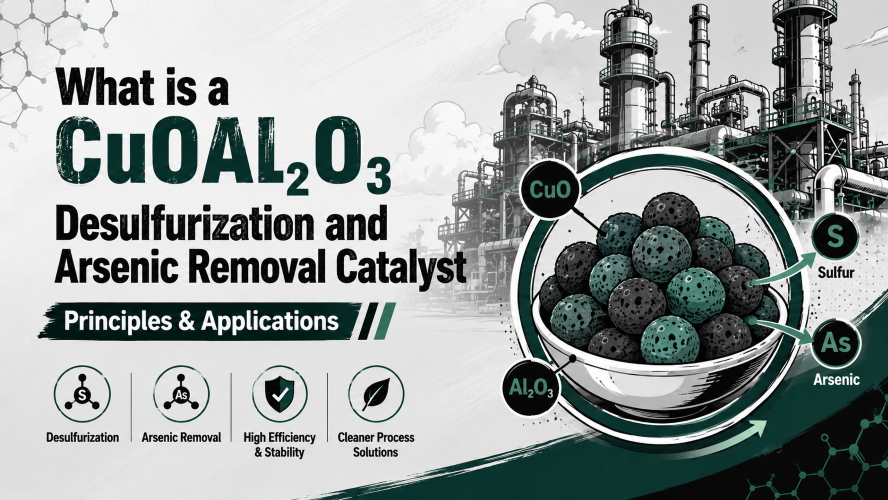
What is a CuO/Al₂O₃ Desulfurization and Arsenic Removal Catalyst? Principles & Applications
In petroleum refining and petrochemical processing, trace feed contaminants like hydrogen sulfide (H₂S) and volatile arsenides (such as arsine, AsH₃) pose a severe threat to unit profitability. Arsenic in particular is a permanent poison to many downstream catalysts, reacting with active metal sites to form stable, inactive compounds. Even at sub-ppm levels, this can rapidly deactivate sensitive noble metal and selective hydrogenation catalysts, leading to costly yield losses and premature catalyst replacement. To prevent this, operators rely on sacrificial guard beds — and the Desulfurization and Arsenic Removal Catalyst built on a CuO/Al₂O₃ base is the industry-standard solution.
The Principle of CuO/Al₂O₃ Chemisorption
Key Takeaways:
- Irreversible Chemistry: Contaminants like H₂S and AsH₃ react directly with CuO active sites to form permanent, solid copper sulfides (CuS) and arsenides (Cu₃As).
- Sacrificial Guard Bed: Because the chemical transformation is thermodynamically stable, the catalyst is non-regenerable and functions strictly as a protective barrier.
- Superior to Lead (PbO): Modern CuO/Al₂O₃ formulations offer significantly higher adsorption capacities and eliminate heavy-metal environmental hazards.
- Process Criticality: Essential for purifying polymer-grade olefins, preventing the permanent deactivation of downstream Ziegler-Natta and selective hydrogenation catalysts.
The Principle of CuO/Al₂O₃ Chemisorption
The efficiency of a CuO/Al₂O₃ guard catalyst relies on irreversible chemical reactions rather than simple physical adsorption. The catalyst matrix is a highly porous alumina (Al₂O₃) carrier supporting a dispersed active phase of copper oxide (CuO).
As hydrocarbon streams pass through the guard bed, contaminant molecules diffuse into the catalyst's pore structure. Inside, arsine (AsH₃), phosphine (PH₃), and hydrogen sulfide (H₂S) react with the CuO active sites, forming stable solid compounds: copper sulfides (CuS) and copper arsenides (Cu₃As). Because these chemical bonds are essentially unbreakable under normal operating conditions, the contaminants are permanently locked within the catalyst pellet — unlike physical adsorbents, which can release trapped molecules under temperature or pressure swings.
Historically, lead oxide (PbO) served this purpose, but modern copper oxide formulations offer higher adsorption capacity for both sulfur and arsenic, and avoid the environmental and handling concerns associated with lead. Because the chemical transformation is irreversible, these catalysts are non-regenerable and function strictly as sacrificial materials.
What Determines Guard Bed Performance
Contaminant removal depends heavily on mass transfer — the arsenic and sulfur molecules need to travel deep into the catalyst bead to reach the available copper active sites. This means pore structure and mechanical strength both matter: a well-engineered catalyst needs enough internal surface area and pore volume to avoid "pore plugging," while maintaining enough crush strength to resist breakdown under industrial flow rates and pressure drops.
CuO loading is typically customizable — standard formulations are suited to normal sour feeds, while higher loadings can be specified for exceptionally sour crude or heavily contaminated FCC off-gases. Full specification details, including surface area, pore volume, crush strength, and operating temperature/pressure ranges, are available on the Desulfurization and Arsenic Removal Catalyst product page.
Key Industrial Applications
CuO/Al₂O₃ catalysts are deployed across refining, petrochemical, and polymer manufacturing as the first line of defense in a multi-stage purification train.
Polymer-Grade Olefin Purification In HDPE and PP production, feedstocks must be of exceptionally high purity. Arsine and phosphine, even in trace amounts, will rapidly deactivate sensitive Ziegler-Natta, metallocene, and noble metal catalysts used for processing cracked light ends. A CuO-based guard bed ensures monomers meet the strict specifications required for smooth polymerization.
Selective Hydrogenation Protection Hydrocarbon streams from steam crackers or FCC units often contain dienes and acetylenes that must be selectively hydrogenated into olefins. Palladium (Pd) and platinum (Pt) catalysts used in selective hydrogenation are highly susceptible to arsenic and sulfur poisoning — upstream CuO/Al₂O₃ guard beds are essential to protect the lifecycle and selectivity of catalysts such as Palladium Catalyst for Hydrogenation.
Syngas and Natural Gas Deep Polishing In ammonia and methanol plants, synthesis gas must be meticulously cleaned. Any slip of sulfur or arsenic can damage downstream synthesis catalysts. CuO/Al₂O₃ is used as a deep desulfurization and de-arsenication polishing layer to maintain uptime and process stability.
When a Broader or Different Guard Bed Fits Better
A single-metal CuO/Al₂O₃ bed is the right call when sulfur and arsenic are genuinely the only contaminants you need to address. Two situations call for a different product instead:
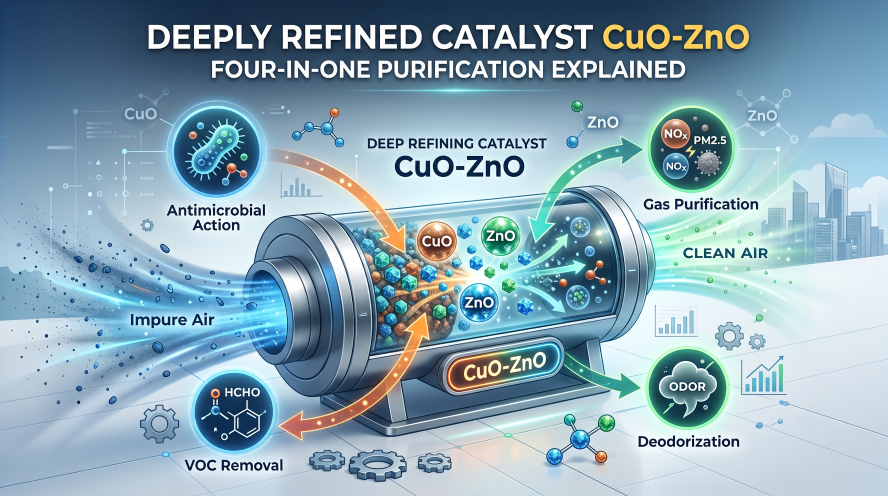
- Feed also carries phosphorus or oxygen compounds: Our Deeply Refined Catalyst combines CuO and ZnO to handle all four contaminant classes in one bed, avoiding the need for a second guard vessel.
- Feed also carries chlorine, ahead of a reforming unit: Our Copper-Nickel Desulfurization Catalyst addresses sulfur, chlorine, and arsenic together, and ships pre-reduced to shorten commissioning time.
Recommended Products from Sorbsieve
- Desulfurization and Arsenic Removal Catalyst — High-performance CuO/Al₂O₃ spherical beads with customizable CuO loading and high crush strength, designed for the ultra-deep, irreversible chemisorption of H₂S and arsine.
- Palladium Catalyst for Hydrogenation — Premium noble metal catalyst engineered for highly selective industrial hydrogenation reactions.
FAQ
Q1: How does a CuO-based catalyst compare to older PbO (Lead Oxide) technologies? A: Modern CuO offers a significantly higher adsorption capacity for both sulfur and volatile arsenides than lead oxide. Copper-based catalysts are also strongly preferred globally to comply with increasingly strict environmental and occupational health regulations regarding heavy metal handling and disposal.
Q2: Can the catalyst bed be regenerated once it is saturated? A: No. The operating principle is irreversible chemisorption, forming permanent solid copper sulfides and copper arsenides. Once the active copper sites are consumed, the guard bed is a sacrificial material and must be safely discharged and replaced.
Q3: Does the chemisorption reaction produce any byproducts? A: Yes — the reaction between CuO and H₂S or AsH₃ typically yields solid metal compounds (locked in the catalyst) and water as a byproduct. If your downstream process is highly sensitive to moisture, it's worth discussing bed configuration with our technical team.
Q4: How do we determine the required volume and lifespan of the guard bed? A: Bed volume and service life depend on your continuous flow rate, inlet concentration of H₂S and AsH₃, and required outlet specifications. Our technical team provides custom bed sizing based on your specific operating conditions.
Looking for Bulk Supply of Desulfurization and Arsenic Removal Catalyst?
Sorbsieve is a trusted bulk supplier of Desulfurization and Arsenic Removal Catalyst and complete industrial adsorbents, serving industrial buyers across the Middle East.
We provide:
- ✅ Container-level supply (20'GP / 40'GP / 40'HQ)
- ✅ Full documentation (COA / TDS / SDS / COO)
- ✅ Multiple packaging options
- ✅ Technical support for catalyst selection and system optimization
- ✅ Fast quote response for industrial inquiries
Contact our team for bulk pricing, product samples, and technical consultation.
Related Products
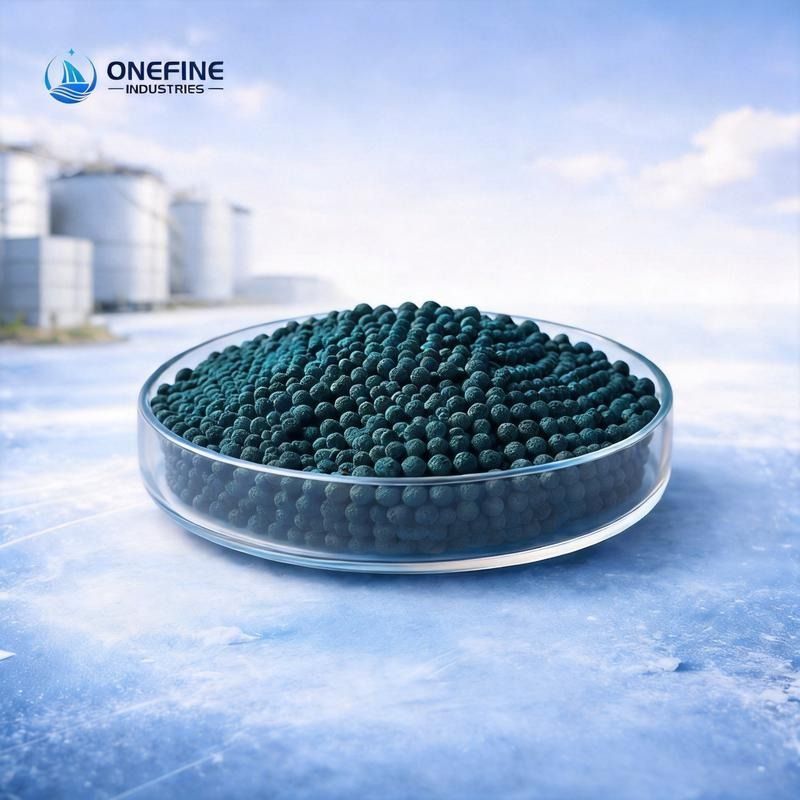
Desulfurization and arsenic removal catalyst
High-performance CuO/Al₂O₃-based desulfurization and arsenic removal catalyst, engineered for the ultra-deep removal of sulfur compounds and volatile arsenides to protect downstream noble metal catalysts. Available in bulk from 1 ton MOQ for Middle East industrial buyers.
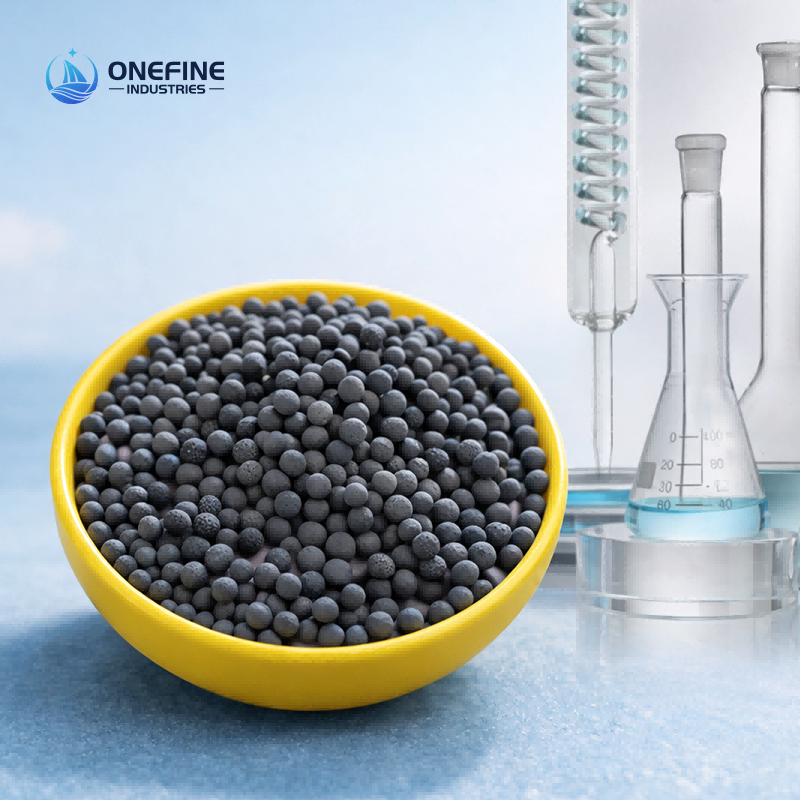
Palladium Catalyst for Hydrogenation (Pd/Al₂O₃)
High-performance palladium on alumina catalyst (Pd/Al₂O₃) for industrial hydrogenation reactions. Available in 0.1-2% Pd loading on alumina support. Exceptional activity, long service life, and excellent selectivity for pharmaceutical, petrochemical, and fine chemical synthesis.
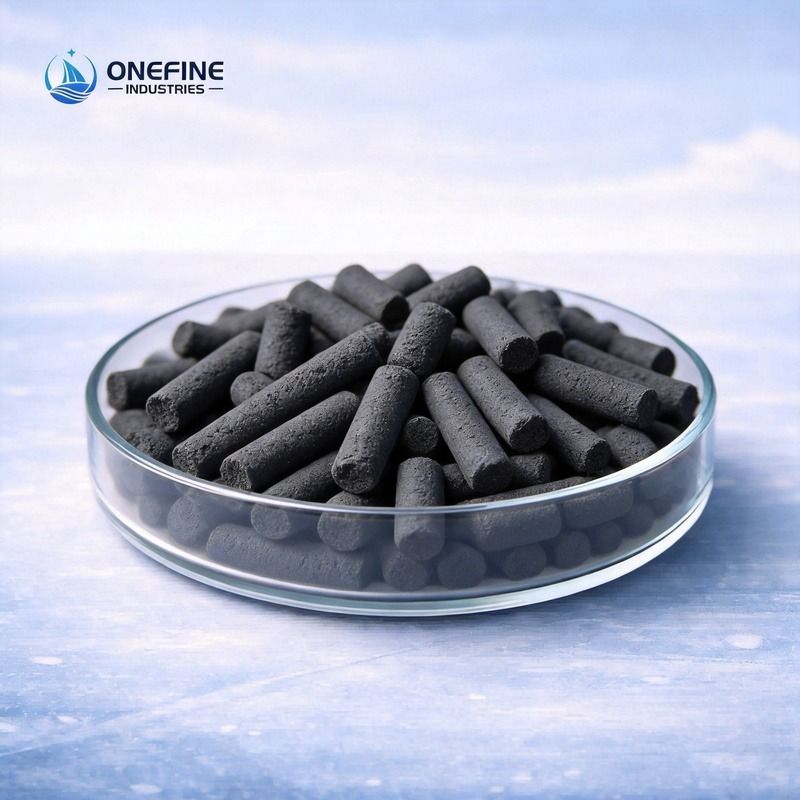
Copper-Nickel Desulfurization Catalyst
A Cu-Ni dual-system desulfurization catalyst for oil refining guard-bed applications. Removes inorganic and organic sulfur, trace chlorine, and arsenic impurities in a single step. Supplied in pre-reduced form for immediate use. Ideal as a protection agent for precious metal catalysts in reforming, hydrocracking, and isomerization units.