Zinc Oxide vs Desulfurization and Arsenic Removal Catalyst: A Deeper Technical Comparison
Key Takeaways
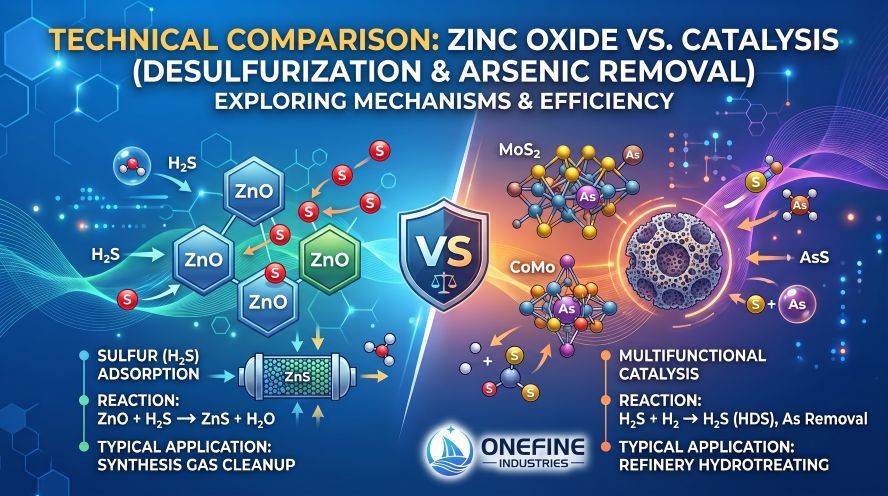
- Zinc oxide acts as a final polishing step for sulfur removal via direct chemisorption, not requiring a hydrogen atmosphere.
- Arsenic removal catalysts function as upstream guard beds that typically require a reducing hydrogen environment to capture organometallic arsenic.
- Bed life scales differently: zinc oxide saturates based on bulk sulfur loading, while arsenic guard beds depend on trace-level contamination.
- Spent arsenic catalyst requires specialized toxic waste handling plans, separate from routine zinc sulfide disposal pathways.
Choosing between sulfur removal and combined sulfur-plus-arsenic removal isn't always a simple either/or call — it depends on what's actually in your feedstock. If you haven't yet narrowed down which catalyst family fits your process, our How to Choose a Desulfurization Catalyst buyer's guide walks through the full seven-product decision tree, including the moisture, COS, and arsenic checkpoints that separate all of our desulfurization catalysts.
This article goes one level deeper. Once "does my feedstock carry arsenic?" narrows your options down to these two specific catalysts, here's what actually separates them at the operating level — not just which contaminant they remove, but how they behave in the bed, how long they last, and what changeout looks like. For the underlying chemistry behind each, see our companion guides: What Is a Zinc Oxide Desulfurization Catalyst? ZnS Chemisorption Explained and What is a CuO/Al₂O₃ Desulfurization and Arsenic Removal Catalyst? Principles & Applications.
Two Different Chemistries, Not Two Versions of the Same Thing
A Zinc Oxide Desulfurization Catalyst works through direct stoichiometric absorption: zinc oxide reacts with hydrogen sulfide to form zinc sulfide, consuming the active material as it goes. It's a straightforward chemisorption process that doesn't depend on a hydrogen-rich atmosphere to function — it's effective across gas and liquid streams as long as sulfur compounds are present.
A Desulfurization and Arsenic Removal Catalyst operates differently. Arsenic in petroleum feedstocks typically exists as organometallic compounds, and capturing it reliably generally calls for a reducing environment — most arsenic guard-bed systems are designed to run under a hydrogen atmosphere, where the catalyst's active sites bind arsenic species as the feed passes through. This isn't a minor detail: it means the two catalysts aren't always drop-in interchangeable across every part of a process train. A unit with no hydrogen circuit available may need to account for this before specifying an arsenic guard bed.
Where Each One Sits in the Purification Train
This is the distinction that a general selection guide can't fully capture, because it depends on your specific train layout, not just your contaminant profile.
Zinc oxide is most often the last polishing step — it's placed where the goal is pushing residual H₂S down to a low, stable level before the stream reaches sulfur-sensitive equipment or meets a pipeline/product spec.
Arsenic removal catalyst is typically positioned as an upstream guard bed — first in line, protecting everything downstream (including, in many cases, a zinc oxide bed further along the train) from irreversible arsenic poisoning. Arsenic-sensitive catalysts have essentially zero tolerance for the contaminant, so this bed's job is prevention, not polishing.
⚠️ Practical implication: if your feedstock carries arsenic, that usually doesn't mean "use the arsenic removal catalyst instead of zinc oxide" — arsenic removal catalysts aren't generally formulated to reach the same ultra-low sulfur polishing target zinc oxide achieves. In many real trains, the two are used together, at different positions, doing different jobs. The selection question addressed here is which catalyst answers your specific contamination profile at a specific point in the train — not a strict either/or across the whole process.
Bed Life and Changeout Cadence Follow Different Logic
Because the two catalysts are consumed by fundamentally different contaminant loads, their replacement cycles don't follow the same pattern.
- Zinc oxide bed life scales with sulfur loading — the higher and more variable the H₂S concentration in the feed, the faster the bed saturates. Facilities processing higher-sulfur streams should expect more frequent monitoring and changeout planning than those running lean gas.
- Arsenic guard bed life is generally governed by trace-level contamination rather than bulk loading — arsenic is typically present at much lower concentrations than sulfur, so these beds often run for extended service periods between changeouts, provided the feedstock's arsenic profile stays consistent. A sudden shift to a higher-arsenic crude or condensate source can shorten this considerably.
Neither catalyst is designed for regeneration in standard service — both are managed as scheduled-replacement consumables, but the triggers driving that schedule (sulfur throughput vs. arsenic breakthrough) are different, and worth tracking separately rather than assuming one changeout calendar fits both beds.
Spent Catalyst Handling Deserves Separate Planning
This is a genuine operational difference that a broad selection guide won't dwell on, but it matters for planning.
Spent zinc oxide catalyst is primarily zinc sulfide — a well-characterized byproduct with established handling pathways. Spent arsenic removal catalyst carries captured arsenic compounds, and arsenic is a regulated toxic element in most jurisdictions. That generally means spent arsenic-guard material needs its own disposal and handling plan, separate from routine spent zinc oxide disposal, and this is worth confirming with your local environmental compliance requirements before the first changeout — not after.
Quick Decision Checklist
- Feed has no known arsenic risk, sulfur is the only contaminant → zinc oxide desulfurization catalyst, sized to sulfur loading
- Feed source has a documented or suspected arsenic risk → arsenic removal catalyst as an upstream guard bed, typically with zinc oxide still in place downstream for final sulfur polishing
- No hydrogen atmosphere available at the intended install point → confirm with your process engineer whether the arsenic removal catalyst's operating requirements fit that location before specifying it there
- Uncertain about arsenic content → a feedstock analysis is cheaper than a poisoned downstream catalyst bed
Recommended Products from Sorbsieve
- Zinc Oxide Desulfurization Catalyst — for H₂S and light organic sulfur polishing across gas and liquid streams (already linked above)
- Desulfurization and Arsenic Removal Catalyst — for feedstocks carrying organometallic arsenic, positioned as a protective guard bed ahead of arsenic-sensitive equipment (already linked above)
FAQ
Can I use zinc oxide catalyst if my feedstock has trace arsenic? Zinc oxide isn't designed to capture arsenic. If arsenic is present, an arsenic removal catalyst is needed upstream — zinc oxide alone won't protect downstream equipment from arsenic poisoning, even if it continues handling sulfur effectively.
Does the arsenic removal catalyst replace the need for zinc oxide entirely? Usually not. Arsenic removal catalysts are built to capture arsenic and provide some sulfur removal, but most process trains still rely on a dedicated zinc oxide polishing step to reach the lowest residual sulfur targets. The two commonly work together rather than as a straight substitute for one another.
How do I know if my feedstock has arsenic? Arsenic content isn't always predictable from crude source alone. A feedstock analysis is the most reliable way to confirm it before committing to a catalyst selection, especially for crude fractions, condensates, or feed sources without a documented contamination history.
Are both catalysts regenerable, or fully consumable? Both are managed as scheduled-replacement consumables in standard service rather than on-site regenerable materials. Their replacement timing is driven by different mechanisms, though — sulfur throughput for zinc oxide, arsenic breakthrough for the arsenic removal catalyst — so they should be tracked on separate monitoring schedules.
Looking for Bulk Supply of Zinc Oxide Desulfurization Catalyst and Desulfurization and Arsenic Removal Catalyst?
Sorbsieve is a trusted bulk supplier of Zinc Oxide Desulfurization Catalyst, Desulfurization and Arsenic Removal Catalyst, and complete industrial adsorbents, serving industrial buyers across the Middle East.
We provide:
- ✅ Container-level supply (20'GP / 40'GP / 40'HQ)
- ✅ Full documentation (COA / TDS / SDS / COO)
- ✅ Multiple packaging options
- ✅ Technical support for catalyst selection and system optimization
- ✅ Fast quote response for industrial inquiries
Contact our team for bulk pricing, product samples, and technical consultation.
Related Products
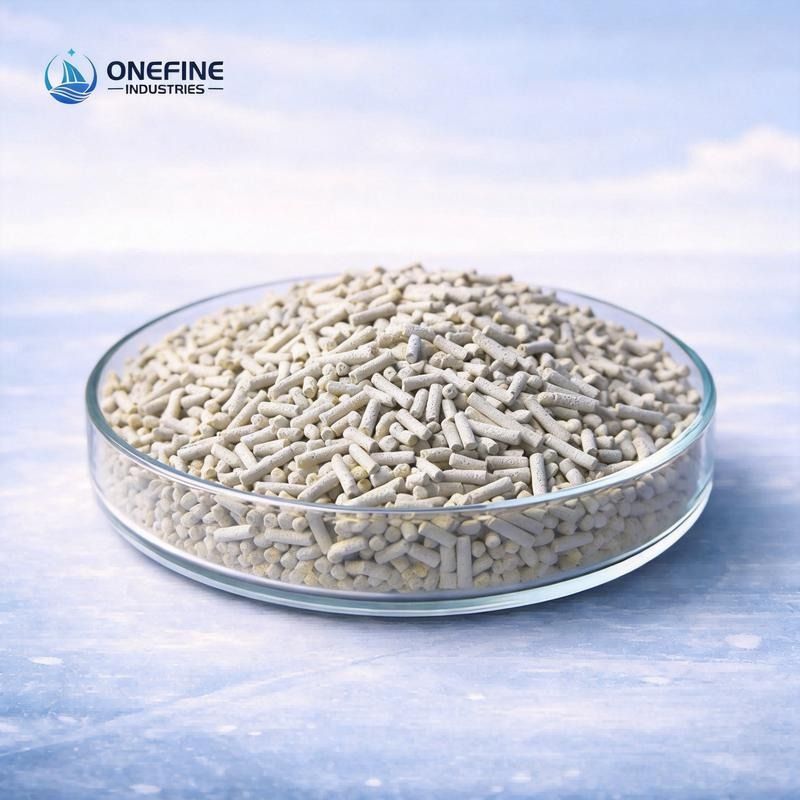
Zinc oxide desulfurization catalyst
High-purity zinc oxide (ZnO) desulfurization catalyst for fine removal of H₂S from natural gas, synthesis gas, hydrogen, and hydrocarbon feeds. Achieves outlet sulfur levels below 0.1 ppm through irreversible chemisorption. High sulfur capacity, long service life, and strong resistance to steam.
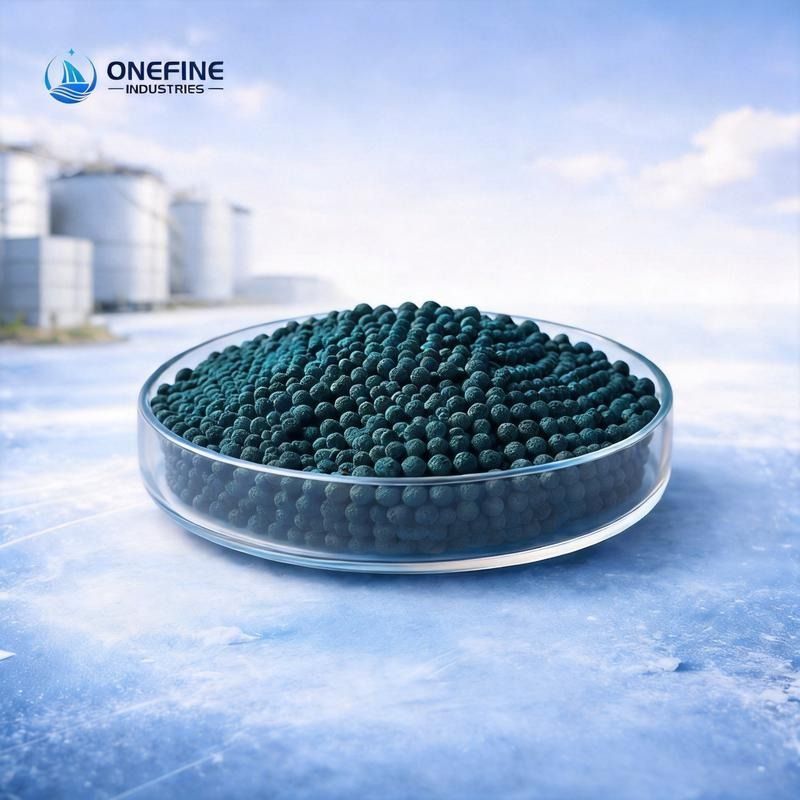
Desulfurization and arsenic removal catalyst
High-performance CuO/Al₂O₃-based desulfurization and arsenic removal catalyst, engineered for the ultra-deep removal of sulfur compounds and volatile arsenides to protect downstream noble metal catalysts. Available in bulk from 1 ton MOQ for Middle East industrial buyers.
Related Reading
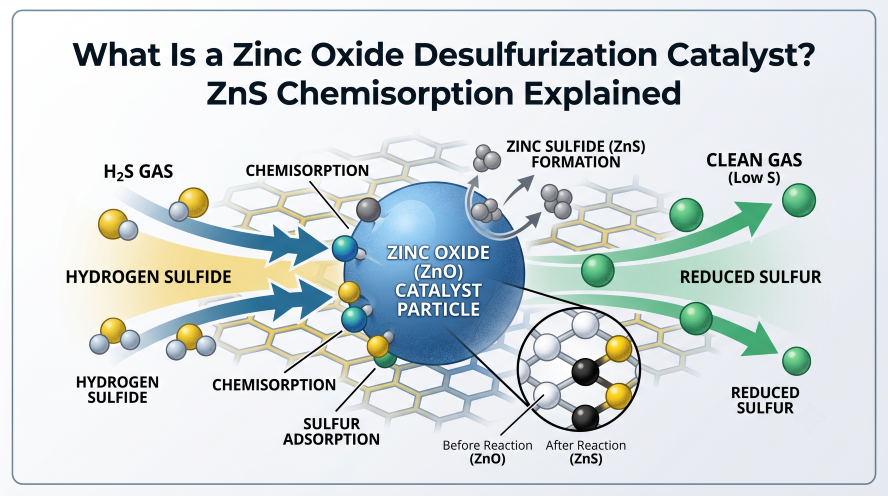
What Is a Zinc Oxide Desulfurization Catalyst? ZnS Chemisorption Explained
A plain-language guide to zinc oxide (ZnO) desulfurization catalyst: how it removes H₂S down to sub-ppm levels, where it fits in a desulfurization train, and how to decide if you need it.
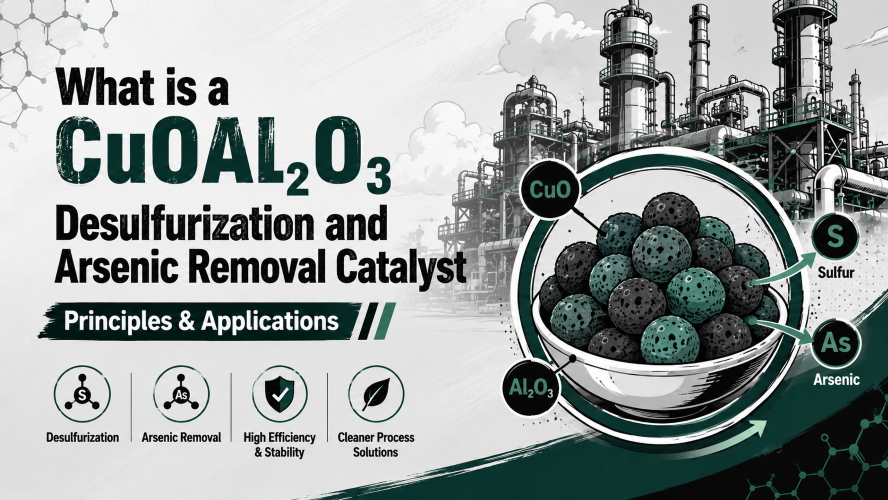
What is a CuO/Al₂O₃ Desulfurization and Arsenic Removal Catalyst? Principles & Applications
A guide to CuO/Al₂O₃ desulfurization and arsenic removal catalysts — how irreversible chemisorption works, key specifications, and how these sacrificial guard beds protect sensitive noble metal catalysts in refineries and petrochemical plants.
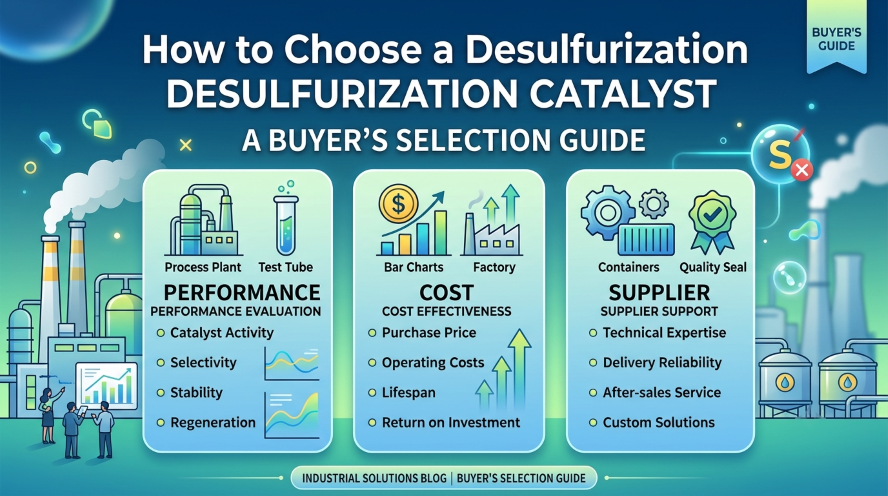
How to Choose a Desulfurization Catalyst: A Buyer's Selection Guide
With seven different desulfurization catalysts in play — each suited to a different feed condition or protection target — picking the right one comes down to a handful of questions about your process. This guide walks through the decision framework.