Technical & Troubleshooting Guides
Practical sizing, troubleshooting, and technical guidance for molecular sieve systems.
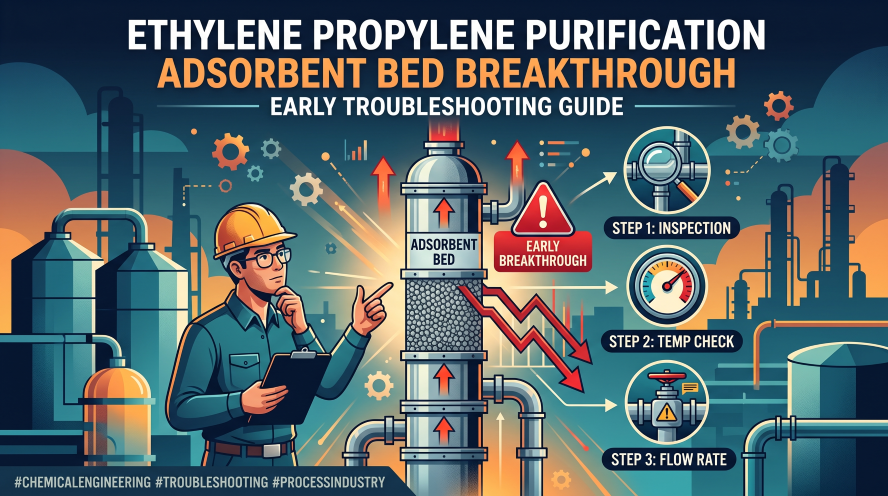
Why Is Your Ethylene/Propylene Purification Adsorbent Bed Breaking Through Early? Troubleshooting Guide
Early breakthrough in a CuO-ZnO ethylene/propylene purification bed is rarely just "the media is used up." This guide breaks down four distinct failure mechanisms — sulfate formation, moisture overload, copper sintering, and COS slip — and how to tell which one is driving your early breakthrough.
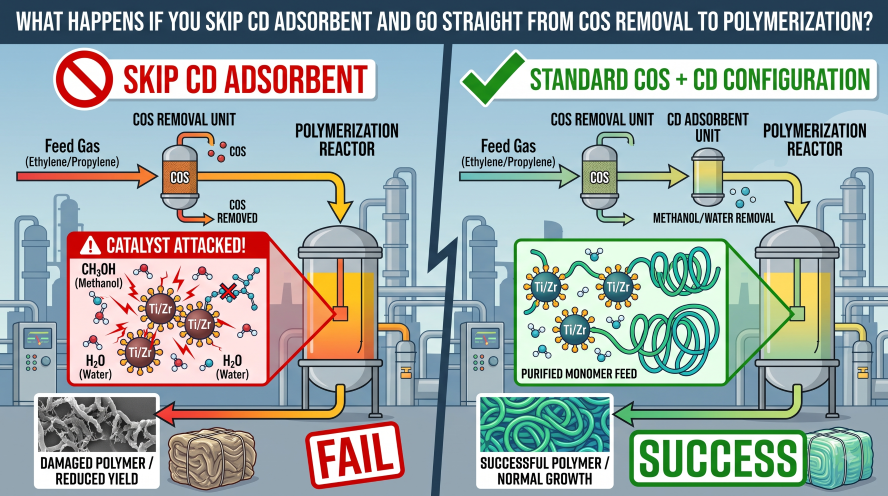
What Happens If You Skip CD Adsorbent and Go Straight from COS Removal to Polymerization?
Bypassing the CD adsorbent bed in an olefin purification train is a serious engineering misstep. This guide explains why oxygenates and moisture that slip past a COS adsorbent bed can permanently poison downstream polymerization catalysts — and why the two beds are not interchangeable.
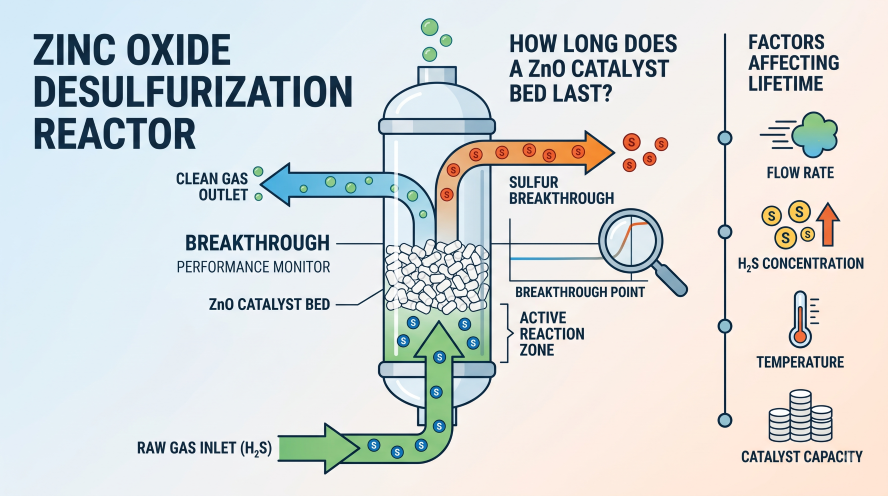
How Long Does a Zinc Oxide Desulfurization Catalyst Bed Last Before Breakthrough?
Discover the thermodynamic and kinetic principles dictating the lifespan of Zinc Oxide (ZnO) desulfurization guard beds. Learn how to calculate theoretical sulfur capacity, understand the Mass Transfer Zone (MTZ), and identify the variables that trigger premature hydrogen sulfide (H₂S) breakthrough.
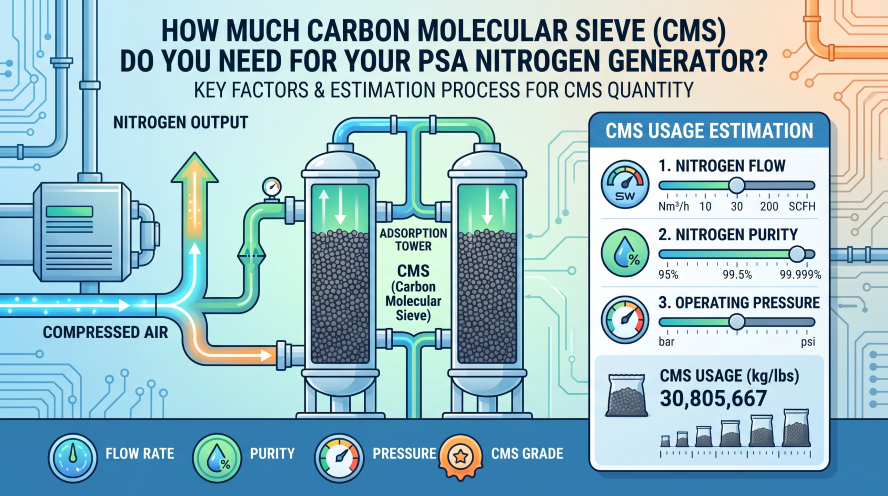
How Much Carbon Molecular Sieve Do You Need for a PSA Nitrogen Generator?
Discover the engineering calculations behind sizing a Pressure Swing Adsorption (PSA) nitrogen generator. Learn how Carbon Molecular Sieve (CMS) kinetic diffusion works, how target nitrogen purity dictates the Air-to-Nitrogen (A/N) ratio, and how to convert your CMS mass requirement into vessel geometry.
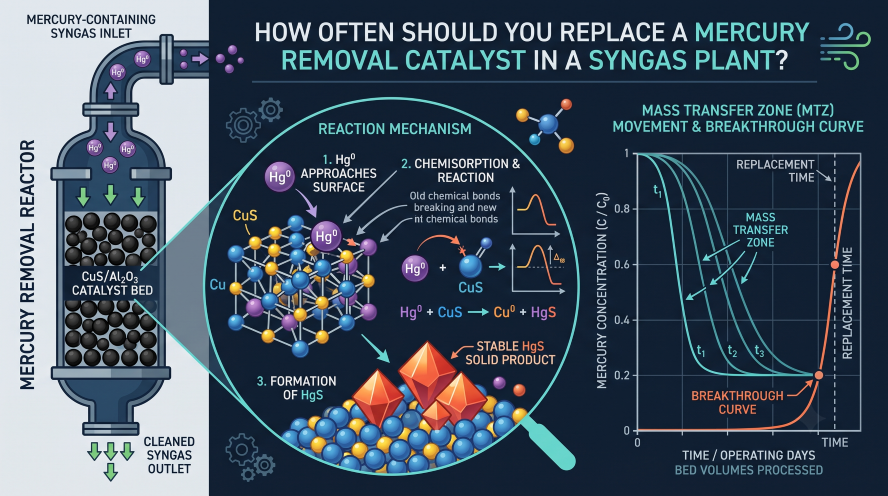
How Often Should You Replace a Mercury Removal Catalyst in a Syngas Plant?
Determining the exact replacement frequency for a mercury removal catalyst in a syngas plant requires analyzing irreversible chemisorption mechanisms, Empty Bed Contact Time (EBCT), and Mass Transfer Zone (MTZ) dynamics. This guide explores how CuS/Al₂O₃ guard beds convert elemental mercury into stable mercury sulfide to maintain sub-0.01 µg/m³ effluent purity across a standard 3 to 5-year operational cycle.
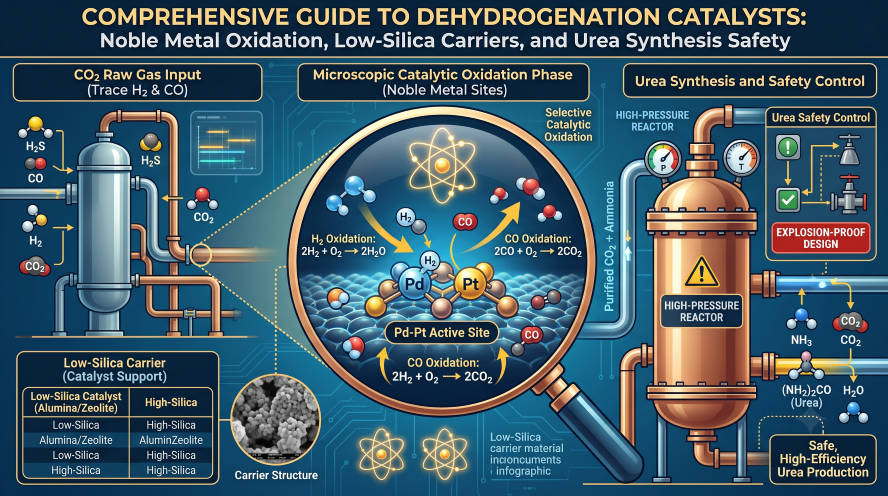
Comprehensive Guide to Dehydrogenation Catalysts: Noble Metal Oxidation, Low-Silica Carriers, and Urea Synthesis Safety
Trace combustible gases like hydrogen and carbon monoxide in carbon dioxide feedstocks present catastrophic explosion risks in high-pressure urea synthesis loops. This guide explains why that risk exists, how a noble metal dehydrogenation catalyst neutralizes it, and what causes these guard beds to eventually fail.
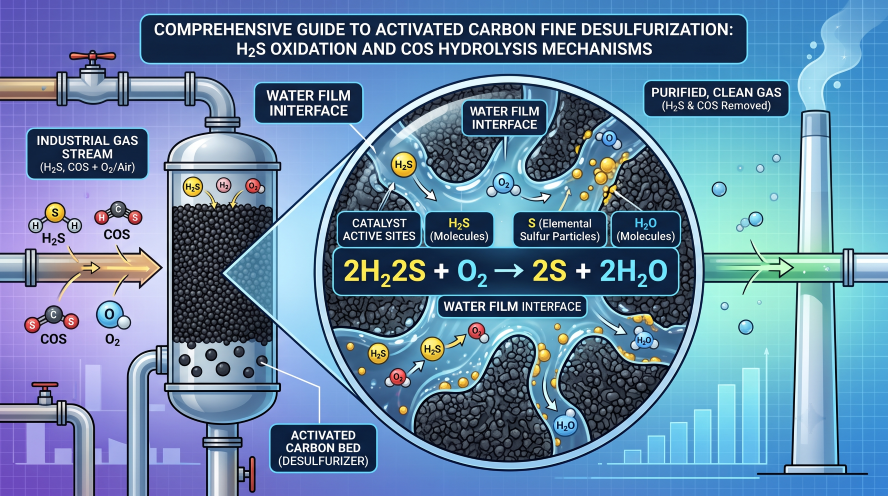
Comprehensive Guide to Activated Carbon Fine Desulfurization: H2S Oxidation and COS Hydrolysis Mechanisms
Explore the dual-mechanism of activated carbon fine desulfurization catalysts. Learn how the micro-water film promotes carbonyl sulfide (COS) hydrolysis and how trace oxygen facilitates catalytic hydrogen sulfide (H2S) oxidation for ultra-deep sulfur removal in syngas and LPG streams.
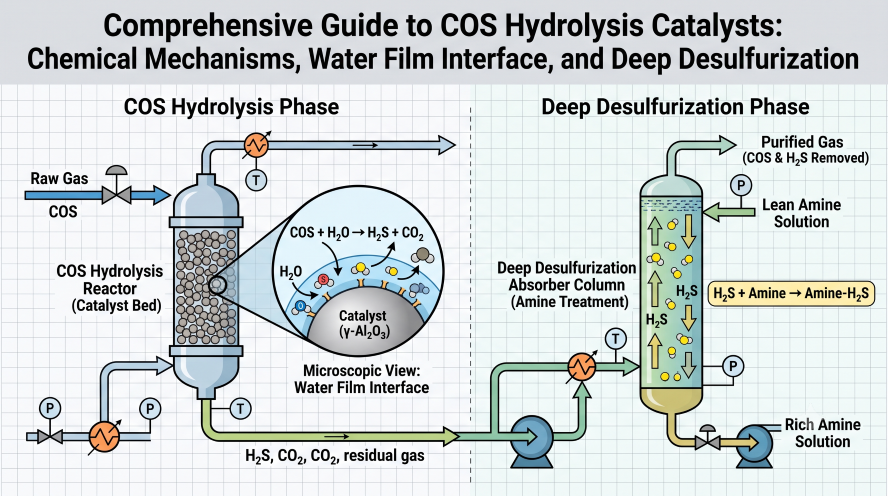
Comprehensive Guide to COS Hydrolysis Catalysts: Chemical Mechanisms, Water Film Interface, and Deep Desulfurization
Carbonyl sulfide (COS) is a highly stable, non-polar contaminant that easily slips past traditional zinc oxide desulfurization beds and amine scrubbing units. This technical guide explains why COS hydrolysis is needed, how the water-film reaction works, and how it fits into a real plant's desulfurization train.
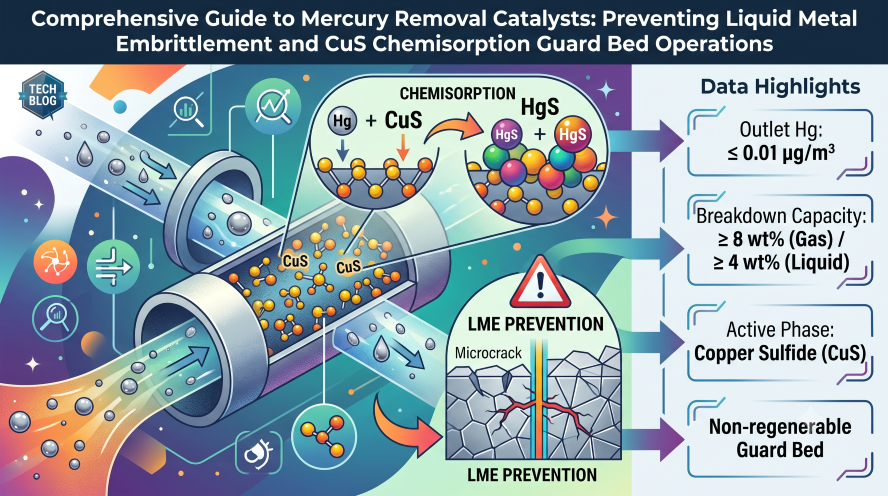
Comprehensive Guide to Mercury Removal Catalysts: Preventing Liquid Metal Embrittlement and CuS Chemisorption Guard Bed Operations
Trace elemental mercury in natural gas and liquid hydrocarbon streams causes catastrophic Liquid Metal Embrittlement (LME) in aluminum heat exchangers and irreversibly poisons noble metal catalysts. This technical guide unpacks the working mechanism of CuS/Al₂O₃ mercury removal catalysts, examining chemisorption kinetics, gas vs. liquid phase engineering, and safe guard bed operation to achieve rigorous sub-0.01 µg/m³ outlet purity.
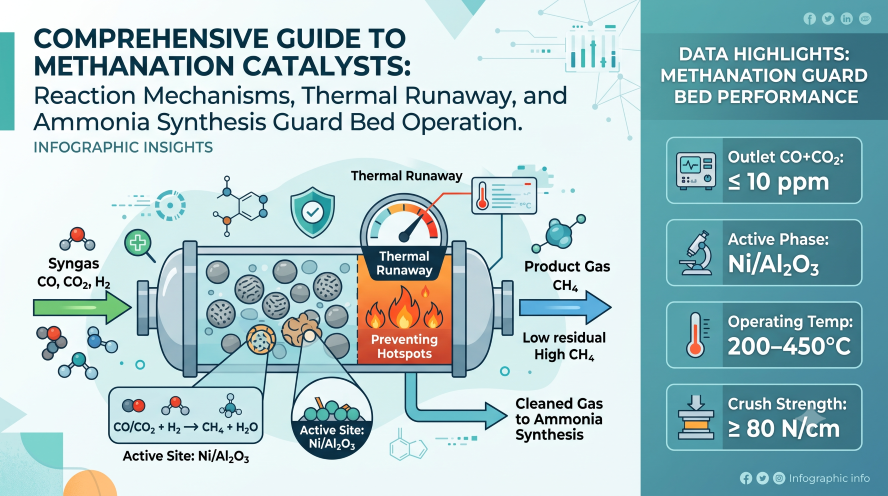
A Comprehensive Guide to Methanation Catalysts: Reaction Mechanisms, Thermal Runaway, and Ammonia Synthesis Guard Bed Operation
Trace carbon monoxide (CO) and carbon dioxide (CO2) in synthesis gas act as lethal poisons to downstream ammonia and hydrogen catalysts. This technical guide explores the fundamental chemistry of nickel-based methanation catalysts, sulfur poisoning mechanisms, thermal runaway prevention, and guard bed engineering strategies to achieve sub-10 ppm carbon oxide purity.
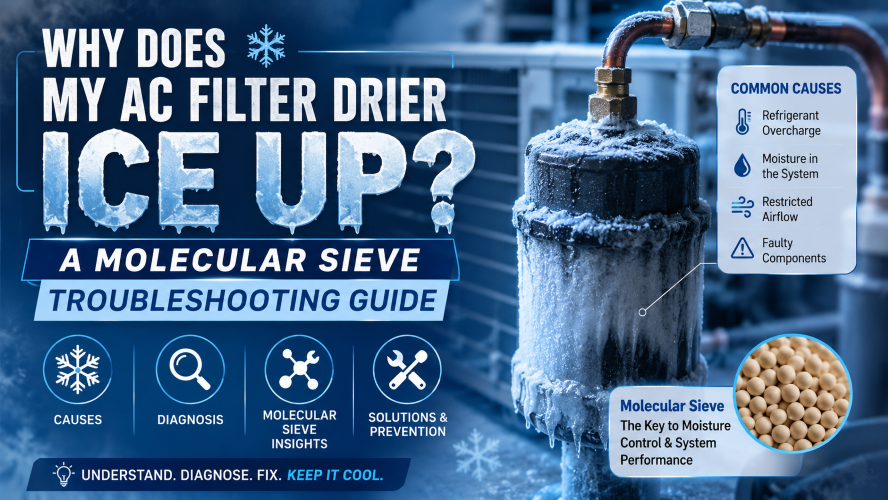
Why Does My AC Filter Drier Ice Up? A Molecular Sieve Troubleshooting Guide
A practical troubleshooting guide explaining why AC and refrigeration filter driers ice up — covering desiccant saturation, restriction, wrong molecular sieve type, and poor evacuation as root causes, plus step-by-step diagnosis and fixes.
How Much Molecular Sieve Do You Need for PSA Oxygen Plant?
Learn how to estimate molecular sieve quantity for PSA oxygen plants based on flow rate, purity, pressure, and adsorbent type. Includes practical ranges and a real-world sizing example.